Low Humidity on Lotus: Causes, Checks & Fixes
Quick answer
Lotus roots live underwater, so low humidity is rarely the main problem—dry summer air mainly stresses tall aerial leaves and can overlap with heat scorch or spider mites. First step: confirm the waterline is submerged, then check whether only the highest sun-exposed pads show crisp margins.
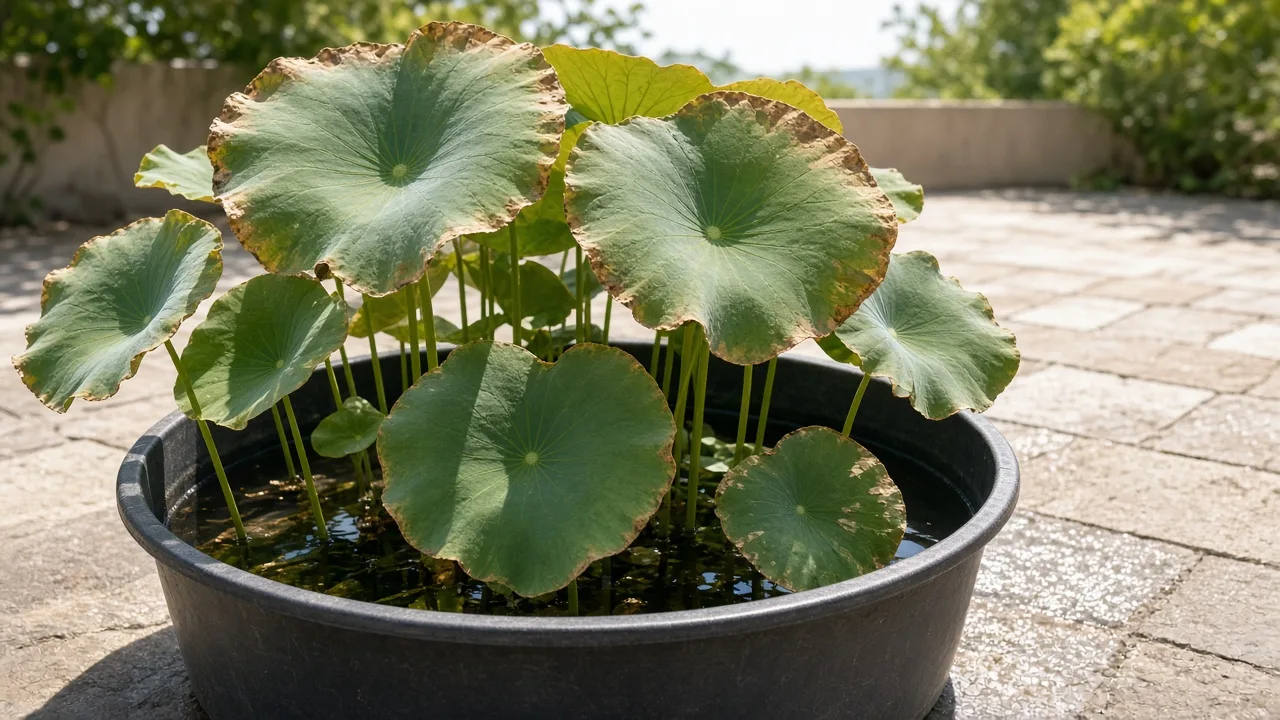
Low Humidity on Lotus: Causes, Checks & Fixes
This guide covers low humidity on Lotus. See also the general Low Humidity guide, watering, and light pages for this plant.
Low Humidity on Lotus: Causes, Checks & Fixes
Quick answer
Sacred lotus (Nelumbo nucifera) is an outdoor aquatic perennial whose rhizome sits in continuously submerged loam. Low indoor humidity advice for calatheas does not transfer cleanly: the crown is wet, and normal outdoor humidity at the water surface is usually adequate for root function.
For how dry air crisp leaf edges on houseplants in general, see our low humidity hub. On lotus, dry air matters most for tall aerial leaves baking above the water—and is easy to confuse with underwatering, mineral burn, or spider mites.
First step: confirm the soil cap stays submerged, then inspect only the highest sun-exposed aerial pads for crisp margins. If floating pads and new stalks look fine, do not mist or humidify the pond—address heat, minerals, or pests instead.
When to use this page vs other lotus guides
- Brown tips — use when tan crispy margins are the main symptom after heat or hard water
- Underwatering — use when the soil cap is exposed and leaves wilt from a dropped waterline
- Spider mites — use when dry air coincides with stippling and webbing on leaf undersides
- Wilting or drooping leaves — use when whole leaves collapse, not just dry margins
- Light guide — use when the plant is indoors or shaded and stretchy—not a humidity issue
What low humidity looks like on lotus
Lotus does not show classic “crispy fern tips” in a dry living room. Symptoms appear on exposed aerial tissue while the rhizome stays cool underwater.
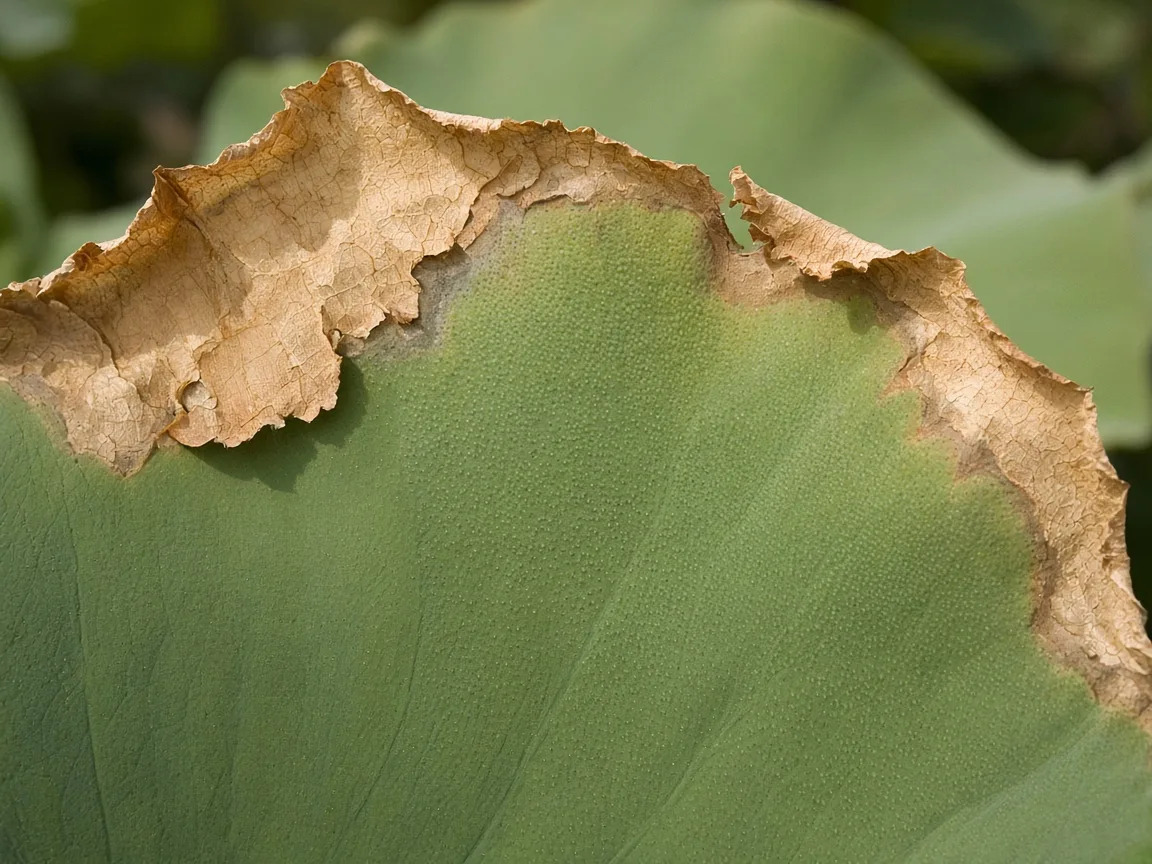
Low humidity on lotus—dry papery margin on a sun-exposed aerial pad; submerged floating leaves may still look normal.
Typical signs:
- Tan or papery outer margins on the tallest aerial leaves during hot, windy afternoons
- Slight upward cupping of round pad edges as margins desiccate
- Faster symptom onset on containers beside reflective paving, walls, or greenhouse glazing
- Floating pads at the water surface still look normal while only aerial leaves crisp
- Fine stippling on upper leaf undersides in the same dry spell—mite overlap
Usually not low humidity:
- Limp drooping of all leaves with low water — underwatering
- White crust at the tub rim plus scorched edges — mineral buildup; see brown tips and flush guidance in watering
- New leaves failing below the surface — overwatering
Submerged roots vs dry air above the water
This split is mandatory for lotus and wrong for almost any terrestrial houseplant.
| Zone | Humidity relevance | What actually matters |
|---|---|---|
| Rhizome in submerged loam | Low—roots are underwater | Water depth, water quality, crown oxygen |
| Floating pad at surface | Moderate—close to evaporating water | Minerals, pests, aging |
| Tall aerial leaf in sun | High—fully exposed to dry wind | Heat, wind, mites, margin scorch |
UF/IFAS describes lotus as a full-sun aquatic grown with submerged soil. Running a room humidifier beside an outdoor tub does not re-wet aerial margins the way topping up the water column does for crown function.
Why lotus shows “low humidity” symptoms
Hot dry air on aerial leaves. NC State lists Nelumbo nucifera as needing full sun in aquatic settings. Standing leaves rise far above the water. When air is hot, dry, and windy, margins desiccate before the petiole can supply water—especially on the highest pads.
Misread underwatering. A dropped waterline causes wilt that owners sometimes attribute to “dry air.” Always mark the waterline before buying humidity gadgets.
Spider mites in dry summers. Colorado State Extension notes dry weather greatly favors spider mites on exposed foliage. Lotus aerial leaves in peak summer match that habitat—see spider mites on lotus.
Indoor or greenhouse spring starts. Conservatory air above a shallow startup tub can be dry while the soil cap stays wet. Symptoms here overlap fungus gnats and surface mold more than true root-zone dryness.
Hard-water mineral stress mimicking scorch. IWGS warns that minerals concentrate when water evaporates from above-ground pots. Crisp margins after repeated hard tap top-ups are often salts, not humidity—flush before humidifying.
Indoor lotus and the humidity myth
Ordinary windows rarely sustain flowering lotus, but growers sometimes overwinter divisions indoors. Low room humidity is still not the primary failure mode—insufficient light and cool water are.
If aerial leaves crisp indoors:
- Move the tub to the brightest available glass after frost danger, or accept that lotus is an outdoor plant per the overview
- Do not let the soil cap dry—indoor heat increases evaporation from the tub surface
- Skip pebble trays under the pot; they do not rehydrate aerial margins meaningfully
How to confirm the cause
- Waterline first — at least 2–4 inches over the soil at all times.
- Which leaves crisp — only the tallest aerial pads point to atmospheric dryness or heat; all leaves limp points to waterline or crown issues.
- Evening recovery test — heat-related cupping often eases overnight; waterline droop does not.
- Mite check — magnify upper leaf undersides for stippling and webbing.
- Mineral rim — chalky deposits at the waterline suggest flush need, not humidity.
- Weather context — record a 95°F+ dry wind day before treating chronic problems.
First fix for lotus
Restore stable water depth and reduce afternoon heat stress on aerial leaves—not room humidity.
- Top up to the marked line so the soil cap stays submerged
- During extreme heat waves, provide temporary afternoon shade for the tub—not permanent shade that weakens the plant
- Rinse upper leaf undersides with a strong water jet if mites are suspected—before any oil spray over open water
Do not mist lotus pads heavily; wet foliage in humid still conditions can invite foliar disease. Do not drain the tub to “balance” humidity.
Step-by-step recovery
If margins keep crisping after depth is stable:
- Flush hard-water tubs — over-fill to dilute minerals per the watering guide
- Treat spider mites if stippling is confirmed — see spider mites
- Relocate the tub a few feet from reflective walls that radiate heat onto aerial leaves
- Hold fertilizer until new aerial leaves open clean per fertilizer
- Trim only fully dead margins by removing the whole stalk above the waterline when more than half the pad is lost
Recovery timeline
- 24–48 hours: Heat wilt and mild margin cupping often ease after cool nights once depth is stable
- 1–2 weeks: New aerial leaves open with clean edges if mites and minerals are managed
- Season-long: Some tan rim on the tallest leaves in peak heat is cosmetic on full-sun lotus
Escalate if crisping hits every new leaf, the tip turns black, or water smells sour—those are crown problems, not humidity.
What not to do
- Run a houseplant humidifier beside an outdoor pond expecting aerial margins to recover
- Mist round lotus leaves every morning like a prayer plant
- Lower water depth to “reduce evaporation”—that causes underwatering
- Diagnose low humidity while the soil cap is exposed
- Ignore mites because “lotus likes sun”—dry air and mites travel together
How to prevent low-humidity stress next season
- Judge health by new growth, not perfect oldest aerial pads
- Flush small tubs in hard-water areas before margins scorch
- Inspect upper foliage weekly in hot dry July–August weather
- Grow lotus outdoors in full sun with realistic expectations for summer margin scorch
- Use the humidity calculator to compare your climate with other plants—not as a pond humidifier prescription