Lotus Fertilizer Guide for Ponds and Containers
Lotus Fertilizer Guide for Ponds and Containers
Lotus Fertilizer Guide for Ponds and Containers
Lotus fertilizer belongs in the soil around the roots, not scattered into open water. For an established true lotus (Nelumbo nucifera), the safest routine is to wait until the plant has several healthy standing leaves, push a slow-release aquatic fertilizer tablet deep into the heavy soil away from the rhizome, and repeat only at the product’s container-volume rate while warm growth continues.
That method suits lotus in a wide watertight tub and lotus grown in a solid pot submerged in a pond. It does not describe aquarium “tiger lotus,” which is a Nymphaea water lily, and it is not a houseplant feeding schedule.
Quick answer: how to fertilize lotus
Use tablets or spikes labeled for pond plants or water lilies/lotus. Start after several aerial leaves stand above the water, not when a newly planted rhizome has only a tiny floating leaf. Bury each tablet fully in the loam near the outer root zone, at least a hand-width from the brittle growing tip, and close the hole so nutrients do not dissolve directly into the water.
Follow the fertilizer label’s rate for the diameter or soil volume of the lotus container. A practical interval for many labeled aquatic products is about every three to four weeks during vigorous growth, but the label takes priority because tablet weights and analyses differ. Stop if growth is weak from cold, transplant damage, insufficient sun, or impending dormancy; fertilizer cannot correct those conditions.
Confirm that you are feeding true lotus
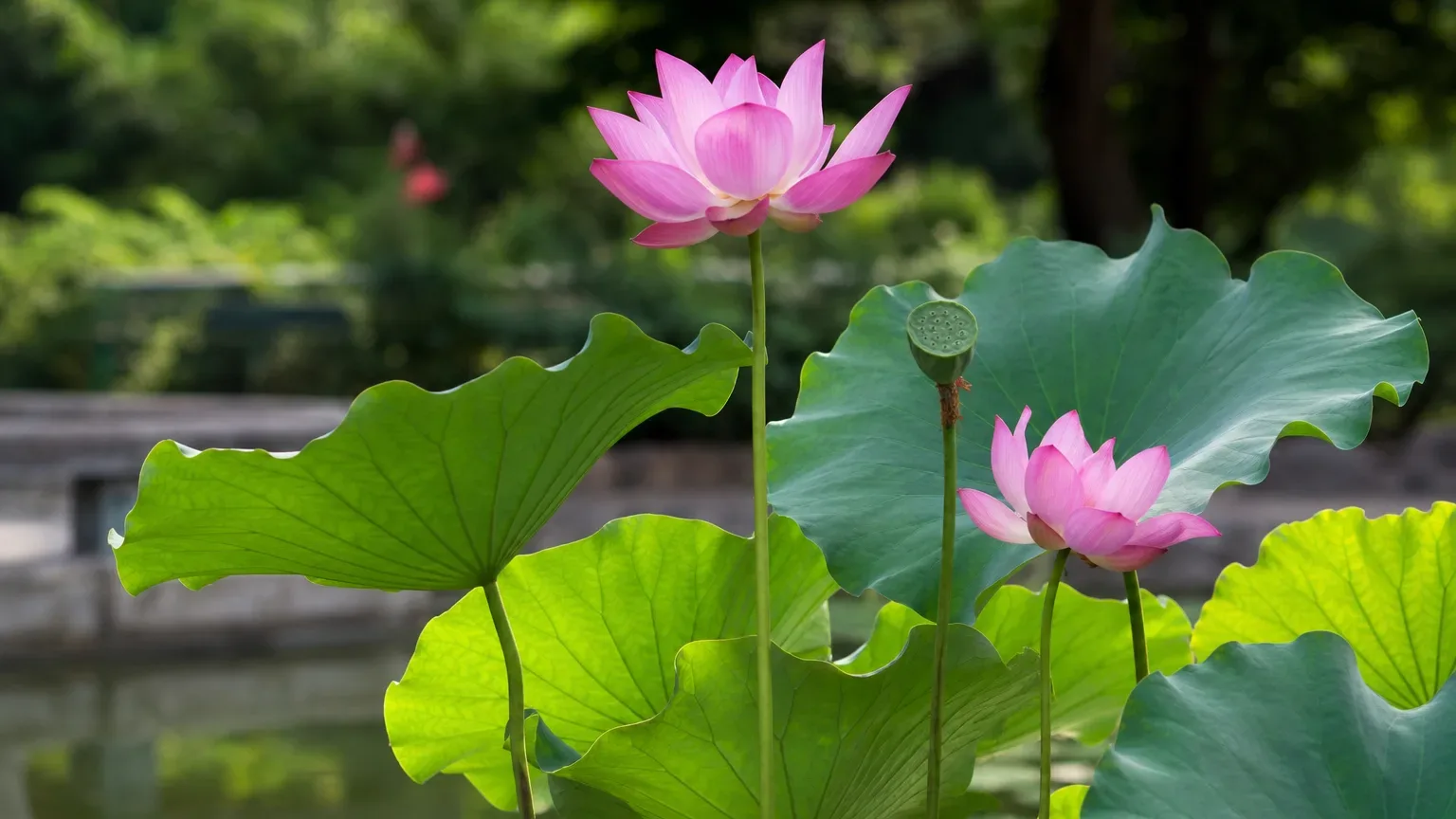
True sacred or Indian lotus is Nelumbo nucifera, a rhizomatous aquatic perennial in the Nelumbonaceae. The RHS profile for Nelumbo nucifera describes rounded leaves and flowers held above the water, while the Missouri Botanical Garden’s lotus collection explains a simple visual distinction: a lotus leaf stalk joins near the center of the leaf, and the flower develops the familiar showerhead-like receptacle.
Water lilies belong to Nymphaea, not Nelumbo. Many aquatic fertilizer tablets are labeled for both, so the product may still be usable, but growth stage and placement advice should follow lotus biology. This guide also excludes the red aquarium plant sold as “tiger lotus,” which remains submerged or sends floating lily pads and is managed as an aquarium water lily.
What fertilizer works for Nelumbo nucifera
Choose a complete, controlled-release aquatic fertilizer that supplies nitrogen, phosphorus, and potassium and is designed to be inserted into submerged soil. Lotus produces a large seasonal canopy from a confined mass of loam, so container nutrients can become limiting during active growth. The U.S. National Park Service describes lotus as a mud-rooted aquatic plant of nutrient-rich conditions, but “nutrient-rich” does not mean pouring soluble feed into pond water.
UF/IFAS gives a species-specific establishment method that incorporates cow manure and an equivalent amount of granular 10-10-10 into the media before the planted pot is submerged. Its sacred lotus culture sheet is evidence that balanced fertilizer can support lotus; it is not a reason to top-dress an occupied pond with loose 10-10-10. For an already planted home container, buried aquatic tablets give better placement control.
Aquatic tablets versus loose fertilizer
Aquatic tablets keep the nutrient source close to roots and reduce immediate contact with open water when buried correctly. Loose granules dropped onto the soil cap can dissolve at the water–soil interface, where nutrients are less controlled and may become available to algae before lotus roots capture them.
Avoid liquid houseplant feed, lawn fertilizer, manure tea, and surface-scattered granules in a stocked pond. If fish or other animals share the water, use only a product explicitly labeled for that setting and follow all restrictions. Do not improvise a dose from a terrestrial pot-plant label.
Does lotus need a high-phosphorus formula?
Lotus needs phosphorus, but a dramatic “bloom booster” ratio is not a substitute for sun, warm water, an uncrowded rhizome, and mature leaves. The NC State Extension profile places N. nucifera in full sun and shallow-water culture; a shaded lotus often makes weak foliage or fails to flower regardless of extra phosphorus.
A balanced or moderately bloom-oriented aquatic formula is reasonable when its label includes lotus. Do not chase flower production by doubling the dose. Research on container-grown Asian and American lotus found that container soil volume affected growth and flowering responses, which is a useful reminder that nutrition and root space interact.
When lotus feeding should begin
Do not fertilize a newly set rhizome immediately. The fresh rhizome already contains stored reserves, while its growing tip is brittle and vulnerable to damage. Wait until the plant has produced several sound aerial leaves—often called standing leaves—because that shows that roots and shoots are established enough to use added nutrients.
Floating juvenile leaves alone are a reason to wait, especially after shipping or division. The National Park Service lotus life-cycle account describes floating leaves preceding the raised canopy. Feed according to that developmental sequence rather than a fixed number of days after planting.
Timing for India and other warm climates
In much of India, lotus growth may begin well before temperate “summer,” and in frost-free areas the active period can be long. Start feeding when warm, sunny conditions produce multiple aerial leaves. During very hot pre-monsoon weather, check water depth and leaf condition before feeding; an evaporating tub or heat-stressed plant needs stable water first.
Heavy monsoon cloud, repeated storm disturbance, or a sudden drop in active leaf production can justify delaying the next dose. Resume only when the plant is extending healthy leaves. Calendar-based monthly feeding is less reliable than pairing the label interval with visible active growth.
When to reduce and stop feeding
Stop feeding as the plant naturally slows, leaves age, or cool weather approaches. Late nitrogen can encourage soft foliage when the plant should be moving reserves into its rhizome. In climates with a clear winter dormancy, no fertilizer is needed while the rhizome rests.
Tropical warmth does not justify continuous feeding if the lotus has stopped making robust leaves. A crowded container may also slow despite adequate nutrients; forcing it with more fertilizer can worsen water quality without restoring vigor. Use the Lotus repotting guide when rhizomes have filled the pot.
How to apply fertilizer without injuring the rhizome
First identify where the newest leaves emerge. The growing tip and advancing rhizome usually run near the soil surface, so do not spear blindly beside them. Choose a point near the container wall and away from fresh shoots, press the tablet several centimetres into the loam, then pinch the soil and sand or gravel cap closed over the hole.
Apply with clean hands or a narrow planting tool, keeping fertilizer out of cuts and away from an exposed rhizome. If you cannot locate the rhizome safely, skip the dose until you can see its direction. A missed feeding is less damaging than a punctured growing tip.
Fertilizing a lotus in a watertight container
For a lotus grown directly in a no-hole tub, briefly lower the water level if that helps you reach the soil without stirring it. Insert the tablet at the outer edge, reseal the cap, and refill gently. Keep the crown and growing tip positioned as described in the Lotus soil guide, because fertilizer cannot rescue a buried or rotting tip.
Large tubs contain more soil and root mass than bowl-lotus containers, but they do not automatically need an arbitrary extra handful of fertilizer. Base the number of tablets on the label’s pot-diameter or soil-volume chart. Dwarf and bowl cultivars need proportionally smaller doses even when their leaves look vigorous.
Fertilizing a lotus pot submerged in a pond
Lift a movable pot to a shallow shelf if you can do so without bending leaves or breaking stems. Insert and seal the tablet, then return the pot to its normal depth slowly so the soil remains capped. UF/IFAS recommends containerizing lotus because it spreads aggressively once rooted into pond soil; its container guidance also keeps feeding and rhizome management localized.
Do not broadcast fertilizer across a natural or earth-bottom pond. Sacred lotus can escape cultivation, and the USGS sacred lotus profile documents it as a nonindigenous aquatic species in parts of North America. Confined culture lets you remove spent plants and prevents nutrients from becoming a whole-pond treatment.
How much and how often to feed
There is no reliable universal tablet count because products vary in tablet size, nutrient analysis, and release rate. Use the label rate for the container, then choose the lowest labeled rate for a recently established, dwarf, heat-stressed, or weak plant. Increase only at a later labeled interval if new growth remains healthy and the container is clearly supporting a larger canopy.
For an established lotus in strong sun, checking every three to four weeks during active growth is a useful routine: assess growth, water condition, and the label interval, then feed only if all three support it. Never stack missed doses. If you skipped a month, resume with one normal application rather than doubling.
Container volume matters as much as leaf count. A peer-reviewed study of Nelumbo cultivars found that soil level altered electrical conductivity, plant growth, and nutrient content. Treat a cramped bowl and a wide 60-litre tub as different root environments even when both hold one rhizome.
Diagnosing nutrient trouble
Before adding fertilizer, check the whole growing system. Lotus requires full sun, warm active conditions, stable submerged soil, and room for horizontal rhizomes. The RHS recommends full sun and loam, while UF/IFAS recommends a shallow, wide container and controlled water depth. A nutrient dose cannot correct deep shade, cold water, a buried tip, or a pot lowered too deeply before leaves can reach the surface.
Use new growth as evidence. One old yellow leaf is normal aging; a pattern across successive young leaves matters more. Make only one major correction at a time, then watch the next leaf cycle.
Signs that feeding is too heavy
Suspect excess fertilizer when symptoms begin soon after an application: unusually soft, oversized foliage; scorched-looking margins without a water-level change; abrupt water clouding; or a strong algae response. Excess nitrogen can also favour leaves over flowers, though shade and crowding produce a similar leafy, flowerless plant.
Stop feeding, remove any exposed tablet you can recover without damaging roots, and refresh part of the water if the container is small and unstocked. In a fish pond, follow the product label and seek pond-specific advice before making large water changes. Do not add a second product to “balance” the first.
Signs that lotus may need nutrients
A nutrient-limited lotus may make successively smaller or paler new leaves and lose vigour while sun, warmth, water depth, and root space remain suitable. Poor flowering alone is weak evidence: the plant may simply be immature, shaded, recently divided, crowded, or outside its warm flowering period.
If conditions are sound and the previous dose interval has elapsed, apply one normal label-rate dose and judge the response in subsequent growth. Also review the Lotus light guide and Lotus watering guide before deciding that yellowing or stalled leaves are a feeding problem.
When to use this page vs other Lotus guides
Use this page for product type, feeding stage, application placement, dose logic, and nutrient troubleshooting. Use the Lotus overview to confirm that a sunny outdoor aquatic setup suits your cultivar, the soil guide for heavy loam and soil caps, and the watering guide for water depth and evaporation.
If the pot is crowded or the rhizome needs renewal, move to Lotus repotting. If you are starting new plants, the Lotus propagation guide covers rhizome division and seed. Feeding is only one part of the system and should follow—not replace—correct establishment.
Related Lotus guides
- Lotus care overview — identity, placement, and the complete seasonal routine.
- Lotus light guide — sun requirements and flowerless growth caused by shade.
- Lotus watering guide — safe depth for new and established leaves.
- Lotus soil guide — submerged loam, soil caps, and mixes that stay in place.
- Lotus repotting guide — divide a crowded rhizome before blaming nutrition.
Conclusion
Feed true lotus only when it is established and actively growing. Use a labeled slow-release aquatic tablet, bury it in heavy soil away from the rhizome, match the dose to container volume, and reassess at the label interval rather than feeding automatically.
The best first action for a weak or flowerless lotus is not always fertilizer. Confirm full sun, warm water, correct depth, sound new leaves, and adequate rhizome space first. When those conditions are right, conservative root-zone feeding supports the canopy without turning the surrounding water into the fertilizer target.