Best Soil for Lotus in Ponds and Containers
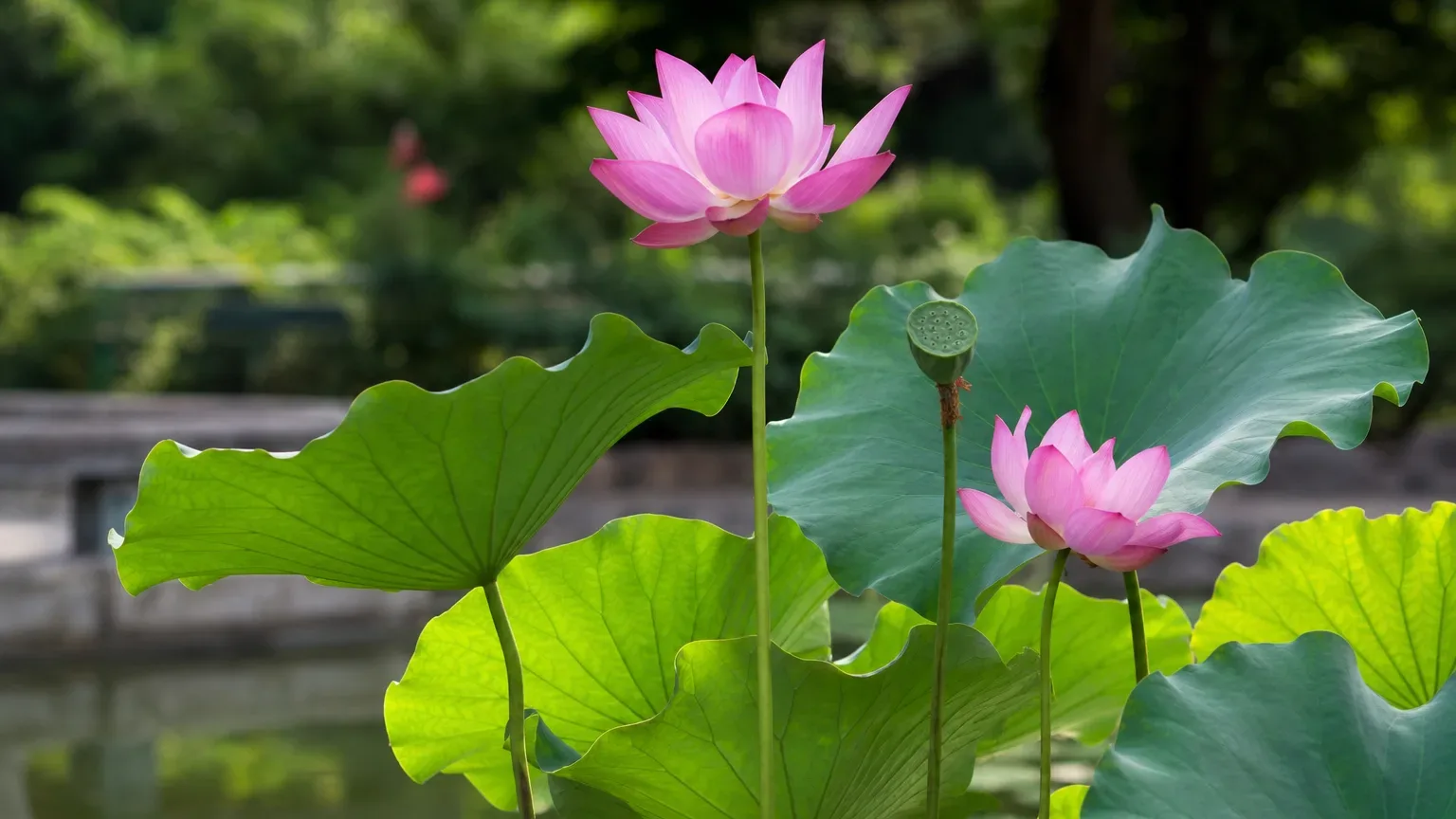
Best Soil for Lotus in Ponds and Containers
Best Soil for Lotus in Ponds and Containers
True lotus, Nelumbo nucifera, does not want a free-draining houseplant substrate. It is a rhizomatous aquatic plant whose roots and running rhizomes occupy submerged mud. In a pond pot or watertight tub, the best lotus soil is therefore dense, mineral-rich loam that holds together underwater while still being soft enough for new roots and rhizomes to enter.
That changes the usual container-gardening priorities. Perlite, bark, coco chips, and fluffy peat are useful where air must move rapidly through a drained pot, but they can float, cloud the water, and release organic particles in a lotus tub. Build the planting layer from clean clay loam or silty loam, use organic matter sparingly, and keep the pointed growing tip exposed when you set the rhizome.
Quick answer: use dense mineral loam, not houseplant mix
For sacred lotus, use heavy garden loam or clay loam with little visible organic debris. NC State Extension describes Nelumbo nucifera as growing best in organically rich loam and mucky submerged soil, while the Royal Horticultural Society recommends a loam-based aquatic planting medium. These descriptions point to a cohesive mineral soil, not a bag of lightweight indoor potting mix.
If your local soil is reasonably clean and forms a firm ball when damp, it may be suitable after stones, roots, and rubbish are removed. If it is almost pure sticky clay, blend in some heavier loam or coarse washed sand so it does not set into a brick. If it is loose beach-like sand, it lacks the fine particles and nutrient-holding capacity needed for a vigorous lotus and should not be the main medium.
Understand the submerged lotus root zone
Lotus is an emergent aquatic perennial: its roots remain in saturated sediment while leaves and flowers rise through and above the water. Missouri Botanical Garden places sacred lotus in muddy soil and still water, and Clemson Extension groups Asian lotus with deep-rooted aquatics whose foliage reaches the surface. The container soil is meant to imitate pond sediment while preventing an energetic rhizome from escaping into the pond floor.
“Drainage” is not the goal inside that planting layer. There should be no drainage holes carrying soil and fertilizer out of a standalone lotus tub, and a pot submerged in a larger pond remains saturated anyway. What matters is a stable substrate, sensible nutrient loading, clean water above it, and a container wide enough for horizontal rhizome travel.
Why the rhizome needs stable mud
The lotus rhizome grows sideways near the upper part of the soil. New roots anchor into the medium, while the fragile pointed growing tip advances across or just under the surface. UF/IFAS recommends a shallow, wide container, placing the rhizome near the edge so it can grow horizontally across the pot.
Loose media can let the rhizome shift or rise when water is added. Hard, compacted clay can make placement difficult and may pinch the growing tip if forced around it. Aim for mud that accepts a finger with moderate pressure, supports the rhizome without weights on its tip, and does not erupt into a cloud when water is poured gently over the surface.
Why ordinary potting mix fails underwater
Most terrestrial potting mixes are engineered to be light and porous. Bark, peat, coir, perlite, and vermiculite create air spaces in a drained pot; underwater, the light fractions may float and the fine organic fraction can discolor or foul a small tub. Illinois Extension specifically warns that potting-soil ingredients can float in a water-garden container and recommends heavy clay soil for rooted aquatic plants.
Do not try to fix a fluffy mix by burying it under a thick layer of stones. The lightweight material can still escape around the edges, and a deep rock layer makes later division harder. If you already filled the pot and the surface is lifting, remove the rhizome carefully, replace the medium, and restart rather than repeatedly skimming debris.
Packaged “garden soil” also needs inspection. Some bags contain mostly composted forest products and behave like potting mix despite the label. Read the ingredients and wet a sample in a jar; suitable mineral soil sinks, settles into a coherent layer, and does not leave a raft of bark and pale particles.
The ideal lotus media texture
The best texture is usually clay loam to silty clay loam: enough fine mineral material to remain cohesive, with enough silt or sand to stay workable. A squeezed handful should hold its shape but break when pressed. Pure clay that becomes a polished, impenetrable lump is less convenient, while gritty soil that falls apart immediately is too sandy to use alone.
Texture matters more than a precise recipe. Local alluvial loam, red loam with clay, and cultivated field soil can all work if they are clean and not recently treated. Avoid soil collected from roadsides, industrial ground, pesticide-treated fields, sewage channels, or unknown pond bottoms because contaminants become enclosed in the water garden.
Choosing usable local soil in India
Start with subsoil or ordinary mineral garden soil rather than the compost-rich top few centimetres. Sieve out stones, roots, plastic, and fresh plant debris. Red soils vary widely across India, so judge the actual handful: some are useful clay loams, while strongly gravelly lateritic material may need a finer loam blended through it.
Use a simple jar test before filling a large tub. Shake one part soil with several parts water, let it settle overnight, and look for a substantial fine mineral layer with little floating debris. Then wet another sample and squeeze it; a ball that holds but crumbles under thumb pressure is a practical starting point. The test does not provide a laboratory texture class, but it catches the two common failures—nearly pure sand and heavily organic bagged mix.
A practical DIY lotus medium
For most home growers, screened heavy garden loam can be used by itself. Where the soil is extremely dense, mix in a modest amount of coarse washed river sand; where it is lean and pale, blend through a small amount of mature, fully decomposed compost. Do not add perlite, bark, coco chips, fresh manure, leaf mould, or unrotted kitchen compost.
Prepare the medium damp so dry dust does not billow into the water. Fill a wide solid container with enough soil to support the cultivar, leaving headroom for water. Firm it by hand only enough to remove large air pockets; pounding it hard creates an unnecessary clay block. For container setup and later division timing, use the Lotus repotting guide.
When commercial aquatic soil makes sense
A labeled aquatic planting loam can help when local soil is contaminated, almost pure sand, or unavailable on a paved balcony. Choose a dense mineral product intended for pond baskets, not lightweight aquatic pellets designed to be poured loose into an aquarium. True lotus is not an aquarium foreground plant, and ordinary aquarium gravel alone does not replace a nutrient-holding soil layer.
Check the label for added fertilizer. A rich pre-fertilized medium can release nutrients before a newly planted rhizome has enough leaves to use them. If the product already contains feed, delay extra tablets and follow the manufacturer’s aquatic-plant rate rather than combining several feeding systems.
How much organic matter should lotus soil contain?
Lotus is a vigorous feeder once established, but “fertile” does not mean filling the tub with compost or manure. UF/IFAS describes enriching garden soil with one-fifth well-decomposed cow manure, which provides an upper reference for a thoroughly matured amendment rather than permission to use fresh dung. In a small warm container, excessive decomposing material can consume oxygen, smell sour, release nutrients into the water, and encourage algae.
A conservative home mixture is safer: use mostly mineral loam and add only a small, evenly blended amount of mature compost when the base soil is poor. Skip fresh manure entirely. Once the lotus has several standing leaves, buried aquatic tablets offer more controlled nutrition than repeatedly enriching the whole substrate; see the Lotus fertilizer guide for timing.
Lotus soil pH: useful, but secondary
Sacred lotus tolerates acidic submerged soil according to the UF/IFAS species profile, while many horticultural references describe neutral loam. That is not a reason to chase an exact number with household acids, lime, or random pond chemicals. For most growers, clean soil with a roughly mildly acidic to neutral reaction is adequate, and stable water conditions matter more than forcing a textbook pH.
Test only when growth remains poor despite strong sun, warm weather, appropriate depth, and a healthy rhizome, or when local water is unusually alkaline or saline. Treat the soil and water as one system. Changing pH abruptly in a tub can affect aquatic life and nutrient availability, so use a measured pond-safe correction only after confirming a real problem.
Match the media to the container
A wide, solid, round tub suits the horizontal running habit better than a narrow flowerpot. It also reduces the chance that a growing tip jams into a corner. Container confinement is important because lotus can spread aggressively; Clemson Extension advises growing lotus in pots rather than allowing it to establish freely in natural ponds.
Do not use a fabric grow bag, coconut-lined basket, or highly perforated nursery pot for an unlined patio tub. These let fine soil and nutrients escape. In a larger lined pond, a purpose-made aquatic basket may work when the openings are fine and the soil surface is capped, but a solid no-hole container gives the cleanest control for Nelumbo nucifera.
Plant the rhizome without burying the growing tip
Lay the rhizome horizontally near the soil surface, usually with the cut or older end toward the container edge and the pointed growing tip facing along the open curve of the pot. Press the older section gently into the mud, but leave the tip exposed. Deep burial can damage or suffocate the tender new growth, and placing a stone directly on it can snap it.
Add water slowly over a saucer, plastic sheet, or your hand so the stream does not excavate the soil. Begin with shallow water above the surface while new leaves extend, then adjust for the cultivar as growth strengthens. Water-depth decisions belong in the Lotus watering guide, because full-size and bowl lotus should not be treated identically.
Top-dress without building a gravel trap
A thin cap of washed coarse sand or fine rounded gravel can hold the surface during filling and discourage fish from digging. UF/IFAS suggests a 1–2 inch sand or gravel layer, but home tubs without fish often need less. Keep the cap shallow enough that emerging roots can enter the soil and future rhizome division remains manageable.
Rinse the material until runoff is clear. Avoid sharp aggregate around the brittle tip, limestone chips where they may raise alkalinity, and decorative glass with cutting edges. A top-dressing stabilizes good soil; it cannot turn bark-based potting mix into suitable lotus media.
Diagnose lotus soil problems
Floating bark, perlite, or a persistent brown cloud means the medium is too light or the surface was disturbed. Remove loose debris, and replace the substrate if it continues rising. Black bubbles, a sewage-like smell, or softening rhizome tissue suggest overloaded organic matter or decaying material; isolate the plant, inspect the rhizome, and discard foul media rather than masking the smell.
A hard, cracked block when the tub is drained points to nearly pure clay or severe compaction. At the next safe division window, replace or amend it with workable heavy loam. Pale leaves despite warm full sun may reflect depleted nutrition rather than bad texture, especially after a season of vigorous growth. Confirm the other care factors before adding fertilizer.
If leaves fail to reach the surface, do not automatically blame soil. Excessive initial water depth, a damaged growing tip, cool weather, or insufficient light can produce similar symptoms. Check the Lotus light guide and the plant’s Lotus overview before dismantling a clean, stable pot.
When to use this page vs other Lotus guides
Use this guide to choose the planting medium, judge local garden soil, control floating debris, and position the rhizome at the soil surface. Use the watering guide for waterline changes and top-ups, the fertilizer guide for tablet timing, and the repotting guide when rhizomes crowd the container.
If the soil is stable but the plant remains weak, investigate sun and temperature before remixing the pot. If you are starting new plants, the Lotus propagation guide covers rhizome division and seed-grown lotus. Keeping these decisions separate prevents a depth or light problem from being “fixed” with richer mud.
Related Lotus guides
- Lotus care overview — the full growing system and cultivar-scale considerations.
- Lotus watering — initial submergence, mature water depth, and evaporation.
- Lotus fertilizer — when established leaves can support feeding.
- Lotus repotting — replacing exhausted media and managing circling rhizomes.
- Lotus propagation — handling divisions without breaking the growing tip.
- Lotus pruning — removing old stems without sending water down hollow stalks.
Conclusion
The best lotus soil is not a clever houseplant recipe. It is clean, dense, workable mineral loam kept continuously submerged, with organic matter used cautiously and a thin washed cap only where surface stability requires it. Choose the soil by how it behaves in water, not by a bag’s marketing label.
Once the medium stays put, position the Nelumbo nucifera rhizome horizontally and leave its growing tip uncovered. Pair that stable root zone with cultivar-appropriate water depth, full sun, warmth, and controlled feeding; those conditions allow true lotus to build strong leaves and flowers without turning the tub into a floating compost bin.