Underwatering on Lotus: Causes, Checks & Fixes
Quick answer
On sacred lotus, underwatering almost always means the waterline fell below the soil cap or a rhizome dried during storage or repotting—not a houseplant dry-down cycle. First step: refill gently until 5–10 cm (2–4 in) of water covers the soil and shield the tub from wind while the level stabilizes.
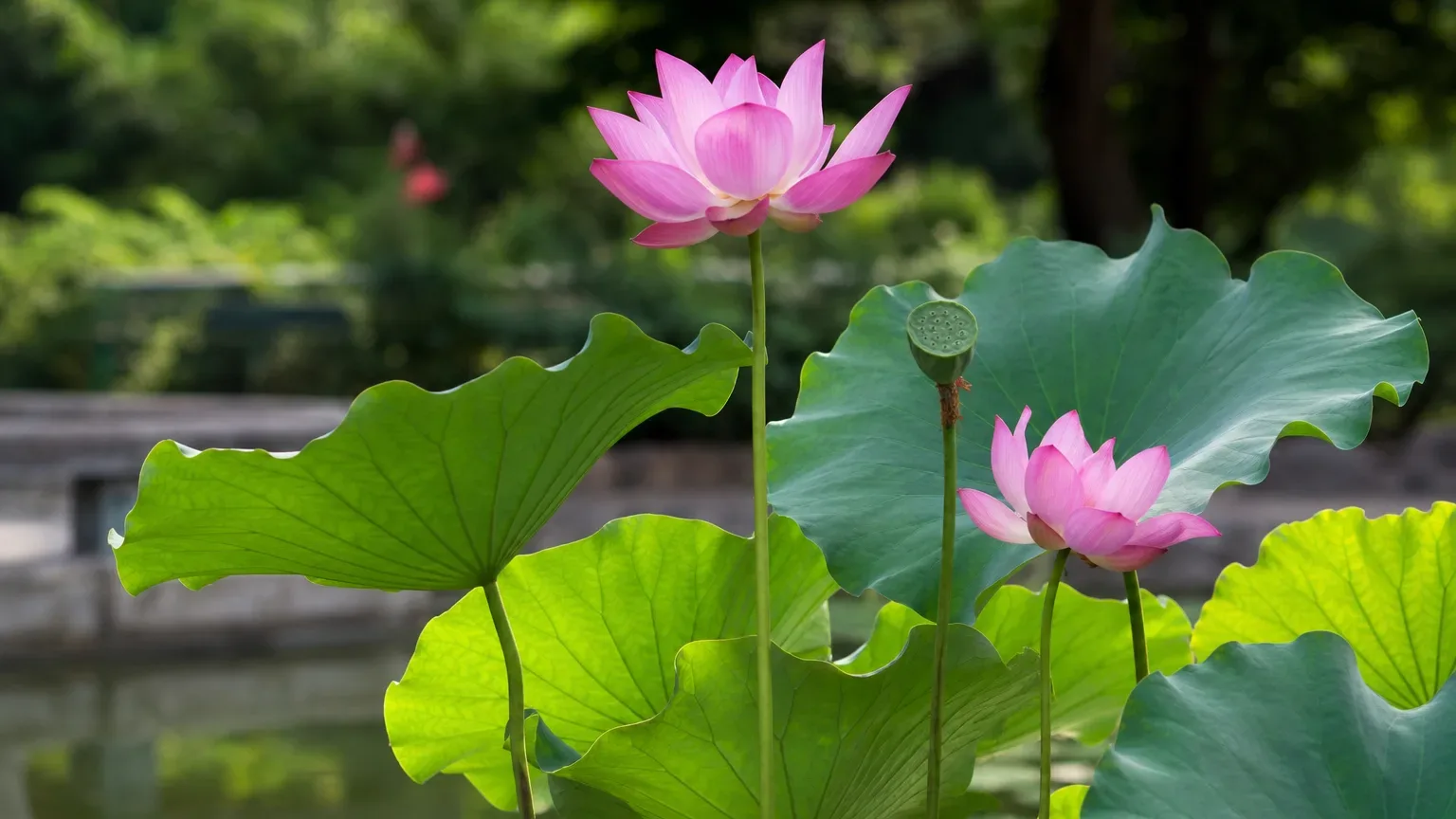
Underwatering on Lotus: Causes, Checks & Fixes
This guide covers underwatering on Lotus. See also the general Underwatering guide, watering, and light pages for this plant.
Underwatering on Lotus: Causes, Checks & Fixes
Quick answer
Lotus always needs its heavy loam submerged—so underwatering on sacred lotus (Nelumbo nucifera) is not about letting potting mix dry like a houseplant. It means the waterline dropped low enough to expose the soil cap, evaporation outpaced your top-ups in a hot patio tub, or a rhizome dried out during division, shipping, or frost-free storage.
For how chronic water deficit stresses terrestrial plants in general, see our underwatering hub. On lotus, judge the depth of water above the soil and whether the crown stayed wet—not finger-dry mix.
IWGS recommends keeping at least 2–4 inches of water over the soil at all times, and UF/IFAS starts newly planted lotus in about 6 inches of water until growth begins. Those minimums only work if you maintain them through evaporation.
First step: refill gently along the container wall until about 5–10 cm (2–4 in) of water covers the soil, then shade the tub from drying wind until the level holds.
Why lotus dries out despite living in water
Lotus is an emergent aquatic whose rhizomes root in submerged mud while leaves and flowers rise above the surface. The plant cannot tolerate an exposed soil cap any more than a fern can tolerate bone-dry peat—but the failure mode looks different because the problem is water-column depth, not calendar watering.
Lotus-specific triggers:
- Missed evaporation top-ups — Above-ground patio tubs lose water fast in sun and wind. IWGS notes that when water evaporates, minerals stay behind—but the immediate crisis is the dropping line, not chemistry.
- Vacation or irregular checks — Large ponds buffer evaporation; a half-barrel on paving does not. A few hot days without topping up can expose the sand cap.
- Rhizome left dry during division or shipping — RHS warns that lotus rhizomes resent disturbance and divisions should be handled carefully; tubers left on a bench dry within hours.
- Winter storage too dry — In cold climates, lifted containers are overwintered frost-free with rhizomes kept just moist. Bone-dry dormant tissue fails to resprout in spring.
- Shallow winter water that freezes away — Missouri Botanical Garden notes that containers in very shallow water (less than 6 inches) should be moved deeper or indoors so crowns do not freeze dry at the surface.
- Accidental draining — Overflow pipes set too low, tipping tubs, or “cleaning” that bails water below the soil line.
- Wrong soil that cracks when exposed — Light floating mixes shift when the cap dries; see the Lotus soil guide for dense loam that stays put underwater.
Underwatering is common on small tubs and after human handling—not because lotus is drought-tolerant. UF/IFAS lists no drought tolerance for sacred lotus; it grows submerged in water.
What underwatering looks like on lotus
On lotus, underwatering shows up at the waterline and leaf edges, not as lightweight dry potting mix. Watch for a visible soil or sand cap above the water, wilted aerial leaves in afternoon heat, crisp brown margins on otherwise green foliage, and new shoots that stall just as the tub ran low. A rhizome left dry may show shriveled tan tissue at the growing tip before any leaf appears.
Typical signs:
- Exposed mud or sand at the container edge while older leaves still look green
- Aerial leaves cupping or wilting on hot days after the waterline dropped
- Crisp, brittle leaf margins—especially on the newest foliage
- Stalled coin-stage floating leaves when evaporation outpaced refills
- Shriveled or cracked rhizome tissue after division left on a dry surface
- Spring failure to sprout from a dormant tuber stored too dry over winter
Not lotus underwatering:
- New leaves repeatedly failing below the surface in a full tub — see overwatering on lotus
- Soft black rhizome with sour smell — see root rot on lotus
- Weak pale leaves on long petioles in shade — see not enough light on lotus
- One lower yellow leaf on vigorous growth — often normal; see yellow leaves on lotus
Check the waterline, not whether the soil feels dry
Terrestrial underwatering means dry mix several centimetres down. Lotus requires wet loam year-round. Pushing a moisture meter into the pot answers the wrong question.
Mark the normal waterline on the tub with tape or a waterproof pencil—the same method described in the Lotus watering guide. In hot or windy weather, check daily. Top up before the soil cap appears, not after leaves crisp. The diagnostic measurement is depth from the soil surface inside the pot to the water surface, not depth from the pond bottom.
If the line dropped recently, underwatering is likely. If the tub stayed full but leaves wilt, look at wilting on lotus for depth stress, heat, or physical damage before assuming drought.
Patio tub evaporation and the exposed soil cap
Small above-ground containers behave differently from in-ground ponds. Every side catches sun and wind, so evaporation can remove several centimetres of water per day during peak summer. Dark tubs heat further, increasing both evaporation and leaf stress.
When the cap dries, two problems stack:
- Rhizome crown exposure — The brittle growing tip sits at the soil surface under shallow water. Exposed mud means that tip lost its protective water layer.
- Cap erosion on refill — Pouring a hose onto cracked dry mud clouds the water and can bury or dislodge the tip. Refill slowly down the wall in stages.
IWGS recommends occasional overflow flushing in hard-water tubs to dilute minerals—but that is separate from the emergency of a visible soil cap. Restore depth first; manage chemistry after growth stabilizes.
Dormant rhizome drying during winter lift or division
Lotus goes dormant in winter with overwintering tubers. In zones where containers must be lifted, RHS advises overwintering frost-free with rhizomes kept just moist—not submerged in a full tub, but never bone dry either.
Spring underwatering failures often trace to:
- Dormant rhizomes shriveling in a garage over winter
- Divided sections left on newspaper too long before replanting
- Mail-order tubers drying in transit
RHS propagation guidance plants rootstock horizontally just below the soil surface and barely submerges until growth starts. A dried tip may not sprout; firm tissue with an intact growing point can still recover once submerged.
After spring division, replant the same day. Soak shriveled-but-firm sections in shallow clean water for a few hours before setting them in loam—do not leave tubers on a bench while you “get to it tomorrow.”
How to confirm the cause
- Measure depth from the soil surface — Is water absent or only a few millimetres above the cap?
- Inspect the soil cap — Is mud, sand, or loam visibly exposed at the edge or center?
- Review the last week — Heat wave, travel, tipped container, or aggressive bailing?
- Check the growing tip — Firm and pale green under shallow water, or shriveled and brown after drying?
- Watch the newest leaf — Wilting aerial foliage in a low tub differs from leaves that never reach the surface in a deep tub (overwatering).
- Smell the rhizome — Dry stress is firm and tan; sour softness suggests rot instead of simple drought.
- Cross-check storage history — Was a lifted pot left too dry all winter?
Confirmed underwatering requires a dropped waterline or dried rhizome handling matching visible stress—not merely “I have not watered lately” in the houseplant sense.
First fix for lotus
Refill gently until about 5–10 cm (2–4 in) of water covers the soil.
Pour slowly down the container wall or over a saucer so the sand cap does not erode. If the tub ran very low in hot weather, refill in two stages an hour apart rather than blasting dry cracked mud. Move the container to afternoon shade or wind shelter until the level holds steady for several days.
Then:
- Mark the restored waterline for daily checks.
- Remove only loose surface debris—not living leaves you hope will recover.
- Stop fertilizer until several leaves open normally at the surface.
- Wait one to two weeks for the next leaf to confirm the line is stable.
Do not respond by draining the tub “to freshen it”—that worsens exposure. Do not sink the pot deeper to “make up for lost time”; depth mistakes belong on the overwatering page. Do not repot and refill on the same day unless the rhizome is physically out of the container already.
Step-by-step recovery
- Restore minimum depth at the shallow-start mark from the Lotus watering guide.
- Shield from evaporation — partial shade, wind break, or grouping tubs during heat waves.
- Soak dry divisions — firm shriveled rhizomes in shallow water for a few hours before replanting horizontally with the tip exposed.
- Trim only above water — cut damaged aerial stems above the surface; never submerge fresh cuts (IWGS stem guidance).
- Deepen gradually only after three or more leaves open reliably—never jump to maximum depth to “compensate” for drought.
- Rule out rot if tissue softens after refilling — see root rot on lotus.
Recovery timeline
Mild evaporation stress with a firm rhizome: aerial leaves firm up within days once depth is restored, and new floating leaves in one to three weeks when water is warm. IWGS lists 75°F for at least three summer months as ideal for strong growth—cool water slows recovery even after refilling.
Rhizome that dried significantly: two to six weeks before steady new shoots if the growing tip survived. Crisp leaf margins do not green up—success means clean new growth. Dead dry tips do not resprout; salvage firm sections with intact eyes via Lotus propagation.
Lookalike symptoms on lotus
| What you see | More likely cause | Where to read |
|---|---|---|
| Leaves failing below surface in a full tub | Too much depth too soon | Overwatering on lotus |
| Soft black rhizome, sour smell | Anaerobic rot / foul water | Root rot on lotus |
| Wilting in full sun with stable depth | Heat, depth change, or stalk damage | Wilting on lotus |
| One old yellow leaf, firm tip | Normal leaf aging | Yellow leaves on lotus |
| Weak pale leaves, long petioles in shade | Low light | Not enough light on lotus |
| No spring sprout from dry stored tuber | Winter desiccation | Lotus repotting |
What not to do
Do not use a houseplant dry-down rule or moisture meter as your main check. Do not hose blast dry mud in the center of the pot. Do not fertilize a drought-stressed rhizome to “push growth.” Do not lower the container deeper thinking more water equals more recovery—that is the opposite fix. Do not leave divided rhizomes out overnight. Do not confuse mineral crust at the waterline (from repeated top-ups without overflow) with underwatering—crust can coexist with adequate depth; see the Lotus watering guide for flushing.
How to prevent underwatering next time
Treat patio tubs like open evaporating pans, not self-watering pots. Mark the line, check daily in summer, and top up before mud shows. Group containers or use partial shade on the hottest afternoons if evaporation constantly outpaces you.
When overwintering lifted pots, keep rhizomes just moist in frost-free storage—never desiccated, never waterlogged in a sealed bag. Replant divisions immediately in spring.
Match routine depth to cultivar: IWGS keeps dwarf lotus in 2–12 inches of water and standard lotus deeper only after strong growth. Beginners often underwater small tubs while assuming “aquatic plants take care of themselves.”
Full sun and warm water help leaves recover faster once depth is stable—see the Lotus light guide for placement that does not sacrifice evaporation management.
When to worry
Urgent when the soil cap has been exposed more than a day in heat, the growing tip is shriveled or brown, or refilling does not produce new shoots within three weeks in warm water. If the rhizome is mushy and sour, water alone will not fix it—trim to firm tissue or discard.
A lotus that repeatedly runs dry in the same small tub needs a larger water volume, more frequent checks, or an automatic top-up—not a bigger fertilizer dose.
When to use this page vs other Lotus guides
- Lotus watering guide — Routine depth, top-ups, evaporation, and water quality before assuming underwatering.
- Overwatering on lotus — Stalled submerged leaves and depth stress when the tub is full.
- Root rot on lotus — Black soft rhizome decay after foul or stagnant conditions.
- Wilting on lotus — Leaf collapse when depth looks correct but heat, damage, or stalk issues are involved.
- Lotus problems hub — Browse all lotus symptom guides.
Related Lotus guides
- Lotus overview
- Lotus watering
- Lotus soil
- Lotus light
- Lotus repotting
- Lotus propagation
- Overwatering on lotus
- Root rot on lotus
- Yellow leaves on lotus
Related tool
Use the Plant Watering Calculator to narrow causes for underwatering on this plant before changing multiple variables at once.