Brown Tips on Lotus: Causes, Checks & Fixes
Quick answer
Brown tips on lotus usually mean crispy margins on round aerial leaves from heat, wind, hard-water minerals, or buried aquatic fertilizer—not dry potting mix. First step: check the newest leaf, then flush the tub if margins scorch after top-ups in hard water.
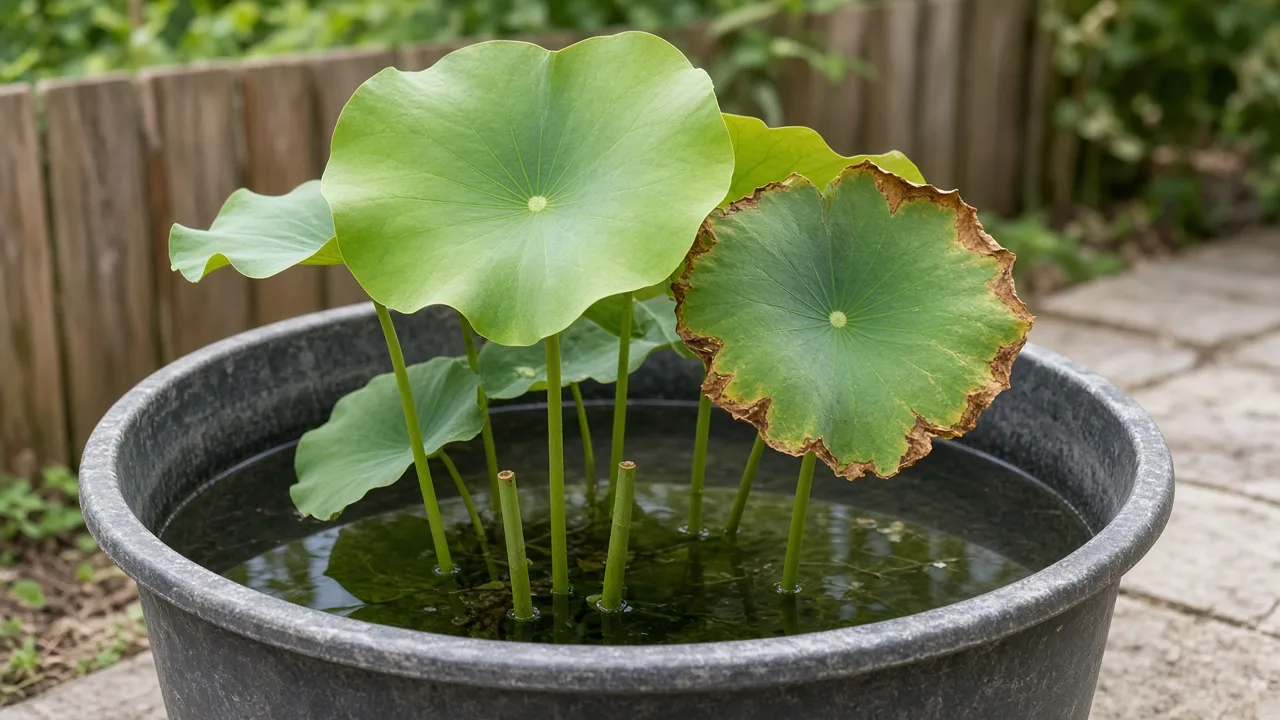
Brown Tips on Lotus: Causes, Checks & Fixes
This guide covers brown tips on Lotus. See also the general Brown Tips guide, watering, and light pages for this plant.
Brown Tips on Lotus: Causes, Checks & Fixes
Quick answer
On sacred lotus (Nelumbo nucifera), “brown tips” almost always means tan, papery margins on the outer edge of round leaves—especially tall aerial pads fully exposed to sun and wind—not the pointed leaf tips you see on a peace lily. Lotus roots stay submerged in heavy loam, so the problem is rarely “forgot to water.”
For how dry air and salt stress crisp leaf edges on houseplants in general, see our brown tips hub. On lotus, read heat, mineral buildup in small tubs, and shallow fertilizer placement first.
First step: inspect the newest leaf. If it opens clean while only the tallest or oldest pads show tan rims, flush hard-water residue from the tub and hold fertilizer until standing leaves look stable. If new leaves brown from the tip inward right after feeding, stop tablets and check placement depth.
When to use this page vs other lotus guides
- Underwatering — use when the soil cap is exposed above the waterline and leaves wilt or crisp from drought at the crown
- Overwatering — use when new leaves fail below the surface, water smells sour, or the growing tip is buried
- Yellow leaves — use when whole pads yellow rather than crisp only at the margin
- Low humidity — use when hot dry air around aerial leaves—not submerged roots—is the main stressor
- Watering guide — use for depth schedules and hard-water flushing after margins stabilize
What brown tips look like on lotus
Lotus leaves are round and peltate, held on hollow petioles. Browning shows at the rim farthest from the stalk because that tissue dries out first when water uptake lags.
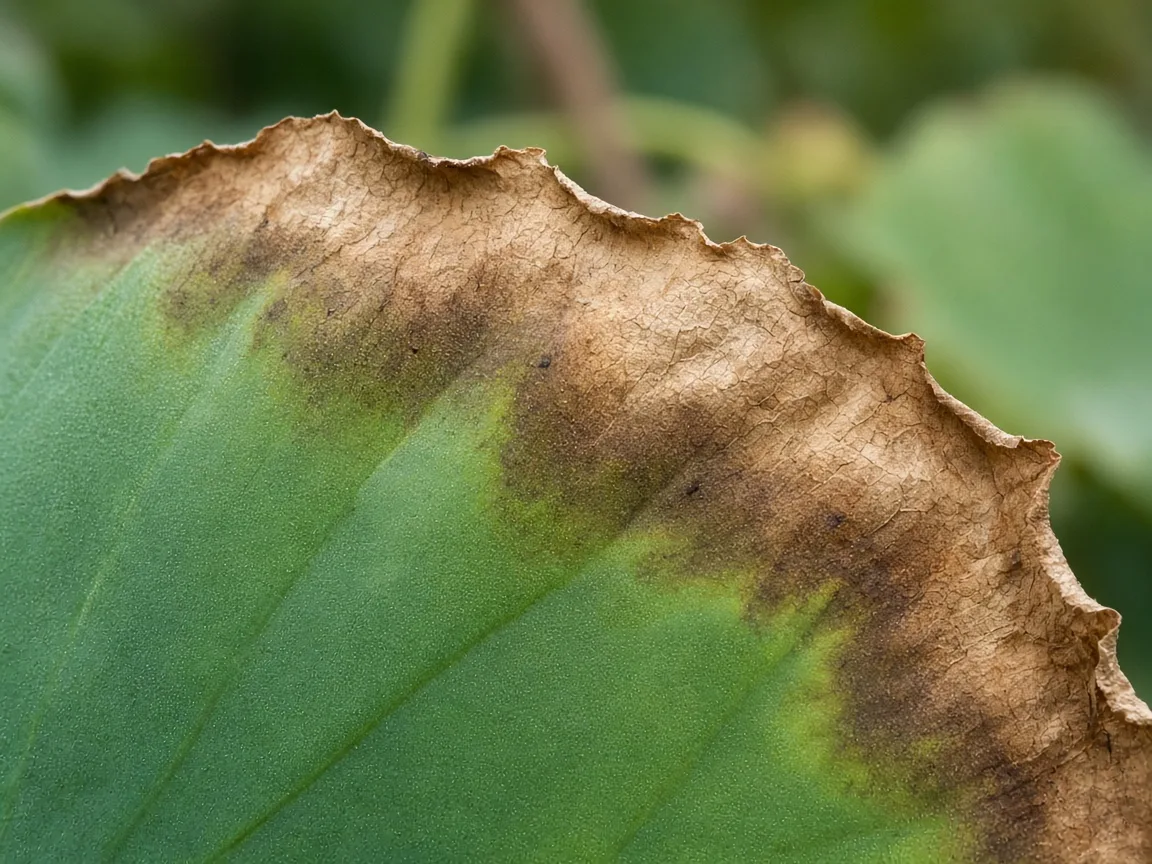
Brown tips on lotus—tan papery margin on a round aerial pad; compare with the green center and the firm growing tip at the rhizome.
Typical patterns:
- Tan, papery outer rim only on tall aerial leaves in July–August heat—center still green
- Brown spreading inward from the leaf edge after a fertilizer tablet dissolved too shallow or too close to fine roots
- White mineral crust at the waterline plus scorched margins in a small patio tub fed by hard tap water
- Stippled pale spots that later tan on leaf undersides—see spider mites on lotus before blaming humidity
- Oldest outer floating pads fading brown while new stalks stay green—often normal senescence, not a crisis
Not lotus brown tips:
- Whole pads yellowing underwater — overwatering or root rot
- Limp drooping aerial leaves with stable water — drooping leaves or wilting
- Small pale leaves on long stalks in shade — not enough light
Why lotus gets brown tips
Heat and wind scorch on aerial leaves. UF/IFAS lists full sun as a requirement for lotus, and standing leaves rise 2–4 feet above the water on exposed hollow stalks. In air above 95°F (35°C) with dry wind, the leaf margin loses water faster than the petiole can supply it. Floating pads scorch less because they sit closer to the cool water surface.
Hard-water mineral buildup in above-ground tubs. IWGS warns that very hard, alkaline water can accumulate harmfully in containers when evaporation leaves minerals behind with each top-up. Lotus tolerates little over 1000 ppm hardness in pots. Salt crust at the rim often appears the same week margins crisp.
Shallow or misplaced aquatic fertilizer. Lotus needs buried slow-release tablets pushed deep into heavy loam, away from the rhizome—not loose granules or houseplant food dissolved into the water column. Surface nutrients feed algae and burn fine roots; leaves brown from the margin inward when uptake fails.
Water chemistry from frequent chlorinated top-ups. Municipal tap water with chloramine does not gas off like chlorine. Repeated small top-ups in a tub can stress root tissue; margins are often the first visible sign while the rhizome still feels firm.
Normal aging of outer pads. Lotus sheds older floating leaves as the season progresses. RHS culture includes removing fading foliage once stalks dry—brown rims on the lowest, oldest leaves alone are expected.
Standing leaves vs floating pads: where browning starts
This distinction is lotus-specific and saves misdiagnosis.
| Leaf type | Position | Common brown-tip cause |
|---|---|---|
| Floating pad | Rests on water surface | Aging, occasional mineral splash, aphid stippling |
| Aerial pad | Held well above water | Heat/wind scorch, dry air, fertilizer burn |
| Newest stalk | Just reaching surface | Depth stress or rhizome trouble—not classic “tips” |
Tall aerial leaves are the canary for atmospheric stress. If only they crisp while submerged new growth stays green, do not drain the tub—adjust heat exposure, flush minerals, or fix fertilizer placement instead.
How to confirm the cause
- Read the newest leaf — clean green center and margin means the rhizome is fundamentally healthy; older tan rims may be cosmetic.
- Check the waterline — confirm at least 2–4 inches of water over the soil so the cap stays submerged; exposed mud points to underwatering, not brown tips alone.
- Inspect the tub rim — white or chalky mineral band suggests hard-water concentration.
- Review last fertilizer date — tablets should sit several inches from the growing tip, deep in loam, only after standing leaves form.
- Feel the rhizome tip — firm pale tissue supports a foliage-level fix; soft black mush means root rot.
- Scan leaf undersides — webbing or stippling means pests, not humidity.
First fix for lotus
Flush the container to dilute mineral buildup and hold fertilizer.
In a small patio tub:
- Over-fill with fresh water until excess runs out the overflow, replacing evaporation concentrate as IWGS recommends for hard water
- Skim floating debris and algae mats from the surface
- Do not add more fertilizer until margins on new leaves stay clean for two weeks
Make that single correction before repotting, pruning half the plant, or spraying pesticides over open water. If you fed within the last two weeks and algae bloomed simultaneously, skip the next tablet entirely and review the Lotus fertilizer guide.
Step-by-step recovery
If margins keep crisping after a flush:
- Shade only the hottest afternoon — a temporary 30% shade cloth on extreme heat days beats moving the tub indoors; lotus still needs six or more hours of direct sun for the season.
- Relocate surface tablets — push any shallow tabs deeper and farther from the rhizome per the soil guide.
- Treat pests if stippling is present — rinse aerial leaf undersides before any spray; see aphids or spider mites.
- Trim only dead tissue — cut brown stalks at least 2 inches above the waterline; IWGS warns never to cut stems below water because hollow petioles can flood the crown.
- Repot in spring if loam is foul — chronic mineral crust plus sour smell may need fresh heavy loam per repotting—not a midsummer emergency unless the rhizome is rotting.
Recovery timeline
- Week 1: Flush complete; no new browning on the youngest pad
- Weeks 2–4: New aerial leaves open with clean margins; oldest tan-rimmed leaves remain cosmetic
- Rest of season: Occasional rim scorch on the tallest leaves in heat waves is normal on full-sun lotus
Worsening signs: browning on every new leaf, black growing tip, or sour stagnant water. Switch to root rot diagnosis.
What not to do
- Mist aerial leaves like a calathea—lotus is an outdoor aquatic; misting does not fix mineral burn and can encourage foliar disease in humid still weather
- Pour houseplant fertilizer into the water column
- Cut browned petioles below the waterline
- Drain the tub to “reset” leaves— that causes underwatering damage
- Remove every leaf with a tan rim if more than half the pad is still green
How to prevent brown tips next season
- Flush small hard-water tubs every few weeks during peak evaporation
- Use only labeled aquatic tablets, buried deep per the fertilizer guide
- Mark the normal waterline and top up before the soil cap exposes
- Expect some margin scorch on the tallest aerial leaves in record heat—judge health by new growth, not perfect older pads
- Remove fading foliage above the waterline per pruning so decay does not foul the tub