Fungus Gnats on Lotus: Causes, Checks & Fixes
Quick answer
Fungus gnats on lotus usually mean decaying organic matter at or above the submerged soil line—not that the plant was watered too often. First step: re-submerge any exposed soil cap, skim floating debris, and place yellow sticky traps at the pot rim while you find the damp organic layer larvae are using.
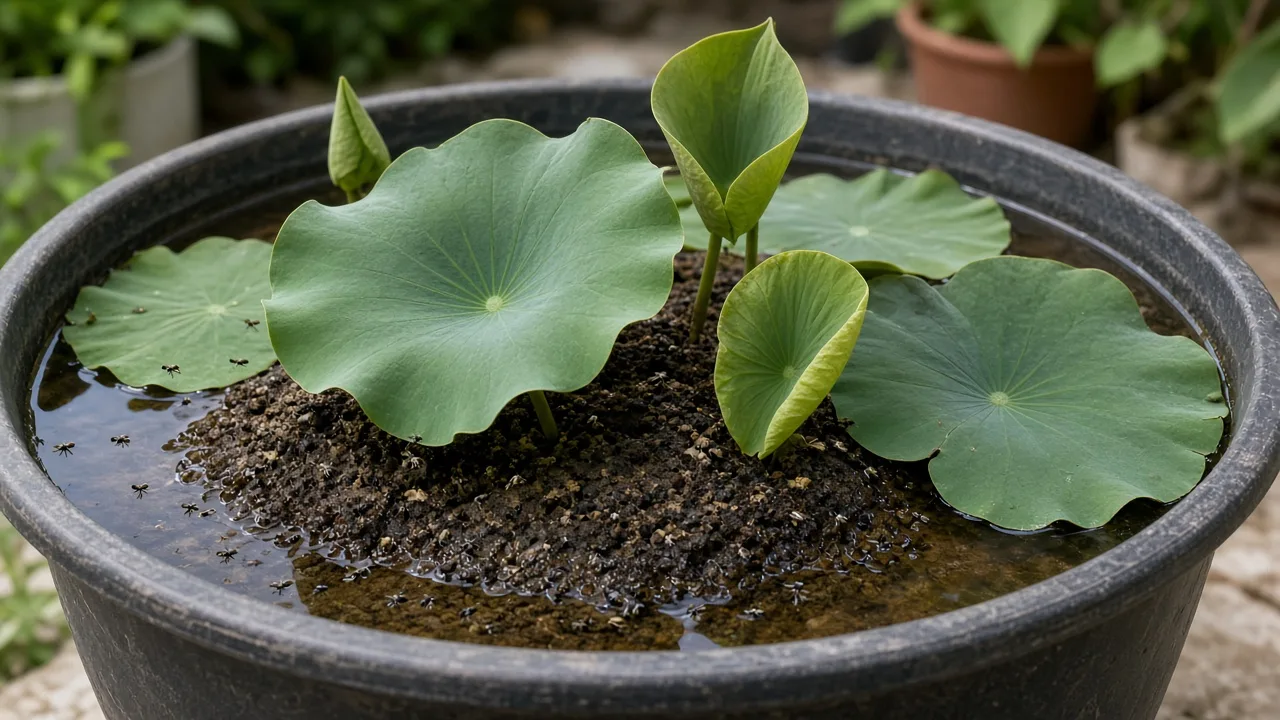
Fungus Gnats on Lotus: Causes, Checks & Fixes
This guide covers fungus gnats on Lotus. See also the general Fungus Gnats guide, watering, and light pages for this plant.
Fungus Gnats on Lotus: Causes, Checks & Fixes
Quick answer
Fungus gnats on sacred lotus (Nelumbo nucifera) almost always point to damp organic matter at or just above the submerged soil line—not the houseplant mistake of “too much water.” Lotus is built for continuously wet roots in heavy submerged loam; you cannot fix gnats by drying the pot. For how fungus gnats behave in moist organic media in general, see our fungus gnats hub. On lotus, the first useful clues are an exposed mud cap after evaporation, rotting leaf debris on the soil surface, and small dark flies at the tub rim—not underwatering.
First step: top up the container so the soil cap stays submerged, skim decaying organic debris from the surface, and place a yellow sticky trap at the pot rim. Make that one correction before adding drenches, repotting, or spraying near open water.
Fungus gnats vs. other small flies around a lotus tub
Lotus culture attracts several small flying insects. Identifying the adult prevents the wrong fix—especially around ponds shared with fish or turtles.
| What you notice | Likely insect | Where it breeds | First check |
|---|---|---|---|
| Slender dark fly, long antennae, Y-shaped wing vein | Fungus gnat | Exposed mud cap, damp loam, nearby houseplant pot | Waterline, soil surface, sticky trap at rim |
| Stockier fly, short bristle-like antennae, around green algae | Shore fly | Algae on wet surfaces, emersed trays, fouled margins | Algae at tub edge; compare antennae |
| Fly on fruit or kitchen waste | Fruit fly | Fermenting food | Remove food source |
| Fly rising from a floor drain | Drain or moth fly | Drain biofilm | Clean drain—not the lotus pot |
UC IPM notes that fungus gnats have long segmented antennae, while shore flies around algae have short bristle-like antennae. Adults of both may hover near water gardens, but fungus gnat larvae need moist organic debris or potting media—not open water alone.
Why lotus gets fungus gnats
Exposed soil cap after evaporation. Lotus should keep at least 2–4 inches of water over the soil at all times. In a small tub during hot, windy weather, the waterline can drop until the sand or gravel cap and upper loam are no longer fully submerged. That damp, air-exposed surface is exactly where adult females lay eggs in moist organic debris.
Rich loam, compost, and decaying leaf litter. Lotus grows in organically rich submerged soil. A thin layer of well-rotted manure or compost is useful deep in the pot, but fresh organic matter left on the surface—or fallen lotus leaves decaying on the mud—feeds the fungi and bacteria fungus gnat larvae eat. This is different from a peat houseplant mix, but the insect response is similar: organic matter plus moisture equals larvae.
Indoor or greenhouse spring starts. Many growers hold newly planted rhizomes in shallow tubs indoors or in a conservatory before outdoor temperatures stabilize. Warm room air above cool water, a exposed soil edge, and nearby houseplant collections create ideal conditions. Plants moved outdoors in summer may already carry larvae in the loam cap.
Stagnant small tubs with surface scum. Foul, low-oxygen water does not breed fungus gnats by itself, but oily scum and decomposing algae at the rim can overlap with shore flies and mask a separate gnat problem in exposed mud. If water smells sour, also read root rot on lotus—gnats may be a side symptom of failing mud, not the primary cause.
A neighboring houseplant is the real source. Adults are weak fliers that often stay near breeding media but may drift to windows and pond edges. A constantly wet pothos on the patio beside the lotus barrel can keep producing flies that appear to belong to the aquatic setup.
What fungus gnats look like on lotus
On lotus you usually see adults before any rhizome damage. They hover at the container rim, walk across emergent leaf petioles, and collect on nearby glass—not inside open pond water.
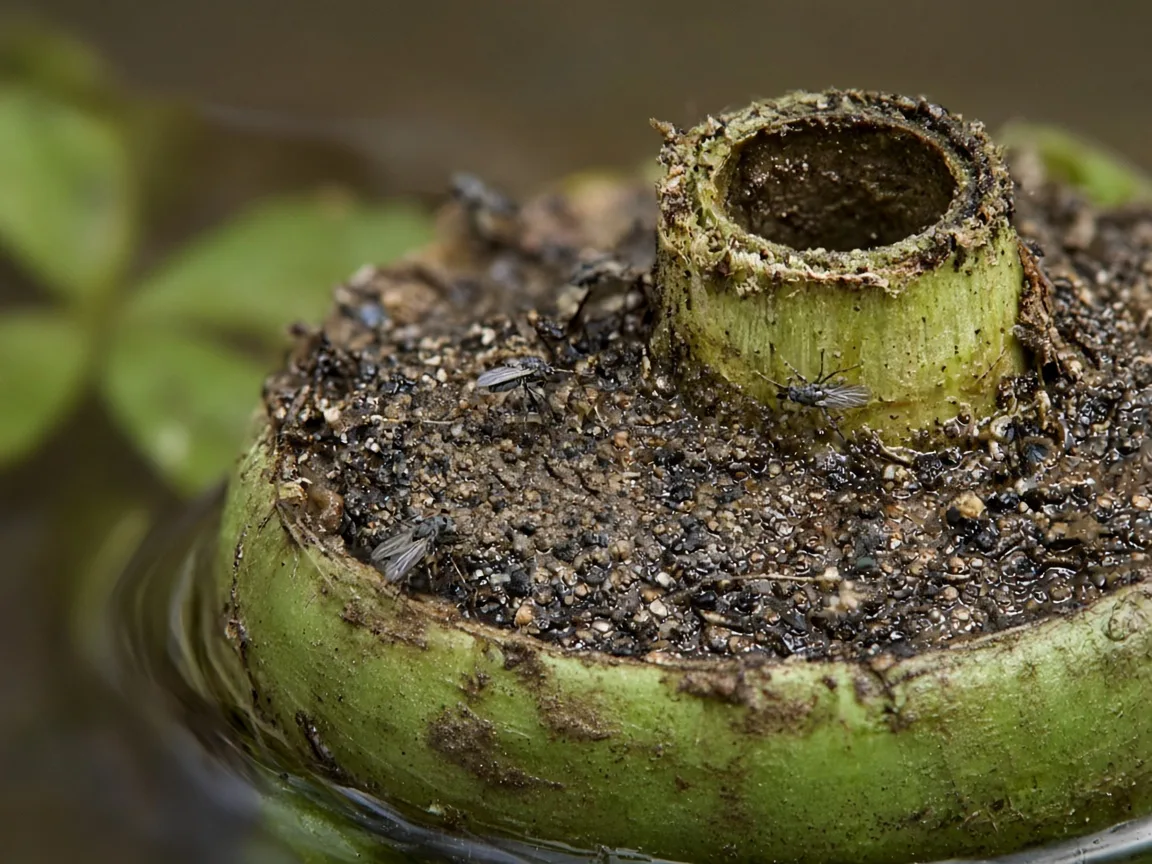
Fungus gnats on lotus—adults at the tub rim above an exposed damp mud cap; re-submerge the soil surface before treating larvae in open pond water.
Typical signs:
- Tiny dark, mosquito-like flies about 1/16 to 1/8 inch long with long legs and antennae
- Flies that rise when you disturb an exposed soil cap or a damp houseplant pot beside the tub
- Slender translucent larvae with black head capsules under a potato slice placed on damp mud—not floating in water
- Optional shiny slime trails on an exposed organic surface when larvae are abundant, as UC IPM describes on container media
What lotus damage looks like when gnats are only part of the story:
- New leaves still reach the surface and rhizome tissue feels firm—gnats are likely a surface-habitat nuisance
- Repeated underwater leaf death, soft black rhizome, or sour mud—prioritize root rot or overwatering depth mistakes over insecticide
- Yellow aerial leaves with clear water and firm rhizome—see yellow leaves on lotus before blaming larvae
Established lotus rhizomes are thick storage organs, not delicate seedling roots. Larval feeding on fine roots is more serious in seedlings and young plants than on a mature runner—though chronic surface decay still deserves correction.
Check the mud cap and waterline first
Lotus diagnosis starts at the horizontal soil surface under the water, not at houseplant drainage holes.
- Mark the normal waterline on the container and compare it after hot weather.
- Look for exposed sand, gravel, or loam at the center or edges where evaporation outpaced top-ups.
- Skim floating leaf bits, pollen, and algae mats resting on the soil cap.
- Press the rhizome zone gently only if you must lift the pot in shade—firm pale tissue is healthy; soft black mush points to rot, not gnats alone.
- Inspect the brittle growing tip remains exposed and unburied per RHS planting guidance.
- Disturb every nearby houseplant pot and watch whether flies emerge there instead.
If the soil cap has stayed fully submerged and only open water is visible, widen the search to patio pots, propagation trays, compost buckets, and pond-edge mulch before treating the lotus loam.
Spring startup tubs vs. established pond pots
Two lotus setups fail in different ways.
New rhizome or division in a shallow indoor tub: UF/IFAS starts newly planted lotus in about 6 inches of water over heavy soil. The soil is submerged, but room temperatures, a small water volume, and rich loam can leave the upper cap persistently warm and organic—especially if the container sits near houseplants. Gnats here often peak in late winter and spring when indoor plants use less water but media stays moist.
Established outdoor container: Evaporation and fish disturbance matter more than indoor humidity. Flies at the rim plus an exposed cap after a windy week strongly implicate the lotus pot itself. Flies only at windows with a fully submerged cap suggest a neighboring source.
Do not move a gnat-heavy indoor start outdoors to “drown” the problem—larvae can persist in loam. Fix the surface habitat before placing the pot in a pond shared with livestock.
How to confirm larvae without harming the rhizome
Use monitoring tools on the damp organic surface, not in open water:
- Potato slice test: Place 1/4-inch potato pieces cut-side down on an exposed mud cap or on damp loam at the rim. Check the underside after three to four days for larvae, as Colorado State Extension recommends. Dispose of infested pieces away from the pond.
- Yellow sticky trap: Mount a card just above the container rim or on a stake beside the pot—UC IPM uses sticky traps to capture adults. Keep adhesive out of reach of birds, pets, and pond animals.
- Waterline recovery test: After topping up, recheck flies in one week. Fewer adults at a submerged cap supports evaporation exposure as the trigger.
Do not bury potato in submerged mud below the waterline or float traps on leaf pads where fish or turtles can contact them.
First fix for lotus
Re-submerge the soil cap and remove decaying organic debris from the surface.
Specifically:
- Top up with fresh water until the sand or gravel cap is fully covered again—typically maintaining at least 2–4 inches over the soil for active growth, matching cultivar depth guidance in the Lotus watering guide
- Skim fallen leaves, pollen mats, and loose organic scum resting on the mud
- Place one yellow sticky trap at the rim to monitor adult emergence
- Move or dry down any confirmed wet houseplant pot beside the tub
Make that single correction before stacking Bti drenches, hydrogen peroxide, repotting, or foliar sprays. Lotus cannot tolerate a houseplant-style dry-down; drying the crown causes underwatering damage while larvae may remain in pockets of damp debris at the rim.
Step-by-step recovery if adults persist
If trap counts stay high after two weeks of stable submergence:
- Partial water change in small tubs — Gently siphon debris from the surface and replace water to dilute organic load, following flush guidance in the Lotus watering guide. Avoid exposing the rhizome.
- Remove excess surface organic matter — Brush decaying material off the cap without burying the growing tip.
- Bti labeled for fungus gnat larvae — Apply only to the exposed soil surface or media the label permits, not as a blind pour into fish or turtle water. UC IPM describes Bti as a media drench that may need repeat applications about five days apart. Confirm the product label allows your exact setup before use near open water.
- Repot in early spring if loam is foul — Replace decomposed, peat-contaminated, or fluffy mix with fresh heavy loam per the Lotus soil guide and repotting guide. Summer repotting is stressful; prefer spring division unless the container has failed.
- Address overlapping mold — White fuzzy growth on an exposed cap may also signal mold on soil on lotus; scrape decay and re-submerge rather than treating only the flies.
Expect overlapping life stages. At warm room temperatures a generation can complete in about 17 days, so adults may linger after the habitat fix.
Recovery timeline
Judge success by fewer adults on sticky traps, a stable submerged cap, and continued healthy lotus growth—not by leaf appearance alone.
- Week 1: Waterline stable; debris cleared; fly numbers at the rim begin dropping
- Weeks 2–3: Potato checks find fewer or no larvae; new leaf spikes still reach the surface in warm shallow water
- Weeks 4–6: Occasional stray adult acceptable; rhizome still firm on gentle inspection
Worsening signs: sour-smelling mud, black growing tip, or every new leaf dying underwater. Those patterns mean root rot or depth stress—not a gnat-only problem. Escalate rhizome inspection before adding more pesticides.
What not to do
- Let the soil cap dry out or drain the tub to kill gnats—lotus roots must stay submerged
- Spray flying adults over open pond water—UC IPM warns against indoor fogging and aquatic exposure risks harming fish, frogs, and turtles
- Pour hydrogen peroxide, neem, or houseplant drenches into a shared pond without a label that explicitly permits that site
- Bury the growing tip under gravel to “fix” surface gnats
- Fertilize a stressed rhizome because growth slowed—wait until standing leaves are present per the Lotus fertilizer guide
- Assume gnats alone explain poor flowering—lotus needs full sun, warmth, space, and time; see the Lotus overview
How to prevent fungus gnats next season
- Maintain water depth during evaporation spikes — Daily rim checks in hot weather per Lotus watering
- Cap loam with washed sand or fine gravel — Keeps soil in place without a deep stone layer that buries the tip
- Limit fresh manure or compost at the surface — Work organic enrichment deep in the pot away from the rhizome
- Remove yellowing foliage above the waterline — Follow Lotus pruning so hollow stems do not funnel debris downward
- Flush hard-water tubs periodically — IWGS notes mineral buildup that can interact with surface scum
- Inspect indoor spring starts and neighboring houseplants before peak fly season
- Divide crowded rhizomes in early spring before organic breakdown accelerates in a packed pot
Prevention on lotus is habitat management at the mud–water interface—not keeping soil dry.
When to worry
Treat as urgent when soft rhizome tissue, a black growing tip, or sour stagnant water accompanies heavy fly numbers. In that case, insects are secondary to crown failure.
A medium-priority gnat cloud with firm rhizomes, intact tips, and normal new leaves is a surface-habitat correction—not an emergency spray situation. Escalate if adults remain abundant after four weeks of submerged cap, debris removal, and corrected neighbor pots.
When to use this page vs other Lotus guides
- Lotus watering guide — Use for routine depth and top-ups before assuming insects are the main issue.
- Lotus problems hub — Browse all common issues on this species.
- Mold on soil on lotus — Use when white or fuzzy growth appears on an exposed cap alongside flies.
- Root rot on lotus — Use when rhizome tissue is soft, water smells sour, or leaves fail underwater.
- Overwatering on lotus — Use when depth or stagnation—not flying adults—is the primary mistake.