Mold on Soil on Lotus: Causes, Checks & Fixes
Quick answer
Mold on lotus soil almost always grows on an exposed mud or sand cap after evaporation lowers the waterline—not because the rhizome was kept too wet underwater. First step: re-submerge the soil surface, skim decaying leaf debris, and scrape loose fuzzy growth off the cap.
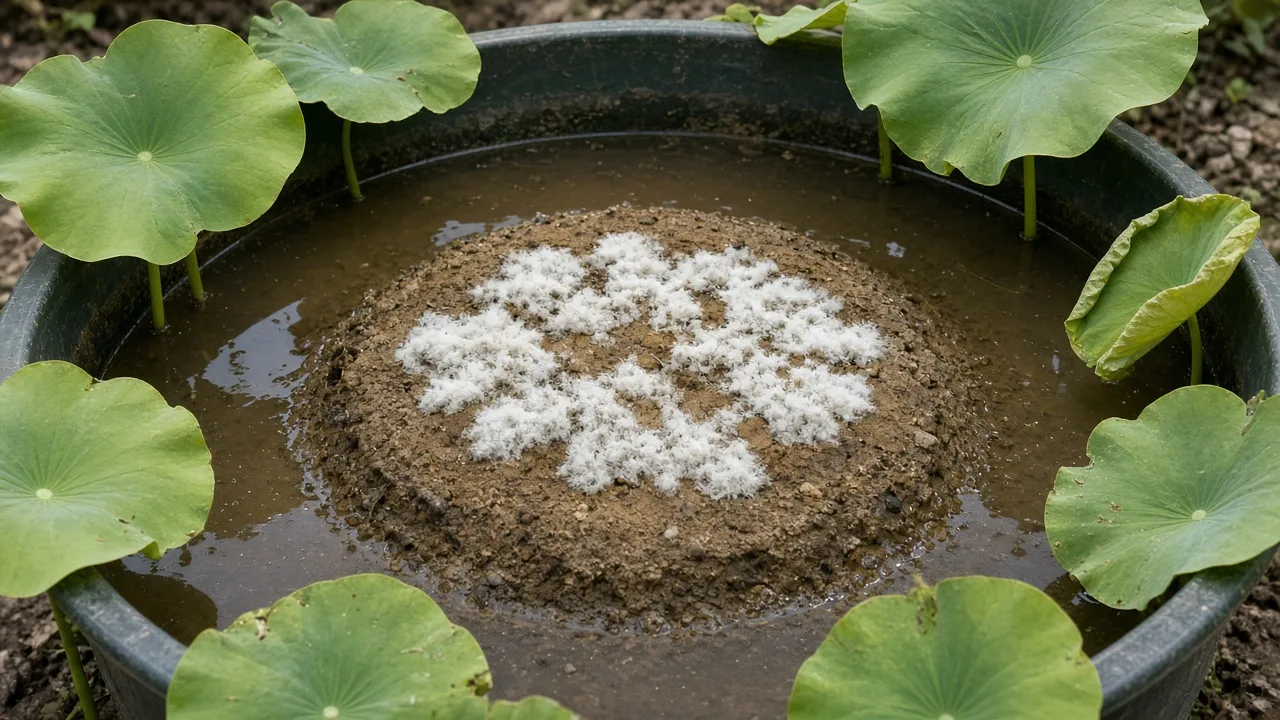
Mold on Soil on Lotus: Causes, Checks & Fixes
This guide covers mold on soil on Lotus. See also the general Mold on Soil guide, watering, and light pages for this plant.
Mold on Soil on Lotus: Causes, Checks & Fixes
Quick answer
White or gray fuzz on sacred lotus (Nelumbo nucifera) soil is almost always saprophytic fungi on an exposed mud cap—not the same problem as mold in a soggy houseplant pot. Lotus requires submerged heavy loam; you cannot fix surface mold by drying the crown.
For how fungi colonize wet organic media in general, see our mold on soil hub. On lotus, the first clue is evaporation exposing the sand or loam surface while decaying leaf litter rests on top.
First step: top up until the cap is fully submerged, skim decaying debris, and scrape loose fuzzy growth off the exposed mud without burying the growing tip.
When to use this page vs other lotus guides
- Fungus gnats — use when small flies hover at the rim alongside damp organic surface
- Overwatering — use when depth or stagnation—not surface fuzz—is drowning new leaves
- Root rot — use when rhizome tissue is soft, black, or sour-smelling
- Underwatering — use when exposing the cap caused the mold; fix is re-submergence
- Watering guide — use for long-term depth and flush routines after the cap is clean
What mold on soil looks like on lotus
On lotus you see growth at the horizontal soil surface where air meets damp loam—not floating uniformly in open water.
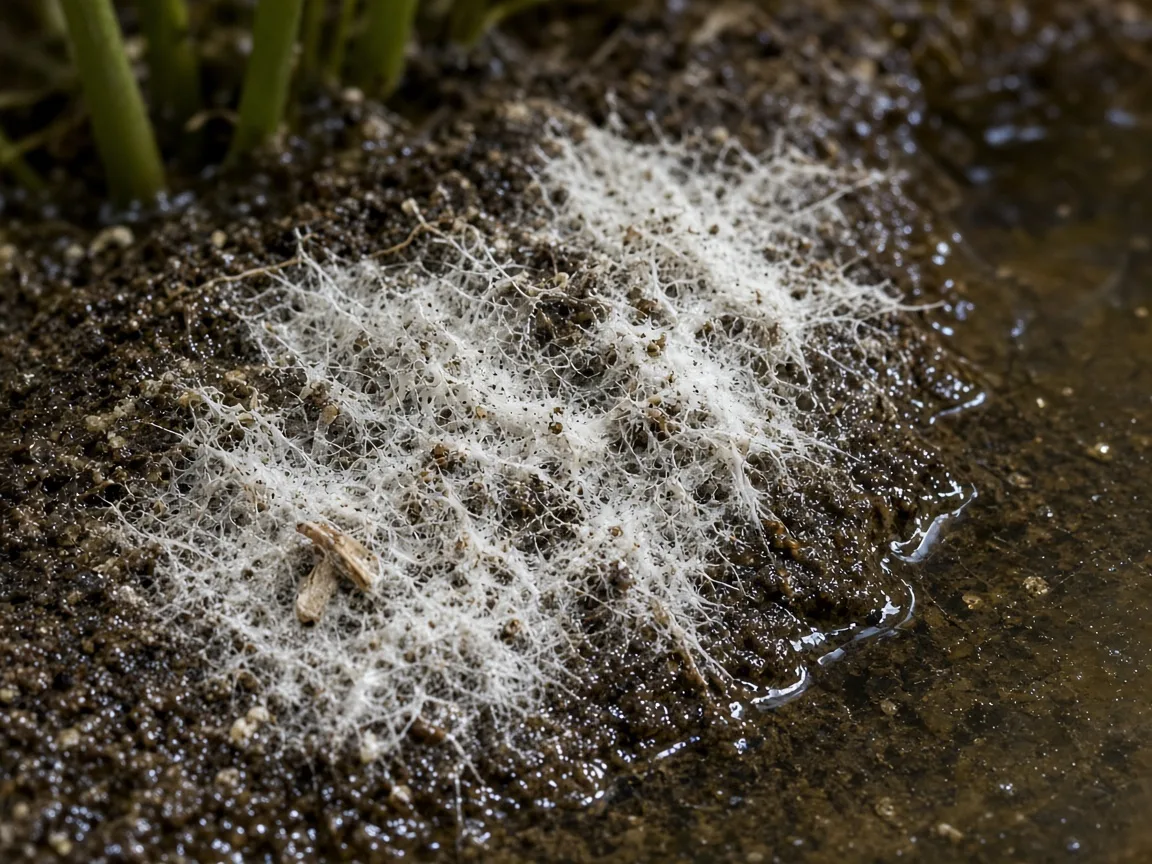
Mold on soil on lotus—white saprophytic fuzz on an exposed mud cap at the waterline; re-submerge rather than drying the crown.
Typical signs:
- White, gray, or occasionally yellow fuzzy patches on exposed sand or loam at the container center or edges
- Growth appearing within days of a hot week that lowered the waterline
- Decaying lotus leaf pieces or pollen mats resting on the cap feeding the fungi
- Musty smell at the rim without immediate black rhizome mush
- Small dark flies at the surface—overlap with fungus gnats
Not lotus soil mold:
- Green film on open water — algae; manage nutrients and light, not soil scraping
- Soft black rhizome with sour water — root rot
- White dust on aerial leaf tops only — powdery mildew is uncommon on lotus; check pests and spray drift
The exposed cap: why lotus gets surface mold
Lotus culture keeps organically rich loam submerged under a sand or gravel cap. When evaporation drops the line below the cap, the upper millimeters become a damp aerobic zone—perfect for saprophytic fungi eating decaying organic matter.
Lotus-specific triggers:
- Missed summer top-ups in patio tubs—most common cause
- Fresh compost or manure left on the surface instead of buried deep in the pot
- Fallen leaves and pollen resting on the mud after pruning delays
- Indoor spring-start tubs with warm room air above cool water and a persistently exposed edge
- Stagnant small tubs where surface scum and mold overlap—flush before assuming the rhizome is lost
Unlike peat houseplant mix, lotus loam should never dry. Mold here signals habitat at the mud–air interface, not “too much water” underwater.
Mold vs algae vs crown rot
| Sign | Likely issue | First action |
|---|---|---|
| Fuzz on exposed mud only | Surface mold | Re-submerge, scrape, skim debris |
| Green slick on open water | Algae | Nutrient/light balance, flush |
| Black soft tip, sour smell | Crown rot | Rhizome inspection—urgent |
| Flies at rim + exposed cap | Fungus gnats + mold habitat | Submerge cap, sticky traps |
How to confirm the cause
- Compare waterline to your marked normal level — exposure duration matters.
- Probe rhizome tip gently — firm and pale green supports surface-habitat fix only.
- Note organic debris on the cap—pollen, leaves, uneaten fish food.
- Watch new leaf emergence — clean new stalks mean mold is likely cosmetic at the surface.
- Check for flies — fungus gnat adults lay eggs in moist organic debris at the rim.
- Smell the water — sour anaerobic odor means escalate beyond mold scraping.
First fix for lotus
Re-submerge the soil cap and remove the organic layer the fungi are eating.
- Top up with fresh water until the sand cap is fully covered—at least 2–4 inches over the soil during active growth
- Skim floating leaf bits, pollen, and scum from the surface
- Scrape loose fuzzy growth off the exposed mud with a plastic spoon—do not bury the brittle growing tip
- Dispose of scraped material away from the pond
Make that single correction before fungicide drenches, hydrogen peroxide pours into fish water, or repotting in summer heat.
Step-by-step recovery
If fuzz returns within two weeks:
- Partial water change — siphon surface debris and over-fill to flush minerals per watering
- Bury future compost deep — work manure into the lower half of the pot per soil
- Address fungus gnats if adults persist — see fungus gnats
- Improve circulation in tiny tubs—overflow pipe set so occasional flushes replace stagnant water
- Repot in early spring if loam is decomposed, peat-contaminated, or smells foul—see repotting
Surface cinnamon or household fungicides are unnecessary on large outdoor tubs if submergence and debris removal fix the habitat—never pour unlabeled products into shared pond water.
Recovery timeline
- Days 1–3: Cap submerged; visible fuzz scraped; debris cleared
- Week 1: No new fuzzy patches at the former exposure zone
- Weeks 2–4: Occasional regrowth after heat waves means tighten top-up schedule—not emergency repot
Escalate if the growing tip blackens, new leaves fail underwater, or water stays sour after flushing.
What not to do
- Let the soil cap dry out to kill mold
- Bury the growing tip under extra gravel to cover fuzz
- Pour hydrogen peroxide or bleach into a pond with fish or turtles without a label permitting that use
- Stir up the whole pot and cloud the water repeatedly—stability matters for UF/IFAS container culture
- Assume mold alone explains poor flowering—lotus still needs full sun, warmth, and space
How to prevent mold next season
- Daily rim checks during peak evaporation
- Cap loam with washed sand or fine gravel without deep burial of the tip
- Limit fresh organic matter to the lower pot profile
- Remove yellowing foliage above the waterline per pruning
- Flush hard-water tubs periodically per IWGS guidance
- Inspect indoor spring starts before peak fly and mold season