How to Grow and Care for Water Lilies and Lotus
Compare water lilies and lotus, choose a cultivar for your pond or tub, and get clear guidance on soil, water depth, sunlight, fertilizer, and winter care.
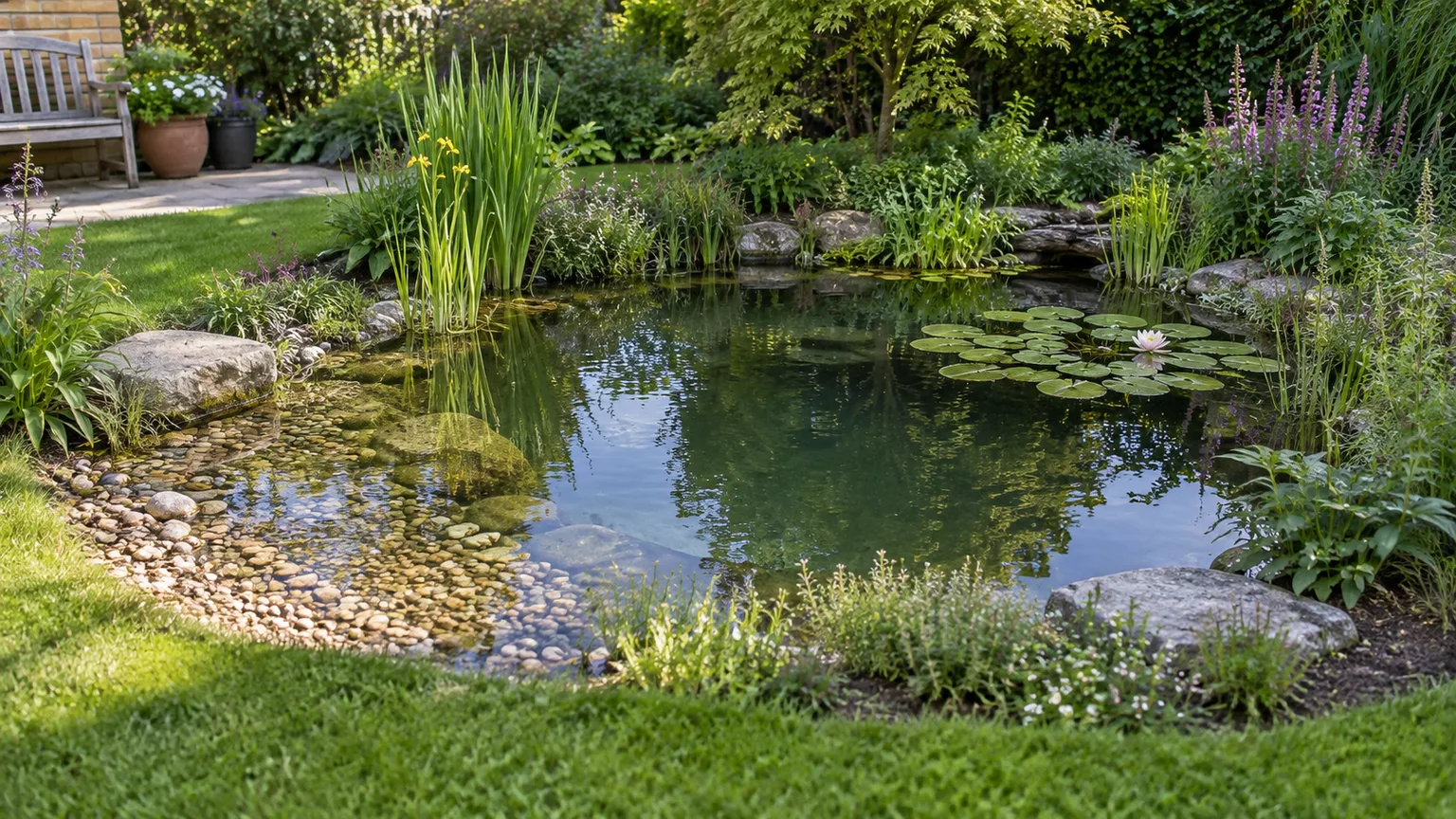
Water lilies and lotus reward a pond gardener with flowers and shade, but a plant that grows beautifully in a broad pond can stall in a shallow patio bowl. The most reliable approach is to identify the plant first, match a named cultivar to your water depth and winter climate, and then plant it in the right kind of container. Light and fertilizer matter, but a wrong cultivar or a frozen root zone can undo both.
The word “lotus” is also used loosely in plant names, so check the botanical name on the label. This guide covers true water lilies in the genus Nymphaea and true lotus in the genus Nelumbo—two aquatic plants with different leaves, planting parts, and container needs.
Water Lilies and Lotus Are Different Plants
Check the leaves and flower center
A water lily’s round leaves usually float flat on the surface, with a notch where the leaf stem meets the blade. Lotus leaves rise above the water on upright stalks; their circular blades have a central attachment rather than a notch at the edge. A lotus flower also develops a distinctive flat-topped or cone-shaped seed head in its center. These clues are useful even when there are no flowers.
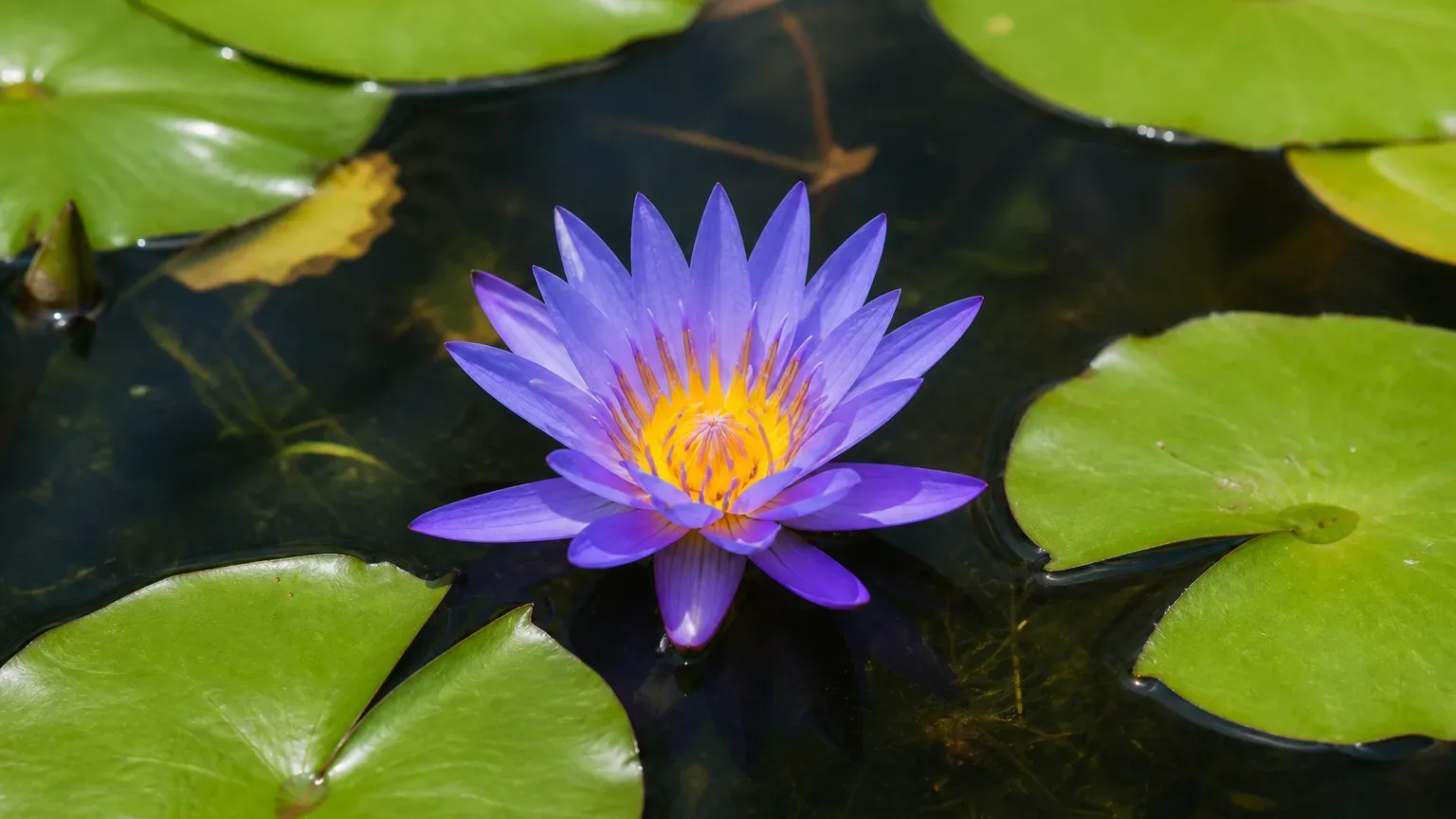
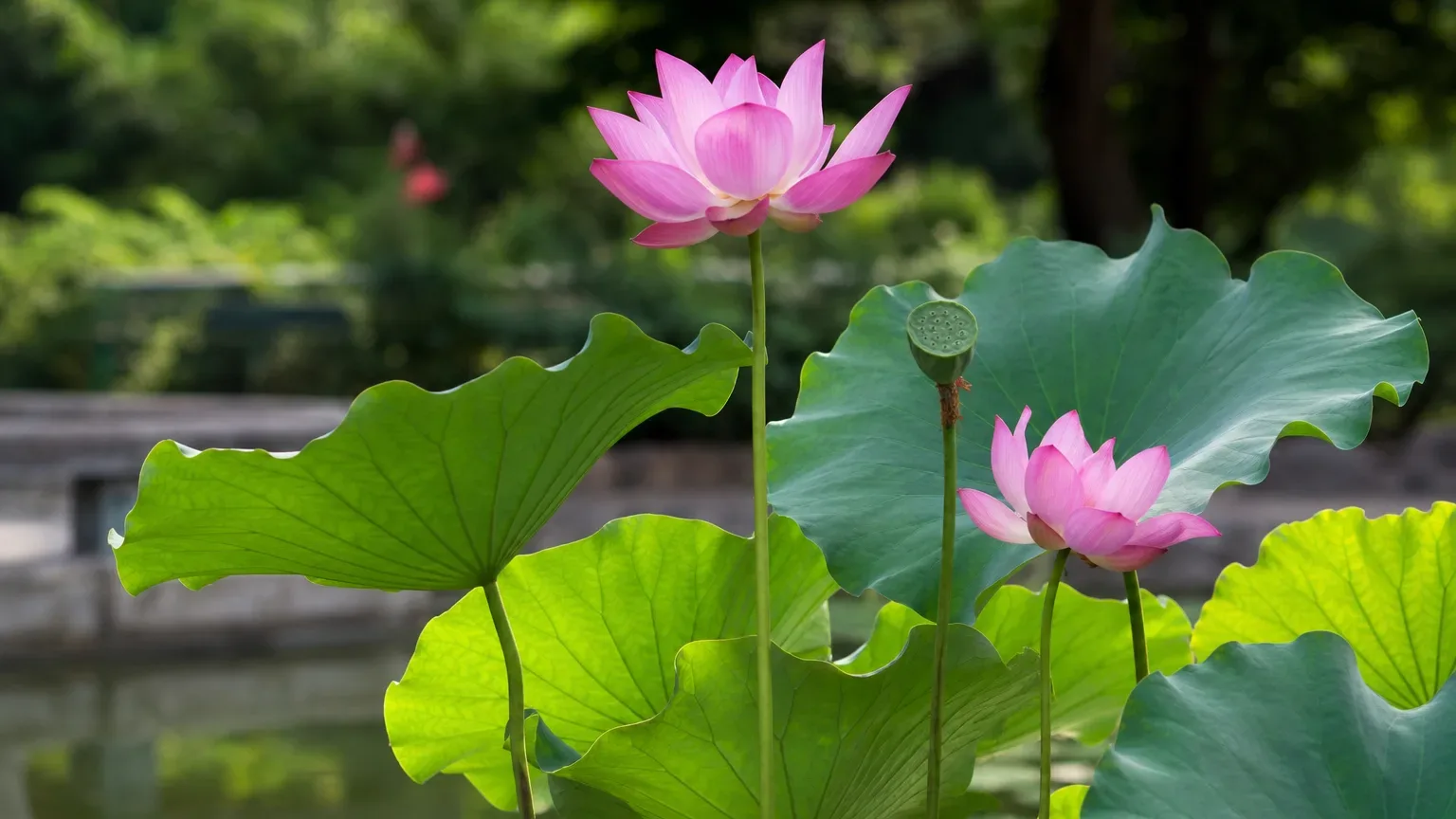
The resemblance is a result of both plants adapting to life in shallow water, not a sign that they need identical care. Kew lists water lilies in Nymphaeaceae and sacred lotus in Nelumbonaceae, and notes that lotus is more closely related to plane trees and proteas than to water lilies (Kew: Nymphaea; Kew: sacred lotus). A hardy water lily typically spreads from a rhizome; lotus has thick, brittle growing tubers that are easy to damage. A mistake that is harmless to a lily—handling or trimming a lotus tuber—can destroy the point from which a lotus continues growing.
Their flowers also behave differently. Many hardy water lily flowers sit at the waterline and open during the day, while tropical water lilies can flower above the surface and include night-blooming kinds; lotus flowers rise above the water. There are exceptions among cultivars, so use leaves, the central flower structure, and the nursery’s botanical label together rather than using flower color alone to identify a plant (University of Illinois Extension: water garden plants).
Choose a Plant for Your Pond, Tub, and Climate
Before you buy, consider four constraints: the container or pond’s usable depth, its open surface area, direct sun, and the plant’s winter hardiness. A large water lily or vigorous lotus can crowd a small basin, while a tropical water lily may flourish all summer and still be lost at the first hard freeze. The name and mature size of the cultivar matter more than a general description such as “small pond plant.”
For a pond, choose a plant whose mature spread leaves open water and room for other plants. Dwarf and miniature water lilies are usually a better fit for a half-barrel or patio tub than a vigorous large cultivar. If you have fish, maintain open areas for gas exchange and habitat; a dense plant cover can shade out other aquatic growth and undermine pond balance. A lotus can create dramatic height and broad leaves, but it may expand rapidly in an uncontained pond.
A container gives you more control. A water lily basket keeps rhizomes and soil contained and can be moved between shelves. Lotus is easier to manage in a wide, round, water-tight pot that contains its runners and avoids sharp corners that can snag the tuber’s growing tip. If the goal is a small tabletop feature, choose a named miniature or bowl cultivar; a young standard plant is not a miniature just because it currently fits the pot.
Hardiness labels are useful, but they do not guarantee that a plant in a small container will survive a cold winter. The water body, container, and rhizome or tuber must all avoid freezing; a large pond can buffer roots that would freeze in a shallow tub. A hardy water lily is the simplest choice for an outdoor pond in a cold climate when it can sit deep enough below the ice line. Tropical lilies need a winter plan before purchase. Lotus hardiness and flowering vary by cultivar and growing conditions, so check the named plant with a regional grower.
Measure the Water and Identify the Cultivar
Measure the pond at the location where the pot will sit, from the soil surface in the pot to the water surface. This is not the same as measuring the pond’s total depth from the liner or bottom. Check whether the supplier’s listed depth refers to water above the crown, the pot rim, or the pond shelf; if you cannot tell, ask before buying rather than guessing from the number.
Water lily cultivars range from miniatures suited to a few inches of water to large types that need several feet. The RHS gives examples from roughly 4 inches for miniature cultivars to 4 feet or more for large cultivars and advises matching the plant to the depth and size of the pond (RHS: choosing pond plants). This is why there is no one safe planting-depth figure for every water lily. Confirm the mature width, recommended depth, and hardiness of the actual cultivar on the label.
Lotus also needs a cultivar matched to its eventual scale. Miniature “bowl lotus” selections stay more compact than full-size lotus, but they still need space for a horizontal tuber and a warm, sunny container. Kansas State Research and Extension lists lotus container sizes ranging from bowl types to full-size plants, emphasizing that container size affects the plant you can grow (K-State Research and Extension: Water Gardening: Plants for the Water Garden).
Check Native Status and Local Rules
A pond plant’s legal and ecological status depends on species and location. American lotus (Nelumbo lutea) is native in parts of North America, while other regions treat it or non-native water lilies as invasive or restricted. Minnesota, for example, regulates non-native Nymphaea and prohibits releasing or planting them in public waters; its DNR also warns that a small plant fragment can start a new population (Minnesota DNR: non-native water lilies; Penn State Extension: Mid-Atlantic water garden species).
Before purchase or propagation, check your state or provincial invasive-species list and your local rules for private ponds. Do not release an unwanted plant, its soil, or pond water into a lake, stream, wetland, roadside ditch, or storm drain. Keep a garden pond away from flood-prone waterways, and dispose of unwanted aquatic growth in the trash or as your local invasive-plant authority directs.
Prepare the Right Container and Planting Medium
Use a container built for water plants, not a standard flowerpot filled with lightweight indoor potting mix. Peat, bark, perlite, and other light ingredients can float out of the pot, muddy the water, and add decomposing organic material. The RHS recommends an aquatic basket filled with aquatic compost or heavy clay-based loam for water lilies (RHS: how to grow waterlilies).
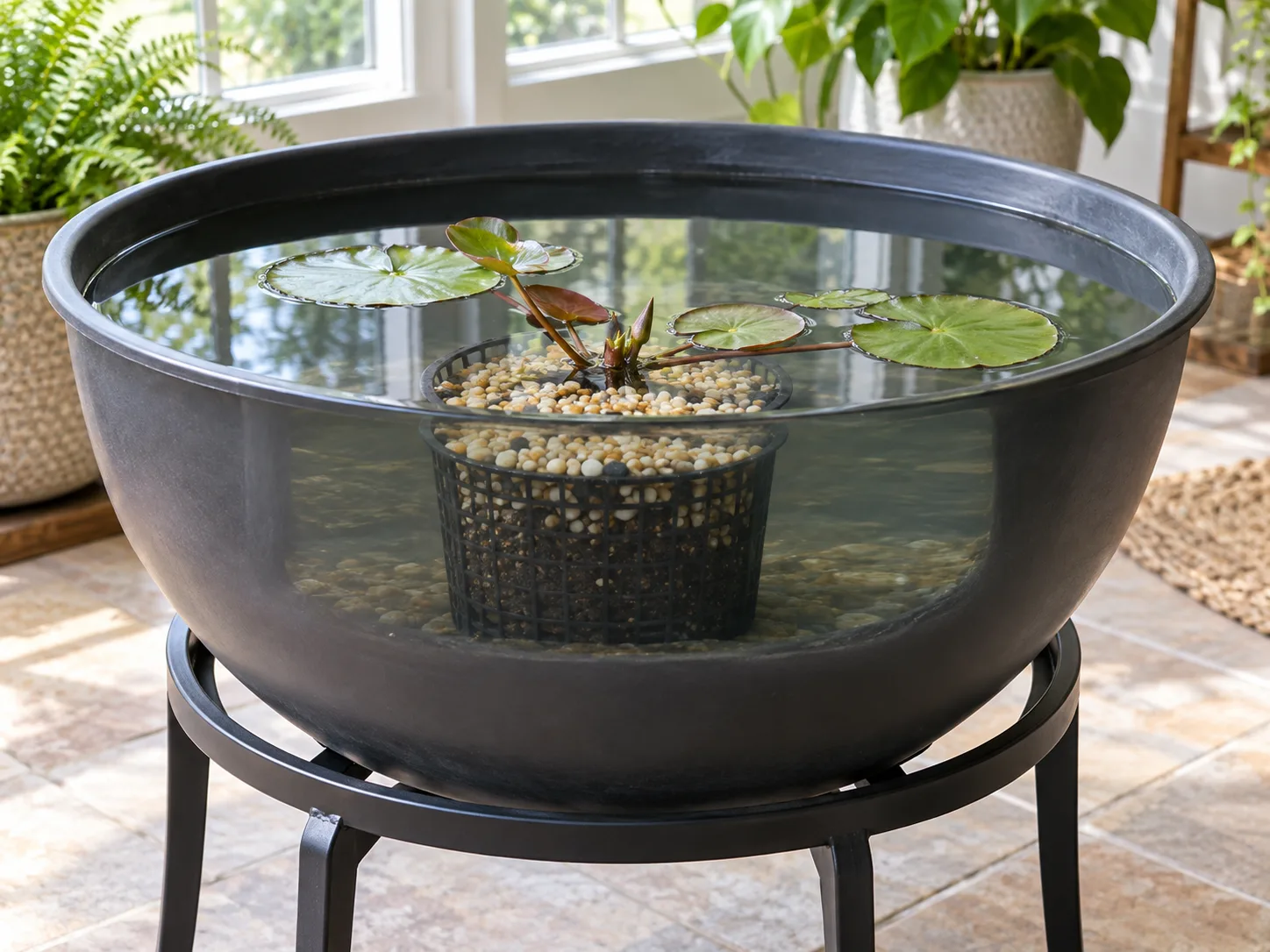
For lilies, use a mesh aquatic basket sized for the mature cultivar. Line the sides if the medium escapes, pre-moisten the soil so it settles, and finish with washed pea gravel or shingle to hold the surface in place. Gravel is a cap, not a growing medium: do not bury the crown under a deep layer that blocks new leaves.
Lotus needs a separate approach because the tuber runs sideways and its growing end is fragile. A wide, round, water-tight container without drainage holes keeps the lotus contained and avoids corners where a growing tip may be trapped; Kew uses large sealed pots for sacred lotus and warns that growing tips must not be damaged during potting and division (Kew: sacred lotus cultivation). Choose the container for the named cultivar rather than trying to restrict a full-size lotus in a small pot.
Planting a Water Lily
Plant in spring or early summer once the water is warming and the plant is actively growing. Fill the basket with heavy aquatic soil or clay loam, then place a hardy lily rhizome near one side of the pot with the growing tip angled toward the center. The RHS recommends keeping the crown at the surface of the compost, trimming old leaves and long roots, and using washed pea shingle to keep the soil in place (RHS: how to grow waterlilies).
Tropical lilies are often sold as tubers or bare-root plants, and their crown or tuber orientation can vary by cultivar. Follow the seller’s planting diagram rather than forcing the hardy-lily angle onto a tropical plant. Set the basket into water carefully so the soil stays settled; if the plant is new or has small leaves, begin in shallower water and move it down in stages.
Planting a Lotus Tuber
Plant lotus only when the tuber is dormant or just beginning to sprout and the water is warm enough for active growth. Put a shallow layer of heavy loam in a broad, sealed container, make a small trench, and lay the tuber horizontally with its growing tip directed toward the center. Cover it lightly with soil while leaving the growing point exposed or barely covered, following the supplier’s instructions for that cultivar. Do not press, bend, cut, or bury the tender tip.
Add water gently until the soil is saturated, then keep a shallow layer of water above it while the tuber establishes. The tuber itself should remain anchored in moist soil rather than floating loose in the pot. Kansas State’s lotus instructions describe planting divisions in a shallow trench and covering the thick portion while protecting growing ends; this is a better model than handling the tuber like an ordinary bulb (K-State Research and Extension: lotus repotting).
Set the Pot at the Right Water Depth
For an established water lily, the plant’s pad height and flowering position help you assess placement: leaves should reach the surface without being stretched on long, weak stalks. But do not use leaf position as a substitute for the depth written for the cultivar. A plant set too low may exhaust itself reaching the surface; one set too high may be exposed to winter freeze or may dry as water levels fall.
New hardy lilies often establish more reliably when started with the crown covered by several inches of water, then lowered as their leaves extend. The RHS suggests starting with about 6 to 10 inches over the crown and lowering the basket in stages; tropical lilies, which grow quickly, can often go directly to their permanent position (RHS: planting waterlilies). Use bricks or a stable shelf to adjust height, then remove the support if the final site is deeper.
For lotus, keep the pot in relatively shallow water while it is young and the tuber is rooting, then adjust gradually to the mature cultivar’s position. A deep cold pond can delay spring growth because the water warms slowly, while a very shallow small tub can heat and evaporate quickly in summer. K-State’s guidance gives a specific depth and container arrangement for the cultivars it covers, but other lotus forms differ; follow your plant’s label and change depth a little at a time.
Give Plants Direct Sun and Warm, Calm Water
Aim for at least six hours of direct sun a day if flowering is the priority. Water lilies may keep producing leaves in part shade but give fewer flowers; lotus and tropical lilies are especially dependent on strong light and warm water. A sunny pond corner away from fountains and cascades suits water lilies better than a place where constant movement keeps leaves wet or pushes them under.
Hardy water lilies tolerate cooler water than tropical kinds. Tropical water lilies need warm growing conditions—RHS gives 70°F as a growing-season benchmark—while lotus also begins later in spring because its water must warm before growth takes off (RHS: water lily growing guide; International Waterlily and Water Gardening Society: lotus care). In a cold spring, a dormant lotus may simply be waiting for warm conditions; forcing fertilizer into cold soil will not make it wake faster.
Small containers can swing from chilly to hot much faster than ponds. Watch water levels during hot, windy spells and top off the vessel so the crown or tuber does not become exposed. If the feature sits on a sun-baked patio, a larger volume of water can buffer temperature swings better than a tiny bowl, provided the container still fits the cultivar.
Feed at the Roots, Not in Open Water
Use fertilizer formulated for aquatic plants, usually in slow-release tablet form, and push it into the soil near the roots. This keeps nutrients where the plant can use them and reduces the chance that loose fertilizer will feed algae throughout the pond. The RHS recommends aquatic feed tablets pressed into the compost, and K-State advises beginning lotus feeding after leaves start to stand above the water (RHS: ongoing care; K-State Research and Extension).
Start feeding a newly planted lotus only after it is growing actively; fertilizer pushed against a tender tuber can damage the emerging plant. Established lilies and lotus can be fed during active spring and summer growth, following the label for the container’s soil volume and the product interval. Lotus often grows vigorously and may use more nutrients than a small lily, but there is no single tablet count that fits every pot or product.
Do not treat sparse flowers as an automatic request for more fertilizer. Check light, temperature, depth, and crowding first. Stop or reduce feeding as growth slows late in the season; late nitrogen can encourage soft new growth just as the plant should be preparing for dormancy.
Keep Water Levels Steady and Remove Dying Growth
Top up container ponds as water evaporates, especially in hot weather. Keep the plant’s crown submerged at its intended depth; in a lotus tub, keep the soil saturated and the tuber covered with water. If the feature also holds fish or other aquatic life, make water changes and treatments based on the needs of that whole system, not on the plant alone.
Remove yellowing or decaying leaves and spent flowers before they accumulate in the water. Cut a fading water lily flower as low on its stem as you can safely reach, and remove dead autumn foliage so it does not rot in the pond; leave healthy green leaves in place because they are still feeding the plant. For lotus, leave several inches of stem above the rhizome when cutting back seasonal growth rather than making a flush cut at the soil line (RHS: deadheading and winter care; International Waterlily and Water Gardening Society: lotus care).
Overwinter Hardy Lilies, Tropical Lilies, and Lotus
Winter care is about protecting the underground growing parts, and it depends on whether the plant is hardy and how deep the container sits. A large pond may keep a hardy lily’s rhizome below the freezing zone even when ice forms at the surface. A shallow tub can freeze solid, so a “hardy” label alone is not a guarantee for a container pond in a severe winter.
For hardy water lilies, leave the plant in a pond only if its rhizome remains below the local freeze depth. Before winter, remove dead leaves and lower the basket to the pond’s deeper shelf. If the pond is too shallow, move the pot to a frost-free place or follow a locally recommended dormant-storage method rather than leaving it exposed in a frozen bowl.
Tropical water lilies cannot tolerate freezing. Before frost, either maintain them in warm, bright water indoors or lift the tuber and store it dormant in damp sand at a steady temperature of at least 50°F. The RHS recommends damp-sand storage at 50°F or warmer; check the supplier’s instructions, because cultivars and storage setups differ (RHS: overwintering waterlilies). Do not let the tuber dry to a crisp or sit in cold, stagnant water.
Lotus in a large natural pond may overwinter if its tuber stays below the freeze line, but lotus in small above-ground tubs is more exposed. In a cold region, move a sealed container to a cool, frost-free space or use a protected pond position known to stay unfrozen around the pot. Kew stores sacred lotus tubers in frost-free damp mud, while experienced container growers also move pots to a cool garage or cellar; that difference reflects climate and cultivar, so choose the method that keeps the tuber from freezing and follow local grower advice (Kew: sacred lotus cultivation; Fine Gardening: growing lotus in containers).
Diagnose Leaves Without Flowers
A water lily can make plenty of pads and still fail to bloom. Troubleshoot in this order: confirm that the site gets enough direct sun; check that the plant is at the cultivar’s recommended depth; consider whether spring water is still too cool; then inspect for a crowded pot or missed aquatic fertilizer. This sequence prevents a common mistake—feeding heavily when the real problem is deep shade or a newly divided plant that needs time to establish.
Lotus may also spend a season building roots and foliage before flowering, especially when grown from seed. A tuber division or named young plant can flower sooner, but no seller can guarantee blooms in the first season. If leaves look healthy and are gradually increasing, patience is more useful than moving the pot every few days.
Yellow leaves are not always a disease. Older outer leaves naturally age and should be removed once they turn yellow; widespread yellowing with soft, dark, foul-smelling growth at the crown suggests rot or another serious root-zone problem. Lift and inspect only if the plant is clearly declining, and do not cut or pull at a healthy lotus tuber just to check on it.
Chewed leaves, distorted new growth, or stippling can point to aphids, beetles, caterpillars, or mites depending on the plant and region. First identify what is present and remove badly damaged leaves or hand-pick insects. Avoid spraying household insecticide, dish soap, or an ordinary garden pesticide over pond water. Some pesticides can harm fish and aquatic life, while lotus leaves are particularly sensitive to chemical treatments; use only a product whose label allows the intended aquatic use and follow local rules (Kew: sacred lotus cultivation and pests; Penn State Extension: management of fish ponds). Ask a local extension office or aquatic-plant specialist before treating plants in or around a pond.
Prune, Divide, and Contain Mature Plants
Divide when a water lily’s basket is packed with rhizomes, pads become crowded or smaller, or flower production falls despite adequate light and feeding. The RHS recommends dividing most water lilies every four to five years, but vigorous cultivars in small baskets may need attention sooner (RHS: care for older water lilies). Spring, before strong growth begins, is the easiest time to repot.
Lift the basket from the pond, rinse away enough soil to see the healthy growing sections, and use a clean sharp knife to separate a piece with a visible growing point and healthy rhizome. Replant at once in fresh aquatic medium and return the original plant to the pond. Do not leave divisions exposed in the sun while you decide where they will go; keep them damp and shaded during the short repotting job.
Lotus division needs more care because the growing tips break easily. Work while the plant is dormant or just beginning growth, wash the tuber gently, and cut only between sections with viable growing ends. K-State and Kew both emphasize protecting those tips during division; if you cannot identify a safe piece, it is better to leave the lotus intact for another season than to cut randomly through the tuber (K-State Research and Extension; Kew: sacred lotus propagation).
Containers are the simplest way to limit spread. A mesh basket controls a water lily’s rhizome while keeping it liftable; a sealed lotus pot contains runners more effectively. Still inspect the surrounding water and container edges: fragments can escape when plants are divided or pots are moved. Dispose of unwanted divisions responsibly, not in a natural waterway.
Grow Water Lilies or Lotus in a Small Container
A pond is not essential if you use a water-tight tub, half-barrel liner, or broad patio basin with enough room for the named plant. The vessel should be wide enough for the mature leaves and deep enough to give the pot the specified water cover. A container also lets you move plants for winter, but its smaller water volume evaporates and heats more quickly than a pond.
For water lilies, choose a miniature cultivar and use an aquatic basket inside the larger tub. For lotus, select an actual bowl or dwarf lotus cultivar and a round, unperforated pot wide enough for its growing tuber. Do not put a full-size plant in a tiny bowl and expect fertilizer or pruning to keep it miniature; growth is constrained, not reliably resized, and flowering can suffer.
Indoor growing is possible with a dwarf water lily only when you can supply intense light, warm water, and adequate room for the container. A bright room is not automatically bright enough for blooms, and a small tabletop glass bowl lacks the temperature stability and planting depth many lilies need. Treat indoor water lilies as a specialized water-garden project, not as an ordinary houseplant.
Keep Pond Cover and Water Quality in Balance
Pads provide shade and habitat, and rooted plants can take up nutrients from pond soil. That does not make water lilies or lotus a complete filter, nor do they guarantee clear or oxygen-rich water. Oxygen levels depend on photosynthesis, circulation, wind exchange, pond depth, and the amount of organic material that decays.
Try to keep roughly half or less of the pond surface covered by leaves, with open water left between clumps. The RHS suggests no more than half; Penn State Extension allows greater combined cover from floating and deep-water plants in some backyard ponds, while emphasizing underwater plants and ecosystem balance (RHS: choosing pond plants; Penn State Extension: backyard ponds). These are planning ranges, not a formula for every fish pond. A small wildlife pond, a koi pond, and a display tub have different needs.
A pond completely covered by water lilies or lotus can block light from reaching submerged plants and reduce habitat below the surface. Use dedicated submerged oxygenating plants, appropriate aeration, and good nutrient management if your pond needs those functions; do not add more lily pads to solve algae or water-quality problems. Penn State’s pond ecology guidance explains how plant cover, light, oxygen, and decomposition interact in a pond (Penn State Extension: pond ecology).
Conclusion
The key to growing water lilies and lotus is to treat them as two different aquatic crops. Identify the botanical plant, select a cultivar that fits your measured water depth and surface area, use heavy aquatic soil, and protect the growing point when planting. Then provide direct sun, feed at the roots, and plan winter care around the actual pond or container rather than relying on a hardiness label alone.
If flowers do not appear, check light, depth, water warmth, crowding, and feeding before making several changes at once. Keep plants contained and leave open water, and you can enjoy their leaves and flowers without turning a small basin into a management problem.



