How to Revive Cut Hydrangeas: Does Alum Really Help?
Revive cut hydrangeas with a cool head soak, a clean angled recut, and warm vase water. Learn when alum is optional and when a bloom is truly past saving.
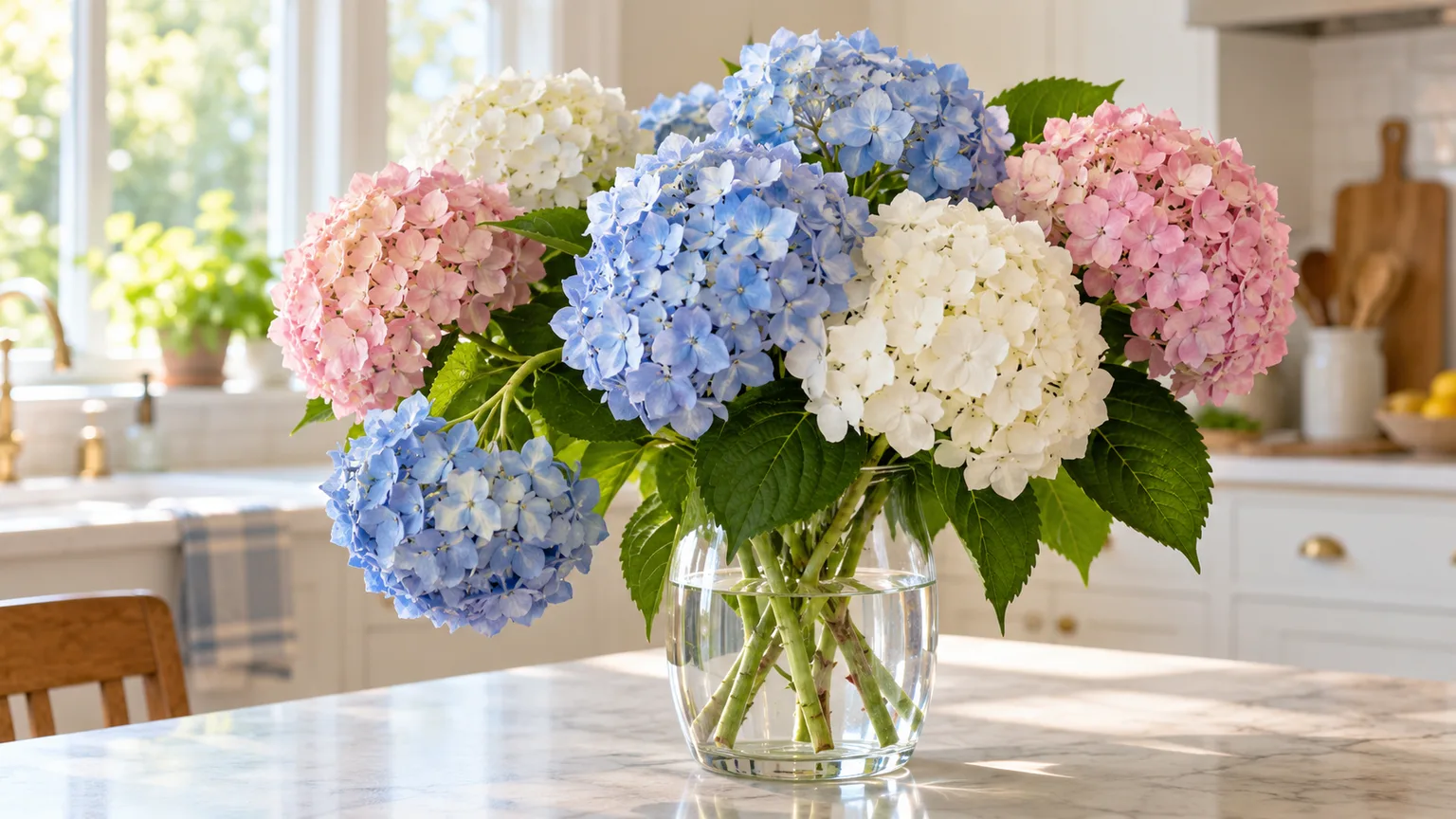
A cut hydrangea that suddenly droops is often worth trying to save, especially if its petals still feel soft and flexible. Start with a cool-water soak for the flower head, make a fresh angled cut, then give the stem clean warm water in a washed vase. That water-first reset is the useful part of the viral trick; alum is optional, and the available advice does not establish that it is the ingredient responsible for a comeback.
The order matters because a limp bloom can be dehydrated, while a brown, dry one may already be spent. The guide below separates those cases, explains what each step can plausibly do, and gives you a way to judge improvement without treating a single bouquet as proof that every part of a multi-step hack works.
The short answer: start with water, not alum
If your cut hydrangeas have gone limp but the florets are still supple, submerge the flower heads in cool water for about 30 minutes, then re-cut the stems with a clean sharp tool and place them in fresh warm water. Leave the arrangement in a cool spot and give it several hours; some blooms take longer to respond. The New York Botanical Garden recommends a one-hour cold-water head soak, followed by a 45-degree recut and warm-water conditioning overnight, so extending the soak toward an hour is reasonable for a very droopy head. New York Botanical Garden’s cut-flower guide also recommends removing foliage that would sit below the waterline and keeping arrangements away from heat and direct sun.
You do not need alum to make that first attempt. There are practical home-gardening accounts of alum dips, boiling-water dips, and whole-head soaking, but those methods vary and are often described together with recutting and fresh water. If you want to learn whether alum changes the result for your flowers, try it only after you have a water-only baseline or compare similar stems side by side; do not assume that an improvement proves the powder caused it.
Decide whether the bloom can recover
A salvageable hydrangea usually looks tired rather than damaged: its head hangs, the petals feel less crisp, and the color is still largely intact. A stem can be thirsty even when the vase contains water if the cut end is old, crushed, or sitting among cloudy debris. Those flowers are good candidates for a careful rehydration attempt because you can correct both the water supply and the condition of the stem.
A bloom that has turned brown, papery, translucent, or mushy is at a different stage. Water may firm some surrounding petals, but it cannot restore tissue that has dried, browned, or begun to decay. If the petals are already crisp and the head is aging naturally, remove it from the bouquet or preserve it as a dried flower instead of repeating a rescue that cannot make old tissue fresh again.
Also check where the droop starts. If the whole flower head bends at the neck, the stem may not be supplying enough water; if only a few outer florets are curled or browned, the head may simply be aging unevenly. If the stem is soft, slimy, or dark at the base, trim above the damaged portion and use a clean vase before deciding whether the bloom itself is finished.
Why cut hydrangea heads wilt
A flower head stays firm only while it can replace the water it loses to the surrounding air. Once a stem is cut, the plant no longer has roots to replenish that water, so a warm room, sunlit window, heater, or long delay between cutting and arranging can make a large head droop before a smaller flower shows much change. A vase that looks full is not proof that water is moving efficiently through every stem.
The stem end can also become less effective over time. A blunt or crushed cut, a stem that was out of water for a while, or debris and leaves breaking down in the vase all work against clean water uptake. This is why refreshing the cut and water is more practical than trying to force an old stem to drink by adding several substances at once.
Hydrangea florets are delicate, and a large flower head has many small surfaces that dry in indoor air. The New York Botanical Garden’s recommendation to dunk the head itself is useful because it treats the bloom as well as the stem; it does not mean that all wilt has the same cause or that any soak can reverse age-related browning. Think of the bath as a rehydration attempt, not a way to reset the flower’s natural lifespan.
What the viral treatment combines
The version that circulates online bundles several actions: cool water over the flower head, warm or very hot water in the vase, a new angled cut, and a stem dipped in alum. It can be tempting to call all of that “the alum trick,” but the label hides the fact that the flower also received a fresh cut and a new supply of water. If it perked up afterward, the result does not tell you which change mattered most.
The separate parts have different purposes. A cool bath exposes the florets to water; a fresh cut removes the old stem end; clean vase water restores the supply; and warm water is a conditioning choice supported by botanical-garden guidance. Alum is a separate powder treatment at the cut end, and advice about its amount, timing, and mechanism is not consistent enough to treat it as a required step.
The more useful question is not whether the clip looked convincing but which steps are repeatable and low-risk for your bouquet. You can start with the parts that do not require a special ingredient, check the bloom after a few hours, and reserve alum for a small comparison if you remain curious.
What botanical guidance and home trials actually show
The New York Botanical Garden gives a specific conditioning sequence for long-lasting hydrangeas: submerge the flower heads in a bowl of cold water for an hour, let them drip dry, recut the stems at an angle, and condition the stems in warm water overnight. It also recommends a clean vase, lower leaves removed, and a cool location out of direct sun. That is institutional cut-flower guidance for water and stem handling; it does not make alum part of the routine.
The Chicago Botanic Garden has described a small staff comparison that included alum powder, commercial flower food, a quick-dip conditioning product, and smashed stems. That is useful as a reminder that several popular treatments can be compared, but a garden blog demonstration is not the same as a replicated research study across cultivars, stem ages, and controlled storage conditions. Its page does not give a basis for promising that alum is the deciding factor in every bouquet. Chicago Botanic Garden’s cut-hydrangea comparison.
Household advice varies as well. Stacy Ling describes soaking heads and using alum as one conditioning option, while Tori Wesszer at Fraîche Living describes a near-boiling-water stem treatment; neither report establishes a standardized alum dose or proves that hot water and alum explain the same result. Stacy Ling’s practical guide and Tori Wesszer’s revival method at Fraîche Living are examples of reported home practice, not controlled evidence.
Taken together, the clearest recommendation is to use the steps supported by the botanical garden’s conditioning guidance first. A water-only rescue is easy to repeat, and it keeps you from exposing a tired flower to an unnecessary sequence of powders, slicing, and very hot water before you know whether it needs them.
A water-first rescue for drooping cut hydrangeas
Work with one stem or one small group at a time if the arrangement is fragile. The goal is to expose the flower head to clean cool water, refresh the stem end, and return it to a clean vase with enough water to reach the cut surface. You can decide whether any optional product is worth trying after the bloom has had time to respond.
1. Set up a clean basin and vase
Wash a bowl or clean sink and a vase with hot, soapy water, then rinse away residue. Dirty containers can seed the fresh water with debris before the flower has a chance to rehydrate, and a wide bowl makes it easier to immerse a large hydrangea head without crushing florets against the sides.
Set out cool water for the head soak and fresh warm tap water for the vase. “Warm” here means comfortably warm, not steaming or close to boiling; a home treatment should not depend on guessing a temperature that might injure tender tissue or burn you. Keep a sharp clean floral knife or bypass pruners nearby so you can make a smooth cut after the soak.
2. Soak the flower head in cool water
Lower the flower head into the bowl until the florets are covered, while keeping the leaves and most of the stem out of the bath when practical. Hold it under gently with a clean plate only if it floats; do not press hard enough to bruise the petals. Start with 20 to 30 minutes for a slightly limp bloom, then continue up to about an hour if it is still flexible and clearly dehydrated.
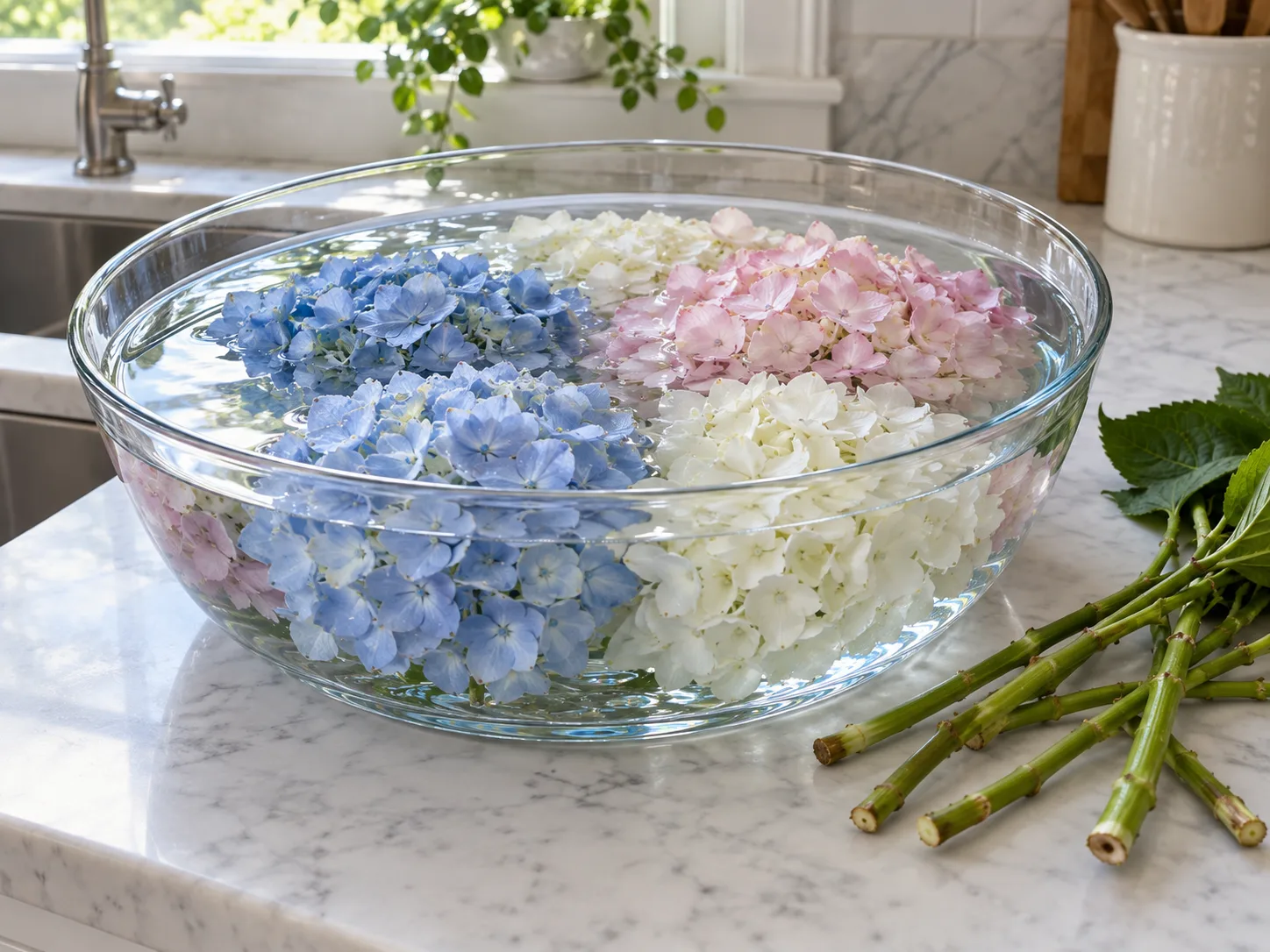
The New York Botanical Garden uses a one-hour soak, while household accounts often use shorter windows. There is no reason to keep the head submerged overnight as a default; a brief soak followed by stem conditioning gives you a clear first checkpoint and limits the time the petals remain wet. When you lift the bloom, let water drip away naturally rather than rubbing the florets with a towel.
3. Recut the stem and condition it in warm water
Remove any leaves that would sit under the vase waterline, then cut about an inch from the stem end with a sharp, clean tool. Make a fresh diagonal cut so the stem has an open end and does not sit flat against the bottom of the vase. If the stem is thick and woody, a short vertical slit near the base is sometimes used in cut-flower conditioning; avoid crushing the stem with a hammer, since bruised tissue is not a clean route for water uptake.
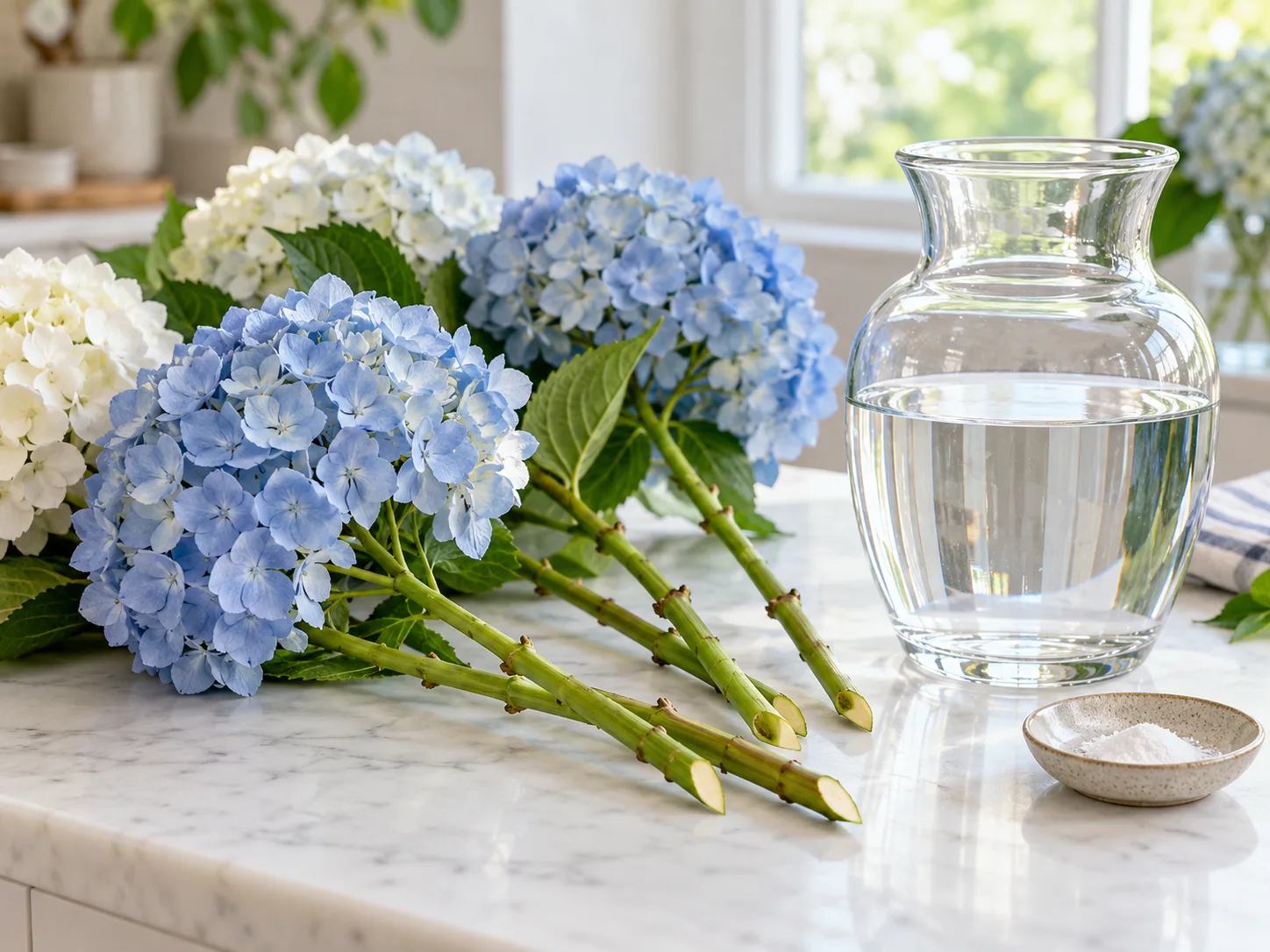
Put the stem straight into the clean vase, with the cut end below the waterline. Add commercial cut-flower food if you have a packet intended for bouquets and follow its label; otherwise, fresh clean water is a sound first attempt. The New York Botanical Garden recommends warm water for overnight conditioning, so keep the vase in a cool, shaded room while the stems take up water.
4. Check recovery before adding another treatment
Take a quick photo or note how the flower head hangs before treatment, then check it after an hour, after several hours, and the following morning. Look for a firmer neck, less drooping, and florets that feel less limp; a small change in position can be more meaningful than expecting the entire head to look newly cut. Do not repeatedly pull the stem out to inspect the base, since every interruption makes it harder to tell whether the treatment is helping.
If the head is improving, leave it in clean water and continue normal vase care. If one stem is unchanged but still supple, repeat a water-first reset once with another fresh cut only if the base looks blocked or damaged. If it is worsening, brown, or mushy, stop experimenting and remove it so a decaying stem does not sit in the same water as healthier flowers.
Is alum powder necessary?
No. Alum is a traditional cut-flower tip that some gardeners and floral arrangers report using on fresh stem ends, but the sources reviewed do not establish a reliable dose or a proven mechanism that makes it necessary for reviving wilted hydrangeas. The New York Botanical Garden’s conditioning sequence does not call for it, and the Chicago Botanic Garden’s comparison shows it as one of several treatments rather than an ingredient every hydrangea needs.
If you still want to try alum, use it as a separate, small comparison rather than adding an arbitrary amount to the vase. Select two similar stems from the same bouquet, make the same fresh cut on both, and give both the same soak, water depth, temperature, light, and observation time; apply alum only to one stem according to the product’s directions, if provided. If one stands better, repeat with another pair before deciding the powder mattered, because stems from one bunch can differ in maturity and prior water stress.
Do not treat alum as flower food. A powder on a cut end does not supply the same combination of ingredients as a commercial bouquet preservative, and an excess may cloud vase water or leave residue. When you do not have a measured direction from a reliable source, skip the powder and spend the effort on a clean vase, smooth recut, and consistent water instead.
Why near-boiling water is not the first step
Some home-gardening writers recommend a very hot or near-boiling dip for the lower stem, but instructions differ on how hot the water should be and how long the stem should stay in it. The New York Botanical Garden’s guidance for hydrangeas is warm water overnight after a cold head soak, not a near-boiling bath. For an ordinary vase rescue, comfortably warm water is easier to control and avoids scalding without requiring you to assume that hotter water is better.
Do not combine a head soak, very hot stem dip, alum, stem splitting, and homemade additives all at once. That makes it impossible to identify what helped and increases the chance of damaging a stem that may only need a fresh cut and water. If you have already tried the cool soak and clean recut without improvement, check the bloom’s condition before adding a more aggressive treatment.
If just one head droops in an arrangement
You do not have to dunk the entire bouquet or disturb every stem when a single hydrangea head starts to hang. Lift out the affected stem, remove any submerged leaves, and check whether the water is cloudy or the base is slimy; refresh the vase water for the whole arrangement if it is dirty. A separate basin lets you soak the one bloom without wetting neighboring flowers that may be in good condition.
After its head soak, make a small clean recut and return that stem to the arrangement only if the head remains firm enough to handle. If the other flowers are not hydrangeas, keep their florets above the basin because many flowers do not benefit from having their heads soaked. Dry the hydrangea by letting it drip over the sink before returning it to the bouquet, so damp petals are not pressed against other blooms or leaves.
What to do when the bloom does not perk up
First, confirm the basics rather than changing everything at once. Is the vase clean? Is the cut end fully underwater? Is the room warm or sunny? Does the base of the stem feel soft or smell unpleasant? Correct one clear problem, then give a still-supple bloom several more hours in a cool location.
If the flower remains limp after an overnight conditioning period, the head may be too old, the stem may have lost its ability to move water, or it may have been stressed before you bought or cut it. A water soak can help a dehydrated bloom but cannot reverse bruising, browning, or tissue decay. Repeating the same treatment over and over can also accelerate petal damage from handling.
Remove an irreversibly faded head from the vase and keep the remaining stems in fresh water. If the head is intact but past its fresh display stage, dry it as a separate project; these hydrangea drying methods explain how to preserve blooms that no longer look fresh in a vase. Set a realistic goal: rescuing a stem for a little longer is possible, but restoring a new-flower appearance or extending vase life indefinitely is not.
Prevent the next bouquet from wilting early
The rescue is less work when a cut hydrangea reaches water quickly and starts in a clean vase. For garden stems, take a bucket of water with you, cut only mature blooms, and move them into water as soon as they are cut. For purchased flowers, re-cut the stem ends before arranging instead of assuming that the florist’s original cuts are still fresh after storage and transport.
Hydrangeas drink readily, so check the water level daily and top it up when the cut ends are no longer submerged. Remove foliage below the waterline, use a clean vase, and replace cloudy water rather than simply pouring more water over it. Keep the bouquet away from direct sun, heating vents, and appliances that warm the room; a cooler display area slows moisture loss compared with a hot bright window.
Cut and transport garden stems while cool
If you are cutting from a shrub, choose a cool part of the day, such as morning, and avoid taking blooms when they are already limp from afternoon heat. Make a clean cut with sharp pruners and set each stem into a water-filled bucket before moving on to the next. That shortens the period when the cut surface is exposed to air and warm garden conditions.
Use mature flower heads that feel firm rather than soft, newly opened heads that have not finished developing. A fresh, mature bloom is a better starting point for a vase than a head that has already faded on the shrub. The exact time a cut flower lasts varies with the hydrangea type, flower maturity, indoor temperature, and how it was handled, so treat vase-life claims as ranges rather than guarantees.
Keep the vase water clean and the display cool
Wash the vase between bouquets and remove leaves that would decay in water. If you use a packet of flower food, make the solution at the stated dilution instead of adding extra powder; stronger is not automatically better. When the water turns cloudy or the stems begin to smell, empty the vase, rinse it, and refill it rather than trying to mask the problem with alum or fragrance.
Check the arrangement each day, since a large hydrangea head can use water faster than a small mixed bouquet. Refill before the cut ends are exposed, and if the arrangement has been sitting for several days, refresh the water and trim a little from the stem end if it looks discolored or clogged. These ordinary habits are more repeatable than waiting for a single viral trick to compensate for warm placement or dirty water.
Conclusion
A cool-water bath for the flower head, a clean angled recut, and fresh warm vase water are the best first moves for a wilted but still-supple cut hydrangea. The New York Botanical Garden supports that water-first sequence, while alum remains an optional folk treatment without a standardized dose or clear evidence that it is the key to recovery.
Give the bloom several hours in a cool place before judging it, and stop when the petals are brown, papery, or mushy. For the next bouquet, cut mature flowers while it is cool, get them into water promptly, and keep the vase clean. Those steps cannot make a cut flower last forever, but they give a recoverable hydrangea the best chance to stand up again.