Yellowjackets Characters as Plants: 7 Matches
From Shauna’s flytrap to Natalie’s bougainvillea, explore seven Yellowjackets plant matches and the facts that make each comparison work.
If the stranded soccer team from Yellowjackets were recast as plants, the obvious picks would be the ones with a sharp edge: a Venus flytrap, a thorny bougainvillea, maybe a flower with a reputation for danger. But a good match needs more than a dramatic color or a killer nickname. The best pairings connect a character’s public image, the parts she keeps hidden, and something genuinely distinctive about the plant.
These are fan interpretations, not canon, and they avoid major plot revelations. I’m matching the central seven to plants that offer a little more than a visual resemblance. Along the way, there are a few useful corrections: fungi are not plants, mock orange doesn’t bloom at night, and a Venus flytrap is much more selective than its reputation suggests.
How this fan cast works
Think of each pairing as a reading, not a diagnosis. A character can fit more than one plant, and a plant can suggest very different things depending on whether you focus on its flowers, survival strategy, growing conditions, or danger. The point is to make each comparison specific enough that you can see why it works—and where it stops working.
I also separate the character metaphor from the garden facts. “Hardy,” “toxic,” or “carnivorous” describes a real plant trait; it does not mean a character is literally any of those things. Where a plant has a care or safety catch, I mention it because the species may send readers from a fan listicle to an actual nursery.
The seven matches at a glance
| Character | Plant match | The connection |
|---|---|---|
| Shauna | Venus flytrap | A quiet exterior with a sharp, costly response when a boundary is crossed |
| Misty | Foxglove | A caretaker’s usefulness paired with a beauty that deserves caution |
| Taissa | Mock orange | A polished name and surface that don’t tell the whole story |
| Van | Hellebore | Winter presence, persistence, and a dry streak beneath the bloom |
| Lottie | Lotus | A spiritual image that can inspire people—or become a screen for their projections |
| Natalie | Bougainvillea | Bright, resilient, mobile, and protected by thorns |
| Jackie | Tropical hibiscus | A vivid social presence that depends on the right conditions |
Shauna: Venus flytrap
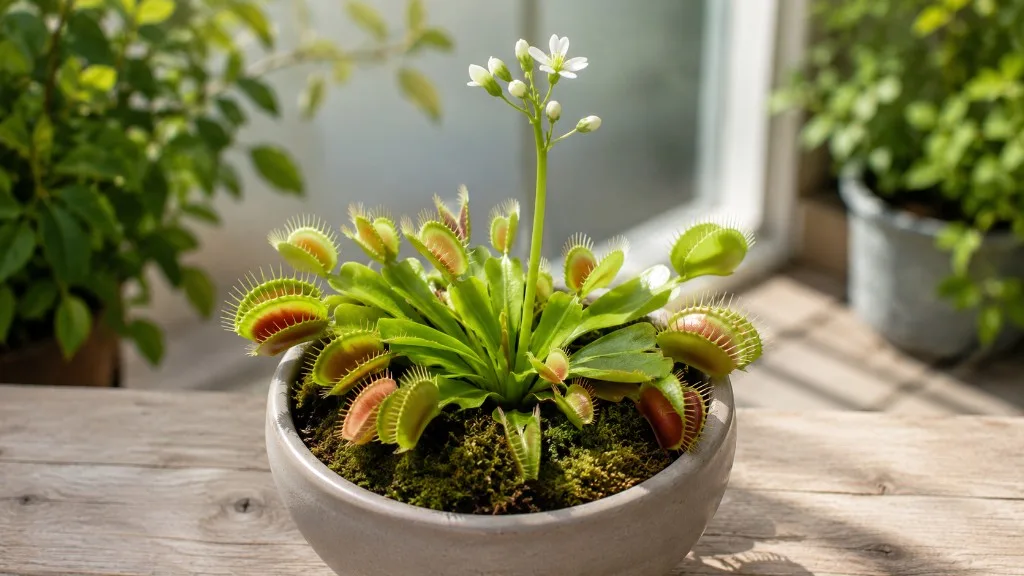
Shauna gets the Venus flytrap because the plant’s menace is easy to overread. Its hinged leaves look like jaws, and they do close on prey, but the trap is not a tiny animal lunging at everything that passes. A flytrap needs repeated stimulation of its trigger hairs before it shuts; continued movement inside the trap helps signal that prey is present. The plant spends energy on a capture rather than snapping shut for every stray touch. The Royal Horticultural Society’s guide and NC State Extension’s plant profile describe that specialized mechanism.
That distinction feels right for Shauna: tension can sit quietly for a long time, then a reaction arrives with consequences that cannot be undone by pretending nothing happened. The comparison isn’t that she is secretly a predator; it is that a calm-looking surface can conceal a reactive system with its own rules. A flytrap’s response is also costly and finite. Repeatedly triggering traps for amusement weakens the plant, so even its most theatrical feature is not an invitation to poke it.
The botanical version has a second, less obvious parallel: a Venus flytrap is native to a small coastal region of North and South Carolina, not to any generic “wild forest.” The U.S. Fish and Wildlife Service describes its restricted native range, and NC State Extension notes that wild collection is not a legal option. If you want one, choose nursery-propagated stock. It is a specialist plant that needs mineral-free water, bright light, nutrient-poor growing medium, and a cool seasonal rest; ordinary potting mix and tap water can be fatal. BBC Gardeners’ World and Savvy Gardening offer practical care context alongside the RHS guidance.
Misty: Foxglove
Misty’s strongest plant match is foxglove, Digitalis purpurea. Its tall flower spikes are charming from a distance and full of detail up close, much like Misty’s bright, helpful manner can make people underestimate the force of her attention. She wants to be useful and included; foxglove is also useful in a very particular context, but it is not a plant to handle casually or mistake for harmless decoration.
The comparison works because foxglove carries two truths at once: it is a striking cottage-garden flower and a plant with serious toxicity if eaten. NC State Extension notes its poisonous properties and its historical use in treating heart conditions; the ASPCA lists foxglove as toxic to dogs, cats, and horses. That fact is not a cute extension of the character joke. It is a practical warning: do not grow foxglove where children or animals are likely to chew it, and never use garden plants as medicine. NC State Extension’s foxglove profile gives the botanical description and growing conditions.
Why not simply make Misty a mushroom, as the familiar visual joke does? The fungus comparison is understandable, and mushrooms do suit an unsettling, hard-to-read character. But if the assignment is to choose a plant, foxglove brings the caretaker-and-danger tension into the plant kingdom while giving readers a more useful fact to remember: beauty does not certify a plant as safe.
Taissa: Mock orange
Mock orange suits Taissa because the name itself sounds like a neat explanation that turns out to be incomplete. Philadelphus coronarius is a rounded shrub with white flowers and a strong fragrance; despite the common name, it is not an orange tree. NC State Extension says its scent is especially enjoyable in the evening, which is a better detail than calling it a night-blooming plant. Evening fragrance and flowers that open only after dark are not the same thing. See NC State Extension’s mock-orange profile for its habit and site preferences.
The personality link is the gap between the version of Taissa that reads as composed and the parts of her life that do not fit that tidy image. Mock orange is most memorable when it is flowering and scented; outside that show, it is a plain green shrub that needs deliberate placement and occasional shaping. That gives the comparison more texture than “the flower blooms at night”: a polished impression can dominate the first encounter without describing the whole plant—or person.
Mock orange is a deciduous shrub for a garden bed, not a little indoor plant. It can grow in sun or partial shade and prefers moist, well-drained soil. Put it where you can enjoy the fragrance and give it enough room to mature; don’t buy it expecting an evergreen screen in every climate.
Van: Hellebore
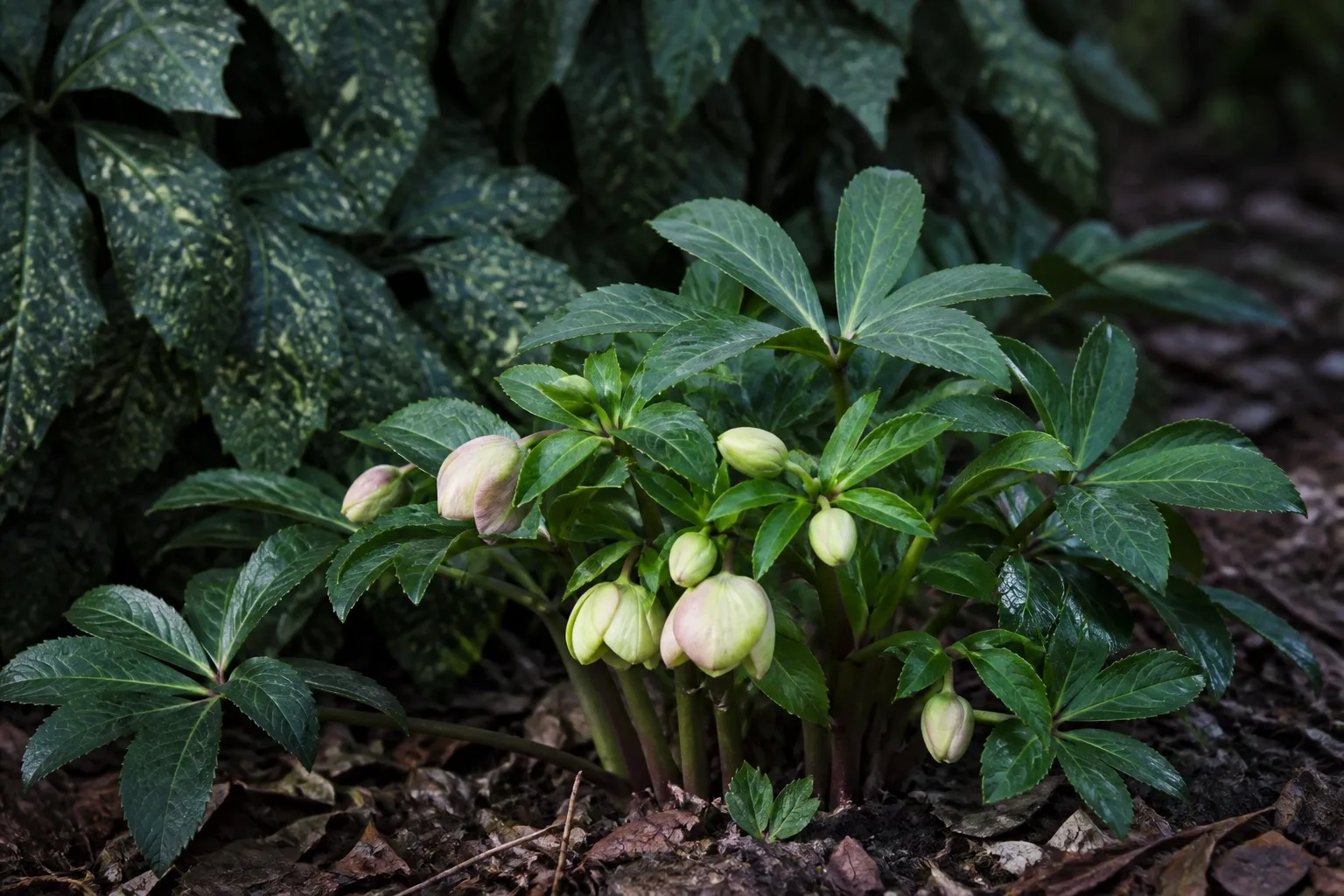
Van gets hellebore for its ability to hold the garden’s attention when many showier perennials have gone quiet. Hellebores bloom in winter or early spring, often with flowers angled downward beneath leathery leaves. They are persistent garden plants, and that steady presence fits Van’s dry humor and refusal to disappear into the background.
“Hard to kill” needs a little care, though. Hellebores are not invulnerable, and their evergreen leaves can look battered after a harsh winter. They do best in organically rich, well-drained soil and light to moderate shade, with shelter from cold winds. NC State Extension’s hellebores profile describes the winter bloom and growing conditions; it also warns that the leaves, stems, and roots are poisonous if eaten. Resilience is a fit for Van. Invincibility is not a botanical fact.
Lottie: Lotus
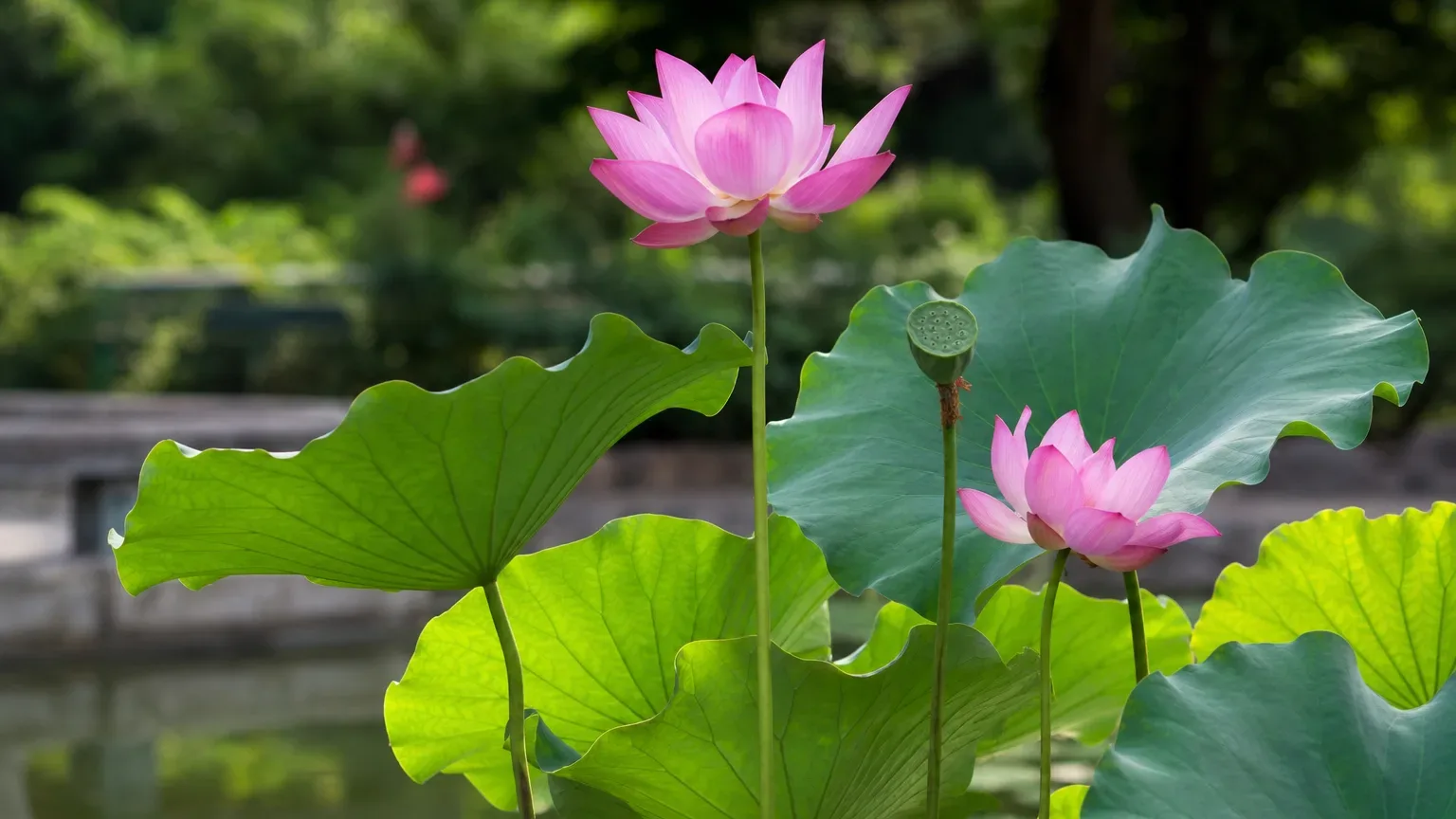
Lottie’s match is a lotus, with purple as the palette rather than a claim that “purple lotus” names one single species. A lotus rises from water and mud into a flower that can look almost improbably composed. That image can stand for Lottie’s spiritual attention and the way other people gather meaning around her; it can also suggest how easily a symbol becomes more powerful than the person carrying it.
That ambiguity matters. A lotus does not prove that someone is enlightened, and spiritual meanings vary across traditions and individuals; NC State Extension notes the sacred status of the lotus in Buddhism and Hinduism in its sacred-lotus profile. In this fan cast, the flower is a visual metaphor for a person whose inward impressions become a shared language. Whether those impressions are guidance, projection, or some mixture is part of the tension, so the plant should not flatten Lottie into a simple “mystic” label.
In a real garden, lotus is an aquatic plant, not a standard windowsill houseplant. Its image belongs with water and broad leaves, which is why it makes such a strong symbolic match even if it is the least casual choice in this lineup.
Natalie: Bougainvillea
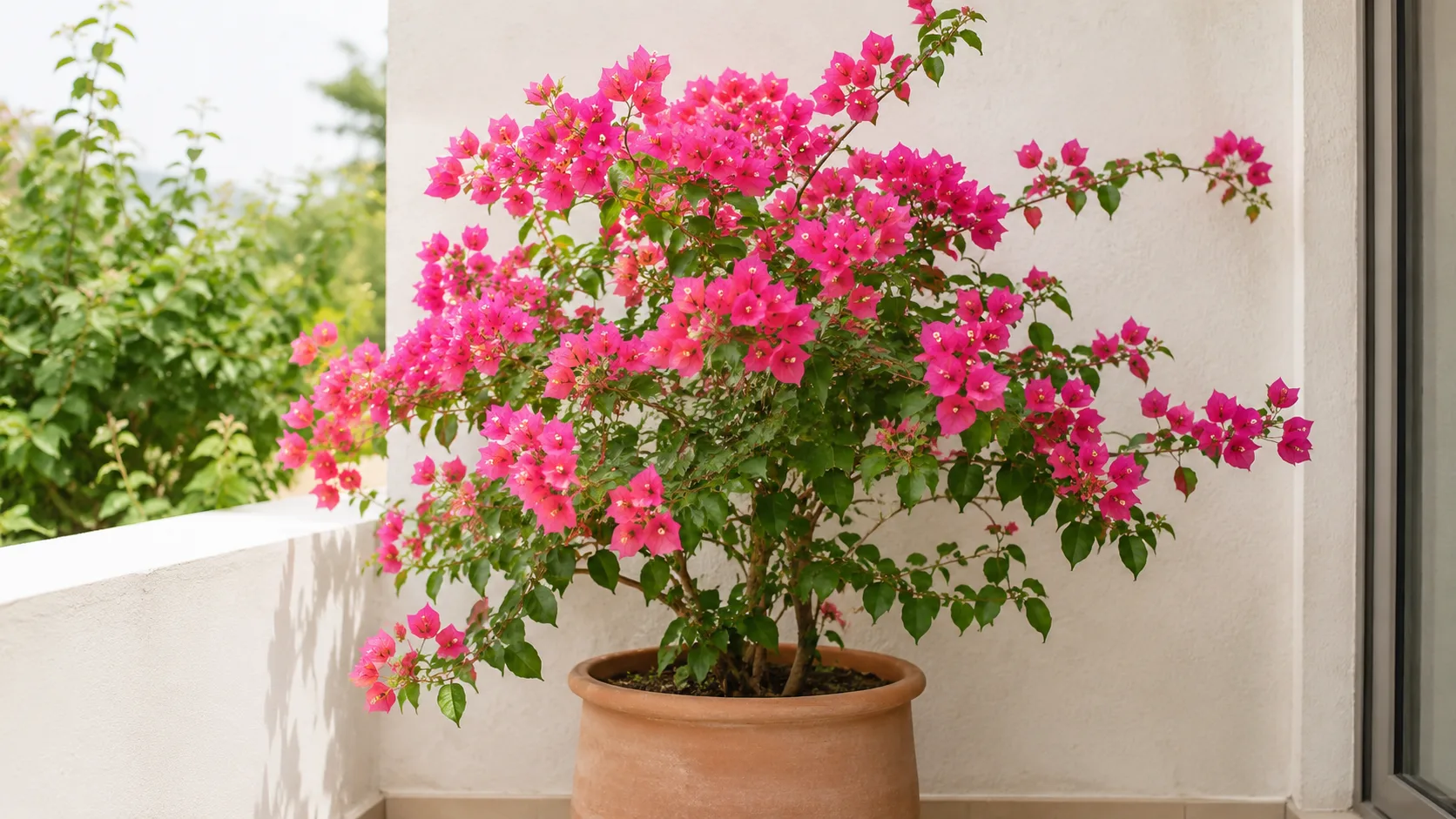
Bougainvillea fits Natalie because it is vivid without being delicate. The bright color that people call its flower is mostly made of papery bracts surrounding small true flowers; underneath that color, the plant grows as a woody, scrambling vine with thorns. NC State Extension describes its colorful bracts, thorny stems, and tolerance for heat and dry conditions in its bougainvillea profile.
That combination makes the match feel earned. Natalie is often the person who sees the ugly truth in a room before anyone else wants to name it, but she is also resourceful enough to keep moving when the setting changes. Bougainvillea’s flexible growth and hard edges suggest that ability to adapt while protecting a vulnerable center. Its color draws the eye; the thorns set a boundary.
The practical catch is climate. Bougainvillea wants strong sun, good drainage, and warmth; frost can injure it, so in colder regions it is commonly grown in a container that can move under cover. BBC Gardeners’ World’s growing guide notes the need for a sunny position and winter protection in cool climates. Wear gloves when pruning, and don’t plant a thorny vine where people need to brush past it every day.
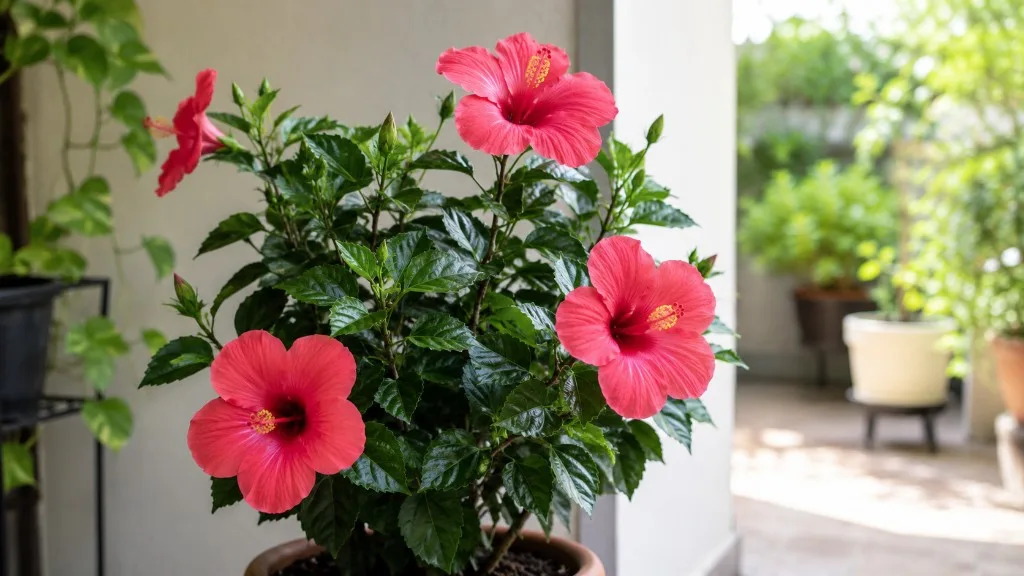
Jackie: Tropical hibiscus
Jackie is tropical hibiscus: large, brilliant, immediately legible as the center of attention. The flowers can look almost too polished to be real, and that glamour suits a character whose social role depends on being seen and accepted. Yet the match is about conditions as much as appearance. Chinese hibiscus, Hibiscus rosa-sinensis, is a tropical evergreen shrub that needs warmth and protection from frost; it is not interchangeable with every plant called hardy hibiscus.
That distinction helps the metaphor. Jackie’s outward confidence can seem effortless, but the tropical plant needs an environment that supports it. Move it abruptly or expose it to cold and it may drop leaves or buds. NC State Extension’s Chinese hibiscus profile describes its bold flowers and frost sensitivity. “Doesn’t do well in the cold” is fair for this tropical species, not a rule for the whole hibiscus genus.
What the botanical details change
The fun of matching characters to plants is the leap from a recognizable trait to a new interpretation. The leap gets better when the underlying fact is right. A flower’s name, color, or reputation can be a starting point, but the plant’s actual biology often supplies a more interesting reason to keep the match.
Why Misty is not a mushroom
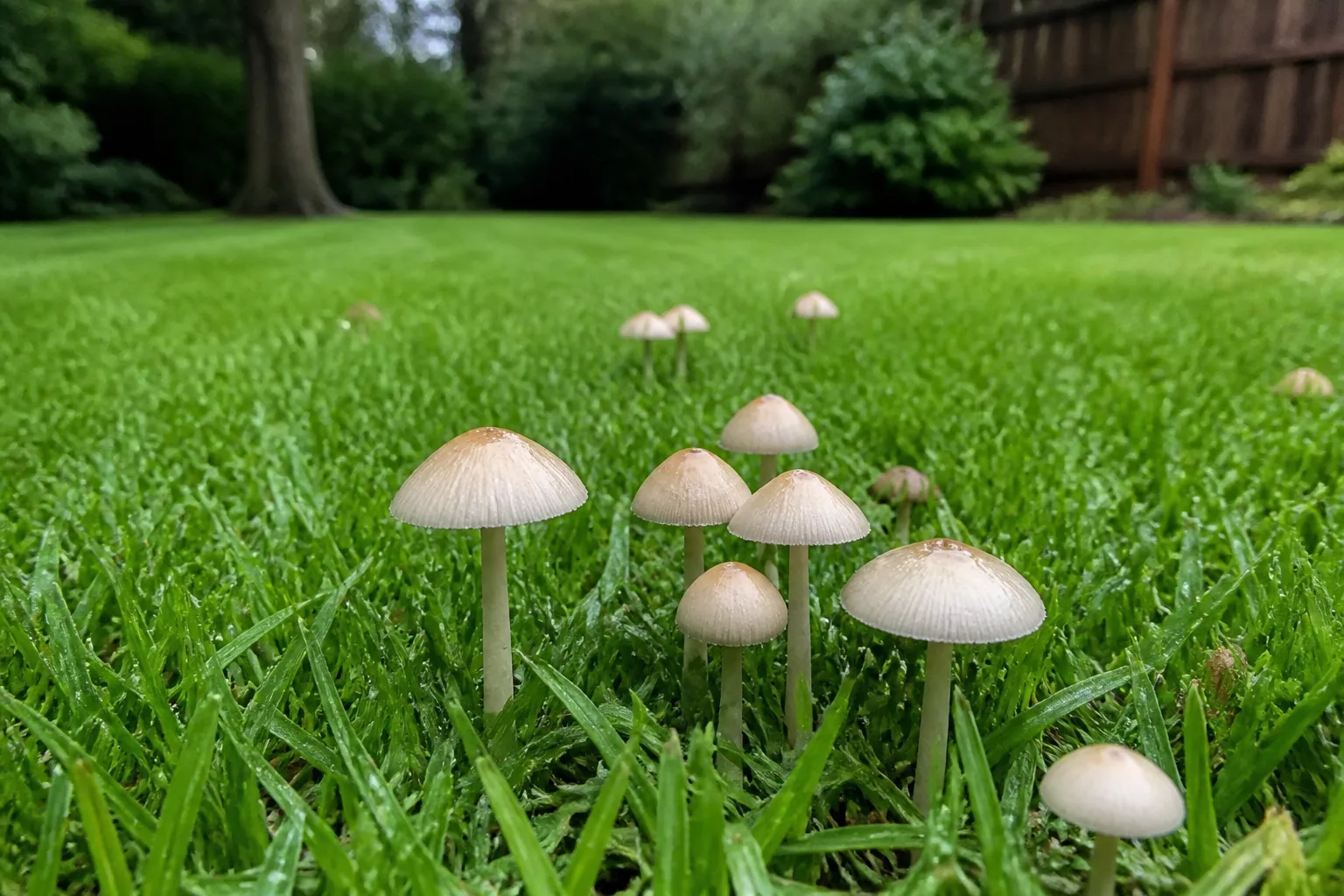
Mushrooms are fungi, not plants. They do not photosynthesize; their visible caps are reproductive structures, while much of the fungus lives as a network of threads in its growing material. Calling Misty a mushroom can still work as a pop-culture metaphor, but it answers a different question from “which plant would she be?” Foxglove preserves the unsettling beauty and adds the sharper idea of a caregiver whose usefulness should never be confused with safety.
A flytrap is choosy, not touch-triggered theater
A Venus flytrap does not snap shut every time a leaf is brushed. Its trigger hairs need repeated stimulation close together, and the plant’s digestion depends on further signals from the prey. RHS explains that traps have a limited number of closures; repeatedly poking them for a reaction spends energy without feeding the plant. That makes the real organism less like a movie monster and more like a highly specialized system that responds when several conditions line up.
Mock orange is fragrant, not a night bloomer
The useful Taissa comparison is the scent’s evening presence, not flowers that suddenly open at night. Mock orange is valued for fragrant white flowers, and its common name refers to the orange-like scent rather than an orange fruit or citrus relationship. Keeping those details straight makes the metaphor more distinctive: the mismatch is in the name and the polished first impression, while the fragrance rewards someone who stays long enough to notice it.
Choosing a real plant from the lineup
A character match can make you curious about a plant, but choose by site before personality. A Venus flytrap, a lotus, and bougainvillea ask for almost opposite environments, so buying the one with the best story can create a disappointing gardening project. Start with your light, winter temperatures, soil or water setup, and the amount of maintenance you want to give.
Start with your climate and growing space
For a shaded garden with reasonably rich soil, a hellebore may be a more realistic fit than a tropical hibiscus or bougainvillea. For a sunny, warm patio, bougainvillea is more plausible if you can protect it from winter cold. A Venus flytrap suits someone willing to use mineral-free water, a specialist growing medium, and a cool rest period; it is not a standard low-effort desk plant. Lotus belongs in a water-garden setup, while mock orange needs outdoor shrub space.
The details shift with region and cultivar. “Hibiscus” can mean tropical Chinese hibiscus or cold-hardy perennial species; “lotus” can refer to plants and cultivars with different growth habits. Read the botanical name on the label, check your local hardiness guidance, and ask a nursery how the plant overwinters in your area. BBC Gardeners’ World’s bougainvillea advice is written for a cool British climate, for example, so its exact winter schedule should not be transplanted to a frost-free garden.
Check the safety and maintenance trade-offs
Two of the moodier choices call for particular care around people and animals. Foxglove can cause serious harm if eaten, and the ASPCA specifically lists it as toxic to dogs, cats, and horses. NC State Extension warns that hellebore leaves, stems, and roots are poisonous if ingested. Bougainvillea has thorns, while a flytrap’s special water and dormancy needs are easy to overlook. Check each plant’s own profile before putting it in a child-accessible bed or a pet’s favorite route.
If an animal may have eaten foxglove, contact a veterinarian or animal poison-control service promptly rather than waiting for symptoms. For other plants, identify the exact species before assuming that a common name tells the whole safety story. The visual joke is optional; a safe location and a plant suited to your climate are what make the garden version work.
Conclusion
Shauna as a Venus flytrap and Natalie as bougainvillea are the clearest matches, but the lineup is stronger when it leaves room for contradiction: Misty’s foxglove is useful and dangerous, Taissa’s mock orange carries a misleading name, Van’s hellebore is resilient but not invulnerable, Lottie’s lotus invites projection, and Jackie’s tropical hibiscus depends on warmth. Those are readings, not official character assignments, and a different fan could make a convincing case for a different garden.
The plant facts make the game more fun. A mushroom belongs to the fungi, a flytrap has a precise trigger mechanism, and mock orange’s evening scent is not proof of nocturnal blooming. If one of these plants earns a place in your own garden, let the match spark the idea and let the species’ real light, climate, maintenance, and safety needs decide.