Orange Tree Care Guide: Citrus sinensis Basics
Citrus sinensis
Grow Citrus sinensis in full sun, slightly acidic free-draining soil, and even moisture. Learn orange tree watering, repotting, fruiting, winter, thorn, and pet-safety essentials.
Orange Tree Care Guide: Citrus sinensis Basics
Start with wateringThe most common care mistake for Orange TreeWatering guide →Orange Tree care essentials
Light
Water
Water deeply when the upper 2–5 cm of mix has partly dried, then let excess drain. Keep actively growing and fruiting trees evenly moist without waterlogging; use less water during cool, slow winter growth.
Soil
Deep, fertile, slightly acidic loam that holds even moisture but drains freely. For containers, use a peat-free loam-based citrus mix amended with about 20% coarse grit or perlite. Target pH 5.5–6.5.
Humidity
Temperature
Fertilizer
About Orange Tree
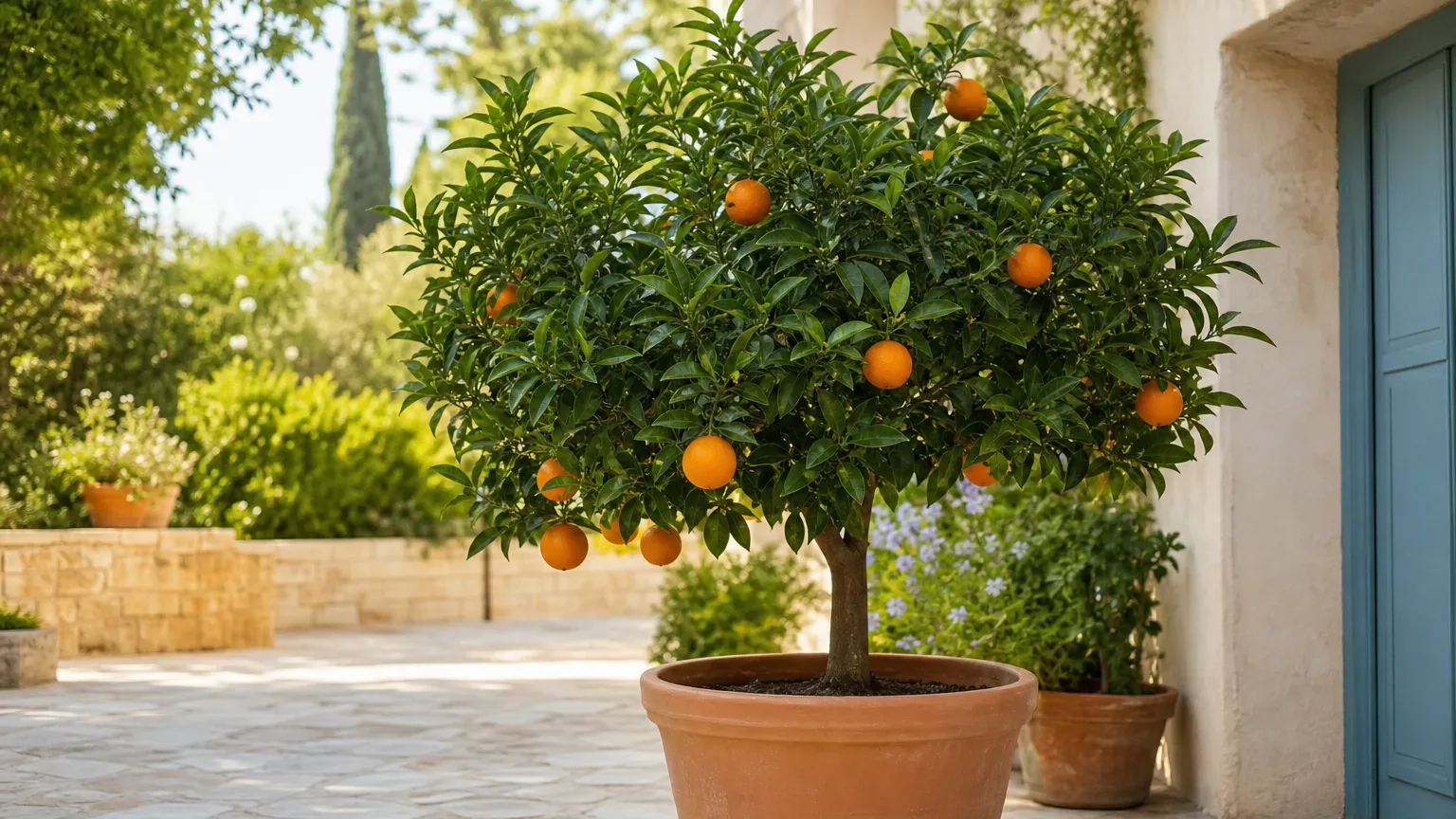
Orange Tree is native to Subtropical Asia; domesticated in Asia, with southern China considered a likely origin, typically reaches 6–9 m (20–30 ft) in the ground; usually maintained at 2.5–4 m (8–13 ft) in large containers or protected cultivation indoors, with moderate; faster in sustained warmth, full sun, and fertile, evenly moist soil growth. Orange Tree has a tree like growth habit and part of the Rutaceae family. It is also known as Sweet Orange, Sweet Orange Tree, Navel Orange, Mosambi, and Santra.
| Detail | Information |
|---|---|
| Also known as | Sweet Orange, Sweet Orange Tree, Navel Orange, Mosambi, Santra |
| Native region | Subtropical Asia; domesticated in Asia, with southern China considered a likely origin |
| Mature size | 6–9 m (20–30 ft) in the ground; usually maintained at 2.5–4 m (8–13 ft) in large containers or protected cultivation |
| Growth rate | Moderate; faster in sustained warmth, full sun, and fertile, evenly moist soil |
| Growth habit | Tree Like |
| Scientific name | Citrus sinensis |
| Family | Rutaceae |
Orange Tree Care Guide: Citrus sinensis Basics
Orange tree is a sun-loving evergreen fruit tree, not a dim-room foliage plant. Citrus sinensis—sweet orange, santra, or navel types in many Indian markets—needs strong light, frost-free warmth, free-draining roots, and even moisture while it flowers or carries fruit. Get those basics right and a grafted cultivar can thrive on a sunny terrace or in a warm courtyard; park it in a closed living room or a waterlogged pot and you will mostly grow yellow leaves and dropped blossom.
For home growers in India and similar warm climates, the practical challenge is rarely keeping santra alive through summer. Established trees tolerate heat well. The harder jobs are preventing monsoon saturation, giving enough direct sun for fruit to size, and protecting tender growth when nights turn unexpectedly cool.
Quick orange tree care at a glance
- Light: Full outdoor sun—at least six hours of direct light; more helps flowering and ripening.
- Habit: Evergreen, spiny, self-fertile fruit tree; flowers and fruit can overlap on the same branches.
- Water: Soak when the upper 2–5 cm of mix is partly dry; keep evenly moist during active growth and fruit swell; ease off in cool weather.
- Soil: Slightly acidic, loam-based mix with grit or perlite; intolerant of heavy, saturated soil.
- Pot: Free-draining container; enlarge gradually; never leave standing in runoff.
- Feeding: Citrus-formulated feed through the year at label strength; switch summer/winter formulas if your product line recommends it.
- Cold: Frost-tender; protect new growth near freezing and move portable trees under bright frost-free cover before cold snaps.
If the tree declines, check the root zone before buying a tonic. Wet, sour mix needs drainage correction; a light pot and curled leaves need a thorough soak. The Orange Tree watering guide and Orange Tree soil guide separate those problems in more detail.
What kind of plant is an orange tree?
Citrus sinensis is a small evergreen tree in the rue family (Rutaceae). Missouri Botanical Garden describes sweet orange as originally domesticated in subtropical Asia, with glossy aromatic leaves, fragrant white flowers, and round to slightly oval fruit. NC State Extension notes it is a hybrid with a long cultivation history and names China as a likely centre of early use—helpful context for Indian growers who already know santra as a familiar orchard crop.
Unlike deciduous temperate fruit trees, orange keeps its leaves year-round and seasons mainly through growth rate, flowering, and ripening rather than bare dormancy. That evergreen habit changes watering logic: the plant still transpires in winter, but much more slowly, so saturated mix is a bigger risk than a briefly dry surface.
Sweet orange vs other citrus at home
Sweet orange sits between lemon and calamondin in temperament. RHS citrus guidance groups all container citrus under similar light, feeding, and winter-protection rules, but cold tolerance and humidity needs differ by type. Lemons often accept cooler winter rooms than limes or calamondins. Sweet orange wants steady warmth, excellent drainage, and strong sun—closer to a terrace fruit tree than to a shade-tolerant houseplant. If you already grow mosambi or lemon, reuse the citrus mindset but do not copy their exact water or cold limits without checking each species.
Growth habit and realistic mature size
In open ground, Missouri Botanical Garden records sweet orange reaching up to about 30 feet (9 m), with slender spines at leaf axils especially on vigorous young shoots. NC State Extension lists a typical range of about 8–30 feet tall and 8–15 feet wide depending on cultivar and site. RHS gives a more conservatory-oriented frame of 2.5–4 m height and 1–1.5 m spread when grown as a container shrub or small tree over 10–20 years.
Container culture and pruning keep home plants much smaller, but they do not rewrite the species. A balcony santra still wants a woody root system, a stable pot, and enough canopy room for airflow. Expect moderate growth in sustained warmth, full sun, and fertile, evenly moist—but never waterlogged—soil.
Choose a grafted cultivar, not a seedling guess
Buy a labelled, grafted cultivar when dependable fruit and manageable size matter. RHS warns that seedlings do not come true to type, and NC State recommends grafting among standard propagation routes. Seed-grown oranges can take many years to crop and may not match the parent fruit. Named navel types such as ‘Washington’ are valued for seedless, easy-peel fruit, though Missouri Botanical Garden notes some cultivars dislike very hot semi-tropical lowlands or very dry desert edges—worth remembering if your site is extreme.
Inspect nursery stock for a firm graft union, healthy green leaves, no sour smell from the pot, and clean leaf undersides. Confirm expected mature size and rootstock with the seller before you commit terrace space.
Best placement in India and warm climates
Give orange tree the sunniest sheltered terrace, courtyard, balcony, or conservatory you can offer. NC State lists full sun and frost tenderness as core traits, and recommends morning sun where tender new wood might meet late cool nights. In most Indian plains and coastal cities, winter cold is mild compared with temperate regions, but sudden January dips or hill-station nights can still burn tender flush.
Protect young container plants from drying wind and from roof runoff during monsoon. Stagnant humidity without airflow can encourage pests; moving air plus strong light is the better combination. Where occasional frost is possible, plan frost-free winter shelter before damage appears—portable trees are easier to protect than in-ground specimens.
Growing orange tree in a large container
Yes—sweet orange can flower and fruit in a large outdoor pot when drainage and sun are excellent. RHS recommends peat-free, loam-based potting compost with added grit in full light, moving plants outside for summer where climate allows. Use a heavy pot with several open drainage holes, start only one size wider than the root ball, and step up gradually as roots fill the mix. An oversized tub around a small rootball stays wet too long; a severely rootbound pot can dry within a day in terrace heat and shed flowers or young fruit.
NC State cautions that citrus dislikes root disturbance, so repot carefully and avoid frequent unnecessary moves. Plan for Orange Tree repotting every two to three years, or sooner if roots circle densely or water runs straight through the rootball. A bright living room is a short winter refuge, not a year-round fruiting site.
Light: treat orange tree as a full-sun fruit tree
Orange tree needs full sun. Missouri Botanical Garden specifies full sun in deep, evenly moist, well-draining soil, and NC State calls direct sunlight a requirement. RHS likewise lists full sun with south- or west-facing sheltered exposure for container culture.
Aim for at least six hours of direct outdoor light daily; more is better for compact growth and sweeter fruit. Acclimate nursery foliage over several days when moving from shade net to open terrace concrete. Pale, leggy shoots and sparse flowering usually mean the site is too dim. For window choice, intensity limits, and sunburn signs, use the Orange Tree light guide.
Watering through heat, fruit swell, and winter slowdown
Water by the root zone, not a fixed calendar. Check the upper 2–5 cm of mix; when that layer is partly dry, soak thoroughly until excess drains, then empty any saucer. RHS citrus culture advises regular summer watering to keep compost evenly moist, while in winter indoors you should let the surface partly dry before watering again—overwatering in cool weather is among the commonest citrus failures.
Hot active growth on a sunny terrace may need checking every day or two; cool winter slowdown may mean weekly checks are enough. Even moisture matters from flowering through fruit swell; repeated drought can trigger flower or young-fruit drop, while chronic saturation yellows leaves and rots roots. During monsoon, pause irrigation when rain is already wetting the root zone, and move pots out of closed saucers. Seasonal examples and diagnostic signs live in the Orange Tree watering guide.
Soil and drainage for gardens and pots
Use deep, fertile, slightly acidic soil that holds even moisture yet drains freely. Missouri Botanical Garden recommends sandy loams and warns that orange is intolerant of heavy, saturated soils. NC State prefers pH around 5–6 but tolerates neutral to alkaline ranges when drainage is good. RHS lists moist but well-drained loam with acid to neutral pH for container plants.
A practical pot blend is about 60% peat-free loam-based mix, 20% fine composted bark or mature compost, and 20% coarse grit or perlite. The goal is prompt drainage after each soak—especially important in humid monsoon weather. Tolerance of garden loam does not make a closed decorative pot safe. Mix recipes, pH context, and warning signs are covered in the Orange Tree soil guide.
Feeding citrus without forcing weak growth
Citrus are hungry plants. RHS recommends feeding throughout the year with products formulated for citrus—higher-nitrogen summer feeds from late March to October, then a more balanced winter formula from November to mid-March, always at label dilution. Lack of nutrients shows as pale leaves, weak new shoots, or poor fruit hold, but fertilizer cannot fix dim light, waterlogged soil, or a rootbound pot.
Correct placement and drainage before escalating feed strength. Compost top-dressing between repots can supplement a light container program. Rates, deficiency signs, and overfeeding risks belong in the Orange Tree fertilizer guide.
Flowering, fruit set, and harvest expectations
Sweet orange is self-fertile, so one tree can set fruit without a pollinator partner. RHS notes that citrus flowers do not require cross-pollination, though stable warmth, humidity, and insect activity still influence how many flowers become fruit. Fragrant white blossom may share the canopy with slowly ripening oranges because fruit can take many months to mature.
On a small container tree, thin an excessive crop so branches and roots are not overburdened. Harvest with secateurs rather than pulling fruit from thorny shoots. Major pruning timing and wood selection belong in the Orange Tree pruning guide; vegetative multiplication of a favourite cultivar is covered in Orange Tree propagation.
Thorn safety and basic housekeeping
RHS describes Citrus sinensis as spiny, and Missouri Botanical Garden notes slender axillary spines especially on new growth. Wear thick gloves for pruning and harvest, keep thorny branches above eye level on busy terraces, and teach children to treat the tree as a fruit crop rather than a climbing frame.
Inspect protected trees regularly for scale insects, mealybugs, and spider mites—RHS lists these as common citrus pests indoors or under cover. Sticky honeydew, pale stippling, webbing, or shell-like bumps are better warning signs than one old yellow leaf. Improve light and root aeration before stacking chemical treatments.
Pet cautions around orange tree
Ripe orange flesh is a familiar human food, but the plant is not pet-safe overall. ASPCA lists Citrus sinensis as toxic to cats, dogs, and horses because essential oils and psoralens in skins and plant material can cause vomiting, diarrhoea, depression, or dermatitis, while noting the fruit itself is edible. Keep leaves, stems, peel, prunings, and concentrated citrus oils away from pets, and contact a veterinarian after meaningful ingestion. Human edibility of the arils is not a substitute for species-specific pet guidance.
Common mistakes and the first corrective action
The most common failures share one pattern: treating sweet orange like a low-light houseplant or watering it on a rigid schedule through cool, slow weeks. Too little sun stalls flowering. Winter overwatering yellows leaves while mix stays wet. Monsoon runoff and closed saucers smother roots. Buying a seedling for quick santra harvest sets false timelines. Ignoring thorns turns routine harvest into an injury risk.
First action when unsure: move the tree to the brightest outdoor spot available, check whether the mix is soggy or bone dry, and correct drainage or moisture before adding fertilizer or making large pruning cuts. If flowers are present, prioritize even watering over heroic dry stress. If leaves drop after a sudden move indoors, stabilize light and humidity before panicking.
When to use this page vs other Orange Tree guides
Use this overview to decide whether an orange tree fits your site, pot, and climate, and to set expectations for size, sun, and fruiting. Switch to sibling guides when you need depth on one task:
- Orange Tree light — terrace intensity, low-light limits, sunburn.
- Orange Tree watering — dryness checks, monsoon pauses, fruit-drop prevention.
- Orange Tree soil — mix recipes, drainage fixes, pH context.
- Orange Tree fertilizer — seasonal feeds, deficiency and burn signs.
- Orange Tree repotting — pot size, root checks, aftercare.
- Orange Tree propagation — cuttings, grafting context, aftercare.
- Orange Tree pruning — shape, thinning, and post-harvest cuts.
Return to the Orange Tree plant hub for the species profile and cluster navigation.
Related Orange Tree guides
- Orange Tree overview — this page: identity, placement, and care map.
- Orange Tree light — full-sun requirements and warning signs.
- Orange Tree watering — even moisture through flowering and fruit swell.
- Orange Tree soil — free-draining mixes for humid seasons.
- Orange Tree fertilizer — year-round citrus feeding basics.
- Orange Tree repotting — container refresh without drowning roots.
- Orange Tree propagation — vegetative routes for named cultivars.
- Orange Tree pruning — canopy balance and harvest timing.
Conclusion
Sweet orange rewards growers who treat it as a sun-loving evergreen fruit tree: full outdoor light, open drainage, even watering while flowers and fruit develop, and frost protection when nights turn cold. In India and other warm regions it thrives on terraces and in courtyards when monsoon sogginess and winter overwatering are controlled. Start with a grafted cultivar, give it real sun, and open the sibling guides when one care topic needs a deeper fix.
How to care for Orange Tree?
When should you water Orange Tree?
Water deeply when the upper 2–5 cm of mix has partly dried, then let excess drain. Keep actively growing and fruiting trees evenly moist without waterlogging; use less water during cool, slow winter growth.
- Test the upper 2–5 cm and lift the pot - Water deeply when the upper 2–5 cm of mix has partly dried, then let excess drain.
- water thoroughly when the surface is partly dry and the container feels lighter - Water deeply when the upper 2–5 cm of mix has partly dried, then let excess drain.
- Drain excess water - Water deeply when the upper 2–5 cm of mix has partly dried, then let excess drain.
What soil works best for Orange Tree?
Deep, fertile, slightly acidic loam that holds even moisture but drains freely. For containers, use a peat-free loam-based citrus mix amended with about 20% coarse grit or perlite. Target pH 5.5–6.5.
- 60% peat-free loam-based potting mix - For containers, use a peat-free loam-based citrus mix amended with about 20% coarse grit or perlite.
- 20% fine composted bark or mature compost - For containers, use a peat-free loam-based citrus mix amended with about 20% coarse grit or perlite.
- 20% coarse grit or perlite - For containers, use a peat-free loam-based citrus mix amended with about 20% coarse grit or perlite.
Grower notes for Orange Tree
What matters most with Orange Tree
Sweet orange is a sun-loving evergreen fruit tree, not a dim-room houseplant. Give Citrus sinensis full sun, steady warmth, a free-draining root zone, and even moisture while it is flowering or carrying fruit. Chronic saturation is more dangerous than a briefly dry surface, while repeated drought can trigger flower and young-fruit drop. Change one care variable at a time so the tree can acclimate.
Best placement in a real home
Place a container tree in the sunniest sheltered balcony, terrace, courtyard, greenhouse, or conservatory available. Aim for at least six hours of direct sun and rotate the pot periodically for balanced growth. Harden it off gradually before moving it into stronger outdoor sun. Sweet orange is frost-tender: protect new growth from temperatures near 0°C (32°F), and move portable trees under bright frost-free cover before cold weather.
Before you buy this plant
Choose a named, grafted cultivar if dependable fruit and manageable size matter; seed-grown oranges may take many years to crop and do not reliably match the parent fruit. Inspect leaf undersides and branch joints for scale, mealybugs, and spider mites. Select a tree with a firm graft union, healthy green leaves, and no sour smell from the pot. Confirm the rootstock and expected mature size with the nursery.
First month after bringing it home
Quarantine the tree, keep it in bright stable conditions, and learn how quickly its container dries before repotting. Do not place a small rootball into an oversized volume of wet compost. Some leaf, flower, or fruit drop can follow abrupt changes in light, temperature, or humidity; correct the environment before adding extra fertiliser or water.
Pet and thorn safety
ASPCA lists Citrus sinensis as toxic to cats, dogs, and horses because the skins and plant material contain essential oils and psoralens; the edible fruit flesh is the exception. Exposure can cause vomiting, diarrhoea, depression, or dermatitis. Keep leaves, peel, prunings, and concentrated citrus oils away from pets. Orange trees can also carry slender, sharp thorns at leaf axils, especially on vigorous young growth, so wear thick gloves and keep branches away from eyes, children, and pet paths.
Flowers, fruit, and realistic expectations
Orange trees are self-fertile, so one tree can set fruit, but intense light, warmth, nutrition, and stable moisture determine whether flowers hold. Fragrant white blossom may share the canopy with slowly ripening fruit. Thin an excessive crop on a small container tree so branches and roots are not overburdened, and use secateurs rather than pulling ripe oranges from thorny shoots.
Is Orange Tree safe for pets?
ASPCA lists Citrus sinensis as toxic to cats, dogs, and horses. Essential oils and psoralens in the skin and plant material can cause vomiting, diarrhoea, depression, or dermatitis; the fruit flesh is edible.
Sweet orange skin, leaves, stems, and other plant material contain essential oils and psoralens and should be kept away from pets. ASPCA lists Citrus sinensis as toxic to cats, dogs, and horses, while noting that the fruit is edible. Concentrated citrus essential oil creates a separate, higher-exposure hazard and should never be applied directly to pets.
Watering Orange Tree
For Orange Tree, test the upper 2–5 cm and lift the pot; water thoroughly when the surface is partly dry and the container feels lighter and water check containers every 1–3 days in hot weather and weekly in cool conditions; water by soil moisture and pot weight rather than a fixed schedule. Water most during warm flowering, fruit development, and summer heat; in winter let the surface partly dry and never leave the pot standing in water.
| Detail | Information |
|---|---|
| How often | Check containers every 1–3 days in hot weather and weekly in cool conditions; water by soil moisture and pot weight rather than a fixed schedule |
| How to check | Test the upper 2–5 cm and lift the pot; water thoroughly when the surface is partly dry and the container feels lighter |
| Seasonal changes | Water most during warm flowering, fruit development, and summer heat; in winter let the surface partly dry and never leave the pot standing in water |
Signs of overwatering
- yellow leaves while the mix remains wet
- leaf drop in cool weather
- sour-smelling soil
- dark, soft, or rotting roots
Signs of underwatering
- curled or wilting leaves
- dry brown leaf margins
- premature flower or young fruit drop
- mix pulling away from the pot edge
Soil & potting for Orange Tree
Use a mix of 60% peat-free loam-based potting mix, 20% fine composted bark or mature compost, 20% coarse grit or perlite for Orange Tree. Moist but freely draining; heavy saturated soil can suffocate roots and cause decline. Target soil pH around 5.5–6.5. Repot every 2–3 years or when roots emerge from drainage holes; mature tub plants can be top-dressed between repottings, ideally in spring, just before vigorous new growth.
| Detail | Information |
|---|---|
| Recommended mix | 60% peat-free loam-based potting mix, 20% fine composted bark or mature compost, 20% coarse grit or perlite |
| Drainage | Moist but freely draining; heavy saturated soil can suffocate roots and cause decline |
| Soil pH | 5.5–6.5 |
| Repotting frequency | Every 2–3 years or when roots emerge from drainage holes; mature tub plants can be top-dressed between repottings |
| Best season to repot | Spring, just before vigorous new growth |
Signs it needs repotting
- roots emerging from drainage holes
- water running through a tightly packed rootball
- container drying unusually fast in warm weather
- tree becoming unstable or growth stalling
Humidity & temperature for Orange Tree
Fertilizer & pruning for Orange Tree
Common problems on Orange Tree
Yellow Leaves
MediumLikely cause: Common on this plant type; confirm with recent watering, light, and root checks.
Quick fix: Inspect the plant and correct the most likely care stressor before stacking treatments.
Full fix guide →Brown Tips
MediumLikely cause: Common on this plant type; confirm with recent watering, light, and root checks.
Quick fix: Inspect the plant and correct the most likely care stressor before stacking treatments.
Full fix guide →Root Rot
MediumLikely cause: Common on this plant type; confirm with recent watering, light, and root checks.
Quick fix: Inspect the plant and correct the most likely care stressor before stacking treatments.
Full fix guide →Overwatering
MediumLikely cause: Common on this plant type; confirm with recent watering, light, and root checks.
Quick fix: Inspect the plant and correct the most likely care stressor before stacking treatments.
Full fix guide →Underwatering
MediumLikely cause: Common on this plant type; confirm with recent watering, light, and root checks.
Quick fix: Inspect the plant and correct the most likely care stressor before stacking treatments.
Full fix guide →Spider Mites
MediumLikely cause: Common on this plant type; confirm with recent watering, light, and root checks.
Quick fix: Inspect the plant and correct the most likely care stressor before stacking treatments.
Full fix guide →Mealybugs
MediumLikely cause: Common on this plant type; confirm with recent watering, light, and root checks.
Quick fix: Inspect the plant and correct the most likely care stressor before stacking treatments.
Full fix guide →Aphids
MediumLikely cause: Common on this plant type; confirm with recent watering, light, and root checks.
Quick fix: Inspect the plant and correct the most likely care stressor before stacking treatments.
Full fix guide →Leggy Growth
MediumLikely cause: Common on this plant type; confirm with recent watering, light, and root checks.
Quick fix: Inspect the plant and correct the most likely care stressor before stacking treatments.
Full fix guide →Slow Growth
MediumLikely cause: Common on this plant type; confirm with recent watering, light, and root checks.
Quick fix: Inspect the plant and correct the most likely care stressor before stacking treatments.
Full fix guide →Wilting
MediumLikely cause: Common on this plant type; confirm with recent watering, light, and root checks.
Quick fix: Inspect the plant and correct the most likely care stressor before stacking treatments.
Full fix guide →Drooping Leaves
MediumLikely cause: Common on this plant type; confirm with recent watering, light, and root checks.
Quick fix: Inspect the plant and correct the most likely care stressor before stacking treatments.
Full fix guide →Low Humidity
MediumLikely cause: Common on this plant type; confirm with recent watering, light, and root checks.
Quick fix: Inspect the plant and correct the most likely care stressor before stacking treatments.
Full fix guide →Not Enough Light
MediumLikely cause: Common on this plant type; confirm with recent watering, light, and root checks.
Quick fix: Inspect the plant and correct the most likely care stressor before stacking treatments.
Full fix guide →Fungus Gnats
MediumLikely cause: Common on this plant type; confirm with recent watering, light, and root checks.
Quick fix: Inspect the plant and correct the most likely care stressor before stacking treatments.
Full fix guide →Mold on Soil
MediumLikely cause: Common on this plant type; confirm with recent watering, light, and root checks.
Quick fix: Inspect the plant and correct the most likely care stressor before stacking treatments.
Full fix guide →