How To Thin Arizona Citrus Fruit In Summer For A Better Harvest
Learn when to thin Arizona citrus fruit, what to remove, and when summer fruit drop calls for an irrigation check instead of more thinning.
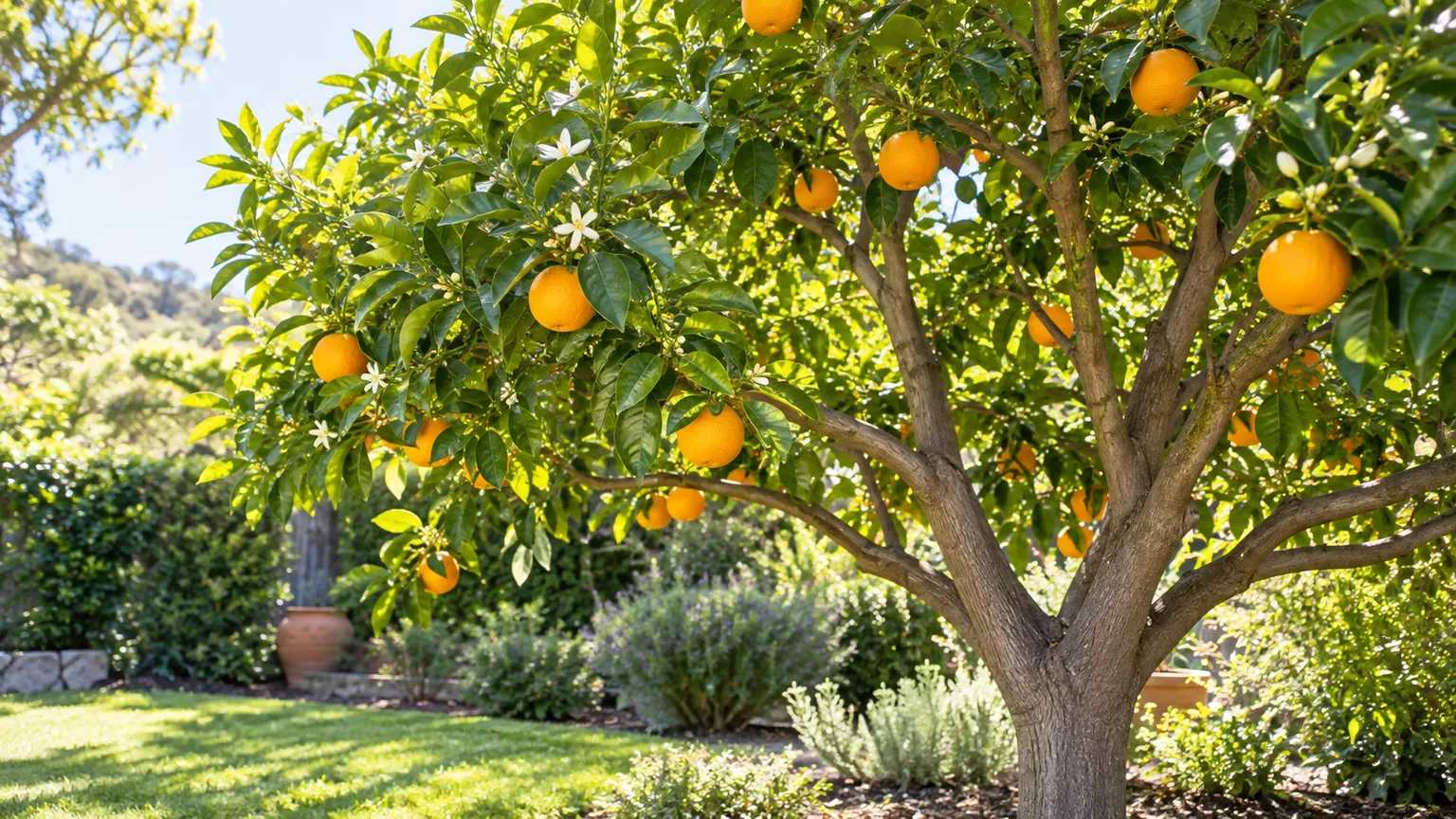
Citrus trees often set more flowers and tiny fruitlets than they can carry, then shed some on their own. That does not mean every Arizona orange, lemon, lime, or mandarin tree needs hand thinning each summer. A healthy, established tree with firm branches can usually be left to manage a normal crop. Selective thinning is most useful when a young tree is carrying more fruit than its small canopy can support, when fruit is packed into tight clusters, or when a branch is bending under a heavy load.
The important distinction is between fruit you choose to remove and fruit the tree drops because it is stressed. Heat, dry soil, wind, or poor root-zone conditions can trigger additional fruit loss. Pulling off more healthy fruit will not correct those problems. Check the tree, its soil, and its irrigation first; then thin only if a clear crop-load issue remains.
Quick Answer: Do Arizona Citrus Trees Need Summer Thinning?
Usually, no. Citrus trees shed flowers and small fruit on their own, and routine hand thinning is not generally required. Thin selectively only when a young tree is carrying more than its small framework can support, a branch is visibly bending, or fruit is damaged or crowded. Leave a healthy, balanced crop on an established tree.
Arizona Cooperative Extension’s home-citrus diagnostic publication describes natural spring fruit drop and notes heavier drop during hot, dry, windy weather or when irrigation or nitrogen is inadequate. Its citrus irrigation guide says interval recommendations are guidelines that vary with soil, weather, and the application method; there is no one watering schedule for every Arizona tree. (University of Arizona Cooperative Extension: home citrus problems, University of Arizona Cooperative Extension: citrus irrigation)
Source method and limits: This is a source-based synthesis, not a field-tested thinning protocol. The Arizona context comes from those two Cooperative Extension publications; broader fruit-drop advice is cross-checked against UC IPM and UF/IFAS. The Arizona publication pages link to PDFs that were not available as readable text during this revision, so this guide uses only the limited statements available in their accessible publication summaries and does not reproduce an irrigation table. The article record does not identify an individual citrus specialist or report a measured Arizona tree or yield result.
What Citrus Fruit Drop Means in Summer
Citrus commonly sheds some flowers and newly set fruit as the crop develops. The University of Arizona Cooperative Extension’s home-citrus diagnostic publication says natural drop occurs in spring and can be heavier during hot, dry, windy conditions or when irrigation or nitrogen is inadequate. That local diagnostic point makes a useful distinction: falling fruit is a symptom to assess, not proof that the remaining crop needs thinning. (University of Arizona Cooperative Extension: home citrus problems)
UC IPM also describes natural citrus drop and additional late-spring or early-summer loss associated with heat and low soil moisture. UF/IFAS lists several possible environmental causes of citrus fruit drop, including water-management swings, but its Florida guidance should not be copied as an Arizona watering calendar. (UC IPM citrus cultural tips, UF/IFAS citrus problems guide)
Look at the whole tree. A few tiny fruitlets falling under a leafy, otherwise stable canopy is different from larger fruit dropping alongside wilt, leaf scorch, twig dieback, or visibly dry soil. If the loss is paired with those signs, investigate root-zone moisture, drainage, irrigation distribution, pests, or disease before removing more fruit.
Why Citrus Thinning Differs From Apple or Peach Thinning
Guidance for apples, pears, plums, peaches, and nectarines often gives specific spacing targets after a natural early-summer drop. The Royal Horticultural Society describes thinning those crops to improve size and quality, reduce breakage, or help manage irregular bearing. Citrus is not included in that crop-by-crop thinning list, and UC IPM says routine citrus thinning is usually unnecessary. Do not transfer an apple spacing rule or a peach thinning schedule to an orange tree. (RHS fruit-thinning advice, UC IPM)
That difference matters in an Arizona summer. Citrus holds a dense, evergreen canopy that shades fruit and branches. Removing fruit does not require opening the canopy, and pruning limbs to “thin” a crop is a different, much larger intervention. The general fruit-tree thinning methods summarized by Epic Gardening are useful for understanding why crop-specific advice exists, but fruit type and growth habit determine what to remove and when. (Epic Gardening fruit-thinning guide)
Use the citrus-specific guidance as the starting point: wait for natural shedding to settle, remove damaged or tightly crowded fruitlets when necessary, and keep a mature tree’s healthy crop largely intact. If you also grow apples or peaches, plan those jobs separately rather than treating every fruit tree alike.
When Thinning Can Help a Citrus Tree
Thinning can help a young tree that has started bearing before it has built a substantial canopy and branch framework. A heavy crop takes resources that the tree could otherwise use for roots, shoots, and structural growth. Fruit can also weigh down a slender branch, press against other fruit, or remain trapped where it is difficult to inspect. In those cases, selective removal can lower the immediate load and leave the tree with a more manageable crop.
It can also help a tree with crowded clusters where fruit is rubbing, misshapen, or already damaged. Remove a fruit that is split, scarred, diseased, or lodged against a branch before it injures the neighboring fruit or becomes a sanitation problem. If a heavy branch is bending, reduce fruit on that branch gradually and consider temporary support where it can be installed without girdling or rubbing the bark.
Thinning is a choice about crop quantity and tree strength, not a treatment for every fruit-drop episode. A practical citrus-thinning overview from Gardening Know How also recommends considering tree size and natural fruit drop before selecting fruit to remove; it is an editorial source, so use it as practical context rather than a universal numeric standard. (Gardening Know How citrus-thinning guide)
When to Leave Fruit Alone
Leave a normal crop on a healthy, established tree when its branches remain firm and fruit is not crowded, rubbing, or damaged. A small amount of fruit drop by itself is not a reason to strip the tree; wait long enough to see whether the remaining crop settles into a balanced pattern.
If fruit is dropping while foliage wilts or the root zone is dry, pause thinning and use the soil check below. If the tree has a light crop after poor bloom, frost, or a weak previous season, thinning cannot add fruit or reverse what happened during flowering. When the evidence is unclear, mark the branch that concerns you and compare its load and condition again before making a small removal.
Check Tree Age, Canopy, and Crop Load
Start with the tree, not a target number. A one-year-old nursery tree, a recently planted sapling, and a mature in-ground orange are not equivalent even if they have a similar number of fruitlets. Tree age, rootstock, cultivar, pot size, sun exposure, previous pruning, and recent growth all affect how much crop the tree can support. A vigorous tree with broad, leafy branches may carry more fruit than a small tree still establishing roots.
Look at the canopy’s size and leaf cover. If the crown is sparse, the trunk is thin, or branches are still short and flexible, a heavy crop may slow establishment or bend limbs. A thick canopy on a mature tree provides more leaf area to support fruit and shade it from direct sun. Do not estimate crop capacity from fruit count alone; weigh the fruit’s distribution and the tree’s structure together.
For container citrus, pot size and root restriction add another variable. The RHS guide to growing citrus recommends thinning young fruits on smaller trees and gives about 20 fruits as a guide for many trees around one metre tall. That is a container-oriented rule of thumb, not a prescription for an Arizona tree planted in the ground. Use it to recognize that small trees need a lighter crop, then judge your own tree by canopy, vigor, and branch strength. (RHS grow-your-own citrus guide)
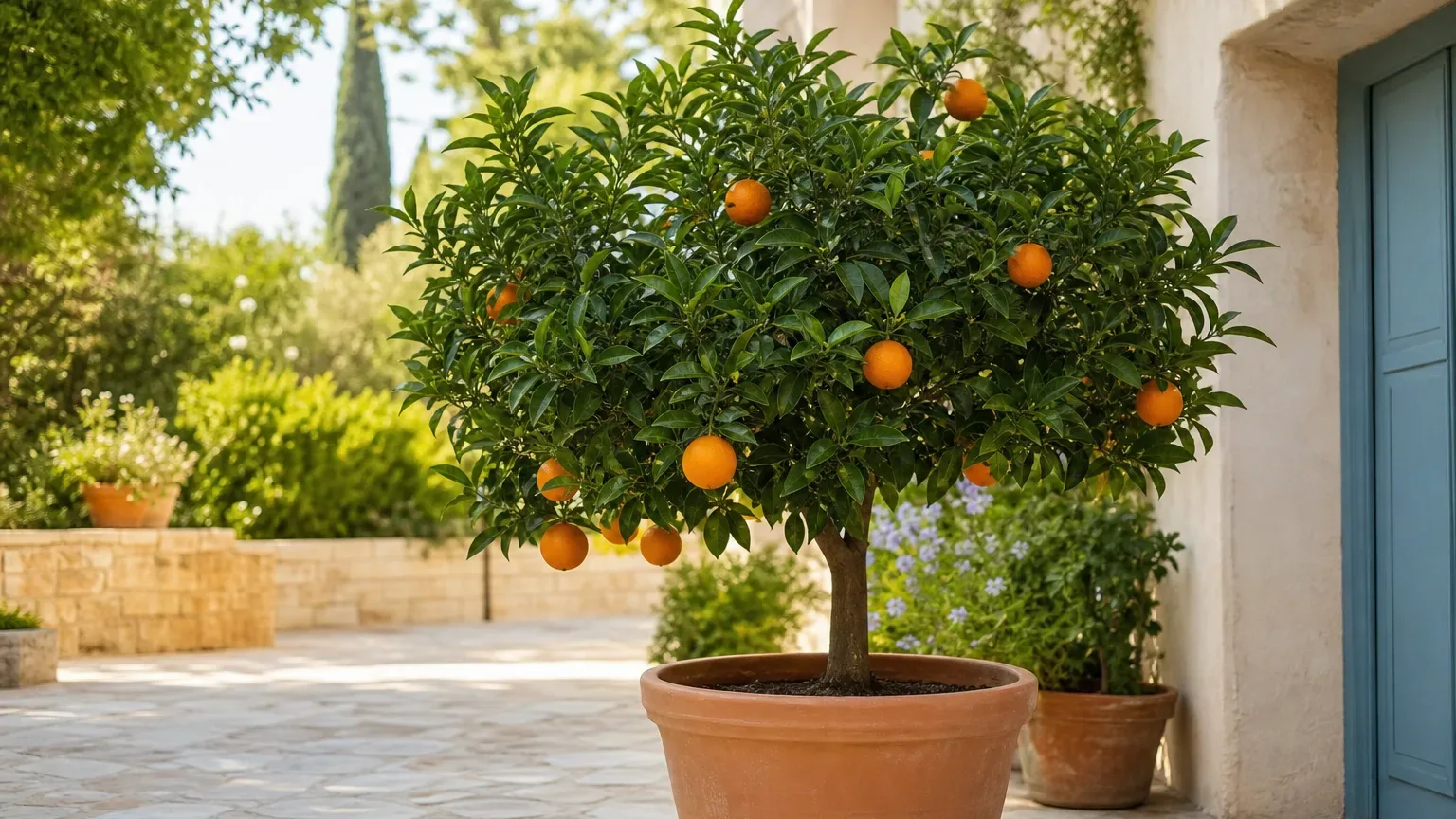
A small container tree usually has less canopy and root space to support fruit than a mature tree in the ground.
If you have a potted Meyer lemon, the site’s Meyer lemon container guide covers pot-specific care and fruit thinning. For a broader overview of an in-ground orange, see the orange-tree growing guide.
Choose the Right Time After Natural Fruit Drop
Do not schedule citrus thinning by copying the “June drop” calendar used for apples and other deciduous fruit trees. Citrus bloom and fruit development vary with species, cultivar, weather, and location. In Arizona, some trees flower in more than one flush or carry fruit at different stages, so there may not be one simple date when every natural drop has finished.
Wait until the first wave of small fruit has either fallen or remained on the tree long enough for you to see which branches are carrying a crop. If fruit is still pea-sized and the tree is shedding heavily, give it time unless a limb is in immediate danger or a fruit is damaged. If the fruitlets are larger and the crop remains crowded after natural drop, selective thinning can still remove a problem fruit, but the potential benefit to the remaining fruit may be smaller.
A general RHS guide recommends waiting until after natural early-summer drop before thinning several common orchard fruits. That timing is a useful reminder to let natural shedding happen first, not a calendar date to impose on citrus. The RHS citrus guide and the BBC Gardeners’ World citrus-growing advice are written largely around smaller, often container-grown trees and cooler UK seasons; their growing principles can inform container care, while their seasonal timing should not be copied directly to Arizona. (RHS fruit-thinning advice, RHS citrus guide, Gardeners’ World citrus guide)
Select Fruitlets to Remove First
When thinning is justified, remove fruitlets that have a clear problem: split, diseased, badly damaged, tightly crowded, pressed against a woody stem, or rubbing as the branch moves. Keep healthy, well-shaped fruit with room to develop on a sturdy branch. Do not use “remove the smallest fruit first” as an automatic rule; a small fruit may simply be at a different stage or position.
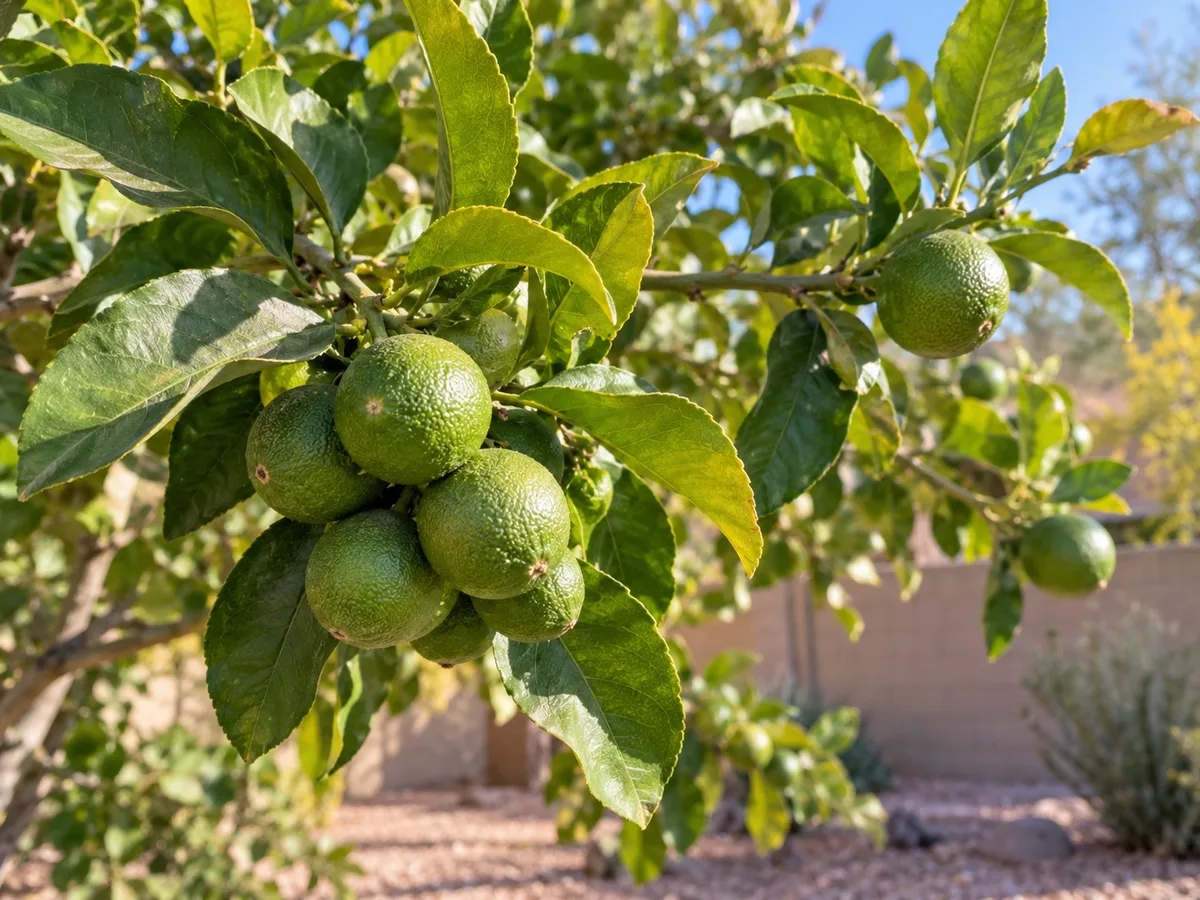
Illustrative generated image, not a photograph of an Arizona tree or evidence from a field trial. Judge the real branch, fruit condition, and space around each fruit before removing anything.
Walk around the canopy instead of thinning only the easiest side to reach. If a cluster needs attention, remove only enough to create practical separation and reduce the visible strain. There is no verified statewide spacing target for all citrus varieties, pot sizes, and in-ground trees; do not transfer apple or peach distances to citrus. (RHS fruit-thinning advice)
Thin a Young or Newly Planted Tree
A young or newly planted citrus tree has a smaller canopy and developing branch framework. If it sets a heavy crop before that structure is established, keep the load light rather than aiming for a fruit count copied from another tree. The RHS citrus guide discusses a lighter crop for smaller, container-grown trees and gives a rough example for a tree around one metre tall; that is context for small trees, not an Arizona quota for in-ground citrus. (RHS grow-your-own citrus guide)
Remove fruit that is bending a young shoot or packed into a tight cluster, then step back and check the framework. Use a gentle twist for loose fruitlets, or clean, sharp hand pruners for fruit that is firmly attached. Avoid pulling hard enough to tear bark or strip leaves. For the larger establishment picture, the orange-tree growing guide covers site and general care; this page stays focused on crop load.
Thin a Mature Tree Gently
A mature citrus tree with a healthy canopy often needs no hand thinning. If one limb is overloaded, thin that section only and keep the remaining fruit distributed across sturdy branches. Avoid removing so much from one area that the crop is suddenly concentrated on weaker limbs elsewhere.
A UGA Citrus Blog article on alternate bearing describes how a heavy crop can compete with vegetative growth and influence the following bloom in some mandarins. It discusses Georgia production citrus rather than setting a home-garden Arizona quota, so treat it as a reason to avoid extreme crop swings—not as a forecast for every lemon, lime, or orange. (UGA Citrus Blog on alternate bearing)
Fruit thinning and structural pruning are separate jobs. If the branch itself needs correction, use the site’s guide to when to prune citrus trees and plan the wood cuts separately.
Use a Hand Method That Protects Branches
Support a thin branch with one hand while removing a loose fruitlet with the other. A gentle twist is enough when the stem releases easily; for larger or firmly attached fruit, clip the short stem with clean, sharp hand pruners rather than yanking and tearing the shoot.
Make a few removals, then look at the entire branch and canopy before continuing. Pick up split or diseased fruit rather than leaving it beneath the tree. Work from the ground where possible; leave high, tensioned, or unsafe branches to a qualified tree-care professional.
Keep the Canopy Leafy to Limit Sunburn
Fruit thinning removes fruit. It does not mean opening up the canopy. In intense summer sun, leaves shade branches and fruit; removing large limbs at the same time can expose previously protected surfaces. Citrus fruit can suffer sunburn when directly exposed for long periods, so preserve healthy leafy growth around fruit as you make selective removals.
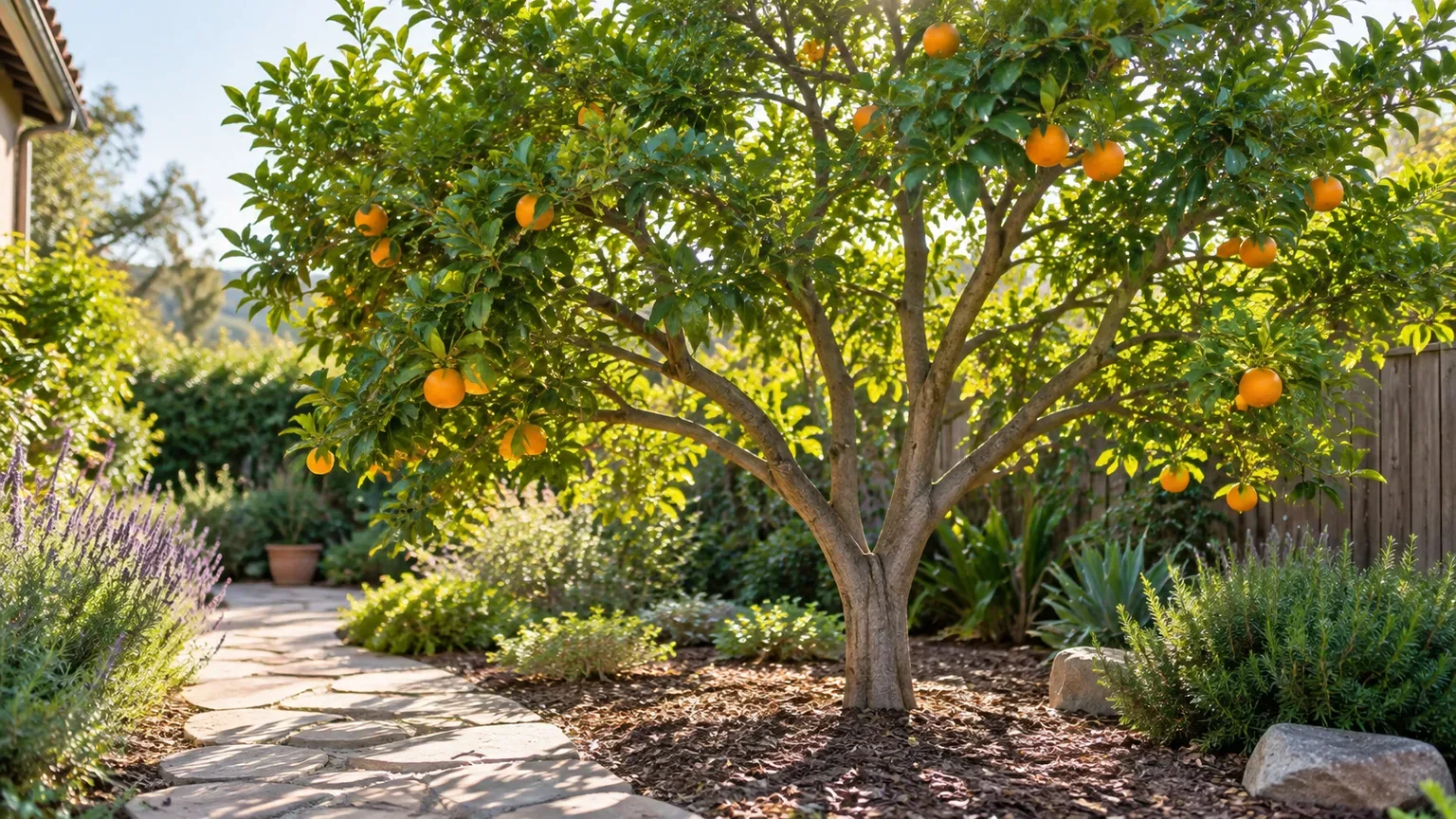
Keep this distinction clear if you have read about commercial citrus canopy management. The UGA article describes pruning or hedging as one method used in production settings to alter crop load, but a home gardener should not treat hard summer pruning as a substitute for hand thinning. The amount of shade, branch structure, tree size, and weather are different in a commercial row than in a backyard tree. UC IPM also notes that inadequate moisture can contribute to small, sunburn-prone fruit, so retaining healthy shade and checking irrigation work together. (UC IPM citrus cultural tips)
For branch removal, use the separate citrus pruning guide and avoid combining a large pruning job with fruit removal during severe heat. If thinning fruit reveals an unexpectedly bare section, leave it leafy and monitor for stress rather than cutting more.
Check Soil Moisture Before Blaming Crop Load
Before thinning in response to fruit drop, check moisture below the soil surface at more than one point under the canopy. A damp patch near one emitter does not show whether water is reaching the rest of the active root zone, and a short sprinkler run can wet the surface while deeper soil stays dry.
If the soil is dusty and dry below the surface, review how irrigation reaches the roots. If it remains sticky, puddled, or saturated, more water is not the answer; drainage or application pattern may need attention. UC IPM identifies inadequate soil moisture as one factor associated with citrus summer drop, while Arizona Cooperative Extension’s diagnostic publication also flags inadequate irrigation among possible causes of heavier fruit loss. (UC IPM citrus cultural tips, University of Arizona Cooperative Extension: home citrus problems)
Adjust Irrigation for Arizona Heat
Use the soil and the irrigation setup to decide when to water, rather than following a universal number of days. University of Arizona Cooperative Extension publishes citrus irrigation intervals as guidelines and says local soil, weather, and application method affect the interval. Its search-accessible summary also distinguishes delivery methods, so the published ranges are not interchangeable across drip, microsprinkler, basin, or flood irrigation. Check the Arizona citrus irrigation publication for the current detailed table and adapt it to your site; this guide does not reproduce those interval figures.
For drip systems, check emitters for clogs and confirm that water reaches more than one point under the canopy as the tree grows. Container citrus needs more frequent observation because a pot holds a limited volume of mix; the site’s indoor citrus guide covers that different setup. UK container advice can help explain pot care, but its seasonal timing is not an Arizona schedule. (Gardeners’ World citrus guide)
Avoid Fertilizer and Pruning Shortcuts
Do not add fertilizer just because the tree dropped fruit. Fertilizer will not replace missed irrigation or repair damaged roots; if a nutrient problem seems likely, use a soil or leaf test and a local citrus recommendation before changing the feeding program.
Do not remove branches as a shortcut for fruit thinning. A hand-thinning pass removes selected fruit while retaining the leaves that shade the crop. For wood cuts, use the separate fruit-tree pruning guide or the citrus-specific pruning advice linked above.
Understand the Harvest Trade-Off
Thinning always lowers the number of fruits left to harvest. It may help when a young tree or a visibly overloaded limb needs relief, but it does not guarantee larger fruit; variety, water, light, tree vigor, and the season also matter. The sensible goal is a crop the tree can carry without damaging its framework, not the maximum number of fruit at any cost.
Citrus can vary from year to year. The UGA Citrus Blog describes alternate bearing in mandarins and how a heavy crop can affect vegetative growth and flowering the following season, but those production observations do not predict every backyard tree. Keep a simple note of crop size and branch condition so you can compare seasons without treating one year as a universal pattern. (UGA Citrus Blog on alternate bearing)
Follow a Simple Summer Thinning Checklist
Use the tree’s condition to choose among three responses:
| What you see | What to do |
|---|---|
| A few very small fruitlets fall; foliage and branches look stable | Leave the remaining crop and observe. Natural drop can reduce the set without hand thinning. |
| A young tree has a heavy set, fruit is tightly crowded or damaged, or one branch is visibly bending | Remove only the clearly problematic fruitlets, then reassess the whole branch before continuing. |
| Larger fruit drops with wilt, scorched leaves, dry soil, or ongoing decline | Pause thinning. Check irrigation reach, drainage, and symptoms; seek local extension help if the cause is not clear. |
This short decision table replaces a fixed calendar or fruit quota. It also keeps the two jobs separate: thin fruit when crop load is the visible problem, and investigate growing conditions when the whole tree shows stress.
Avoid Common Citrus-Thinning Mistakes
Three mistakes can turn a small adjustment into lost fruit:
- Using a fixed number or spacing rule. Tree size, variety, and growing setup differ. A rough count for a small container citrus tree is not a target for a mature tree in the ground. (RHS grow-your-own citrus guide)
- Treating every fallen fruit as over-cropping. Heat, dry soil, and other stress can contribute to drop; thinning does not correct the underlying cause. (UC IPM citrus cultural tips)
- Pruning wood to remove fruit. Branch cuts also remove leaves and can expose the remaining crop; use hand thinning for fruit and a separate plan for structural pruning.
If you cannot name the specific problem a removal will solve, leave the fruit in place while you check the tree.
Recheck the Tree After Thinning
After one light pass, look at the branch again and stop if it is no longer visibly strained or crowded. Record the date, approximate crop stage, and which part of the canopy needed attention; that note can help you compare next season without relying on memory.
If the tree continues dropping fruit or develops new wilt, leaf scorch, or dieback, investigate the growing conditions instead of removing more. For a stable tree with sound branches, leave the remaining crop alone.
Conclusion
Arizona citrus trees do not automatically need summer thinning. Leave a healthy, balanced crop alone; remove fruit selectively only when a young tree, crowded cluster, damaged fruit, or bending branch gives you a clear reason.
When fruit is dropping across the tree, check root-zone moisture and irrigation before treating crop load. Arizona guidance varies with site conditions, and this source-based guide reports no local field trial or universal thinning quota.