How to Grow and Care for Orange Trees
Learn how to grow orange trees in a yard or pot, from choosing a grafted variety and planting depth to light, watering, feeding, pruning, frost care, and harvest.
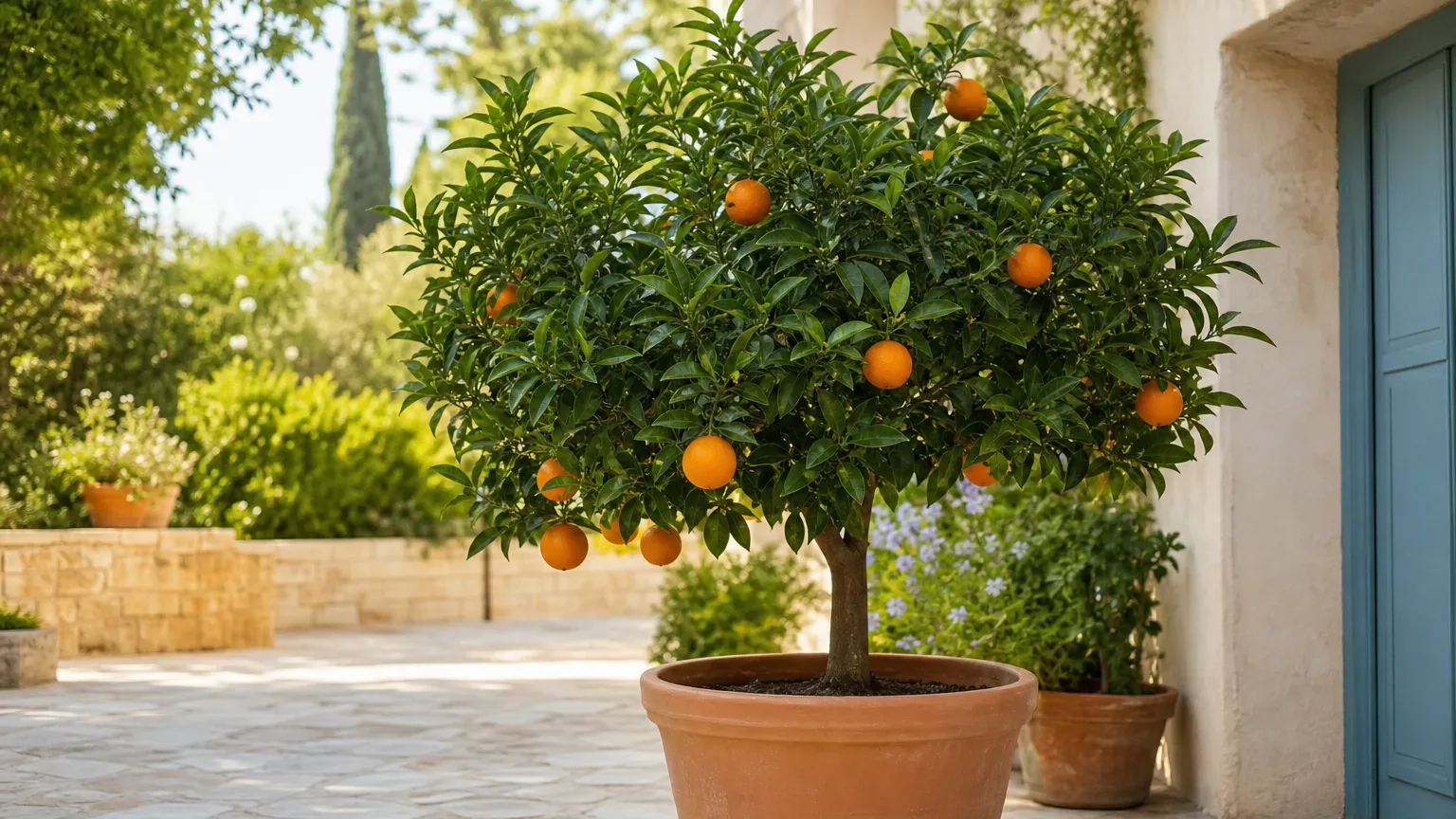
Orange trees (Citrus sinensis) need warmth, direct sun, and roots that get water without staying saturated. In a frost-free region, a tree can become a lasting part of the garden; in a colder climate, a compact orange in a movable container may be the more realistic choice. Decide which setting you can provide before choosing the tree, because moving a large pot or rescuing a tree planted in a cold, wet corner is difficult.
The most common care mistakes are not complicated: planting too deeply, watering by calendar, feeding a stressed tree more fertilizer, or expecting a shaded indoor tree to crop like one outdoors. The guide below separates those decisions by growing setup and season, so you can adjust care to what the tree and its soil are actually doing.
Start with the right orange tree
Buy a healthy, labeled nursery tree if you want a predictable orange and a reasonable path to fruit. A nursery-grown tree is usually grafted: the named orange variety forms the top, or scion, while a selected rootstock forms the roots and lower trunk. Rootstock affects vigor and can influence adaptation to soil, pests, and cold, so ask the nursery which rootstock is paired with the cultivar and whether it suits your climate and container plan. The visible graft union is a useful landmark when planting and when removing shoots later.
Sweet oranges are self-fertile, so one tree can set fruit; a second orange is not required. Variety still matters. Navel oranges are popular for eating fresh, Valencia oranges are valued for juice, and blood oranges offer colored flesh whose intensity can vary with growing conditions. A compact cultivar or dwarfing rootstock is usually better for a pot than a standard tree that you hope to keep small by repeated hard pruning. Mature size depends on both the variety and rootstock, so use the nursery’s actual specifications rather than assuming every “dwarf” orange will fit a small windowsill.
Choose fruit type and size for the way you will use it
Think about where the fruit will be used and when you can harvest it. If you mainly want easy-to-peel snack fruit, look for a navel selection; if juice is the priority, a Valencia may suit you better. Local climate changes flowering and ripening calendars, so use variety descriptions as a starting point and ask a regional nursery which oranges have performed well nearby. Homes & Gardens summarizes the main orange types and notes that a single tree can produce fruit because oranges are self-fertile (Homes & Gardens orange-growing guide).
For a container, include winter logistics in the purchase decision. A tree in a large pot can become heavy even before it reaches mature size; a wheeled plant caddy or a place near a bright, protected doorway can make seasonal moves possible. If the only available indoor spot is dim and the tree cannot spend warm months outside, choose the tree for foliage and fragrance rather than expecting reliable fruit.
Choose a warm, sunny site and planting season
Orange trees thrive in warm regions with long, bright growing seasons and are vulnerable to hard freezes. In much of the United States, zones around 9–11 are a broad first filter for in-ground citrus, not a guarantee: cultivar, rootstock, tree age, wind exposure, soil moisture, and the duration of a cold spell all affect damage. A sheltered city garden may stay warmer than an exposed yard at the same mapped zone, while a low spot where cold air settles can be colder than its surroundings.
Choose a site with at least 6–8 hours of direct sun, good air movement, and protection from strong wind without deep shade. If your soil stays wet after rain, plant on a broad raised mound or choose a container rather than placing the root ball in a low pocket. In cool-winter climates, plant in spring after severe frost risk has passed so roots have a long warm season to establish; in mild regions, follow local citrus planting timing and avoid the hottest or driest stretch if you cannot keep a new tree watered. The Homes & Gardens guide likewise recommends full sun, shelter, and spring or summer planting in cooler areas (planting and care overview).
Allow room for the mature canopy, not just the young tree in its nursery pot. A standard orange can become a broad tree, while a dwarf or semi-dwarf selection occupies less space; actual spacing varies with rootstock, pruning style, and local growing conditions. Keep the tree far enough from walls and paving that the canopy can develop and you can reach the fruit, and avoid planting where runoff from a roof or lawn keeps the root zone continuously wet.
Plant an in-ground tree without burying the trunk or graft
Water the nursery tree before planting and dig a hole wider than the root ball but no deeper than its height. Loosen circling roots gently at the edge, set the tree so the top of the root ball is level with or slightly above surrounding grade, and keep the graft union above the soil line. Backfill with the soil from the site, water slowly to settle it, and correct the tree’s depth before the soil firms. UGA Extension’s fruit-tree guidance recommends a hole at least twice the root spread, planting at the nursery depth, and avoiding fertilizer in the planting hole where it could injure young roots (University of Georgia Extension planting guidance).
Do not bury the trunk to make the tree look stable. Soil or mulch against the trunk keeps bark damp and can conceal the graft union; if the tree wobbles, firm the soil around the root ball and use a temporary stake only if wind or a top-heavy canopy requires it. Spread a 2–3-inch layer of organic mulch over the root area to slow evaporation, leaving a clear gap around the trunk. On heavy clay, a raised planting position and improved drainage across the wider area are safer than filling one deep hole with a different, loose soil mix that may collect water.
Grow orange trees in containers
Choose a compact orange or a known dwarfing rootstock and a sturdy pot with several unobstructed drainage holes. Start with a container only modestly larger than the root ball; a huge pot holds a large volume of wet mix around a small root system and is harder to move for winter. A 5-gallon pot can be a practical starting size for some young trees, but the tree’s root ball and nursery recommendation should determine the fit. Before you buy, check that the future pot can pass through doors and can be moved safely when cold weather arrives.
Use a commercial citrus or high-quality container mix that drains freely rather than garden soil. Place the tree at the same depth it grew in its nursery container, water through after planting, and empty any saucer so the pot does not sit in runoff. Southern Living’s container guide recommends drainage holes, a slightly acidic mix, a moisture check below the surface, and gradual seasonal moves for potted oranges (container orange-tree guidance). Those basics matter more than a decorative pot material: porous terracotta dries faster, while glazed ceramic and plastic hold moisture longer and need closer checks.
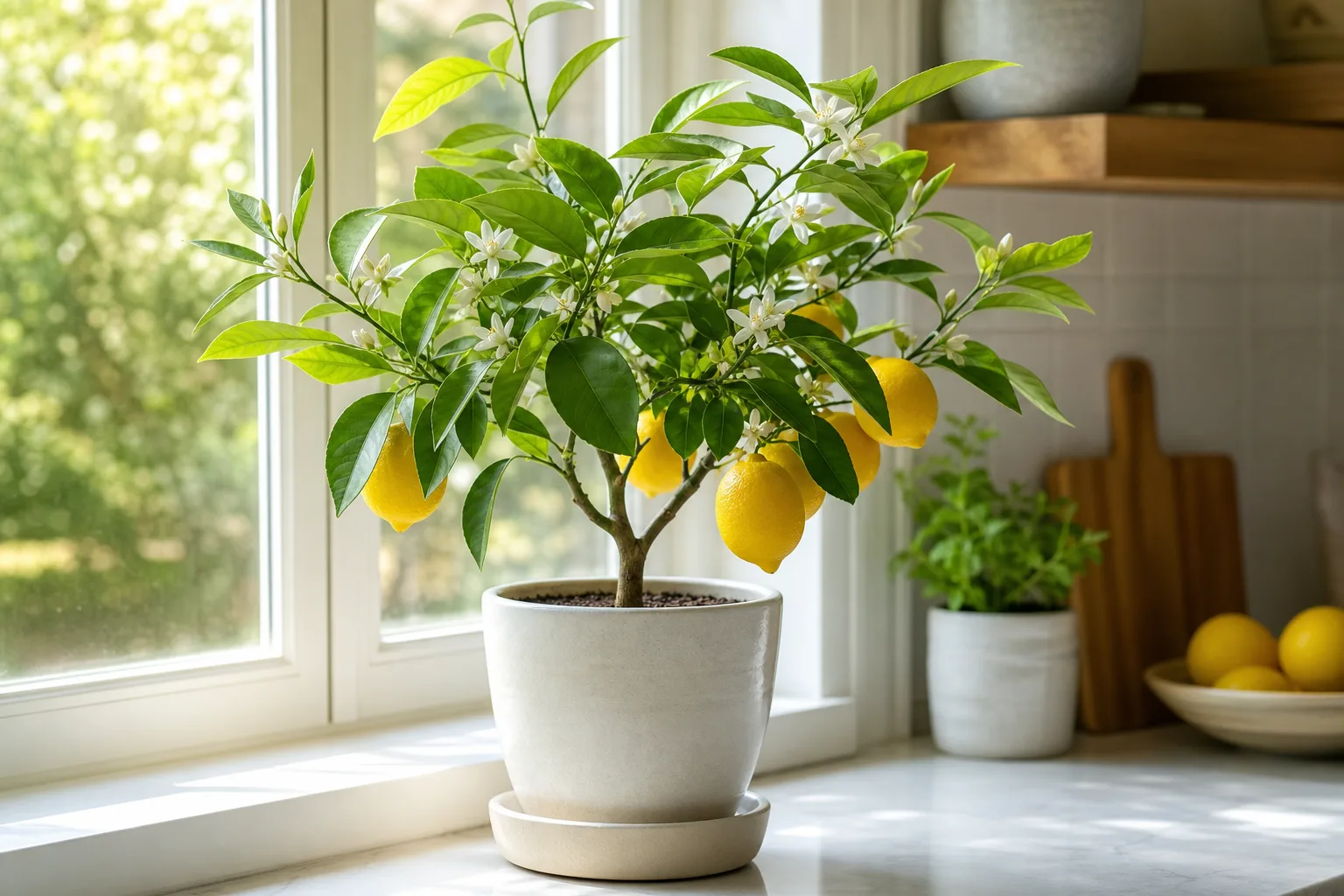
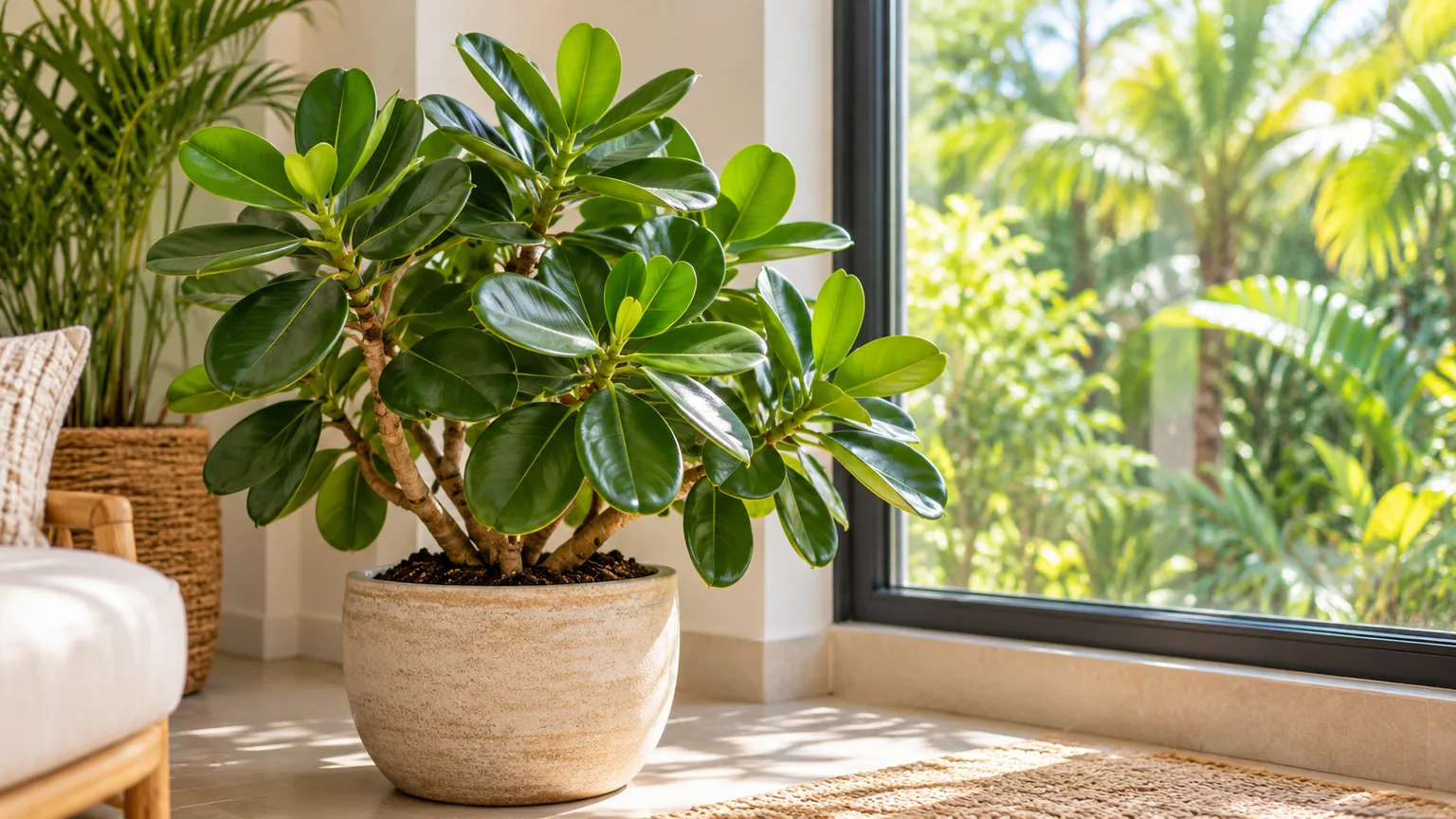
A potted citrus tree can flower and hold fruit indoors when it receives strong light; choose an orange variety suited to container growing.
Give roots a draining soil mix
Orange trees do best in soil that holds some moisture but drains promptly after irrigation or rain. In the ground, loamy or sandy soil is usually easier to manage than compacted clay. If water remains pooled long after a storm, do not try to solve the problem by adding a pocket of potting mix or sand to the planting hole; change the planting position, improve drainage over a larger area, or use a raised bed. Before changing soil pH, test it. Citrus generally favors a mildly acidic range, but adding lime, sulfur, or iron without a test can create a second problem.
For containers, use a mix formulated for citrus or blend a quality potting mix with an aerating material such as perlite, pumice, or fine bark. Do not add a layer of gravel at the bottom; it does not replace drainage holes and can leave the usable root zone wetter. Over time, fine particles and decomposing organic matter can make a mix slower to drain, so repot when roots are densely circling, water runs straight through without wetting the root ball, or the tree dries unusually fast despite appropriate watering.
Provide sun first, then warmth and shelter
Fruit production depends on light as well as survival. Give an outdoor tree full sun for most of the day; a tree can stay leafy in partial shade but grow slowly, flower sparsely, and ripen fruit poorly. Protect young trees from harsh wind and reflected heat off walls or pavement, especially while they are establishing. In hot climates, morning sun with some late-afternoon relief can reduce heat stress, but deep shade is not a substitute for proper watering.
An indoor orange tree needs the brightest available window, ideally with several hours of direct sun, and may still need a grow light in winter. Rotate the pot every week or two so the canopy does not lean toward one window. When moving a tree outdoors for summer, expose it gradually: begin in bright shade, then increase direct sun over a week or so. A sudden move from a dim room to intense afternoon sun can scorch leaves even though the final outdoor site is suitable.
Water deeply, then let the root zone breathe
There is no dependable “once a week” schedule for every orange tree. Water demand changes with soil texture, tree size, wind, rainfall, heat, fruit load, and whether the tree is in a pot. During establishment, check a young in-ground tree frequently and keep the original root ball from drying completely; as roots spread, water a wider area rather than pouring repeatedly at the trunk. Give a deep soak, then let excess drain before the next irrigation. In rainy weather, skip watering even if a calendar says it is time.
For an established tree, check soil several inches below the surface near the active roots. If it is still damp, wait; if the root zone is drying, water slowly enough to wet it beyond the trunk area. Container trees need more frequent checks because a small volume of mix can dry quickly in summer, but they also suffer faster from standing water. For a pot, feel the upper inch or two of mix and lift the pot if you can judge its weight; water thoroughly when the mix has begun to dry, then empty the saucer. Southern Living describes the same practical check for potted oranges: feel below the surface and water until excess exits the drainage holes.
Do not use yellow leaves alone as proof of overwatering. Saturated roots can yellow and decline, but underwatering, cold, pests, nutrient problems, and normal older-leaf turnover can look similar. Check soil moisture and drainage first, then look at which leaves are affected and whether the pattern appears on one branch or throughout the canopy. If you have been watering on a fixed schedule, pause and assess the root zone before adding either more water or fertilizer.
Feed for growth without forcing tender late-season shoots
Use a fertilizer labeled for citrus or fruit trees and follow its label for tree age, container volume, and application interval. Young trees need modest, regular nutrition as they establish; mature trees carrying a crop use more. A granular product should be spread over the root zone, not piled against the trunk, and watered in as directed. Container trees may need feeding more often than trees in the ground because frequent watering can carry nutrients out of the pot, but never compensate by exceeding the product rate.
Apply most fertilizer during active growth in spring and summer, then taper before cold weather in regions with winter freezes. The California Department of Food and Agriculture’s citrus nutrition guidance notes that excess nitrogen can delay fruit maturity and encourage late growth that is more vulnerable to frost; its rates are designed for commercial groves, so use local home-garden recommendations rather than copying orchard amounts (CDFA citrus fertilization guidance). More nitrogen is not a cure for yellow foliage or a poor crop. If leaves show a persistent pattern, check irrigation, soil pH, root health, and pests before adding micronutrients or changing fertilizer.
Expect some flower and fruit drop
Orange trees often produce more flowers and tiny fruitlets than they can carry to maturity. A modest amount of blossom and young-fruit drop is normal, particularly on a young tree or after a heavy bloom. The tree’s age, light, recent temperature swings, water stress, root condition, and crop load all affect how much fruit remains. A grafted tree may begin producing within a few years, but nursery size, cultivar, climate, and care change the timeline; a small tree that is still building its canopy may benefit from having an early crop thinned.
Because sweet oranges are self-fertile, a second tree is not needed for pollination. Outdoors, insects move pollen among flowers; indoors, a soft small brush can transfer pollen between open flowers if the tree blooms but sets little fruit. Still, hand-pollinating will not make a shaded or stressed tree productive. If flowers drop before fruit forms, first stabilize light, watering, and temperature rather than adding fertilizer or repeatedly moving the tree while it is blooming.
Prune lightly after the crop
Orange trees do not need aggressive annual pruning to produce fruit. Use clean, sharp pruners to remove dead, broken, diseased, crossing, or rubbing branches, and thin a crowded interior only enough to improve light and air movement. Remove shoots growing from below the graft union; those are rootstock growth and will not produce the named orange variety. Avoid topping the canopy into a box shape, which removes productive foliage and can expose shaded limbs and bark to intense sun.
The safest timing is usually after the main harvest and before the next strong flush, adjusted for local frost and flowering patterns. In cold-prone regions, avoid late-season pruning that stimulates tender growth just before winter. A small amount of corrective pruning is less stressful than removing a large share of the canopy at once. If a tree has become far too large for its site, consider whether a smaller cultivar or rootstock is needed instead of repeatedly cutting it back hard.
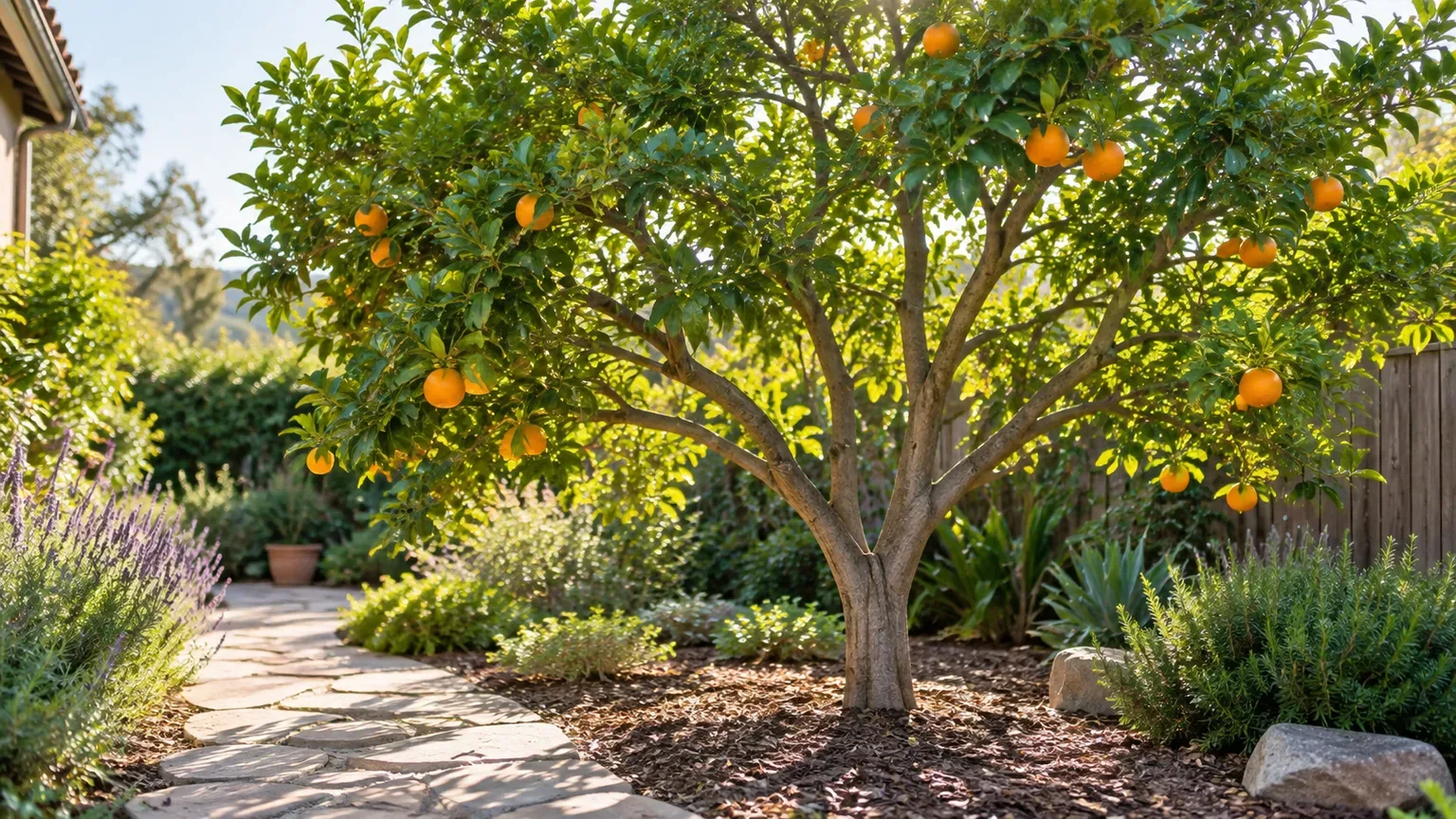
Light thinning can improve access and airflow while preserving the leafy canopy that supports fruit growth.
Harvest by flavor and maturity, not color alone
Orange color is a useful clue, but it is not a complete ripeness test. The rind may color unevenly, and in warm conditions some ripe citrus can retain green tones; cultivar and temperature both affect appearance. Check the fruit against the normal size and season for its variety, smell for a fresh citrus fragrance, and taste one orange before harvesting a large batch. A ripe orange should taste sweet and juicy rather than sharply sour or starchy.
Fruit does not continue to ripen in sweetness after it is picked, so leave it on the tree if it needs more time. Twist gently or use hand pruners to cut the stem rather than yanking, which can tear bark or break a fruiting twig. Harvest over several passes when fruit on the tree matures at different rates. Refrigerate picked oranges if you will not use them soon, and remove split or rotting fruit so it does not attract pests.
Protect the tree from cold before a forecast freeze
If your winters include hard freezes, decide in advance how the tree will be protected. A container tree should move to a bright, frost-free location before a damaging cold night, not after leaves or young fruit have been injured. Bring it in gradually when possible and place it away from heating vents and cold drafts. Indoor air can be dry, but stable light and careful watering matter more than misting; reduce watering as growth slows, while never letting the root ball turn bone dry for a long period.
For an in-ground tree facing a short cold snap, water the root zone ahead of the freeze if the soil is dry, and use a frost cloth that reaches close to the ground to trap warmth. Do not wrap plastic directly against foliage or leave a cover on through hot sunny days. Small trees may benefit from a temporary frame or trunk protection, but no cover can make a warm-climate orange reliably hardy in a colder region. After cold damage, wait for new growth to show which wood is alive before pruning, and avoid fertilizing immediately to force recovery.
Propagate according to your goal
Growing an orange from seed is enjoyable, but it is a slow route to fruit. Seeds from many citrus types can produce nucellar embryos that are genetically like the mother plant, while some seedlings arise from sexual reproduction and differ; seedlings also pass through a long juvenile stage before they flower. UF/IFAS explains that commercial trees combine a fruiting scion with a rootstock and describes seed, budding, and cutting propagation in its citrus propagation guide. For a named cultivar and a more predictable time to fruit, buy a healthy grafted tree from a reputable nursery.
Cuttings can produce a plant with the same top-growth genetics as the parent, but rooting citrus successfully takes warmth, humidity, clean stock, and careful moisture control. A cutting-grown tree also lacks the selected rootstock that can influence vigor and tolerance to soil or cold. Budding and grafting are more specialized and require compatible, disease-free material. If you plant a seed, keep the seedling for foliage or as a learning project and be patient; do not assume it will stay compact or bear fruit on the schedule of a nursery tree.
Identify common pests and act on evidence
Inspect new growth and leaf undersides every week or two during active growth. Aphids cluster on soft shoots and may leave sticky honeydew; scale insects sit firmly on stems or leaves; spider mites can stipple foliage and leave fine webbing; citrus leafminers create winding trails in tender leaves. A few pests on a large tree may not justify treatment, while repeated damage to new flush or a rapidly increasing infestation deserves closer attention. Identify what is present before choosing a control, and ask a local extension office about a product suited to edible citrus if the problem persists.
Do not diagnose citrus greening from one yellow leaf. Huanglongbing (HLB) is a serious citrus disease that can reduce fruit quantity and quality; USDA’s Agricultural Research Service describes its major impact on Florida groves and ongoing research into management (USDA-ARS citrus greening overview). Persistent asymmetric blotchy mottling, decline, or misshapen fruit deserves local assessment, but symptoms can overlap with nutrient problems and root rot. The Queensland Government’s citrus greening guide describes those signs and look-alikes (citrus greening symptoms and look-alikes). Ask a local extension office or plant-health agency whether the pattern warrants testing; extra fertilizer, home remedies, and random pesticide use will not confirm the cause and can create new problems.
Diagnose yellow leaves in the right order
First feel the soil several inches down. If it is wet for days, check drainage and watering frequency; if it is dry through the root ball, water thoroughly and watch whether new growth improves. Next, notice the pattern: a few old inner leaves can age naturally, while broad pale growth, green veins against yellow tissue, tip burn, or mottling may point to different stresses. Look for insects, webbing, sticky residue, distorted new leaves, and damage limited to one side of the tree.
If the pattern continues, test soil pH and ask a local extension service or qualified citrus nursery to help interpret the symptoms. Commercial citrus nutrient guides use leaf and soil analysis because visual deficiency symptoms can overlap with salinity, excess water, or other nutrient problems. Take clear photos of both sides of affected leaves, note recent weather and watering, and describe any fruit changes. That short record is more useful than trying several fertilizers or sprays at once.
Keep pets away from orange leaves and peel
The fruit can be eaten by people, but the whole plant is not a pet-safe snack. The ASPCA lists orange as toxic to dogs and cats because of essential oils and psoralens, and notes that peel and plant material can cause problems; keep pets from chewing leaves, stems, or fallen peel and contact a veterinarian if ingestion occurs (ASPCA orange toxicity information).
Conclusion
Start with a healthy, labeled orange tree that fits your climate and available space. Plant it at the right depth in a sunny, drainable site, or choose a compact container tree you can protect from winter cold. Then make care decisions from evidence: check the root zone before watering, follow a citrus fertilizer label and local timing, prune selectively, and taste fruit before picking the whole crop.
When a tree struggles, resist the urge to change everything at once. Review light, recent weather, soil moisture, roots, and pests in that order, and seek local help when a serious disease is possible. Steady conditions and a well-matched tree give orange growers the best chance of enjoying fragrant flowers and fruit for years.