How to Prune Fruit Trees Like a Pro
Learn when to prune apples, peaches, plums, and cherries, how to make clean cuts, choose a tree shape, and restore an overgrown fruit tree safely.
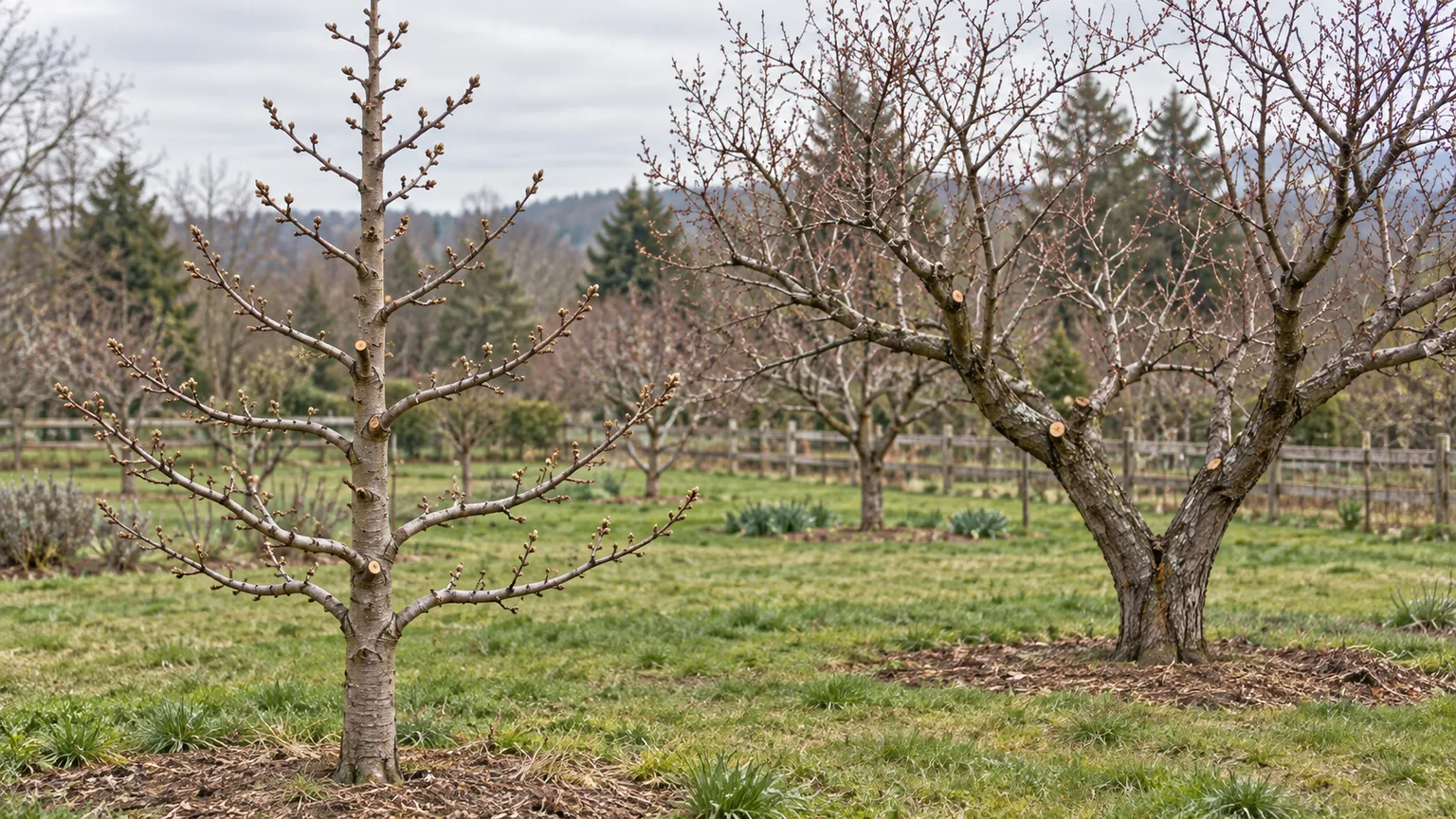
Pruning is easiest when you stop thinking of it as a haircut. Each cut changes where a tree sends energy, how sunlight reaches its leaves and fruit, and which branches carry the next crop. A good session is therefore selective: identify the tree, decide what needs to improve, then remove the fewest branches that accomplish that goal.
The calendar and the right cut depend on the kind of fruit tree. Apples and pears are commonly pruned while dormant; peaches need a different balance of renewal wood and light; and cherries and plums can be more vulnerable to disease when cut in cool, wet weather. The guide below gives a dependable starting point, with local climate and disease advice taking precedence where they differ.
Quick answer: match the cut to the tree
First identify the fruit and the tree’s stage: newly planted, still being trained, mature and productive, or neglected. For apples and pears, plan most structural pruning for late winter after the harshest cold has passed but before buds open. For peaches and nectarines, maintain an open, well-lit framework and preserve enough healthy one-year shoots for the coming crop. For established cherries and plums, favor the dry, locally recommended window—often after harvest or during active growth—rather than assuming every fruit tree should be cut in winter.
On any tree, begin with dead, broken, diseased, rubbing, and badly placed growth. Then look for a single improvement: a brighter interior, a stronger scaffold, a more manageable height, or a young replacement branch. Remove a branch back to its point of origin when it needs to go; shorten a branch only when a suitable outward-facing bud or lateral gives the new growth a useful direction. Preserve the branch collar at the base of a limb. Do not top the tree, strip the canopy, or remove a fixed fraction just because a rule of thumb says to.
What pruning can and cannot fix
Pruning can improve light distribution, keep limbs from colliding, remove damaged or diseased wood, guide a young tree’s framework, and renew fruiting growth. Better light inside the canopy helps leaves work effectively and can improve fruit color and quality. Well-spaced limbs are also easier to inspect, thin, harvest, and support.
Pruning cannot correct every cause of poor fruiting. A tree may fail to crop because it is too young, has the wrong pollination partner, experiences frost during bloom, is overfed with nitrogen, lacks water, carries a heavy crop one year, or has a root or trunk problem. Large pruning cuts will not cure a declining root system, and removing healthy limbs will not solve a pollination gap. Before cutting, consider whether the tree is healthy and whether the problem actually relates to its canopy.
More pruning is not automatically better. Removing a large share of leafy growth can trigger vigorous upright shoots, delay flowering, expose bark to sun injury, and reduce the next crop. A tree that has been pruned heavily in past years may need restraint rather than another correction. Think of pruning as steering future growth, not as a way to force an immediate harvest.
Identify the tree and define the goal
If you are unsure of the species, check the leaves, bark, fruit, and growth habit before making major cuts. Apples, pears, quince, peaches, plums, apricots, and cherries do not all carry fruit on the same-aged wood or respond equally to a dormant-season cut. Even within one species, cultivar, rootstock, climate, and the training system can alter the best approach. A nursery tag, local extension guide, or experienced orchardist can help confirm the identity.
Next, step back and view the whole tree from several sides. Find the trunk, the main scaffold limbs that form the permanent framework, and the smaller laterals that bear leaves and fruit. Notice whether the tree has one dominant upright leader or a bowl-shaped center, whether branches have room to thicken, and where sunlight is blocked. Flag any limb that is dead, cracked, diseased, or likely to rub another branch. If you cannot explain what a proposed cut will improve, leave that branch for now.
Set one or two realistic goals for this season. A young tree may need a sound scaffold and a dominant leader, not a full crop. A healthy mature tree might need a few crowded shoots removed. An old tree may need gradual height reduction and renewal over several years. Avoid changing the entire architecture in one session: established trees respond to large cuts with a surge of regrowth, and that regrowth can quickly recreate the crowding you were trying to remove.
Choose a training shape
Training shape is the tree’s lasting arrangement of trunk and main limbs. It should suit the species, available space, rootstock vigor, and how you plan to harvest. Do not force a mature tree into a different system in a single year. When a tree already has a stable, productive structure, preserve it unless there is a clear safety, disease, or access reason to change it.
Central leader: apples and pears
A central-leader tree has one main trunk continuing upward, with scaffold limbs arranged around it at intervals. This familiar pyramid form is common for apples and pears. Keep the leader dominant but not dramatically taller than every side branch; select sturdy limbs with broad, well-attached angles, and avoid several strong branches emerging from one crowded point. Lower scaffolds can extend farther than upper ones so they receive light instead of sitting in permanent shade.
As the tree grows, remove competing leaders or redirect them while they are still small. Favor lateral branches that angle outward and slightly upward rather than vertical shoots or limbs that hang below the productive canopy. A branch angle near 60 degrees from upright is often useful for apples, but it is a guide rather than a measuring exercise. Branches with very narrow, upright unions can split as the crop and canopy gain weight. Utah State University Extension’s apple-training guidance explains how spacing, light, and branch angle contribute to a strong, fruitful framework.
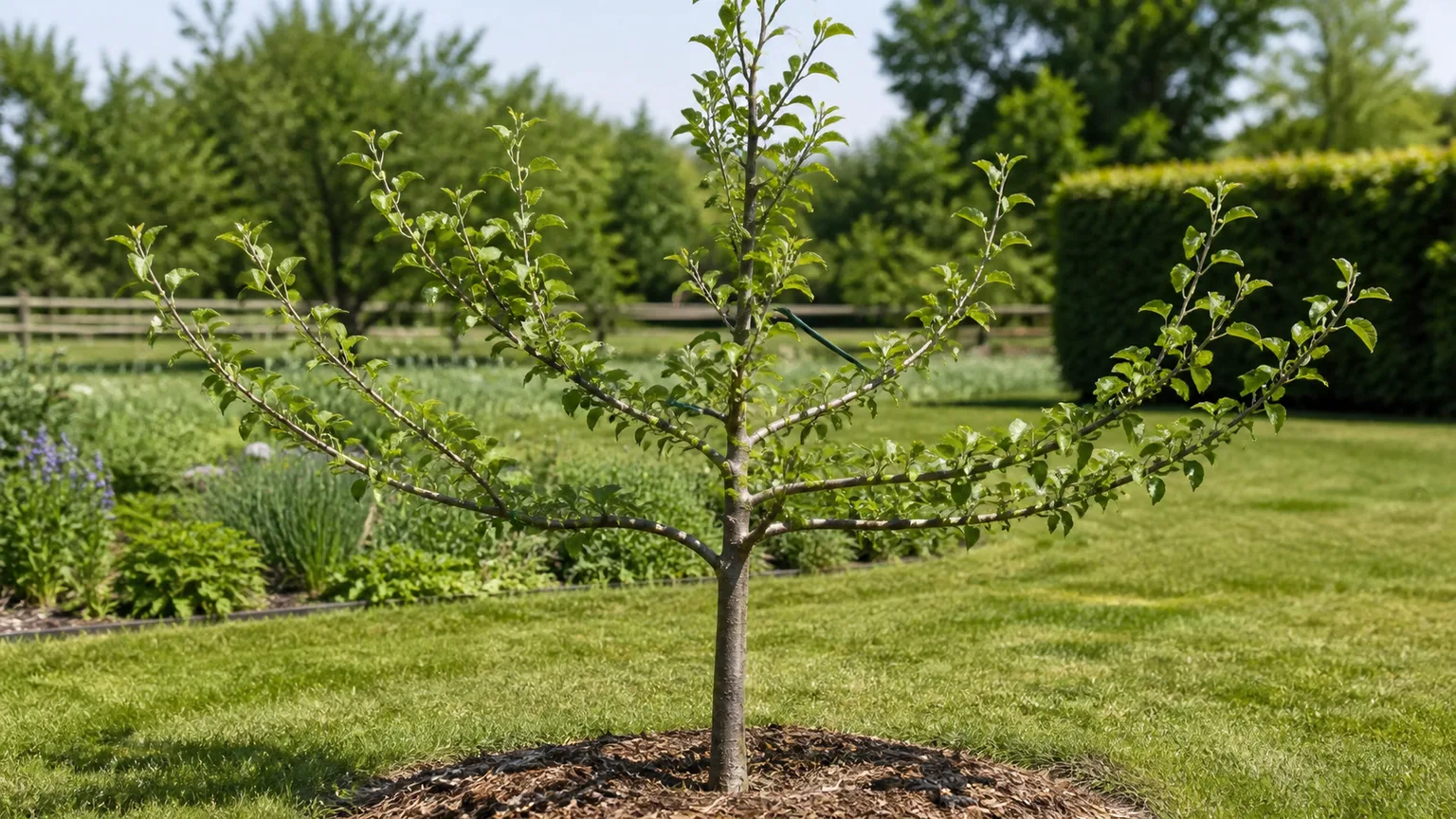
A well-spaced framework lets light reach lower branches; keep the tree’s existing shape in mind as you choose cuts.
Open center: peaches and nectarines
An open-center, or vase-shaped, tree has several main limbs arranged around a low trunk and an open middle. Sunlight and air can reach the interior, and fruit is easier to pick. This form is common for peaches and nectarines, which respond well to renewal pruning. Choose a small number of sturdy, outward-growing scaffolds and prevent one from taking over the center.
The open center is not a cue to remove every branch pointing inward or to hollow out the tree until it is bare. Retain well-placed fruiting shoots along the scaffolds, including younger shoots that can replace older wood. Peach fruit is borne on one-year shoots, so removing all of last season’s growth can sacrifice the crop. Thin crowded shoots selectively and keep enough healthy renewal wood distributed through the canopy. If the tree has a different established form, follow its structure rather than making abrupt, oversized cuts.
When to prune by fruit type
There is no single pruning date that suits every fruit tree. The right window balances growth response, cold injury, crop timing, and disease risk. Local extension advice matters especially where winters are severe, spring rain is common, or silver leaf, canker, or fire blight is present. Choose a dry day when possible, and avoid cutting just before a hard freeze or during prolonged wet weather.
Apples, pears, and quince
For established apples and pears, the main structural session is generally in late winter, after the coldest part of winter and before buds swell. The tree is still dormant, its framework is visible, and cuts can encourage spring growth. Pruning too early in winter can reduce cold hardiness in some regions; waiting until leaf-out can remove developing flower buds and push the tree into a different growth response. Utah State University Extension describes this balance for apple trees.
Young pome-fruit trees need only the cuts that establish a leader and well-spaced scaffolds. Heavy pruning in the first years can stimulate leafy growth at the expense of early flowering. Mature trees usually need selective thinning: remove a competing leader, a damaged limb, or a crowded branch that shades the interior. Light summer pruning can check excessive vigor or remove upright water sprouts, but it should not become an excuse to strip out productive foliage in hot weather.
Quince is also a pome fruit, but cultivar and training form affect its needs. Treat it as an individual tree rather than assuming it will respond exactly like an apple. Keep its framework open enough for light and access, preserve healthy fruiting laterals, and consult region-specific guidance if it is trained as a fan or espalier.
Peaches, nectarines, apricots, and plums
Peaches and nectarines need regular renewal because a large share of their crop forms on shoots that grew the previous year. The aim is a manageable open framework with a supply of vigorous, well-placed young shoots—not a skeleton of old limbs and not an impenetrable thicket. In many North American growing regions, peaches are pruned during dormancy before spring growth; exact timing and severity should follow local guidance and the tree’s vigor. Keep enough one-year wood across the scaffolds for fruiting, then remove weak, shaded, or badly crowded growth.
Apricots and plums are also stone fruits, but disease risk and local climate can make cool-season pruning hazardous. In regions where silver leaf is a concern, prune plums during the recommended spring or summer window and choose dry conditions. Gardeners’ World’s plum-pruning advice emphasizes timing cuts to reduce disease risk and renovating old trees gradually. Apricot recommendations vary by region; avoid treating a general peach schedule as universal, especially where bacterial canker is common.
If a plum or apricot has been neglected, do not remove all old limbs at once. Retain healthy fruiting wood, open a small portion of the canopy, and reassess the response in the following season. Heavy cuts can provoke vigorous shoots and may remove much of the wood that would otherwise fruit. In some commercial stone-fruit systems the sequence is different—for example, Cummins Nursery’s stone-fruit guidance discusses pruning peaches after bloom—so use recommendations suited to your climate, cultivar, and production system rather than importing a calendar from another region.
Cherries, citrus, and other exceptions
Cherries deserve their own timing decision. Sweet and sour cherries can be trained as bushes, pyramids, or fans, but established trees are commonly pruned soon after harvest in regions where cool, wet cuts raise the risk of silver leaf or bacterial canker. Young formative pruning may have a different window. The Royal Horticultural Society’s cherry guidance recommends pruning established cherries immediately after harvest, generally in late summer, and choosing dry weather. In colder or drier climates, local advice may differ; do not transfer a UK calendar date to another climate without checking.
For citrus, remove dead, damaged, crossing, or suckering growth and keep the canopy accessible, but avoid severe structural pruning unless the tree needs it. Wait until frost danger has passed before exposing previously shaded limbs, since sudden sun can injure bark. Citrus may carry flowers or fruit at several stages, so a light selective approach is usually less disruptive than a hard annual cut. For figs, persimmons, and less common fruits, consult a species-specific source before applying an apple or peach system.
Disease changes the plan. Fire blight in apples and pears, for example, calls for prompt removal of infected wood and sanitation practices that differ from routine shaping. Follow local extension directions for how far below visible symptoms to cut, how to handle the material, and when to disinfect tools. Utah State’s apple guidance advises cutting well below visible fire-blight symptoms and provides disease-specific sanitation advice; do not apply one distance or disinfectant schedule to every pathogen and region.
Tools, weather, and disease precautions
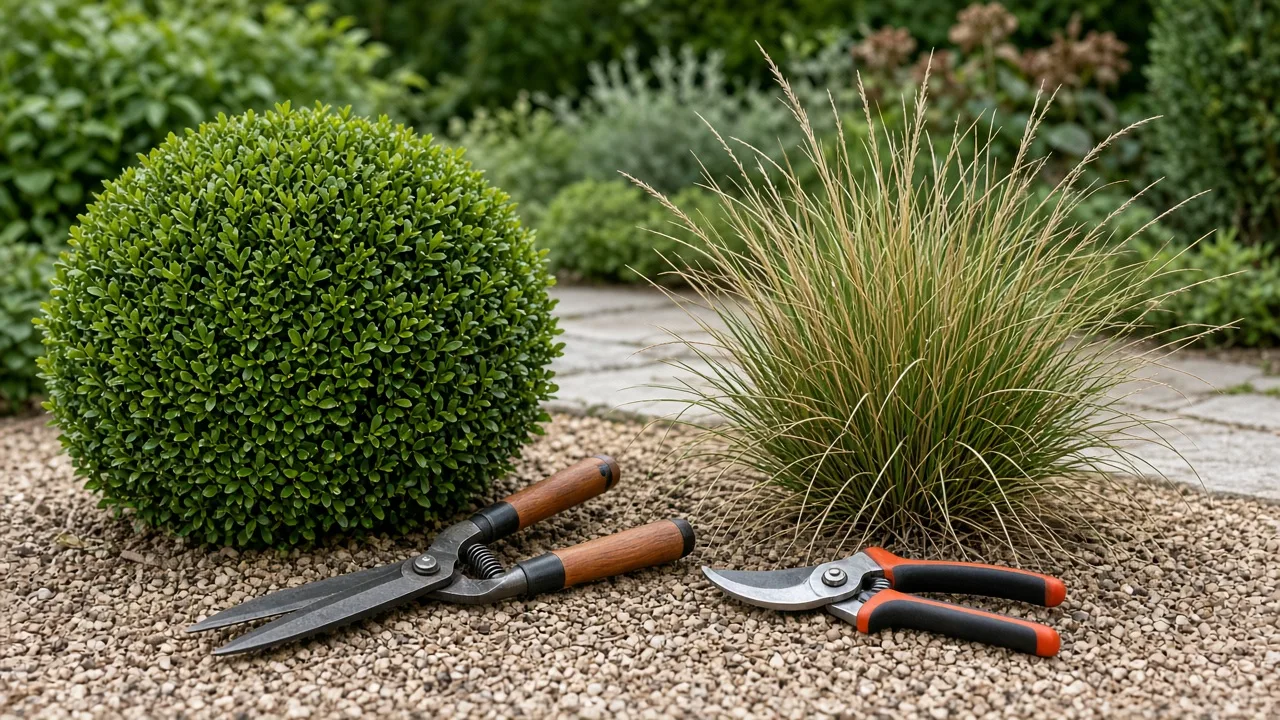
Use sharp bypass hand pruners for small shoots, loppers for branches within their rated capacity, and a pruning saw for larger limbs. Anvil pruners can crush living stems, and using a tool that is too small encourages twisting or tearing. Keep tools clean, sharp, and comfortable to operate. If you need to strain, stand on an unstable object, or reach beyond your balance, stop and use safer equipment or hire an insured arborist for high or heavy limbs.
Inspect the tree before starting. Look for nests, wires, unstable limbs, and signs of disease. Wear eye protection and gloves; keep bystanders out of the drop zone. Use a stable ladder only when you can maintain safe contact, and never cut a branch that can fall onto you, a building, or a power line. Branches near utility wires are a job for the utility company or a qualified professional.
Choose a dry period whenever disease prevention is important. Do not prune stone fruit in wet weather if silver leaf or bacterial canker is a local concern. For fire blight, follow disease-specific timing and sanitation recommendations: an ordinary shaping session and the removal of active infection are different tasks. Remove infected material from the site as advised locally, and do not assume a quick wipe of the blade makes every cut safe. Routine sterilizing between every healthy cut is usually unnecessary, but disinfect between cuts or trees when a known pathogen or local protocol calls for it.
Before making a large cut, check whether the tree is healthy enough to recover and whether the branch is too large to remove safely. A wound is not improved by paint or sealant in ordinary circumstances; good placement and a clean cut at the branch collar matter more. If the trunk or main scaffolds show extensive decay, cankers, or splitting, obtain an in-person assessment before removing load-bearing limbs.
Make a cut the tree can close around
For a branch that should be removed entirely, locate the branch collar: the slightly swollen tissue where the branch joins its parent limb or trunk. Also find the raised branch bark ridge along the upper side of the union. Make the cut just outside these structures, following the angle of the ridge, rather than flush against the trunk. The collar contains tissue involved in wound response. A flush cut removes it; a long stub dies back and can impede closure. A smooth cut that preserves the collar gives the tree the best chance to compartmentalize the wound.
For a branch that should be shortened, use a heading cut just above a healthy bud or a suitable side branch pointing in the direction you want growth to go. Angle the cut slightly away from the bud and avoid leaving a long stub. Heading cuts stimulate shoots near the cut, so use them deliberately; repeated shortening of every branch creates a dense outer shell. A thinning cut removes a branch back to its origin or to a lateral branch large enough to assume its role. Thinning opens space with less of a growth surge than indiscriminate heading.
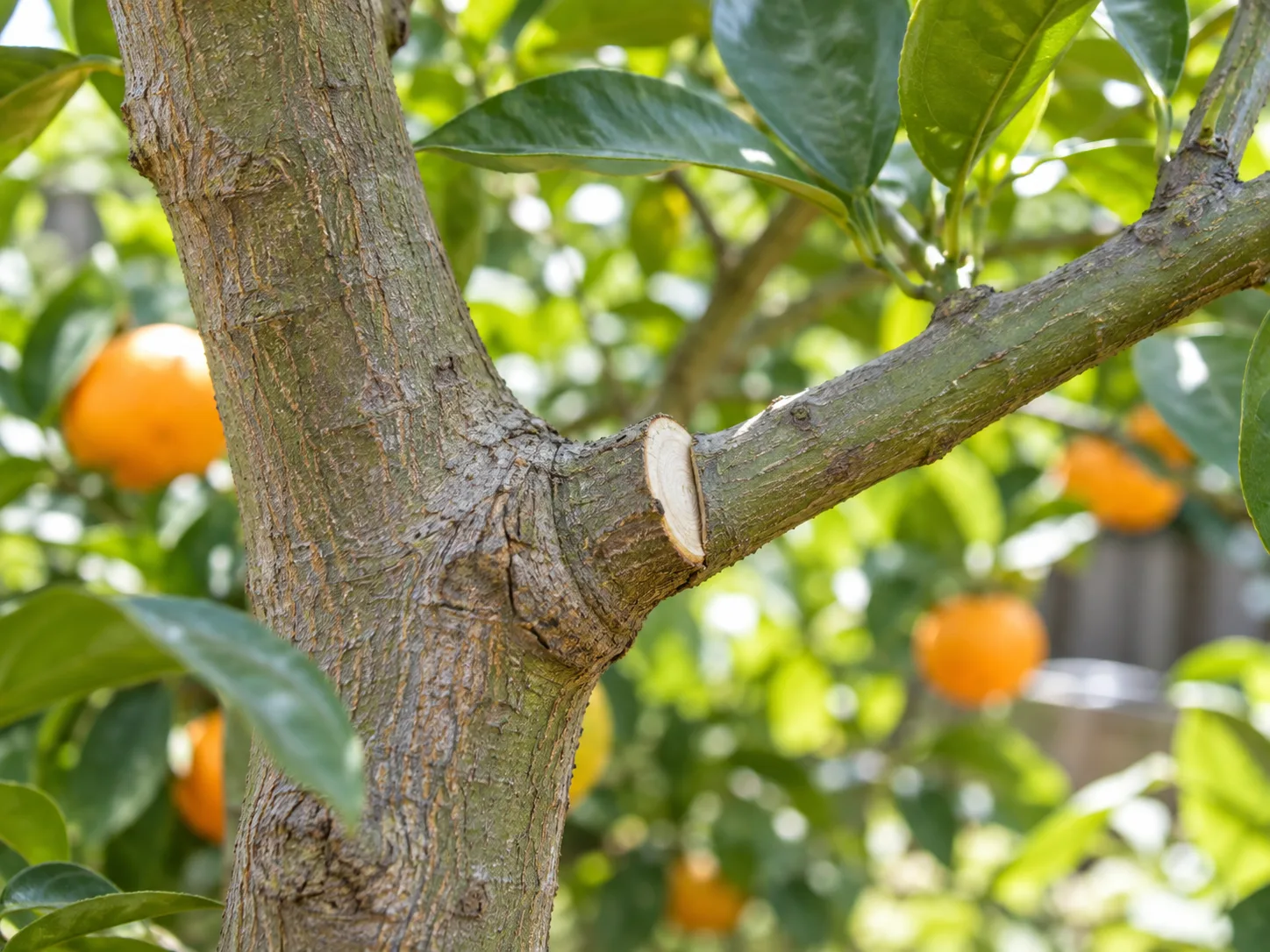
Cut just beyond the collar and bark ridge; do not shave the trunk or leave a long dead stub.
Avoid topping: cutting the trunk or major limbs back to arbitrary points. Topping leaves large wounds and commonly stimulates a cluster of weak, upright shoots. If a tree is too tall, reduce its height over time by cutting back to suitable lateral branches, or seek an arborist’s advice if the structure is beyond safe home pruning. A proper reduction cut transfers growth to a lateral that can support it; a blunt cut across a limb does not.
Remove a heavy limb without tearing bark
A heavy branch can tear a long strip of bark as it falls. Use the three-cut method when you have the right saw and the limb is within safe reach: make a shallow undercut several inches out from the trunk, make a second cut from above a little farther out to remove the branch’s weight, then remove the remaining stub with a final cut just outside the collar. The first two cuts control the falling section; the last protects the trunk’s collar. Never attempt this overhead, near a structure, or on a limb too large to control. Hire a qualified arborist for that work.
A step-by-step annual pruning sequence
Work from the tree’s overall structure toward small details. This sequence keeps you from getting distracted by easy-to-reach twigs while a larger structural problem remains.
- Confirm the tree and season. Identify the fruit type, check local timing and disease guidance, and postpone if conditions are unsafe or wet when dry weather is important.
- Walk around the canopy. View it from all sides and, if possible, from a short distance. Decide on one or two goals and identify the main leader or scaffolds you intend to preserve.
- Remove hazards and dead wood. Take out broken branches and clearly dead growth. If disease is suspected, stop and follow the relevant identification, cut distance, sanitation, and disposal guidance before continuing.
- Resolve major conflicts. Remove one of a pair of rubbing, crossing, or parallel limbs when there is a clear better-positioned branch to keep. Preserve sturdy, well-attached scaffolds and avoid removing two major limbs that leave the same side of the tree empty.
- Open useful light and access. Thin selected inward-growing, vertical, or congested shoots when they shade productive branches or block airflow. Do not remove every inward shoot automatically; some may be useful as future fruiting wood or a replacement limb.
- Shorten only where direction matters. If a branch is too long or growing into a path, cut back to a well-placed lateral or bud. Use thinning cuts for branches that need to disappear and heading cuts sparingly to steer growth.
- Stop and reassess. Step back after each few cuts. Check how much healthy canopy remains, whether the tree still has balanced scaffolds, and whether your original goal has been met. If not, schedule more work for a later season rather than escalating into a severe renovation.
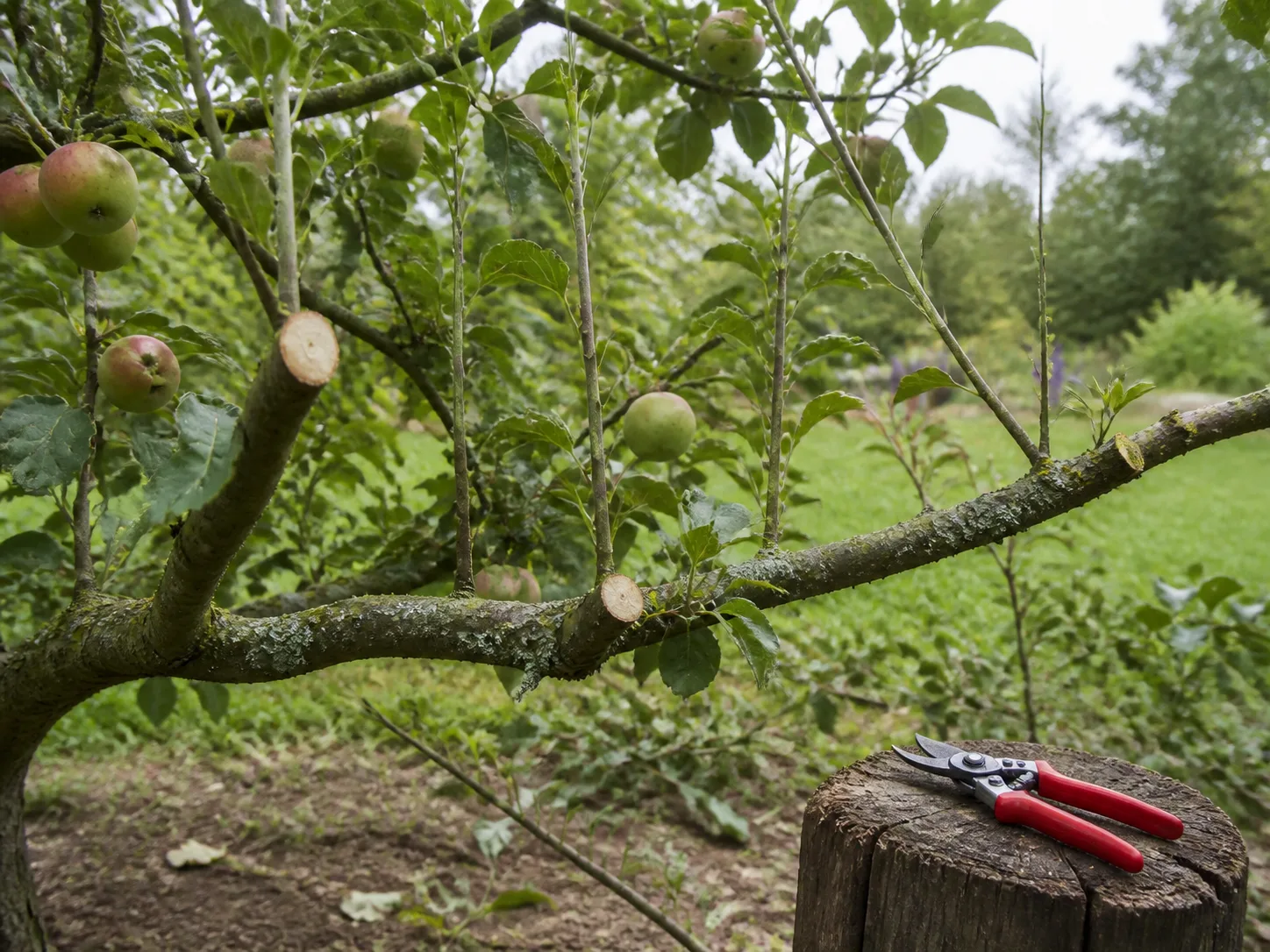
Selective thinning should leave productive wood and a balanced canopy, not a bare framework.
For a young tree, stop when the basic framework is sound. For a mature tree, a successful annual session may involve only a handful of cuts. The right amount depends on vigor, crop load, health, and the number of genuine conflicts—not on a universal “remove one-fifth” rule. Record what you removed and where; that note makes it easier to avoid repeating the same large cut next year.
Restore an overgrown tree over several seasons
Start by assessing whether the tree is worth restoring. Check trunk stability, major unions, disease, and the amount of healthy foliage. An old tree with sound roots and scaffolds can often be improved, but a severely decayed or unsafe tree may need professional evaluation or replacement. If you do renovate, think in stages: regain access and light, establish a manageable height, then refine fruiting wood over subsequent years.
In the first season, remove dead, diseased, broken, and dangerous limbs, then choose a few of the worst crossings or competing leaders. Reduce height only to well-positioned laterals. Preserve healthy lower scaffolds and enough leaf area for the tree to recover. Do not try to make every branch short, evenly spaced, and perfectly symmetrical at once. Large cuts can produce a flush of water sprouts, and those shoots will need selection rather than wholesale removal as they develop.
In later seasons, keep the best-positioned replacement shoots and thin out the rest while small. Gradually redirect the canopy, renew old fruiting wood where the species benefits from renewal, and remove additional oversized limbs only when the tree has responded well. People’s Trust for Endangered Species’ orchard guidance likewise recommends a gradual approach to restoring neglected fruit trees. Patience generally preserves more crop and creates fewer large wounds than a one-time hard cutback.
Mistakes that cost light, fruit, or tree structure
- Using one calendar for every species. Apples, peaches, plums, and cherries differ in fruiting wood and disease risk. Confirm the species-specific window and local weather guidance before cutting.
- Removing every upright shoot. Some water sprouts should go, especially when they crowd the center, but a well-placed vigorous shoot can become a replacement limb or renewal branch. Select rather than reflexively strip.
- Cutting flush to the trunk. Flush cuts remove the branch collar. Cut just outside the collar and bark ridge; do not leave a long stub either.
- Topping to control height. Arbitrary cuts produce large wounds and often a dense flush of upright regrowth. Reduce to suitable laterals over time instead.
- Taking too much healthy canopy at once. A severe cut can reduce the crop, expose limbs to sun injury, and provoke water sprouts. Renovate over several years.
- Removing last year’s fruiting shoots from stone fruit. Peaches carry much of their crop on one-year wood, and plums also need a thoughtful balance of young and established fruiting growth. Keep enough productive wood.
- Pruning in wet or freezing conditions. Wet cuts can raise disease risk for susceptible species; very early winter cuts can expose dormant trees to cold injury. Choose the locally recommended dry window.
- Using blunt tools or unsafe access. Crushed wood, uncontrolled falling limbs, and unstable ladders turn a simple job into a hazard. Sharpen tools and get help for high, heavy, or utility-adjacent branches.
Conclusion
To prune fruit trees well, identify the species, choose a safe season, preserve the tree’s useful framework, and make only the cuts that solve a real problem. Start with dead or damaged wood, then improve light and spacing while protecting healthy fruiting shoots. Keep each cut just outside the branch collar, use heading cuts sparingly, and never top the tree. When a tree is badly overgrown, spread the work over several seasons. A restrained, well-timed session builds a stronger canopy—and gives you a better chance of enjoying the fruit without sacrificing next year’s crop.