How to Grow and Care for a Meyer Lemon Tree
Learn how to care for a Meyer lemon tree indoors or out, including pot size, soil, fruit set, harvest timing, and fixes for yellow leaves.
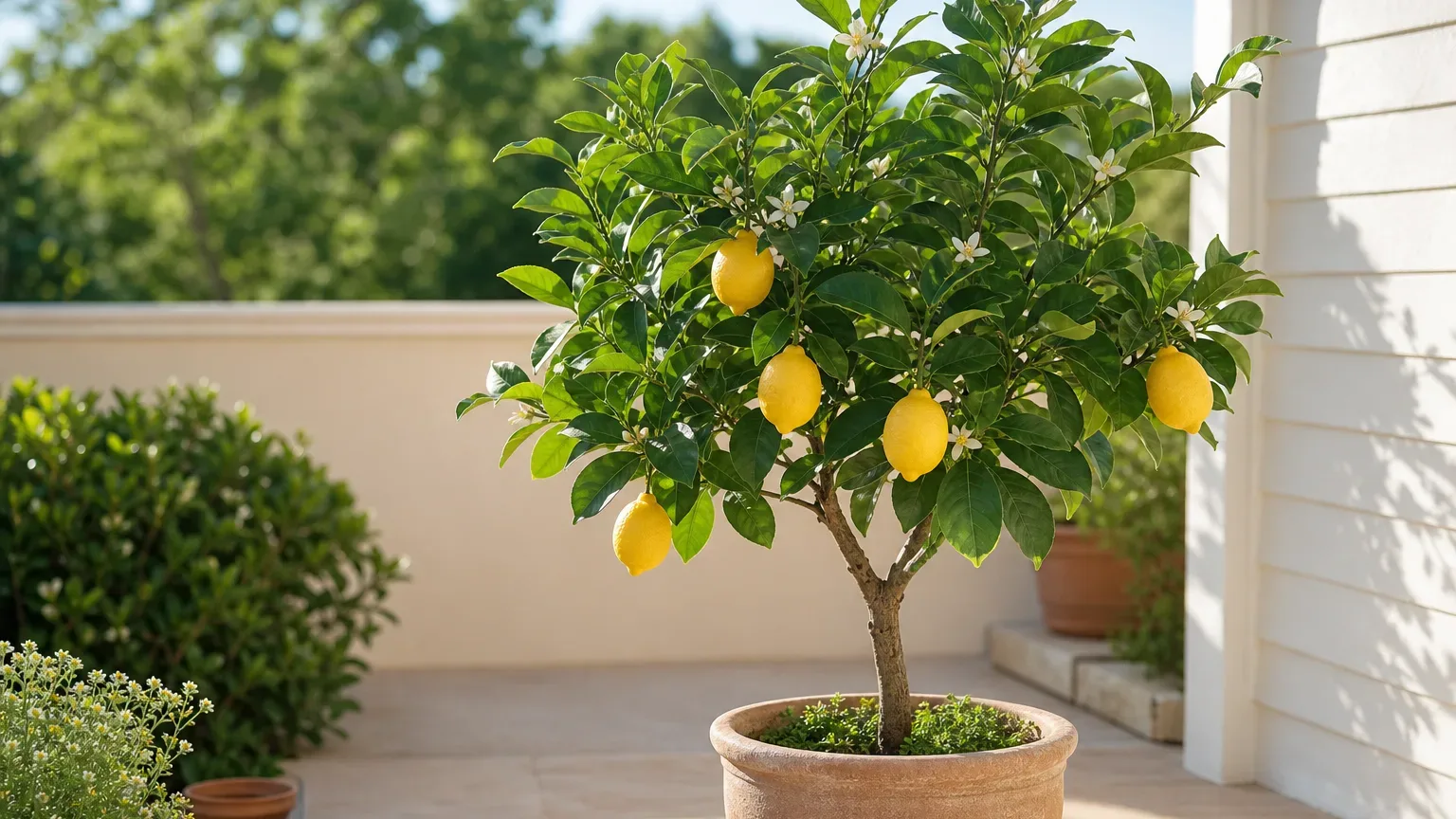
A Meyer lemon tree is a good container fruit tree because it stays more manageable than many standard citrus, flowers with a wonderful fragrance, and can move indoors before frost. It is not a carefree houseplant, though. A productive tree needs a bright root-friendly home, a steady change from outdoor summer growth to a cooler winter rest, and enough leaf area to pay for every lemon it carries.
The most useful way to think about Meyer lemon tree care is as a sequence. Give the tree strong light first, let the pot drain completely, feed during active growth, protect it from cold, and adjust the crop when the young tree is carrying more fruit than its branches and roots can support. The details below are for a grafted or nursery-grown Citrus × limon ‘Meyer’ in a pot, with notes for warm-climate in-ground growing where they change the decision.
Start with the right Meyer lemon tree
Meyer lemon is a cultivar of citrus commonly described as a lemon–mandarin hybrid. Its fruit is usually rounder, thinner-skinned, and less sharply acidic than a Eureka or Lisbon lemon, and its compact habit makes it especially useful on a patio or balcony. NC State Extension describes Meyer as a more cold-hardy cultivar with thinner skin and sweeter fruit, but “more cold-hardy” still means frost-tender, not winter-proof. NC State Extension’s lemon profile also notes that lemon trees prefer full sun, protection from wind, regular water in the growing season, and small applications of nitrogenous fertilizer.
Buy a named, grafted tree from a nursery with a clear plant label when reliable fruit is the goal. A grafted tree gives you known fruit quality and a rootstock chosen for vigor or size; a seed-grown lemon is an enjoyable experiment but may take years to flower, may not reproduce the parent fruit, and may never become a dependable crop. Inspect the trunk for a graft union, healthy green leaves, and no scale, webbing, sticky residue, or leaf-miner trails before bringing the plant home.
Decide where the tree will live before choosing its final pot. A sunny, sheltered patio that can accommodate a heavy container and a winter doorway is more valuable than a decorative pot that cannot be moved. If you will never have a place with strong direct light indoors, plan on a grow light or choose a warm outdoor site where the tree can remain year-round.
Choose the best container and planting mix
Use a container with several open drainage holes and a stable, broad base. A 5-gallon pot can suit a young tree, but the correct size is the smallest container that fits the root ball with a little fresh mix around it—not an oversized tub chosen “for future growth.” Too much wet mix around a small root system dries slowly, especially in winter, and creates the conditions that lead to root decline.
Choose an airy commercial citrus or container fruit-tree mix. The mix should hold enough water for a sunny day while releasing excess water quickly; a dense garden soil, pure compost, or fine moisture-retentive houseplant mix is a poor choice in a pot. A slightly acidic root zone is useful, but texture and drainage come first. If the mix collapses into a hard, wet mass after watering, correcting the structure is more important than chasing a pH number.
If you are planting outdoors in the ground, test drainage before committing the tree. Citrus roots need oxygen as well as water, and a low spot or compacted clay basin is a bad site even if the surface looks sunny. Raise the planting area or choose a mound when water lingers, and keep the trunk flare or crown roots at the original soil level rather than burying them under amended soil.
Potting a nursery tree without burying the trunk
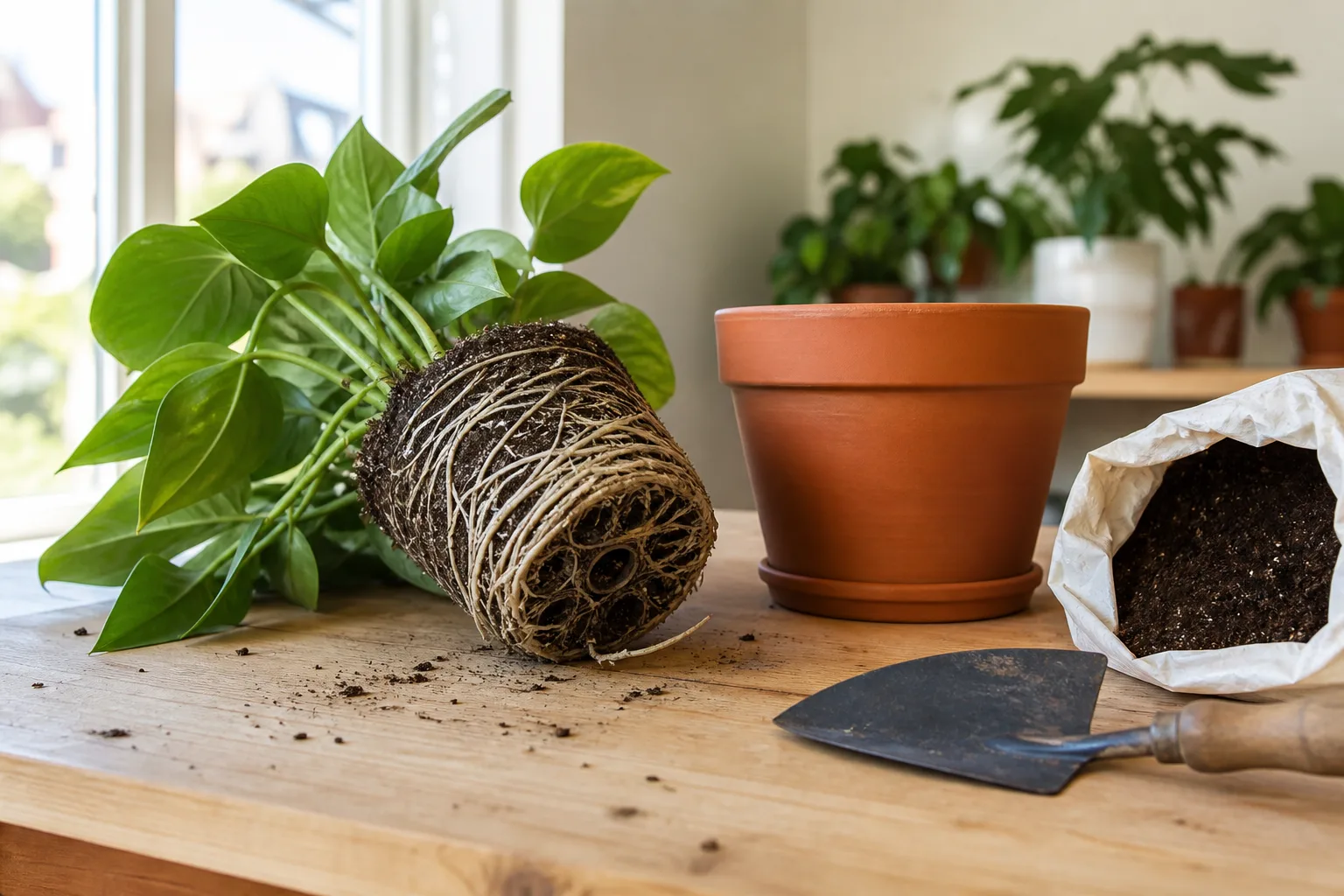
Water the nursery tree lightly if the root ball is bone dry, then slide it from the pot without pulling on the trunk. Look for circling roots and tease only the outermost tight roots loose; aggressive root shredding is unnecessary stress for citrus, which dislikes major root disturbance. Set the tree so the top of its existing root ball sits level with or slightly above the new mix, and keep the graft union well above the soil.
Backfill around the root ball without packing the mix into a soggy, airless layer. Water slowly until the entire root ball is moistened and excess runs through the holes, then empty the saucer. Do not put gravel in the bottom of the pot to “improve drainage”; it reduces the usable soil depth and does not fix a waterlogged mix. A pot foot or raised stand is useful when a patio surface blocks drainage.
Give it enough light to flower and fruit
Aim for at least eight hours of direct sun during the active season. Six hours can keep a tree alive, but the trade-off is usually lankier growth and fewer flowers or fruit. Outdoors, a south- or west-facing position protected from strong wind works well; a bright wall can add warmth, but reflected heat also increases the need to check moisture.
Indoors, place the tree immediately beside the brightest unobstructed window you have, not several feet back in a room. Glass reduces the intensity of light more than the bright patch on the floor suggests, and winter days are shorter. If the tree cannot receive roughly six hours of strong direct light, use a grow light positioned according to its instructions and run it consistently rather than moving the tree from dim room to dim room.
Light problems often masquerade as watering problems. A tree with long gaps between leaves, soft thin new growth, and little flowering is asking for more light; watering it more will not create the energy needed for fruit. Rotate the pot a quarter turn every week or two if growth leans toward the window, but do not make large changes during flowering or while fruit is setting.
Water by root-zone condition, not calendar
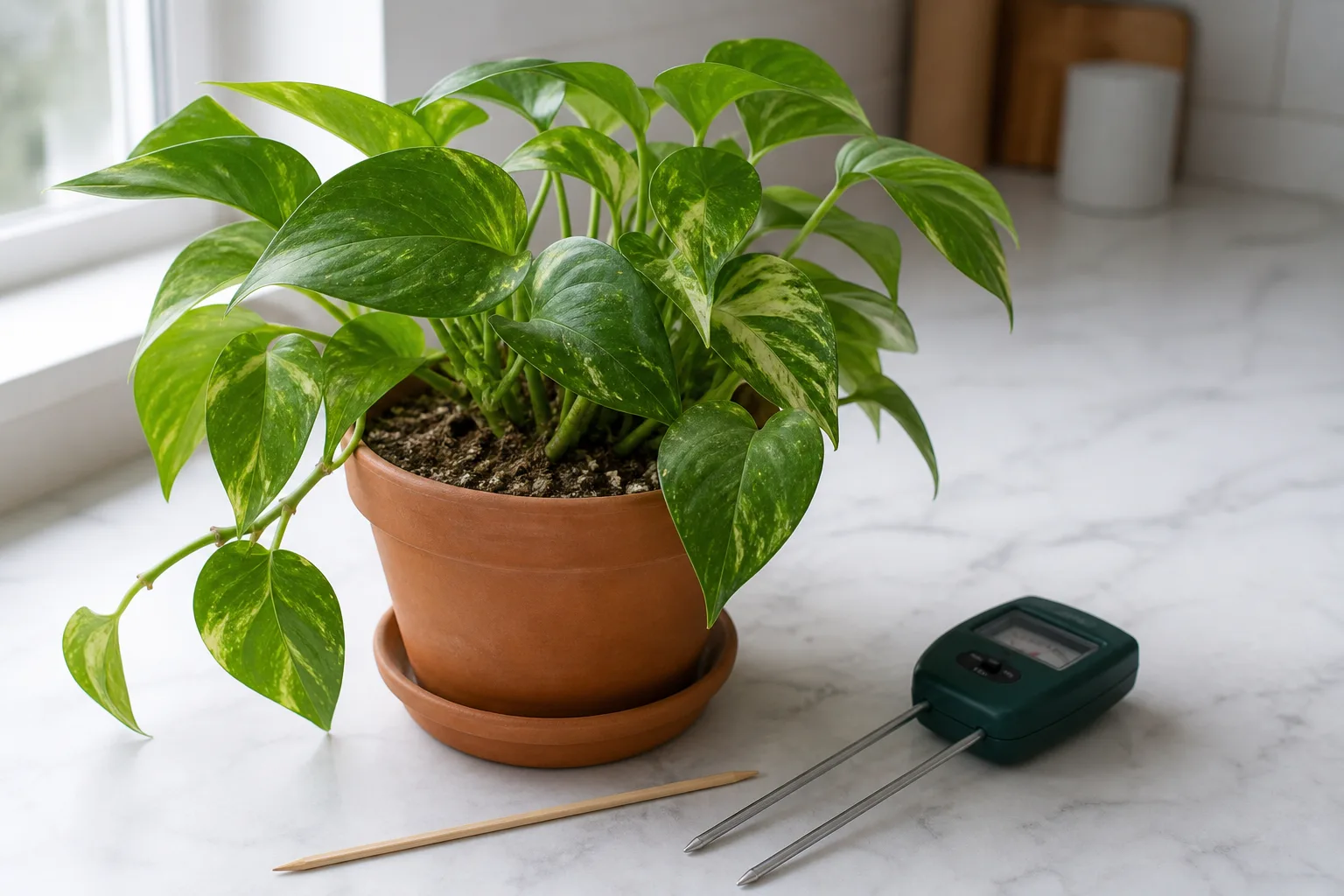
In warm, bright weather, check the pot every day or two. Push a finger or wooden skewer several inches into the mix, lift the pot to learn its lighter dry weight, or use a moisture meter as a supplement rather than a substitute for looking at the plant. Water when the upper portion has dried somewhat but before the entire root ball becomes dusty and hydrophobic.
When it is time to water, soak the mix thoroughly until water flows from the drainage holes. Let it finish draining before returning the pot to its saucer. A small splash every day wets only the surface and encourages a cycle of dry outer roots and a persistently wet center; a complete soak followed by partial drying gives you a more useful air-water rhythm.
The schedule changes sharply with the season. A tree outside in summer may need water several times a week in a small pot, while the same tree indoors in winter may need water only every week or two—or less in a cool room. Feel the mix before watering rather than copying a calendar. Pale or yellow leaves, a sour-smelling pot, and soil that stays wet for many days point toward excess moisture; limp leaves and a root ball that pulls away from the pot indicate drought, but limp foliage can also follow root damage, so check the roots and soil before assuming thirst.
Rainwater is a practical choice when available, especially for a plant that receives repeated irrigation in a small pot. Whatever water you use, flush the container occasionally with a generous watering and allow full drainage so fertilizer salts do not accumulate at the surface. Never leave the tree sitting in runoff.
Feed for leaves, flowers, and fruit
Meyer lemons are heavy feeders because an evergreen tree must maintain leaves while producing new shoots, fragrant flowers, and fruit. Use a citrus fertilizer that supplies nitrogen plus trace elements, and follow the label rate for container plants. A formula with more nitrogen than phosphorus can support active growth, but more fertilizer is not a shortcut to more lemons; excess salts burn roots and can push soft leafy growth at the expense of flowers.
Feed during active growth in spring through early fall, spacing applications according to whether the product is slow-release or liquid. A recently purchased tree already carrying a controlled-release fertilizer may not need an immediate second dose. Pause or reduce feeding when light and temperature fall sharply indoors. New growth that is pale throughout can reflect hunger, but yellow leaves with green veins, salty crust, or saturated soil need a root-zone and pH investigation before another application.
Fruit production depends on the whole system, not on a “bloom booster.” Strong light, adequate nitrogen, healthy roots, and stable watering do more for fruit set than adding phosphorus to a stressed plant. For an in-ground tree, spread fertilizer over the root zone rather than piling it against the trunk; for a pot, never exceed the container label rate because salts have nowhere to disperse.
Manage temperature and humidity indoors
Meyer lemon trees prefer warm growth and dislike frost, but a permanently hot, dry living room is not an ideal winter environment either. A bright, cool room, enclosed porch, greenhouse, or sunroom is often easier than placing the tree beside a radiator. NC State Extension recommends a well-lit indoor location for container lemons in cooler climates, while the RHS citrus-growing guide explains that citrus kept indoors over winter need light, some humidity, and reduced watering.
Protect the tree from freezing weather rather than testing its lower limit. Forecast temperatures, pot exposure, wind, and the length of the cold event all matter, and a container root ball can chill faster than soil in the ground. Move the tree before frost, not after leaves have blackened. Keep it away from cold drafts and heating vents, and do not place a frost-covering fabric directly against hot bulbs or heaters.
Humidity helps reduce dry-air stress, but a pebble tray cannot compensate for dim light or waterlogged soil. If you use one, the pot must sit on pebbles above a shallow water line, never in standing water. A humidifier, grouping plants, and keeping the tree away from forced-air heat are usually more dependable; good air movement still matters because stagnant, wet foliage encourages disease.
Move a potted Meyer lemon between indoors and outdoors
The indoor-outdoor transition is where many healthy trees lose leaves. A tree adapted to bright outdoor sun can scorch when moved straight behind glass, while a tree acclimated to a dim room can sunburn when placed in midday light. Move it in stages: start in bright shade or gentle morning sun, increase exposure over about a week, and reverse the process before bringing it indoors in autumn.
Inspect the undersides of leaves, branch joints, and the soil surface before every move. Outdoor plants may carry ants, scale, aphids, or mites indoors, where natural predators are absent and a small population can spread quickly. Rinse the foliage if appropriate, isolate the tree from houseplants for a short observation period, and treat only after identifying the pest.
Expect indoor growth to slow. Water less as evaporation and transpiration fall, stop feeding if the tree is barely growing, and accept that a few older leaves may drop after a change in light or temperature. A gradual move, bright placement, clean foliage, and restrained winter watering usually prevent a temporary adjustment from becoming a root problem.
Prune for structure without sacrificing fruiting wood
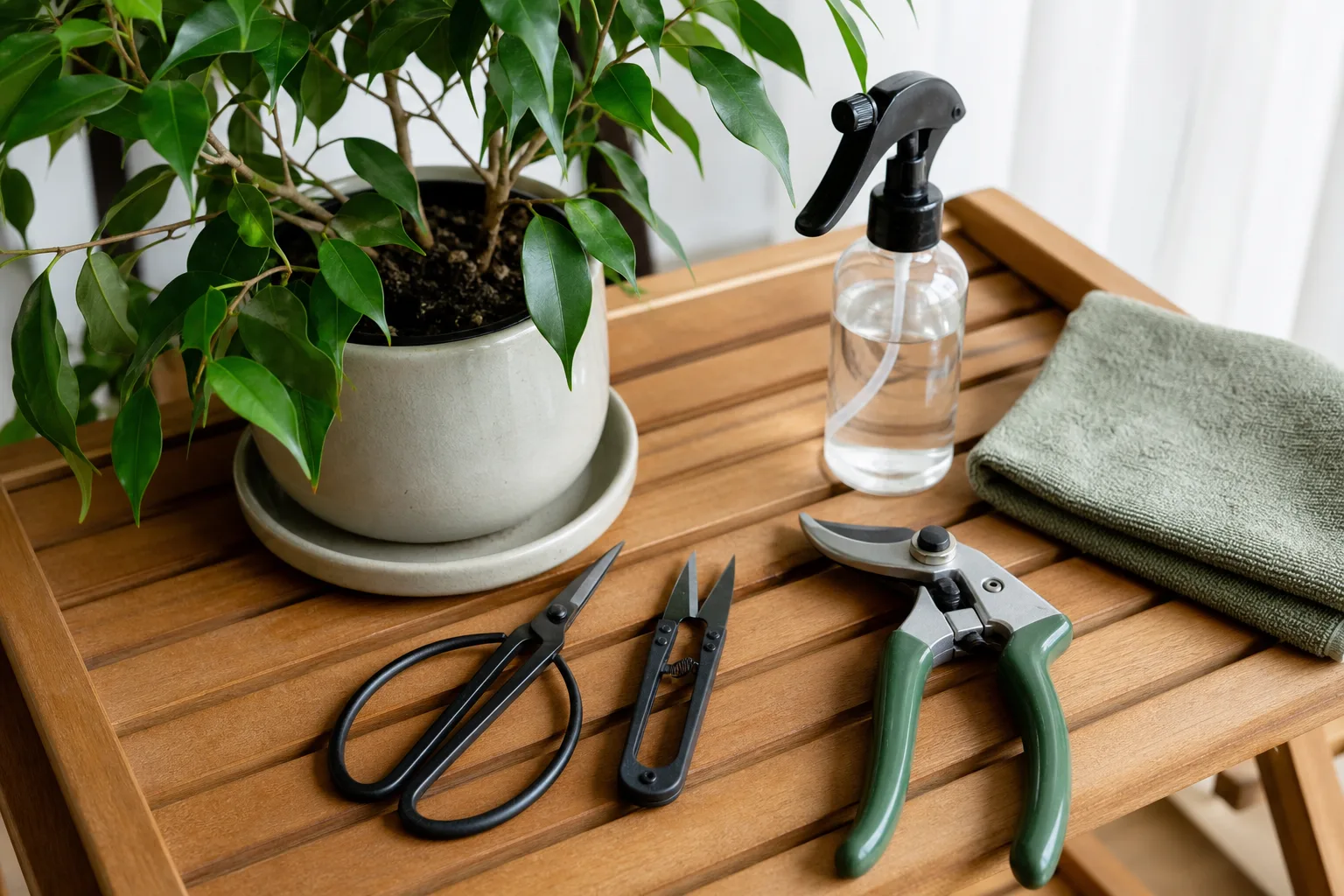
Pruning is mainly for access, balance, airflow, and size control. Remove dead, broken, crossing, inward-growing, or badly weak branches first. Then shorten a leggy shoot just above a healthy leaf or outward-facing bud, making a clean cut with sanitized bypass pruners. Wear gloves: young citrus branches can carry sharp thorns.
Do not shear the whole canopy because the tree looks untidy. Meyer lemons flower on new growth, but leaves are also the tree’s solar panels; removing too much at once reduces the energy available to hold flowers and fruit. Avoid major pruning immediately before a move outdoors or during a heavy crop. Light shaping after a harvest or during a healthy active-growth window is safer than repeated hard cuts.
Check the trunk for the graft union and remove shoots that arise below it. Rootstock suckers often grow faster and more upright than the Meyer canopy, but they will not give you the fruit you bought the tree for. Rub or cut them off at their origin while they are small; do not leave a stub that can resprout.
Pollination and fruit set in a home
You do not need two Meyer lemon trees. Citrus flowers are self-fertile, so one healthy tree can set fruit. Outdoors, insects and air movement may do the pollen transfer; indoors, flowers can still pollinate, but a gentle touch with a small soft brush or cotton swab between open flowers can help when the room is still. Just One Tree’s citrus guidance also describes citrus as self-pollinating indoors and recommends a soft brush when you want to help the process.
Fruit set is not the same as a full crop. It is normal for a tree to shed some flowers and tiny fruit, especially after a move, drought, sudden cold, poor light, or a root disturbance. If every flower drops, check light and temperature first, then watering and pests. If a few pea-sized fruits form and fall while the tree looks otherwise healthy, the tree may simply be balancing its crop.
Avoid carrying a heavy crop on a small, recently repotted tree. Let it establish roots and leaves before expecting a large harvest. Stable conditions around flowering—no abrupt moves, no dry-to-soggy watering swings, and no heavy pruning—often matter more than hand pollination.
Thin fruit and harvest at the right stage
Meyer lemons can take many months from flower to ripe fruit, and a tree may carry flowers, green fruit, and ripe fruit at the same time. The RHS guidance on citrus notes that citrus fruit can ripen slowly and suggests thinning an overloaded crop; as a practical rule, a young tree should carry only the number of fruit its canopy can support without bending branches or stopping new growth. Remove the smallest or crowded fruit first, leaving space around the strongest fruit.
Harvest when the fruit is full-sized, richly colored, and releases with a slight lift rather than a hard tug. Meyer lemons can develop a warmer yellow or orange cast as they mature. Use clean pruners to cut the stem instead of twisting the fruit, which can tear a branch or leave a wound. If several lemons ripen together, harvest the mature ones and leave green fruit to continue sizing.
Do not judge a tree’s success by one season. A young plant may prioritize roots and shoots, and an older tree may have an off year after winter stress or an unusually heavy crop. Record when it flowered, when fruit set, and how the plant responded to feeding and light; that simple history makes next season’s adjustments far more accurate than guessing from a single leaf.
Repot when roots, not the calendar, says so
Repot in spring when new growth is beginning, unless the container has failed or the roots are clearly distressed. Strong signals include roots circling densely at the outside of the root ball, roots emerging from drainage holes, water running straight through a dry compacted mass, or a tree that dries out almost immediately despite a healthy canopy. A pot that is merely attractive is not a reason to disturb citrus.
Move up only one container size, using fresh airy mix and the same planting depth. Loosen the outer roots gently, preserve the central root ball, and water once thoroughly after potting. Do not jump from a small nursery pot into a half-barrel unless you can manage the slow-drying mix and the tree’s eventual weight. RHS container guidance also recommends a slightly larger pot and minimal root disturbance, with top-dressing between repottings.
After repotting, give the tree bright but not punishing light for a short recovery period, protect it from wind, and hold fertilizer until it resumes growth or the product label says otherwise. A brief pause in growth is normal. Continued wilt in wet soil is not; check the root ball for rot rather than watering again.
Propagate: cuttings versus seed
Semi-ripe cuttings can clone a good Meyer lemon, but they are not as reliable for a beginner as buying a grafted tree. Use healthy current-season growth without flowers or fruit, keep the cutting humid in a sterile, well-draining medium, and provide bright indirect light while it roots. Sanitation matters because an enclosed cutting environment can spread rot quickly. The new plant may grow vigorously but will not have the rootstock advantages of a nursery graft.
Seed is best treated as a curiosity, not a shortcut to a named Meyer lemon. Citrus seedlings can take years to mature and may not resemble the parent fruit. Home for the Harvest’s lemon-growing guide distinguishes the compact Meyer from larger lemon varieties and notes that seed-grown plants do not reliably reproduce the parent. The RHS guide likewise recommends semi-ripe cuttings for cloning and warns that seedlings can fruit late or produce inferior fruit.
Diagnose yellow leaves, leaf drop, and no fruit
Yellow leaves are a symptom, not a diagnosis. Start with the root zone: if the mix is wet well below the surface, suspect overwatering, poor drainage, or a pot that is too large. If the mix is dry, leaves are curled, and the tree perks up after a thorough watering, correct drought stress. If the newest leaves are pale while the mix drains normally, consider nutrition or a high-pH root zone; if leaves are stippled or sticky, inspect for pests.
Leaf drop after moving indoors can be a response to lower light, dry air, temperature change, or wet winter soil. Remove only fully dead leaves, improve the environment, and wait before making several changes at once. A leaf that drops while the tree continues producing firm new growth is less alarming than widespread drop paired with blackened twigs, sour soil, or a soft trunk base.
For a tree with flowers but no lemons, use this order: confirm direct light, check whether the room is still and flowers are opening, review recent moves or drought, inspect pests, and only then reconsider fertilizer. For a tree with no flowers, low light and juvenile age are more likely than a missing second pollinator. Do not prune heavily or add bloom fertilizer before fixing the basic growing conditions.
Handle pests and disease with low-risk steps
Inspect a Meyer lemon weekly, especially after moving it indoors. Scale insects look like fixed bumps on stems or leaf veins and may produce sticky honeydew; aphids cluster on soft new growth; mites cause fine stippling and sometimes webbing; mealybugs hide in joints and leaf axils. NC State Extension lists scale, aphids, mites, mealybugs, citrus canker, sooty mold, and other problems among citrus concerns, while the RHS problem-solving guidance emphasizes regular checks for sap-feeding insects.
Begin with isolation, a strong water rinse where the plant tolerates it, removal of badly infested leaves, and improved airflow. A cotton swab can lift a small number of scale or mealybugs, but repeated inspection is essential because eggs and crawlers appear later. If you use insecticidal soap, horticultural oil, or another pesticide, choose a product labeled for the plant and pest, follow the current label exactly, test a small area, and keep the tree out of harsh sun until treated foliage dries. Never improvise a concentration from a recipe intended for another product.
Sooty mold is often a secondary black coating on honeydew rather than the first cause. Treating the insect source and washing leaves gently is more useful than scrubbing alone. Brown or collapsing roots, a sour smell, and persistent wet soil point to a root problem: stop automatic watering, inspect drainage and roots, and repot only when you can remove the cause rather than simply adding fresh wet mix.
Keep pets and people safe around citrus
Keep the tree, fallen leaves, peel, and pruned material away from cats, dogs, and horses that may chew plants. The ASPCA lemon safety entry lists lemon as toxic to pets; exposure can cause gastrointestinal upset and other reactions, and concentrated peel oils are not a safe “natural remedy.” Contact a veterinarian or animal poison-control service promptly if a pet has eaten plant material and you are concerned.
Wear gloves and wash after pruning if citrus sap or peel oils irritate your skin. Keep thorns away from children and pets, use clean tools, and do not apply a pest product where edible fruit can be harvested until its label permits it. Rinse harvested fruit before use, and remember that “organic” or homemade does not automatically mean harmless to people, pets, beneficial insects, or the tree.
Conclusion
Successful Meyer lemon tree care is less about finding a magic fertilizer than about maintaining a stable cycle. Give the tree direct sun, a well-drained pot, thorough watering followed by partial drying, citrus feed during active growth, and a cool bright winter location. Move it gradually between outdoors and indoors, inspect pests before they spread, prune lightly, and thin a crop that is too heavy for the canopy.
If your tree is struggling, change one variable at a time and begin with the roots and light. A Meyer lemon can recover from a missed watering or a dropped flush of flowers; it has a much harder time recovering from months of wet soil, repeated hard pruning, or a sudden move from shade to hot sun. With that sequence in place, the flowers become easier to keep, the fruit has time to ripen, and the container tree can remain productive for years.



