How to Grow and Care for Song of India
Learn Song of India care with clear light, watering, soil, humidity, fertilizer, pruning, propagation, repotting, pest, and brown-tip fixes.
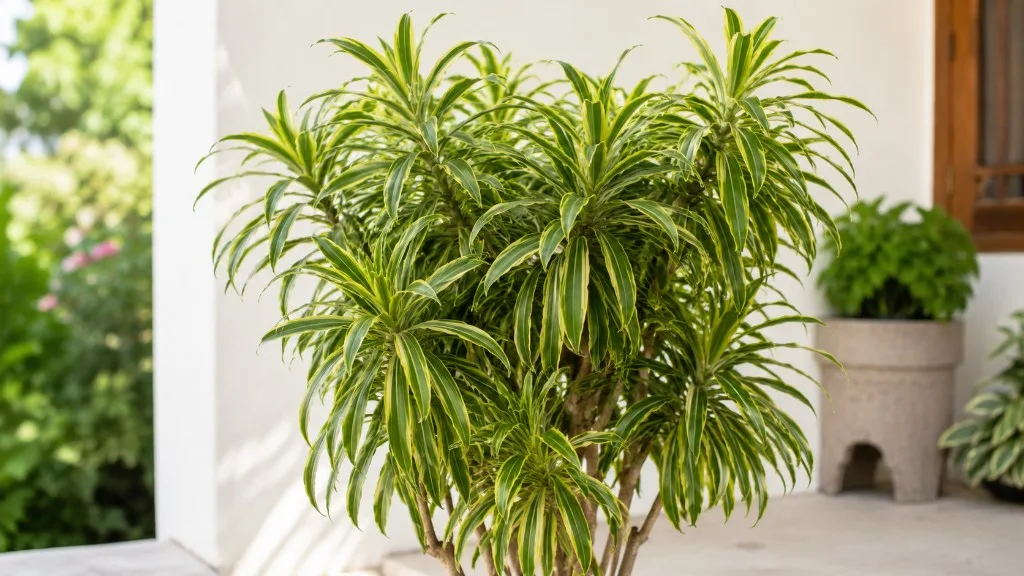
Song of India (Dracaena reflexa ‘Song of India’) is a cane-form houseplant with dark green leaves edged in chartreuse. It can look remarkably polished in a bright room, but its reputation for being easy hides the details that matter: the roots need air as well as moisture, the leaves dislike hot direct sun, and the variegation fades when the plant is kept too dim.
The most reliable routine is simple: give it bright filtered light, water deeply only after the upper mix has dried, use a draining pot, keep it warm, and inspect the leaf tips whenever you change water or fertilizer. This guide also explains how to prune a leggy plant, root a cutting, move it outdoors for summer, and tell brown tips from root trouble before the damage spreads.
Song of India Care Quick Reference
Use these targets as starting points, not rigid promises. A small plant in a warm, bright room may dry in five days; a large pot in winter light may still be damp after two weeks.
| Care factor | Practical indoor target | What to watch for |
|---|---|---|
| Light | Bright indirect light; gentle morning sun is fine | Stretching and faded stripes mean too little; bleached patches mean too much |
| Water | Thorough soak after the top 1–2 inches dry | Wet mix plus yellow leaves points to root stress |
| Soil | Airy houseplant mix with bark and moderate perlite | Slow drainage and a sour smell are warning signs |
| Temperature | About 65–80°F; protect from cold drafts | Sudden leaf drop can follow cold or air-conditioning exposure |
| Humidity | Average rooms are workable; 45–60% is more comfortable | Crispy tips and mites are more likely in very dry air |
| Feeding | Half-strength foliage fertilizer every 4–6 weeks in active growth | Brown margins can follow excess fertilizer or mineral buildup |
| Pruning | Cut bare canes above a node or growth point | New shoots take time; do not remove healthy green leaves unnecessarily |
| Outdoor range | Year-round only in warm, frost-free zones around 10–11 | Acclimate to sun and return indoors before cold weather |
What Song of India Is and How It Grows
Song of India is a cultivated form of Dracaena reflexa, also sold under the older name Pleomele reflexa. It is an evergreen member of the asparagus family, grown for narrow, reflexed leaves and woody, branching stems rather than showy flowers. The University of Florida IFAS describes the species as a slow-growing, irregularly shaped dracaena that can become a small tree in a protected landscape, while container plants stay much smaller and denser. (University of Florida IFAS Extension)
Its natural pattern helps explain the care. The species comes from warm Indian Ocean regions and is adapted to bright, filtered conditions rather than a cold, dark interior. Mature stems gradually lose their oldest leaves, so a bare lower cane is not automatically a problem; a sudden cascade of leaves is a problem because it usually signals root stress, cold, a sharp light change, or a pest outbreak.
The familiar yellow-green edge is a useful light gauge. In deep shade, new leaves often emerge smaller and the contrast becomes duller. In strong filtered light, the plant keeps tighter leaf clusters and clearer margins, but a hot pane of afternoon glass can scorch the same leaves that looked healthy the week before.
Light Requirements for Color and Compact Growth
Place Song of India in a bright room where the sun is softened by a sheer curtain, nearby foliage, or distance from the glass. An east-facing window is usually the easiest fit because it provides gentle morning light. A south- or west-facing window can work if the plant sits back from the pane or receives a curtain during the strongest afternoon hours.
Do not interpret “tolerates low light” as “grows well in low light.” Dracaenas often survive dim offices, but growth slows, internodes lengthen, and variegated leaves lose some of their contrast. Gardening Know How likewise recommends bright indirect light to partial shade for dracaenas and notes that direct sun can damage their foliage. (Gardening Know How)
Read the symptoms before moving the pot. Long bare sections between leaf clusters, a leaning crown, and smaller new leaves suggest that light is too weak; move the plant closer over a week rather than placing it straight into sun. Tan, bleached, or papery patches on the window-facing side suggest scorch; filter the light and leave damaged tissue in place until you are ready to prune it.
Rotate the container a quarter turn every week or two for even growth. Wipe dust from broad leaves with a clean, damp cloth, but avoid oily leaf-shine products that can interfere with the leaf surface and make pest inspection harder.
Watering Without Root Rot
Song of India wants a repeating wet-to-drier cycle, not a permanently wet pot and not drought treatment. Thorough watering wets the entire root ball; a period of partial drying then restores air in the pore spaces. If the container stays saturated, fine roots lose oxygen and the plant can yellow even though the soil is technically “moist.”
When it is time, pour water slowly over the soil until a steady stream exits the drainage hole. Let the container finish dripping, then empty the saucer or decorative cachepot. Never let the pot stand in runoff; the roots cannot tell whether the water arrived from a saucer or from the top.
How to test the pot before watering
Push a finger or a wooden skewer 1–2 inches into the mix near the pot wall. If that depth feels dry and the pot is noticeably lighter, water; if it feels cool and damp, wait and check again in a few days. For a large container, the weight test is often more reliable than touching the surface, which can dry while the center remains wet.
Expect a shorter interval in bright summer growth and a longer one in low-light winter conditions. Do not copy a weekly schedule from another home. A plant beside a heater can need water sooner because the leaves lose moisture, while a plant in a cool corner may stay wet long enough for the same schedule to cause root rot.
If you have repeatedly watered with hard or treated tap water and the leaf edges keep browning, switch to rainwater, distilled water, or a suitable filtered source for several weeks and flush the soil occasionally. Water quality is not the only cause of brown tips, but it becomes a reasonable suspect when the plant is correctly placed and the mix is drying normally.
Soil, Drainage, and Pot Choice
Use a quality indoor potting mix that feels light and crumbly rather than dense and muddy. A practical blend is roughly two parts houseplant mix, one part medium orchid bark, and one part perlite or pumice by volume. Do not treat this ratio as a formula that overrides your climate: if your mix dries in two days, add a little more moisture-retaining base; if it remains wet for ten days, increase structure and improve the pot.
Dracaena roots are sensitive to prolonged saturation and to excess salts. Clemson’s dracaena guidance, summarized in the project’s existing soil research, also warns about fluoride sensitivity and overly perlite-heavy mixes. Moderate perlite can improve air space, but using a succulent mix that is mostly perlite is unnecessary for Song of India and may make the plant swing from wet to dry too quickly.
Choose a pot with an unobstructed drainage hole and only a little wider than the root ball. A container that is dramatically larger than the plant holds a large reservoir of wet mix that the roots cannot use. A heavy, broad-based pot is helpful once the canes become tall; it reduces tipping without forcing you to bury the stem deeper than it was originally planted.
Skip garden soil and skip the “drainage layer” of rocks at the bottom of a container. Stones do not create a magic escape route for water above them; the fine mix can still stay saturated. Airy mix, a drainage hole, and a pot that matches the root volume are the controls that matter.
Temperature and Humidity That Prevent Setbacks
Keep Song of India in a stable, warm spot away from exterior doors, cold window glass, radiators, and forced-air vents. Normal household temperatures are fine when they are steady, but a plant can react badly to a sudden cold draft even if the room’s average temperature seems comfortable. The UF/IFAS profile lists the species for warm outdoor zones and describes it as suitable for interiorscapes, not as a cold-hardy houseplant.
Average indoor humidity is often enough for survival, but dry winter air can turn minor watering inconsistency into crisp tips and can favor spider mites. Aim for roughly 45–60% relative humidity around the foliage if you can do so without making the room damp. A small hygrometer tells you whether the problem is genuinely dry air instead of leaving you to guess from the leaf tips.
Practical ways to raise humidity
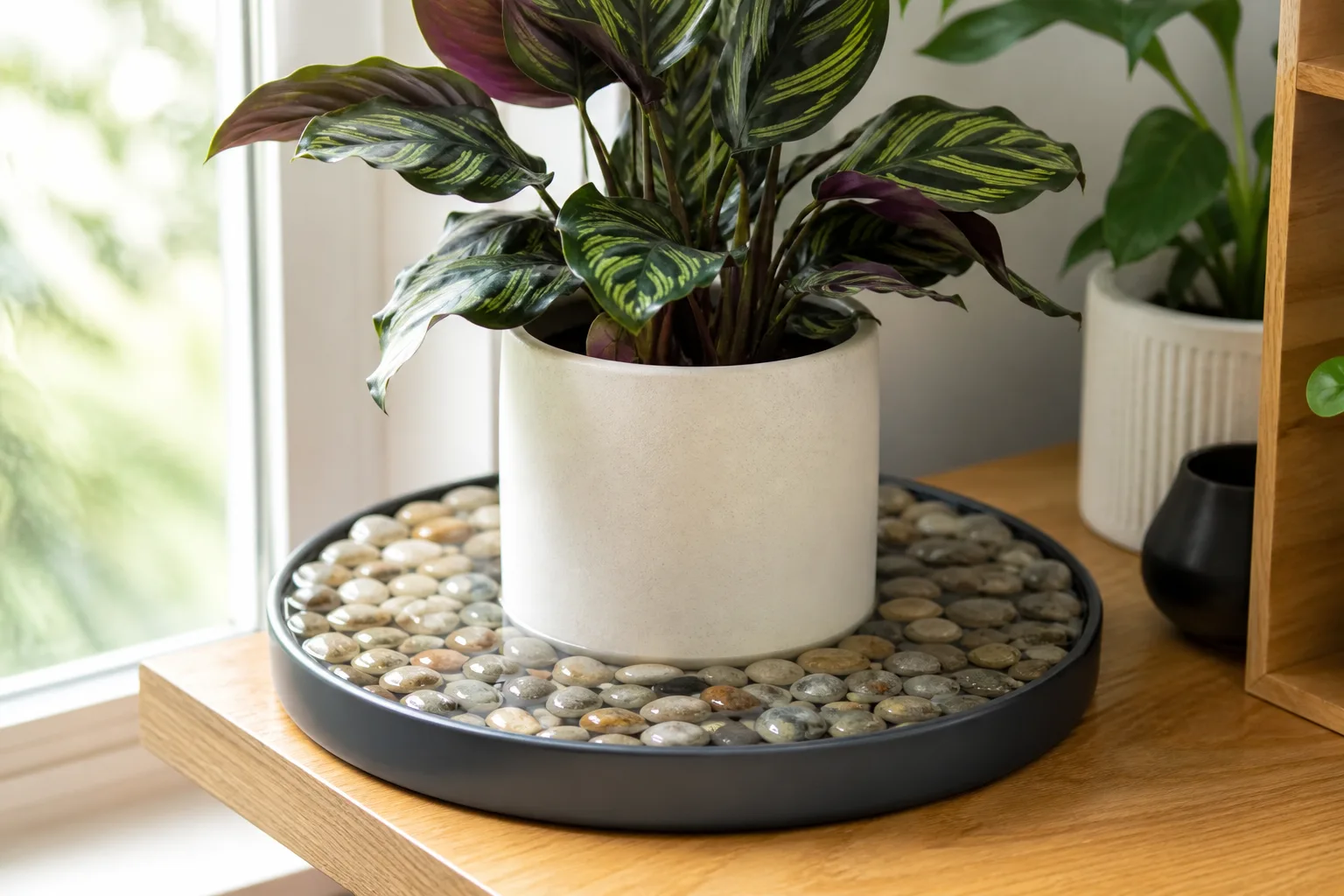
The most reliable option is a clean humidifier placed near—but not blowing directly onto—the plant. Grouping several plants can soften a very dry microclimate, and a pebble tray may modestly raise humidity immediately around the leaves when the pot sits on stones above the water line. The tray is not a substitute for drainage: the base of the pot must never sit in standing water.
Misting has a short effect and can leave mineral spots on variegated foliage. If leaves stay wet for hours in a still room, frequent misting can also make leaf-spot problems more likely. Use it only as a brief supplement, not as the central humidity plan.
Fertilizer and Fluoride-Sensitive Foliage
Feed during active growth, usually spring through summer, with a complete liquid houseplant fertilizer diluted to half the label rate. A four- to six-week rhythm is sufficient for most indoor plants. Water the plant first if the mix is dry, and do not feed a recently repotted plant until it has resumed growth.
More fertilizer does not make Song of India grow faster in a useful way. Excess soluble salts can burn roots and leaf margins, while weak light limits the plant’s ability to use the nutrients. Plantura emphasizes both seasonal feeding and restraint for dracaenas, noting that overfertilizing can damage this otherwise frugal plant. (Plantura)
Flush the pot with plain water occasionally if the mix drains freely and you see a white crust on the soil or pot rim. If runoff is slow, flushing may keep the root zone wet for too long; repot into fresh, airy mix instead. Brown tips that persist after you correct watering and humidity can come from fluoride or fertilizer salts, so change one variable at a time and watch new growth rather than expecting old brown tissue to turn green.
Pruning for a Fuller, Better-Shaped Plant
Prune when the canes are too tall, bare, or uneven—not because a healthy plant needs routine shearing. Use clean, sharp pruners and cut a cane just above a visible node, leaf scar, or branching point. Several weeks or months later, dormant buds below the cut may produce new shoots; brighter light helps those shoots remain compact.
If only the tips are brown, trim the brown tissue along the leaf’s natural tapered shape and leave a narrow brown margin. Cutting deep into green tissue creates a larger wound and does not solve the underlying water, salt, humidity, or light issue. Remove a fully yellow or dead leaf at its base once it detaches easily.
The pieces you remove can become cuttings. Keep the parent plant warm and bright after a major cut, but do not compensate with extra fertilizer or daily soaking. Recovery is driven by viable buds and functioning roots, not by forcing a burst of soft growth.
Propagating Song of India from Stem Cuttings
Song of India is most conveniently propagated from stem cuttings during active growth. Select a firm, healthy cane with several nodes and at least one leafy crown or a short section with viable buds. Make a clean cut, remove leaves that would sit below water or soil, and allow the cutting to rest briefly while you prepare its container.
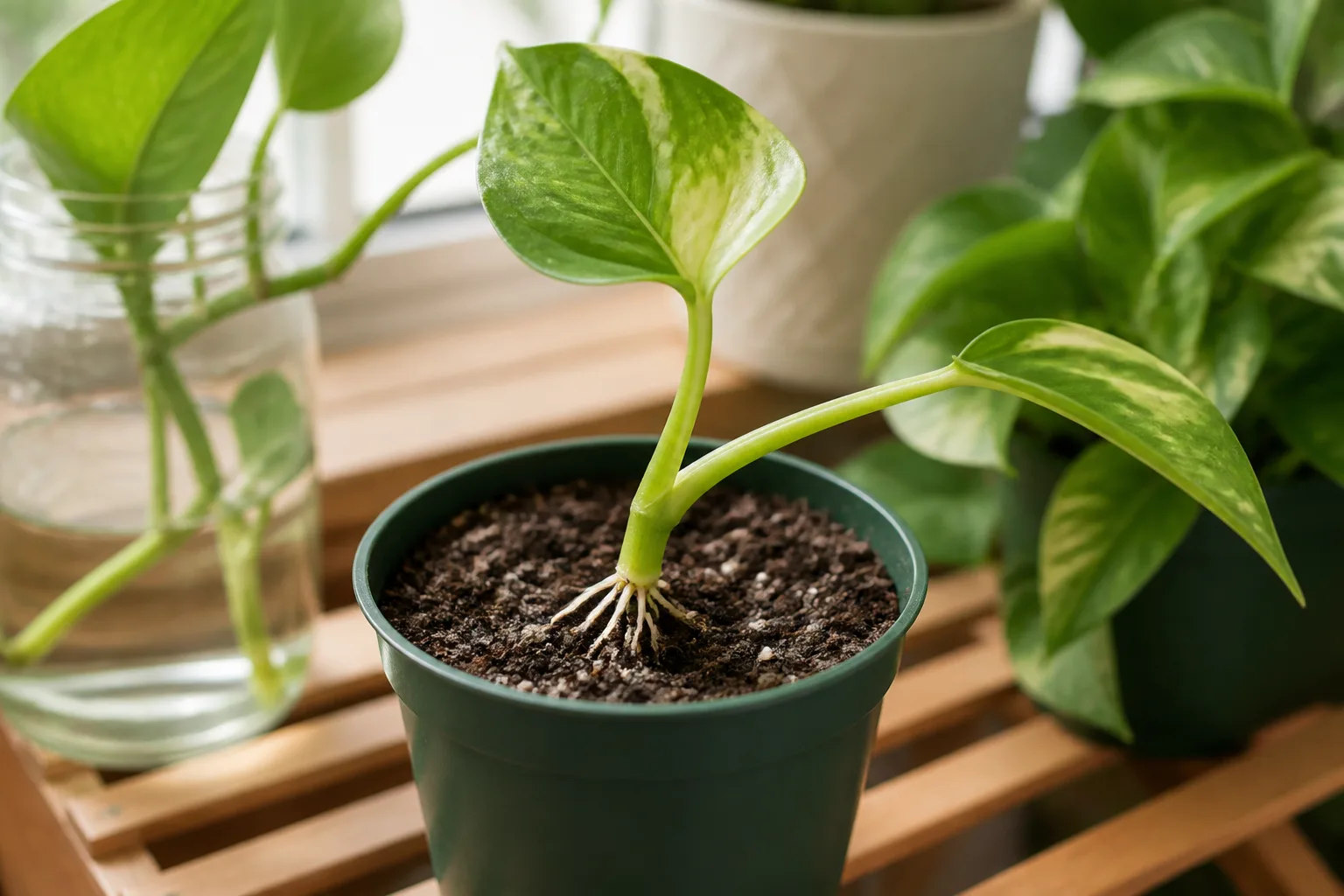
For water propagation, place the lower node in clean water while keeping leaves above the surface. Set the jar in bright indirect light and change the water whenever it becomes cloudy. Once roots are several inches long and branching, transfer the cutting to a small draining pot; keep the mix a little more evenly moist than usual for the first few weeks as soil roots take over.
For soil propagation, insert one or two nodes into a small pot of pre-moistened, airy mix. Firm the mix just enough to hold the cutting upright, then place it somewhere warm with bright filtered light. Keep it lightly moist, not saturated. New growth is a better sign of establishment than tugging on the cutting, which can break young roots.
Water propagation versus soil propagation
Water lets you see roots develop and makes it easy to notice rot, but the cutting must transition to a new medium. Soil avoids that transition and can produce roots ready for pot culture, but it requires more patience because the progress is hidden. Either route works when the cutting has a node, the medium has air, and the environment stays warm and stable.
Repotting and Root Inspection
Repot in spring or early summer when roots circle the container, emerge from the drain hole, or the mix has collapsed and remains wet for too long. A plant that dries unusually fast can also be rootbound, but rule out high heat and brighter light before disturbing the root ball. Slow growth alone is not a reason to repot; Song of India is naturally slow.
Slide the plant out by supporting the root ball and stems, never by pulling the crown. Healthy roots are firm and pale tan to cream. Brown, soft, sour-smelling roots indicate rot: remove only the mushy tissue with sterile scissors, refresh the mix, and use a clean pot with a working hole. Do not put a severely declining plant into a huge pot in the hope that more soil will help it recover.
Move up one pot size, set the root ball at the same depth, and fill around it without packing the mix hard. Water once to settle the soil, allow complete drainage, and return the plant to bright indirect light. Hold fertilizer for about four weeks or until new growth resumes; freshly disturbed roots are more vulnerable to salt injury.
Seasonal Care and Outdoor Acclimation
In spring, check for compacted mix, prune leggy canes, and increase watering only as light and growth increase. In summer, a healthy indoor plant can benefit from a covered patio or bright shade, but harden it gradually over seven to ten days. Start with bright shade, then add gentle early sun if the leaves remain unscorched; wind can dry and tear leaves even when the light is perfect.
In USDA zones around 10–11, Song of India may be grown outdoors in a warm, protected position with partial shade. UF/IFAS records Dracaena reflexa as an outdoor landscape plant in warm zones and notes that it is not tolerant of salt spray. (University of Florida IFAS Extension) Elsewhere, bring it indoors before nights become cold or frost threatens, and inspect the leaf axils for hitchhiking pests before placing it near other plants.
Winter indoors means less light and slower dry-down. Move the pot away from heaters and cold glass, stop routine fertilizer, and check the soil at root depth before watering. When bringing it back outside the following year, repeat acclimation; a plant that tolerated patio shade last summer can still scorch if a new location receives stronger sun.
Pests, Diseases, and Leaf-Symptom Diagnosis
Inspect the undersides of leaves and the tight leaf bases every week or two. Spider mites prefer hot, dry conditions and may leave fine webbing or pale stippling. Scale appears as fixed brown or tan bumps, while mealybugs look like small cottony clusters. Isolate the plant, rinse foliage gently, and then use insecticidal soap or horticultural oil only according to its label, covering the undersides and repeating as directed.
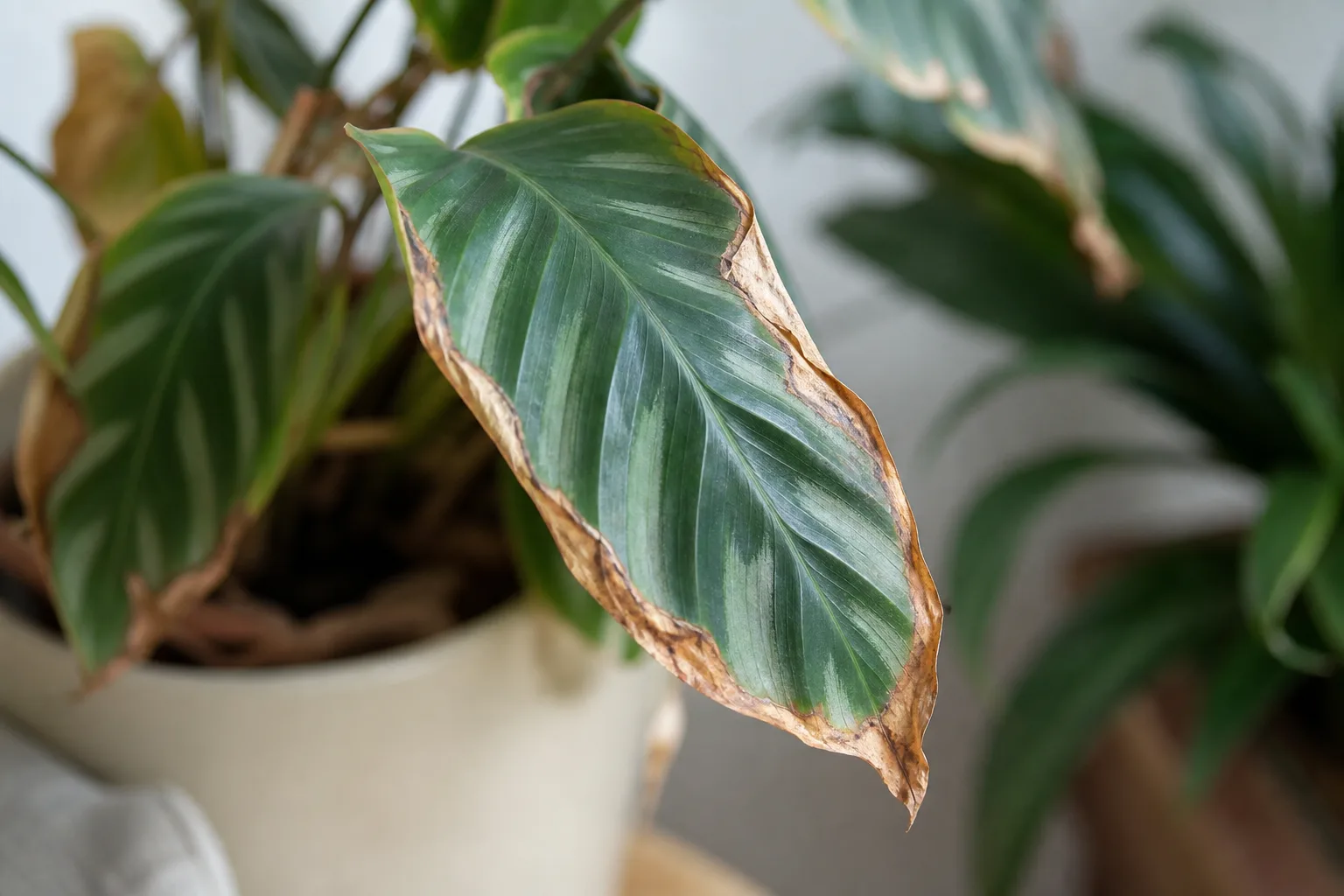
Leaf spot is more likely when foliage stays wet in poor airflow. Remove badly affected leaves, keep water off the canopy when possible, and increase air movement without placing the plant in a harsh draft. If a stem is soft at the soil line or the plant collapses while the mix remains wet, stop treating the leaves and inspect the roots immediately.
Brown, crispy tips: Check the soil moisture swing first, then room humidity, direct sun, fertilizer buildup, and water quality. A dry tip alone is cosmetic and will not reverse; the goal is to prevent the next leaves from browning.
Yellow leaves: One old lower leaf can be normal senescence. Several yellow leaves in quick succession, especially with wet soil, suggest overwatering or root injury. A uniformly pale, stretched plant more often needs brighter filtered light, while yellowing paired with fine webbing calls for a mite inspection.
Drooping: A limp plant with dry mix needs a thorough soak and a better watering rhythm. A limp plant in wet mix needs air at the roots, not more water; check drainage, pot size, and root firmness before watering again.
Leaf drop after moving: A sudden change from dim indoor light to hot sun, a cold draft, or a root disturbance can trigger older leaves to fall. Stabilize light and temperature, avoid repeated moves, and wait for new growth before making another major change.
Pet Safety and Responsible Placement
Keep Song of India away from cats and dogs that chew plants. The ASPCA lists Dracaena species as toxic to dogs and cats because of saponins; reported signs include vomiting, depression, loss of appetite, excess salivation, and dilated pupils in cats. (ASPCA Animal Poison Control)
Place the pot where a curious pet cannot reach fallen leaves, and do not assume a high shelf is safe for a determined climber. If ingestion is suspected, remove access and contact your veterinarian or the ASPCA Poison Control Center rather than waiting for symptoms to become severe. The plant’s safety profile is a separate question from its care requirements: a bright, warm shelf may suit the dracaena perfectly while being a poor location in a pet household.
Conclusion
Song of India stays attractive when you manage the root zone and the light together. Give it bright filtered light to preserve its stripes, let the upper mix dry before a complete watering, use a draining pot, protect it from cold drafts, and feed sparingly during active growth.
When a problem appears, read the pattern before reaching for a remedy: wet soil with yellowing calls for a root check, crispy tips call for a water-quality and humidity review, and stretched growth calls for more light. Pruning and stem cuttings can rebuild a sparse plant, while gradual outdoor acclimation can provide stronger summer growth. With those decisions in place, this tropical dracaena becomes a steady, long-lived houseplant rather than a short-lived burst of nursery color.