Hardy Shrubs to Plant in September for Winter Color
Choose hardy shrubs to plant in September, from red-twig dogwood to winterberry, with zone, light, soil, spacing, watering, and winter-care advice.
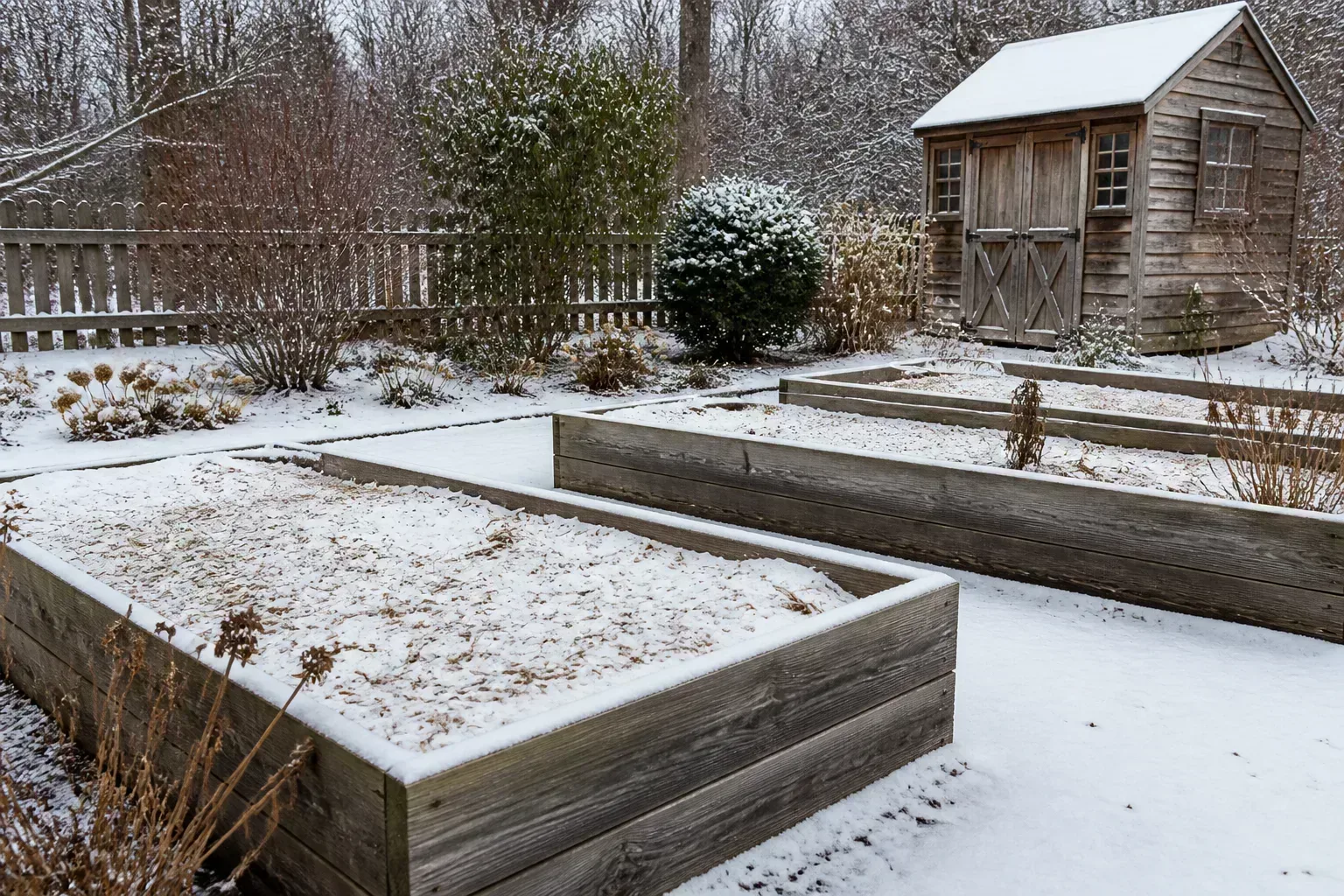
September is a useful month for planting shrubs because the calendar is finally working with you. The air is often cooler than it was in summer, the soil can still be warm enough for root growth, and a new shrub has less leafy top growth to support while it settles in. But “plant in September” is not a promise that every shrub will be established before winter. The right date depends on your first hard freeze, soil moisture, shrub hardiness, and whether the plant is going into the ground or a more exposed container.
The seven shrubs below earn a place for different reasons. Some keep evergreen foliage; some lose their leaves but reveal red stems, bright berries, or peeling bark; others provide the structure that makes a winter garden feel intentional. Use the list as a set of choices, not a shopping mandate. A winterberry in dry sand or an Indian hawthorn in a harsh northern site can be a poor match even if the plant is labeled “hardy.”
Why September Can Be the Best Shrub-Planting Window
Fall planting is most useful when it gives roots time to grow before the ground freezes. That window is longer in a mild climate and shorter in a cold one, so a gardener in a northern zone may need to plant in early September while someone farther south can plant later. A practical rule is to plant while the soil is workable and the shrub still has several weeks of ordinary, unfrozen conditions ahead—not simply by the date printed on a garden calendar.
The benefit is establishment, not immediate top growth. A shrub may look almost unchanged above ground through autumn while its roots explore the surrounding soil. This is why a modest nursery plant planted at a sensible time can be a better investment than a large, root-bound specimen installed just before a hard freeze. Gardening Know How’s overview of cold-hardy plants makes the same useful distinction: cold tolerance varies widely, and deciduous shrubs can be as winter-tough as evergreens even when they look bare.
Postpone planting if the root ball is frozen, the bed is saturated, or a severe cold snap is forecast immediately after installation. A late shrub can sometimes be held temporarily in its nursery container in a sheltered spot, kept evenly watered, and planted when the soil becomes workable again. Do not leave a container root ball exposed to repeated freezing and thawing for weeks; roots in a pot experience temperature swings much faster than roots in the ground.
Choose Winter Interest by Site, Not by a Pretty Tag
“Winter color” describes several different effects, and each points to a different plant. Evergreen leaves give steady mass but can suffer wind or salt injury. Bare red stems are strongest against snow or a dark background. Berries show best when the plant has enough light and when birds have not already stripped them. Peeling bark and branching shape are subtle, but they do not disappear when foliage drops.
A quick match for sun, shade, soil, and space
| If your site has… | Start with… | Watch for… |
|---|---|---|
| Moist or periodically wet soil | Red-twig dogwood or winterberry | Both can spread; give them room and monitor suckers |
| Average, well-drained soil and full sun to part shade | Ninebark | Mature size varies sharply by cultivar |
| A spring-flowering arching shrub | Bridal wreath spirea | Prune after flowering, not as a fall cleanup |
| Mild winters and a protected sunny bed | Indian hawthorn | Cold damage and leaf spot in stressful sites |
| A formal screen or hedge | Privet | Size, pruning load, and regional invasiveness |
| Brilliant fall color in a region where it is permitted | Burning bush | Check local invasive-plant guidance before buying |
This table is a starting point, not a substitute for the plant tag or local extension database. Hardiness zones estimate average minimum temperatures; they do not account for wind exposure, reflected heat, sudden thaws, salt, wet roots, or the difference between a protected courtyard and an open field. If two shrubs fit your color goal, choose the one that matches the bed’s moisture and mature size first.
1. Red-Twig Dogwood Brings Color to Wet or Moist Ground
Red-twig dogwood (Cornus sericea, also called redosier dogwood) is the strongest choice here when winter interest and wet-soil tolerance need to happen in the same plant. It is a multi-stemmed deciduous shrub: the leaves fall, the white berries fade, and the newer stems become the feature. In winter, those red branches read clearly from a distance, especially when planted near ornamental grasses, evergreens, or a snowy path.
Penn State Extension lists red-twig dogwood for hardiness zones 2 to 7 and describes a shrub that prefers organically rich, consistently moist soil, full sun to partial shade, and room to colonize. Oregon State University also notes that the plant can grow from full sun into fairly heavy shade and is easy to transplant from late fall into the garden. Those details matter because red-twig dogwood is not a substitute for a drought shrub. It may tolerate a dry spell once established, but it performs best where irrigation or naturally moist soil is reliable.
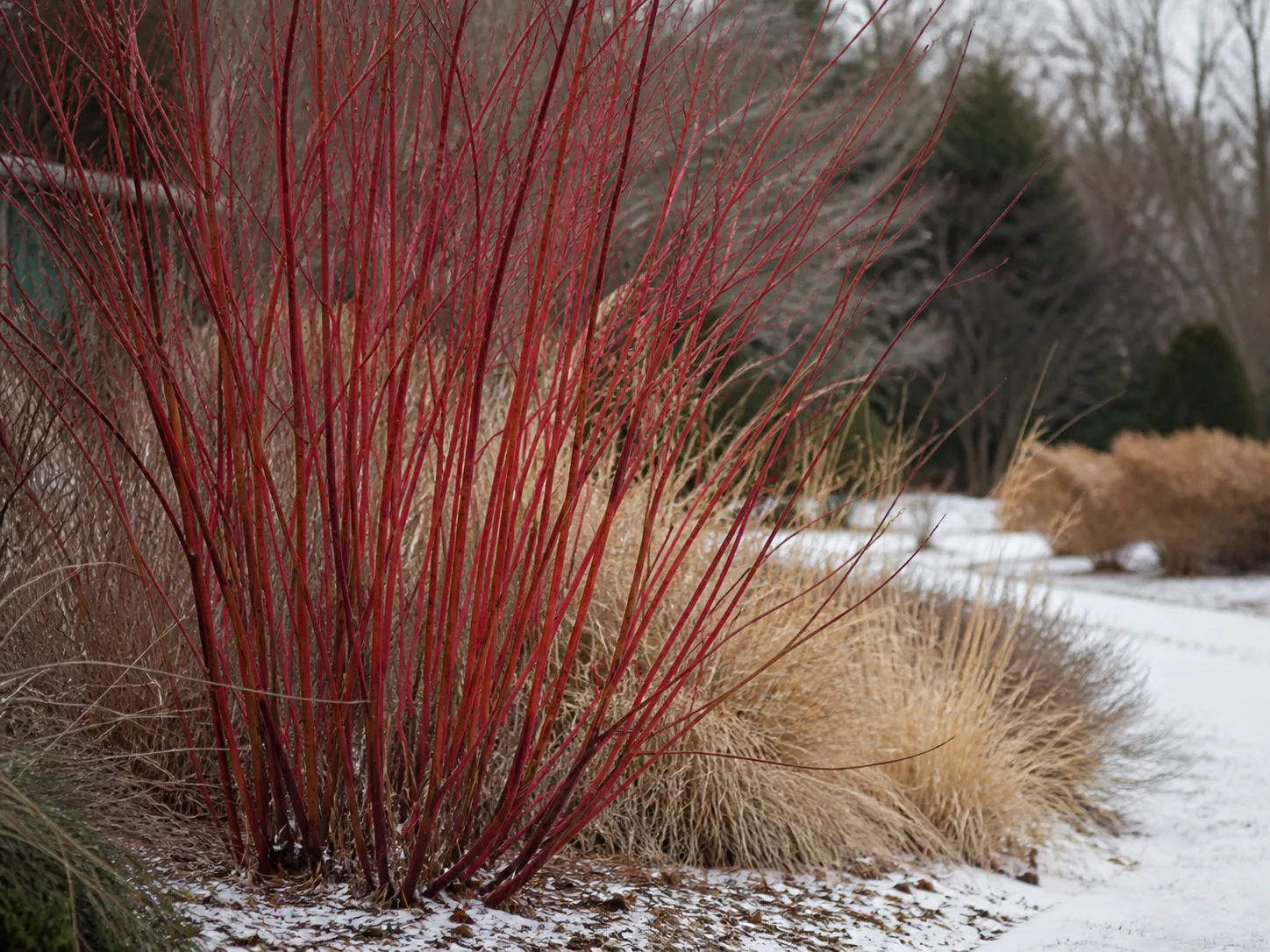
The brightest winter display comes from young red stems, so give this spreading shrub enough room for renewal pruning.
Plant it where the spreading habit is useful: at the edge of a rain garden, beside a drainage swale, or as a loose screen rather than in a narrow foundation bed. Expect roughly 6 to 12 feet of height depending on site and selection, and plan to remove root suckers if the shrub starts crossing into lawn or a neighboring bed. In late winter or early spring, thin out some of the oldest, dullest stems at ground level to make space for fresh colorful shoots. Avoid shearing the whole plant into a tight ball; that sacrifices the multi-stem character that makes it valuable.
2. Ninebark Adds Peeling Bark and Tough Structure
Ninebark (Physocarpus opulifolius) is a deciduous shrub for gardeners who want a plant that still has something to say after its leaves drop. Its layered, exfoliating bark reveals reddish to light-brown inner surfaces, and the branching habit gives a winter bed structure without demanding evergreen foliage. In late spring and early summer, white to pink flower clusters add another season of interest.
NC State Extension describes common ninebark as native to central and eastern North America and adaptable to slightly acidic, dry-to-medium, well-drained soil in full sun to part shade. That makes it a more forgiving choice than winterberry for an ordinary border, but do not confuse “tough” with “small.” Cultivars range from compact forms to shrubs that can occupy a substantial section of a mixed border.
Ninebark is also a good example of why a cultivar name belongs on your shopping list. Purple-leaf selections can lose some color when they are exposed to long periods of intense sun, while compact forms make more sense near a walkway or beneath a window. Read the mature height and width for the exact cultivar rather than relying on the species’ common name.
September planting works well when the bed drains after rain and the root ball can be watered deeply without staying saturated. Do not fertilize aggressively to force autumn growth. Let the shrub put its energy into root contact, then prune only broken or dead wood until you know how the plant flowers in your climate. If shaping is necessary, pruning just after bloom preserves more of next year’s flower potential than a random fall haircut.
3. Winterberry Makes Bare Branches Worth Looking At
Winterberry (Ilex verticillata) is the shrub to choose when your definition of winter color is a mass of red berries against leafless branches. It is deciduous, so it does not behave like an evergreen holly. That is the point: once the foliage drops, the fruit becomes easier to see and can persist into the colder months, though birds and weather ultimately determine how long the display lasts.
The most important winterberry detail is pollination. Winterberry is dioecious, meaning male and female flowers occur on separate plants. Only a female plant produces berries, and it needs a compatible male nearby that blooms at the same time. Buying one attractive female cultivar without checking the pollinator requirement is the fastest way to end up with a healthy, berry-free shrub. Penn State Extension’s winterberry profile confirms both the separate-sex requirement and the shrub’s preference for acidic, organic soil.
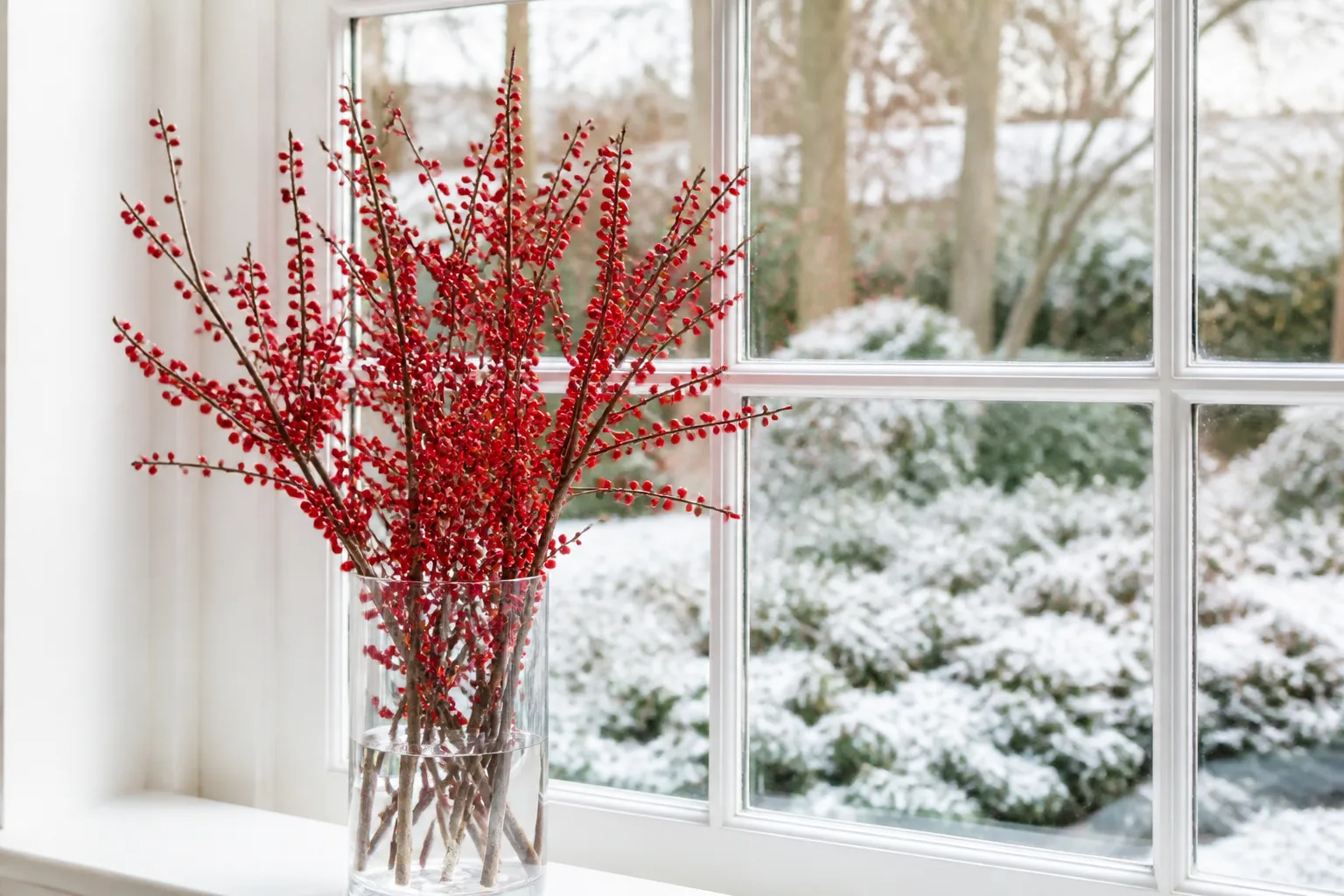
Winterberry’s fruit is the feature; confirm the female plant and its compatible male pollinator before planting.
Penn State Extension places winterberry in zones 3 to 9 and recommends sun to partial shade with acidic, organic soil. It tolerates moist conditions and can form large colonies through root suckers. Use it in a rain garden, along a pond edge, or in a naturally damp low spot where its spreading habit will not become a maintenance fight. In a dry bed, regular irrigation can keep it alive, but it is usually smarter to choose a shrub adapted to those conditions.
Space winterberry for mature width, not the size of the nursery pot. If you are designing a berry display, group the female where it is visible from the house and place the male close enough for pollination but far enough away that the planting still looks natural. Remove only damaged or badly placed branches in the first year. Heavy pruning can remove the wood that carries future flowers and fruit.
4. Bridal Wreath Spirea Delivers Spring Flowers and Fall Color
Bridal wreath spirea is a useful September planting when you want a deciduous shrub with an elegant spring event rather than a winter-green silhouette. The classic bridalwreath type, Spiraea × vanhouttei, develops long, arching stems lined with white flower clusters. The branches create a fountain-like shape that looks especially good at the back of a border or where it can lean slightly over a path.
Penn State Extension’s spirea guidance makes a distinction that many plant labels blur: not every spirea is the same species or has the same behavior. Bridal wreath spirea is not interchangeable with Japanese spirea, which has a different bloom timing, form, and regional invasive concern. Some other white-flowering spireas have useful yellow, orange, or red autumn foliage, while the bridal wreath type is prized mainly for its arching form and spring bloom.
Give it full sun for the heaviest flowering and well-drained soil that does not stay waterlogged. The plant can tolerate ordinary garden conditions, but crowding it into a narrow hedge invites poor airflow and makes the natural arching habit look awkward. Measure the mature width before planting several together.
The pruning rule is simple: do not use September as an excuse to shorten every branch. Spring-flowering bridal wreath spirea sets flower buds on older wood, so wait until flowering finishes before thinning or shaping. A newly planted shrub may spend its first season establishing roots and produce a lighter display than a mature specimen. That is normal, not evidence that the planting failed.
5. Indian Hawthorn Keeps a Neat Evergreen Shape in Mild Climates
Indian hawthorn (Rhaphiolepis species and hybrids) fills a different role from the deciduous shrubs above. It is mostly evergreen, naturally mounded, and useful in foundation beds, low hedges, and small gardens where a large colonizing shrub would overwhelm the space. Clemson Extension reports that most cultivars grow about 3 to 6 feet tall and wide, with pink or white spring flowers, bluish-black fruit, and leathery foliage that can turn purplish in winter.
This is the warm-climate choice on the list, not a universal cold-hardy recommendation. Clemson notes that Indian hawthorn can be sensitive to cold damage and should be placed in a protected site in the colder part of its range. Choose a sheltered, sunny bed with moist but well-drained soil, and be especially cautious in exposed locations where winter wind can dry evergreen leaves.
The plant prefers sun but tolerates partial shade, and established shrubs can handle some drought. Avoid the common mistake of treating drought tolerance as permission to plant it in compacted, bone-dry soil and forget it. Stress from poor irrigation, improper fertilization, or foliar disease can make cold injury more likely. Clemson also identifies Entomosporium leaf spot as a major problem and recommends spacing plants for airflow and using drip irrigation rather than wetting foliage overhead.
Pruning is rarely needed. If the shrub needs a size correction, make it just after bloom rather than repeatedly clipping the outside into a green ball. For September planting, focus on root moisture and site protection; do not spend the first autumn trying to make the plant look finished.
6. Privet Builds a Dense Screen Where Hedges Belong
Privet (Ligustrum) remains popular because it is fast, dense, and responsive to pruning. In a deliberate hedge, it can create privacy more quickly than many slower shrubs, and its glossy foliage keeps visual mass well into the colder season in climates where the selected species remains evergreen or semi-evergreen. Small white flowers and dark fruit add seasonal interest, although the flowers can be strongly scented and the fruit can spread by seed.
The word “privet” covers multiple species, so the label deserves more attention than the common name. Check the exact species, expected height, mature width, and local invasive-plant status before buying. A fast-growing hedge that outgrows a small yard is not low maintenance; it is a recurring pruning project. Privet also becomes a poor choice when the goal is a loose wildlife garden rather than a clipped screen.
Plant privet in full sun for the densest growth, although many selections tolerate partial shade. Prepare a long, properly spaced trench or individual holes rather than planting shrubs shoulder to shoulder. The temptation to close gaps immediately leads to crowded roots and weak airflow later. Use the mature width on the tag to set spacing, then accept that a new hedge will look unfinished for a season.
September is a good time to establish a hedge if you can keep the root balls watered and the plants are not being installed just before frozen soil. Do not shear newly planted privet hard in the fall. Remove broken branches, let the roots settle, and begin formative pruning after new growth resumes, following the shape you want rather than cutting on autopilot every few weeks.
7. Burning Bush Offers Fall Color, With a Serious Caveat
Burning bush (Euonymus alatus) is included because its intense red fall foliage explains why it remains tempting in garden centers. Its winged stems and reliable autumn color can make a strong visual statement, and the shrub is tolerant of a range of conditions. It is also one of the clearest examples of why “hardy” and “good choice” are not synonyms.
Burning bush has escaped cultivation in parts of the United States and can displace native vegetation. Penn State Extension identifies winged euonymus as an invasive landscape shrub and notes that birds disperse its abundant fruit and that seedlings can form dense thickets. The risk is regional: local climate, seed dispersal, nearby natural areas, and state or county rules all matter. Before planting, check your state invasive-plant list or ask your cooperative extension office. If it is listed as invasive or prohibited where you live, skip it; a shrub that looks beautiful in a fall photo is not worth adding to a local habitat problem.
If it is permitted and you choose it, place it where its mature size fits without annual drastic cutting. Full sun generally produces the strongest color, while shade can make the display less vivid. Keep an eye out for seedlings beyond the planting bed and remove them before they establish. Pruning can control size, but it does not erase the underlying spread risk.
For gardeners seeking the same autumn drama without the same concern, look at locally native shrubs with red, orange, or purple fall foliage, or choose a winter-interest shrub whose value comes from stems, berries, or bark. A slightly less theatrical plant that belongs in your region will usually provide more responsible, durable landscaping.
How to Plant Shrubs in September Without Rushing the Roots
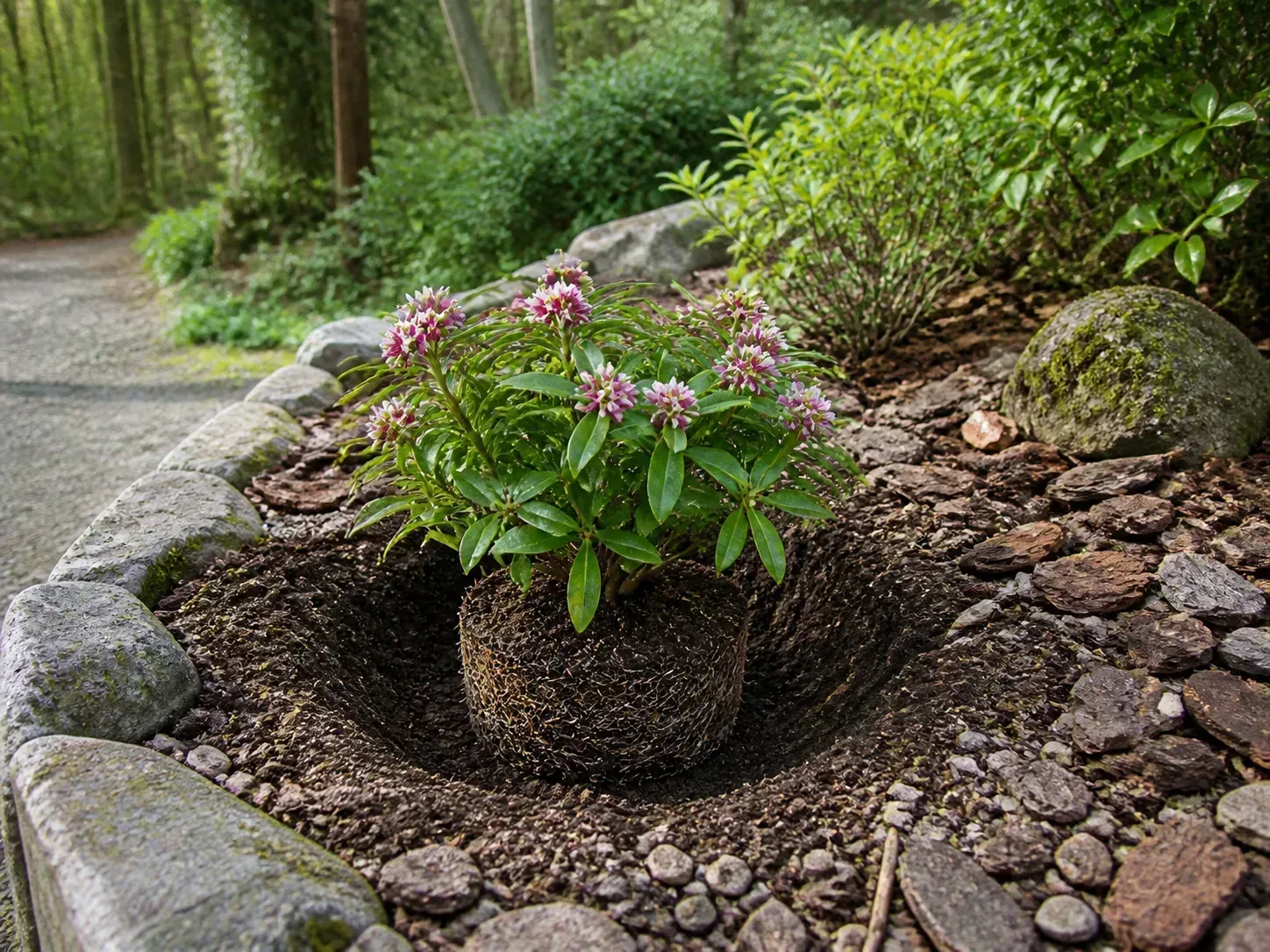
A fall-planted shrub needs broad root-zone contact and careful depth more than a deep hole packed with amendments.
Dig wide, set the root flare high, and backfill carefully
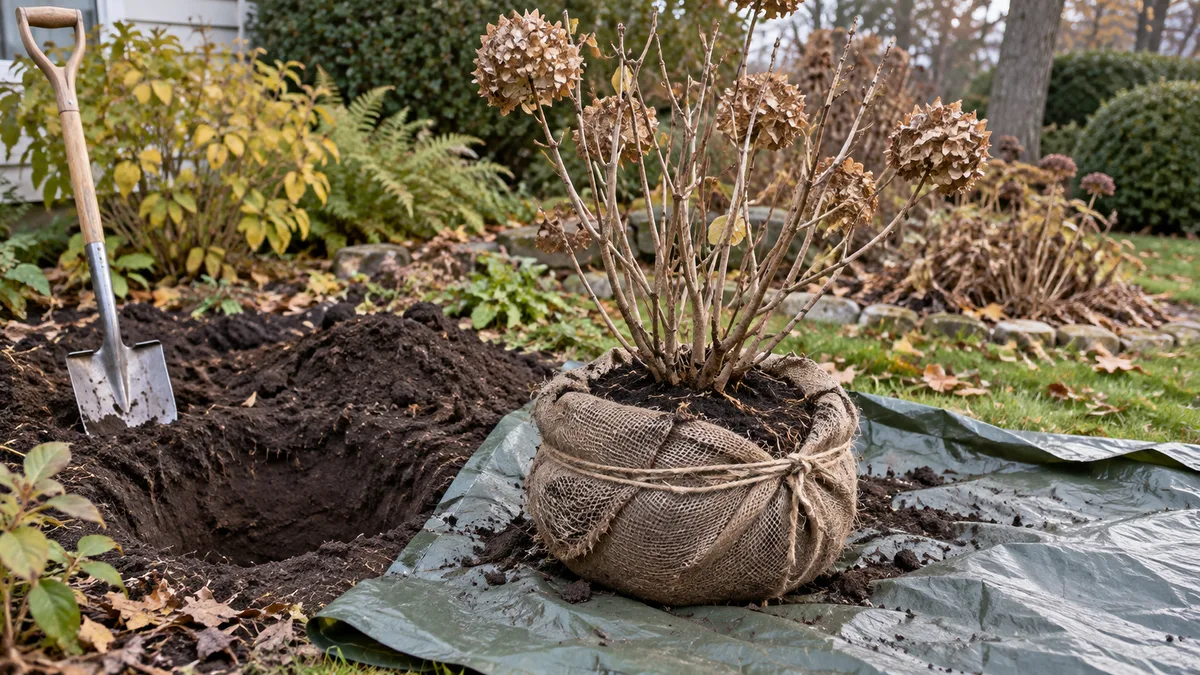
Start by watering the nursery plant so the root ball is evenly moist. Slide it out of the container and inspect the roots. If they are circling tightly, loosen a few around the outside with your fingers or make shallow vertical cuts; do not shred the entire root ball. For a balled-and-burlapped plant, remove twine and as much accessible synthetic material as possible without letting the soil collapse.
Dig a hole no deeper than the root ball and about two to three times as wide. The top of the root ball should sit level with, or slightly above, the surrounding soil, especially in heavy clay or wet ground. Do not bury the trunk or root flare. Backfill with the soil you removed, breaking up large clods but resisting the urge to create a pocket of rich compost that roots may refuse to leave.
Water slowly so the soil settles around the roots, then check that the shrub has not sunk. Build a low soil rim at the outside edge of the hole if the bed drains quickly, but do not create a permanent basin around a shrub that dislikes wet feet. Keep mulch two to three inches deep over the root zone, never piled against stems.
Water by the root ball, then adjust for weather
The first watering wets the planting hole; it does not finish the job. For the first several weeks, check the original root ball and nearby soil with your finger or a small trowel. A container-grown shrub can have a moist surrounding bed but a dry, water-repellent root ball, or the opposite: a saturated hole around roots that have not yet moved outward.
Water slowly and deeply when the root zone begins to dry, then reduce frequency after steady rain or cooler conditions. Newly planted evergreens may need attention during winter thaws because their leaves continue losing water even when the ground is cold. Deciduous shrubs need less winter irrigation after leaf drop, but their roots are not inactive whenever the soil is unfrozen.
Avoid a rigid “water every day” rule. Heavy clay, rainfall, species, wind, mulch, and container size all change the schedule. The warning signs of trouble can point in opposite directions: wilting in wet soil suggests damaged or oxygen-starved roots, while a light, shrinking root ball suggests drought. Check the soil before adding more water.
Mulch and First-Winter Protection That Actually Help
Mulch moderates soil temperature, reduces evaporation, and protects shallow roots from rapid freeze-thaw changes. Use a two- to three-inch layer of shredded bark, leaf mold, or another stable organic mulch over a wide circle. Leave a visible gap around the stems so bark stays dry and rodents have less cover directly against the plant.
Do not wrap every shrub automatically. Most hardy shrubs planted at the right depth and watered properly do not need a plastic tent. Protection is more useful for an evergreen in an exposed, windy site, a shrub at the edge of its hardiness range, or a newly planted broadleaf evergreen such as Indian hawthorn. A breathable wind barrier placed on the windward side can help; sealed plastic touching foliage can trap moisture, heat, and disease.
Keep salt-laden snow away from sensitive beds, and do not pile plowed snow against a young shrub simply because it is convenient. Heavy snow can bend branches, while salt can injure roots and foliage. Inspect after storms and gently brush off wet, heavy snow from fragile branches with an upward motion rather than shaking the plant.
Pruning and First-Year Expectations
The safest September pruning is removal of dead, broken, crossing, or diseased wood. Save major shaping for the shrub’s correct pruning window. Spring-flowering shrubs such as bridal wreath spirea can lose next year’s flower buds if cut at the wrong time. Red-twig dogwood is different: its winter display improves when older stems are selectively renewed in spring. Ninebark can be pruned after flowering or rejuvenated when necessary, but a new plant rarely needs that treatment in its first autumn.
Expect roots to establish before the canopy performs. A shrub planted in September may shed leaves, pause, or look less impressive than the day you bought it. That does not mean you should add fertilizer, prune harder, or water on a calendar without checking the soil. The useful first-year milestones are a stable root ball, healthy buds or stems, no persistent wilt, and gradual growth when the next season begins.
Smart Swaps and Red Flags Before You Buy
Pause at the nursery if the label gives only a common name, skips mature size, or promises “year-round color” without explaining whether that means leaves, stems, fruit, bark, or fall color. Ask for the species and cultivar. “Spirea” and “privet” are groups, not single plants, and the best choice can change with the exact selection.
Be equally skeptical of a shrub described as carefree without a site condition attached. Red-twig dogwood is a strong wet-soil plant but can spread. Winterberry is excellent for berries but requires a compatible male pollinator and acidic moisture. Indian hawthorn is tidy and evergreen but has a narrower cold-climate fit and can struggle with leaf spot. Burning bush is colorful but deserves a local invasive-risk check before it enters the cart.
If a plant fails one of your non-negotiables, make a smart swap. For wet ground, consider another locally appropriate native shrub rather than forcing a drought plant to survive. For a small foundation bed, choose a compact ninebark or Indian hawthorn selection suited to your climate instead of repeatedly shearing a large shrub. For fall color, compare native species and cultivars recommended by your extension office rather than assuming the brightest red is the best ecological choice.
Conclusion
The best hardy shrub to plant in September is the one that can establish in your soil before winter and still perform the job you want in January. Red-twig dogwood supplies red stems in moist ground, ninebark contributes bark and structure, winterberry carries berries on bare branches, bridal wreath spirea brings spring flowers, Indian hawthorn holds evergreen form in mild climates, privet makes a deliberate screen, and burning bush remains a conditional choice because of invasive risk.
Plant by soil and root-ball condition, not by a date alone. Set the shrub at the correct depth, water the root zone deeply but responsively, mulch without touching the stems, and delay major pruning until you know the plant’s bloom and renewal cycle. Done that way, September planting is not just a way to fill an empty bed before winter; it is a head start on a garden that still has shape, color, and wildlife value when the rest of the landscape goes quiet.