11 Dwarf Fruit Trees for Small Yards
Find the best dwarf fruit tree for your yard with honest notes on mature size, self-pollination, cold protection, containers, pruning, and first-year care.
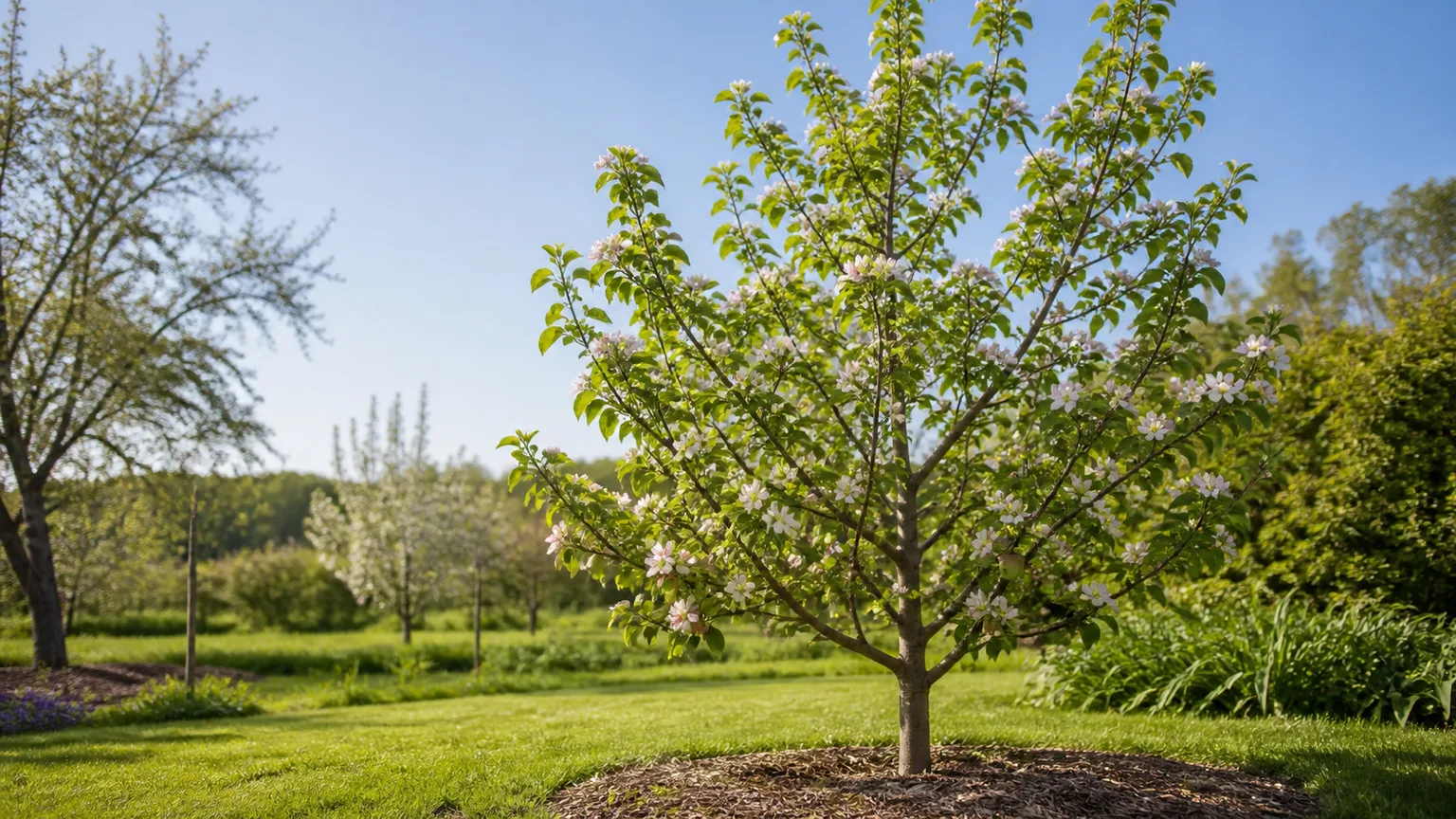
The best dwarf fruit tree for a small yard is not necessarily the shortest tree at the nursery. It is the tree whose mature canopy, rootstock, pollination needs, climate requirements, and maintenance all fit the space you actually have.
That distinction matters because “dwarf” is used loosely. A grafted apple on a dwarfing rootstock, a naturally compact peach, a fig kept in a pot, and a full-size tree trained against a wall may all be sold as small-space choices—but they do not behave the same way. The list below focuses on trees that can work in compact yards, patios, or large containers when you buy the right cultivar or rootstock and give it enough sun.
The short answer: choose by rootstock, pollination, and climate
If you want the safest starting point, choose a dwarf apple, self-fertile plum, fig, Meyer lemon, or calamondin according to your winter temperature and available light. Apples and pears are excellent for cool-winter gardens when the rootstock and pollination partner are right. Figs and pomegranates reward hot, sunny sites. Citrus is wonderfully productive in a pot, but it needs a winter plan if your yard freezes.
Before you buy, write down four facts: the sunniest planting spot, the width you can spare at maturity, your coldest typical winter temperature, and whether you can plant two compatible trees. The RHS guide to choosing fruit trees treats rootstock, pollination, and trained forms as part of the choice for good reason: the fruit name on the tag is only one piece of the fit.
| If your priority is… | Start with… | Watch out for… |
|---|---|---|
| One tree and reliable flowers-to-fruit potential | Fig, Meyer lemon, calamondin, pomegranate, or a confirmed self-fertile plum | “Self-fertile” does not cancel poor light, frost, or water stress |
| A cold-winter small yard | Dwarf apple, pear on Quince C, hardy plum, or a locally recommended cherry | Chill hours, spring frost, and rootstock hardiness still matter |
| A patio or balcony | Fig, Meyer lemon, calamondin, pomegranate, or a true genetic dwarf peach | Pots dry quickly and become heavy; plan for winter movement |
| A narrow fence line | Apple or pear cordon/espalier, or a trained plum | The support system is part of the tree, not an optional decoration |
What “dwarf” really means
There are three ways a fruit tree becomes small. A dwarfing rootstock restricts the vigor of a grafted variety. A genetic dwarf is naturally compact because of its own growth habit. A trained tree is kept narrow or low through pruning and support, even when its underlying variety would grow larger.
Rootstock is often the most important detail on the label. The Royal Horticultural Society’s rootstock guidance explains that rootstocks control vigor and can allow fruit trees to occupy much less space; its examples include M9 or M27 for very small apples, Quince C for smaller pears, and Gisela 5 for compact cherries. A rootstock can also affect staking, drought tolerance, soil suitability, and how early the tree begins fruiting.
Availability is not uniform. The University of Maine Cooperative Extension’s rootstock guidance notes that dwarf types are common for many apples and sweet cherries but are not equally available for every fruit species. Current nursery catalogs and regional guidance may list semi-dwarfing stocks or genetic dwarf cultivars for peaches, plums, apricots, and other fruits, so treat the exact mature height and width as more trustworthy than a generic word like “miniature.”
Pruning alone is not a reliable way to turn a vigorous tree into a dwarf. It can keep a canopy smaller for a while, but hard annual cuts may stimulate strong regrowth, reduce fruiting wood, or leave a tree too large for the root system and support. Buy the size you need at the graft or cultivar level, then use pruning to maintain a workable shape.
11 dwarf fruit trees for small yards
The entries below are not promises that every named fruit will fit every climate. “Compact” may mean a dwarfing rootstock, a genetic dwarf cultivar, a container-grown specimen, or a trained form. Read the nursery label for mature dimensions, chill requirement, rootstock, pollination group, and whether the tree is grafted.
1. Apple trees
Dwarf apples are among the most useful small-yard fruit trees because there is a wide range of eating and cooking cultivars, and the rootstock gives you real control over the final footprint. An apple on M9 or M27 can stay far smaller than the same cultivar on a vigorous stock; a columnar or cordon-trained apple can make productive use of a narrow edge without filling the whole yard.
The catch is pollination. Many apples need a compatible second cultivar that flowers at the same time, and a triploid cultivar may not work as the pollinating partner even though it can receive pollen. If you have room for only one tree, look for a cultivar explicitly described as self-fertile or partly self-fertile, and confirm that the label is referring to your exact cultivar rather than to apples as a group.
Small-rooted apple trees often need permanent staking or a trellis. That is not a defect: the support lets the tree carry fruit without the root system rocking in the soil. Give it full sun, weed-free soil around the trunk, and enough access to thin fruit and pick without climbing.
2. Pear trees
Pears suit a small yard when you choose a dwarfing rootstock such as Quince C or use a cordon or espalier form against a sturdy wall. They are a good choice for gardeners who want a narrow, architectural tree and can provide consistent moisture; dwarfing pear rootstocks are not as forgiving of neglect as a deep-rooted full-size tree.
Most pears need another compatible pear cultivar for a dependable crop. The two trees do not have to be large: a pair of small trees in the same flowering group, or a nearby neighbor’s compatible pear, may solve the pollination problem. Check the pollination group rather than assuming that any two pears will work together.
Pears can take several years to settle into regular fruiting. Keep grass and competing plants away from the root zone, water during dry spells, and resist the urge to fertilize heavily when the tree is only making leaves. A compact pear that receives steady sun and careful training is more useful than a shorter pear planted in deep shade.
3. Cherry trees
For a small yard, look for a sweet cherry grafted on a compact stock such as Gisela 5, or choose a tart cherry if that fruit suits your kitchen. The RHS lists Gisela 5 as a semi-dwarfing cherry rootstock with an ultimate trained height around 8 to 10 feet, while Utah State University Extension notes that Gisela-grafted cherries are commonly kept under 10 feet with the right support and training.
Pollination varies by cultivar. ‘Stella’, ‘Lapins’, ‘Sunburst’, and some other sweet cherries are self-fertile, but a self-fertile label does not make a second tree useless: compatible cross-pollination can still improve cropping for some cultivars. Cherries flower early, so a sheltered site and a plan for late frost are more valuable than squeezing one into the coldest corner of the yard.
The fruit may be small enough for a child to pick, but the tree still needs protection from birds. Netting that is installed safely before the fruit colors can save more of the harvest than extra fertilizer. Keep the canopy open enough for airflow and inspect the tree after wet weather.
4. Peach trees
Peaches can be excellent small-yard trees because true genetic dwarf cultivars such as ‘Bonanza’ and ‘Pix Zee’ are available in some markets, and peaches are generally self-fertile. Their flowers are also ornamental, so a single tree can justify its space even in a mixed border or sunny patio.
Their limitation is not usually pollination; it is winter and spring weather. A peach that survives winter can still lose its crop if an early bloom is hit by frost. Choose a cultivar recommended for your local chill range, plant it in full sun with good air circulation, and use a warm wall or fan-trained form where appropriate.
Peaches set more fruit than a young compact tree can comfortably mature. Thin the developing fruit after the natural drop so the branches do not become overloaded and the remaining peaches reach better size. Keep irrigation even while the fruit is swelling, but do not leave the roots in saturated soil.
5. Plum trees
Plums offer one of the better combinations of compact form and generous reward. ‘Opal’, ‘Victoria’, and ‘Blue Tit’ are examples of self-fertile plums listed by the RHS for container or small-garden culture, while Pixy is a semi-dwarfing plum rootstock. In practice, a single self-fertile plum is a sensible choice when space is tight, though a compatible second plum can still improve the crop.
Choose a sunny spot with moisture-retentive but well-drained soil. A young tree needs support for its first few years, and a container-grown plum needs a generous pot that will not dry out every afternoon. BBC Gardeners’ World Magazine recommends summer pruning for plums and warns against routine winter pruning because of silver leaf disease; follow the timing used by your local extension service if your climate differs.
Thin a heavy set of fruit before branches bend. A small tree that ripens a moderate crop is healthier and easier to protect from birds and wasps than one carrying every fruit it can set.
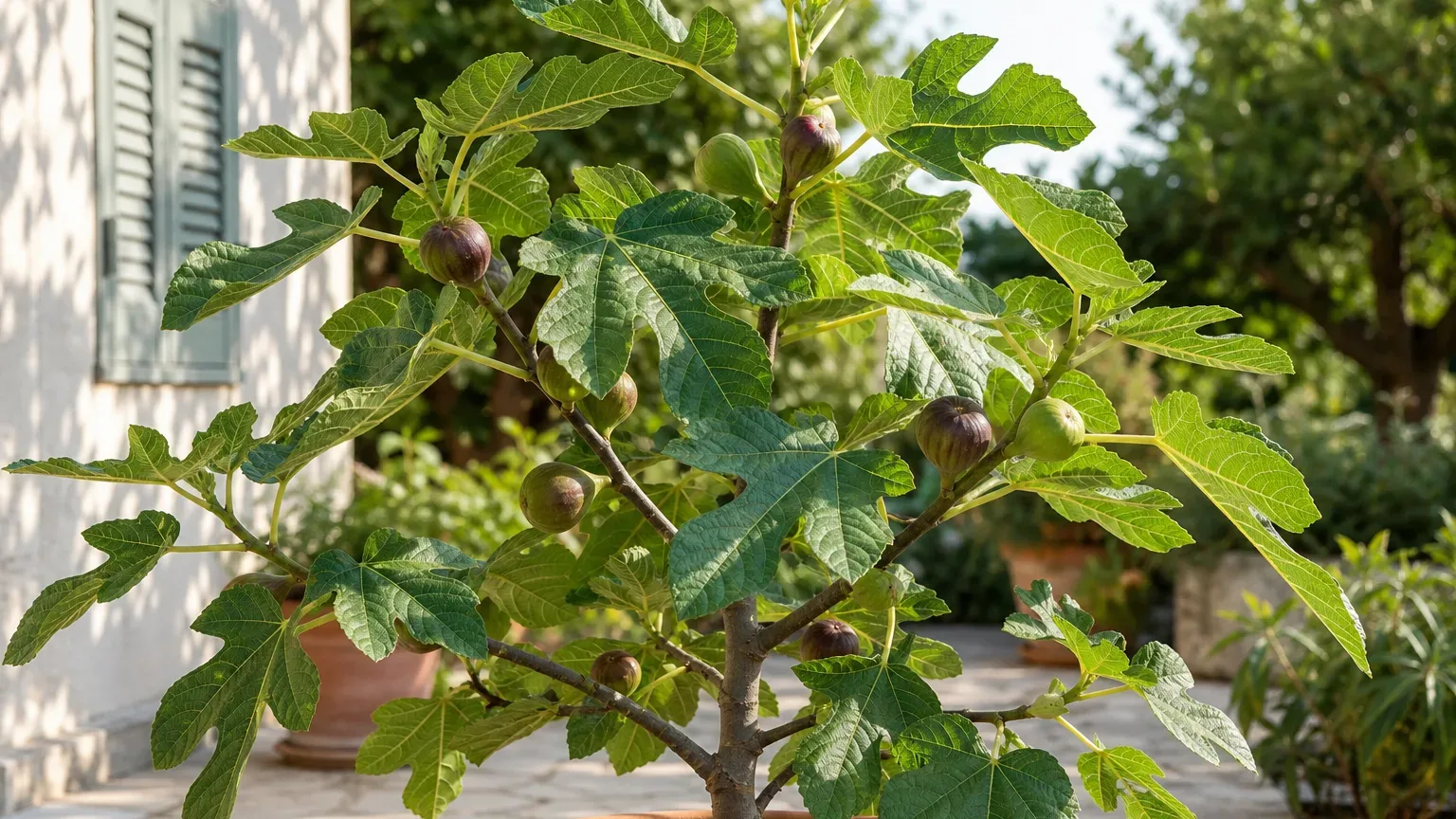
6. Fig trees
Figs are often the most forgiving choice for a sunny patio or a yard where you want to limit roots deliberately. They do not need a special dwarfing rootstock, and their natural shrub-like habit can be kept compact by a container, careful renewal pruning, or a fan-trained shape. The RHS lists cultivars such as ‘Brown Turkey’ among figs suited to container culture and notes that pollinators are not required.
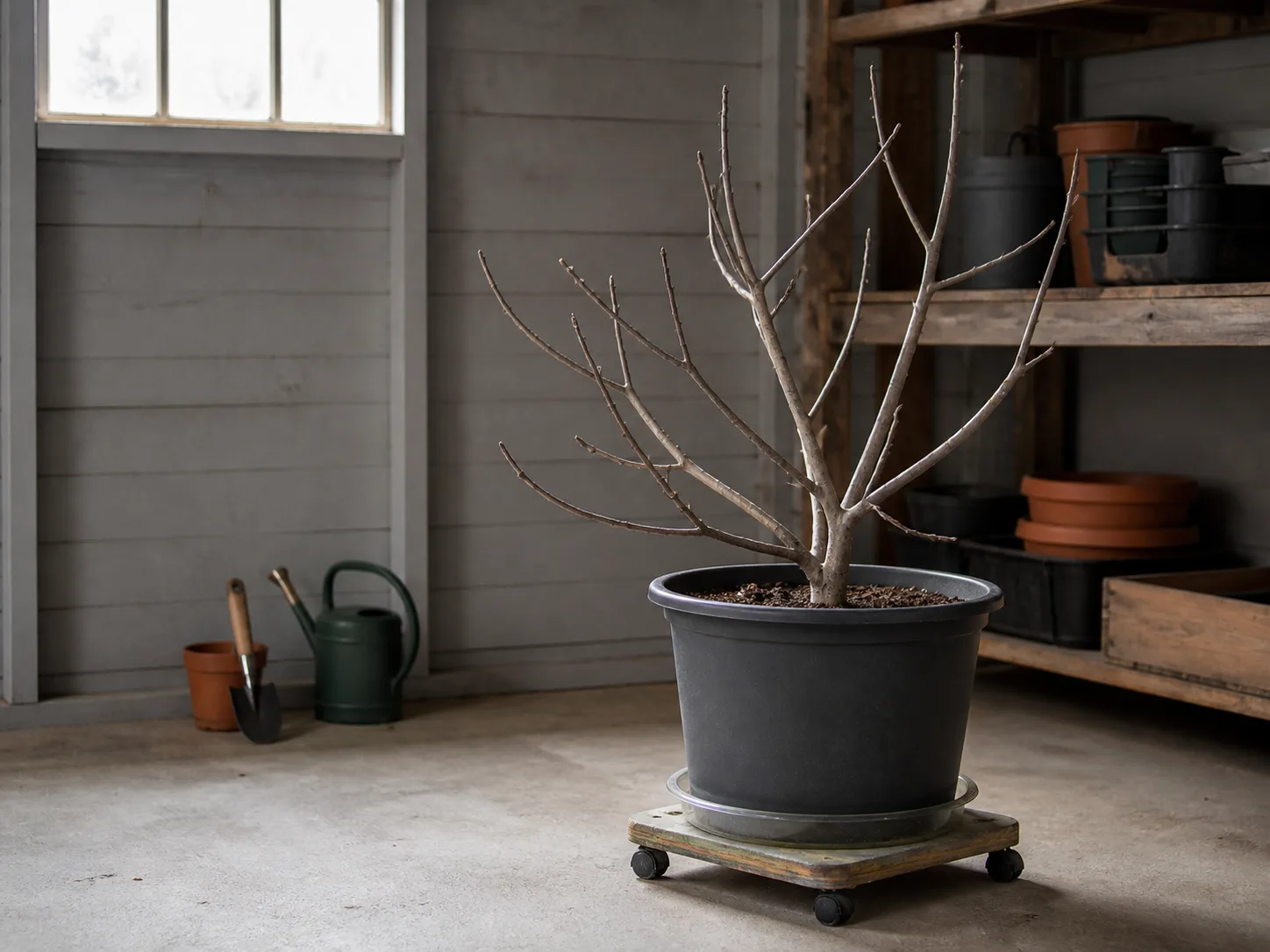
The container is part of the growing strategy, not just a way to move the tree. Figs can fruit well with restricted roots, but they still need direct sun, regular moisture while fruit is swelling, and a winter plan in cold climates. A dormant fig can spend winter in a cool sheltered place; an evergreen-looking warm room with weak light is not a substitute for the seasonal conditions the plant expects.
Figs can make leaves at the expense of fruit when they are overfertilized or kept too shaded. Let the tree establish, keep the root ball evenly but not constantly wet, and remove suckers that steal energy from the framework.
7. Meyer lemon
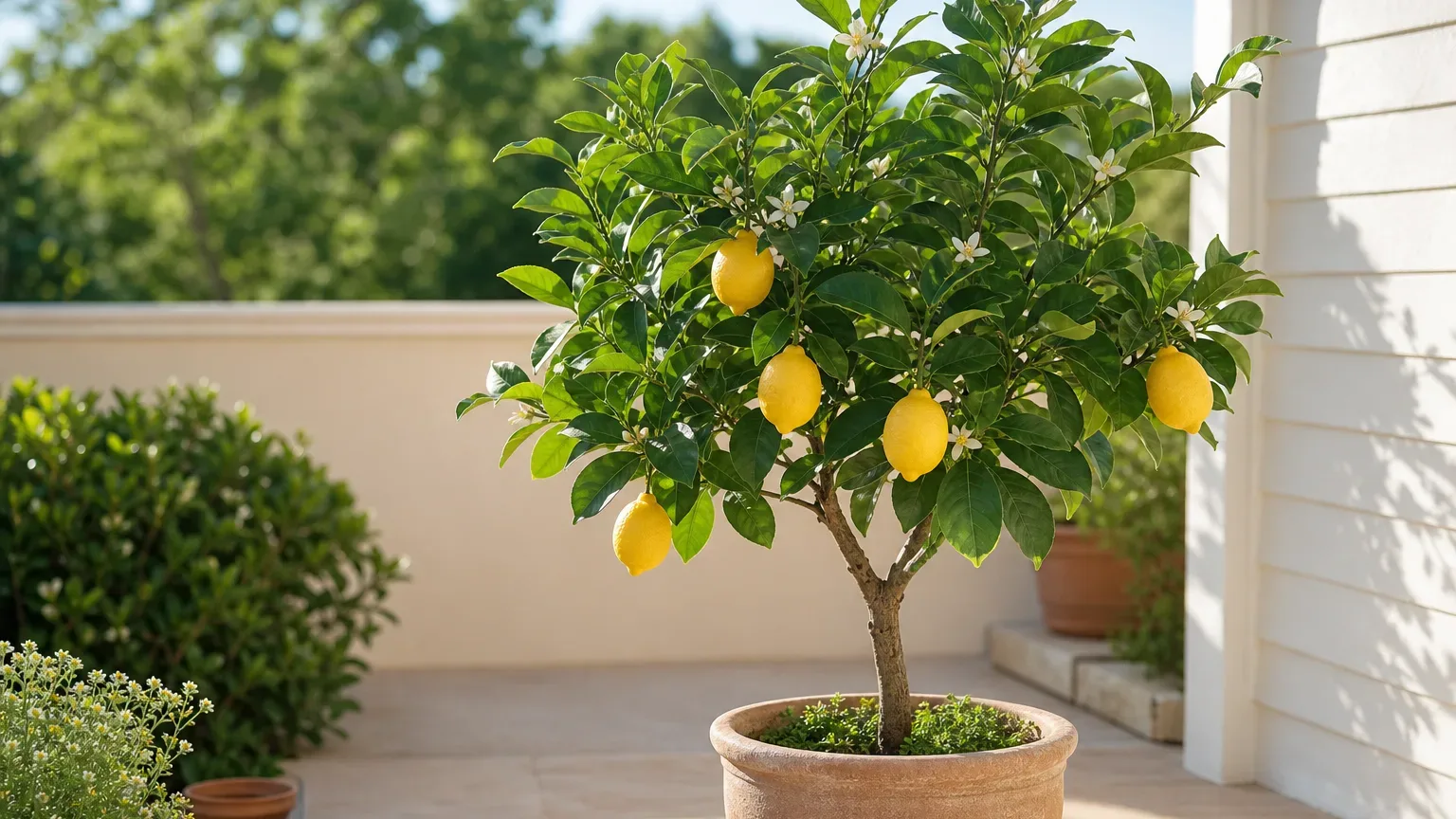
A grafted Meyer lemon is a strong choice when “small yard” really means patio, balcony, or a sunny container corner. It is self-pollinating, fragrant, and comfortable in a pot, but it is not a tree to leave outside through freezing weather. Penn State Extension’s container-growing account describes a grafted Meyer lemon that flowered quickly, carried fruit indoors, and took roughly ten months for the lemons to ripen.
Give it at least six hours of strong sun, move it gradually between outdoor and indoor conditions, and brush the flowers gently when insects cannot reach them. Penn State also notes that sudden temperature changes can cause fruit drop. Bring the plant in before a damaging freeze, keep it away from hot vents, and accept that an indoor winter may mean fewer flowers than a bright outdoor summer.
The best Meyer lemon purchase is a grafted, named tree from a reputable nursery—not a seed-grown lemon with an unknown maturity timeline. A pot with drainage, citrus-appropriate fertilizer used according to its label, and careful watering matter more than a decorative container.
8. Calamondin orange
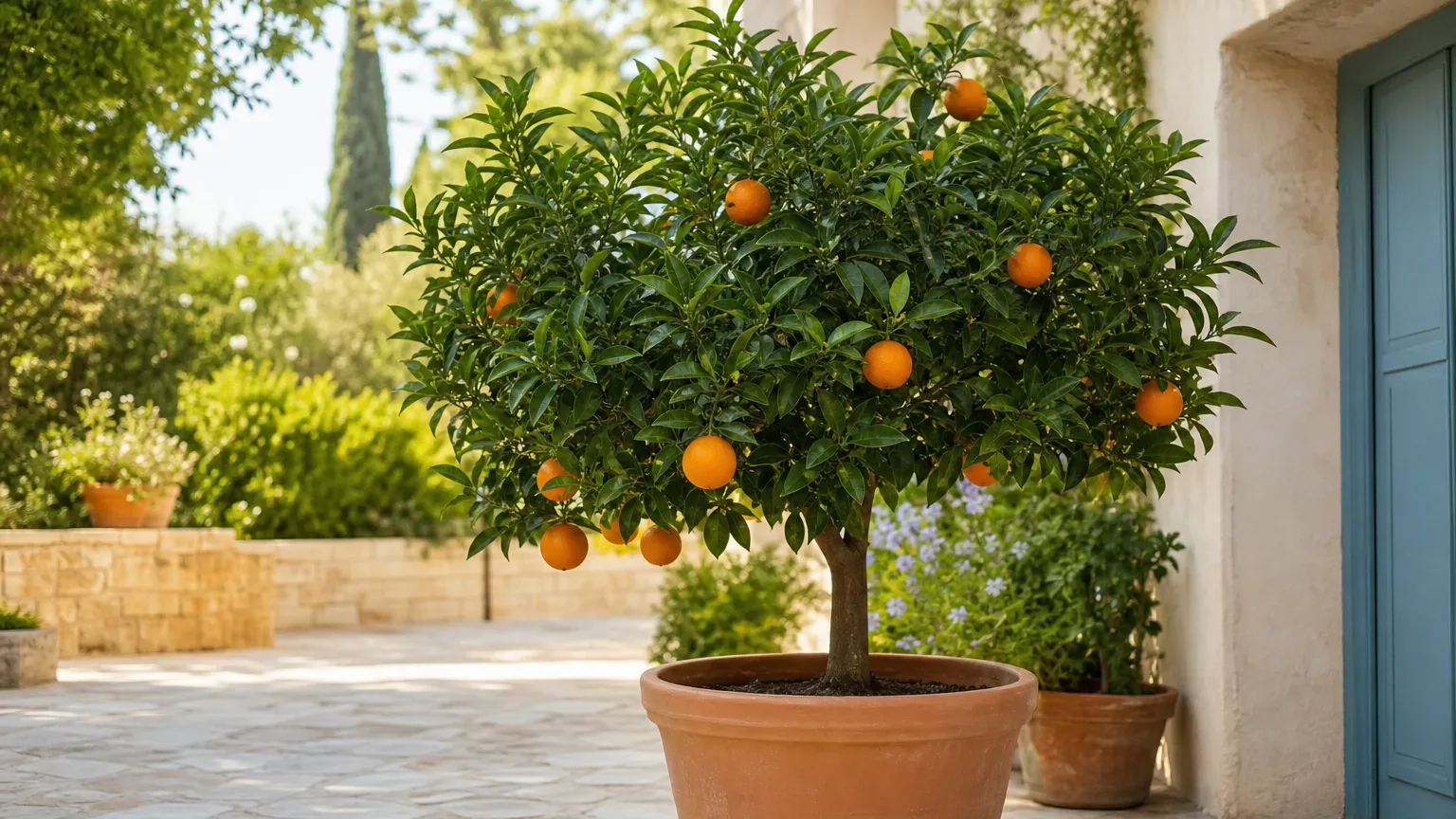
Calamondin is a compact citrus for gardeners who want flowers and fruit in a container but do not have room for a full-size orange tree. The small, tart fruits are more useful for drinks, marmalade, and cooking than for eating like a sweet navel orange, and the tree’s glossy leaves and fragrant flowers are part of its appeal.
Treat it like a light-hungry citrus: give it the brightest site available, allow the surface of the mix to begin drying before watering again, and shelter it from frost. It is often workable as a single container tree because citrus cultivars commonly set fruit without a second tree, but check the exact plant label and expect to hand-pollinate flowers if the tree spends bloom time indoors.
Do not solve a dim winter location by simply watering more. Low light plus wet roots is a fast route to weak growth and leaf drop. If the winter spot is bright but not sunny, a properly positioned grow light is more useful than a larger pot.
9. Pomegranate
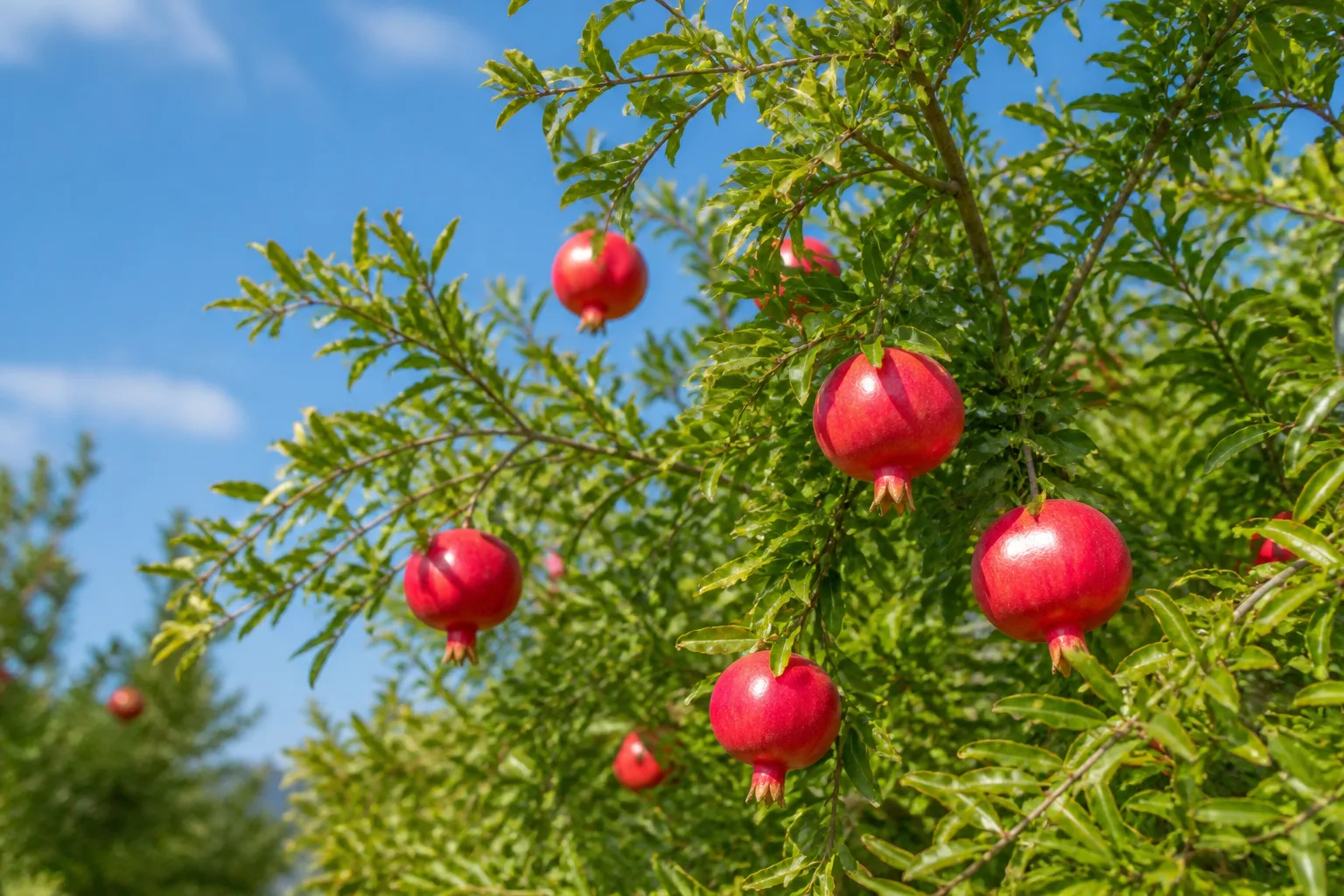
Pomegranates are naturally multi-stemmed shrubs that can be trained as small trees or kept as compact patio plants. They like heat, strong sun, and sharply drained soil, making them a better match for a hot, dry yard than for a cool, wet corner. Dwarf forms such as ‘Nana’ are ornamental and container-friendly, although their fruit is generally not the main reason to grow them.
If you want edible fruit, buy a named fruiting cultivar rather than assuming that any tiny pomegranate will crop well. Give the plant a long sunny season, thin suckers from the base if you want a tree form, and keep water consistent while fruit develops. Pomegranates tolerate dry conditions once established, but a young tree still needs deep watering while its roots spread.
Winter cold and short summers are the limiting factors. In a borderline climate, a pot lets you shelter the plant, but a large woody container becomes heavy and the move must happen before cold damage—not after the leaves and branches have already been injured.
10. Persimmon
Persimmon is worth considering when you want a fruit tree with strong autumn interest and can provide a warm, sunny position. Some Asian persimmons and selected cultivars can be kept in large containers or trained smaller, while native persimmons are generally more cold-tolerant but may grow larger. The important buying detail is the species, cultivar, rootstock, and expected mature width—not simply the word “dwarf.”
Most commonly grown persimmons can be productive as a single tree, but pollination behavior varies, especially between species and cultivars. Ask the nursery whether the plant is self-fruitful and whether fruit quality or seedlessness changes with pollination. Give it excellent drainage and enough summer heat for fruit to ripen; a compact tree in a cool, shaded yard may survive while producing little.
Avoid heavy pruning just to force a persimmon into an artificial shape. Establish a strong framework, remove crossing or damaged wood, and let the tree’s natural habit do some of the space management.
11. Jujube
Jujube is an underused option for a hot, sunny small yard. The fruit is crisp and apple-like when fresh and becomes date-like as it dries, while the tree tolerates heat and leaner soil better than many temperate fruits. Compact cultivars can be grown in a large container or kept smaller with late-winter shaping, but the root system and mature width still deserve room.
The main catch is climate: jujube wants a long, warm growing season to sweeten its fruit. It can be self-fertile, but ask whether the cultivar needs a pollination partner in your region. Give it full sun, deep water during establishment, and remove suckers if you want a clean single-trunk tree rather than a thicket.
Gardening Know How’s practical guide to fruit trees that tolerate small spaces includes jujube, persimmon, fig, and pomegranate for compact gardens, but its detailed size and hardiness examples are cultivar-specific. Use them as a starting point, then verify the exact plant you are buying.
Ground or container? Choose the tree’s long-term home
Plant in the ground when you have a sunny, well-drained site and want the tree to handle summer heat with a larger root zone. A ground-planted dwarf apple, pear, cherry, peach, or plum can still need staking and irrigation, but it usually has more soil volume than the same tree in a pot. Leave enough space for the mature canopy, a clear path for pruning and harvest, and airflow around the branches.
Choose a container when the yard is paved, the soil is poor, or the tree needs winter shelter. Figs, Meyer lemons, calamondins, pomegranates, and some peaches are especially adaptable to pots. The RHS container guide recommends selecting the rootstock and cultivar together, using a pot roughly 18 to 20 inches in diameter for many fruit trees, and keeping the mix moist without leaving it constantly wet.
Do not put a small tree into the biggest pot you can lift. Oversized wet soil dries slowly around a still-small root ball, while a too-small pot becomes a daily watering obligation and can overheat. Start with a stable, well-drained container that gives the root ball modest room to expand, then move up gradually or root-prune and refresh the mix according to the species.
Container trees also deserve a root inspection at purchase. Penn State Extension explains that circling roots can later girdle a trunk and that a pot-bound root system should be corrected before planting. Look for a tree with healthy roots, find the root flare, and do not bury the graft union or the trunk deeper than it was growing.
The first-year plan: plant, water, stake, and prune
The first year is about root establishment, not forcing a giant harvest. A tree that spends its energy making stable roots and a balanced framework will be easier to keep small and more productive later.
- Inspect before planting. Remove the container and look for circling or matted roots. Loosen or cut problem roots with a clean, sharp tool if the plant is otherwise healthy, and reject a badly girdled tree when you have a choice. Confirm the graft union, root flare, cultivar, rootstock, and mature size.
- Set the depth carefully. Dig a broad hole rather than a deep pit. The root flare should sit at or slightly above the surrounding soil, and the graft union should remain clearly above soil and mulch. Backfill with the native soil you removed unless a soil test or local extension recommendation says otherwise.
- Water deeply and check the soil. Water thoroughly after planting to settle the root zone, then check moisture by hand rather than using a calendar. Young in-ground trees may need deep watering every few days in hot, dry weather; containers may need checks daily. Let the upper layer begin to dry, but do not allow the root ball to become bone-dry while new roots are forming.
- Stake when the rootstock or site requires it. Very dwarf apples, pears, and some grafted cherries may need permanent support. Tie the trunk loosely so it can move slightly without rubbing; inspect the tie as the trunk thickens. Remove the support only if the cultivar and rootstock can stand without it.
- Mulch without volcanoes. Spread a thin, wide layer of organic mulch over the root zone, keeping it away from the trunk. Mulch should conserve moisture and reduce grass competition, not hold wet material against the bark.
- Prune with a job in mind. At planting, remove broken or crossing wood and establish the framework recommended for the tree’s form. Do not repeatedly shear a young tree to make it look tiny. Apples and pears may be trained as cordons or espaliers; peaches, nectarines, and cherries can suit fan training; plums often prefer summer pruning in climates where winter cuts raise disease risk.
- Thin the crop. Once the tree has established and fruit begins to set, remove crowded fruit so the remaining crop matches the tree’s size. One small tree carrying fewer, healthier fruits is a success—not a failure to maximize every flower.
Training can multiply the usefulness of a narrow space. The Almanac guide to cordon fruit trees describes apples and pears grown as single stems against horizontal wires; the method is compact, but the wires, posts, and annual pruning are part of the installation. Do not plant a vigorous tree beside a fence and assume the fence will become an espalier.
When the tree flowers but fruit does not set
Check the likely causes in this order: pollination, frost, light, water stress, tree age, and crop load. A single apple or pear may flower beautifully without a compatible partner. A peach or plum may lose flowers to a late freeze. Citrus may bloom indoors without insects moving pollen. A tree in shade can produce leaves and flowers but lack the energy to carry fruit to maturity.
Weather during bloom can also matter. Cold, rain, or a lack of pollinating insects can reduce fruit set even when the cultivar is technically self-fertile. Hand-pollinate indoor citrus with a soft brush, confirm flowering overlap for apples and pears, and avoid moving a flowering container tree abruptly between warm indoors and cold outdoors.
Finally, check the basics before adding fertilizer: is the root zone draining, is the tree receiving enough direct sun, and did it dry out while fruit was swelling? Correct the limiting condition first. More fertilizer cannot replace a missing pollinator, repair frost damage, or create light where a wall blocks the sun.
Conclusion: buy the mature footprint, not the label
Small yards can produce real fruit, but success starts at the nursery label. Choose the fruit you will actually eat, then verify the cultivar’s mature width, rootstock, pollination requirement, chill or heat needs, and container suitability. For the simplest one-tree setup, look closely at figs, Meyer lemons, calamondins, pomegranates, and confirmed self-fertile plums; for cool climates, dwarf apples, pears, cherries, and plums can be excellent when their pollination groups and rootstocks match.
Give the tree full sun, good drainage, enough water during establishment, and support when its rootstock requires it. A truly useful dwarf fruit tree is not the one with the smallest tag—it is the one you can reach, protect, prune, and keep healthy for years.