Does Borax Kill Ants? How Bait Really Works
Does borax kill ants? Yes—when used as a slow bait. Learn how it works, where to place it, how long it takes, and when safety changes the plan.
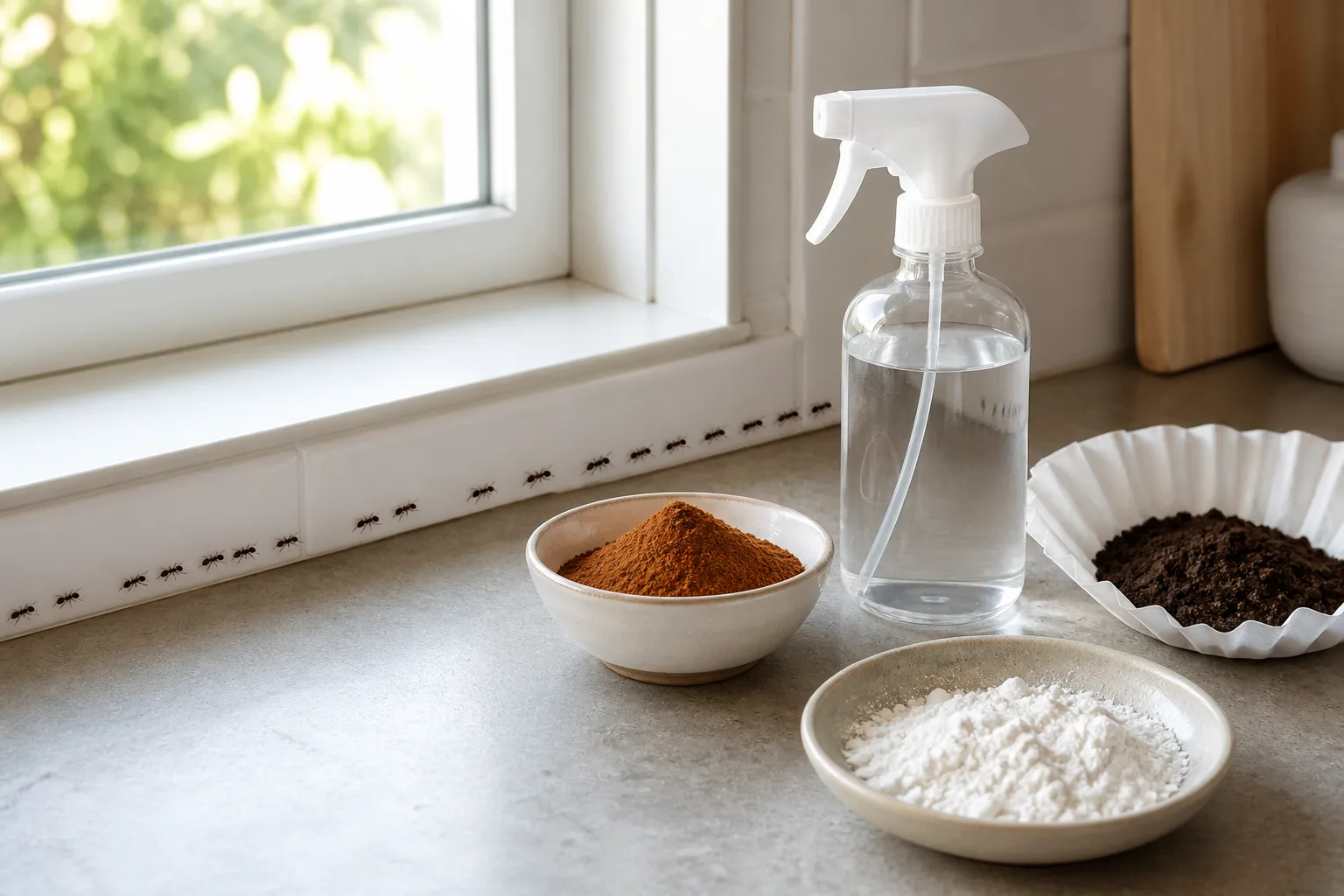
Yes, borax can kill ants, but it is not an instant-contact powder and it is not a magic line to sprinkle across a countertop. It works best when an ant eats a small amount in an attractive, slow-acting bait and carries that bait back to nestmates. That is the difference between killing a few workers and reducing the colony that keeps sending replacements.
For most household trails, the safest practical choice is a labeled ant bait in an enclosed station, placed near the route and used exactly as directed. A homemade borax-and-sugar mixture can be attractive to some ants, but an open dish creates more exposure risk, has no universal recipe, and may fail when the colony wants protein or grease instead of sweets.
The short answer: yes, but only as a bait
Borax is a sodium borate salt. Ants do not normally seek out a pile of plain borax, so the powder by itself is a poor bait. The toxicant has to be combined with something the colony is already collecting, such as a sweet liquid or a protein- or grease-based food, and the mixture has to be slow enough that workers can return to the nest.
That mechanism is why a visible trail may become busier before it becomes quieter. Workers are finding a food source and recruiting nestmates. If the bait is accepted and left undisturbed, the traffic can eventually fall as the toxicant moves through the colony. If you spray the trail or surround the bait with a strong repellent, you may remove the couriers before they deliver anything home.
The answer is therefore conditional: borax can be an effective colony bait for some ants, but plain borax, a random ratio, or a contact-kill approach will not reliably solve every ant problem.
Borax and boric acid are related—not interchangeable by label
People often use “borax” and “boric acid” as if they are the same product. They are both boron compounds, and both may appear in ant-control products, but they are chemically different materials with different labels, formulations, and directions. The National Pesticide Information Center’s boric acid fact sheet explains that borax is a sodium borate salt and that the toxicity of boric acid and sodium borate salts depends on the amount of boron and the way the product is used.
That distinction matters in a kitchen. A box sold as a laundry or cleaning product is not automatically a registered ant pesticide just because a recipe online pairs it with sugar. A labeled ant bait identifies its active ingredient, approved use sites, precautions, and disposal instructions. Those details are part of the treatment, not paperwork to ignore.
How a borate bait affects ants
When ants eat a borate toxicant, it can disrupt their digestive system and eventually kill them. The same general slow-poison idea is used in many ant baits: workers collect food, return to the nest, and share it with other members of the colony. The toxicant does not need to kill every ant that touches it; it needs to reach enough nestmates before the workers die.
Concentration changes the result. Too little may not suppress the colony. Too much can make the bait taste or feel wrong to the ants, causing them to avoid it or die before they get home. Ant species, colony needs, weather, and competing food all change what “attractive” means, so a ratio that appears to work in one kitchen is not a universal formula.
Why slow action matters more than instant kill
An ant colony is a distributed system, not a crowd that disappears when the visible workers do. The queen, larvae, and nest-bound workers are protected in soil, wall voids, pavement cracks, mulch, or rotten wood. The foragers you see may represent only a small share of the colony.
The UC Integrated Pest Management guidance on ants explains that bait must be slow-acting so workers can return to the nest. A fast spray can make the counter look clean while leaving the colony untouched. A slow bait looks less dramatic, but it is aimed at the right biological problem.
Diagnose the trail before choosing a bait
Before mixing or buying anything, watch the ants for five minutes. Follow the trail in both directions, note what the workers are visiting, and look for the crack, pipe opening, plant, or outdoor feature that connects the route to the rest of the property.
This small inspection prevents two common mistakes: offering a sweet bait to a colony that wants grease or protein, and treating ants that are only visiting a plant because they are harvesting honeydew from aphids, scale, or mealybugs.
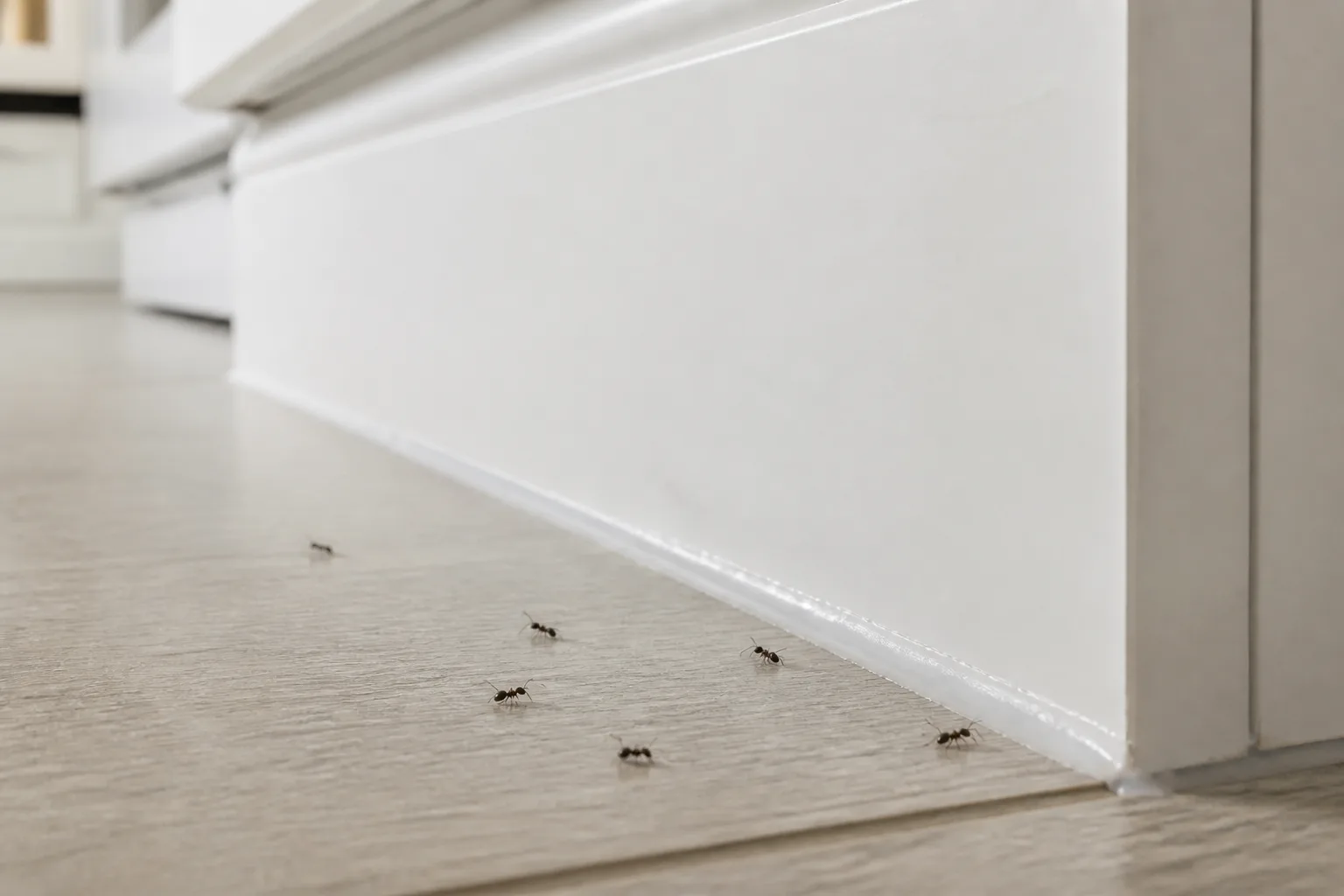
Kitchen trails usually point to food, water, or an entry route
Small ants around a sink, pantry, pet bowl, recycling bin, or sticky counter are usually responding to a dependable resource. Wipe syrup, fruit juice, grease, crumbs, and pet-food residue; rinse recycling; empty the trash; and dry the sink edge. Also check for dripping plumbing, damp sponges, condensation, and water under appliances.
Then locate the entrance. Ants often follow the edges of baseboards, cabinet seams, window frames, pipes, wires, and door thresholds because those routes provide cover. Do not seal every crack the moment you see it if you intend to bait there; the workers need a quiet route to the bait first. Once activity falls, caulk the gap and keep monitoring for a second entry point.
If you find one wandering ant and no repeat trail, cleaning and observation may be enough. If the same line returns each day, colony-level control is more likely to be useful than a scented deterrent.
Ants on plants and outdoor mounds can signal a different problem
Ants climbing a houseplant or garden plant are not automatically eating the plant. Look underneath leaves and along tender stems for sticky honeydew, aphids, soft scale, or mealybugs. Gardening Know How’s ant guidance and Epic Gardening’s garden-ant guide both point to the connection between ants and honeydew-producing pests. In that situation, removing or managing the sap-feeding pest is part of solving the ant problem.
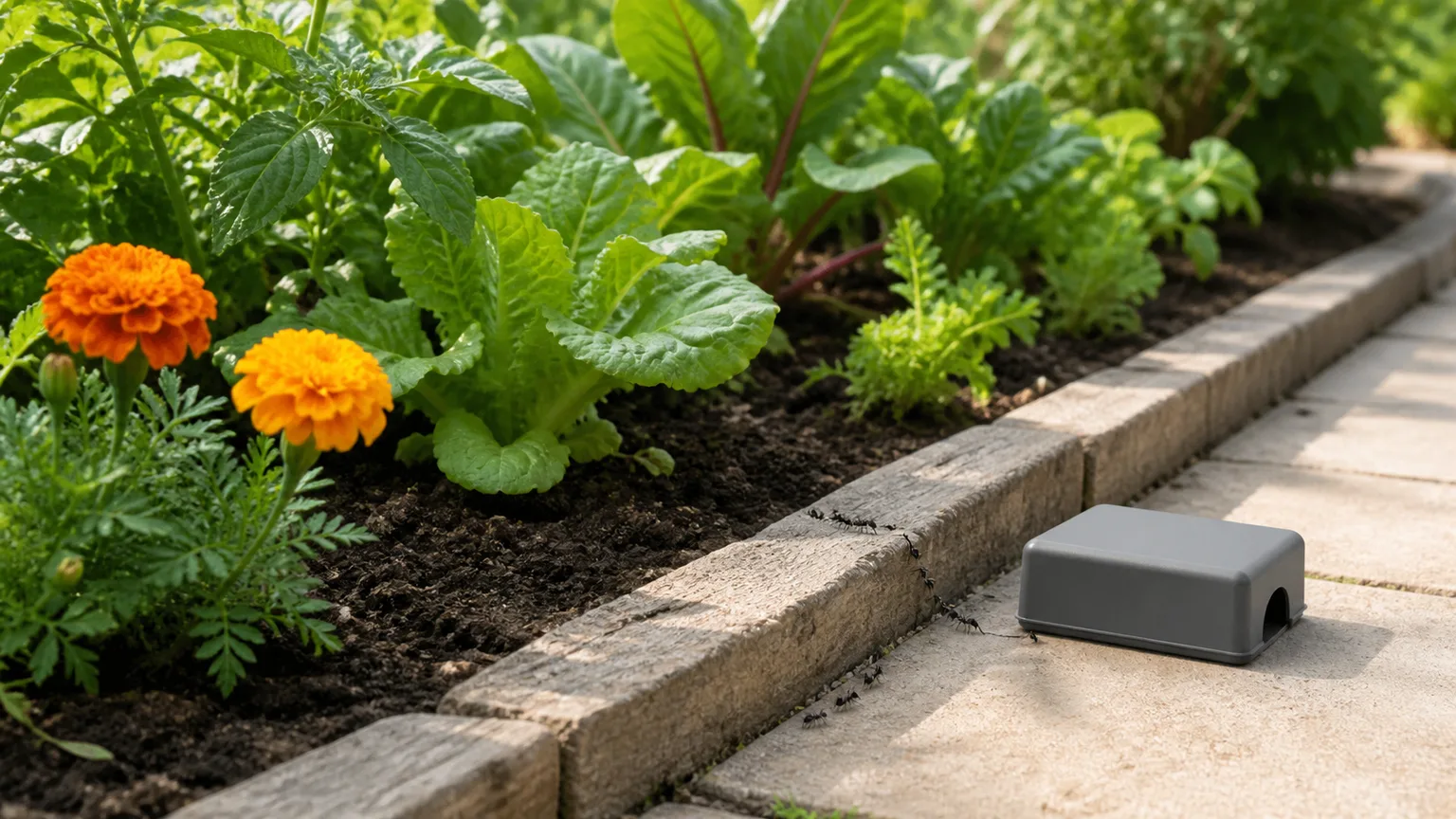
Outdoor ants are also part of a functioning garden. They recycle organic matter, move through soil, and can prey on other insects. If they are not protecting aphids, damaging a structure, invading a living space, or creating a stinging hazard, total eradication may be unnecessary. Bait the route you need to protect rather than broadcasting borax through soil, mulch, or a flowering bed.
Large ants near damp wood, sawdust-like frass, window frames, or wall voids deserve an inspection for carpenter ants. Red ants that swarm from a mound and sting deserve distance and local species-specific advice. Neither situation is a good test case for an open kitchen recipe.
Use borate bait with a safer decision rule
The decision is simple: use a labeled bait product when you need colony control; use sanitation and exclusion when you only need to remove a temporary trail; and escalate when the ant’s identity or location changes the risk. That rule is more reliable than asking whether borax is “natural.” Natural describes origin, not exposure safety or performance.
Choose a labeled, enclosed station when possible
An enclosed station keeps the bait in a defined container, limits handling, and makes it easier to place the product where ants can reach it but children and pets cannot. Read the label before buying, because indoor kitchen use, outdoor foundation use, garden-bed use, and use near edible crops are not interchangeable.
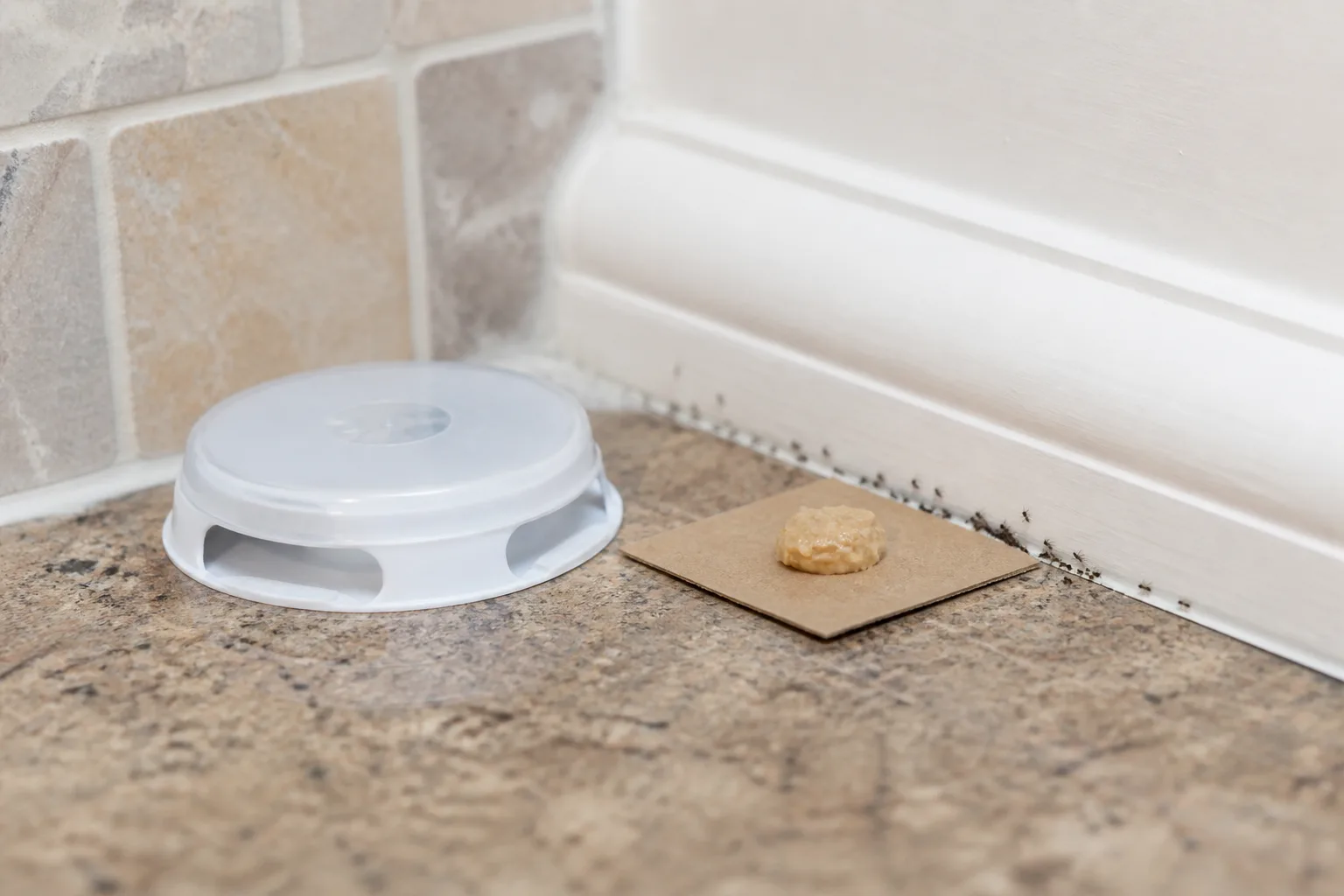
The UC IPM ant-bait guidance recommends bait stations or stakes as an easy, safer option and notes that both sweet and protein baits may be useful for pavement ants. It also advises placing bait near trails, keeping it inaccessible to children and pets, and allowing time for results.
If the label lists a borate active ingredient, do not dilute it, add sugar, transfer it to another jar, or combine it with a spray unless the label specifically says to do so. A ready-to-use bait is already formulated for acceptance and controlled exposure. The product label is the source of truth for amount, placement, weather protection, and disposal.
Know when an open homemade bait is the wrong trade-off
Open bottle caps and cardboard squares are easy for ants to find, but they are also easy for a toddler, dog, cat, or crawling insect that is not your target to reach. They can spill onto a food-contact surface, get carried by a pet, absorb moisture, or be mistaken for something edible.
I would not use an open borax bait in a home with children or pets, near food preparation, beside an uncovered pet bowl, or in a plant pot. I would also avoid improvising outdoors where rain can move borate into soil and where non-target insects may encounter it. For adults who choose a homemade approach despite those trade-offs, the minimum standard is to treat it like a pesticide: keep the original package, prevent access, label any temporary container, use the smallest practical amount, and follow local product directions. A commercially labeled station remains the better recommendation.
Place the bait so the colony—not just the workers—gets exposed
Placement determines whether ants accept the bait. Put it beside an active trail or near an entry point, not in the middle of a cleaned surface and not so far away that workers have to abandon their normal route. The goal is to make the bait easy to discover without forcing ants to cross vinegar, essential oil, insecticide residue, or a powder barrier.
Remove competing food and keep the route quiet
Before placing bait, remove crumbs, sticky spills, open sugar, ripe fruit, grease, recycling residue, and pet food from the immediate area. You do not need to sterilize the whole house; you need to make the bait the most convenient acceptable food on that route.
Vacuum a heavy trail or wipe it with soapy water away from the bait placement. Soapy water removes the pheromone trail and gives you a clean starting point, but wiping the route directly under an active station can make workers lose the path. Do not spray the ants while they are feeding. Workers that die on contact cannot carry the bait back to the nest.
Leave the station in place long enough to judge acceptance. A sudden increase in ants around the station is not necessarily failure; it may mean the workers have found and recruited to the bait. Avoid moving it every few hours unless the label or a clear access problem requires it.
If ants ignore it, troubleshoot the setup before adding more
Ants may ignore borate bait for several reasons. The colony may be seeking protein or grease, the bait may be stale or dried out, the station may be too far from the route, the trail may be contaminated with a repellent, or the ants may be using a different entrance. Food preferences can also shift with season and brood needs.
Start by checking acceptance rather than increasing the toxicant. Replace old bait as the label directs, move the station closer to the active trail, remove competing food, and consider a different labeled formulation designed for the feeding preference you observed. Offer no more than the product directions allow, and do not place multiple incompatible pesticides together.
If the ants vanish after you spray but reappear in another room, assume the route changed. If they ignore several properly placed, labeled baits, revisit the species diagnosis and nesting site. Persistent ants in a wall, ceiling, apartment chase, or multiple rooms are no longer a good pantry experiment.
What borax cannot replace: cleanup, exclusion, and diagnosis
Borax can address the toxicant part of ant control, but it does not remove the food, water, entry crack, aphid colony, wet wood, or structural void that keeps the problem supplied. The best sequence is usually clean the attraction, trace the route, bait if colony control is needed, then seal and prevent.
Vinegar and essential oils may disrupt or mask an ant trail for a while, but that is different from killing a colony. Epic Gardening’s practical ant-control coverage describes vinegar, peppermint, and citrus as deterrent-style methods that can confuse or discourage ants; treat them as temporary route management, not as a replacement for bait when the colony keeps sending workers.
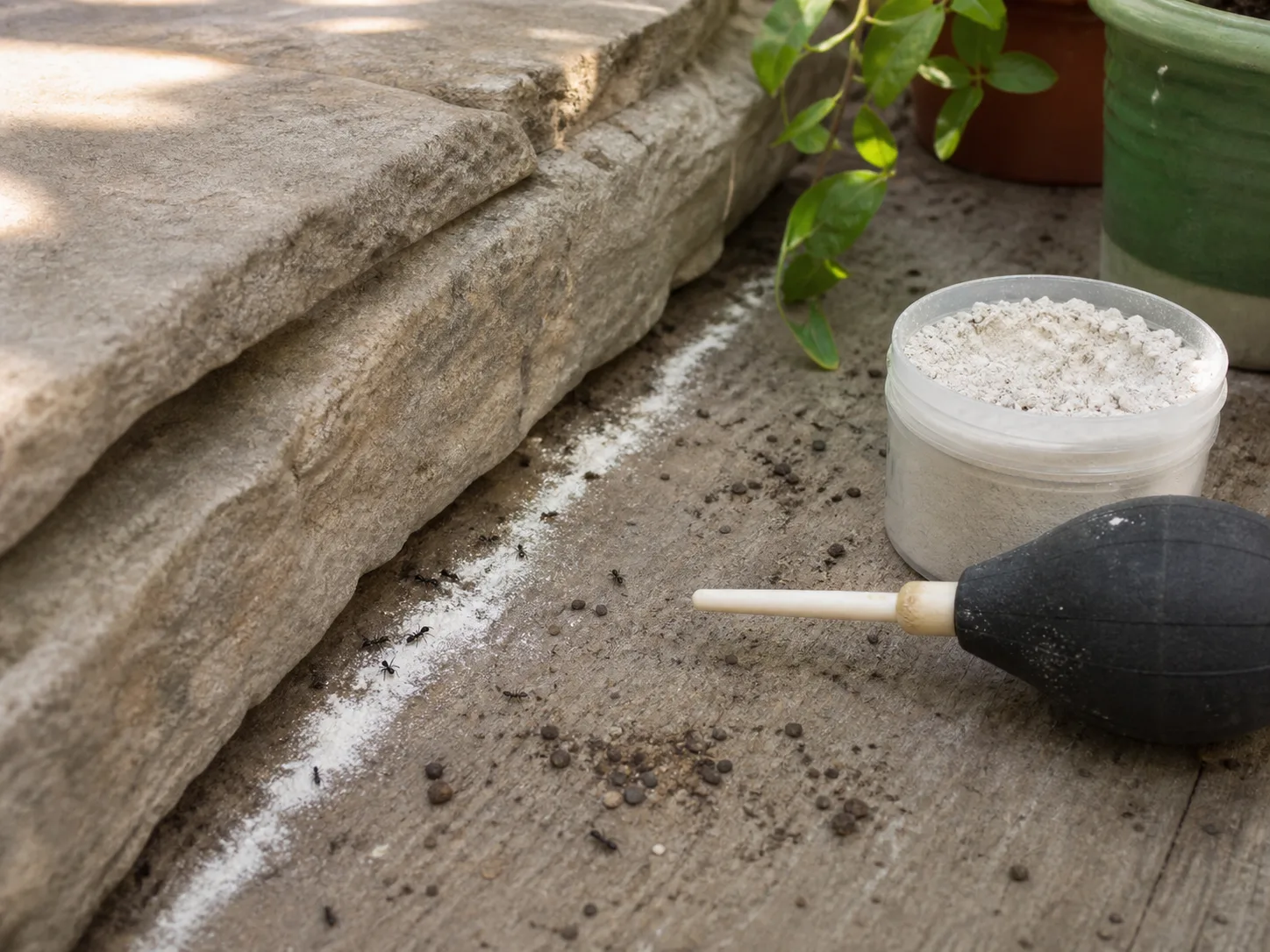
Diatomaceous earth is also a different tool. A dry, thin dust at a crack can kill some foragers that cross it, but it does not lure workers home and can lose effectiveness when wet. A contact spray or powder can be useful for an immediate cleanup in a label-approved location, yet neither is a substitute for a slow bait when the nest is hidden.
Safety around children, pets, food, plants, and wildlife
Borax is not harmless just because it is sold in a household aisle. NPIC notes that borax can irritate skin and be corrosive to the eye, and that exposure can occur through ingestion, skin, eyes, breathing dust, or contaminated hands. It also notes that children and pets can be exposed when products are accessible, and that borax and boric acid can injure plants at excessive levels.
Keep bait in its original container and store unused product away from food, medicine, children, and animals. Do not use loose powder in pantry corners, inside a plant pot, on a countertop, beside a pet’s water bowl, or where rain can wash it into soil or drains. Wash hands after handling, keep dust out of the air, and follow the product label’s first-aid directions.
If a child or pet may have swallowed borax or bait, do not guess from an internet recipe. Contact Poison Control in the United States at 1-800-222-1222 for a child exposure, and contact a veterinarian or animal poison service for a pet exposure; have the product container and active ingredient available. If there is trouble breathing, collapse, a seizure, or severe symptoms, seek emergency care immediately.
Garden safety is part of the calculation. Borate products can move with water through soil, and excess boron can be toxic to plants. Keep bait out of edible beds unless the product label specifically allows that site and crop, and choose contained, targeted placement rather than sprinkling borax around a mound or across mulch.
How long borax bait takes to work and what success looks like
Do not use instant death as your success metric. A colony bait is designed to keep workers alive long enough to make a delivery. You may see more activity at first, then a gradual reduction as the bait is consumed and the nest is affected.
UC IPM says some bait programs take five to ten days before fewer ants are noticeable, while other situations take several weeks. The actual timeline depends on species, colony size, nest location, temperature, rain, product freshness, and whether the ants have access to better food somewhere else. A quiet counter after one afternoon is not proof of colony control, and a visible trail after one day is not proof of failure.
Track the trend from the same location once or twice a day. Record whether workers are feeding, whether new trails appear, whether the station is empty or dry, and whether ants return after cleaning. Replace or reposition only when the label and observations support it. If activity is unchanged after the product’s stated evaluation window, change the diagnosis or bait type instead of stacking more borax on the problem.
Prevent the next trail after activity drops
Once ant traffic falls, finish the job that bait cannot do. Caulk the entry crack, repair leaks, replace damp weatherstripping, trim vegetation that touches the house, and move mulch or leaf litter away from the foundation where practical. Store sugar, syrup, honey, fruit, grease, and pet food in clean sealed containers; rinse sticky packaging before it goes into recycling.
Inspect plants near the entry route for aphids, scale, and mealybugs. In the garden, tolerate ants that are simply decomposing material or moving through soil, and intervene when they are protecting sap-feeding pests, entering the home, damaging a structure, or creating a sting hazard. The goal is a stable boundary, not a chemically empty yard.
Keep one bait station or product label on hand only if it is appropriate for your setting. Seasonal preparation—checking door thresholds, window gaps, hose bibs, and foundation cracks before a predictable warm-weather invasion—usually prevents more trouble than keeping stronger chemicals around for a dramatic emergency.
When to call a pest professional
Get an inspection when ants continue after sanitation, exclusion, and labeled bait use; emerge from wall or ceiling voids; appear in several rooms; return from damaged wood; or keep switching routes. A professional can identify whether the colony is in the structure, outside near the foundation, or associated with a plant pest.
Treat suspected carpenter ants as a moisture and wood-inspection problem, not just a bait problem. Treat fire ants or other stinging ants as a safety issue: keep people and animals away from the mound, do not disturb it, and use local, species-appropriate guidance. Tiny pale ants appearing in warm wall or cabinet voids can also require a different bait strategy from ordinary sugar ants.
Ask for an integrated plan that includes identification, sanitation, exclusion, targeted baiting, and spot treatment where necessary. A plan that only sprays visible ants may provide a short-lived visual improvement while leaving the nest and its entry route intact.
Conclusion
Borax can kill ants, but it works as a slow, accepted bait—not as a line of plain powder and not as an instant spray. The most reliable path is to identify what the ants are following, remove food and moisture competition, use a labeled enclosed bait that matches their feeding preference, keep sprays and repellents away from the station, and give the colony days rather than hours to respond.
Use extra caution around children, pets, food, plants, and outdoor soil. If the ants point to damp wood, a wall void, a stinging mound, or a plant pest, borax is no longer the whole answer. A targeted, species-aware plan will outperform a stronger pantry mixture almost every time.