Orange Tree Light Needs: Full Sun Guide
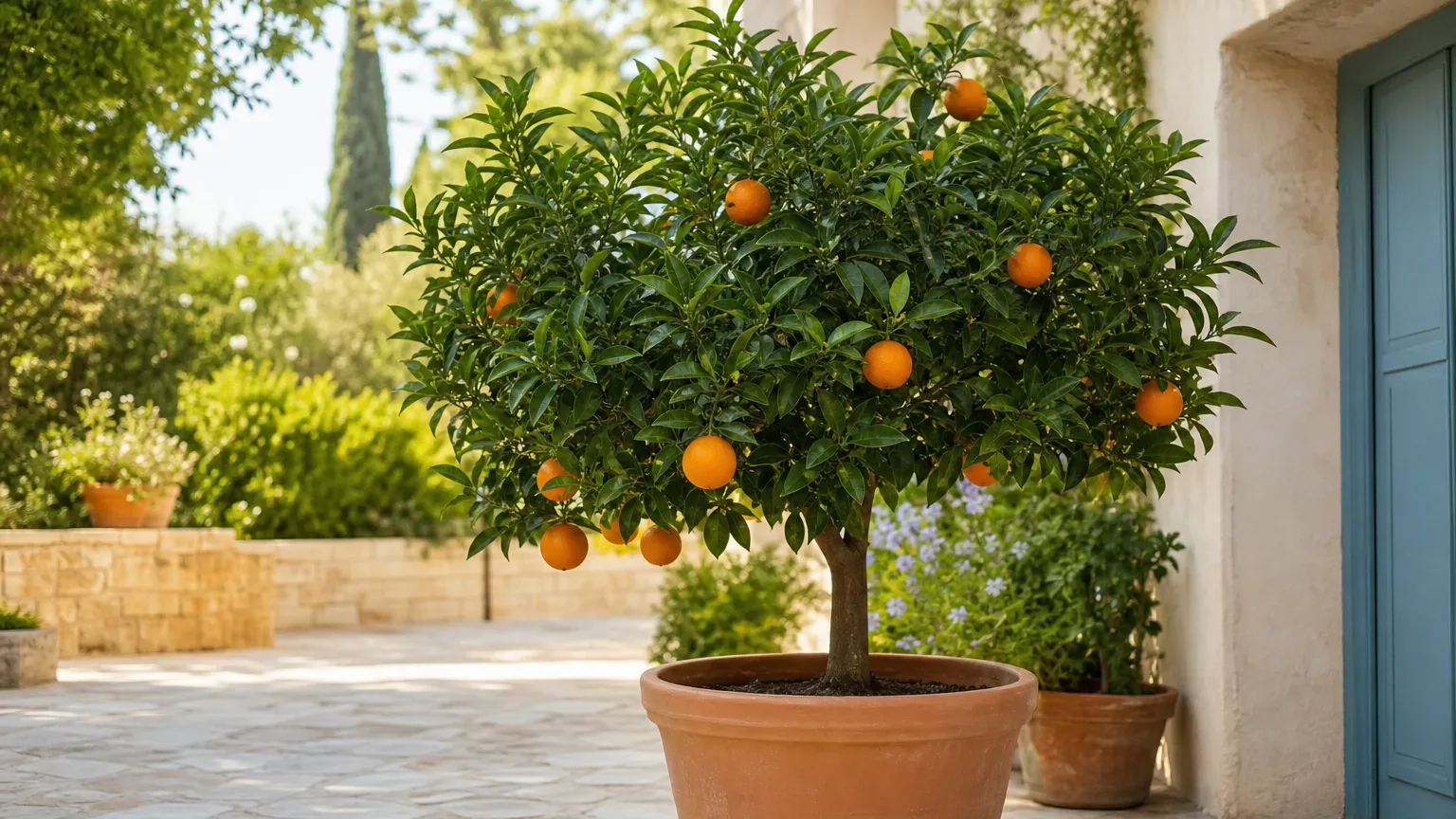
Orange Tree Light Needs: Full Sun Guide
Orange Tree Light Needs: Full Sun Guide
A sweet orange can keep green leaves in a merely bright room, but that does not make Citrus sinensis a shade houseplant. Orange is an evergreen fruit tree whose compact branching, fragrant flowers, and slow fruit ripening all depend on strong direct light. In most Indian homes the useful question is not whether the space feels sunny, but whether the canopy receives several hours of unobstructed sun on clear days.
For a container santra on a terrace or balcony, choose the most open exposure you can manage, then solve pot heat and watering rather than parking the tree in permanent shade. Indoor culture works mainly as winter protection or short-term quarantine — not as the long-term home for a tree you want to flower and fruit.
How Much Light Citrus sinensis Needs
Give orange tree at least six hours of direct sun on most days, and prefer all-day open exposure when flowering and fruiting matter. UF/IFAS notes that citrus trees tolerate light shade but will be more productive if grown in full sunlight. Missouri Botanical Garden similarly lists sweet orange as performing best in full sun to light shade, with best performance in full sun.
Count light that strikes leaves and developing fruit, not general brightness on the floor or wall. A deep chajja, neighbouring tower, shade net, or larger tree can erase midday sun even when the balcony feels hot. Walk the site at mid-morning, noon, and mid-afternoon before you commit a permanent pot position.
Full sun versus tolerated shade
Full sun means the canopy sees open sky and receives direct beams for much of the day. Light shade — dappled cover or a few hours blocked — may keep an established tree alive, but extension guidance consistently links fuller sun to better productivity. RHS lists sweet orange position as full sun and recommends growing container plants in full light with shade from hot sun — shade for heat management, not dim culture.
Partial shade is a survival setting, not a fruiting default. If your only option is a pocket between walls with three hours of direct sun, the tree may remain ornamental for years without meaningful flowering. In that case a grow light, a sunnier rented terrace season, or a different plant choice is more honest than extra fertilizer in the same dim corner.
Counting hours that reach the canopy
Use a simple field test on a clear day. When direct sun hits the leaves, note the time; when shade from a building or roof cuts the beam, note that too. Add the direct intervals together. Hazy or monsoon days do not cancel the need for an open site — they mean you should avoid additional shade from rain shelters or crowded pots.
For rooftop and courtyard growers in Nagpur, Pune, Bengaluru, or Hyderabad, compass direction matters less than sky access. A southeast terrace with a low parapet often outperforms a nominally south-facing balcony buried under the floor above. Rotate the container every week or two so one side does not dominate; rotation shapes the plant but does not create energy the tree never received.
Why Sweet Orange Is Not a Low-Light Plant
Citrus sinensis evolved as a small evergreen tree of subtropical Asia, domesticated for fruit in open, warm landscapes — not as an understory foliage specimen. Its glossy leaves photosynthesize year-round, and container culture does not reduce that demand. When light is weak, the tree stretches toward the brightest opening, producing long internodes and a thin canopy that is hard to correct later without hard pruning.
RHS describes oranges as best grown in a cool or temperate greenhouse or conservatory and moved outside during the summer months. That seasonal rhythm underscores the species’ appetite for intensity. A living-room spot that barely sustains a pothos will not support a woody citrus long term.
Flowers, fruit and light intensity
Sweet orange is self-fertile, so one tree can set fruit, but flowers and young fruit are expensive in energy terms. Stable warmth, nutrition, and moisture matter — and so does light. RHS citrus guidance states that plants need plenty of warmth, sun and humidity to thrive, and that cool temperatures, dry air, and cold draughts indoors can cause leaf drop, failed flowering, or poor fruiting.
Low light rarely kills citrus quickly because the woody frame stores resources. Instead you get sparse blossom, small leaves, and a canopy that leans hard toward glass or the terrace opening. Treat “no oranges yet” as a light clue only on a mature grafted tree in an otherwise sound root zone; seedlings and recently repotted plants have their own timelines.
Best Outdoor Placement in India
In frost-free and warm subtropical regions, outdoor sun is the default. Place container oranges on the sunniest secure terrace, courtyard, or garden edge where wind does not shred new flushes but nothing tall cuts off the midday beam. UF/IFAS home-citrus planting guidance advises selecting a site with partial to full sun and wind protection where possible.
Leave space around the pot so light can reach multiple sides of the canopy. Crowding santra against a wall with another tall plant in front converts full sun at the terrace level into partial shade at the leaves.
Terrace, balcony and courtyard choices
Prioritize exposure in this order: open rooftop or wide terrace with sky on several sides; a deep balcony with an unobstructed sun path; a sunny paved courtyard; then a large direct-sun window plus outdoor summer time. A normal ceiling lamp cannot replace outdoor sun for a fruiting orange.
South, southeast, and southwest exposures are often strong in the Northern Hemisphere, but measure rather than assume. In coastal Chennai or Mumbai, salt wind and haze may call for a slightly sheltered corner that still receives long direct sun — shelter the tree from drying gusts, not from the sky. For detailed whole-plant fit, start with the Orange Tree overview.
Managing pot heat without shading the canopy
Intense sun on black plastic, metal, or dark ceramic pots can overheat roots even when leaves look happy. On west-facing summer terraces, lift the pot for drainage, use a light outer sleeve, and water based on actual dry-down from the Orange Tree watering guide. Shade the pot wall, not the canopy, when root heat is the problem.
Reflected radiation from white walls, glass balustrades, and pale tile can intensify exposure. That is usually acceptable for acclimated citrus, but a nursery plant moved straight from shaded retail stock to a glowing rooftop may scorch. Solve heat at the root zone first before you permanently pull the tree back into dim shade.
Indoor, Conservatory and Winter Light
Citrus can spend cool months in a frost-free greenhouse, glazed veranda, or conservatory, then return outdoors to a sunny sheltered spot in warm weather — the pattern RHS recommends for container citrus. Growing citrus as houseplants is not ideal long term, because most types prefer a cool winter spell and more humidity than centrally heated rooms provide.
When night temperatures fall near frost in northern and inland India, move portable trees under bright frost-free cover. The goal is maximum light and stable cool-to-moderate temperatures, not a warm dim bedroom. RHS notes that citrus should keep their leaves all winter, which means they require plenty of light along with careful watering and feeding.
Best window positions
Use the largest window with the longest direct beam. In the Northern Hemisphere, a south-facing pane is the usual first choice; east gives gentler morning sun; west adds intensity but can overheat leaves against hot glass. Place the canopy close enough to receive direct light without pressing foliage on the glazing.
If the tree must live indoors for weeks, put it at the glass, not across the room. Stretching, yellowing interior leaves, and one-sided growth mean the station is still too dim. Add a grow light before you increase fertilizer.
Grow Lights When Natural Sun Is Limited
Use supplemental lighting when winter shelter, monsoon overhangs, or apartment geometry leave the canopy with little direct sun for days at a time, following extension guidance to add artificial lighting where natural light is limited. Choose a full-spectrum LED horticultural fixture with published output and enough coverage for the whole canopy, not a decorative bulb.
Mount according to the manufacturer’s high-light crop distance — often much closer than a desk lamp — and run a timer for roughly 12–14 hours while outdoor sun is unavailable. Watch the newest leaves: long internodes mean more intensity; bleaching directly under the panel means more distance. Grow lights are a bridge, not a substitute for summer outdoors when your climate allows it.
Direct Sun and Safe Acclimation
Established outdoor oranges want full sun, but nursery stock is often grown under shade cloth or dim retail conditions. Acclimate over 7–14 days: start with morning sun and bright open shade, add an hour or two of stronger exposure every few days, and pause if the newest leaves bleach or crisp.
Do not combine a sudden light jump with repotting, heavy pruning, or drought. RHS advises hardening off when moving citrus outdoors so growth does not check or burn. Return a scorched plant one step back in exposure, not into a dark corner.
Seasonal Light Adjustments
Reassess placement at least three times a year. Winter low sun angle, summer roof overhang, and monsoon cloud all change how much reaches the pot.
Monsoon and winter transitions
During heavy monsoon weeks, keep the tree in the most open position available and avoid rain shelters that also block the sky. Fast cloudy-season growth can shade itself; address structure in the Orange Tree pruning guide at the proper season rather than moving the tree permanently under shade.
In cool months, prioritize bright frost-free cover over a warm dark room. When warm weather returns, harden the plant off again even if it only spent a few dim weeks indoors. Spring is also when root and shoot growth accelerate — coordinate any repotting with the Orange Tree repotting guide only after light and temperature are stable.
Warning Signs of Wrong Light
Judge by new growth after a placement change, not old leaves from a previous site.
Too little light shows as long thin shoots, wide internodes, a canopy leaning hard toward one opening, pale or small new leaves, and few flowers on a mature tree. Soil may stay wet longer in dim rooms, which can mimic drought stress on the foliage. Fix placement first.
Too much light or heat after a sudden move shows as sharply defined pale or tan patches on sun-facing leaves, crisp tissue on the newest flush, or damage concentrated near hot glass. Pull back one acclimation step, improve airflow, and protect the pot from overheating. Damaged leaves will not green again; success is clean replacement growth.
Spider mites and scale often flare when citrus is stressed in dry, bright, indoor air. Weak light alone does not cause sticky honeydew, but a tree parked indoors for winter without enough sun becomes a slower, more vulnerable host. Correct light and airflow before stacking pest treatments.
How Light Connects to Watering and Fruiting
More sun usually increases transpiration, especially for a leafy container in hot wind. A terrace santra in June may need checking every day or two; the same pot in a dim winter veranda dries far more slowly. Always water from root-zone evidence in the Orange Tree watering guide, not from a calendar.
Strong light supports flowering and fruit hold, but it cannot overcome immaturity, a seedling’s long juvenile phase, or a root zone suffocated by the wrong mix. If water sits in the pot despite good sun, open the Orange Tree soil guide before you blame the window. Once the tree is actively growing in open light, feeding follows the Orange Tree fertilizer guide.
When to Use This Page vs Other Orange Tree Guides
- Use the Orange Tree overview to decide whether a frost-tender fruit tree fits your space and climate.
- Use the Orange Tree watering guide when sun, season, or rooftop heat changes how fast the pot dries.
- Use the Orange Tree soil guide when drainage problems persist despite a sunny site.
- Use the Orange Tree fertilizer guide only after light and roots can support active growth.
- Use the Orange Tree propagation guide for grafting and seed context on young plants that still need bright light to strengthen.
Related Orange Tree Guides
- Orange Tree care overview — whole-plant requirements, toxicity, and realistic size.
- Orange Tree watering — moisture checks as sun and season change.
- Orange Tree soil — loam-based citrus mix and drainage for containers.
- Orange Tree fertilizer — feeding during active growth in bright conditions.
- Orange Tree repotting — container size and spring timing.
- Orange Tree propagation — grafted cultivars versus seedlings.
- Orange Tree pruning — opening a dense canopy without removing all fruiting wood.
Conclusion
Citrus sinensis wants full sun, open sky, and honest outdoor time whenever your climate allows. At least six hours of direct sun on most clear days is a workable minimum; more open exposure generally means tighter growth, better flowering, and a fairer shot at ripening fruit on a grafted container tree. Tolerated shade keeps the plant alive but trades away the performance most growers expect from santra.
Place the pot where the canopy — not just the terrace floor — receives the beam, acclimate nursery plants over one to two weeks, and protect roots from overheating without shading leaves by default. When winter or apartment life forces the tree indoors, put it at the brightest frost-free window and add a real grow light rather than treating a dim room as long-term culture. If growth still looks leggy or fruitless after light improves, move to watering, soil, and root checks before you change everything at once.