Not Enough Light on Orange Tree: Causes, Checks & Fixes
Quick answer
Not enough light on an orange tree (Citrus sinensis) triggers a severe metabolic carbon deficit, leading to rapid canopy thinning, winter leaf drop upon moving indoors, dark enlarged shade leaves, and total abortion of flowers and pea-sized fruitlets. Citrus trees have exceptionally high photosynthetic demands: they require 8 to 12 hours of direct outdoor sunlight or 12 to 16 hours beneath dedicated horticultural LED grow lights delivering 30 to 50+ DLI (400 to 800+ PPFD). First step: relocate the tree immediately to an unobstructed south-facing exposure or install a high-output full-spectrum LED fixture, while reducing watering frequency to match slowed transpiration.
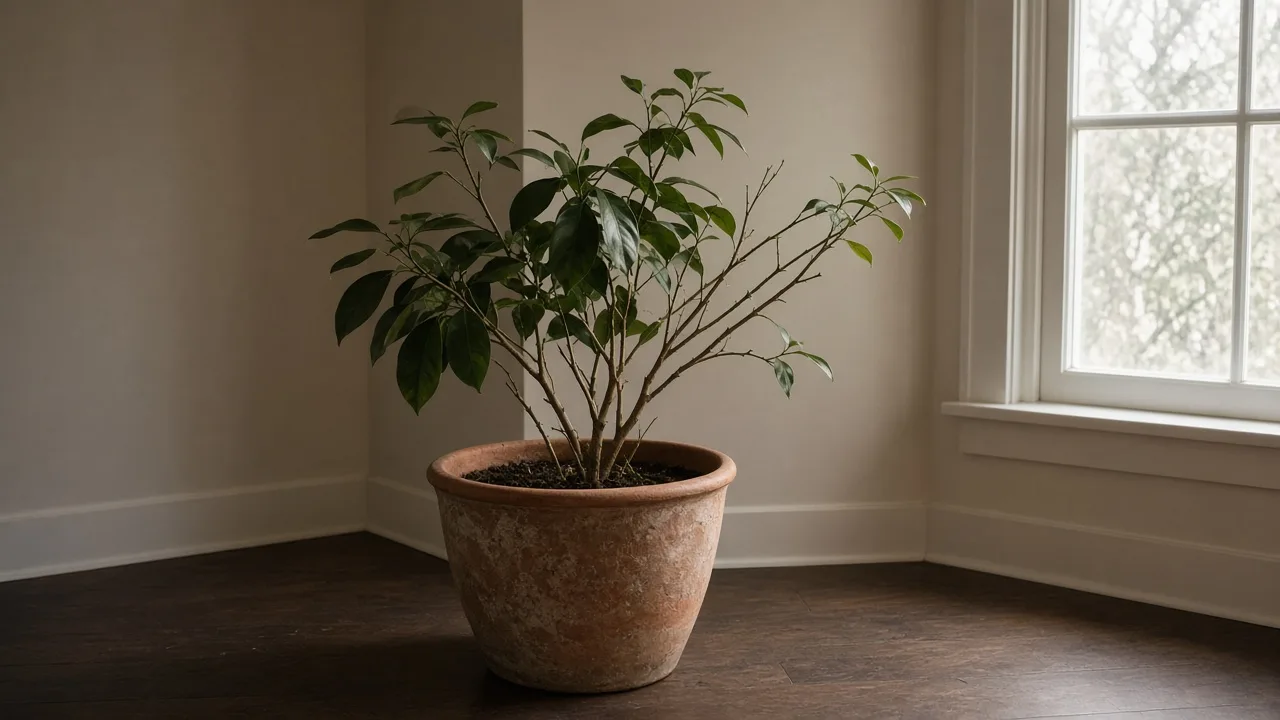
Not Enough Light on Orange Tree: Causes, Checks & Fixes
This guide covers not enough light on Orange Tree. See also the general Not Enough Light guide, watering, and light pages for this plant.
Not Enough Light on Orange Tree: Causes, Checks & Fixes
Quick answer
Not enough light on an orange tree (Citrus sinensis) creates an immediate metabolic energy deficit. Unlike shade-tolerant understory foliage plants that adjust to low photon levels, sweet orange is an obligate full-sun subtropical fruit tree designed for intense solar radiation. When light falls below required levels, the tree burns through stored carbohydrates faster than it can produce them through photosynthesis, triggering canopy thinning, massive leaf drop when transitioning indoors, dark oversized shade leaves, failure to bloom, abortion of flowers and young fruitlets, and etiolated, spindly branches that snap under future fruit loads.
For how inadequate photon flux affects houseplant cellular respiration in general, see our global not enough light guide. On an orange tree, however, the problem is an acute carbon crisis: citrus requires 8 to 12 hours of direct outdoor sunlight or 12 to 16 hours under full-spectrum horticultural LED grow lights delivering 30 to 50+ DLI (400 to 800+ PPFD) to sustain flowering and fruit set.
First step: immediately reposition the tree to maximum photon exposure. Move the container to an unobstructed south-facing window, open sunlit terrace, or directly beneath a dedicated horticultural grow light. At the same moment, reduce watering volume by 30% to 50%—a light-starved citrus transpires very little water, and wet roots will suffocate before new leaves can unfurl.
When to use this page vs other Orange Tree guides
Light starvation creates canopy symptoms that can easily be confused with root problems, watering errors, or nutritional deficiencies. Use this routing table to confirm whether photon deficit is your primary issue:
| What You Observe on the Orange Tree | Primary Diagnostic Cause | Recommended Guide |
|---|---|---|
| Thinning canopy, green leaves dropping indoors, dark enlarged leaves, zero blossoms, spindly twigs | Severe photon deficit / low DLI | Stay on this guide |
| General care baseline, container sizing, hardiness zones, and fruiting lifespan | Cultural baseline & cultivar selection | Orange Tree Care Overview |
| Canopy light targets, lux calculations, seasonal window exposure, and terrace angles | Light management & outdoor acclimation | Orange Tree Light Guide |
| Uniform yellowing on oldest lower leaves while soil remains soggy; heavy defoliation | Root asphyxiation from stagnant water | Orange Tree Overwatering & Root Rot |
| Dull inward leaf curling, brittle brown margins, pot feeling featherweight | Chronic moisture exhaustion | Orange Tree Underwatering |
| Scorched brown leaf tips with white mineral crust on container rim and soil surface | Fertilizer salt burn or tap water salinity | Orange Tree Brown Tips |
| Interveinal chlorosis (yellow leaves with dark green veins) on newest flushes under full sun | Iron or micronutrient deficiency / alkaline soil pH | Orange Tree Soil Guide & Problems Hub |
| Stippled bronze leaf surfaces, fine silk webbing in branch axils, premature leaf drop | Spider mite infestation under dry indoor conditions | Orange Tree Problems |
| Irrigation schedules, container soak-and-dry cycles, and seasonal dry-down depths | Water management | Orange Tree Watering |
What low light looks like on Orange Tree
Because Citrus sinensis produces woody stems and thick, leathery (coriaceous) leaves, its response to photon deprivation manifests across distinct developmental stages.
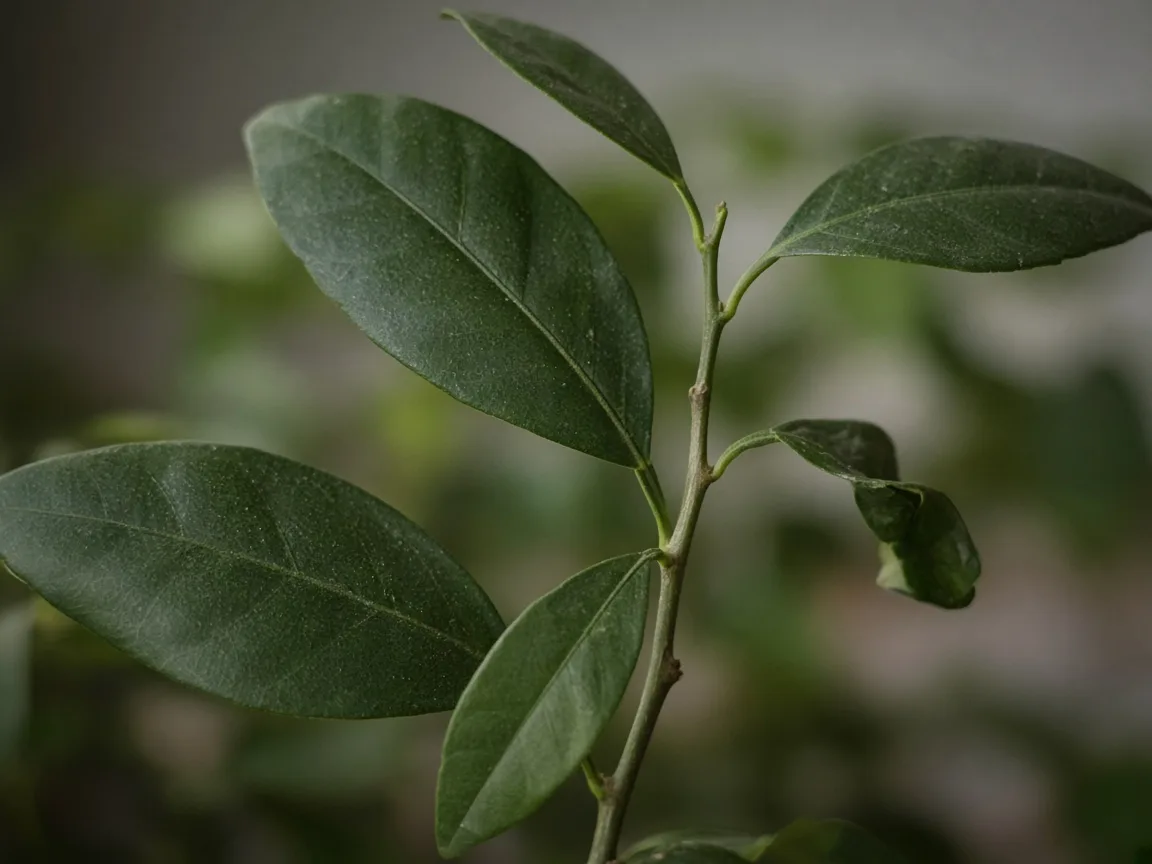
Thin, oversized dark shade leaves and spindly elongated stems on Citrus sinensis caused by photon starvation indoors—compare with compact, waxy foliage grown under full sun.
1. Leaf thinning and canopy defoliation
When photon levels drop below the tree’s daily metabolic requirement, the lowest and innermost leaves on the scaffold branches stop producing net positive carbohydrates. Instead of contributing sugars to the tree, these shaded leaves become energetic sinks. The tree forms an abscission zone at the base of the petiole, dropping mature, fully green leaves cleanly from the twigs. Over several weeks, the inner canopy becomes bare, leaving foliage only at the outermost tips.
2. Massive winter leaf drop upon transitioning indoors
The most common disaster among container citrus growers occurs within two to four weeks of moving an orange tree indoors for the winter. In a phenomenon documented by commercial growers and university extension services, the tree rapidly drops dozens of green leaves, leaving bare branches. Warm indoor room temperatures (68°F to 75°F / 20°C to 24°C) stimulate high cellular respiration, but standard window light supplies only a tiny fraction of the photons the tree received outdoors in autumn. Unable to synthesize enough carbohydrates to maintain leaf tissue in warm air, the orange tree jettisons its canopy.
3. Dark, enlarged shade leaves
Any new vegetative flushes produced in suboptimal light exhibit abnormal morphology. The leaves emerge significantly larger in surface area, thinner in cross-section, and noticeably darker forest-green than normal sun foliage. The tree synthesizes excess chlorophyll per unit leaf volume and expands the leaf lamina in a desperate bid to intercept diffuse photons. However, these shade leaves lack the thick waxy cuticle and robust palisade mesophyll cell layers typical of healthy citrus, making them floppy, fragile, and prone to pest attacks.
4. Lack of blooming and flower abortion
Citrus floral initiation is a resource-intensive biological event. In spring, an orange tree requires substantial starch reserves accumulated in stems and roots during prior sunny months to form floral buds. Under low light, the tree suppresses flower bud differentiation entirely. If flower buds do form, the tree frequently aborts them prior to anthesis, dropping unopened buds or unfertilized blossoms before petals can open.
5. Fruitlet abortion (June drop exacerbation)
Even if an orange tree flowers indoors or on a partially shaded balcony, setting fruit requires sustained carbon delivery. Citrus naturally undergoes a self-thinning phase known as “June drop,” where weak fruitlets are shed. Under insufficient light, the tree cannot satisfy the heavy carbohydrate demand of developing fruitlets. Within two to three weeks of petal drop, pea-sized young oranges turn dull yellow, form an abscission ring at the calyx, and drop completely, leaving the tree with a zero fruit yield.
6. Weak, spindly branches (etiolation)
Shoots emerging in dim light exhibit severe etiolation. Internodes (the stem spacing between consecutive leaf nodes) stretch abnormally long as auxin concentrates in the stem to drive elongation toward the nearest light source. The resulting wood is narrow, flexible, and deficient in lignin. These weak, spindly branches droop under their own weight and will snap easily if they ever bear heavy, mature oranges weighing 200 to 300 grams each.
Photobiology of Citrus sinensis: DLI, PPFD, and the carbon starvation threshold
To diagnose and correct light stress on sweet orange, growers must understand the quantitative photobiology of the genus Citrus.
Photobiological Thresholds for Citrus sinensis:
• Outdoor Full Sun: 8–12 hours direct sunlight (DLI: 35–60+ mol/m²/day | PPFD: 1,000–2,000 µmol/m²/s)
• Indoor LED Supplemental Target: 12–16 hours photoperiod (DLI: 30–50+ mol/m²/day | PPFD: 400–800+ µmol/m²/s)
• Light Compensation Point (LCP): ~40–60 µmol/m²/s (Respiration equals photosynthesis)
• Light Saturation Point (LSP): ~800–1,200 µmol/m²/s (Maximum photosynthetic rate)
• Typical Residential Window (unobstructed): PPFD 50–150 µmol/m²/s (DLI: 3–8 mol/m²/day — STARVATION LEVEL)
The concept of Daily Light Integral (DLI)
Daily Light Integral (DLI) measures the total number of photosynthetic photons delivered to a square meter of canopy over an entire 24-hour day, expressed in moles of light per square meter per day (mol/m²/day). While a pothos or snake plant thrives on a modest DLI of 4 to 8 mol/m²/day, Citrus sinensis is an obligate high-energy crop. Botanical references from the Missouri Botanical Garden Plant Finder confirm that sweet orange requires full sun to achieve optimal growth and fruit production. In outdoor citrus-growing belts, trees receive 35 to 60+ mol/m²/day during spring and summer.
Indoors, an unobstructed south-facing window with double-pane low-E glass rarely delivers more than 6 to 12 mol/m²/day on clear winter days, and drops below 3 to 5 mol/m²/day on overcast days. This is far below the 30 to 50+ DLI threshold required for an orange tree to maintain dense foliage, differentiate flower buds, and ripen heavy citrus fruit.
Light Compensation Point vs. Light Saturation Point
The Light Compensation Point (LCP) is the light intensity at which photosynthetic carbon fixation exactly equals the carbon consumed by cellular respiration. For Citrus sinensis, the LCP sits around 40 to 60 µmol/m²/s of Photosynthetic Photon Flux Density (PPFD). When an orange tree receives light near or below its LCP, net carbon gain is zero or negative. The tree literally burns its own stored starches to survive.
Conversely, the Light Saturation Point (LSP) for citrus leaves is exceptionally high, typically between 800 and 1,200 µmol/m²/s. In agricultural field production, UF/IFAS Extension notes that citrus trees will tolerate light shade but are dramatically more productive in full sunlight, where canopies receive unfiltered outdoor irradiance exceeding 1,500 to 2,000 µmol/m²/s at solar noon.
Why Orange Trees suffer severe indoor light starvation
Indoor cultivation presents unique biological challenges for an evergreen fruit tree:
1. Architectural and glass attenuation
Modern residential window glass is engineered to block infrared and ultraviolet wavelengths, and standard low-emissivity (Low-E) coatings reflect a substantial percentage of visible photosynthetically active radiation (PAR). Furthermore, window frames, deep roof eaves, balcony chajjas, and window screens attenuate incoming sunlight by 40% to 70% before it ever touches the canopy. A spot three feet back from a window may appear bright to human eyes, but a light meter reveals that photon intensity drops by roughly 80% to 90% due to the inverse-square law.
2. The temperature-respiration mismatch
In outdoor temperate winters, cold temperatures naturally depress a citrus tree’s metabolic respiration rate. When root-zone and ambient temperatures hover between 45°F and 55°F (7°C to 13°C), the tree enters a semi-dormant quiescent rest where carbohydrate consumption is minimal. However, inside centrally heated homes, winter temperatures remain warm (70°F / 21°C). High temperatures drive enzymatic respiration, burning carbohydrates rapidly. Because the dim indoor window cannot provide the photons needed to replenish those carbohydrates, the tree rapidly exhausts its starch reserves. The Royal Horticultural Society highlights that growing citrus as permanent indoor houseplants is difficult because citrus demands cool winter rest conditions combined with intense light, and that warm, dim rooms inevitably cause defoliation.
3. Lack of canopy penetration
Orange trees possess dense, multi-tiered globular canopies. In direct outdoor sunlight, shifting sun angles ensure light penetrates deep into the inner branch structure. In a window setting, light enters unidirectionally from one side. The outer leaves shade the inner shoots, plunging 70% of the canopy into deep, sub-compensation gloom.
Diagnostic inspection: step-by-step confirmation checks
Before assuming your orange tree has root rot, pests, or nutrient deficiencies, follow this five-step diagnostic inspection:
- Measure Photon Intensity with a Quantum PAR Meter: Do not guess light levels using your eyes, which dilate automatically to compensate for dim rooms. Use a dedicated quantum light sensor or an calibrated smartphone light app to measure PPFD at the top, middle, and bottom of the canopy. If PPFD reads below 250 µmol/m²/s during midday, your tree is severely light-starved.
- Inspect Internode Spacing: Measure the distance between consecutive leaf nodes on the newest branch flushes. On an outdoor, full-sun Citrus sinensis, internodes are tight and compact, measuring 0.5 to 1.5 cm (0.2 to 0.6 inches). On an etiolated, low-light tree, internodes stretch to 3 to 6 cm (1.2 to 2.4 inches), creating a leggy, open scaffold.
- Examine Leaf Texture and Thickness: Gently feel the newest mature leaves. Healthy full-sun citrus leaves are thick, stiff, and leathery with a noticeable waxy sheen. Low-light leaves feel thin, papery, and pliable, lacking protective epicuticular wax.
- Evaluate Root Ball and Soil Moisture: Slide the root ball out of the pot. Light-starved trees consume very little water because transpiration plummets in the shade. If the potting mix stays wet for more than 10 to 14 days after watering, but the roots remain firm, tan, and fresh-smelling (not black or mushy), the primary stressor is inadequate light stalling transpiration, not root infection.
- Review Bloom and Fruit History: As observed in the RHS diagnostic guide on citrus problems, failure to flower and premature blossom drop are directly caused by lack of light, erratic watering, or temperature extremes. If a mature grafted tree has produced lush foliage for two seasons without producing a single bloom, light levels are insufficient for reproductive induction.
Lookalike symptoms and differential diagnosis
| Symptom Pattern | Suspected Issue | How to Differentiate from Low Light |
|---|---|---|
| Green leaves drop from inner canopy; oversized dark new leaves; long internodes; no blooms | Not Enough Light | Roots are healthy and firm; soil dries very slowly; stems stretch toward light source |
| Lower leaves turn completely yellow with brown, mushy roots and sour potting soil | Overwatering / Root Rot | Leaves drop while soft or yellowing; roots slough off; stems do not etiolate |
| General uniform pale yellowing across entire tree; slow growth but short internodes | Nitrogen (N) Deficiency | Leaves are undersized, not oversized; occurs even in full direct sunlight |
| Fine yellow stippling on leaf surface; leaves turn bronze and drop; fine webs on twigs | Spider Mites | Webbing visible with hand lens; affects leaves regardless of stem elongation |
| Sudden massive leaf drop following exposure to freezing temperatures below 32°F (0°C) | Freeze Injury | Leaves turn dark, water-soaked, and crisp within 24–48 hours of frost exposure |
| Curled, inward-rolling leaves; pot extremely light; crispy brown tips and margins | Underwatering | Relieved within hours of deep watering; stems remain rigid and compact |
The first fix: photon restoration protocol
Your single immediate priority is to dramatically increase photon flux while protecting the root system from waterlogging. Do not apply fertilizer today, do not prune heavily, and do not transplant into a larger container. Implement this targeted two-part protocol:
Photon Restoration Protocol for Citrus sinensis:
Step 1: Relocate the tree to an unobstructed south-facing window or mount a high-intensity
        horticultural LED grow light (400–800 µmol/m²/s PPFD) 12 to 18 inches above the canopy.
Step 2: Set an automatic timer for a 14-to-16-hour daily photoperiod to achieve 35+ DLI.
Step 3: Throttle watering: allow the top 5 cm (2 inches) of potting mix to dry completely
        before irrigating, matching moisture delivery to the tree's current reduced transpiration rate.
Grow light equipment specifications
If natural sunlight cannot provide at least 6 to 8 hours of direct sun on the leaves, artificial lighting is mandatory. According to extension guidance on indoor houseplant lighting from Oklahoma State University, artificial supplemental lighting must be added wherever natural light falls short of plant maintenance thresholds.
For an orange tree, choose a full-spectrum horticultural LED fixture (commercial quantum board or high-intensity bar light) drawing at least 100 to 200 actual watts from the wall. The fixture must deliver broad PAR spectrum (400 to 700 nm) with supplemental deep red (660 nm) wavelengths to support photosynthesis and flowering. Position the light fixture 12 to 18 inches directly above the top foliage to deliver 400 to 800+ PPFD across the canopy. As recommended by heritage citrus specialist Four Winds Growers, indoor citrus trees require roughly 8 to 12 hours of direct sun or 12 to 16 hours of supplemental grow light exposure daily to sustain healthy vegetative development and fruit production.
Step-by-step recovery plan
Restoring a light-starved orange tree requires careful synchronization of photon intensity, irrigation, and nutrition over several months:
Phase 1: Stabilization and moisture throttling (Weeks 1–3)
- Install the supplemental grow light or position the tree in maximum direct sun.
- Cease all fertilization. A light-stressed tree cannot utilize nitrogen or potassium; dumping fertilizers into inactive soil leads to chemical salt burn.
- Test container moisture using a wooden dowel or moisture probe. Withhold water until the top 5 cm (2 inches) of potting mix is dry. Review our orange tree watering guide for accurate soil dry-down assessment.
- Rotate the container by 90 degrees twice weekly to ensure light reaches all sides of the canopy, preventing lopsided branch architecture.
Phase 2: Acclimation and vegetative bud break (Weeks 3–6)
- Monitor the leaf axils along older branches. Under sustained 35+ DLI, dormant axillary buds will begin to swell into fresh vegetative shoots.
- These newly emerging leaves will develop under high light conditions, producing thick, compact, waxy foliage with short internodes.
- Do not remove older, oversized shade leaves yet. Even inefficient shade leaves produce some carbohydrates through photosynthesis; wait until the tree establishes a full canopy of sun-adapted leaves before trimming old foliage.
Phase 3: Structural pruning and light feeding (Weeks 6–12)
- Once vigorous new growth flushes have matured and hardened into deep green leaves, evaluate the tree’s structural scaffolding.
- Use sanitized bypass pruners to head back weak, spindly shoots by one-third to one-half. Cut just above an outward-facing node to stimulate lateral branching and build thick, sturdy wood capable of bearing future fruit. Consult our orange tree care overview for comprehensive branching standards.
- Resume feeding using a specialized citrus fertilizer formulated with an N-P-K ratio around 2-1-1 or 3-1-2 and fortified with chelated micronutrients (iron, zinc, manganese). Apply at one-quarter strength for the first two feedings, then gradually increase to label strength as vegetative growth accelerates.
Winter transition protocol: preventing indoor leaf drop
If you grow container citrus in regions with freezing winters, follow this transition protocol every autumn to completely prevent winter leaf drop:
- Two-Week Gradual Acclimation: Never move an orange tree directly from blazing full sun outdoors into a heated living room. In early autumn, before indoor heating is activated, move the pot into bright open shade or onto a covered patio for 10 to 14 days. This allows the tree to adjust its stomatal conductance and chlorophyll density before entering the house.
- Cool Overwintering Station: Place the tree in the coolest bright room available, such as an unheated sunroom, enclosed porch, or bright conservatory where winter temperatures stay between 50°F and 60°F (10°C to 15°C). Keeping the air cool suppresses cellular respiration, aligning metabolic demand with reduced winter light.
- Root Zone Warming: If the tree must reside in a room with cool floors, place the container on an insulating plant riser or seedling heat mat set to 65°F (18°C). Warm roots absorb water and micronutrients efficiently, preventing the physiological drought that triggers leaf drop when canopies are exposed to bright sun or grow lights.
- Active Grow Light Timer: Run supplemental LED grow lights for 14 hours daily throughout the winter months to maintain DLI above 30 mol/m²/day.
Mistakes to avoid
- Continuing a Summer Watering Schedule in Dim Light: Transpiration drops by more than 70% in low light. Watering a light-starved orange tree every few days saturates the root zone, rotting root hairs and compounding defoliation.
- Applying High-Nitrogen Fertilizer to “Fix” Yellowing Leaves: When citrus leaves drop from low light, novice growers often assume the tree needs food and dump synthetic fertilizer into the soil. Inactive roots cannot absorb mineral salts, resulting in severe fertilizer burn and root collapse.
- Using Cheap Decorative LED Bulbs: Domestic screw-in LED bulbs, desk lamps, and flexible purple clip-on lights emit negligible PPFD (often less than 20 to 50 µmol/m²/s at 12 inches). They are completely useless for high-light citrus crops.
- Pruning Off All Bare Branches Immediately: When an orange tree defoliates from low light, its bare branches still contain living green cambium tissue and dormant adventitious buds. Scratch the bark with your thumbnail: if the tissue underneath is moist and green, leave the branch intact. It will flush with new foliage once light intensity is restored.
- Potting into an Oversized Tub: Sinking a light-starved tree into a huge container of wet soil traps excess moisture around the roots. Maintain compact root-to-soil volume in a coarse, well-aerated potting blend, as outlined in our orange tree soil guide.
Recovery timeline and expectations
- Days 1 to 14: Leaf drop stabilizes and halts completely once supplemental lighting is established and overwatering is corrected.
- Weeks 3 to 5: Dormant vegetative buds swell at branch nodes and leaf axils, pushing out fresh flushes of compact, thick new shoots.
- Weeks 6 to 10: The new canopy hardens into deep, glossy green foliage. Old, fragile shade leaves may naturally abscise as vigorous new sun foliage takes over photosynthetic production.
- Months 4 to 6: With sustained high DLI (30 to 50+ mol/m²/day), mature branches develop sufficient starch reserves to initiate flower buds, leading to fragrant white blossoms and successful fruitlet set during the next seasonal cycle.
How to prevent light starvation long term
- Maximize Outdoor Growing Time: Keep your container orange tree outdoors in full, open sunlight for as many months of the year as your climate allows. Move it outdoors in spring as soon as night temperatures reliably stay above 40°F (5°C), and keep it outside until autumn frost threatens.
- Track Seasonal Sun Angles: Monitor how shadows from neighboring buildings and trees shift across your patio or balcony. Move the container to track the sun path from spring through autumn.
- Supplement Every Indoor Stay: Treat high-output grow lights as a standard component of container citrus care rather than an emergency fix. Whenever the tree is inside, the timer should run 12 to 16 hours daily.
- Regular Canopy Rotation: Rotate the pot 90 degrees every week to prevent one-sided etiolation and maintain a balanced, 360-degree fruiting framework.
For complete seasonal care routines, pest prevention, and cultural practices, explore our all orange tree problems hub.
Related Orange Tree guides
- Orange Tree Care Overview — Botanical background, climate thresholds, mature sizing, and container culture
- Orange Tree Light Guide — Detailed exposure guidelines, outdoor siting, and acclimation strategies
- Orange Tree Watering — Root-zone moisture checks, container drainage, and seasonal watering rhythms
- Orange Tree Soil & Potting — Formulating well-aerated, coarse citrus potting blends and container selection
- All Orange Tree Problems — Complete diagnostic index for citrus pests, fungal diseases, and physiological disorders
Related tool
Use our Light Meter Calculator to measure exact lux, foot-candle, and PPFD readings for your orange tree and determine whether your current windowsill or grow light setup meets species-specific thresholds.