Drooping Leaves on Orange Tree: Causes, Checks & Fixes
Quick answer
Drooping leaves on an orange tree (Citrus sinensis) usually indicate a moisture uptake imbalance: either dry soil depleting cellular turgor, waterlogged mix suffocating roots with hypoxia, or cold soil stalling root activity. Probe 2–5 inches deep across both the center and edge of the root ball before acting. If dry, deliver a slow, deep soak until runoff appears; if waterlogged, stop watering, clear drainage holes, and allow the mix to aerate.
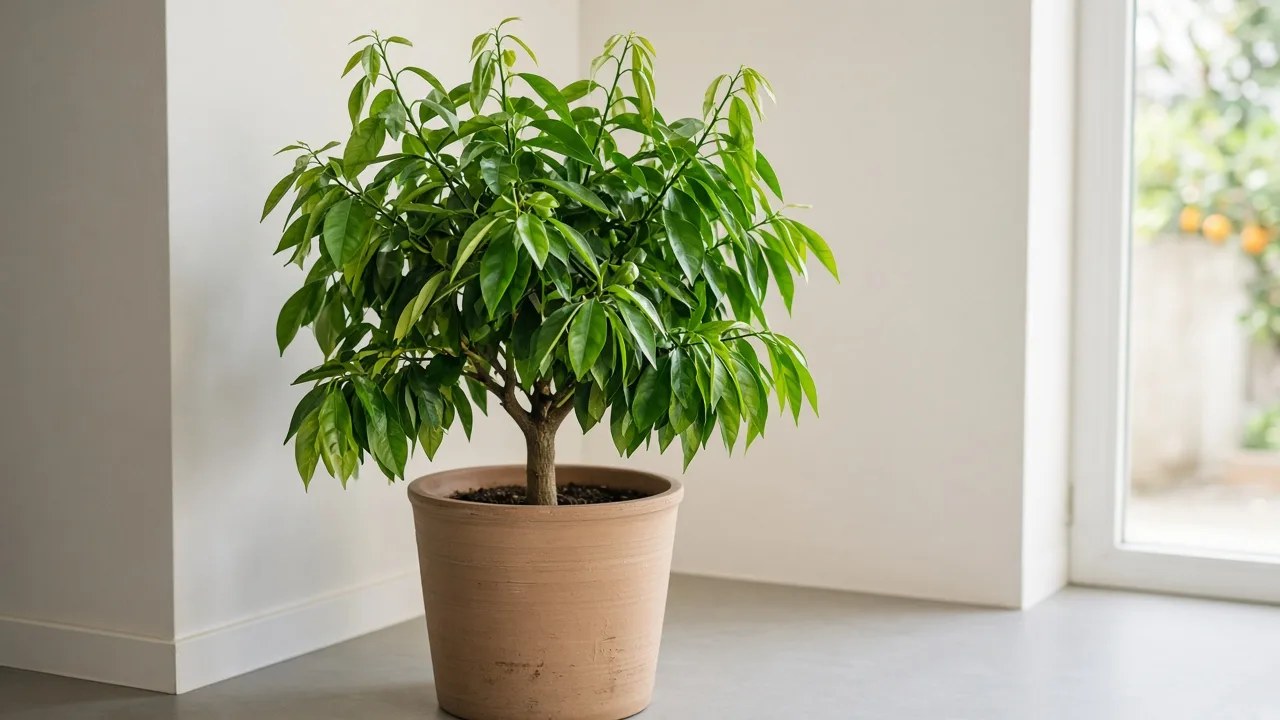
Drooping Leaves on Orange Tree: Causes, Checks & Fixes
This guide covers drooping leaves on Orange Tree. See also the general Drooping Leaves guide, watering, and light pages for this plant.
Drooping Leaves on Orange Tree: Causes, Checks & Fixes
Quick answer
A healthy sweet orange tree (Citrus sinensis) holds its thick, glossy evergreen leaves firmly angled toward the sun. When cellular hydrostatic pressure falters, the petioles relax and the entire canopy visibly deflates. For how cellular turgor loss operates across all plant families, see our drooping leaves guide. On sweet orange, drooping leaves are almost always a root-to-canopy hydration disconnect: acute drought in a desiccated container, root suffocation from chronic overwatering, or chilled roots entering temperature dormancy.
First step: probe the root zone 2–5 inches deep at both the container center and edge, then lift the pot. If the potting mix is dry and the container is feather-light, apply a slow, deep soak until water runs freely from the drainage holes. If the mix is saturated and heavy, halt all watering immediately, clear saucers, and allow the root zone to aerate before applying any other treatment.
When to use this page vs other Orange Tree guides
This guide addresses general loss of leaf turgor where foliage hangs limp while woody branches remain intact. If your orange tree displays more distinct secondary symptoms, route your diagnosis using the table below:
| What you see on your orange tree | Primary suspect | Recommended guide |
|---|---|---|
| Limp foliage on dry soil; pot feels feather-light | Acute root-zone drought | Underwatering |
| Drooping, yellowing leaves on perpetually wet mix; sour odor | Saturated soil suffocating roots | Overwatering |
| Soft, blackened roots; mushy root flare; rapid canopy collapse | Fungal pathogen in wet media | Root rot |
| Sudden total structural collapse of stems and canopy | Severe root loss or vascular trauma | Wilting |
| Pale yellow leaves with dark green veins; no limpness | Micronutrient (iron/zinc) deficiency | Yellow leaves |
| General pot drying rhythm and seasonal care | Cultural routine baseline | Watering |
| Long-term aeration and container mix structure | Physical potting substrate | Soil |
What drooping leaves look like on Citrus sinensis
Sweet orange leaves are leathery, elliptical, and attached to stems by articulated, narrowly winged petioles. Under normal conditions, hydrostatic pressure within the leaf cells holds each blade upright and rigid. When water delivery stalls, the pulvinus tissue at the base of the petiole loses rigidity first, allowing the leaf blade to pivot downward toward the ground.
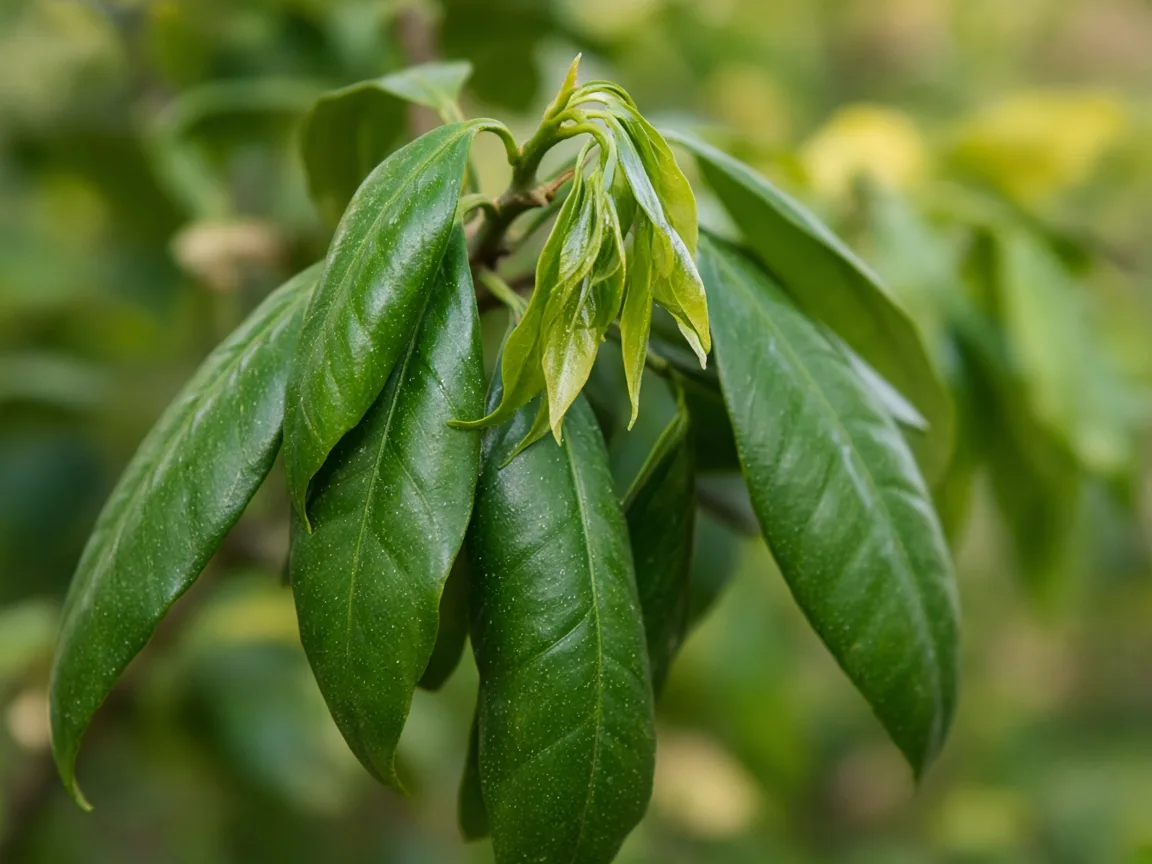
Close-up: drooping Citrus sinensis leaves hanging limply from petiole joints while branch stems remain firm.
Key visual markers help pinpoint the underlying stress:
- Flagging new flush growth: Tender, light green vegetative flushes at branch tips wilt rapidly, bowing like shepherd’s hooks before older, mature foliage shows obvious limpness.
- Dull, lusterless leaf blades: Healthy citrus leaves reflect bright light with an oily sheen; dehydrated or oxygen-starved leaves turn matte green or grayish before drooping.
- Inward leaf cupping: Under acute heat or drought, leaf margins curl inward along the central midrib prior to downward drooping—a protective response to reduce transpirational surface area.
- Flower and fruitlet shedding: Sweet orange trees prioritize vegetative survival over reproduction. When moisture transport fails, trees rapidly abort fragrant blossoms and marble-sized young fruit to conserve water.
Midday moisture stress vs severe root hypoxia
Container citrus growers frequently misdiagnose drooping leaves because two opposite root conditions produce virtually identical canopy symptoms. Understanding the physiological difference between transpirational deficit and root hypoxia is critical to saving your tree.
Midday transpirational stress in container citrus
Sweet orange is an evergreen sun worshiper requiring full sun to thrive. On hot, breezy summer afternoons, atmospheric vapor pressure deficit (VPD) climbs drastically. A containerized citrus tree transpires moisture through leaf stomata faster than its root system can extract water from a restricted root ball.
As a result, the canopy may flag or sag between 1:00 PM and 3:30 PM, even when moisture is present in the lower pot. If the leaves recover their crisp posture by early evening or overnight as ambient temperatures drop and humidity rises, the tree is experiencing transient midday moisture stress rather than true root failure. Shielding dark-colored pots from direct solar baking or providing light shade cloth during extreme heat waves resolves this issue without extra watering cycles.
Chronic root hypoxia from saturated soil
The far more lethal counterpart is root hypoxia. Sweet orange roots demand abundant oxygen for cellular respiration. Research from UF/IFAS Citrus Extension highlights that prolonged saturation in waterlogged soils rapidly depletes dissolved oxygen from the pore spaces surrounding citrus feeder roots.
Within 24 to 48 hours of complete waterlogging, root cells lose the ability to generate ATP, shutting down the aquaporin channels responsible for water absorption. The tragic paradox occurs: the tree wilts and droops in a pot filled with water because its suffocated root hairs cannot drink. Hypoxic droop is distinguished by leaves remaining limp overnight, lower leaves yellowing while damp, a foul or marshy smell rising from the drainage holes, and roots turning from fibrous white or tan into dull gray or brown decay.
Cold soil root inactivity and winter leaf drop
Temperature plays a major role in sweet orange root physiology. While the canopy can tolerate mild cold, the root zone behaves quite differently:
Physiological root chilling below 55°F (13°C)
Citrus roots slow their metabolic and water-absorption rates when soil temperatures drop below 55°F (13°C), and water uptake nearly ceases below 50°F (10°C). When container-grown trees are kept on cold outdoor stone terraces or positioned indoors near drafty windows where bright winter sun or dry furnace air warms the canopy, the leaves attempt to transpire while cold roots remain paralyzed.
The Royal Horticultural Society notes that this transpirational imbalance frequently causes winter leaf drop when roots cool, resulting in leaves drooping limp and shedding while still green. Elevating containers off cold concrete surfaces using wooden plant dollies and matching root-zone warmth to ambient canopy temperature prevents this winter collapse.
Freeze injury below 28°F (-2°C)
Sweet orange is significantly less cold-hardy than mandarins or kumquats. Guidelines from UC Statewide IPM document that sweet orange trees experience cellular freeze injury when ambient temperatures fall below 28°F (-2°C). At sub-freezing thresholds, ice crystals rupture internal cell walls within the leaf parenchyma and young green twigs.
Upon thawing, the damaged tissues lose all cellular integrity, causing catastrophic canopy droop. Frost-damaged leaves appear water-soaked, turn limp and blackened, and dry into brittle crisps that remain stubbornly attached to dead twigs. Portable containers must be moved under frost-free, bright shelter before autumn temperatures plunge toward freezing.
The multi-point probe test across the citrus root ball
Testing only the top inch of container citrus mix is the primary cause of watering misjudgments. Peat- and bark-based potting substrates often develop moisture stratification, misleading growers.
       [ Sweet Orange Canopy ]
                 || (Trunk Flare)
       +---------||---------+
       | [A]           [B]  |  <-- Upper 2–5 cm: tests surface dry-down
       |                    |
       |       [CORE]       |  <-- Mid-ball (3–5 in): tests inner root ball
       |                    |
       | [C]           [D]  |  <-- Lower zone: detects perched water tables
       +--------------------+
             \__ __/ (Drainage holes: smell and root check)
To diagnose your tree accurately, run a three-point probe check before reaching for a watering can:
- Probe the inner core near the trunk: Push a long wooden skewer or probe 3–5 inches deep within a few inches of the central root flare. In root-bound or peat-heavy soils, the root core can become hydrophobic, repelling water even when runoff drains from the bottom.
- Probe the outer container perimeter: Insert the probe 2–4 inches down near the inside rim of the pot. If the perimeter is wet while the inner core is bone dry, water has formed bypass channels down the container sides without penetrating the root ball.
- Lift and check container weight: Lift the pot by its rim or tilt large tubs. A waterlogged citrus pot feels heavy and dense like a bucket of wet cement. An underwatered container feels surprisingly light and tips effortlessly.
- Inspect bottom drainage holes: Turn the pot slightly to check the drainage openings. Free moisture pooled in saucers or soggy mix plugging the holes confirms poor aeration and saturated lower depths.
The first fix: slow, deep irrigation or drainage intervention
Do not apply multiple interventions at once. Diagnose the root status using the probe test and take the single appropriate first action:
For dry, hydrophobic root balls: slow, deep irrigation
If the probe confirms dry, powdery mix and the pot is lightweight, apply slow, deep irrigation across the root ball rather than pouring a rapid deluge over the surface. Rapid watering simply cascades down the pot margins without wetting the dense feeder root matrix.
- Pour water slowly in a broad circular pattern around the outer canopy drip line, allowing it to percolate steadily.
- Pause for 5 minutes to let the media soften, then apply a second pass until 10–20% of the volume drains out the bottom holes.
- For severely dried, contracted root balls, bottom-water by setting the container in a tub of tepid water filled to one-third the pot height for 20–30 minutes until moisture wicks into the core, then drain thoroughly.
- Empty the saucer completely 20 minutes after runoff finishes. Never allow citrus roots to sit in stagnant effluent.
For saturated, hypoxic root zones: drainage remediation
If the probe emerges cold, soggy, and dark while leaves hang limp, do not add a single drop of water:
- Empty and remove collection saucers immediately.
- Raise the container on pot feet or wooden risers to expose bottom drainage holes to moving air.
- If the tree is outdoors in heavy rain, move the container under a covered porch or eaves while keeping it in bright, indirect light.
- Do not repot an acutely water-stressed citrus on day one unless the potting medium has collapsed into sour mud. Disturbing fragile, oxygen-starved feeder roots causes fatal shock.
Step-by-step recovery and rehabilitation
Once the initial corrective action is taken, nurse your sweet orange back to vigor following this measured schedule:
- Provide stable, sheltered light: Move an acutely drooping container tree out of scorching, windy direct exposure for 2 to 4 days. Place it in bright, indirect light or filtered morning sun. Reducing harsh transpirational drag gives recovering roots time to rehydrate the canopy.
- Re-establish the 2–5 cm dry-down cycle: Do not water again until a probe inserted 2–5 cm (1–2 inches) deep into the mix indicates the upper layer has partially dried and the container feels noticeably lighter. When watering, always soak deeply and drain completely.
- Inspect and amend soil structure: If the potting mix remains soggy for more than 5 days following irrigation, the substrate lacks sufficient pore space. Sweet orange is intolerant of heavy, saturated soils. Plan to repot in early spring into a free-draining citrus blend containing 60% loam-based mix, 20% coarse pumice or perlite, and 20% pine bark as detailed in our soil guide.
- Withhold fertilizer until active flush resumes: Never apply fertilizer to a drooping or recovering orange tree. Concentrated mineral salts burn fragile, regrowing root hairs. Wait until fresh green vegetative shoots expand and mature before resuming diluted feeds per our fertilizer guide.
- Prune only verified dead wood: Limp, wilted branches often look dead but retain green cambium tissue beneath the bark. Wait 2 to 3 weeks until recovery is established. Scratch bark lightly with a thumbnail; prune back only brittle, brown twigs that fail to show green living tissue.
Recovery timeline
Recovery timing depends directly on whether drooping was driven by moisture deficit, hypoxia, or thermal shock:
- 12 to 24 hours (acute underwatering): If dry soil was the sole cause, petioles stiffen and leaves lift back into an upright, glossy posture within hours of a deep soak.
- 3 to 7 days (transpirational or relocation stress): Canopy recovers once temperatures moderate, drafty conditions are corrected, and humidity levels stabilize.
- 3 to 6 weeks (root hypoxia and overwatering): Suffocated roots must regenerate root hairs before they can efficiently hydrate the canopy. Heavily damaged older leaves may yellow and drop during this phase. Judge success by the emergence of firm, vibrant new flush growth from branch tips.
- 2 to 3 months (freeze injury): If sub-28°F temperatures killed foliage but the lower trunk and rootstock survived, new dormant buds will break along older scaffold limbs once sustained spring warmth returns.
Mistakes to avoid with drooping Orange Trees
- Watering on a calendar schedule: Never water every “Monday and Thursday.” Environmental temperatures, humidity, and growth phases dictate water uptake. Always probe the mix first.
- Light surface sprinkling: Splashing a cup of water over the surface only wets the top inch while the majority of the citrus root system stays desiccated. Always water deeply until excess drains.
- Applying fertilizer as a tonic: Feeding a stressed citrus tree with synthetic nitrogen or plant food burns damaged roots and accelerates leaf drop.
- Emergency unpotting during acute wilt: Ripping a drooping tree out of its pot tears fine feeder roots. Only repot when rot is advanced or the tree has stabilized.
- Leaving pots in standing saucer water: Waterlogged saucers create a perched water table, suffocating the lowest roots and guaranteeing root rot.
- Ignoring pet and thorn safety: Citrus sinensis stems carry slender, sharp spines at leaf axils, particularly on young wood; always wear sturdy gardening gloves. Furthermore, sweet orange foliage, prunings, and peel contain volatile essential oils and phototoxic psoralens that are toxic to dogs and cats according to the ASPCA, potentially causing vomiting, diarrhea, and depression if ingested.
How to prevent drooping leaves long term
Preventing foliage sag on sweet orange requires balancing container aeration with steady moisture availability:
- Position in full sun: Provide at least 6 to 8 hours of direct sunlight daily. Direct sun powers robust root and vascular development, helping the tree regulate water balance efficiently.
- Use coarse, well-draining media: Plant in porous terracotta or heavy containers with multiple drainage holes using a gritty, bark-amended mix. Avoid dense garden clays and moisture-retaining gels.
- Adjust irrigation by season: Water generously during hot summer growth, flowering, and fruit sizing, checking containers daily in high heat. In winter, scale back irrigation significantly, allowing the upper root zone to dry between drinks per our watering guide.
- Protect from winter freezes: Move container trees indoors or into a frost-free conservatory before freezing weather arrives. Keep pots off freezing floors to maintain active root metabolism.
- Scout pests and diseases: Regularly inspect leaf undersides and branch crotches for sap-feeding pests that rob turgor, consulting our problems hub at the first sign of abnormal growth.
When to worry
Temporary leaf drooping after a blistering afternoon or a single delayed watering is routine for container citrus and easily corrected. However, you should treat drooping as an urgent emergency if:
- The root flare or lower trunk feels soft, spongy, or oozes brown sap.
- A strong, putrid or sulfurous odor rises from the potting soil.
- Leaves drop in mass while remaining completely green and supple.
- Twigs turn brown or black from the tips downward with shriveled bark.
- Limp foliage fails to respond 48 hours after a thorough, deep watering.
In these severe situations, suspect advanced root decay or structural vascular failure. Consult our root rot guide for intensive surgical root pruning and fungicide rescue protocols.
Related Orange Tree guides
- Orange Tree overview — Comprehensive cultural profile, climate tolerances, and fruit care.
- Watering guide — Establishing the ideal soak-and-dry irrigation cadence across seasons.
- Light requirements — Maximizing fruiting sun exposure and preventing winter light starvation.
- Soil and potting mix — Designing a free-draining citrus mix that prevents root hypoxia.
- Overwatering — Recognizing saturated media and reversing early root suffocation.
- Underwatering — Rehydrating desiccated root balls and preventing premature fruit abortion.
- Root rot — Step-by-step root inspection, trimming, and repotting for decayed systems.
- Wilting — Diagnosing severe vascular collapse and sudden canopy failure.
- Yellow leaves — Distinguishing nutrient chlorosis from moisture-induced leaf discoloration.
- All Orange Tree problems — Complete index of pests, nutritional deficiencies, and environmental disorders.
Related tool
Use our Watering Calculator with orange-tree pre-selected to calculate personalized irrigation volume and frequency based on your container dimensions, ambient temperature, and sun exposure.