Water Lily Watering Guide for Ponds and Containers
Water Lily Watering Guide for Ponds and Containers
Water Lily Watering Guide for Ponds and Containers
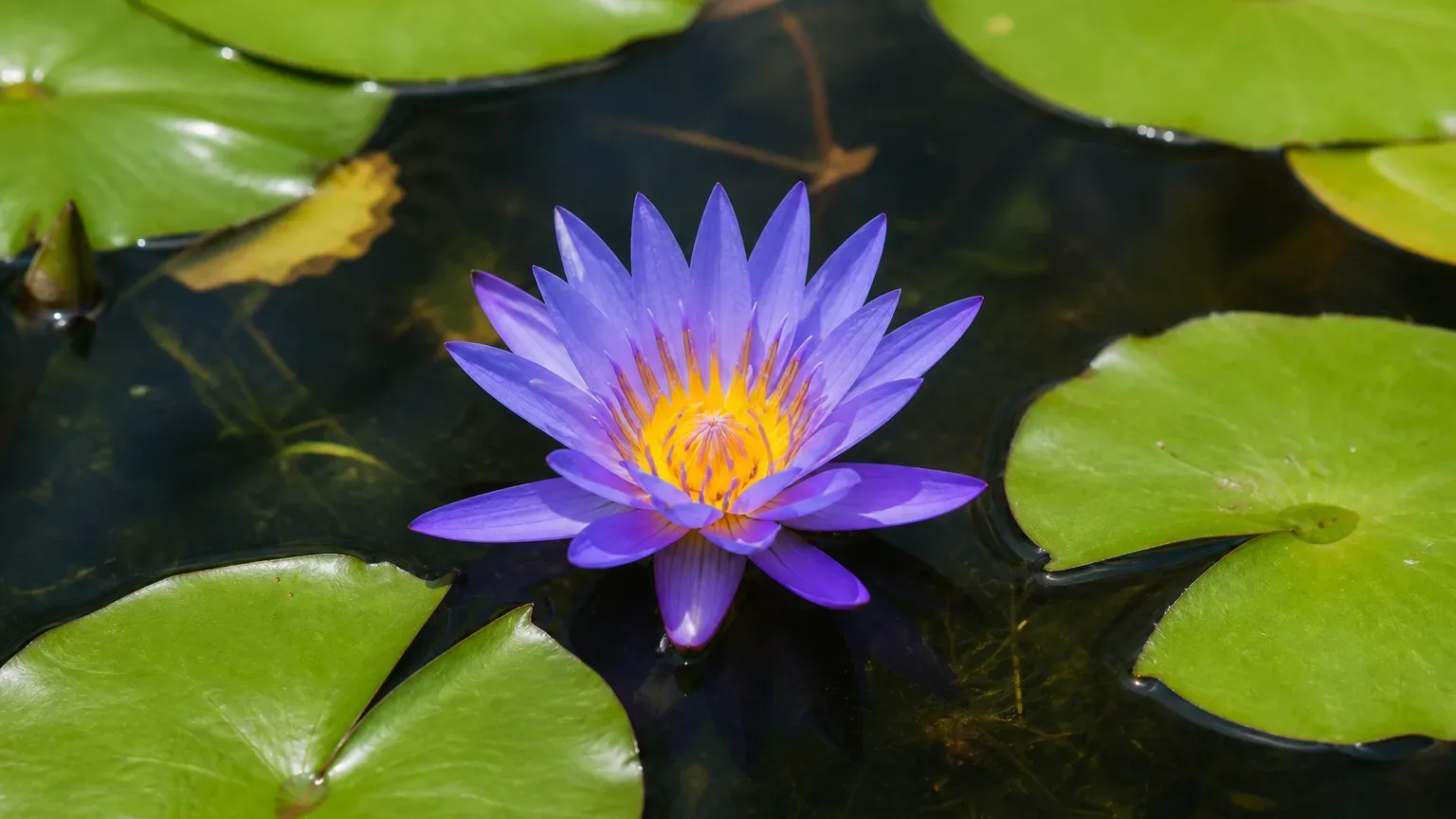
Water Lily (Nymphaea nouchali) does not need a drink-and-dry cycle. Its tuber and roots stay planted in submerged loam while its pads float at the surface, so “watering” means maintaining the right depth, temperature, movement, and cleanliness of the surrounding water. Kew identifies the species as a tuberous aquatic plant of the wet tropical biome, which is the essential context for every recommendation below.
This guide is for an aquatic blue water lily in a pond, terrace tub, or broad watertight container. It is not advice for lotus, terrestrial lilies, cut flowers, or aquarium plants that float freely without rooted baskets.
The quick answer
Keep the Water Lily basket continuously submerged in calm, warm water, with every healthy pad able to reach and lie flat on the surface. For a newly planted or recently divided Nymphaea nouchali, begin with roughly 15–25 cm (6–10 in) of water above the crown, then lower the basket in stages as longer stalks develop. Utah State University similarly distinguishes tropical lilies as warm-water plants suited to shallower 6–10 in placement, but the seller’s cultivar guidance and the plant’s response should decide the final depth.
Check the waterline at least every few days in exposed containers during hot or windy weather. Top up before the basket or crown becomes exposed, and reduce excess depth if new pads remain submerged or cannot reach the surface.
Watering an aquatic water lily is water-level management
A Water Lily cannot be assessed by pressing a finger into the soil or waiting for the pot to feel light. The dense loam inside its aquatic basket should remain underwater; drying can damage fine roots, tender shoots, and the crown. Your routine check is visual: note the waterline, confirm the basket is covered, and see whether the newest pads are floating rather than being stranded below or held rigidly above the surface.
This is also why ordinary “overwatering” language is misleading. Too much water does not mean wet soil; it usually means the basket is set too deep for the current stalk length. Rot is more closely associated with a damaged crown, cold or poor conditions, and decaying material than with permanent submersion itself; NC State lists crown rot among tropical water-lily problems.
Set the correct water depth above the crown
Measure from the top of the planted crown or basket soil, not from the bottom of the pond. A 45 cm-deep tub may provide only 20 cm of water above a basket raised on bricks, and that crown-to-surface distance is what the emerging stalk must cross. This makes basket stands a practical way to fine-tune depth without draining the pond.
There is no single permanent depth for every plant sold as a blue water lily. Vigor, maturity, container size, and the exact selected form affect reach and spread, while the RHS advises matching a water lily to the size and depth of its pond. Treat 15–25 cm above the crown as a useful establishment range for this tropical species, then use growth as your feedback.
Start shallow, then lower the basket
After planting or division, place the basket high enough that the shortest emerging pad can float. Wait until the plant is producing firm new stalks, then lower it by about 5–10 cm at a time. Pause after each move until the next pads reach the surface comfortably; this staged method prevents a weak new shoot from spending all its stored energy trying to cross deep water.
Do not change depth, location, and fertilizer at the same time. If growth stalls, you need to know which change caused it. Keep the crown itself at the soil surface inside the basket and use the Water Lily soil guide for the correct heavy aquatic medium and gravel cap.
Adjust depth to the plant, not a universal number
Pads that remain crumpled underwater, pale before opening, or repeatedly fail just short of the surface point to excessive depth, especially just after planting. Raise the basket and reassess new growth rather than pulling stalks upward. Existing submerged leaves may not recover, so judge the adjustment by the next one or two pads.
Pads that pile over each other or stand above the surface can indicate a mature, crowded basket, not simply shallow water. Confirm that the waterline has not fallen, then check whether the rhizome has filled its container. If crowding is the real problem, the Water Lily repotting guide is more useful than repeatedly making the pond deeper.
Choose a pond or container that holds a stable waterline
A lined pond buffers day-to-day temperature and water loss better than a small bowl. For container culture, choose a broad watertight tub large enough to leave open water around the mature pads; the RHS notes that even dwarf water lilies need a large container at least 30 cm deep. Nymphaea nouchali may spread much wider than a dwarf cultivar, so a tiny indoor bowl is not a durable substitute.
Place the container on a level, load-bearing surface before filling it. Water is heavy, and moving a planted tub after filling can disturb the basket and crown. Leave several centimetres of freeboard so wind and monsoon rain do not wash soil, fertilizer, or small animals over the rim.
Top up without shocking the container
Top up when evaporation lowers the level enough to change the crown-to-surface depth, rather than waiting for exposed soil. Add water gently against the tub wall or onto a saucer so the stream does not scour the basket. Small, regular additions keep depth and chemistry steadier than allowing a container to fall dramatically and then refilling it all at once.
If your municipal supply is disinfected, follow the water provider’s guidance for chlorine or chloramine and use a pond-safe conditioner when fish or other sensitive pond animals are present. Chloramine does not simply disappear on a short standing schedule, so “leave every bucket overnight” is not a universal treatment. For a plant-only tub, modest top-ups are usually less disruptive than complete changes, but local water hardness and treatment still matter.
Avoid routine full water changes. They disturb the developing pond ecosystem, swing temperature and chemistry, and can suspend basket soil. Replace a large proportion only for a defined problem such as contamination, an accidental chemical dose, or severe foul water, and match replacement-water temperature as closely as practical.
Manage evaporation and monsoon rain in India
On hot Indian terraces, broad dark containers can lose water quickly and heat above the air temperature. Check daily during heat waves, keep the basket well submerged, and top up in the cooler morning if the waterline has dropped. Tropical water lilies grow actively in warmth; NC State reports that tropical day-blooming water lilies prefer temperatures above 21°C (70°F), while very small containers can still overheat in harsh afternoon exposure.
Monsoon care reverses the problem. After heavy rain, drain or bail enough water to restore the intended depth and freeboard, especially if new pads have been pushed underwater. Prevent roof runoff, detergent, paint residue, fertilized soil, and pesticide wash from entering the tub; rainfall itself is less concerning than what it carries from surrounding surfaces.
In cooler regions or unusually cold winter weather, growth may slow sharply. Do not let the tropical tuber freeze or dry while dormant; the RHS recommends keeping tropical water lilies at no less than 10°C (50°F) in winter. Reduced growth means fewer top-ups may be needed, but the crown must remain submerged.
What good water quality means for Nymphaea nouchali
Good water does not have to look sterilized. A healthy outdoor tub may hold microorganisms, a light biofilm, and some algae, yet it should not smell sour or rotten, carry an oily chemical film, or bury the crown under decomposing sludge. Remove yellow pads and spent blooms before they sink, because decomposing material adds nutrients and consumes oxygen.
Nutrient control matters more than chasing a perfect pH number. New Mexico State Extension explains that excess nitrogen and phosphorus can drive algal blooms and oxygen depletion as the excess biomass dies and decomposes. Push aquatic fertilizer tablets into the basket soil according to the label; never pour ordinary soluble houseplant or lawn fertilizer into open water.
If fish are gasping near the surface at dawn, the water smells like rotten eggs, or animals become lethargic, treat it as a pond-water emergency rather than a Water Lily watering issue. Dissolved oxygen naturally falls overnight and warm water holds less oxygen, so heavily stocked warm containers have less margin for decomposing leaves and surplus feed. Test the water and protect the animals first.
Keep water calm without letting it become foul
Water Lilies prefer a calm surface because splashing continually wets flowers and pads, and strong current pulls stalks away from their natural vertical path. Utah State recommends positioning lilies away from waterfalls and splashing water, and the RHS likewise advises still water away from fountains, pumps, and cascades. Calm does not mean sealed or neglected: the surface still exchanges gases with the air.
If a fish pond needs filtration or aeration, route the return so it does not batter the crown or sweep pads sideways. A gentle circulation zone elsewhere in the pond can coexist with a sheltered lily pocket. In a plant-only tub, removal of decaying material and conservative feeding are usually more useful than installing a fountain directly beside the basket.
Read the pads, stalks, and crown
Healthy water balance produces firm stalks and pads that arrive at the surface, unfurl, and lie mostly flat. A temporary older yellow leaf is normal, but a run of collapsing new pads deserves investigation. Check depth first, then water temperature, crown firmness, smell, and recent chemical or fertilizer additions.
An exposed basket, curling pads stranded above a fallen waterline, crisp margins, and stalled growth indicate lost water or excessive heat. Restore the level gradually if the container has become extremely low, shade the container wall rather than the foliage, and remove only tissue that is clearly dead.
Soft black stalk bases, a foul-smelling basket, and a mushy crown are different. Do not assume that adding more clean water will cure established rot. Isolate the basket if practical, remove decomposing foliage, inspect the crown, and consult the Water Lily overview before deciding whether sound tuber tissue can be saved.
A first-action troubleshooting sequence
When the Water Lily looks stressed, make one observation-led correction:
- Confirm identity and setting. It should be rooted Nymphaea nouchali in an aquatic basket, not lotus or a free-floating aquarium plant.
- Measure crown-to-surface depth. Raise the basket if new stalks cannot reach; top up if the basket is becoming exposed.
- Check water condition. Look for odor, chemical film, heavy debris, a sudden algae crash, or distressed fish.
- Review the last 72 hours. Note heavy rain, heat, a full water change, fertilizer, pesticide drift, or pump changes.
- Change one factor. Stabilize depth first unless contamination or animal distress makes water quality urgent.
Give healthy new growth time to respond. Damaged pads do not reverse their injury, so repeated daily adjustments can create more stress than the original depth error.
When to use this page vs other Water Lily guides
Use this page for waterline, submersion depth, top-ups, calm-water placement, and pond or tub water quality. Use the Water Lily light guide when pads are reaching the surface but flowering is weak in shade, and use the Water Lily fertilizer guide when an established sunny plant has pale growth or declining bloom despite stable water.
Basket media clouding the pond belongs in the Water Lily soil guide. A congested rhizome, split basket, or need to reset the crown belongs in repotting, while producing new plants from divisions belongs in the Water Lily propagation guide.
Related Water Lily guides
Start with Water Lily care for the complete species profile and to confirm that your plant is Nymphaea nouchali. Then coordinate water depth with light, soil, fertilizer, and repotting rather than changing each factor in isolation.
Conclusion
Water Lily watering is the practice of keeping a rooted aquatic plant at a stable, workable depth in clean, calm, warm water. Start a young Nymphaea nouchali shallow enough for its pads to float, lower it gradually as stalks lengthen, and top up before evaporation exposes the basket. When something looks wrong, measure the crown-to-surface distance first, then inspect water quality and recent changes; that sequence solves more problems than following a calendar or replacing all the water.