Water Lily Propagation: Divide Nymphaea nouchali
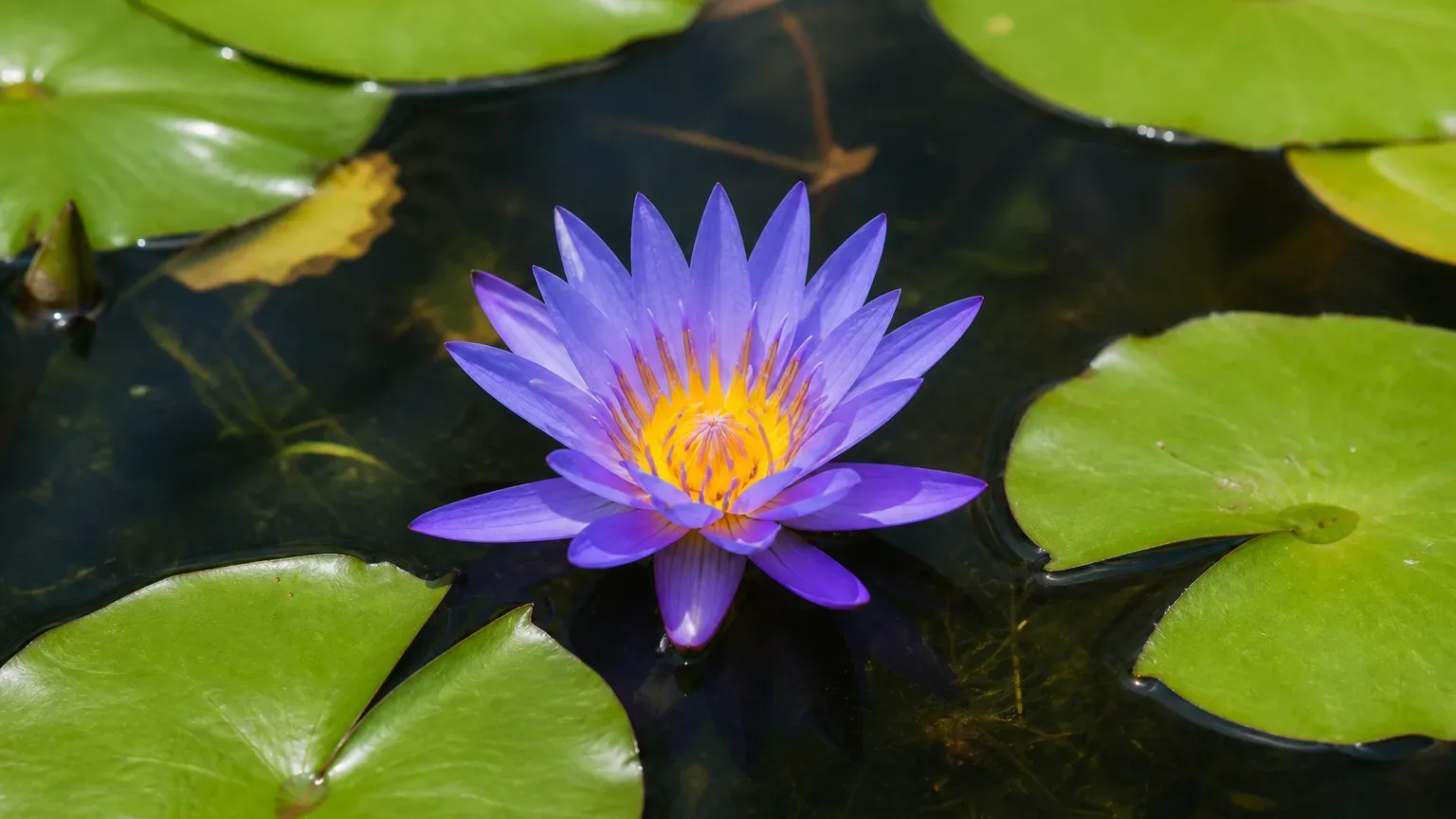
Water Lily Propagation: Divide Nymphaea nouchali
Water Lily Propagation: Divide Nymphaea nouchali
Quick answer: divide a firm, budded rhizome
The most practical way to propagate Water Lily (Nymphaea nouchali) at home is to divide its tuberous rhizome while the plant is entering active warm-season growth. Keep only firm sections with at least one unmistakable growing bud and some sound roots, then pot each section separately in heavy aquatic loam with the growing point at the surface.
Place the new basket in calm, shallow water so its first pads can reach the surface, then lower it gradually as stalks lengthen. Division gives you a clone of the parent and is much faster than seed, but there is no honest universal success percentage: a budless piece, a soft rhizome, cold water, or a buried crown can fail even when the cutting looks substantial.
Confirm that the plant is Nymphaea nouchali
Check the label before cutting. Kew accepts Nymphaea nouchali as a tuberous aquatic species native across tropical and subtropical Asia to northern Australia; Nymphaea stellata is an older name you may still see in Indian nurseries. Its leaves usually float on the water, and its tuber or short rhizome stays anchored in bottom soil.
The common names “blue lotus,” “star lotus,” and “Neel Kamal” are unreliable in commerce. This guide is for N. nouchali in the water-lily family, Nymphaeaceae—not sacred lotus (Nelumbo nucifera). If the plant has an elongated lotus rhizome and strongly emergent, water-repellent leaves held above the surface, stop and identify it again before making any cut.
Species identity changes the advice. The Flora of China treatment describes N. nouchali with an erect, unbranched rhizome, while many generic division diagrams show long, creeping hardy-water-lily rhizomes. Use the structure actually in your hand: preserve a healthy bud and firm storage tissue rather than forcing it to match a diagram of another species.
The best propagation method for this species
Division is the first choice because it preserves the parent plant’s flower colour and growth traits and can establish within the same warm season. The South African National Biodiversity Institute’s closely related N. nouchali var. caerulea account calls division the easiest method and specifies at least one bud at the rhizome tip. For a home grower, two sound buds provide a useful margin, but one vigorous bud is the biological minimum supported by this species-level account.
Seed is worthwhile when you want genetic variation, have no parent plant to divide, or want to observe the complete life cycle. It is not a shortcut to a matching clone. Seed-raised plants vary, and the same SANBI account reports that blue-water-lily seedlings can take three to four years to flower.
Do not assume leaf plantlets are available. Some tropical water-lily cultivars are viviparous, but that is cultivar-specific; a plantlet method should be used only when your identified plant actually produces a rooted plantlet at a leaf node. For ordinary N. nouchali, plan around rhizome or tuber division and seed.
Best time to divide in India and tropical climates
Divide when warm conditions and obvious new growth coincide, not on a calendar alone. The Royal Horticultural Society recommends dividing tuberous and rhizomatous pond plants during active spring growth, and NC State Extension describes tropical day-blooming water lilies as warm-season aquatics that perform in full sun and fertile loam. In much of India, that means late winter through spring after cold stress has passed, or another warm window when the plant is pushing fresh leaves.
Avoid dividing during a cold spell, while the tuber is dormant and leafless, or immediately before days of violent monsoon overflow. Hot tropical regions can support a longer working season, but choose a morning when you can replant immediately and keep the basket’s water level stable. If the parent is flowering strongly and not crowded, there is no need to cut it merely because another year has passed.
Good reasons to divide include several growing points packed against the basket, pads stacking above one another, distorted basket walls, or declining flowering despite adequate sun and feeding. The RHS notes that congestion can push leaves above the surface and reduce flowering, although these signs can also reflect water that is too shallow; check placement before reaching for a knife.
Step-by-step Nymphaea nouchali division
Prepare the replacement baskets before lifting the parent. You need a clean sharp knife, heavy clay-based aquatic loam or peat-free aquatic compost, washed gravel, tubs of pond water, and labels. Do not use fluffy terrestrial potting mix: it floats, clouds the water, and does not anchor a water-lily tuber well.
Work out of direct midday sun and keep the rhizome damp throughout. A water lily is an aquatic plant, so an hour drying on a terrace is not equivalent to “callusing” a cactus cutting. Make decisive cuts, remove decay, and replant promptly.
1. Lift and rinse the parent plant
Raise the basket slowly so trapped water and pond animals can drain back. Tip the root mass into a shallow tray, then wash away enough soil with pond water to expose the tuber, buds, and roots. You do not need to scrub every root clean; you need a clear view of firm tissue and natural separations.
Inspect before dividing. Healthy storage tissue should feel firm, not collapse under a thumb, and active buds should look compact and intact. Cut away black, hollow, foul-smelling, or mushy tissue until only clean firm material remains; sterilize the blade again before touching a healthy section.
2. Find viable buds and make clean divisions
Trace each growing point back into sound rhizome or tuber tissue. Make a clean cut that leaves every chosen piece with at least one viable bud, a useful portion of firm storage organ, and roots where available. RHS general water-lily guidance advises sections with two or three growth buds, while the species-level SANBI guidance accepts one; larger multi-bud divisions are safer when the parent is big enough, but do not destroy a small plant trying to meet an arbitrary count.
Discard budless chunks and all soft tissue. A large piece without a growth point is not more promising than a small, healthy budded division. Do not split the parent into the maximum possible number of slivers; fewer robust pieces usually tolerate handling better and reach the surface sooner.
3. Pot each division in heavy aquatic loam
Fill a wide aquatic basket with heavy loam, leaving room to position the tuber without bending the bud. The RHS water-lily planting guide recommends heavy clay-based loam or peat-free aquatic compost, with the crown at the surface and washed gravel above to hold soil in place. Keep gravel away from the bud itself.
Spread surviving roots into the loam and firm gently so the division cannot float free. Orient the growing point upward and leave it at, or just above, the soil surface; burying it deeply encourages stagnation and makes emerging leaves work through unnecessary material. Push any aquatic fertilizer tablet away from the cut and bud, or wait for fresh growth before feeding a small stressed piece.
4. Re-submerge in shallow, calm water
Start shallow enough that the young pads can reach and float without stretching through a deep water column. A useful starting point is roughly 15–25 cm of water above the crown for an established division, adjusted shallower for a tiny bud; this is the initial planting range in the RHS water-lily guide. If every emerging leaf stalls below the surface, raise the basket rather than assuming it needs fertilizer.
Use bricks or an overturned aquatic pot as a temporary shelf, then lower the basket in stages as petioles lengthen. Keep it away from fountains, cascades, and strong pump outlets. Stable, warm, sunlit water matters more during establishment than immediately reaching the parent plant’s final depth.
Aftercare during the first month
For the first two to four weeks, protect consistency. Keep water warm, calm, and at a steady depth; give the plant strong sun; remove only leaves that have turned fully soft or rotten. The aim is not to preserve every old pad but to see a sequence of firm new stalks whose pads reach the surface.
Do not change depth, fertilizer, and location on the same day. If growth pauses, first check whether the crown is buried, the bud is damaged, the water has cooled, or the basket has slipped too deep. Use the Water Lily light guide for sun placement, the Water Lily soil guide for basket media, and the Water Lily watering guide for stable submersion.
Shade the water container itself if extreme terrace heat is cooking the water, but do not shade the lily pads into weak growth. During heavy rain, prevent the container from overflowing the basket or changing depth abruptly. Never add ordinary soluble houseplant fertilizer to the open water; when active leaves confirm establishment, follow the Water Lily fertilizer guide for buried aquatic feeding.
Signs the new division has established
The clearest success signal is a fresh, firm leaf stalk emerging from the bud and producing a pad that opens flat at the surface. Additional leaves should follow from the same crown, and pale new roots may begin binding the loam. One retained old leaf staying green is not proof that the division has rooted.
Do not demand flowers immediately. Establishment, root replacement, and leaf production come first, and flowering depends on sun, warmth, plant size, and nutrition. Judge the plant by its direction of travel: new tissue should be firmer and healthier than the material that was present on division day.
Common propagation failures and first actions
The rhizome turns soft or smells sour: lift it immediately, cut back to firm tissue with a sterilized knife, and repot only if a healthy bud remains. If decay reaches the only bud, the division is lost; extra fertilizer cannot replace a growing point.
Leaves start but never reach the surface: the basket is probably too deep for the division’s current petiole length. Raise it in stages and keep the crown correctly exposed. Check the Water Lily repotting guide if the basket position or planting depth is unclear.
The bud sits still without rotting: check water temperature and sun before disturbing it again. N. nouchali is a tropical wet-biome plant, and RHS species records treat it as tender rather than a cold-hardy pond lily. Repeated lifting damages new roots and makes a slow start slower.
Soil clouds the pond or the piece floats out: the medium is too loose, the gravel cap is inadequate, or the division was not anchored. Replant in dense aquatic loam, firm around the roots, cap with washed gravel, and keep the bud uncovered.
Growing Nymphaea nouchali from seed
Seed propagation is botanically valid but slower than division. A pollinated flower closes and its developing fruit moves underwater; species descriptions record globose fruits and very small seeds, and the species account from Monaco Nature Encyclopedia describes spring–summer sowing followed by germination in about three to four weeks under warm, sunny conditions. Treat that interval as a source-based expectation, not a guarantee for every seed lot.
Choose seed when cloning is not important. A named or selected plant may not reproduce exactly from seed, and weak or old seed can germinate unevenly. Division remains the reliable route when your goal is another plant like the parent.
Collecting ripe seed without losing it
After pollination, the flower stalk bends down and the fruit ripens underwater. SANBI notes that the mature fruit can release many small seeds that float briefly before sinking, so collection is easy to miss. Enclose the developing fruit loosely in fine muslin or another water-permeable bag before it breaks apart; do not seal it in plastic.
Collect only from your own correctly identified, pesticide-free plant. Rinse away fruit pulp in clean water and sow promptly rather than drying the seed by default. Label the parent and collection date because mixed pond seed is difficult to identify at grass-like seedling stage.
Sowing and raising seedlings
Use a shallow pan of finely sieved clean loam with little or no fertilizer. Sow thinly, cover with a very light layer of soil or grit, and submerge under about 2.5–5 cm of warm water. The RHS recommends 23–27°C for tropical water-lily seed, while the species-level SANBI method uses no more than 2.5 cm of water in a sunny position.
Keep the pan evenly submerged and free from algae mats that smother tiny leaves. When seedlings have two or three floating leaves, move them carefully into individual small containers, then increase basket size and water depth gradually. Expect years rather than months to first flowering; do not feed delicate new seedlings at mature-plant strength.
Why this is not lotus propagation
Water lily and lotus are different aquatic lineages with different storage organs and growth architecture. Nymphaea nouchali belongs to Nymphaeaceae and usually carries floating pads from a bottom-anchored tuberous rhizome; sacred lotus belongs to Nelumbo and commonly sends leaves well above the water from long running rhizomes.
Do not copy the popular lotus-seed trick of filing a hard seed coat and apply it automatically to N. nouchali. The cited species-specific method sows tiny water-lily seed shallowly in submerged loam without that step. Likewise, do not handle this compact, budded water-lily tuber as if it were a long, brittle lotus runner with several internodes.
When to use this page vs other Water Lily guides
- Start with the Water Lily overview if you still need to confirm identity, aquatic habit, or whole-plant requirements.
- Use the Water Lily soil guide when choosing heavy loam, an aquatic basket, and a gravel cap for a new division.
- Use the Water Lily repotting guide when the goal is refreshing or resizing the parent basket without necessarily making more plants.
- Use the Water Lily light guide if a rooted division makes leaves but fails to gain strength or flower.
- Use the Water Lily fertilizer guide only after new growth confirms that the division is establishing.
Related Water Lily guides
- Water Lily care overview — species identity, growth habit, and complete care context.
- Water Lily watering — water level, submersion, and seasonal stability.
- Water Lily soil — basket media, crown position, and gravel capping.
- Water Lily repotting — congestion checks and basket renewal.
- Water Lily fertilizer — safe aquatic feeding after establishment.
- Water Lily pruning — removing damaged pads and spent flowers without injuring the crown.
Conclusion
For Nymphaea nouchali, successful propagation starts with one decision: keep a firm section with a live bud. Divide during warm active growth, make clean cuts, anchor each piece in heavy aquatic loam with its growing point exposed, and begin in shallow calm water before lowering the basket gradually.
Seed offers variation and a rewarding long project, but it can take three to four years to flower and will not guarantee a clone. Division is the practical home method. If you confirm the species, refuse soft or budless material, and let fresh floating leaves—not a fixed number of days—prove establishment, you give this tropical water lily its best realistic start.