Water Lily Light Requirements for Strong Blooms
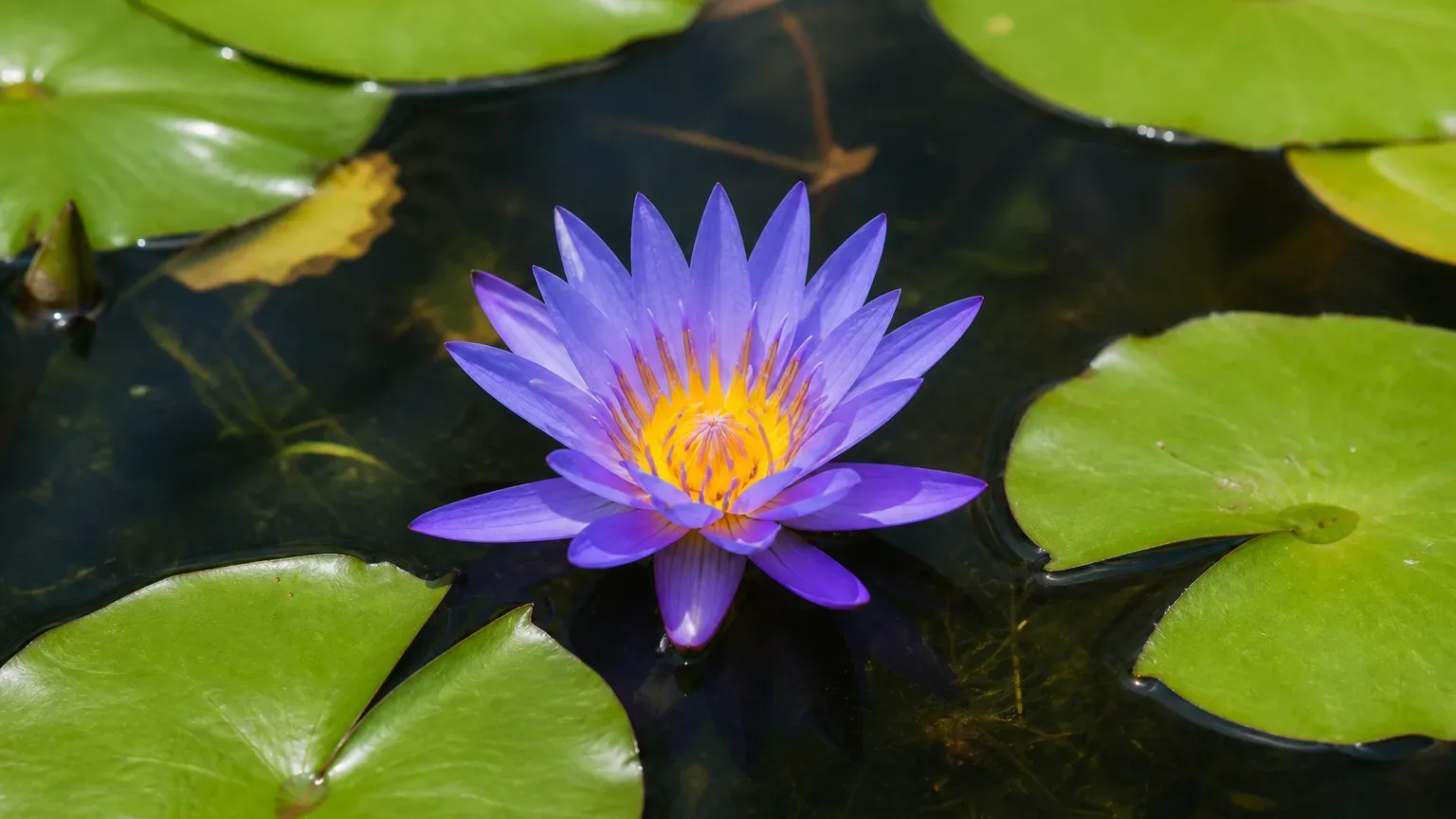
Water Lily Light Requirements for Strong Blooms
Water Lily Light Requirements for Strong Blooms
Quick answer: give Water Lily at least 5–6 hours of direct sun
Give Nymphaea nouchali at least five to six hours of unobstructed direct sun at the water surface each day during active growth. More open-sky light is generally useful when the water stays warm and the pads are healthy. NC State Extension recommends at least five hours of sun for tropical day-blooming water lilies, while the Royal Horticultural Society says most water lilies need at least six hours per day when poor flowering is the concern.
Treat that range as a placement target, not a promise that sunlight alone will produce flowers. A shaded plant may still make pads, but sustained blooming also depends on warm water, a correctly positioned crown, suitable depth, space, and nutrition. If your plant has healthy leaves but no buds, record the hours of direct sun before adding fertilizer or disturbing its basket.
First confirm you have an aquatic Water Lily
This guide is for Nymphaea nouchali, an aquatic, tuberous water lily whose leaves normally float on the water. Kew recognizes it as an accepted species that grows primarily in a wet tropical biome, and the RHS lists the older name Nymphaea stellata as a synonym. It is rooted in submerged soil; it is not a loose floating aquarium plant.
Names such as “blue lotus,” “star lotus,” and “Neel Kamal” are used inconsistently in trade. Do not apply lotus advice to this plant: true lotus belongs to Nelumbo and normally carries many leaves above the water, whereas Nymphaea is a rooted aquatic with floating leaves. Clemson Extension explicitly separates Nymphaea water lilies from Asian lotus. Check the botanical label before deciding where to place the container.
How much light does Nymphaea nouchali need?
For reliable flowering, choose a site with full sun or the brightest open exposure available. The RHS growing guide advises full sun to promote flowering, and its species profile identifies Nymphaea as a submerged aquatic perennial with floating leaves and flowers at or above the surface. That growth form puts the pads in direct contact with outdoor light even though the tuber remains underwater.
Five hours is a useful minimum for tropical water lilies; six or more is a safer target when flowering matters. Bright open shade can maintain foliage, especially in a warm climate, but it commonly reduces the number and frequency of blooms. Avoid presenting “bright shade” as equivalent to full sun merely because the water looks bright to your eyes.
Count direct sun at the water surface
Measure the light where the pads float, not where you stand beside the pond. Note the first and last time direct sunlight reaches the water, then subtract periods when a parapet, tree, shade cloth, or neighboring building blocks the sun. Check at least twice on a clear day because a terrace tub that looks sunny at noon may be shaded for most of the morning and late afternoon.
Repeat the check in a different season. The sun angle changes, trees leaf out, and monsoon cloud can shorten useful direct exposure. A phone light meter can compare locations, but there is no single defensible lux reading that replaces hours of real outdoor sun for a large flowering water lily.
Choose the brightest practical pond or container position
A sunny pond, courtyard water garden, or broad terrace tub is usually a better home than an indoor bowl. Place it away from permanent roof overhangs and dense canopies, and allow the mature pads an open patch of water rather than burying them beneath taller marginal plants. UF/IFAS describes water lilies as pond plants whose leaves rise to the surface, so overhead shade directly affects the plant’s working leaf area.
Light is not the only placement variable. Water lilies also prefer calm water, away from fountains, cascades, and strong pump outlets. A bright but turbulent location can still perform poorly, so evaluate sun and water movement together before relocating the basket.
What partial shade changes
Partial shade is a compromise, not an automatic failure. A Nymphaea nouchali that gets several hours of direct morning sun may produce serviceable pads and occasional flowers, but expect weaker flowering than in an open six-hour site. Shade-tolerant named tropical cultivars exist—NC State lists some cultivars as tolerant of partial shade—but that does not establish the same tolerance for every plant sold as Nymphaea nouchali.
Observe the source of shade. A short period of late-afternoon shade in a very hot, reflective courtyard is different from all-day tree shade. Floating competitors also cast shade: thin excess duckweed or overcrowded pads so new Nymphaea leaves can reach open light without stripping the whole pond bare.
Direct sun is usually an asset, not a problem
Healthy water-lily pads are adapted to sit at the exposed water surface. Full sun is therefore the default recommendation for flowering rather than something to filter automatically. UF/IFAS notes that the water-lily cultivar ‘Attraction’ performs in full sun; cultivar evidence is not species proof, but it supports the broader horticultural pattern across cultivated Nymphaea.
Do not confuse an old pad’s normal decline, insect feeding, leaf spot, or chemical splash with sunburn. Sun injury is more plausible after a sudden move from protected nursery conditions into intense exposure, especially when a shallow dark container overheats. Keep the plant stable and judge the new pads formed in its current position, not only the nursery leaves that arrived with it.
Handle extreme reflected heat without moving into deep shade
On a rooftop or stone terrace, reflected heat can warm a small container rapidly. The first response is not to move the water lily into a dim room. Use a larger water volume, maintain a stable water level, and if necessary provide limited late-afternoon relief while preserving direct morning and midday sun.
Warmth and light normally work together for this tropical species. The RHS says tropical water lilies need water of at least 21°C during summer growth, while NC State recommends temperatures above 70°F (about 21°C). The practical risk in India is usually an undersized container heating and evaporating quickly, not an established pond-grown leaf receiving ordinary outdoor sun.
Can a Water Lily grow indoors under lights?
An indoor decorative bowl beside a window is unlikely to support a mature, repeatedly flowering Nymphaea nouchali. The plant needs substantial water volume, rooted aquatic soil, room for floating pads, warm water, and high light across a broad surface. A pane of glass, balcony roof, and distance from the window can reduce exposure even when the room feels bright.
A powerful horticultural fixture can keep young or overwintered material growing, but it is an equipment-intensive substitute for a sunny pond. The lamp must illuminate the entire pad area without overheating the leaves or water, and the setup needs electrical protection appropriate for use near water. If you cannot provide that safely, use grow lights only as temporary support and move the plant outdoors once conditions are warm.
Signs your Water Lily receives too little light
The most persuasive low-light pattern is continued leaf production with few or no flower buds, especially when the plant receives less than five hours of direct sun. New pads may be smaller, slower to replace old leaves, or stretch toward the brightest edge of the container. Growth can remain green enough to look “healthy,” which is why lack of flowers is often the first complaint.
These signs are not exclusive to shade. Excessive planting depth can delay leaves reaching the surface, crowding can push pads over one another, cool water can slow a tropical plant, and poor nutrition can reduce flowering. The NC State genus profile describes Nymphaea as rooted aquatic plants with floating leaves, so first make sure the leaves can actually float in open light before diagnosing the plant from color alone.
Signs of excess sun or heat stress
Suspect excess heat or abrupt sun exposure when newly exposed pads develop bleached or crisp patches soon after a move, while the water level is falling quickly and the container is unusually hot. Damage confined to old nursery leaves is less conclusive; watch whether new leaves emerge firm and evenly colored. Scattered spots, chewed areas, and holes call for a pest or disease check rather than an automatic shade treatment.
Protect the root zone by keeping the aquatic basket submerged at the correct depth and topping up evaporation losses. If damage continues on new pads, test a modest reduction in harsh late-afternoon exposure while retaining strong morning light. Change one variable at a time so you can tell whether the response came from shade, water depth, or temperature.
Troubleshoot leaves without flowers in the right order
When pads look acceptable but flowers do not appear, use a short diagnostic sequence:
- Log direct sun for three clear days. If the average falls below five hours, improve placement first.
- Check open surface space. Remove or divide crowding plants that cover the new pads.
- Confirm water depth and crown position. Leaves should reach and float on the surface without long-term struggle.
- Check water warmth and season. Tropical water lilies slow when conditions are cool or persistently cloudy.
- Review feeding and congestion last. Use the Water Lily fertilizer guide and repotting guide rather than adding soluble feed to the water.
This order prevents a common mistake: feeding a shaded plant harder. Fertilizer cannot replace light, and excess nutrients in open water can create a separate algae problem.
Adjust light through Indian seasons
In much of India, late winter and early spring are useful times to reassess placement before the strongest growth period. Give the plant the most open practical exposure as water warms. During very hot pre-monsoon weather, maintain depth and water volume; do not impose deep shade unless new pads show repeatable stress that cannot be controlled by stabilizing the container.
Monsoon brings a different problem: days may remain bright yet deliver little direct sun. Do not make major placement, depth, and feeding changes during every cloudy spell. Track performance over several weeks, keep nearby plants from shading the pads, and use the Water Lily watering guide to manage water level rather than treating rain as a lighting fix.
When to use this page vs other Water Lily guides
Use this page to choose exposure, count sun hours, assess shade, and separate low light from heat stress. For planting identity, mature spread, and the complete aquatic setup, start with the Water Lily overview. For the dense submerged growing medium and crown position that allow pads to reach light, use the Water Lily soil guide.
Light is only one part of flowering. If the plant has enough sun but its basket is crowded, consult Water Lily repotting. If you are dividing a healthy tuber rather than diagnosing poor flowering, follow the Water Lily propagation guide.
Related Water Lily guides
- Water Lily care overview — identify Nymphaea nouchali and plan the whole pond or container setup.
- Water Lily watering — maintain permanent submersion and stable depth through heat and rain.
- Water Lily soil — anchor the tuber in heavy aquatic loam without clouding the water.
- Water Lily fertilizer — feed a well-lit plant without dosing the open pond.
- Water Lily repotting — correct congestion when full sun no longer produces good flowering.
Conclusion
For Nymphaea nouchali, aim for at least five to six hours of direct outdoor sun at the floating pads, with warm, calm water and enough open surface space for new leaves. Partial shade may sustain foliage, but it is a poor first choice when flowers are the goal, and an ordinary bright room is not equivalent to a sunny pond.
If the plant is not flowering, measure direct sun before changing anything else. Improve exposure if it falls short, then check crowding, depth, warmth, and nutrition one at a time. That sequence is more reliable than guessing from leaf color or treating this aquatic water lily like a lotus or a terrestrial houseplant.