Water Lily Soil Guide for Nymphaea nouchali
Water Lily Soil Guide for Nymphaea nouchali
Water Lily Soil Guide for Nymphaea nouchali
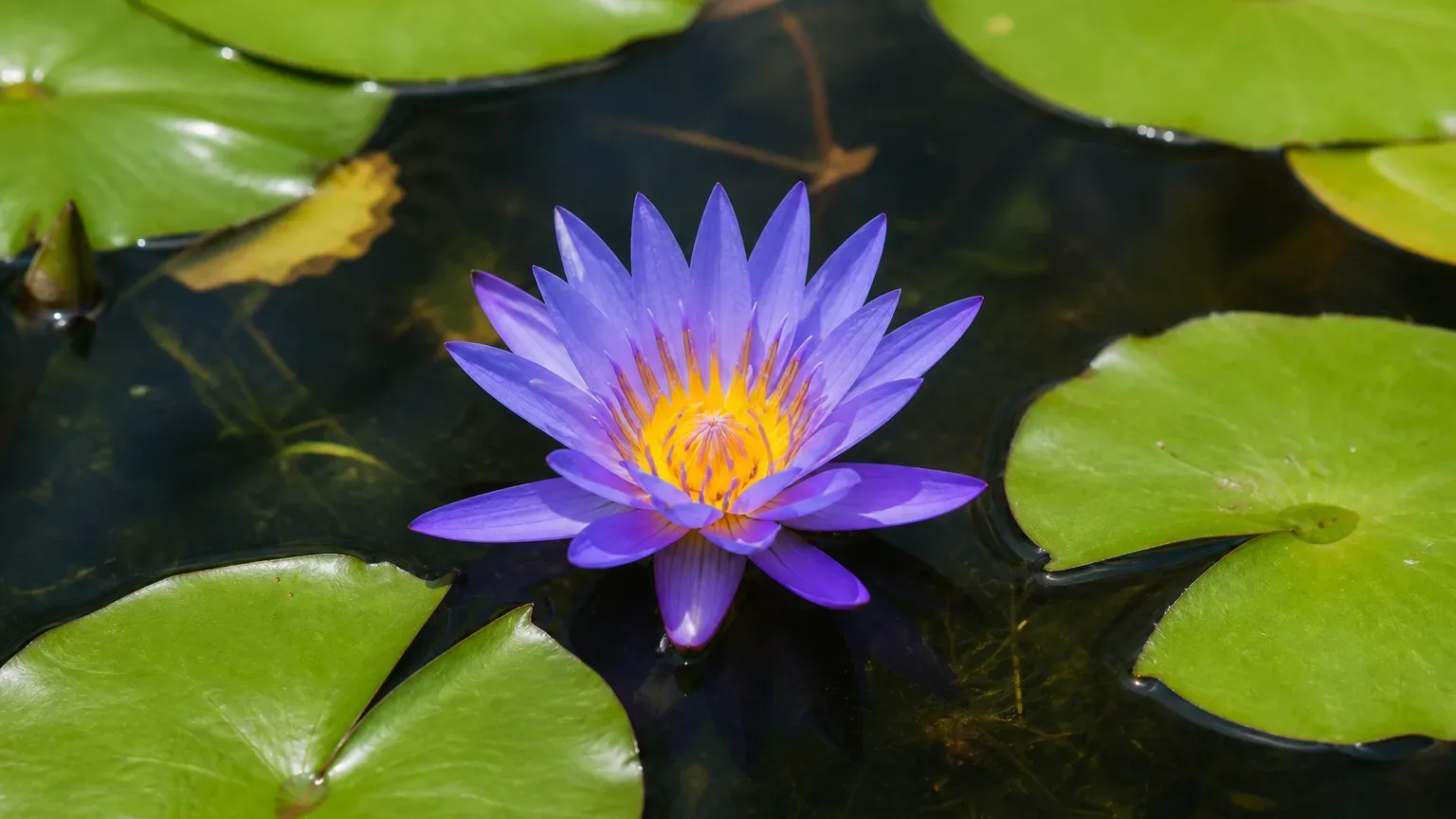
Nymphaea nouchali does not grow in a conventional flowerpot that merely happens to sit near water. It is a rooted aquatic perennial: its tuber and roots stay anchored in submerged sediment while its leaves rise to the surface. Kew classifies the species as a tuberous hydrogeophyte of wet tropical habitats, which is the key to choosing its planting medium.
For this plant, “soil” means dense aquatic loam held inside a submerged basket. It does not mean airy houseplant mix, bark-based compost, cocopeat, or a fast-draining blend.
Quick answer: the best water lily planting medium
Use heavy clay-based loam or a reputable peat-free aquatic compost in a wide aquatic basket. Set the Water Lily crown at the media surface, firm the soil around the roots, add a thin cap of washed pea gravel, and lower the basket gently into still water; this follows the RHS waterlily planting method.
The medium should feel cohesive when wet and remain in the basket. It needs enough mineral clay and silt to anchor the tuber and retain nutrients, but it should not be sticky, pure construction clay that sets into a solid block.
Why ordinary potting mix fails underwater
Terrestrial potting mixes are designed to hold both air and water around roots after excess water drains away. A submerged Water Lily basket never drains in that way. Bark, coco coir, perlite, leaf compost, and other light organic ingredients can float, escape through the basket, cloud the water, or decompose in a confined underwater root zone.
That is why generic “well-draining potting mix” advice is wrong for Nymphaea nouchali. The New York Botanical Garden’s waterlily guidance specifically favours loam or clay-loam and warns that peat can shift the medium too acidic. Avoid fresh manure, vermicompost, kitchen compost, potting soil with visible bark, and mixes containing white perlite granules.
The ideal medium for Nymphaea nouchali
The target is a fertile, fine-textured mineral loam. NC State Extension describes Nymphaea as preferring loamy soil around neutral pH in still or slow-moving water, while its tropical day-blooming profile recommends fertile loamy soil in a submerged container.
Density matters more than drainage. Water moves across the basket surface and through openings, but the media itself should not behave like a loose aquarium substrate. A dense root zone keeps the tuber stable when stalks pull upward toward the surface.
Ingredients that belong in the basket
A suitable basket can be filled with plain clay loam from an uncontaminated garden or with a labelled aquatic planting compost. If local soil is extremely sticky, blend in a modest amount of loamy topsoil so it can be worked around the roots; if it is loose and sandy, replace it rather than trying to bind it with compost.
Use washed pea gravel only as a top dressing, not as the entire rooting medium. Gravel can help hold fines down, but it does not provide the cohesive, nutrient-holding root zone that a tropical Water Lily needs. Do not add limestone chips merely to chase a pH number, and do not collect soil from roadsides, sprayed fields, polluted drains, or saline ground.
A practical texture test before planting
Moisten a handful and squeeze it. Suitable loam should form a firm ball that holds together when your hand opens, then break when pressed with a thumb. Soil that pours through your fingers is too sandy; soil that smears like pottery clay and dries into a hard brick is too clay-heavy.
For a second check, shake a sample with water in a clear jar and let it settle. Mineral particles should sink while the water gradually clears. A thick raft of floating fibres, bark, or foam indicates a terrestrial potting mix, not an aquatic medium.
A simple DIY water lily soil approach
Start with screened, untreated clay loam. Remove stones, roots, twigs, fertiliser granules, and visible organic debris, then wet the soil before filling the basket so dry dust does not billow into the pond. Do not sterilise it with household chemicals, and do not enrich it with a general compost recipe.
Fill the basket enough to support the tuber while leaving room below the rim for the gravel cap. Water Lily feeding is better handled with a labelled aquatic fertiliser tablet buried in the media, not by mixing loose fertiliser or manure throughout the soil; the RHS explains that buried tablets feed the plant rather than the open water.
When a packaged aquatic compost is safer
Choose packaged peat-free aquatic compost when you cannot verify the texture or contamination history of local soil. The word aquatic matters: ordinary bagged potting compost remains unsuitable even if its label says it retains moisture.
Check the ingredient panel rather than trusting a pond-themed picture. The media should be dense and low in buoyant material. A properly planted mesh basket may be lined to retain the media; BBC Gardeners’ World demonstrates lining an aquatic basket, adding aquatic soil, planting the rhizome, and finishing with gravel.
Does water lily soil need a particular pH?
Aim for a near-neutral root zone, approximately pH 6.5–7.5, rather than repeatedly adjusting the whole pond. This working range aligns with the neutral-soil preference in the NC State Nymphaea profile, but source water, fish stocking, stonework, and accumulated organic matter can all influence pond chemistry.
Test pH when growth remains poor despite warm water, strong sun, and correct planting—not as a daily ritual. Sudden chemical correction can destabilise a container pond. If readings are consistently far outside the target, first check the water source and any limestone, concrete, peat, or decomposing material in the setup.
Choose a basket that holds media and roots
Use a broad aquatic basket with enough horizontal room for the tuber and new roots. Mesh baskets are easy to lift and allow exchange with pond water, but fine media may need a hessian or purpose-made liner. Solid tubs can also work if they are stable, food-safe, and large enough, though they are heavier to retrieve.
The basket is a management tool, not a drainage pot. The RHS notes that baskets limit unchecked spread and make the plant easier to lift for care. A tiny nursery pot may establish briefly but becomes congested sooner.
How to plant the tuber and crown
- Add pre-moistened heavy aquatic loam to the basket and make a shallow planting hollow.
- Lay the roots into the media without sharply folding them. Position the tuber securely while keeping the growing crown at the soil surface.
- Press the loam around the roots and tuber so no large air pockets remain, but do not bury or compact the crown.
- Add the washed gravel cap, water the basket gently, and lower it slowly so trapped air and loose fines can escape without erupting.
- Start with water shallow enough for new pads to reach and float, then increase depth as stalks lengthen. See the Water Lily watering guide for stable-depth care after planting.
The accepted horticultural profile for Nymphaea nouchali identifies it as a submerged aquatic perennial with floating leaves. The crown therefore belongs in the media at the pond bottom while the leaves, not the whole plant, occupy the surface.
Add a gravel cap without smothering growth
Rinse pea-sized gravel until the rinse water is clear, then spread a thin, even layer over exposed loam. Keep gravel away from the crown and emerging shoots. A deep layer can trap the growing point, while sharp stone can damage tender stalks.
Gravel is especially useful in mesh baskets, fish ponds, and terrace tubs disturbed by topping up. It cannot rescue a basket filled with floating potting mix; if organics continue escaping from below, repot into the correct mineral medium.
Warning signs the planting medium is wrong
Persistent brown clouds after every disturbance, floating bark or perlite, a tuber that will not stay anchored, and soil streaming from basket openings all point to media that is too loose. Lift the basket carefully and repot rather than adding more gravel indefinitely.
A sour or sewage-like smell, black mush around the crown, and soft collapsing stalk bases suggest decaying organic media or crown damage. Remove affected tissue only if it is clearly dead, replace decomposing mix with clean aquatic loam, and review crown placement. If the plant is firm but has pale growth or few flowers, check light and feeding before blaming soil; use the Water Lily light guide and fertilizer guide to separate those causes.
Diagnose cloudy water before changing everything
A faint haze immediately after lowering a newly planted basket can be simple mineral dust and may settle. Ongoing clouding after water changes, rainfall, fish activity, or moving the basket means fines are still escaping or runoff is entering the pond.
First stop moving the basket, confirm that its liner is intact, and inspect the gravel cap. If clear water returns and stays clear, leave the roots undisturbed. If clouds repeatedly return from the basket, repot; if they enter from outside during rain, divert runoff and keep garden soil from washing into the pond.
Soil care in India and other tropical climates
Warm conditions can keep Nymphaea nouchali actively growing for a long season, so roots may fill a basket faster than they would in a cool pond. Inspect the plant when pads crowd above one another, the basket deforms, or flowering declines despite suitable sun and feeding. The Water Lily repotting guide explains when to refresh media or divide a congested plant.
During monsoon weather, prevent overflowing terrace containers from washing the gravel cap and loam away. After intense rain, check that the crown remains exposed at media level and the basket has not shifted. In hot dry periods, top up gently against the container wall rather than directing a hose at the basket.
When to use this page vs other Water Lily guides
Use this soil guide to choose planting media, test loam, set the crown, cap the basket, and troubleshoot escaping soil. Use the Water Lily overview for the complete growing setup, the watering guide for submersion and water-level decisions, and the fertilizer guide for feeding after the basket is correctly planted.
If you are lifting an established tuber, follow the repotting guide before disturbing it. For making additional plants from a healthy tuber or rhizome, use the Water Lily propagation guide rather than treating division as a soil correction.
Related Water Lily guides
- Water Lily care overview — sun, warmth, still water, and the whole care system.
- Water Lily watering — stable submersion, depth, and topping up.
- Water Lily fertilizer — aquatic tablets and nutrient troubleshooting.
- Water Lily repotting — lifting, dividing, and renewing a crowded basket.
- Water Lily propagation — starting new plants from divisions or seed.
Conclusion
The best Water Lily soil is dense aquatic planting media: heavy clay-based loam or a genuine peat-free aquatic compost, held in a broad basket and capped lightly with washed gravel. Keep the crown at the media surface and reject generic potting mixes that float or decay underwater.
If the water stays clear, the tuber remains anchored, and firm new pads reach the surface, the root zone is doing its job. When problems appear, diagnose media texture, crown position, basket containment, light, and feeding separately instead of replacing every part of the setup at once.