Water Lily Fertilizer Guide for Healthy Pond Growth
Water Lily Fertilizer Guide for Healthy Pond Growth
Water Lily Fertilizer Guide for Healthy Pond Growth
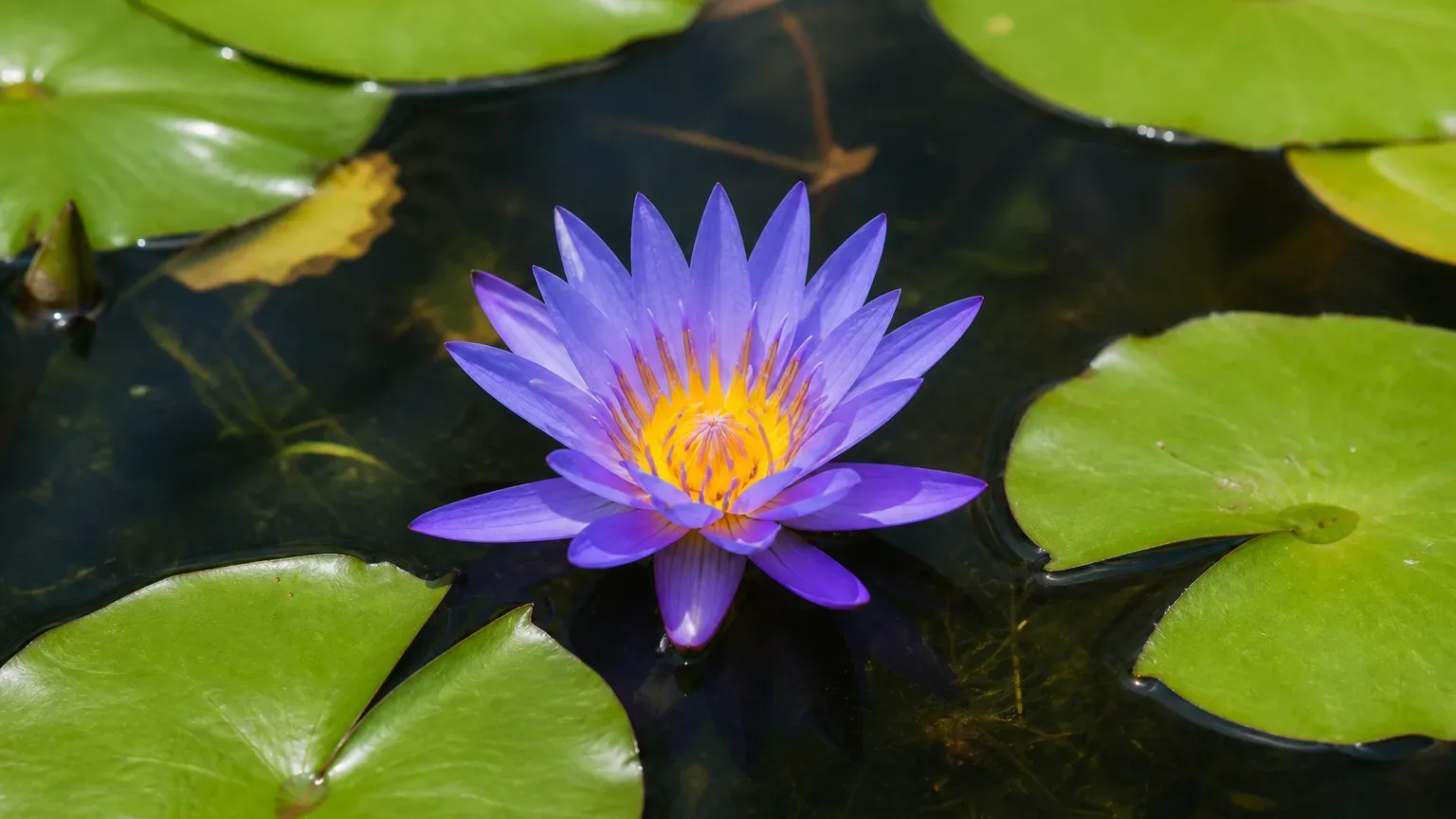
Fertilizing a water lily is a root-zone job, not a matter of pouring plant food into pond water. For Nymphaea nouchali, the blue-flowered tropical water lily also sold as Neel Kamal, the safest practical method is to bury a slow-release aquatic plant tablet in the heavy soil of its basket while the plant is actively growing.
That identity matters. Kew accepts Nymphaea nouchali as a species native across a broad tropical and subtropical Asian range and places it in the wet tropical biome. It is a rooted aquatic plant with floating leaves—not a terrestrial lily, an aquarium stem plant, or a true lotus in the genus Nelumbo.
The quick answer
Use a slow-release fertilizer tablet labelled for water lilies or pond plants. Push it fully into the basket soil, away from the crown, and close the hole so the fertilizer stays around the roots rather than escaping into the water. The Royal Horticultural Society likewise advises pushing aquatic feed tablets into the compost so they feed the plant rather than the water.
Feed only during warm, vigorous growth, starting after established plants are producing healthy new pads. Product strengths vary, so use the tablet count and repeat interval on the label rather than copying a dose from an unrelated brand. If the plant is shaded, newly disturbed, planted too deep, or crowded, correct that issue before assuming more fertilizer will restore flowering.
Why water-lily feeding is not lotus feeding
Water lily and lotus are often confused in India because names such as “blue lotus” are used loosely. A water lily keeps its tuber or rhizome rooted in submerged soil and usually carries pads on the water surface; the RHS profile identifies N. nouchali as an aquatic perennial in Nymphaeaceae. Lotus belongs to a different family and normally raises larger leaves above the water.
Both may be sold with aquatic fertilizer recommendations, but that does not make their dose, container geometry, or growth cycle interchangeable. Follow a water-lily-specific product label and base the amount on the actual basket size. Do not use a lotus article, lotus pot dosage, or agricultural pond-fertilization program as the feeding plan for this species.
What fertilizer to use
Choose a purpose-made aquatic plant fertilizer whose label explicitly includes water lilies. A controlled or slow-release tablet keeps nutrients concentrated in the dense basket medium, where the rooted plant can access them. NC State Extension describes tropical Nymphaea as container-grown aquatics that prefer fertile loam and recommends an appropriate water-lily fertilizer used to label directions.
Avoid ordinary liquid houseplant feed, lawn fertilizer, loose granular fertilizer, fresh manure, and compost tea in the pond. These products are difficult to confine underwater, and a dose released directly into the water is not equivalent to feeding the basket. If fish, turtles, snails, or other animals share the water, use only a product explicitly suitable for that setting and keep every tablet inaccessible beneath the soil.
Slow-release aquatic tablets are the practical default
Tablets are easier to position than loose fertilizer and make it possible to close the soil around the dose. Insert each tablet several centimetres from the crown or growing point and far enough below the surface that it cannot pop out. A top layer of washed gravel helps hold dense aquatic media in place; the RHS aquatic-planting guidance recommends loam-based aquatic compost and a gravel surface for submerged baskets.
Do not leave a tablet resting on the soil, tuck it into the exposed crown, or drop it beside the basket. Those shortcuts increase nutrient contact with open water without improving root-zone placement. In a shallow patio tub, where the water volume is small, careful burial matters even more because a leak is less diluted.
Do you need a particular NPK ratio?
There is no defensible universal NPK number for every N. nouchali basket. Fertilizer analyses, tablet weights, release coatings, container sizes, media fertility, temperature, and growth rate all differ. The RHS explains that nitrogen, phosphorus, and potassium are the three nutrients generally required in the largest quantities, while plants also need secondary and trace nutrients.
For a home pond or tub, product suitability and placement are more useful decision points than chasing a “high phosphorus” slogan. Choose a complete aquatic formulation from a traceable manufacturer, then follow its dose. More phosphorus is not a substitute for direct sun, warm water, adequate leaf access to the surface, or space in the basket.
When to feed a tropical water lily
Feed according to active growth, not simply because a month has arrived. A tropical day-blooming water lily performs best in warm conditions; NC State notes temperatures above 70°F (about 21°C) and at least five hours of sun for this group in its tropical water-lily guidance. Healthy expanding pads are a better signal to begin feeding than an inactive tuber in cool water.
For an established plant, a dose at the start of strong warm-season growth is reasonable. Repeat only at the label interval while growth remains vigorous. Stop when new growth slows because of cool weather, seasonal dormancy, illness, or a major change in water conditions; fertilizer cannot force an inactive root system to use nutrients safely.
Newly planted and recently divided plants
Freshly potted water lilies may be fed at planting if the aquatic fertilizer label allows it, and the RHS includes planting and division among suitable times for tablets. However, a weak, damaged, or partly rotted tuber should first establish clean roots and leaves. Feeding decaying tissue does not repair it and can complicate water quality.
After division, keep the crown correctly positioned and start the basket shallow enough for new leaves to reach the surface. The broader Nymphaea profile from NC State describes water lilies as rooted aquatics with floating leaves, so depth and leaf access remain basic constraints even when nutrients are available. Wait for firm new growth if the division is stressed.
Timing in India and other warm climates
In much of India, feed when warming water and lengthening bright days produce repeated new pads, commonly from late winter or spring into the warm growing period. In frost-free southern or coastal conditions, growth may continue longer, but a calendar-only monthly dose is still a poor rule. Observe the plant and obey the product’s minimum reapplication interval.
During heavy monsoon cloud, flooding, or prolonged turbid water, reassess before feeding. If growth and flowering have slowed because sunlight has dropped, extra fertilizer will not replace light. Secure the basket after water-level changes, remove decaying leaves, and resume only when the plant is again expanding strongly.
A safe step-by-step feeding method
- Check the diagnosis. Confirm that the plant has warm water, direct sun, floating pads, sound tissue, and room to grow.
- Read the entire label. Verify that the product is intended for water lilies and compatible with any pond animals.
- Lift only if safe. If you can reach the basket securely, bring it just high enough to work without exposing the crown for long. Otherwise use the manufacturer’s insertion tool.
- Make a narrow hole. Place it in the soil away from the crown and major exposed rhizome tissue.
- Insert the label-directed dose. Push the tablet deeply into the root zone.
- Close the hole firmly. Replace displaced soil and gravel so the tablet cannot escape.
- Return the basket gently. Avoid stirring soil into the water, and watch water clarity and plant response over the following days.
Water lilies prefer calm water, and the RHS recommends positioning them away from fountains, pumps, and cascades. Review the Water Lily watering guide if the basket is exposed by evaporation or fluctuating water depth before feeding.
How many tablets should you use?
Use the product label’s basket-size table. “One tablet per plant” is not a safe universal instruction because a small tablet in a two-litre dwarf basket and a large tablet in a ten-litre basket are different doses. When the label gives a range, start at the lower end for a recently potted specimen, a small water volume, or a plant recovering from stress.
Record the date and amount rather than guessing later. Re-dose only after the stated interval and only if active growth continues. Never double the next application because one was missed; underwater fertilizer release does not become predictable just because the calendar is behind.
Diagnose before adding fertilizer
Poor flowering is not proof of hunger. The RHS lists low nutrients as one possible cause of poor flowering or early yellowing, but also directs growers to check for at least six hours of sun. A shaded water lily may make broad, sparse pads while producing few flowers even in fertile soil.
Run through the constraints in order: sun, warm water, correct depth, healthy crown, adequate basket space, then feeding history. Use the Water Lily light guide for a plant that receives bright shade rather than direct sun, and the Water Lily repotting guide when shoots crowd the basket edge or pads pile above one another.
Signs that can support a nutrient-shortage diagnosis
Nutrient shortage becomes more plausible when an established plant is warm, sunny, correctly submerged, not congested, and still produces progressively smaller or prematurely pale leaves after the previous fertilizer’s release window has passed. Reduced flowering alongside otherwise correct conditions adds weight to the diagnosis. It does not identify a specific missing element on its own.
Normal old-pad yellowing is not the same as whole-plant decline. Remove spent foliage before it decays, check the date of the last dose, and apply only the next label-directed amount. If the plant sits in loose or exhausted medium, follow the Water Lily soil guide rather than repeatedly compensating with tablets.
Signs of excess fertilizer or nutrient leakage
A sudden algae increase, cloudy or green water, fertilizer granules at the basket surface, or a tablet floating free indicates that nutrients may have escaped the root zone. Rapid soft growth followed by tissue damage can also justify stopping, although these symptoms are not specific enough to prove fertilizer injury. Remove exposed product if you can do so safely and do not add another dose.
Decaying leaves and flowers themselves raise nutrients in pond water, which the RHS notes can encourage algae and reduce oxygen available to pond life in its pond-care guidance. Remove dead material, improve the physical containment of basket soil, and seek pond-specific advice if fish gasp, water develops an odour, or an animal-safe product was not used.
When not to fertilize
Do not feed a dormant tuber, a crown with soft blackened tissue, a plant without established leaves, or a basket sitting in cold water. Do not fertilize immediately to “fix” shade, excessive planting depth, fountain turbulence, pest damage, or crowding. Resolve the limiting condition first.
Also pause when algae is already severe, pond animals appear distressed, the product label is missing, or you cannot identify what was previously applied. Fertilizer is optional during diagnosis; protecting water quality is not. For a plant that needs division or a fresh basket, use the Water Lily propagation guide or repotting guide and restart feeding after sound growth resumes.
When to use this page vs other Water Lily guides
Use this page to choose, time, and place aquatic fertilizer and to decide whether feeding is justified. Use the Water Lily overview for species identity and the complete care system. The watering page covers stable submersion and container top-ups, while the light page helps diagnose low bloom production before you reach for tablets.
The soil page explains dense aquatic media and basket setup; the repotting page covers congestion and exhausted media. For multiplying a healthy tuber or rhizome, use propagation guidance. Fertilizer works only when these physical conditions already let the plant grow.
Related Water Lily guides
- Water Lily overview — identify Nymphaea nouchali and coordinate its complete pond care.
- Water Lily light guide — check whether inadequate direct sun is limiting flowering.
- Water Lily watering guide — maintain safe water depth around the planted basket.
- Water Lily soil guide — choose heavy aquatic media that holds roots and fertilizer.
- Water Lily repotting guide — correct basket congestion and depleted growing medium.
Conclusion
The best water lily fertilizer plan is deliberately contained: a purpose-made slow-release aquatic tablet, buried in the basket soil, applied at the label rate during strong warm-season growth. For Nymphaea nouchali, sunlight, warmth, sound roots, suitable depth, and basket space come before repeat feeding.
When flowering drops, diagnose those conditions before adding nutrients. That sequence prevents a common mistake—feeding the pond while the water lily’s real constraint remains unchanged—and gives this tropical aquatic plant a better chance to turn a measured root-zone dose into healthy pads and flowers.