12 Types of Wildflowers for Summer Gardens
Find summer wildflowers for sun, shade, dry soil, wet spots, pollinators, and cut flowers, with native-status cautions and practical planting advice.
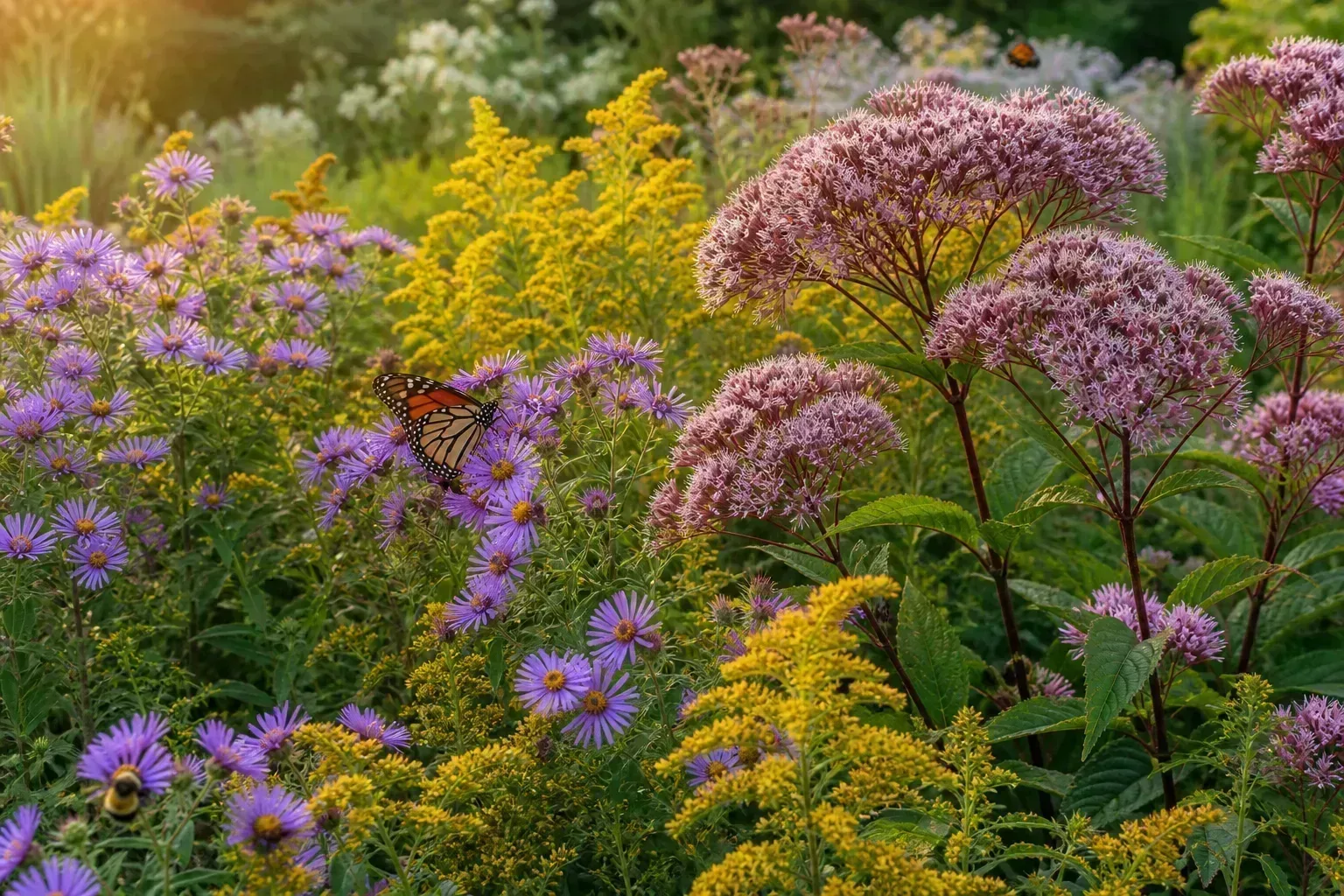
Summer wildflowers are not one style of plant. Some are prairie perennials that get better after their roots settle in; some are quick annuals that fill a bare bed in one season; some belong beside a pond, while others sulk in wet clay. The best choice depends less on a flower’s color than on whether its roots will experience the conditions they evolved to handle.
The 12 types below include dependable native wildflowers, useful annuals, and a few introduced plants that need a local invasiveness check before you plant them. Use the botanical names when buying seed or nursery plants because common names can cover several different species. Bloom timing also shifts with latitude, rainfall, and whether you are growing a species or a compact cultivar.
What Counts as a Wildflower?
A wildflower is generally a flowering plant that grows without deliberate cultivation in its native or naturalized habitat. In a garden, the word is used more broadly for species and cultivars that create a naturalistic look: open flowers, varied heights, seed heads, and a less rigid planting pattern than a formal border.
That definition matters because “wildflower” does not automatically mean native, low-maintenance, or safe to release into the landscape. Purple coneflower and New England aster are native in parts of North America, while Queen Anne’s lace, chicory, oxeye daisy, and wild cosmos were introduced to much of the United States. A plant can be attractive and useful in one region yet spread aggressively in another.
Before ordering seed, check your state or province’s invasive-plant list and look for regionally native seed from a supplier that identifies the collection area. Avoid a bargain packet that lists only “wildflower mix” with no species names. You cannot evaluate height, bloom period, or spread from a mystery blend.
How to Choose Wildflowers for Your Site
Start by observing the space for a full day. Mark the hours of direct sun, where rain collects, how quickly the soil dries after a storm, and whether a fence or tree creates late-afternoon shade. Then decide whether the bed is meant to be seen from a window, visited by pollinators, cut for bouquets, or left as a small habitat patch. Those goals change the right plant list.
Hardiness zone is a useful first filter, and Good Housekeeping’s summer-flower guide likewise recommends checking it before buying. Treat the zone as a starting point rather than a guarantee: drainage, summer heat, winter moisture, and the plant’s local status can matter just as much.
| Garden condition or goal | Strong starting choices | Watch-outs |
|---|---|---|
| Hot, dry, sharply drained soil | Blanket flower, plains coreopsis, coneflower | New plants still need regular water while rooting |
| Average sunny border | Black-eyed Susan, coneflower, New England aster | Give tall plants room and avoid over-rich fertilizer |
| Moist soil or rain-garden edge | Cardinal flower, New England aster | Cardinal flower does not tolerate drought |
| Pond or water garden | White water lily | Choose a cultivar suited to pond depth and control spread |
| Fast annual color | Bachelor buttons, wild cosmos | Reseeding can move plants beyond the original bed |
| Late-season color | New England aster, chicory, coneflower | Bloom dates vary substantially by climate |
Match moisture before color
Moisture is the quickest way to eliminate the wrong plant. A drought-tolerant species may survive a dry summer once established, but it can still rot in a low, poorly drained bed. Conversely, cardinal flower may look perfect in a seed catalog and fail in a hot, dry border because its roots need consistent moisture.
Do not “improve” every site by adding compost. A little compost can help a sandy soil hold moisture, but adding rich organic matter to a naturally lean, sharply drained site can make lanky growth and reduce the dry-soil advantage you wanted. For a stubborn wet spot, improve drainage or choose a moisture-loving plant rather than trying to force a prairie species to behave like a bog plant.
A garden that looks full in June can become a wall of brown stems by August if every plant has the same bloom window. Combine early-summer flowers with reliable midsummer color and at least one late-season anchor. A practical combination might use blanket flower and plains coreopsis in front, coneflower and black-eyed Susan through the middle, and New England aster toward the back.
Use drifts of three or more plants instead of scattering one of everything. Repetition makes an informal bed look designed, and it gives pollinators a larger target. Keep the tallest plants where they will not shade shorter sun lovers, and leave a narrow, mown edge or path so the planting has a clear boundary.
1. New England Aster
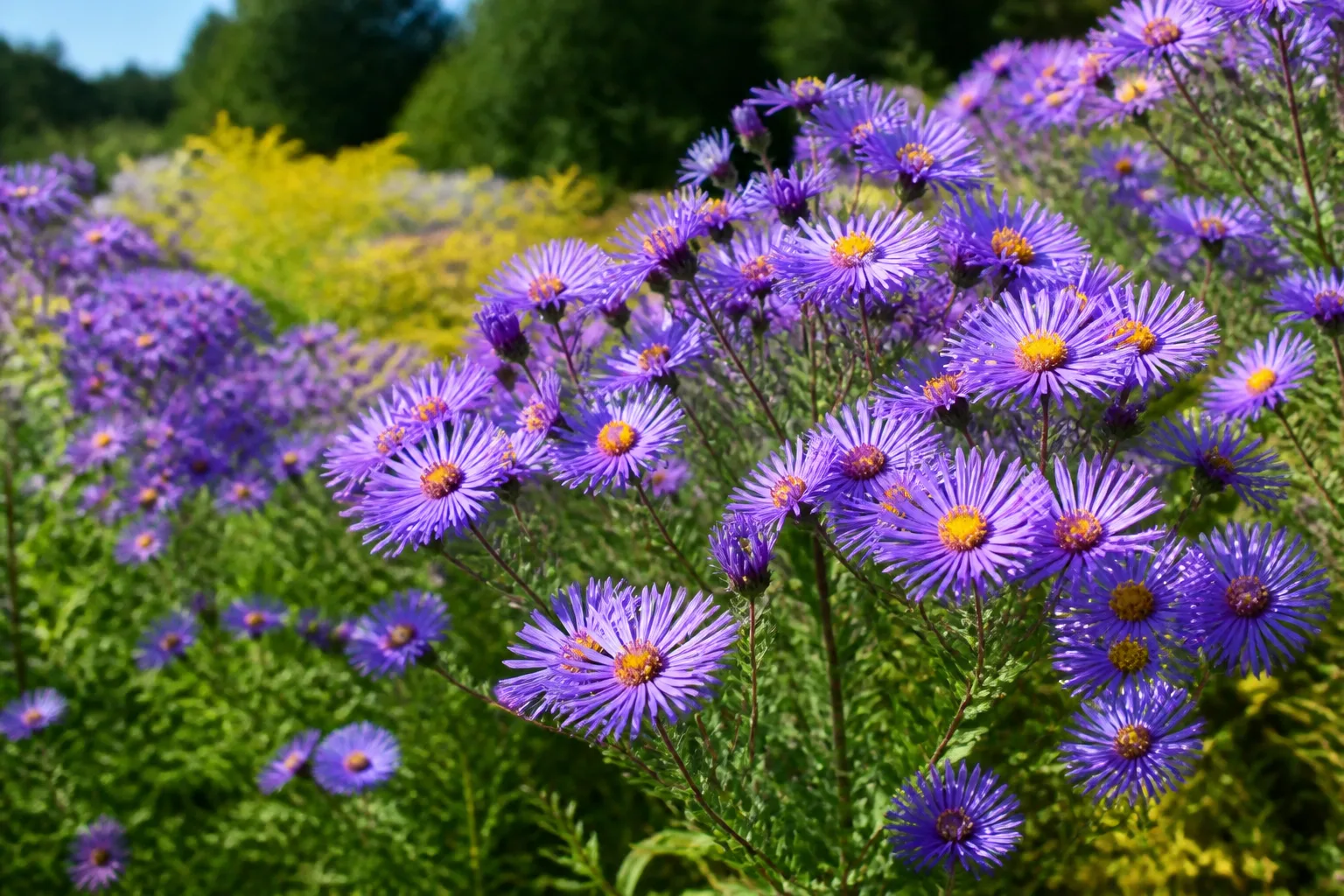
New England aster (Symphyotrichum novae-angliae) is a strong choice when you want a tall, late-summer-to-fall perennial that keeps a garden colorful after many early flowers fade. Its daisy-like rays range from purple and pink to white around yellow centers, and its sturdy stems can make a dramatic back layer in a meadow-style border.
Give it full sun and soil that stays moderately moist but drains after heavy rain. Established plants can tolerate short dry spells, but a newly divided or transplanted aster should not be left to wilt repeatedly. In rich, wet shade, it may flop or develop more foliage than flowers, so morning sun and good air movement are useful.
New England aster is particularly valuable as a late-season nectar plant, but it is not a tiny edging perennial. Check the mature height of the species or cultivar, space it so air can move through the stems, and pinch or support it early in the season if your garden is exposed to wind. Divide crowded clumps in spring if the center thins or flowering declines.
2. Blanket Flower
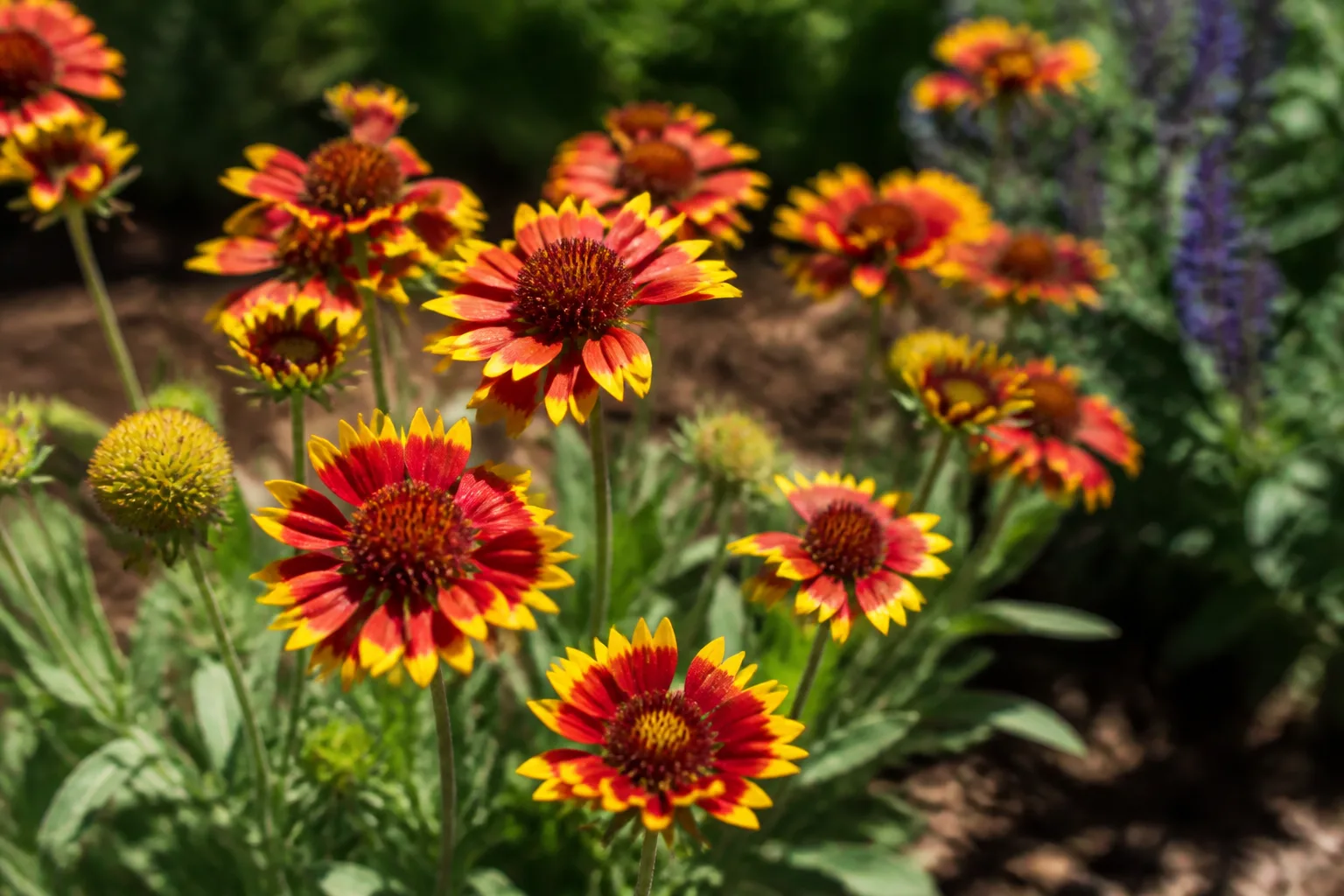
Blanket flower (Gaillardia aristata) brings warm red, orange, yellow, and peach tones to hot, sunny spaces. The flowers have the kind of bold, two-tone pattern that reads from a distance, while the plant’s tolerance for dry conditions makes it a practical candidate for a curb strip, gravelly border, or slope that is hard to irrigate.
Plant it in full sun and sharply drained soil. Heavy clay is a bigger problem than poor fertility; waterlogged crowns decline even when the flowers look thirsty. Let the top layer dry between deep waterings once plants are established, and avoid frequent shallow sprinkling that keeps the crown damp without encouraging deep roots.
Blanket flower can flower for a long stretch if you remove some faded blooms, but leaving a few seed heads gives birds food and allows controlled reseeding. Deadhead along paths and in formal areas; leave selected stems at the back of a habitat bed. Cut the plant back after frost only if you need a tidier look, not because the dormant stems are useless.
3. Queen Anne’s Lace
Queen Anne’s lace (Daucus carota) has airy, flat-topped white flower clusters that soften the outline of a sunny border and make excellent filler for informal bouquets. It is related to the cultivated carrot, and its foliage and bruised root can have a carrot-like scent. A tiny dark floret in some flower heads is a memorable identification detail, but it is not present on every plant.
This biennial or short-lived plant forms a deep taproot and often appears in disturbed ground, roadsides, and open fields. It prefers sun and reasonably well-drained soil, but the more important gardening question is whether it belongs in your area. Queen Anne’s lace is invasive or regulated in some regions, and its ability to self-seed makes a few plants quickly become a colony.
Do not collect roadside seed or scatter it into a natural area. If your local plant authority lists it as invasive, choose a native alternative with a similar umbrella-shaped bloom, such as a regionally appropriate Zizia or Angelica species. If it is permitted and you grow it in a contained garden, remove seed heads before they mature and wear gloves when handling the foliage if your skin is sensitive.
4. Bachelor Buttons
Bachelor buttons usually refers to cornflower (Centaurea cyanus), an annual with intensely blue flowers, though the name is also used for perennial mountain cornflower (Centaurea montana). Treat them as separate plants when choosing seed. The annual is the quicker way to fill a summer bed, while the perennial forms a returning clump in suitable climates.
Cornflower thrives in full sun and average, well-drained soil. Sow it directly after the soil has warmed, or make successive sowings a few weeks apart for a longer run of fresh flowers. It tolerates some drought after establishment, but flowering and stem quality improve when plants do not endure repeated severe wilting.
The blue flowers are excellent in cottage-garden drifts and informal bouquets. Thin crowded seedlings so stems do not become weak and tangled. If you want self-sown plants next year, leave a few heads to dry; if you want the bed to stay in one defined area, cut them before the seed drops. Check regional status before planting large amounts because some introduced Centaurea species are invasive even though cornflower itself is often grown as an ornamental annual.
5. Plains Coreopsis
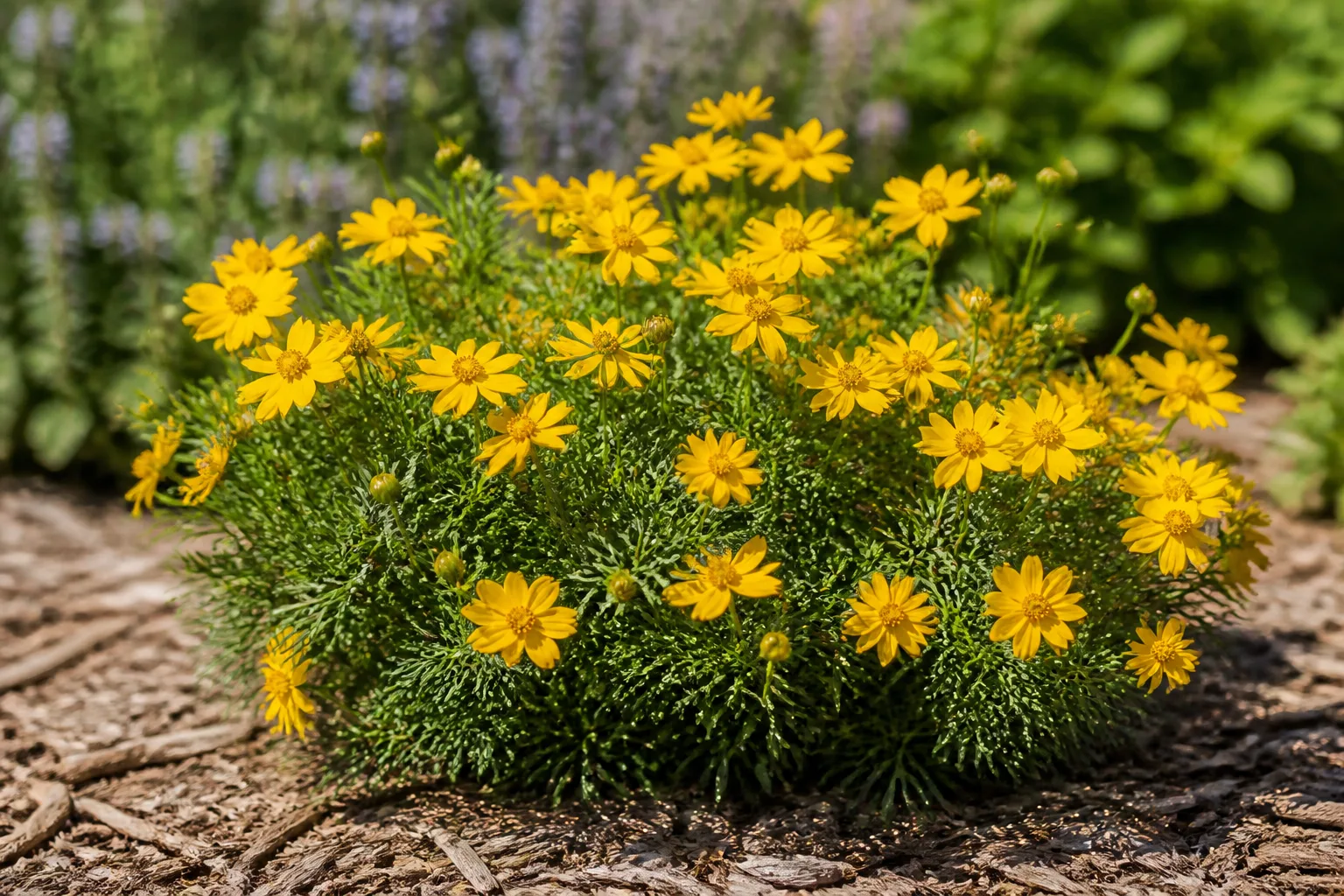
Plains coreopsis (Coreopsis tinctoria) is one of the best options in this list for a bright, low-input annual display. Its yellow petals usually carry a red-brown center or red markings, and its fine foliage creates a light texture rather than a heavy mass. NC State Extension describes it as a long-blooming, heat- and drought-tolerant wildflower for sunny, well-drained sites. NC State Extension
Sow it where the soil is light or only moderately fertile; excess richness can produce floppy stems. The plant performs well in massed patches, and a little crowding can help the planting look intentional. Water lightly but deeply enough to establish roots, then let the surface dry rather than keeping the bed constantly wet.
Plains coreopsis readily self-seeds into open soil. That is a benefit when you want a changing annual meadow and a nuisance when it reaches gravel paths or neighboring beds. Remove faded flowers to reduce volunteer seedlings and encourage more blooms, or reserve one clearly marked patch where the seed can fall without becoming a maintenance problem.
6. Purple Coneflower
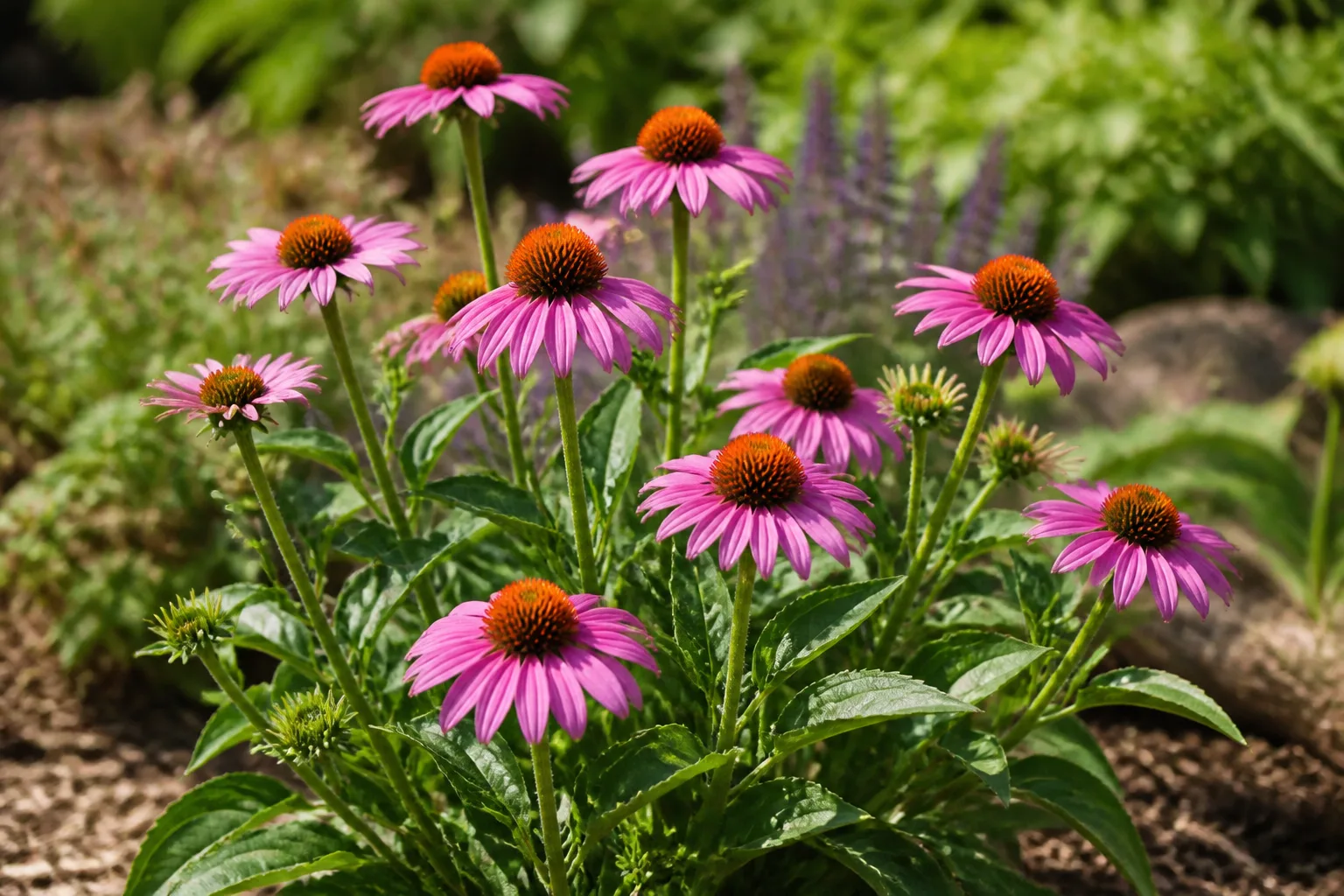
Purple coneflower (Echinacea purpurea) is a durable perennial for the middle or back of a summer border. Its pink-purple rays hang around a raised orange-brown cone, creating a strong silhouette that stays interesting after the petals fall. NC State Extension notes that it is native to central and eastern North America, blooms from early summer into mid-fall, tolerates drought once established, and supports pollinators and seed-eating birds. NC State Extension
Plant it in full sun for the strongest stems, though it can take light shade. Ordinary, well-drained soil is usually enough; do not bury the crown deeply or keep it in a wet pocket. Water transplants regularly during their first season, then reduce irrigation as roots develop. Too much fertilizer often makes the plant tall and soft rather than more floriferous.
Deadheading can encourage another flush, but do not remove every flower head. The dry cones provide fall and winter structure and food for birds. For pollinator habitat, leave healthy stems standing through winter and cut them back gradually in spring rather than clearing the bed immediately after the first frost.
7. Cardinal Flower
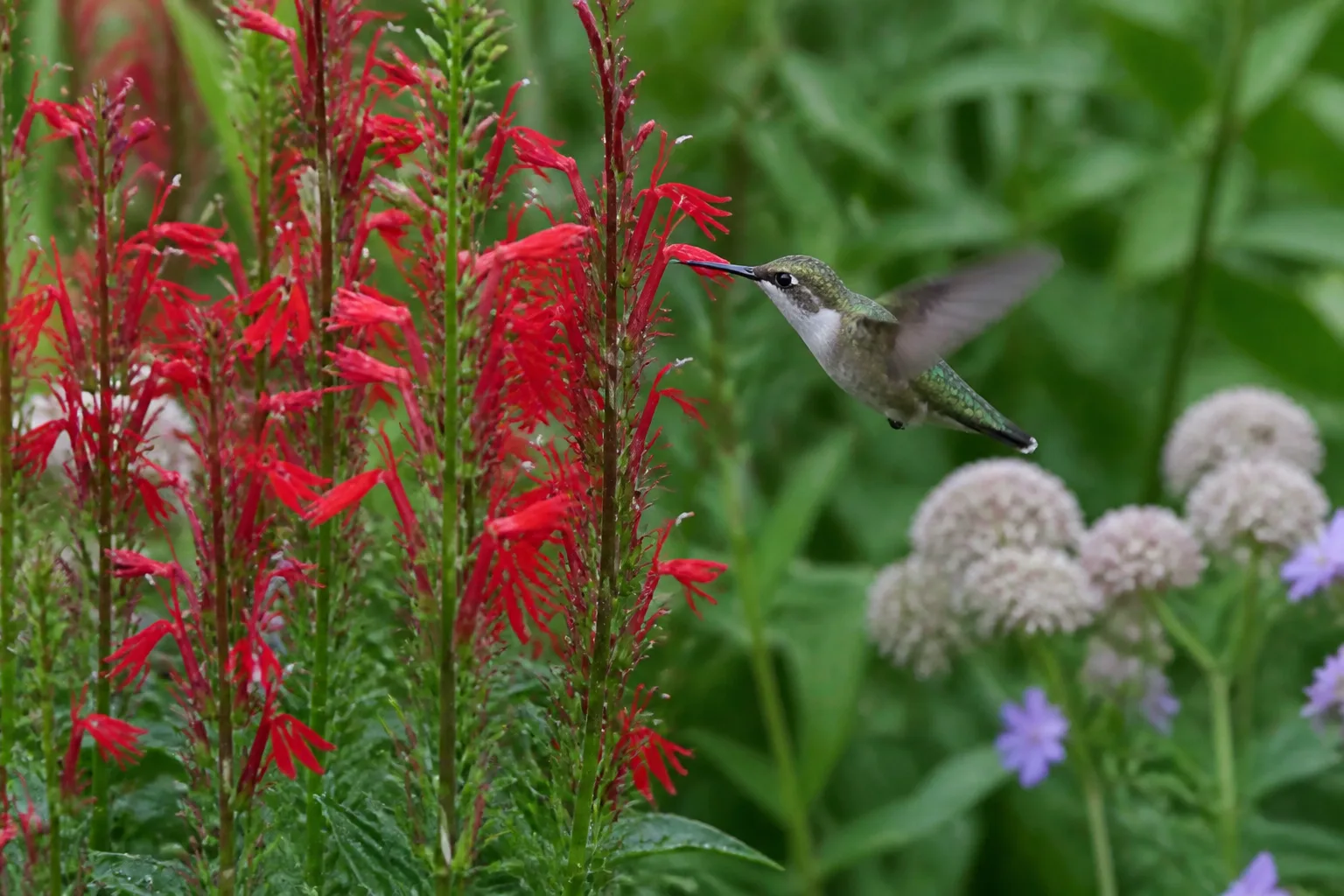
Cardinal flower (Lobelia cardinalis) is the specialist on this list: a vivid scarlet perennial for consistently moist soil, stream edges, rain-garden depressions, and the damp side of a pond. Tall spikes rise above the foliage in summer, and the tubular red flowers are especially attractive to hummingbirds. NC State Extension lists it as a native wetland-associated wildflower with a strong preference for moist conditions. NC State Extension
Do not use cardinal flower as a general substitute for a sunny border perennial. It can take sun or partial shade when moisture is dependable, but it declines quickly in a hot bed that dries out. A two-inch mulch layer can slow evaporation, yet mulch is not a replacement for the moisture the plant requires.
Cardinal flower may behave as a short-lived perennial or biennial in a garden, often persisting through self-sown seedlings. Allow some seed to mature if you want a colony, but keep the planting away from drainage outlets where soil can erode and carry seed beyond your property. Its height also makes it useful at the back of a wet planting, where shorter moisture-loving plants can hide its lower stems.
8. Black-Eyed Susan
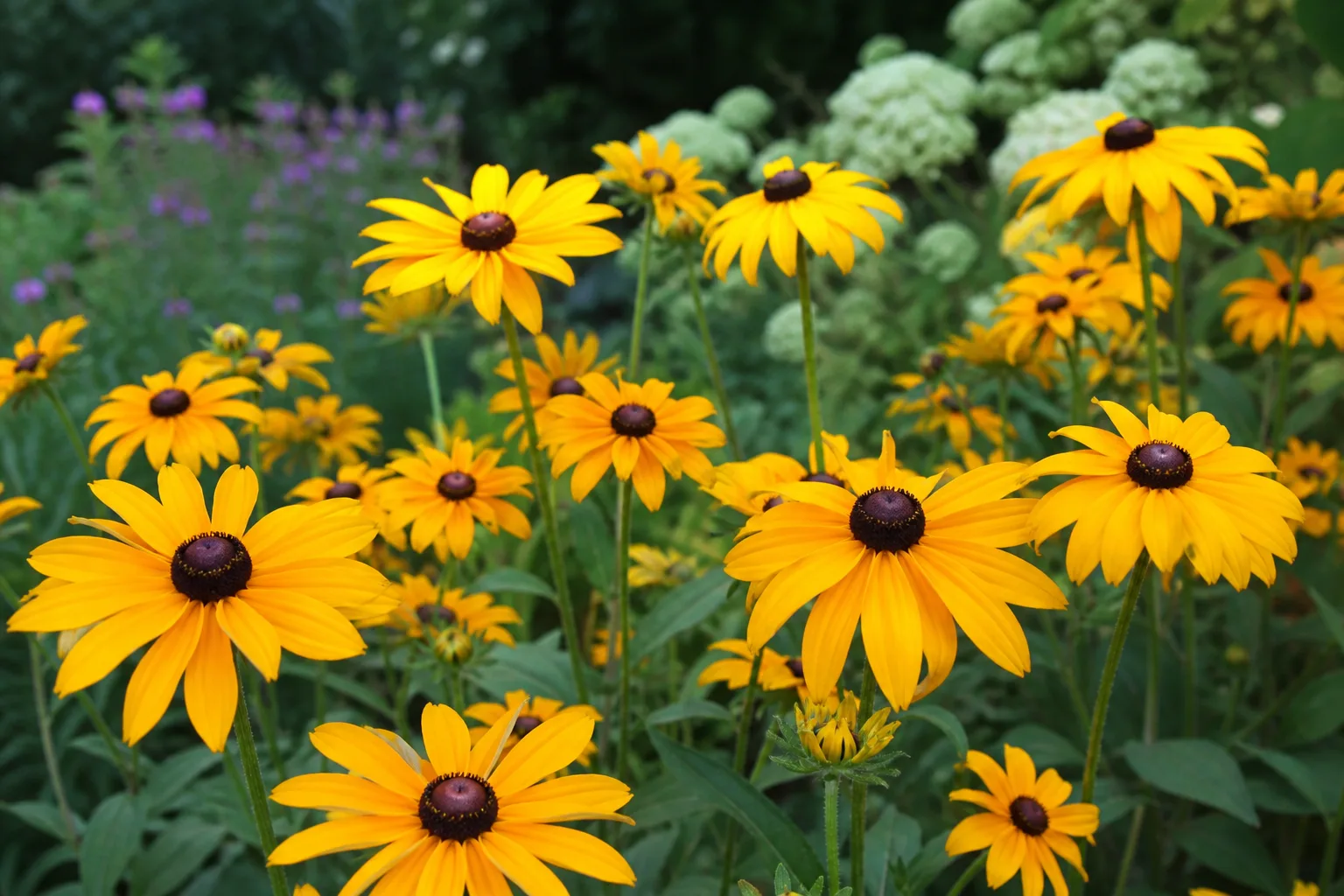
Black-eyed Susan (Rudbeckia hirta) is a cheerful yellow-and-brown wildflower that can bridge the gap between a formal perennial bed and a loose meadow planting. It is often treated as an annual or biennial, though it can persist longer in favorable conditions and reseed. NC State Extension records its summer nectar value, seed use by goldfinches, and tolerance of drought, heat, and salt in appropriate settings. NC State Extension
Give it full sun and average soil with good drainage. Space plants so air can pass between clumps; crowded foliage stays damp longer and can turn the lower part of the plant into a tangle. Water at the soil line during establishment, then let the surface dry between soakings once the plant is growing strongly.
Deadhead for a neater border and more flowers, or leave some cones standing for birds and winter texture. In a small bed, remove only the heads that are leaning over paths. In a naturalized patch, selective cleanup gives you the best balance: preserve seed sources without allowing every stem to collapse into the walkway.
9. White Water Lily
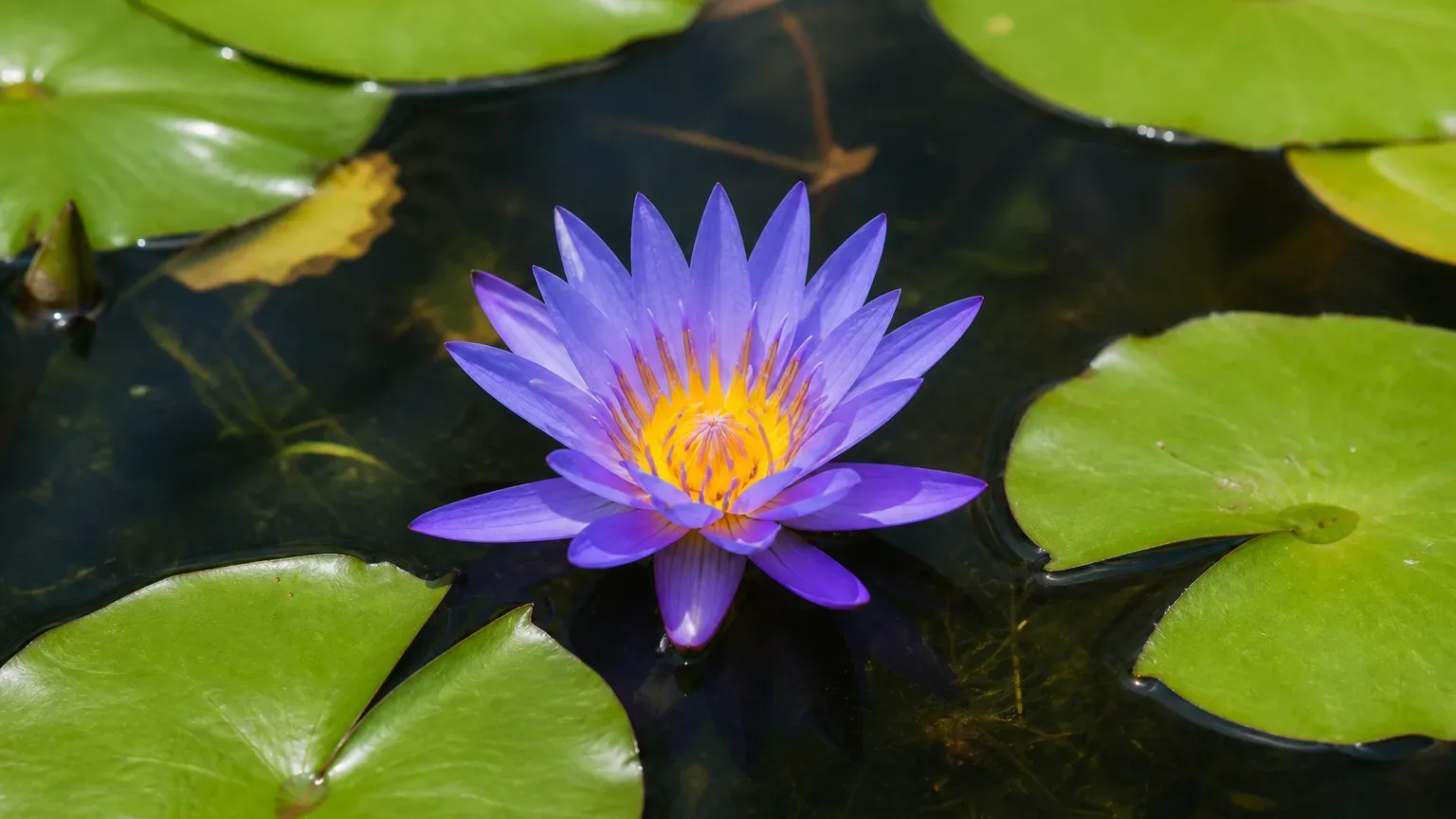
White water lily (Nymphaea odorata) belongs in a pond, not in a damp flower bed. The floating leaves shade the water surface and the fragrant white flowers rise above it, making this one of the most distinctive summer wildflowers in a water garden. Related yellow pond lilies are sometimes sold under similar common names but belong to a different genus, so identify the plant before buying.
Water lilies need sun for dependable flowering, still or slow-moving water, and a container or planting pocket suited to the cultivar’s mature spread. Choose hardy types for climates with freezing winters and tropical types only where the season allows them to persist. A lily that outgrows a tiny tub is not low-maintenance; it becomes a recurring job of lifting, dividing, and thinning leaves.
Do not release a purchased water lily into a natural pond or stream. Keep it in a managed water feature, follow local rules, and remove yellowing leaves before they decay in the water. The right variety can be a beautiful focal point, but it is a specialist plant with different care from every terrestrial flower on this list.
10. Wild Cosmos
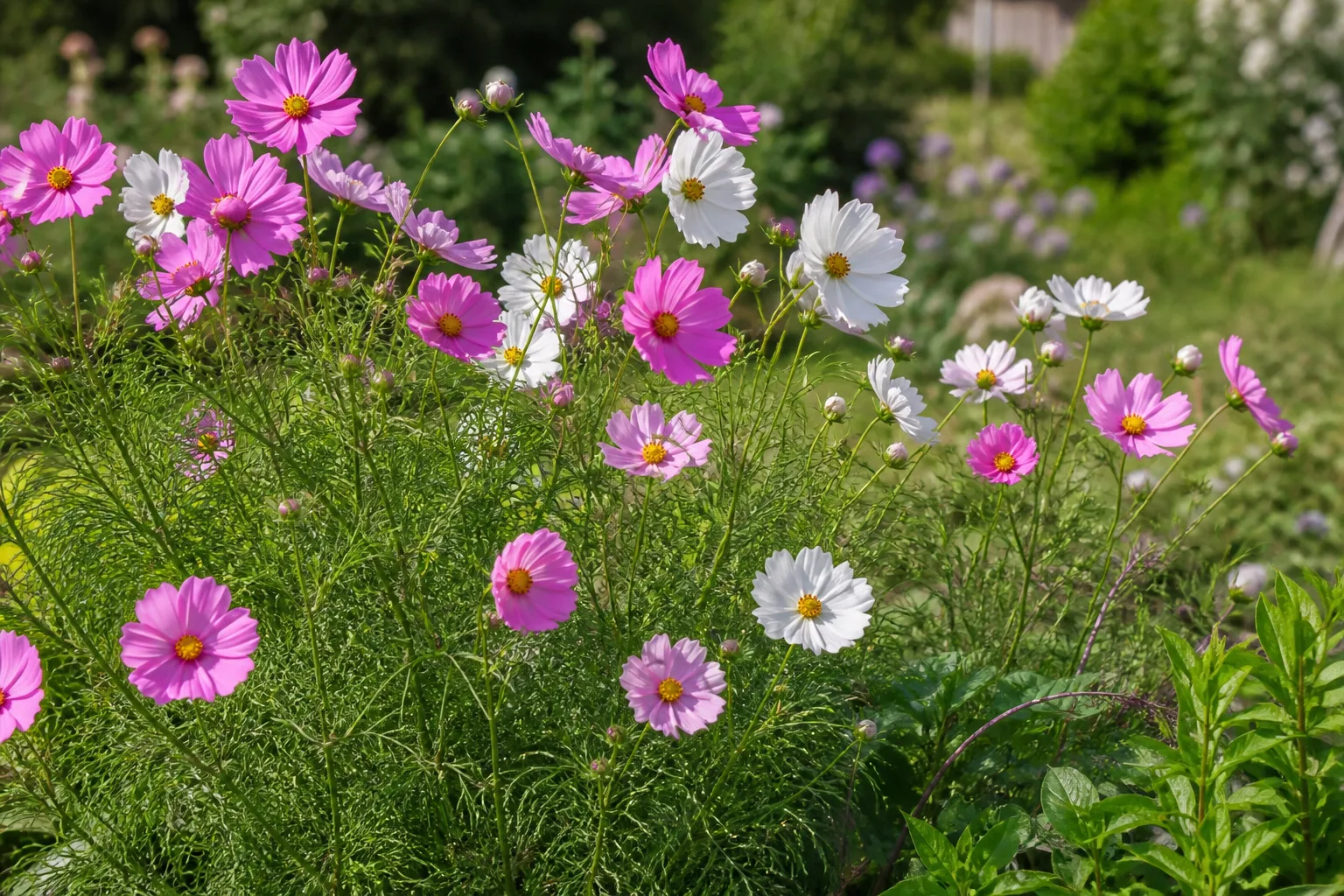
Wild cosmos (Cosmos bipinnatus) is a fast-growing annual that gives a new or renovated bed height, airy foliage, and pink, white, or magenta flowers in a single season. The stems move in the breeze, so it softens rigid fences and makes a light screen behind shorter flowers. It prefers full sun, ordinary soil, and good drainage; rich soil can produce more leaves and fewer sturdy flowers.
Direct-sow cosmos after frost danger has passed and thin seedlings early. Overcrowding is the main reason plants flop, especially after summer thunderstorms. If you need to transplant, move young seedlings before the roots become crowded and water them in promptly.
Cosmos can continue flowering when faded blooms are removed, but it is also a generous self-seeder. That may be welcome in a meadow patch and irritating beside a carefully edged perennial border. Because it is native to Mexico rather than most of the United States, treat it as an ornamental annual and check whether it is considered weedy in your region rather than assuming every “wild” name implies local habitat value.
11. Chicory
Chicory (Cichorium intybus) carries small, intensely blue flowers on upright stems and often opens most generously in the morning. It tolerates sun, lean soil, and dry conditions, which explains why it appears along roadsides and other disturbed places. Its deep root makes it difficult to remove once established, and the plant is naturalized or invasive in portions of North America.
Grow chicory only if it is appropriate for your local area and you have a clear reason to include it. It can work in a contained, informal planting where blue flowers are scarce in late summer, but it is not the best choice for a small front border or a property beside natural habitat. Ask a local extension office or native-plant society for a regionally native blue-flowered substitute if you are unsure.
If you do grow it, control the seed heads before they mature and do not dump pulled roots or ripe seed into a compost pile that does not get hot enough to kill them. Its drought tolerance is useful, but “hard to kill” is not the same as “low risk.” Spread is part of the plant-selection decision.
12. Oxeye Daisy
Oxeye daisy (Leucanthemum vulgare) is an Old World perennial with white rays and yellow centers. It looks familiar, handles sun, and can make a loose, meadow-like display, but it has naturalized widely and is invasive in some areas. The similar Shasta daisy is a cultivated hybrid and should not be treated as the same plant simply because the flowers look alike.
Before planting oxeye daisy, check your state or provincial invasive-species resources. If it is listed as invasive or prohibited, choose a native daisy-like species suited to your region instead. This is one of the clearest cases where a pretty flower is not automatically a responsible wildflower recommendation.
Where it is permitted, provide sun and well-drained soil, and remove spent flower heads before seed ripens if you want to limit spread. It is better suited to a managed, contained area than to a roadside-adjacent meadow. A mown edge and regular inspection make it easier to notice volunteers before they become a larger removal project.
Build a Summer Wildflower Combination That Works
Choose plants by job, then repeat them. For a dry, sunny border, use blanket flower and plains coreopsis at the front, purple coneflower and black-eyed Susan in the middle, and New England aster toward the back. Add bachelor buttons or cosmos for first-year color while the perennials establish, but keep annuals in a defined drift so reseeding does not blur the whole bed.
For a moist edge, replace the dry-site annuals with cardinal flower and a moisture-tolerant aster. Use white water lily only in the pond itself. If you want a cottage effect, combine white Queen Anne’s lace or oxeye daisy only after confirming local status; otherwise choose a native look-alike from your region.
Think in three dimensions: low flowers and foliage near the path, medium clumps at eye level, and tall stems behind them. Leave enough space for the mature width, not the size of a nursery plug. A planting that looks sparse on day one often looks healthier than one that is packed too tightly and requires constant thinning by midsummer.
Start with seeds or transplants?
Direct sowing is usually the simplest and least expensive route for annuals such as plains coreopsis, bachelor buttons, and cosmos. Scatter seed over prepared soil, press it into contact with the surface, and keep the seedbed evenly moist until seedlings are established. Do not bury tiny seed under a thick layer of soil; follow the packet depth for that species.
Perennials can be sown, but they often take longer to reach flowering size and some need cold, moist stratification. Buy nursery plants when you want a more predictable first-season display, especially for cardinal flower or a named coneflower cultivar. Plant transplants during a cool spell, water deeply, and mulch without covering the crown.
Fall sowing can work well for species that naturally disperse seed before winter, while spring sowing is safer for tender annuals and regions with wet winters. In warm climates, a fall-planted perennial may establish beautifully; in cold climates, the same plant may need a spring start. Use local extension timing and the seed supplier’s instructions rather than treating a calendar date as universal.
Manage Wildflowers Without Losing Control
Wildflowers need less fuss than many hybrid bedding plants, but they do not need zero management. During the first growing season, water new plants when the root zone begins to dry, remove fast-growing weeds before they seed, and mark perennials so you do not mistake their young foliage for weeds. Once roots are established, taper irrigation according to the plant’s actual moisture needs.
Avoid fertilizing by habit. A soil test is more useful than a generic high-nitrogen feed, especially in a native-style bed where floppy growth and excess weeds can follow rich soil. Keep a mown strip, path, or crisp edge around the planting; the boundary tells viewers that the looseness is intentional.
Deadhead selectively. Remove seed heads that threaten paths, gutters, or neighboring beds, but leave some healthy cones and stems for birds and overwintering insects. For pollinator value, do the major cutback in late winter or early spring, when the stems are dry and hollow rather than green and full of life.
Inspect the planting twice each summer for spread. Pay special attention to Queen Anne’s lace, chicory, oxeye daisy, and any plant sold under an uncertain common name. If a flower is listed as invasive where you live, do not solve the problem by pruning it harder; replace it with a native or non-invasive alternative suited to the same light and moisture conditions.
Conclusion
The most successful summer wildflower gardens are matched, not mixed at random. Start with sun, drainage, and mature size; then layer annuals for quick color with perennials that return, reseed, or support wildlife over time. Blanket flower, plains coreopsis, coneflower, black-eyed Susan, and New England aster cover a useful dry-to-average sunny range, while cardinal flower belongs in reliably moist soil and water lilies need a managed pond.
Treat native status and spread as part of beauty. Check local plant lists, buy identified seed, keep aggressive plants contained, and give new roots water during their first season. With a clear edge and a bloom sequence that carries from early summer into fall, a wildflower bed can look relaxed without becoming neglected.



