Celery Care Guide: Grow Apium graveolens From Seed
Apium graveolens
Grow stalk celery and ajmoda with steady moisture, rich soil, early indoor sowing, cool-season timing, blanching options, and cultivar-aware spacing.
Celery Care Guide: Grow Apium graveolens From Seed to Harvest
Start with wateringThe most common care mistake for CeleryWatering guide → →Celery care essentials
Light
Water
Celery demands steady, abundant moisture around its shallow fibrous roots. Keep the upper 2–3 cm of mix damp without waterlogging; brief drying often produces stringy, bitter, or hollow stalks.
Soil
Deep, humus-rich, moisture-retentive loam with good drainage. NC State Extension lists neutral pH 6.0–8.0; many growers target 6.0–7.0 for stalk celery.
Humidity
Temperature
Fertilizer
About Celery
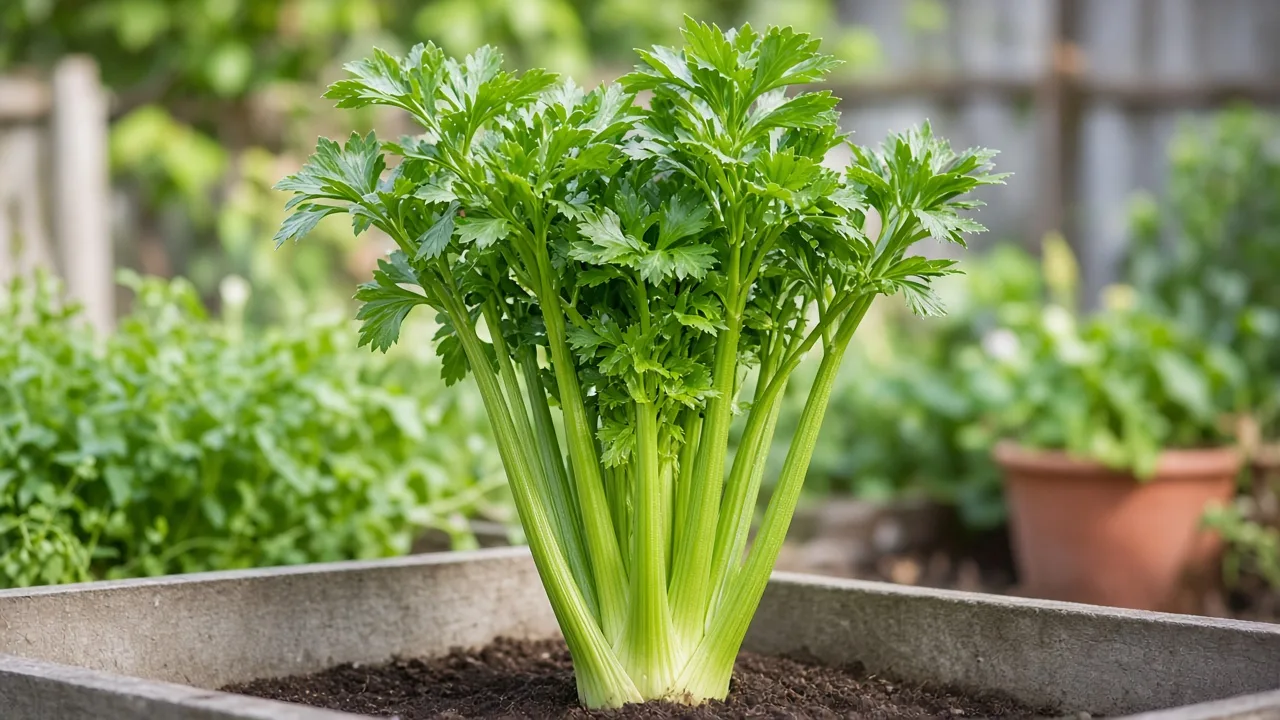
Celery is native to Macaronesia to North Africa, Europe, and the western Himalaya; cultivated stalk celery derives from marshy temperate forms, typically reaches 45–90 cm tall and 30–45 cm wide for stalk types; leaf celery stays shorter and celeriac forms a swollen root instead of thick ribs indoors, with slow to medium — many stalk cultivars need roughly 85–130 days after transplant, with indoor seed starting adding another 10–12 weeks growth. Celery has a herbaceous biennial usually grown as an annual vegetable growth habit and part of the Apiaceae family. It is also known as Ajmoda, Garden Celery, Stalk Celery, Leaf Celery, Smallage, and Celeriac.
| Detail | Information |
|---|---|
| Also known as | Ajmoda, Garden Celery, Stalk Celery, Leaf Celery, Smallage, Celeriac |
| Native region | Macaronesia to North Africa, Europe, and the western Himalaya; cultivated stalk celery derives from marshy temperate forms |
| Mature size | 45–90 cm tall and 30–45 cm wide for stalk types; leaf celery stays shorter and celeriac forms a swollen root instead of thick ribs |
| Growth rate | Slow to medium — many stalk cultivars need roughly 85–130 days after transplant, with indoor seed starting adding another 10–12 weeks |
| Growth habit | Herbaceous Biennial Usually Grown As An Annual Vegetable |
| Scientific name | Apium graveolens |
| Family | Apiaceae |
Celery Care Guide: Grow Apium graveolens From Seed to Harvest
Celery care starts with an honest expectation reset: you are growing a long-season, moisture-hungry apiaceous crop, not a quick leafy green. Apium graveolens (ajmoda, garden celery) forms upright grooved leaf stalks when you choose stalk types (var. dulce), a swollen root when you grow celeriac (var. rapaceum), or aromatic leaves and thin stems with leaf celery (var. secalinum). Wild relatives evolved on boggy, temperate ground, and domesticated celery still behaves like a marsh plant—shallow fibrous roots, slow early growth, and almost no forgiveness for drying out.
The Celery plant hub summarizes species traits for your climate; this page is the full-path overview before you open topic guides on light, watering, and soil.
Celery care at a glance
Give stalk celery full sun in cool air, even moisture in the top few centimetres of soil, deep fertile loam or rich container mix, and an early indoor start so ribs have time to thicken before heat arrives. Plan one well-timed planting per cool window rather than treating celery like succession lettuce.
NC State Extension describes Apium graveolens as preferring full sun with moist, rich, well-drained soil and lists cultivated groups for stalk celery, celeriac, and leaf celery. The RHS notes that wild celery grew on boggy riversides and marshy ground—a useful mental model for why your mix must hold water yet still drain.
Three cultivated forms under one species
Read the seed packet before you sow. Stalk celery is the supermarket rib crop; celeriac is harvested for the root; leaf celery supplies cut-and-come-again foliage with thinner stems. Spacing, blanching, and harvest timing differ, so do not transplant celeriac seedlings into a stalk-celery blanching plan.
Mature size and realistic timelines
Expect roughly 45–90 cm tall stalk plants in a good season, with many cultivars needing on the order of 85–130 days after transplant once weather stays cool. Plot My Garden places typical stalk maturity around 85 days but warns that indoor seed starting adds another 10–12 weeks before plants even reach the garden—one of the longest lead times in the vegetable patch.
What garden celery is and how it grows
Garden celery is a biennial herb in the carrot family, usually grown as an annual for kitchen harvest. NC State lists life cycle options as annual, biennial, or perennial herb depending on climate and harvest timing; in warm districts you will almost always finish the crop in one cool season.
Above ground, ascending stems carry pinnately lobed leaves; below, fibrous roots spread shallowly rather than drilling deep like a carrot. That architecture explains why containers dry out fast and why brief drought shows up as rib quality problems before leaves fully collapse.
Marsh origins and shallow fibrous roots
Because celery evolved in moist temperate margins, it tolerates neither bone-dry mix nor stagnant anaerobic soil. The RHS recommends a sunny site with fertile, moisture-retentive soil and cautions against beds that dry out rapidly. Good drainage still matters—NC State lists good drainage and moist conditions together, not as opposites.
On terraces, that usually means deep pots, mulch, and drip or careful hand watering rather than hoping afternoon rain will rescue a shallow planter.
Cool-season timing in India and warm climates
Celery is a cool-season vegetable in hot lowlands. Plot My Garden places the ideal growing range around 15–21°C (60–70°F) and notes that heat above about 27°C (80°F) encourages bolting and tough stalks. India does not share one national sowing month: Pune, Delhi, and humid coasts differ in night temperature and drying speed.
Winter windows in warm lowlands
In warm plains, treat stalk celery as a winter project started indoors—late summer or early autumn sowing under lights, transplant into the coolest stretch you can manage, and avoid mid-summer direct sowing that heat and dry soil usually end quickly. Cool hill regions and mild winters may offer longer outdoor windows, but the transferable rule is to stack most rib thickening into mild days and nights.
If your only outdoor season is punishingly hot, celery is a poor fit unless you can supply cool air, shade during heat spikes, and never-miss irrigation—still harder than choosing a true heat-season crop.
Light and temperature targets
For stalk quality, prioritize bright light while air stays cool. NC State specifies full sun (six or more hours of direct sunlight daily). The RHS keeps seedlings above 10°C (50°F) after germination because lower temperatures can contribute to bolting later, and delays outdoor planting until nights are reliably warm enough that cold does not persist more than about half a day on young plants.
Window placement, terrace reflectivity, and grow-light hours for indoor starts are covered in the Celery light guide.
Water and rib quality
Celery quality is tightly linked to steady moisture around the crown. Even short drought on established plants can produce thin, bitter, or hollow ribs—exactly the failure mode growers blame on “bad seed” when the real issue was a dry weekend.
Press your finger 2–3 cm into the mix near the crown; water when that layer feels dry while deeper soil still holds slight moisture. Mulch containers and beds to slow evaporation, and irrigate for even moisture rather than cycles of cracked soil followed by soggy crowns. Overwatering without drainage invites crown rot; the first fix when leaves yellow on wet mix is to improve airflow and pause irrigation, not to feed harder.
The Celery watering guide walks through daily checks in warm wind, seasonal shifts in India’s dry winter spells, and the first diagnostic step when ribs turn stringy.
Soil, fertility and spacing
Prepare deep, humus-rich, moisture-retentive loam before transplant. NC State lists high organic matter and neutral soil pH (6.0–8.0); many growers target roughly 6.0–7.0 for stalk celery. Work in compost or well-rotted manure ahead of planting—celery is a heavy feeder, and pale thin stalks often trace to hunger rather than mysterious “weak genetics.”
The RHS advises planting in a block about 23 cm (9 in) apart each way so neighbouring plants shade stems, helping self-blanching types stay mild. Plot My Garden suggests transplant spacing around 20–25 cm in deeply prepared beds. Mix recipes, side-dress timing, and calcium uptake through steady moisture—not sporadic flooding—are detailed in the Celery soil and Celery fertilizer guides.
From seed indoors to final planting
Celery rewards an early start. The RHS recommends sowing indoors between mid-March and early April in temperate climates—translate that pattern to your cool transplant window, not a copied UK calendar. Plot My Garden advises starting indoors 10–12 weeks before the last frost because germination and early growth are slow.
Light-dependent germination
Sow tiny seeds on the surface of moist peat-free seed compost, press lightly, and avoid burying—celery seeds need light to germinate. Keep warmth at least 15°C (59°F); germination can take up to three weeks, so patience beats re-sowing on day ten. Once seedlings appear, give bright light—Plot My Garden recommends 14–16 hours daily under grow lights when a windowsill is too dim.
Hardening off and vernalization risk
Transplant when nights stay above about 10°C, after a gradual harden-off. Plot My Garden warns that exposure below about 7°C (45°F) for extended periods can vernalize young plants and trigger premature bolting once weather warms—ruining a long season of care. Pot up once seedlings have true leaves, then move to a final deep bed or large container rather than repeatedly shifting mature plants. Step-by-step seed handling lives in the Celery propagation guide; why “repotting” means seedling pot-ups, not perennial refreshes, is in the Celery repotting guide.
Terrace containers
Stalk celery can grow in large containers if you accept more frequent watering. Use a deep pot with drainage holes, rich peat-free mix, and block spacing similar to in-ground planting. Containers that dry within a day during rib thickening are undersized or too exposed on a hot railing.
Match self-blanching cultivars unless you are willing to wrap outer stems. Pair container culture with the Celery watering guide before your first heat spell.
Blanching and harvest paths
Traditional trench celery required mounding soil to exclude light; most home growers now choose self-blanching or green cultivars planted in blocks, with optional newspaper wraps on outer stems for the last few weeks, as the RHS describes for paler, milder stems. Plot My Garden suggests wrapping lower stems 2–3 weeks before harvest or relying on self-blanching genetics.
Harvest stalk celery when ribs are full-sized and crisp. Celeriac is lifted when roots reach usable size; leaf celery is cut repeatedly for foliage. Top removal and side-stalk handling—not hedge trimming—are covered in the Celery pruning guide.
Common celery care mistakes
Starting too late indoors leaves plants trying to size up in heat. Count backward from your coolest transplant month, including slow germination.
Letting the surface dry while seedlings are small kills stands or produces weak transplants. Mist or bottom-water until roots deepen.
Crowding without a block plan yields thin stems and more bitterness on green types. Follow spacing guides and choose cultivars suited to your blanching tolerance.
Feast-or-famine watering produces hollow or stringy ribs and can disrupt calcium movement into growing tissue. Steady moisture beats heroic soaking after drought.
Ignoring cultivar group leads to harvesting the wrong organ—digging for roots on a stalk type or expecting thick ribs from leaf celery.
Mid-summer sowing in hot lowlands almost always ends in bolting or stunted plants unless you can engineer cool conditions artificially.
Pets, treated stalks and kitchen harvests
Stalks and leaves are familiar human foods, but that does not make the living crop unlimited safe forage for pets. The LeafyPixels hub notes that the ASPCA database did not return a species-specific celery listing in the sources reviewed—prevent unsupervised grazing, keep pesticide-treated plants away from animals, and ask a veterinarian before deliberately sharing garden celery with pets.
Wash harvests, follow label restrictions on any crop protectants, and store ribs cold with moisture managed so they stay crisp for the kitchen.
When to use this page vs other Celery guides
Use this overview to choose cultivar type, season, and the indoor-start workflow. When one variable needs depth, open the matching topic page: light for sun and heat management, watering for moisture diagnostics, and soil for mix, pH, and organic matter.
Use fertilizer when growth is pale after temperature and water look correct. Use propagation for sowing cadence and seed handling, repotting for seedling pot-ups and final spacing moves, and pruning for harvest-time stalk management—not ornamental shaping.
Related Celery guides
Start at the Celery plant hub for the species profile and grower notes. Terrace growers should read Celery watering next because pots dry faster than raised beds. Before your first sowing, read Celery soil and Celery propagation together—bed prep and indoor timing are one continuous job for crisp ribs.
Conclusion
Good celery care is cool-season timing, never-skipped moisture, rich soil, and an early indoor start matched to the cultivar group on your seed packet. In warm Indian lowlands, success usually means treating ajmoda as a winter container or bed crop—not a heat-season afterthought. When ribs turn stringy or plants bolt early, fix season, water steadiness, and cold exposure before chasing exotic fertilizers.
The cluster guides linked above carry step-by-step detail for each lever once this overview has pointed you to the right topic.
How to care for Celery?
When should you water Celery?
Celery demands steady, abundant moisture around its shallow fibrous roots. Keep the upper 2–3 cm of mix damp without waterlogging; brief drying often produces stringy, bitter, or hollow stalks.
- Press a finger 2–3 cm into the soil near the crown - Keep the upper 2–3 cm of mix damp without waterlogging; brief drying often produces stringy, bitter, or hollow stalks.
- water when that layer feels dry while deeper mix still holds slight moisture - Keep the upper 2–3 cm of mix damp without waterlogging; brief drying often produces stringy, bitter, or hollow stalks.
- Drain excess water - Keep the upper 2–3 cm of mix damp without waterlogging; brief drying often produces stringy, bitter, or hollow stalks.
What soil works best for Celery?
Deep, humus-rich, moisture-retentive loam with good drainage. NC State Extension lists neutral pH 6.0–8.0; many growers target 6.0–7.0 for stalk celery.
- 50% fertile loam or quality potting mix - Deep, humus-rich, moisture-retentive loam with good drainage.
- 35% mature compost or well-rotted manure - NC State Extension lists neutral pH 6.0–8.0; many growers target 6.0–7.0 for stalk celery.
- 15% perlite, rice hulls, or coarse coco chips - NC State Extension lists neutral pH 6.0–8.0; many growers target 6.0–7.0 for stalk celery.
Grower notes for Celery
Know which celery type you are growing
Apium graveolens is not one uniform crop. Stalk celery (var. dulce) is grown for crisp ribs; celeriac (var. rapaceum) forms an edible swollen root; leaf or cutting celery (var. secalinum) supplies aromatic leaves and thinner stems. Spacing, harvest timing, and blanching needs differ, so match the seed packet to the kitchen use rather than treating every form like supermarket stalk celery.
Start early indoors with light and patience
Stalk celery has a long cool season and slow, light-dependent germination. Sow tiny seeds on the surface of moist mix, press lightly without burying, and keep warmth around 18–21°C until seedlings emerge in roughly two to three weeks. Plot My Garden notes that starting indoors 10–12 weeks before transplant gives plants enough time; a sunny windowsill alone is often too dim, so use bright grow lights and handle seedlings by the leaves, not fragile stems.
Protect young plants from cold snaps
Celery is cool-season, but prolonged exposure below about 7°C can vernalize seedlings and trigger premature bolting once weather warms. Transplant when nights stay above about 10°C and harden plants off gradually. In Indian plains, aim for the coolest practical winter window rather than mid-summer sowing, which heat and dry soil usually end quickly.
Treat celery as a heavy feeder
Rich soil is not optional. Work in compost before planting and side-dress or fertigate every few weeks while ribs thicken. Pale leaves and thin stalks often signal nitrogen shortage, while erratic moisture can show up as blackheart-like browning inside the cluster. Steady water helps calcium reach growing tissue better than sporadic flooding after drought.
Blanch stalks only when the crop calls for it
Green self-blanching cultivars need little shading, but traditional ribbed types stay milder and paler when lower stems are wrapped or lightly earthed up two to three weeks before harvest. Nature and Garden describes tying leaves and ridging soil partway up the plant. Blanching is for stalk types; celeriac and leaf celery follow different harvest paths.
Keep edible stalks pet-aware
Celery is a common human food, but the ASPCA toxic-plant database did not return a species-specific celery listing in the source reviewed. Prevent unsupervised grazing, avoid pesticide-treated leaves, and ask a veterinarian before offering garden celery to pets.
Is celery safe around pets?
Celery is an edible human crop, but the ASPCA plant database did not provide a species-specific listing in the source reviewed. Prevent unrestricted grazing, avoid chemically treated stalks, and ask a veterinarian about suitable portions.
Human edibility does not establish veterinary safety. NC State Extension describes Apium graveolens as an edible crop with aromatic foliage but does not replace species-specific pet guidance. Keep treated plants inaccessible and contact a veterinarian if a pet eats a large amount.
Watering Celery
For Celery, press a finger 2–3 cm into the soil near the crown; water when that layer feels dry while deeper mix still holds slight moisture and water check daily in warm or windy weather and every 1–2 days in cool, cloudy conditions; aim for even moisture rather than a fixed calendar. Increase irrigation during dry winter spells in India’s plains; reduce only when cool rains keep soil continuously wet to avoid crown rot.
| Detail | Information |
|---|---|
| How often | Check daily in warm or windy weather and every 1–2 days in cool, cloudy conditions; aim for even moisture rather than a fixed calendar |
| How to check | Press a finger 2–3 cm into the soil near the crown; water when that layer feels dry while deeper mix still holds slight moisture |
| Seasonal changes | Increase irrigation during dry winter spells in India’s plains; reduce only when cool rains keep soil continuously wet to avoid crown rot |
Signs of overwatering
- yellowing lower leaves with persistently wet soil
- soft or darkened crown at soil level
- stalled growth and foul-smelling mix
Signs of underwatering
- thin, tough, or hollow ribs
- bitter flavour and early bolting in heat
- wilted leaves that recover only briefly after watering
Soil & potting for Celery
Use a mix of 50% fertile loam or quality potting mix, 35% mature compost or well-rotted manure, 15% perlite, rice hulls, or coarse coco chips for Celery. Must hold water yet drain freely; saturated anaerobic soil invites root rot and weak stalks. Target soil pH around 6.0–7.5. Repot start indoors, pot up once as seedlings grow, then transplant once into a final deep bed or large container for the season, ideally in late summer to early autumn sowing indoors for winter harvest in warm lowlands; spring sowing where summers stay mild.
| Detail | Information |
|---|---|
| Recommended mix | 50% fertile loam or quality potting mix, 35% mature compost or well-rotted manure, 15% perlite, rice hulls, or coarse coco chips |
| Drainage | Must hold water yet drain freely; saturated anaerobic soil invites root rot and weak stalks |
| Soil pH | 6.0–7.5 |
| Repotting frequency | Start indoors, pot up once as seedlings grow, then transplant once into a final deep bed or large container for the season |
| Best season to repot | Late summer to early autumn sowing indoors for winter harvest in warm lowlands; spring sowing where summers stay mild |
Signs it needs repotting
- seedlings have 2–3 true leaves and fill starter cells
- roots circle or emerge from drainage holes before final spacing
- the final container dries out within a day during active rib growth