Celery Soil Guide: Mix, pH and Moisture
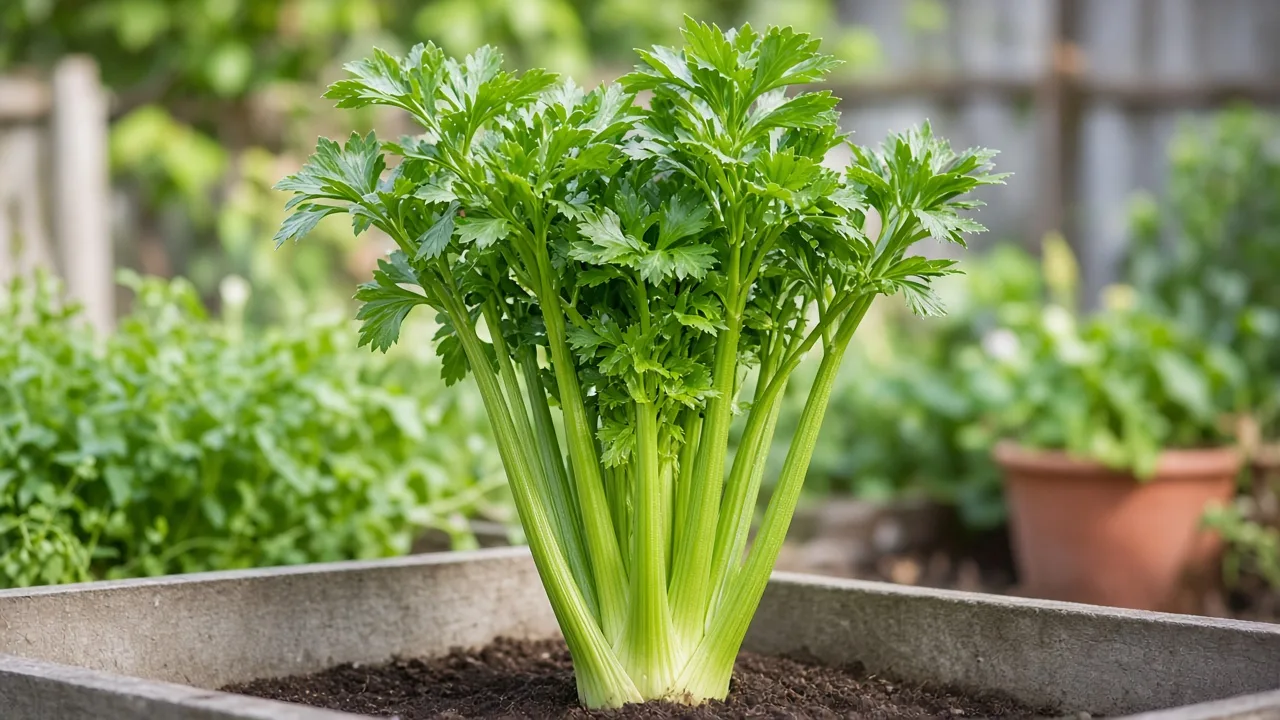
Celery Soil Guide: Mix, pH and Moisture
Celery Soil Guide: Mix, pH and Moisture
Stalk celery (Apium graveolens var. dulce) is not a forgiving windowsill succulent. Its wild relatives grew on boggy river margins and marshy ground, which tells you what the crop still wants: fertile soil that stays evenly moist yet never turns anaerobic. Shallow fibrous roots sit close to the surface, so the upper few centimetres of mix matter as much as the bed below. Get soil wrong once at transplant, and no amount of heroic watering later fully rescues stringy, bitter, or hollow ribs.
This guide covers texture, pH, compost and manure timing, container depth, seed-starting media, and the first soil fixes when growth stalls. Pair it with the Celery overview for cultivar choice and cool-season timing in Indian lowlands.
Why celery soil differs from houseplant mix
Bagged indoor potting soil is built to keep small ornamental roots alive between weekly waterings. Celery needs the opposite balance: high water-holding capacity with enough pore space that oxygen still reaches roots after irrigation or monsoon rain. NC State Extension describes Apium graveolens as preferring full sun, moist, rich, and well-drained soil—with good drainage and moist conditions listed together, not as opposites.
On a sunny terrace, pure multipurpose compost in a shallow pot often dries to dust by afternoon. In a flat clay bed with no organic matter, the same crop may sit in a slick, airless puddle after rain. Celery punishes both extremes.
Marsh roots and shallow feeders
The RHS celery guide notes that wild celery evolved on boggy riversides and marshy ground—moisture-retentive sites that rarely bake dry. Cultivated stalk types keep that appetite for steady hydration around the crown. LeafyPixels grower data for ajmoda matches extension advice: check moisture in the upper 2–3 cm because feeder roots concentrate there.
That shallow habit also means compaction and crusting hurt celery faster than deep-rooted carrots. A hard cap after overhead watering blocks oxygen and makes the crown vulnerable to rot when nights stay cool and wet.
Texture: moist, fertile, well-drained
Think humus-rich loam: crumbs that hold water when squeezed, then break apart instead of smearing. Epic Gardening’s celery guide recommends moist, well-drained soil that is fertile and high in organic matter, amended heavily with compost, decomposed manure, and/or leaf mould before planting.
Organic matter and pore space
Organic matter acts like a sponge and a lung at once—it stores water for shallow roots and keeps macropores open so surplus drains away. NC State lists high organic matter as the preferred soil texture for this species. Without that buffer, terrace pots swing from drought to flood in a single hot day.
Percolation check: Water a prepared empty bed or pot until it drains freely. The surface should darken evenly, not pool for hours. If water sits, add coarse compost, perlite, rice hulls, or fine coco chips before transplant—not after ribs are already stressed.
Squeeze check: Grab a handful of moist mix. It should form a ball that crumbles when poked. A tight ribbon that shines when wet signals clay or over-compaction—common in unamended kitchen-garden rows.
pH and soil testing
Celery tolerates a neutral band. NC State cites neutral soil pH of 6.0–8.0 for Apium graveolens. The LeafyPixels celery profile targets 6.0–7.5, and Epic Gardening suggests pH between 6.0 and 7.0 for garden celery and celeriac.
Most winter ajmoda beds on neutral loam should prioritize organic matter and even moisture over chasing a decimal. Run a simple soil test before dumping lime or sulphur—especially if ribs stay pale and thin despite rich compost, which may be a nitrogen or moisture issue rather than acidity.
Compost and well-rotted manure
Celery is a heavy feeder that expects nutrients to ride in with organic matter. The RHS advises digging in lots of well-rotted manure or garden compost when preparing the site, ideally the autumn before sowing, to improve moisture retention. Poor soil may need a light organic nitrogen dressing later; details belong on the Celery fertilizer guide.
Use well-rotted manure only. Fresh manure heats, salts, and can burn shallow roots. Work it through the root zone weeks ahead of transplant so structure stabilizes. Mature compost alone is the safer default if manure sourcing is uncertain.
Stalk celery vs celeriac
All Apium graveolens forms want fertility and moisture, but harvest organs differ. Stalk celery (var. dulce) needs a deep, humus-rich column for rib expansion—often 45–90 cm of workable soil in beds or tall containers. Celeriac (var. rapaceum) swells a root at the crown; it still needs loose, stone-free upper soil but tolerates slightly denser mixes if drainage stays honest. Leaf or cutting celery (var. secalinum) can succeed in somewhat shallower containers because you harvest aromatic leaves, not thick blanched ribs—see the overview for cultivar matching.
Bed recipes for Indian winter gardens
In warm lowlands, celery is usually a cool-season bed or container crop started indoors, not a mid-summer field plant. Prepare soil during the mild window before transplant so organic matter can settle.
A practical in-ground blend aligned with the celery hub:
- 50% fertile loam or quality garden soil
- 35% mature compost or well-rotted manure (fully composted)
- 15% perlite, rice hulls, or coarse coco chips for aeration
Fork or dig at least 25–30 cm deep for stalk types so shallow roots and later blanching mounds have room. On heavy clay, raise the row or build a raised bed so winter rains drain sideways instead of bathing the crown. Avoid walking on finished rows; compaction shows up as sudden wilt after the first hot spell.
If your site dries out within hours in October sun, this crop may struggle without drip or daily irrigation—soil can only buffer moisture it is allowed to receive.
Container mixes for terrace ajmoda
Containers magnify every soil mistake. The RHS recommends large containers with plants spaced about 23 cm (9 in) apart, using peat-free multipurpose compost—and warns that compost in pots dries quickly, so plan on frequent watering in summer.
Do not fill pots with dense garden soil alone. A workable terrace recipe:
- 50% quality peat-free potting mix or light loam
- 35% mature compost
- 15% perlite, rice hulls, or coarse sand for drainage
Choose a deep pot—at least 30–40 cm tall for stalk cultivars—so roots and moisture buffer match the plant’s height. Drainage holes must stay open; a rich mix with no exit path invites crown rot during humid spells. Place pots where light is strong but roots can stay cool; baking sidewalls accelerate drying.
Pre-moisten components before filling. The finished mix should hold together briefly when squeezed, then crumble—never brick-hard after one dry day.
Seed-starting mix requirements
Soil for mature plants is too rich and heavy for celery seed. Tiny seeds sit on the surface and need light to germinate—bury them and emergence stalls. Epic Gardening advises sowing about ⅛ inch deep and keeping the medium consistently moist for two to three weeks. The RHS describes free-draining seed compost with low nutrients so seedlings are not burned.
Use fine, sterile peat-free seed compost in trays. Press seeds lightly without smothering. Once seedlings show true leaves, pot up into a slightly richer mix before the final outdoor soil—workflow details live on the Celery propagation guide. Epic Gardening notes that waterlogged, poorly draining seed mixes promote damping-off; extra perlite in humid germination rooms is cheap insurance.
Mulch and blanching mounds
After transplant, organic mulch helps hold moisture in open beds. The RHS suggests mulching with garden compost or well-rotted manure while leaving a gap at the stem base to avoid crown rot.
Traditional trench celery refills a deep trench with compost and soil, then hills soil against ribs to blanch them. Modern self-blanching cultivars need less earthing up; if you do mound soil for milder stalks, start only when plants are about 30 cm tall and raise soil gradually so growing tips stay exposed—Epic Gardening recommends mounding about 7–8 cm at a time for trench types. Blanching soil is still real soil: it must stay moist, not packed mud.
Preparing soil before transplant
Clear weeds and debris. Dig or fork to full depth, mixing compost and rotted manure evenly. Rake level without stomping the seedbed. Water once if dust-dry, then transplant when nights stay above about 10°C and seedlings are hardened—timing overlaps the repotting guide.
Set the crown at the same depth it grew in the plug; burying the heart invites rot. Water in gently without compressing pores. In India’s plains, align this step with the coolest practical weeks so soil moisture does not evaporate faster than roots can explore.
Warning signs the mix is failing
| Symptom | Likely soil cause | First fix |
|---|---|---|
| Thin, tough, hollow ribs | Droughty mix, crusted surface | Mulch; improve organic matter; steady watering |
| Yellow lower leaves, sour smell | Waterlogged, anaerobic soil | Open drainage; reduce compaction; pause flood irrigation |
| Stalled growth after rain | Clay pan or sealed pot base | Raise bed; drill pot holes; remix with coarse amendment |
| Seedlings collapse at soil line | Saturated seed compost | Increase perlite; ventilate; sow thinner |
| Dark soft crown | Wet mulch piled on stems | Pull mulch back; improve air at soil level |
Persistently wet soil with no drainage path is how NC State links poorly drained conditions to root rot on this crop. Fix structure before reaching for foliar feeds.
When to use this page vs other Celery guides
Use this soil guide when building beds, blending terrace pots, testing pH, or diagnosing stringy ribs and crown rot. Use the Celery watering guide for daily moisture rhythm and seasonal changes in India. Use Celery light for sun hours, grow lights at seed stage, and bolting risk. Use Celery fertilizer after the root zone is built—celery expects ongoing feeding, not a one-time compost dump alone.
Use Celery propagation for surface sowing and transplant timing, Celery repotting for moving seedlings into final depth, and Celery pruning for side-shoot removal—not for fixing a dried-out potting mix.
Related Celery guides
- Celery overview — cultivar types, ajmoda timing, and cluster map
- Celery watering — even moisture for shallow roots
- Celery light — sun and cool-season placement
- Celery fertilizer — feeding after soil prep
- Celery propagation — seed compost and indoor start
- Celery repotting — final container depth and spacing
- Celery pruning — stalk maintenance without stealing soil moisture
Conclusion
Great celery soil is the marshy middle ground: deep, humus-rich, and always slightly damp—but never sour and sodden. Aim for roughly pH 6.0–7.5, favor high organic matter with real drainage, and give stalk types deep beds or tall pots on Indian terraces. Before you transplant, water the empty mix and watch how fast it drains; that single test tells you whether to add compost, coarse grit, or a raised row so ajmoda ribs can thicken instead of turning stringy.