Celery Propagation: Seed Start & Transplant Guide
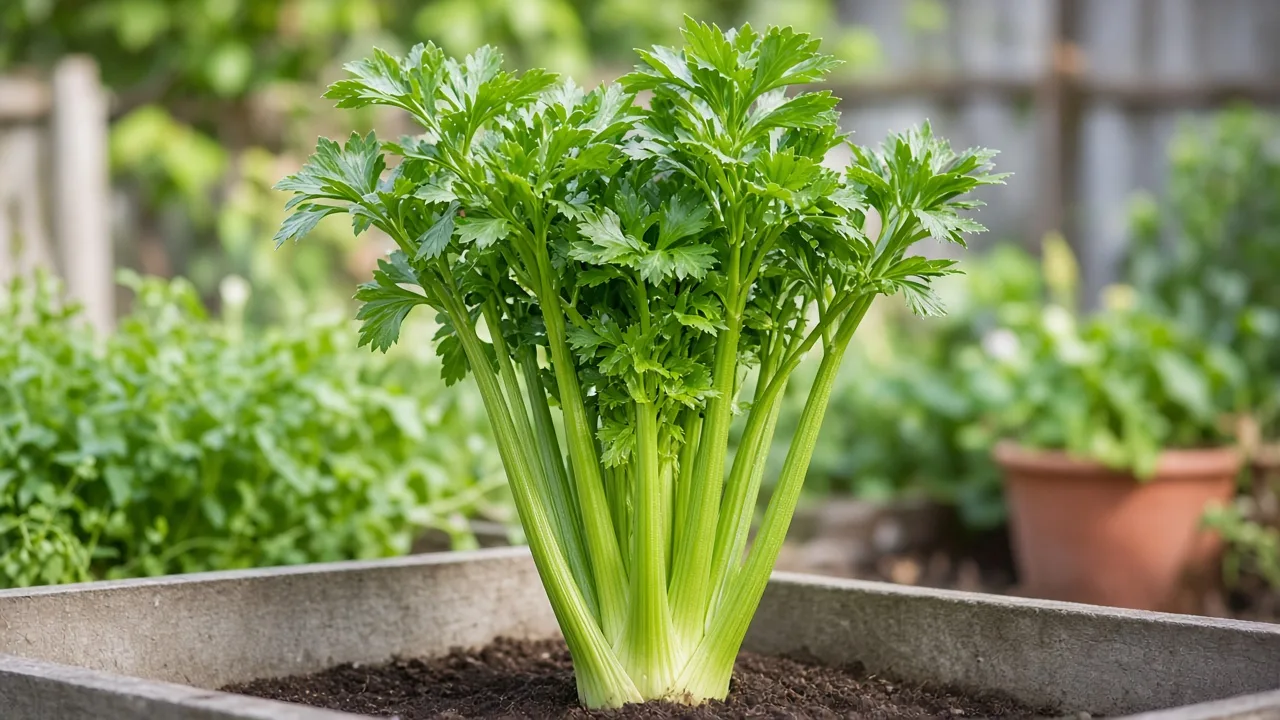
Celery Propagation: Seed Start & Transplant Guide
Celery Propagation: Seed Start & Transplant Guide
Celery propagation for kitchen ajmoda (Apium graveolens var. dulce) is almost entirely a seed story. Unlike pothos or basil, stalk celery does not root reliably from stem cuttings for a full rib crop. NC State Extension lists seed as the recommended propagation strategy for Apium graveolens, and wild relatives are likewise reproduced by seeds. Your job is to master a long, cool indoor start, then transplant once into rich, moist soil—not to hunt for a magic cutting.
The Celery overview explains cultivar groups, mature size, and seasonal identity. This page covers how to multiply celery from seed, when to sow for your climate, and how to avoid the failures that waste the slowest germination in the vegetable patch.
How garden celery propagates
Stalk celery is a biennial herb usually finished as an annual harvest. It flowers, sets seed, and dies in its second year if you let it—but most growers never propagate vegetatively. They sow fresh seed each cool season because genetic quality and rib type come from the packet, not from regrown grocery stubs.
Seed as the only dependable crop method
Tiny ovoid seeds carry the cultivar: self-blanching Pascal types, pink-stemmed novelty lines, celeriac (var. rapaceum), or leaf celery (var. secalinum). RHS treats celery as a crop that needs warm germination and a long growing season, so it is best sown indoors for a strong early start, then transplanted after frost into damp, fertile soil. That indoor lead is not optional in short winters—it is how you buy time before heat or bolting ends the season.
Three Apium graveolens types to match your packet
Before you sow, read the packet name. Stalk celery is grown for thick ribs and needs the longest timeline. Celeriac is propagated the same way (seed, indoor start) but harvested for the swollen root. Leaf or cutting celery also starts from seed, yet you may harvest leaves sooner and at closer spacing. Do not assume one sowing date fits celeriac and supermarket-style ribs—follow days-to-maturity on the label and align post-transplant care with Celery soil and Celery watering.
Methods that fail or mislead beginners
Social posts show celery “propagating” in a glass of water. That can be fun; it is not how commercial or terrace rib crops are established.
Why stem cuttings do not replace seed
Stalk celery forms hollow, brittle stems on a shallow fibrous root system—not a woody node that roots like a houseplant. NC State Extension lists seed—not stem cuttings—as the propagation strategy for Apium graveolens, and cut sections rarely develop the root mass needed for 85–120 days of rib thickening after transplant. If someone offers “stem propagation” for garden celery, treat it as experimental foliage at best, not ajmoda for the table.
Kitchen-base regrowth as a side experiment
Epic Gardening describes regrowing from the base of a bought bunch: keep the bottom inch in shallow water or moist mix until leaves sprout. That is vegetative regrowth for quick leaves—not the same as seed-grown stalks with cultivar fidelity. Epic Gardening notes it usually will not yield high-quality ribs and tends toward leafy growth. Use it as a kitchen science project; for winter terrace ajmoda, start seed on schedule instead.
Backward-planning your sowing calendar
Celery propagation succeeds when you count backward from your coolest transplant window, not when you impulse-sow on a warm afternoon.
Temperate spring counts
In cool-summer climates, Gardening Know How advises starting celery seed indoors eight to ten weeks before the last frost. Plot My Garden stretches that to 10–12 weeks—among the longest indoor lead times in the patch—because germination and early growth are slow. RHS suggests sowing between mid-March and early April in modules, with young plants ready to plant outdoors about ten weeks after sowing (often late May or early June where frosts have passed).
Winter ajmoda windows in India
On hot plains, flip the calendar: sow indoors late summer or early autumn and grow through the coolest winter stretch you can manage, as the overview describes. Peak summer sowing usually ends in heat stress and bolting unless you can supply cool air, shade, and daily moisture. Hill stations and mild winters may allow slightly earlier outdoor transplant, but the propagation rule stays the same—long indoor start, transplant only when nights stay above about 10°C (50°F). Gardening Know How warns that planting out before temperatures are consistently above 50°F (10°C) weakens or kills young plants.
Step-by-step seed starting indoors
Treat celery seed like dust: light, warmth, and steady surface moisture matter more than depth.
Surface sowing and germination warmth
RHS says celery seeds need light to germinate—sow thinly on moist peat-free seed compost, with only a very light dusting of sieved mix if you cover at all. Epic Gardening recommends planting about ⅛ inch deep and warns that too much soil blocks emergence. Plot My Garden presses seeds onto moist mix without burying, then mists rather than flooding from above so lightweight seed does not wash into cracks.
Keep temperatures at least 15°C (59°F) for germination; RHS notes 15°C minimum, while Plot My Garden targets 18–21°C (65–70°F) under a dome or clear cover. Epic Gardening suggests 70–75°F during the germination window, then 60–70°F for seedlings afterward.
Dome, misting, and the two-to-three-week wait
Germination is slow and uneven—often 14–21 days per Plot My Garden, and up to three weeks per RHS. Patience beats resowing on day ten unless the surface dried completely. Mix tiny seed with sand before sprinkling if your hands shake, as Gardening Know How suggests, then thin or prick out once true leaves appear.
Raising sturdy seedlings before transplant
Emergence is only the halfway point. Celery seedlings stay fragile for weeks.
Light hours and the module pot-up
When cotyledons appear, remove the humidity dome and give plenty of light. RHS warns that lower temperatures can cause bolting later—keep seedlings above 10°C (50°F) after emergence. Plot My Garden recommends 14–16 hours of bright light daily, with grow lamps 5–8 cm above the canopy because a windowsill alone is usually too dim for the full indoor run. Match lamp placement with the Celery light guide.
Move seedlings into individual 7.5 cm (3 in) pots or modules when large enough to handle—often after several true leaves, per RHS. Handle by leaves, not brittle stems, as Plot My Garden stresses. Thin to one plant per cell if you oversowed. Pot-up timing and container depth are covered in Celery repotting.
Hardening off above 10°C nights
Before the final move outdoors, harden off gradually for 7–10 days: sheltered shade first, then longer sun, as Plot My Garden describes. Epic Gardening cautions that young celery is prone to bolting if exposed to temperatures below about 55°F (13°C) during early life—a common beginner mistake in temperate springs. Plot My Garden adds that more than about ten consecutive days below 7°C (45°F) can vernalize seedlings so they bolt once weather warms—ruining the rib crop. In India, use row cover on cold terrace nights after transplant, not chilled module benches.
Moving seedlings to final beds or pots
Transplant hardened seedlings into deep, compost-rich beds or containers with drainage—shallow roots cannot chase moisture later. Plot My Garden spaces plants roughly 20–25 cm apart in prepared soil. Water in gently, keep the upper 2–3 cm evenly moist, and begin feeding once growth resumes; see Celery fertilizer. Expect a transplant pause of several days—normal for apiaceous crops—before ribs accelerate in cool weather.
Self-blanching blocks can be planted closer to shade ribs; trench types need room for earthing up later. Choose the method when you buy seed, not at transplant day.
Saving seed from a bolting plant (optional)
If you allow one plant to flower in a second season—or if heat triggers bolting—you can collect mature black seeds from umbel heads for hobby saving. NC State Extension notes fruits ripen black with tiny ovoid seed. Home-saved seed may not breed true for F1 hybrids, and cross-pollination with other Apium or wild relatives can shift flavor. For predictable ajmoda ribs, fresh purchased seed each season is simpler.
Fixing slow germination and damping-off
If nothing emerges after three weeks, check surface dryness and depth first—re-sow on the surface rather than burying deeper. Old seed loses viability faster than many vegetables; buy a new packet before blaming your climate.
Crowded, wet, dim trays invite damping-off: collapse at the soil line on delicate stems. Improve air circulation, reduce dome time after emergence, and water from below when possible. Sterilize reused trays if last season’s apiaceous seedlings failed. Once seedlings are stocky, steady moisture without waterlogging aligns with Celery watering rhythms.
When to use this page vs other Celery guides
Use this propagation guide when you are planning seed sowing, troubleshooting germination, or deciding when to transplant modules outdoors. For grow-light hours and outdoor sun placement, read Celery light. For mix recipes and pH, see Celery soil. For module-to-final-container moves and spacing depth, open Celery repotting. For moisture after transplant, start with Celery watering. For feeding schedules once roots establish, see Celery fertilizer. For cultivar choice and seasonal roadmap, visit the Celery overview.
Related Celery guides
- Celery overview — stalk vs celeriac vs leaf types and cool-season identity.
- Celery light — light-dependent germination and seedling lamp hours.
- Celery repotting — pot-up timing between sowing and final transplant.
- Celery watering — shallow-root moisture after seedlings move outdoors.
- Celery fertilizer — feeding once propagated plants establish in final soil.
Conclusion
Celery propagation means respecting tiny light-loving seed, a 10–12 week indoor head start, and transplant only into cool nights above about 10°C—not rooting grocery stubs for serious ajmoda ribs. Master surface sowing, bright seedling light, gentle hardening off, and one well-timed move into rich, moist soil; then lean on sibling guides for light, repotting, water, and feed through harvest. When heat or bolting ends the crop, sow again for the next cool window instead of chasing cuttings that this species was never built to offer.