Celery Repotting Guide: Transplant & Container Timing
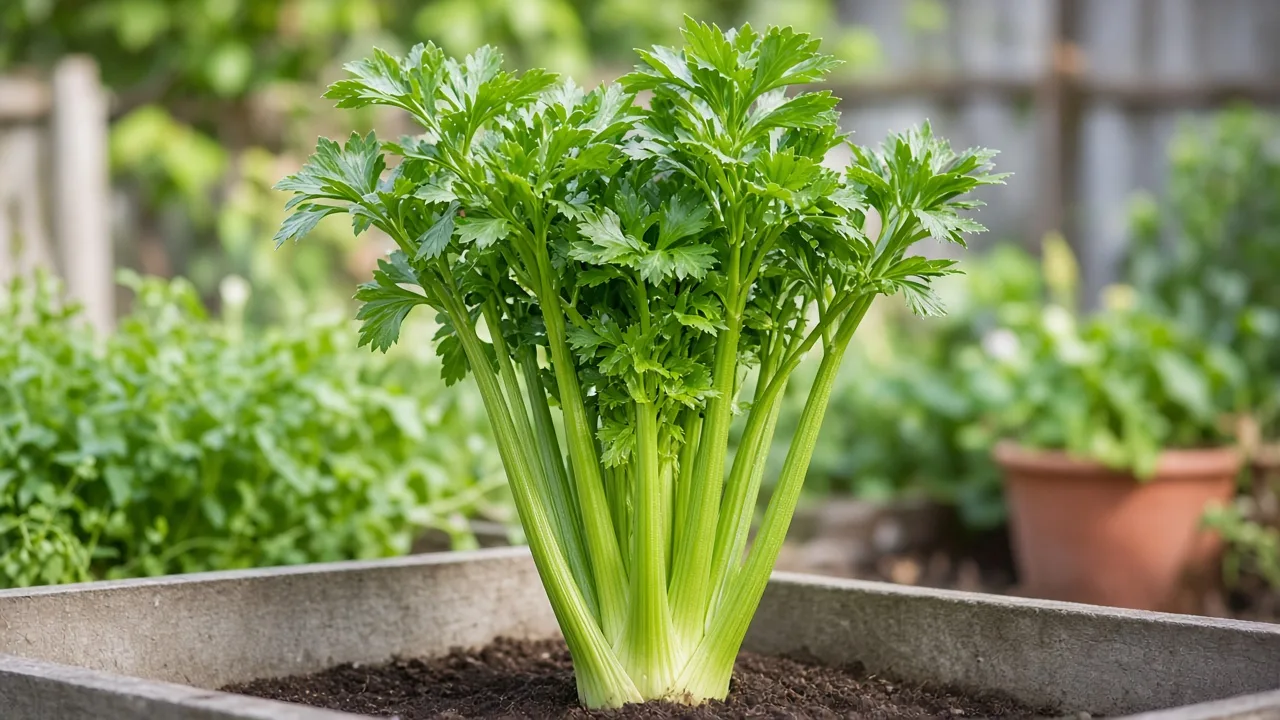
Celery Repotting Guide: Transplant & Container Timing
Celery Repotting Guide: Transplant & Container Timing
Most online repotting advice assumes a long-lived houseplant you upsize every spring. Celery (Apium graveolens, ajmoda) is a cool-season vegetable usually grown as an annual: you pot up delicate seedlings once or twice indoors, then make one careful move into a deep bed or large container for the rib-thickening phase—not a yearly rhythm of bigger decorative pots. NC State Extension describes celery as needing full sun, consistently moist rich soil, and good drainage—conditions you must set up at the final transplant because shallow fibrous roots rarely forgive a late fix.
The RHS celery guide recommends sowing indoors for a strong start, moving seedlings into individual 7.5 cm (3 in) pots when large enough to handle, then planting outdoors about ten weeks after sowing once nights stay reliably mild. Epic Gardening’s celery guide stresses that young plants bolt if exposed to prolonged cool below about 55°F (13°C) and that transplant timing matters more than brute-force pot volume. This page covers when to pot up modules, how deep terrace containers should be, spacing in blocks, and aftercare that keeps stalks tender—especially for growers in warm lowlands who treat ajmoda as a winter terrace crop.
The quick answer for ajmoda growers
Plan three short stages, not endless upsizing: (1) sow on the surface of moist seed compost and wait patiently for slow germination; (2) when seedlings have several true leaves, pot up or thin to one plant per 7.5 cm module; (3) after roughly 8–12 weeks indoors, transplant once into rich, moisture-retentive mix in a deep bed or large pot, spacing plants about 23 cm (9 in) apart in a block if you want mutual shading for blanching. Celery rarely benefits from repotting a mature plant mid-season—if ribs stall in heat, the calendar—not a bigger pot—is usually the limiter.
Move only in cool, stable weather when nights stay above about 10°C (50°F) and avoid mid-summer transplanting on Indian plains. Pre-water, handle by leaves rather than brittle stems, set plants at the same depth as before, and irrigate generously for the first week. Pair moves with the Celery watering rhythm and the soil mix you prepared ahead of time.
Why celery repotting is not houseplant repotting
Houseplant repotting refreshes a perennial root system for years. Stalk celery completes its useful harvest window in one cool season—often 85–130 days after transplant per the Celery overview hub—then bolts or fades when heat and long days arrive. Disturbed roots, drying modules, and cold nights after a move all push the same premature flowering response the RHS warns about when temperatures dip below 10°C (50°F) on young plants.
One cool-season runway, shallow roots
Feeder roots sit in the upper few centimetres of mix, so a final container that dries in hours causes stringy ribs even if you repot again later. Conversely, dropping a tiny seedling into a half-barrel of cold wet compost invites crown rot—celery wants steady moisture with oxygen, not houseplant “let it dry between waterings” logic. Your repotting goal is right-sized final volume prepared early, not maximal pot glamour.
The celery repotting timeline from seed to final pot
RHS notes germination can take up to three weeks—tiny seeds need light, warmth, and patience. Indoor starts typically begin 10–12 weeks before outdoor planting, matching LeafyPixels grower notes on the overview.
First pot-up in modules
When seedlings are large enough to handle—often after several true leaves, not merely cotyledons—move them into individual 7.5 cm (3 in) pots or thin modular trays to one plant per cell. Epic Gardening suggests up-potting to 2 in plug trays when seedlings have two true-leaf sets if you started in crowded flats. Hold seedlings under bright grow lights and keep mix evenly moist; leggy, underlit starts transplant poorly.
Final move into bed or large container
About ten weeks after sowing (RHS timing), transplant hardened seedlings into prepared ground or large containers after the last frost risk—late May to early June in temperate climates, or the coolest reliable winter window on warm terraces. This is the main “repot” for ajmoda: deep, compost-rich media, real spacing, and irrigation you can sustain for months.
Signs celery needs a bigger pot or fresh mix
Pot up or transplant when evidence points to root or volume limits, not every pale leaf:
- Roots circle a module or emerge from drainage holes while tops are still small.
- Mix dries within hours in mild weather despite thorough watering—common when fast-growing celery outgrows a 7.5 cm cup.
- Multiple seedlings share one cell and stems rub together with poor airflow.
- Salt-crusted or collapsed seed compost that will not rewet evenly—refresh before the final move.
- Final terrace pot dries daily during active rib growth while watering checks look otherwise normal.
Yellow lower leaves with constantly soggy mix point to overwatering or poor drainage, not automatically a bigger pot—audit soil structure first.
Best season to transplant or up-pot in India
Align moves with cool, steady growth—roughly 15–24°C days and nights that do not plunge below 10°C for young plants (RHS minimum). On many Indian plains, that means late autumn through winter sowing indoors and transplanting into outdoor pots during the mildest weeks—not pre-monsoon heat. Mid-summer repotting on a sun-baked terrace usually ends in wilt, bitterness, or immediate bolting regardless of pot size.
Morning transplants reduce desiccation; avoid moves during heat waves, water-stressed midday wilting, or when a thick flower stalk is already forming at the crown.
Container size, depth, and spacing
RHS container guidance recommends large containers with plants spaced about 23 cm (9 in) apart, using peat-free multi-purpose compost and frequent summer irrigation because pots dry faster than beds. Stalk types need deep workable mix—think at least 25–30 cm of rich media, more if you plan earth-up blanching.
When stepping up from a module, increase one size at a time (7.5 cm → 15–20 cm → final tub), not from a seed tray straight into a massive planter that stays cold and anaerobic.
Stalk celery vs celeriac vs leaf celery
All Apium graveolens forms share moisture hunger, but harvest organs differ. Stalk celery (var. dulce) needs the deepest final volume for rib expansion. Celeriac (var. rapaceum) swells a crown root—still transplant once into loose, stone-free upper soil, often with similar spacing but less vertical blanching room. Leaf or cutting celery (var. secalinum) tolerates somewhat shallower pots because you harvest aromatic leaves, not thick blanched ribs—see the overview for cultivar matching.
Soil and mix when you move celery
Use the same fertility priorities as your main Celery soil page: humus-rich, moisture-retentive, well-aerated mix. NC State lists high organic matter and moist, well-drained conditions together—your repotting moment is when that structure must exist.
A practical terrace blend aligned with hub data:
- 50% quality peat-free potting mix or light loam
- 35% mature compost or well-rotted manure (fully composted)
- 15% perlite, rice hulls, or coarse coco chips
Pre-moisten mix before filling so the root ball does not sit in a dry pocket. NC State’s Extension Gardener Handbook on container plants reminds growers to loosen circling roots gently and plant at the same depth—advice that applies when celery moves from modules to final pots.
Step-by-step: pot up young seedlings
- Water lightly an hour beforehand so cells hold together.
- Fill 7.5 cm pots with moist seed or potting compost; dib a hole sized to the root mass.
- Lift by leaves, supporting the root ball—celery stems bruise easily (RHS handling note).
- Set at the same depth; burying the crown invites rot.
- Water gently until drainage flows; keep under bright light and above 10°C.
- Hold fertilizer until roots reach pot edges unless you used sterile mix—then light feeding follows the fertilizer guide after establishment.
Step-by-step: transplant into the final container or bed
- Prepare the site days ahead with compost and drainage—celery is a heavy feeder that expects richness at planting (RHS ground prep).
- Reduce water slightly for 7–10 days before the move if using Epic’s approach—Epic Gardening advises against hardening celery by lowering temperatures, which can vernalize young plants.
- Dig holes the size of each plug; space 23 cm apart in blocks for self-shading, or 30–45 cm in single rows for trench types.
- Ease plugs out without stripping roots; loosen only light circling on the outer 1 cm.
- Backfill without compacting—Epic Gardening warns against pressing soil over fragile roots.
- Water thoroughly; diluted kelp or steady moisture helps recovery (Epic transplant notes).
- Mulch lightly in beds to buffer shallow roots; avoid burying the crown.
Hardening off without cold-shock bolting
RHS recommends keeping seedlings indoors until late May or early June in cool climates, hardening off carefully, and protecting with cloches or fleece for several weeks while staying above 10°C. Epic Gardening adds that nights should stay above 50°F before outdoor planting and that cold exposure below about 55°F on young plants is a common bolt trigger.
On terraces, use gradual outdoor shade, wind breaks, and row cover during the first cool nights after transplant—especially if modules sat on a chilly concrete floor. Choose bolt-resistant cultivars if your microclimate swings.
Care after repotting or transplanting
Expect transplant pause: slight wilting or stalled rib growth for several days is normal when roots are disturbed, as described in Gardening Know How’s transplant shock overview. Celery recovers if moisture stays even.
For the first two weeks after the final move:
- Irrigate so the upper 2–3 cm never dries completely during active growth—shallow roots cannot mine deep reserves (overview watering checks).
- Avoid foliar soaking at night in humid cool weather; splash spreads leaf spots when spacing is tight.
- Side-dress or fertigate on schedule once new growth resumes—see Celery fertilizer.
- Shade lightly during the hottest afternoon if temperatures spike above the high twenties °C right after transplant.
If wilting persists with wet mix, inspect the crown for rot from buried stems or anaerobic media before assuming the plant needs yet another pot.
Common mistakes that trigger bolting or wilt
- Transplanting large, root-bound plants into heat after cold module benches vernalized them (RHS bolting advice).
- Hardening off by chilling instead of gradual light/wind exposure (Epic Gardening).
- Skipping the module pot-up and leaving crowded seedlings to compete until ribs are pencil-thin.
- Final pots too shallow so mix flashes dry—stringy, bitter stalks follow.
- Oversized final pots with tiny seedlings sitting in cold, waterlogged compost.
- Burying crowns deeper “for support,” causing basal rot.
- Repotting mid-summer on Indian terraces when the crop should already be finishing—start a new indoor sowing via propagation instead.
When not to repot celery
Skip the move when:
- A thick flower stalk is rising—harvest or compost; repotting will not restore tender ribs.
- Heat stress already dominates; stabilize shade and water first.
- Plants are within a few weeks of planned harvest and roots are not root-bound.
- The issue is low light (leggy, pale growth)—fix placement per Celery light before changing containers.
- Damping-off or crown rot is active; sterile re-sowing beats shuffling sick plugs between pots.
Often the best “repot” for finished ajmoda is composting the spent container and sowing a fresh winter batch.
When to use this page vs other Celery guides
Use this repotting guide when you are moving celery between modules and final containers, upsizing because roots or drying speed demand it, or planning spacing and depth before transplant. For steady moisture checks, start with Celery watering. For mix recipes and pH, see Celery soil. For sowing timing, modules, and seed tricks, read Celery propagation. For light and grow-lamp distance on indoor starts, see Celery light. For feeding after establishment, open Celery fertilizer. For cultivar choice and seasonal roadmap, visit the Celery overview.
Related Celery guides
- Celery overview — stalk vs celeriac vs leaf types and cool-season identity.
- Celery watering — shallow-root moisture rhythm after any transplant.
- Celery soil — compost-rich mixes that drain without drying in hours.
- Celery propagation — when to sow indoors instead of moving oversized seedlings.
- Celery fertilizer — feeding schedule once roots recover from transplant shock.
Conclusion
Celery repotting is a short, cool-season pipeline: pot up delicate seedlings into 7.5 cm homes, then transplant once into deep, fertile containers or beds with honest spacing and irrigation you can keep up for months—not a perennial upsize calendar. Protect young plants from cold vernalization, handle roots gently, and match final pot depth to shallow feeders. When heat, bolting, or a spent crop arrives, sow a fresh ajmoda batch rather than chasing one plant through summer with bigger pots.
Related tool
Try the Pot Size Calculator with celery pre-selected to estimate container needs for your terrace setup.