Celery Light Needs: Full Sun, Seedling Lamps & Shade
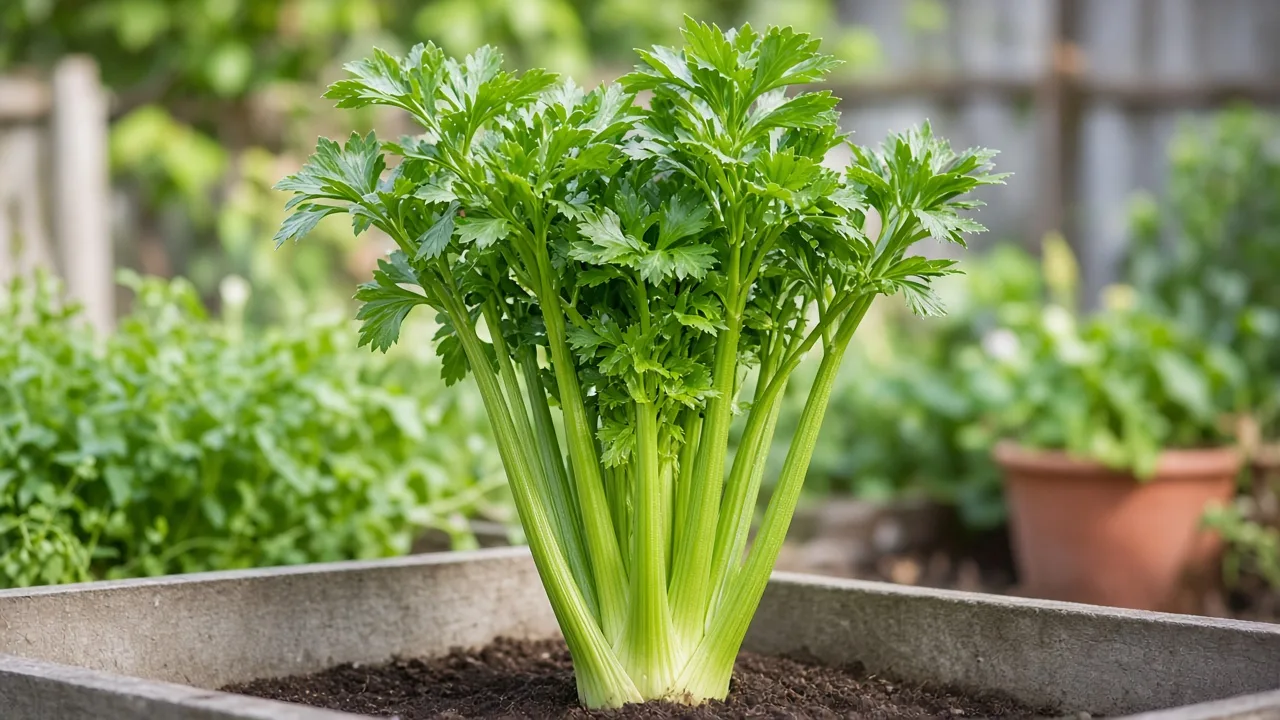
Celery Light Needs: Full Sun, Seedling Lamps & Shade
Celery Light Needs: Full Sun, Seedling Lamps & Shade
Celery (Apium graveolens var. dulce) — ajmoda in many Indian kitchens — is a leafy, upright crop whose ribs thicken only when bright cool-season light meets steady moisture. Unlike shade-tolerant salad greens, stalk celery evolved in moist temperate habitats and behaves like a long, cool-season vegetable: dim sites produce slow, thin, or bitter stalks, while heat plus strong sun without water pushes bolting and stringiness. Light is not optional decoration; it fuels the months between a light-dependent seed start and harvest.
Start with the Celery overview for cultivar groups (stalk, leaf, celeriac), sowing windows, and spacing. This page covers how much sun celery needs at each stage, where to place winter beds and deep pots, grow-light hours for seedlings, when brief afternoon shade is heat relief—not a permanent location—and the first fixes when ribs fail to thicken.
Celery light needs: the quick answer
For mature stalk celery in the garden or a final container, plan for full sun: six or more hours of direct sunlight daily. NC State Extension lists Apium graveolens as full sun (six or more hours of direct sunlight a day) with moist, rich, well-drained soil. Epic Gardening recommends six to eight hours of direct sun in the garden and cautions that too much shade reduces vigor.
That outdoor target is different from seed starting. Celery seeds sit on the soil surface because they need light to germinate—burying them blocks emergence. RHS advises sowing on moist compost with only a very light dusting if you cover at all, and giving seedlings plenty of light once they appear. After emergence, Plot My Garden recommends 14–16 hours of bright light daily—often grow lights 5–8 cm above seedlings because a sunny window alone is usually too dim for the 10–12 week indoor start.
On a winter terrace in hot lowlands, your best light strategy is often when you grow celery, not how much you shade it: give cool-month plantings the brightest unobstructed site you have. Reserve partial shade or 50–70% shade cloth for heat waves above about 27°C (80°F), when Plot My Garden notes bolting and tough stalks become likely—not for an entire dull courtyard year-round.
Why light and cool temperatures build crisp ribs
Celery does not store harvest weight underground like beetroot. The cluster of grooved stalks you eat is living leaf tissue that must photosynthesize continuously through a long season—often 85–130 days after transplant on the hub. Shallow fibrous roots mean the plant cannot “wait out” dim weather; it simply slows rib thickening or pushes tall, weak growth toward any available light.
Cool air makes sun hours useful
Plot My Garden places the ideal growing range around 15–21°C (60–70°F). In that band, long sun hours help ribs elongate and stay crisp when watering stays even. When temperatures climb above about 27°C, the same brightness becomes heat stress unless moisture and optional shade keep leaves from wilting—light and temperature must be read together.
Biennial biology and bolting cues
Celery is a biennial usually grown as an annual. Prolonged cold on young plants can vernalize them so they flower after weather warms—a light problem only indirectly, but placement and transplant timing matter. Plot My Garden warns that more than about ten consecutive days below 7°C (45°F) on seedlings can trigger premature bolting once temperatures rise. Protect transplants until nights stay above about 10°C (50°F) before you chase maximum sun outdoors.
Full sun for mature stalk celery outdoors
Full sun means unobstructed light long enough to cast a sharp hand shadow on soil from mid-morning through much of the afternoon. Six hours is the extension minimum; eight hours on clear cool-season days supports faster rib fill when fertility and moisture match the hub’s heavy-feeder profile—see fertilizer.
RHS tells growers to choose a sunny spot with fertile, moisture-retentive soil and avoid sites that dry out rapidly—a common failure on exposed rooftops where sun is ample but soil overheats. Raised beds that catch open sky often outperform ground courtyards rimmed by walls that steal late-day light.
Why Epic Gardening pushes six to eight hours
Epic Gardening states celery needs six to eight hours of full direct sunlight and recommends avoiding afternoon shade from structures when you want maximum rib production. That matches extension full sun language for Apium graveolens and is the default for winter ajmoda on an open terrace—not for midsummer sowings on the plains, where heat ends the crop regardless of lamp or shade tricks.
Partial sun and when afternoon shade helps
Some references classify celery as tolerating partial sun (roughly three to six hours of direct light) with morning sun and afternoon shade—useful language for hot climates, not permission to grow stalk celery in a permanently dim nook. Plot My Garden lists partial sun (3–6h) as workable when paired with consistent moisture and notes tomato partial shade as a companion strategy during warm weather.
Treat partial sun as:
- Heat management during spikes above 27°C, using 50–70% shade cloth or moving containers to afternoon shade briefly.
- A slower path on bright but interrupted sites (tall parapets, winter tree shade)—expect longer days to harvest and thinner ribs unless you choose leaf celery or harvest young.
Do not confuse intentional blanching shade on lower stalks (newspaper wraps, ridging soil) with growing the whole plant in shade—blanching excludes light from ribs for milder flavor; the leaf canopy still needs brightness to keep the crop alive.
Light requirements for germination
Celery seeds are tiny and slow—often 14–21 days to emerge. They must stay on or just under the surface with light reaching the seed coat. Epic Gardening sows about ⅛ inch deep because seeds require light to germinate; heavy cover prevents emergence. RHS repeats that seeds need light to germinate, with only an optional sieved dusting of compost.
Keep the surface evenly moist (mist rather than flood) at 18–21°C until seedlings appear. Full details on timing and trays live in propagation; light is the piece many growers skip when they bury seeds “like carrots.”
Grow lights for the long indoor seed start
Stalk celery is not a windowsill-afterthought crop. The hub’s grower notes and Plot My Garden align on starting indoors 10–12 weeks before transplant. During that stretch, 14–16 hours of bright light daily after emergence prevents leggy, pale seedlings that collapse after transplant.
Setup basics
Position full-spectrum LEDs 5–8 cm above the canopy and raise them as leaves grow. A south-facing window can supplement but rarely replaces lamps for dense, stocky starts. Pair brightness with steady moisture—dry surface mix kills germination; soggy mix invites damping off.
When to reduce lamp dependence
As outdoor nights pass 10°C and you harden off, shift from artificial hours to real sun in increasing doses (see below). Mature plants in final beds need open sky, not perpetual grow tents.
Hardening off without sunburn or cold shock
Plot My Garden recommends 7–10 days of hardening: begin with one to two hours in a sheltered, shaded outdoor spot, then lengthen exposure daily. Jumping from a bright bench to all-day terrace sun can bleach or crisp young leaves; jumping too early into cold nights risks vernalization.
Handle seedlings by leaves, not fragile stems, when moving trays—see repotting for when to shift from cells to final spacing. One well-timed transplant beats chasing light with repeated moves of mature plants.
Best placement on beds, terraces, and courtyards
RHS prioritizes sun plus moisture-retentive soil prepared with well-rotted organic matter. On Indian rooftops, place winter celery where:
- Morning sun dries dew quickly (reducing leaf disease pressure in humid coasts).
- Midday sun is not blocked by water tanks, AC units, or laundry lines.
- Afternoon light still reaches the crown—celery’s upright habit is taller than beetroot; measure at 30–60 cm height, not standing eye level only.
Align the brightest weeks with cool nights so photons become rib growth instead of heat stress.
The morning–noon–afternoon shadow test
On a clear day, visit the planned row at 9 a.m., noon, and 4 p.m.:
- Does direct sun hit each future plant site?
- Do moving shadows from rails or trees cut total hours below six?
- Is the surface dark tile or metal that radiates heat under full sun—if yes, plan watering checks even when air feels mild.
If the site fails the test, fix placement on the next sowing; mature celery does not tolerate being dug and relocated to chase sun without stalling ribs.
Container celery on balconies and rooftops
Containers amplify both light and heat. Plot My Garden suggests at least 15–20 liters per plant, rich mix, and daily watering in warm weather—full sun on a pot dries faster than an in-ground bed. Put pots where they receive the longest sun arc, not just where they fit beside a wall.
Self-watering reservoirs help on sunny rails but do not replace brightness: a well-watered pot in shade still yields thin ajmoda. Match depth and compost to soil guidance before you blame fertilizer.
Seasonal light strategy for India and tropical lowlands
In hot plains, treat stalk celery as a winter project: sow indoors late summer to early autumn, transplant into bright winter sun when nights are cool and stable—not as a pre-monsoon crop. Hill stations and mild winters can follow a spring rhythm closer to UK guides, but the shadow test still rules.
Rabi-style winter windows
When October–February brings cool nights and clear days, give plants all the sun the terrace offers. That is when six to eight hours matches celery biology. Summer sowings fight heat bolting even under shade cloth; fix the calendar before you buy more lamps.
Heat waves, bolting, and shade cloth
When forecasts push above 27°C, Plot My Garden advises 50–70% shade cloth and more frequent watering to limit bitterness and stringiness. This is temporary relief, not a new permanent location. Remove or open shade when weather returns to the 15–21°C ideal band so ribs keep thickening.
A tall flower stalk after heat or cold snaps signals bolting—see pruning for whether to trim flower shoots, but prevention is timing, temperature, and vernalization control, not less light all season.
Blanching shade is not the same as growing light
RHS explains blanching as excluding light from stems to reduce bitterness and tenderize ribs—traditionally by ridging soil or wrapping outer stalks. Self-blanching cultivars need less intervention; green types stay stronger-flavored in full light on the leaf canopy while lower ribs may still be wrapped two to three weeks before harvest.
Never blanch the entire plant or you starve the crop of photosynthesis. The hub’s grower notes cover when blanching applies to stalk types only—not celeriac or leaf celery.
Leaf celery, celeriac, and self-blanching cultivars
Leaf or cutting celery (var. secalinum) tolerates lighter rib expectations—growers often prioritize aromatic leaves for cooking. Celeriac (var. rapaceum) still wants a bright, cool site for root swell but foliage architecture differs. Stalk types remain the most light-hungry; do not apply “shade-tolerant greens” rules to supermarket-style ribs.
Heat-tolerant cultivars such as ‘Tango’ or ‘Kelvin’ (Epic Gardening) buy margin in marginal summers but do not replace winter timing on the plains.
Warning signs of too little light
Watch for leggy seedlings (long internodes, pale leaves) under weak windows; slow rib thickening after 60+ days in a dim courtyard; small, upright plants with dark green but thin stalks when overcrowding or shade stacks. Overcrowding shades lower leaves—follow spacing in repotting and the overview.
If seedlings were starved of light indoors, outdoor sun alone rarely repairs structure; restart with proper lamps on the next sowing.
Warning signs of too much sun or heat stress
Midday wilting on dry soil in full sun points to watering, not shade forever. Bleached leaf edges on newly transplanted trays mean incomplete hardening. Bitter, stringy ribs after hot spells tie to heat and moisture swings (Plot My Garden). Bolting after cold exposure is a temperature/light-length stress response—shade will not undo vernalization.
Light working with watering and soil
Sun drives transpiration from celery’s large leaf surface. Full-sun containers may need daily moisture checks while shaded pots dry slowly yet still produce poor ribs. Humus-rich soil buffers roots against rapid heating on terraces. Steady fertilizer supports leaf area that can use the light you provide—pale, hungry foliage wastes a sunny site.
When to use this page vs other Celery guides
- Celery overview — cultivar choice, cool-season calendar, and spacing before you tune light.
- Celery watering — even moisture when full sun dries shallow roots fast.
- Celery soil — moisture-retentive mixes; heat + sun on poor mix stalls ribs.
- Celery fertilizer — feeding once brightness supports active growth.
- Celery propagation — surface sowing, germination light, and sow dates.
- Celery repotting — transplant timing and final sunny placement.
- Celery pruning — bolting shoots and harvest-side leaf management.
Related Celery guides
- Celery overview — ajmoda framework for stalk, leaf, and celeriac types
- Celery watering — daily checks when winter sun pulls water from pots
- Celery propagation — light-dependent seed sowing indoors
- Celery soil — rich, moisture-retentive beds under open sky
- Celery fertilizer — nitrogen for leaf area that harvests photons
Conclusion
Stalk celery wants full sun for mature plants—about six to eight hours of direct light on a cool-season calendar—plus bright, long-duration light for seedlings during the 10–12 week indoor start. Sow on the surface because seeds need light to germinate; use 14–16 hours of grow lamps after emergence; harden off gradually; and run the morning–noon–afternoon shadow test before you commit terrace space. Use afternoon shade or shade cloth only as heat-wave relief above roughly 27°C, not as a substitute for a bright winter window. When ribs thicken steadily and flavor stays mild, your light, temperature, and moisture align with Apium graveolens; when plants bolt or stay stringy, fix season and placement before you blame the crop.