Celery Fertilizer Guide: When and How to Feed
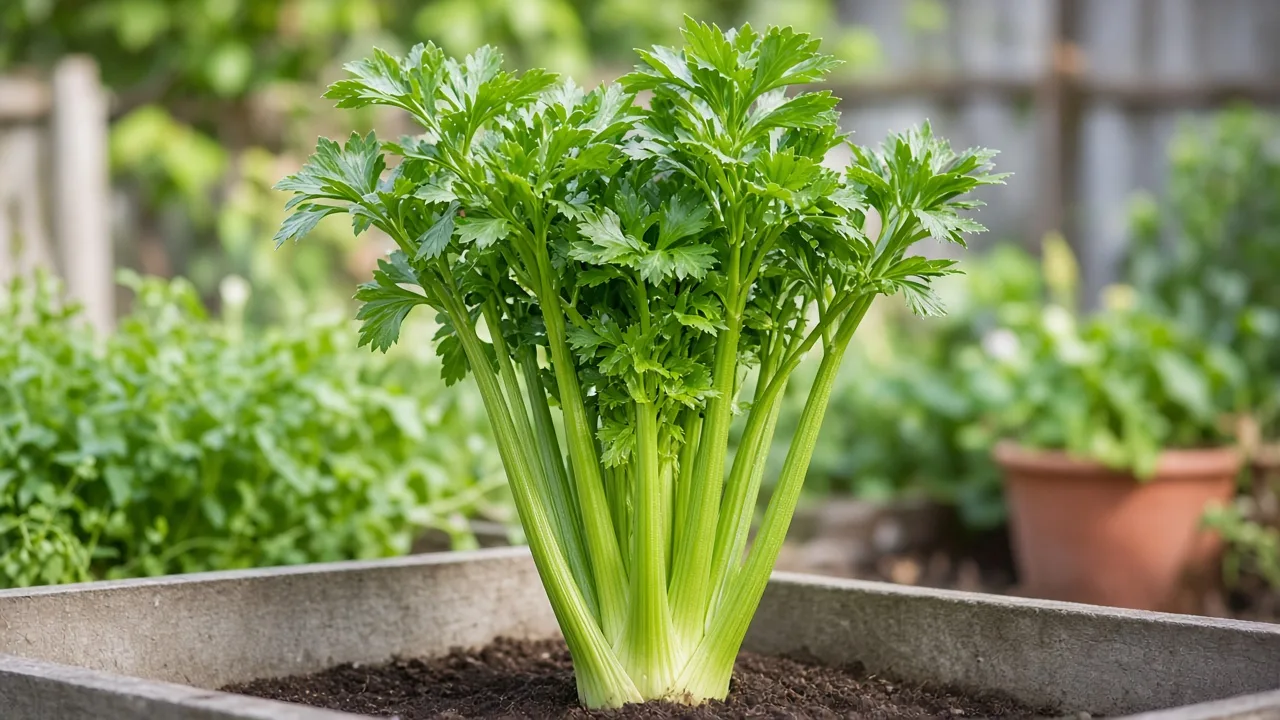
Celery Fertilizer Guide: When and How to Feed
Celery Fertilizer Guide: When and How to Feed
Stalk celery (Apium graveolens var. dulce) is among the most nutrient-hungry crops in a winter kitchen garden. Pale lower leaves, pencil-thin ribs, and bitter harvests often trace to steady nitrogen and organic matter missing from the root zone—not a mystery pest. Unlike forgiving houseplants, ajmoda expects fertility to arrive with moisture in shallow soil, as outlined in the Celery overview. Bottled feed should close a gap you can see after soil and watering are already honest.
Why celery feeding is leaf-crop logic, not succulent logic
Celery is grown for thick, mild ribs and leafy tops, not a storage root or a one-time fruit flush. That means nitrogen matters for most of the cool season, but only while plants can use it—on evenly moist, oxygenated mix. NC State Extension lists Apium graveolens as preferring full sun in moist, rich, well-drained soil with high organic matter—fertility and drainage together, not either/or.
Marsh margins and shallow, hungry roots
Wild celery relatives evolved on boggy, fertile margins where nutrients and water arrived together. Cultivated stalk types keep shallow fibrous roots near the crown. Utah State University Extension notes celery has a small root system and is a poor nutrient forager, so the upper soil must already hold a good nutrient supply. If the top few centimetres go lean or dry, ribs stall long before deep bed fertilizer rescues them.
Build fertility before you open a fertilizer bottle
Long before choosing an NPK ratio, bank organic matter in the bed or container. The RHS celery guide advises preparing a sunny site with fertile, moisture-retentive soil, digging in lots of well-rotted manure or garden compost ahead of sowing—or mulching no-dig beds with the same materials. Epic Gardening’s celery guide recommends amending heavily with compost, decomposed manure, and/or leaf mould before planting, targeting pH 6.0–7.0 and high water-holding capacity.
If you prepared soil that way, the RHS notes additional feeding is usually unnecessary in ground—unless the site was poor or you want to push growth.
Mature compost and pre-plant timing
Work mature compost through the root zone weeks before transplant so structure stabilizes. USU Extension suggests applying no more than about 1 inch of well-composted organic matter per 100 square feet if compost is your main amendment, and using a soil test to decide whether granular fertilizer is warranted. In Indian plains terraces, prepare beds during the coolest practical winter window so organic matter can settle before indoor-started seedlings move outside.
Well-rotted manure versus fresh
Celery wants richness, not heat. Well-rotted manure or compost mixed in before planting matches extension guidance; fresh manure can burn shallow roots, skew moisture, and push soft growth that rots when watering stays heavy on wet nights. If manure sourcing is uncertain, rely on mature compost alone—the same baseline as the Celery soil guide.
NPK priorities for stalk celery and celeriac
Think complete nutrition at planting, then measured nitrogen while ribs thicken. Phosphorus supports early establishment; potassium supports overall plant function. USU Extension recommends working a complete fertilizer with a high ratio of potassium (such as 4-4-8) into the top 6 inches of soil when tests or lean ground call for it.
Nitrogen for rib fill without soft, rot-prone growth
Pale yellowing leaves and thin stalks often signal insufficient nitrogen on a heavy feeder. Plot My Garden’s celery profile describes celery as a heavy nitrogen feeder and ties pale foliage to fertility gaps. USU Extension gives a concrete sidedress example: ¼ cup (21-0-0) per 10 feet of row at 4 and 8 weeks after transplanting. Scale down for containers—half-strength liquid or a tablespoon of balanced organic feed banded at the pot edge beats dumping full row rates on one plant.
Stop chasing nitrogen once stalks are sizing and nights warm; excess soluble feed on saturated mix invites soft tissue and crown problems—especially if light and airflow are already marginal on a terrace.
Potassium and complete fertilizers at planting
A balanced or potassium-forward complete fertilizer at planting suits a crop that spends months in one spot. Avoid lawn formulas or leafy-green boosters with very high nitrogen alone; celery needs ribs, not a forest of tops. Organic growers often rely on compost plus periodic fish emulsion or compost tea; Epic Gardening mentions all-purpose organic fertilizer and liquid fish every couple of weeks during active growth as one workable organic path.
Seasonal feeding calendar from seedling to harvest
Match feeds to cool active growth, not calendar reflex.
Seedlings and transplant establishment
Seed-starting mix is deliberately lean. Do not blast tiny seedlings with full-strength fertilizer. Begin gentle feeding after 2–3 true leaves and a first pot-up—details of timing live in Celery propagation and Celery repotting. At final transplant, most nutrition should already sit in the bed from compost; the first week is about root contact, moisture, and light, not weekly bottles.
Active rib growth and sidedress windows
From established transplant through rib fill:
- Weeks 0–4 after transplant: rely on pre-plant compost; water evenly so nutrients stay available in the shallow root zone.
- Weeks 4–8: if leaves pale and soil was lean, sidedress nitrogen per extension scaling (USU’s 4- and 8-week marks are a useful template).
- Mid-season on terraces: every 2–3 weeks, a diluted balanced liquid or compost tea can match Plot My Garden’s heavy-feeding schedule—only while growth is visibly active and mix drains well.
- Late season / pre-blanch: ease off strong nitrogen before blanching or pruning wraps; rank, waterlogged growth blanches poorly and splits easily.
Container and terrace feeding in Indian winter gardens
Pots magnify both drought and salt buildup. The RHS advises feeding container celery every fortnight with a balanced liquid fertiliser through summer; on a North Indian winter terrace, translate that to active cool-season weeks when plants are visibly growing—not dormant heat spells.
Use deep pots, peat-free mix blended with mature compost, and check whether bagged potting soil already contains slow-release fertilizer. If ribs pale after three weeks of even watering, use half-strength liquid vegetable feed every 10–14 days, then pause and reassess. Daily feeding in small pots is a common way to burn leaf margins and crust the surface while roots stay hungry below.
Stalk celery, celeriac, and leaf celery: same species, different harvests
All are Apium graveolens, but the organ you chase changes how aggressively you feed.
- Stalk celery (var. dulce) needs the longest, steadiest fertility through rib expansion.
- Celeriac (var. rapaceum) still wants rich, moist soil for root swell but tolerates slightly denser mix if drainage stays honest—see cultivar notes in the overview.
- Leaf or cutting celery (var. secalinum) rewards nitrogen for foliage in shallower containers; harvest leaves often so the plant keeps pushing tender growth.
Do not copy celeriac’s spacing and expect stalk-type ribs without stalk-type feeding and depth.
Calcium, blackheart, and fertilizer myths
Blackheart—brown or blackening in the heart of the cluster—is a localized calcium deficiency in developing tissue, not always a lack of lime in the bag. USU Extension lists avoiding water stress as a key way to minimize blackheart and mentions calcium-rich amendments or sprays as supplementary tools. Plot My Garden stresses that consistent watering drives calcium uptake more reliably than dumping gypsum on dry soil.
Fix erratic irrigation before you buy foliar calcium. Pale ribs from nitrogen shortage and blackheart from moisture swings can coexist—address water and modest nitrogen together rather than only spraying leaves.
Signs you are over- or under-feeding
Under-feeding: pale or yellow lower leaves, stalled rib thickening, thin stalks despite good light and even moisture, slow recovery after pot-up.
Over-feeding: dark overly lush tops on weak ribs, salt crust on pot surfaces, leaf tip burn, soft rot-prone growth at the crown when nights are cool and soil stays wet, sudden wilting on fertilized but waterlogged mix.
When in doubt, pause bottled feed for two weeks, confirm drainage, and resume at half strength only if new growth pales.
First action when growth stalls
Before swapping fertilizers:
- Confirm cultivar group (stalk vs celeriac vs leaf) in the overview.
- Check 2–3 cm soil moisture beside the crown—dry or sour/wet?
- Review whether compost was worked in pre-plant or containers rely on lean bagged mix alone.
- Look at leaf colour: uniform pale green suggests nitrogen; heart browning suggests moisture-linked calcium stress.
- Apply one correction—deep soak, compost sidedress, or diluted liquid feed—not all three the same afternoon.
When to use this page vs other Celery guides
- Celery overview — Cultivar choice, cool-season timing, and how feeding fits the full crop. Celery overview
- Celery soil — Organic matter, pH, and mixes that make fertilizer available. Celery soil
- Celery watering — Even moisture that moves calcium and prevents blackheart. Celery watering
- Celery light — Heat stall and how sun changes daily water and feed uptake on terraces. Celery light
- Celery propagation — Lean seed mix and when seedlings first need gentle feed. Celery propagation
- Celery repotting — Pot-up timing without shocking roots mid-sidedress. Celery repotting
- Celery pruning — Blanching and leaf management after growth slows. Celery pruning
Related Celery guides
- Celery overview — ajmoda basics and heavy-feeder context
- Celery soil — compost-first fertility before bottles
- Celery watering — moisture that makes feed and calcium work
- Celery light — cool-season growth windows for sidedress timing
- Celery propagation — when not to fertilize germinating seed
Conclusion
Celery fertilizer success is compost-rich soil first, then measured nitrogen and balanced liquids while cool-season ribs are actively thickening—not weekly strong feed on dry or waterlogged mix. Pre-plant organic matter, extension-scaled sidedress if leaves pale, fortnightly diluted liquid in hungry containers, and steady watering for calcium uptake beat chasing blackheart with supplements alone. Get soil and water right, feed to visible need, and ajmoda ribs have a fair chance to stay crisp instead of stringy.