Celery Pruning Guide: Harvest, Blanching & Stalk Cuts
Celery Pruning Guide: Harvest, Blanching & Stalk Cuts
Celery Pruning Guide: Harvest, Blanching & Stalk Cuts
First, snip only yellow, slimy, or clearly damaged outer leaves and ribs at the base with a clean sharp knife. Do not harvest kitchen stalks until lower ribs on a mature plant are long enough to lift clear of the crown—usually at least 6 inches (15 cm) from soil to the first node. For species context, cultivar choice, and cool-season timing, see the Celery overview.
Quick answer
Celery (Apium graveolens) is “pruned” by timed stalk harvest and leaf cleanup, not by shaping woody branches. After damaged-tissue removal, your first productive cut is typically one mature outer rib (or a small outer pair) cut below the point where stalks join the shared crown, leaving the inner cluster intact. Many stalk cultivars need 85–120 days after transplant before ribs reach harvest size (Gardening Know How). Blanching—excluding light from lower stems for the last two to three weeks—softens flavour on traditional types (Nature and Garden; RHS). Pruning cannot reverse bolting, drought stringiness, or heat stress; fix water and season first.
What celery pruning actually means
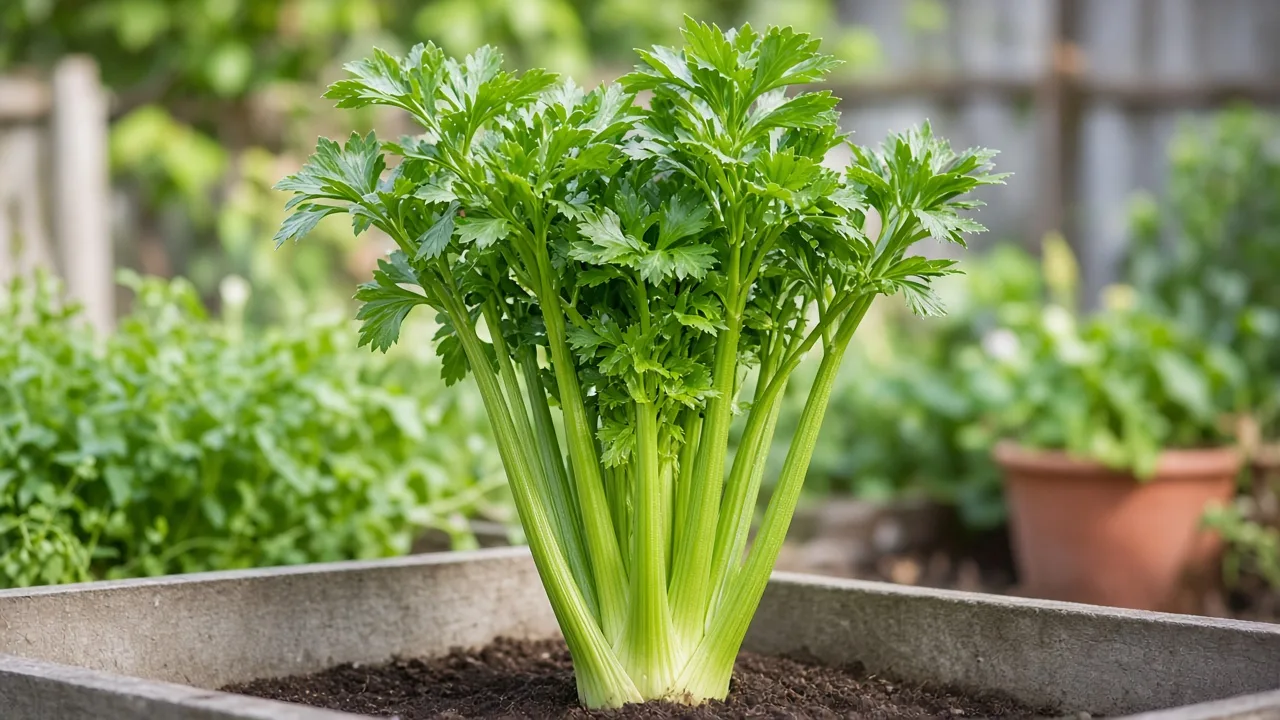
Garden celery forms a cone of grooved leaf stalks (petioles) joined at a common base above shallow fibrous roots (Utah State University Extension). New ribs expand from the central heart; there is no lignified framework to rejuvenate. “Pruning celery” means:
- Sanitation — removing yellow, diseased, or pest-ridden outer tissue.
- Harvest cuts — taking outer ribs or whole plants at kitchen-ready size.
- Blanching prep — tying, wrapping, or earthing stems to exclude light before final harvest on cultivars that need it.
NC State Extension lists cultivated groups under one species: stalk celery (var. dulce), celeriac (var. rapaceum), and leaf or cutting celery (var. secalinum). Harvest cuts differ by type—do not treat celeriac like rib celery.
Stalk celery vs leaf celery vs celeriac
| Type | What you cut | Typical goal | Regrowth |
|---|---|---|---|
| Stalk celery (var. dulce) | Outer ribs or whole plant at crown | Crisp ribs, often blanched | Outer picks until bolt or frost |
| Leaf / cutting celery (var. secalinum) | Aromatic leaves and thin stems | Repeated foliage harvest | Multiple cuts in cool weather |
| Celeriac (var. rapaceum) | Leaves for seasoning; lift root at maturity | Swollen root, not thick ribs | Single root harvest per plant |
Nature and Garden spaces stalk seedlings about 12 inches (30 cm) apart and celeriac wider; harvest timing runs roughly six to seven months after sowing for stalk types in temperate schedules—shorter when you transplant large seedlings into rich, cool conditions.
When to prune or harvest celery
Days and size triggers
Plan harvest from transplant age, not from the day you sow. Gardening Know How places celery harvest 85 to 120 days after transplant, with lower stalks at least 6 inches (15 cm) long and the bunch still compact. Upper ribs on fully sized plants often reach 18–24 inches (46–61 cm) with roughly 3-inch diameter before a whole-plant pull.
Utah State University Extension describes removing outer petioles when they are a foot or more in length and harvesting whole plants when the cluster is about 3 inches or more in diameter, with inner stalks most tender for raw use.
Season and weather
Finish serious harvest before hot, dry weather when possible—Gardening Know How warns that heat without excellent moisture turns ribs woody, and Utah State University Extension notes celery picked in hot, dry weather may be tough, stringy, and bitter. In Indian plains, align harvest with your coolest winter weeks and steady irrigation from the watering guide.
RHS advises harvesting self-blanching and green types before leaves start to turn yellow, because stems turn stringy with age, and finishing before first frost where frost occurs.
Blanching window
For types that need pale, mild ribs, start blanching when stems are roughly 30 cm (1 ft) tall in mid- to late summer in temperate calendars (RHS). Nature and Garden describes ridging soil up to about three-quarters of leaf height or using opaque wrap—two to three weeks before harvest, not months earlier. Self-blanching cultivars in a tight block may need little work except on outside plants (RHS).
What to check before you cut
Run a quick crown-level inspection:
- Moisture — ribs stay crisp when the upper 2–3 cm of mix stays evenly damp; drought precedes hollow or stringy stalks (Utah State University Extension).
- Heart colour — darkening or blackened young leaves in the center may signal blackheart (calcium imbalance aggravated by uneven water); remove only clearly dead tissue and fix moisture before aggressive harvest (Utah State University Extension).
- Bolting cues — sudden stem elongation, flower umbels, or bitter flavour mean leaf harvest is ending; do not keep stripping ribs expecting tenderness.
- Pests — NC State Extension lists aphids, slugs, and celery worms; bag heavily infested outer leaves instead of composting in humid climates.
- Spacing and shade — overcrowded blocks stay wet longer; RHS plants celery in a block about 23 cm apart so neighbours shade stems.
If ribs are thin and plants are pale despite good water, review light and fertilizer before harder cutting.
The first cut to make
After sanitation on damaged tissue, select one mature outer rib that separates cleanly at the crown. Cut below the joint where stalks meet the shared base, angling the blade slightly outward so you do not slice into younger inner petioles. Wait several days and watch the heart: if new outer ribs continue to thicken, your timing was appropriate.
This single conservative rib confirms harvest readiness before you take a full kitchen bunch.
How to harvest celery step by step
Outer-rib cut-and-come-again
- Peel or fold back the oldest outer petiole at soil level.
- Cut at the crown attachment with a sharp knife—do not twist and tear fibrous bases.
- Rinse ribs; grit lodges in the grooved outer surface.
- Leave at least half the leafy mass on the plant between major picks.
Utah State University Extension frames this as removal of outer petioles while inner stalks remain for later, sweeter use.
Whole-plant harvest
When the cluster reaches target diameter and weather is still cool, dig or cut the entire plant at the crown for one large harvest. Gardening Know How recommends cutting stalks below where they join together. RHS suggests using plants as soon as possible after pull for best crunch.
Whole-plant harvest fits end-of-season cleanup, shared harvests, or cultivars that age stringy if left standing.
Blanching before final cuts
- Tie outer leaves, wrap newspaper or cardboard sleeves, or ridge soil partway up ribs (RHS; Nature and Garden).
- Keep the top third of foliage exposed for photosynthesis (RHS).
- Harvest two to three weeks after blanching starts on traditional green types.
Skip aggressive blanching on leaf celery grown for foliage; focus on repeated leaf cuts instead.
Leaf celery and celeriac
Leaf celery — snip outer leaves as low as possible without gouging the crown; dry extras for herb use (Nature and Garden). Celeriac — trim foliage when lifting roots in fall; root harvest is a pull, not rib pruning. Crown cuts on celeriac are for cleanup only before storage.
How much you can safely remove
For ongoing harvest, take only outer ribs that are fully sized, not the entire crown at once unless you are finishing the plant. A practical limit is a few outer stalks per plant per week in cool, moist weather—more aggressive stripping during heat or drought accelerates stringiness (Utah State University Extension).
For sanitation, removing all clearly dead lower leaves is safe. Do not remove more than half the photosynthetic leaf area on a still-growing plant unless you are harvesting the whole cluster.
Where to cut
- Outer ribs — at the crown junction, not mid-petiole, unless you are taking a single rib for the kitchen and leaving the stump to dry.
- Damaged leaves — flush with the crown or at the lowest healthy tissue.
- Whole plant — through the shared base at or just above soil line, keeping roots in the bed if you are clearing space.
- Never — into the central growing point of immature plants or through the heart trying to “open up” the cluster; that invites rot and stalls rib thickening.
What not to cut
- The inner heart cluster on plants still sizing ribs—those petioles drive the next growth flush.
- All foliage on a plant you intend to keep harvesting for weeks.
- Flower stalks for eating quality—they mark the end of tender leaf-stalk production; leave a few plants only if you want seed (Gardening Know How).
- Celeriac roots during the growing season except for the one-time root-tip snip at transplant described on the propagation guide—that is establishment, not pruning.
Pruning damaged, yellow, or bolting growth
Yellow lower leaves on older outer ribs are normal; remove them for airflow. Sudden widespread yellowing on wet soil may be crown stress—reduce harvest pressure and check drainage per the soil guide.
Bolting — narrow leaves, tall hollow stems, umbel flowers — ends the stalk-celery kitchen run. Harvest any usable ribs immediately, then compost or seed-save; scissors will not restore pre-bolt texture.
Blackheart — darkened young heart leaves — is a physiology and moisture problem, not solved by deeper cutting. Improve even irrigation before removing more tissue (Utah State University Extension).
Aftercare after pruning
- Water within a few hours if harvest coincided with a dry spell—celery stays crisper when irrigated regularly before picks (Utah State University Extension).
- Mulch exposed crowns lightly after heavy outer harvest to slow surface drying.
- Do not fertilize heavily the same day you strip many ribs; resume light feeding only if plants are actively growing in cool weather (fertilizer guide).
- Re-blanch only the outside stems you plan to harvest soon—repeated deep earthing can bury the heart.
Store cut ribs refrigerated; Utah State University Extension notes up to about two weeks under refrigeration.
Recovery timeline and signs pruning worked
In cool, moist weather, new outer ribs should begin thickening within one to two weeks after conservative outer harvest. Signs your cuts fit the crop:
- Firm new petioles emerging outside the heart.
- Stable crown without soft rot at soil line.
- Milder, paler ribs after blanching on types that respond to shading.
- No acceleration toward flower stalks after light picks.
If ribs stay thin or turn bitter within days, suspect heat, drought, or bolting—adjust watering and season rather than cutting again.
Mistakes to avoid
- Harvesting before ribs size — weak plants never catch up in one season.
- Stripping the heart to “tidy” the plant — stalls growth.
- Skipping blanching on traditional green cultivars, then blaming flavour on pruning.
- Hard harvest during heat waves — guarantees stringy texture (Gardening Know How).
- Composting diseased outer leaves in humid monsoon climates without bagging.
- Treating celeriac like stalk celery — wrong organ, wrong cuts.
When not to prune
Delay kitchen harvest when seedlings still lack true leaves and crown strength—finish repotting and hardening first. Avoid major stripping during water stress, active bolting, or when blackheart symptoms are spreading in the heart. Do not blanch wet, diseased plants; fix airflow and moisture first.
Conclusion
Celery pruning is outer-rib harvest with crown protection, plus timely blanching on stalk types that need it: cleanup first, then conservative outer cuts, whole-plant harvest when the cluster is ready, and a clear stop when bolting begins. Match cut intensity to cool weather and even moisture; when heat or drought dominate, knives cannot replace a well-timed sowing and steady watering.
Related Celery guides
- Celery overview — cultivar groups, ajmoda timing, and cluster map
- Celery watering — even moisture for shallow roots and rib quality
- Celery light — sun, heat stall, and bolting pressure
- Celery soil — humus-rich beds that support repeated harvest
- Celery fertilizer — feeding without pushing soft growth on wet mix
- Celery propagation — indoor start and transplant timing
- Celery repotting — final spacing and block planting for self-blanching shade