16 Celery Companion Plants for a Healthier Garden Bed
Compare 16 celery companion plants by water, height, and season. Get a practical layout, spacing advice, and a list of plants to keep apart in a small bed.
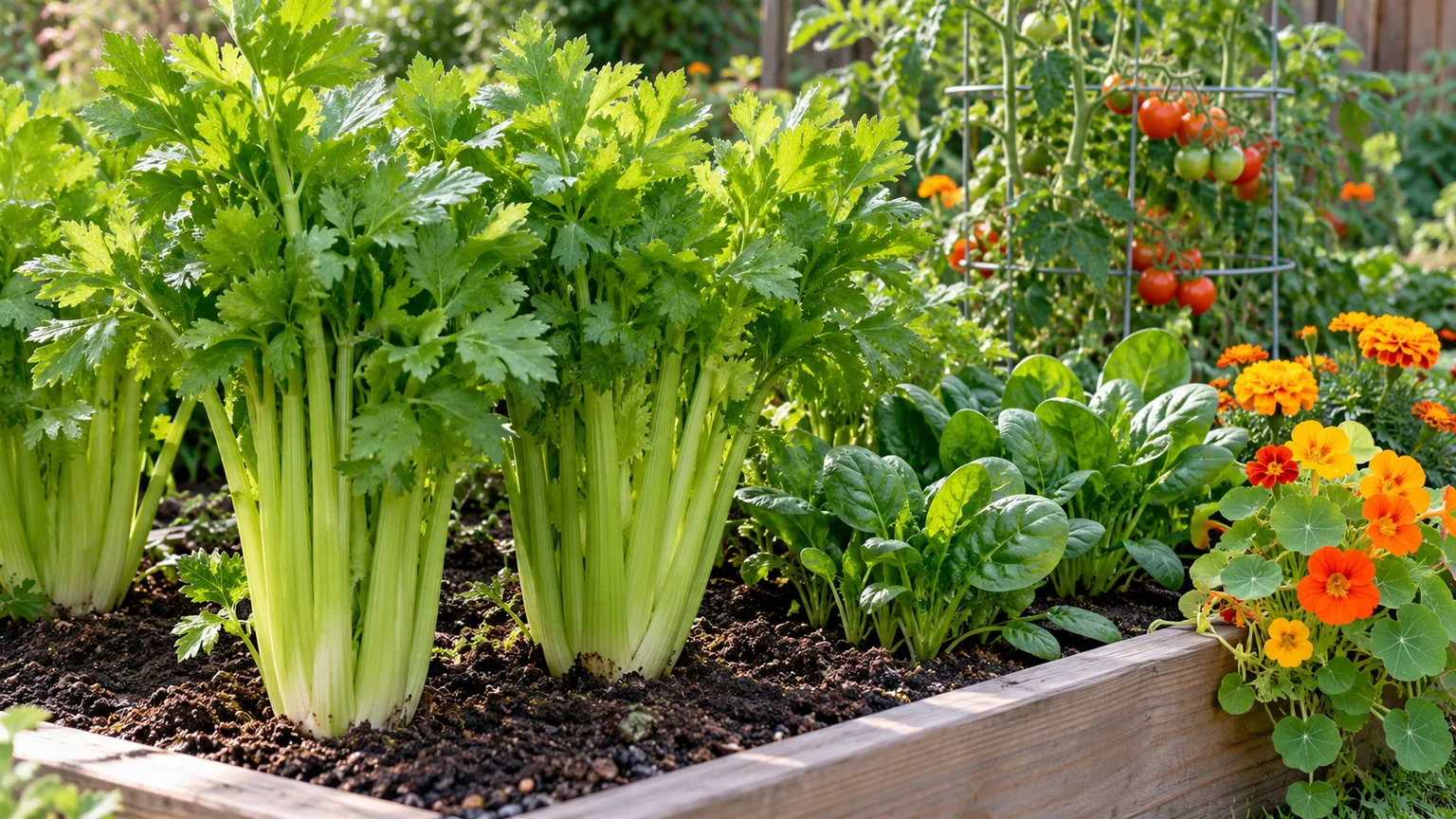
Celery’s best neighbor is a plant that fits the bed without taking away the things celery needs most: steady moisture, fertile soil, light, and room for its shallow roots. Some companions make efficient use of space or bring flowers and insect activity into a vegetable plot. Others are simply compatible crops that share the same season and watering routine. None can make up for dry soil or guarantee a pest-free harvest.
The 16 plants below are useful for different reasons, so choose by your garden’s conditions rather than planting all of them around one celery row. If your bed is small, a quick crop or one flowering edge plant may help more than a dense mix of herbs and vegetables.
What celery needs from its neighbors
Celery is a slow-growing, shallow-rooted crop with an unusually steady need for water. Utah State University Extension describes its small root system and recommends keeping the soil consistently moist; the Royal Horticultural Society likewise advises a sunny site with moisture-retentive soil that does not dry out. A neighbor that competes hard for water, blocks light, or crowds the crown can hurt more than a supposedly helpful companion can help. (Utah State University Extension, Royal Horticultural Society)
Start with the celery spacing printed for your variety. In a home garden, a block planting can use roughly 9 inches between plants, while trench types or larger varieties may need more; the RHS gives 23 centimeters in each direction for block-grown celery. Keep companion plants outside that footprint or use fast crops that will be harvested before celery fills out. (Royal Horticultural Society)
Which companion benefits are supported—and which are folklore?
“Companion plant” can mean several different things: a crop that fits between slower plants, a flower that supplies nectar for beneficial insects, a taller neighbor that casts temporary shade, or a plant said to repel a pest. These mechanisms are not equally proven. The RHS notes that claimed benefits do not show up in every crop combination; mixing plants can sometimes reduce pest pressure, but a specific pairing should not be treated as a dependable pesticide. (RHS guidance on companion planting)
Practical gardening guides commonly recommend spinach, alliums, cabbage-family crops, tomatoes, beans, and flowering annuals around celery. The useful question is what each neighbor can do in your actual bed: fit the season, use a different layer of space, or add flowers without crowding the crop. The lists below keep those practical uses separate from blanket claims that a scent will repel every insect. (Gardening Know How, Harvest to Table)
16 companion plants for celery
These are options, not a recipe for a packed bed. The first five are edible crops that can share a vegetable garden when their mature size and watering needs fit. The next eight are alliums and herbs; some work best at the edge or in a separate pot. The final three are flowers whose value is mainly diversity and insect habitat.
Vegetables that share a bed
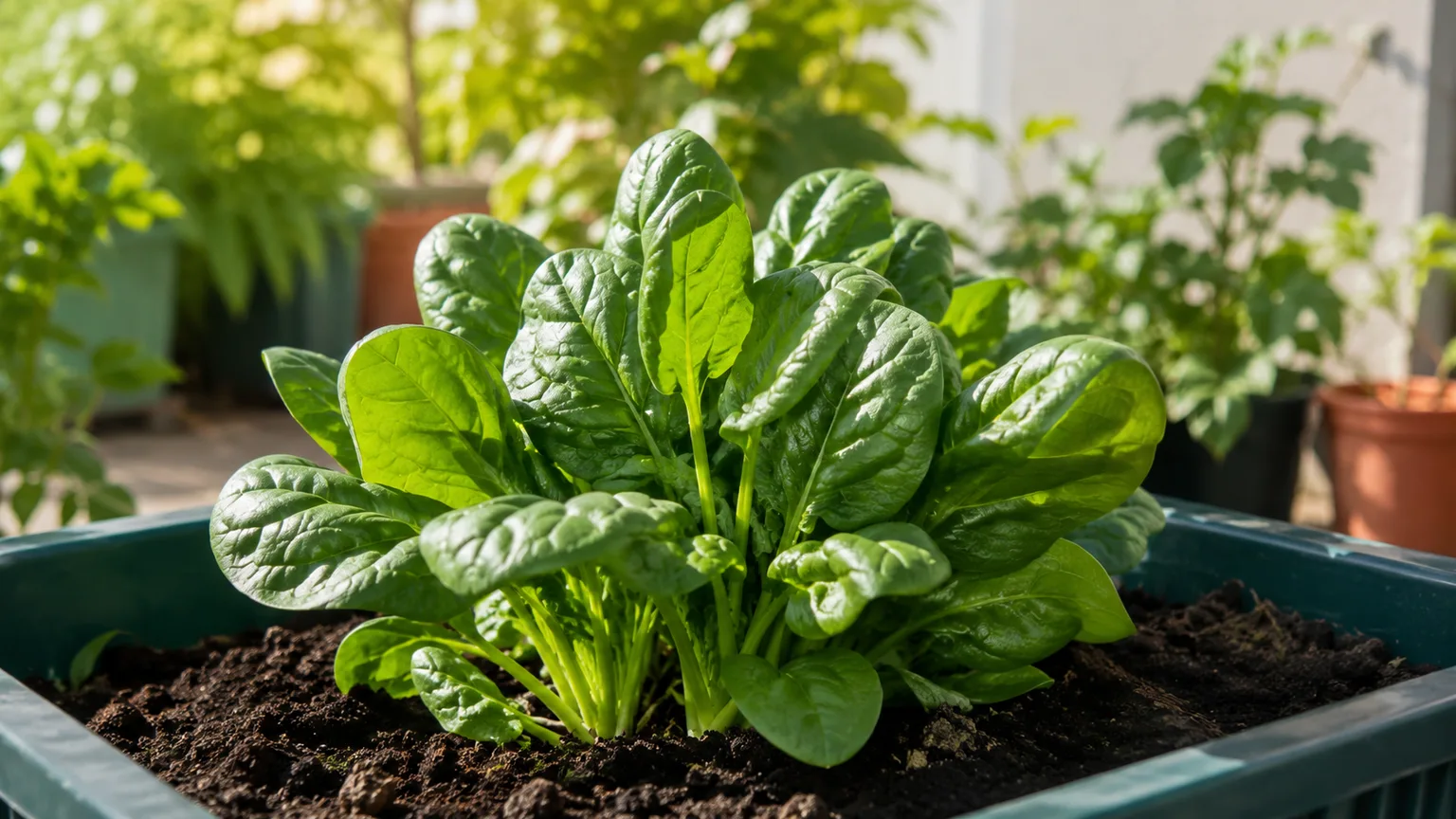
1. Spinach is a good short-season neighbor because it stays low and can be picked while celery is still small. Give it a border strip rather than sowing thickly between established celery plants, and harvest outer leaves before the foliage starts to touch the celery crowns. Spinach also prefers regular moisture, so it can fit a shared watering plan.
2. Cabbage has broadly similar preferences for fertile soil and regular water, so it can share a bed if there is enough room. Its mature leaves can cast some afternoon shade, but cabbage heads become large; put them on the north side of the celery block in the Northern Hemisphere and leave airflow around both crops. Check regularly for slugs, which also favor damp celery foliage. (RHS celery-growing guidance)
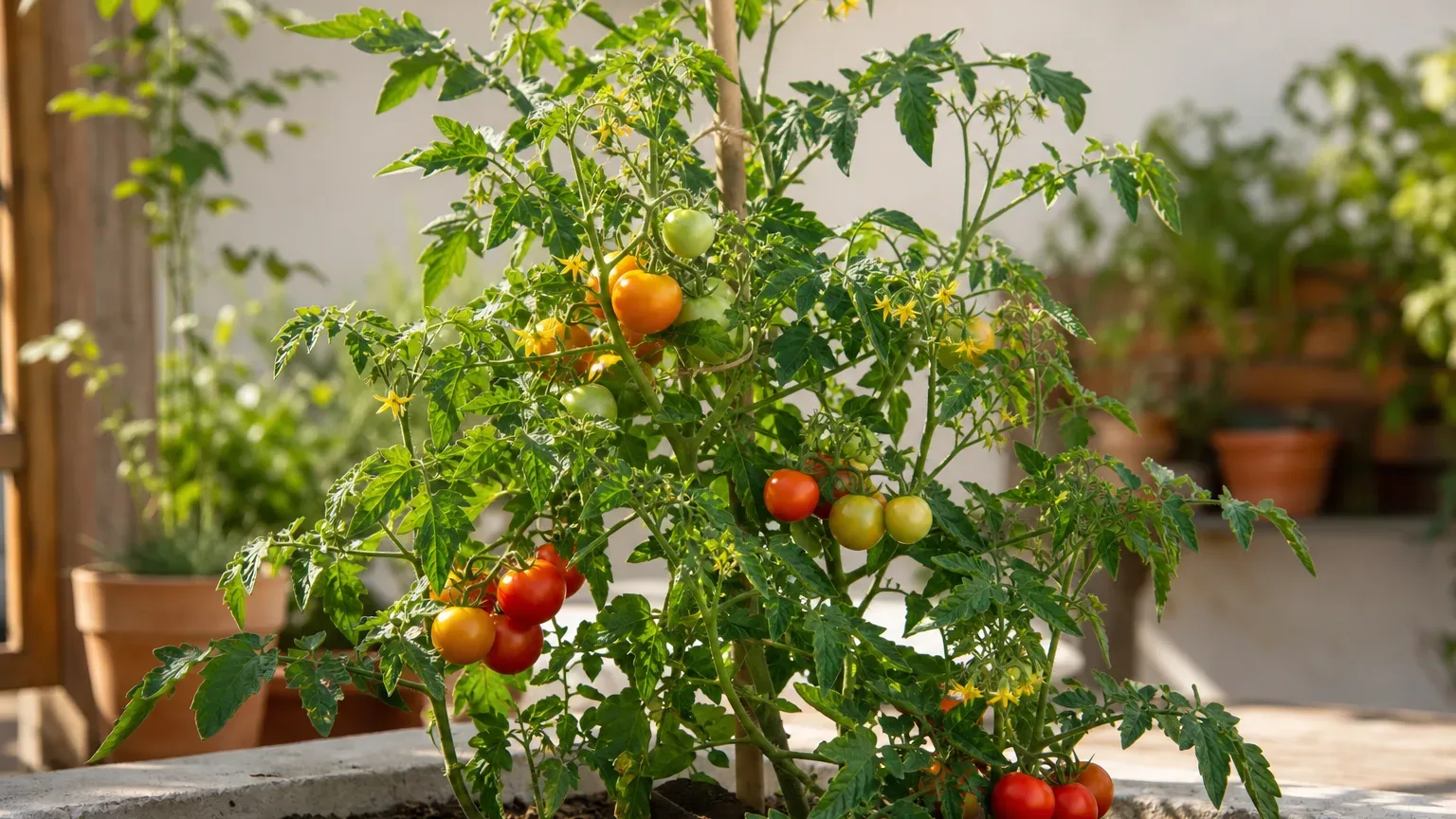
3. Tomatoes can make sense in a mixed bed when the tomato is supported vertically and celery sits along the sunnier edge. Both need regular care, but tomatoes grow tall and can shade celery more than intended, so keep them to the north side and prune or train them to maintain light. Their presence is not a guarantee that aphids or whiteflies will leave celery alone.
4. Cucumbers are another possible fit if you grow a trellised variety. Training vines upward saves ground space and keeps leaves and fruit from smothering the celery, while both crops benefit from attentive watering in warm weather. Do not let the cucumber canopy close over celery; shade from foliage is useful only if it is light and seasonal.
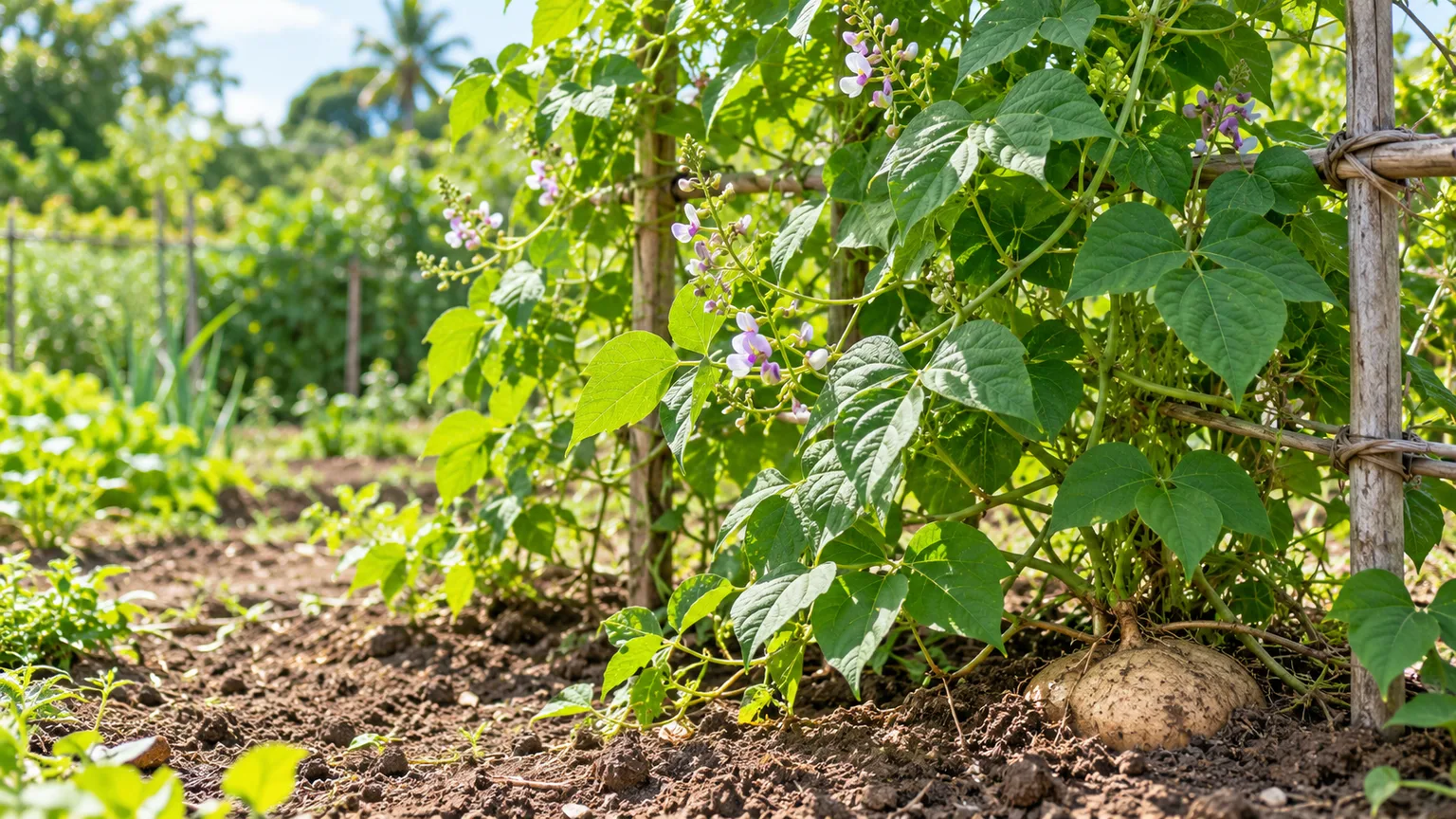
5. Bush beans occupy less vertical space than pole beans and can be harvested from the side of a bed. They are legumes, but that does not mean a living bean plant immediately delivers enough nitrogen to feed neighboring celery; much of the benefit remains in roots and residues after the beans are cut down. Keep the plants from interlocking, and follow soil-test or label guidance instead of skipping celery’s normal feeding needs.
Alliums and herbs
6. Leeks have an upright habit and a long growing season, so they can make a narrow border alongside celery. They are often recommended together, but leave enough room to reach each crop and avoid treating leeks as proven celery-leaf-miner control. The most dependable advantage is a bed that can support both cool-season crops with consistent moisture.
7. Onions fit the edge of a celery bed better than the center: their upright leaves take little overhead space, and bulbs can be harvested before the celery block becomes dense. Onion scent is often said to confuse carrot flies, but that is not evidence that onions prevent celery pests. Use them as a useful crop with a modest footprint, not as a substitute for scouting.
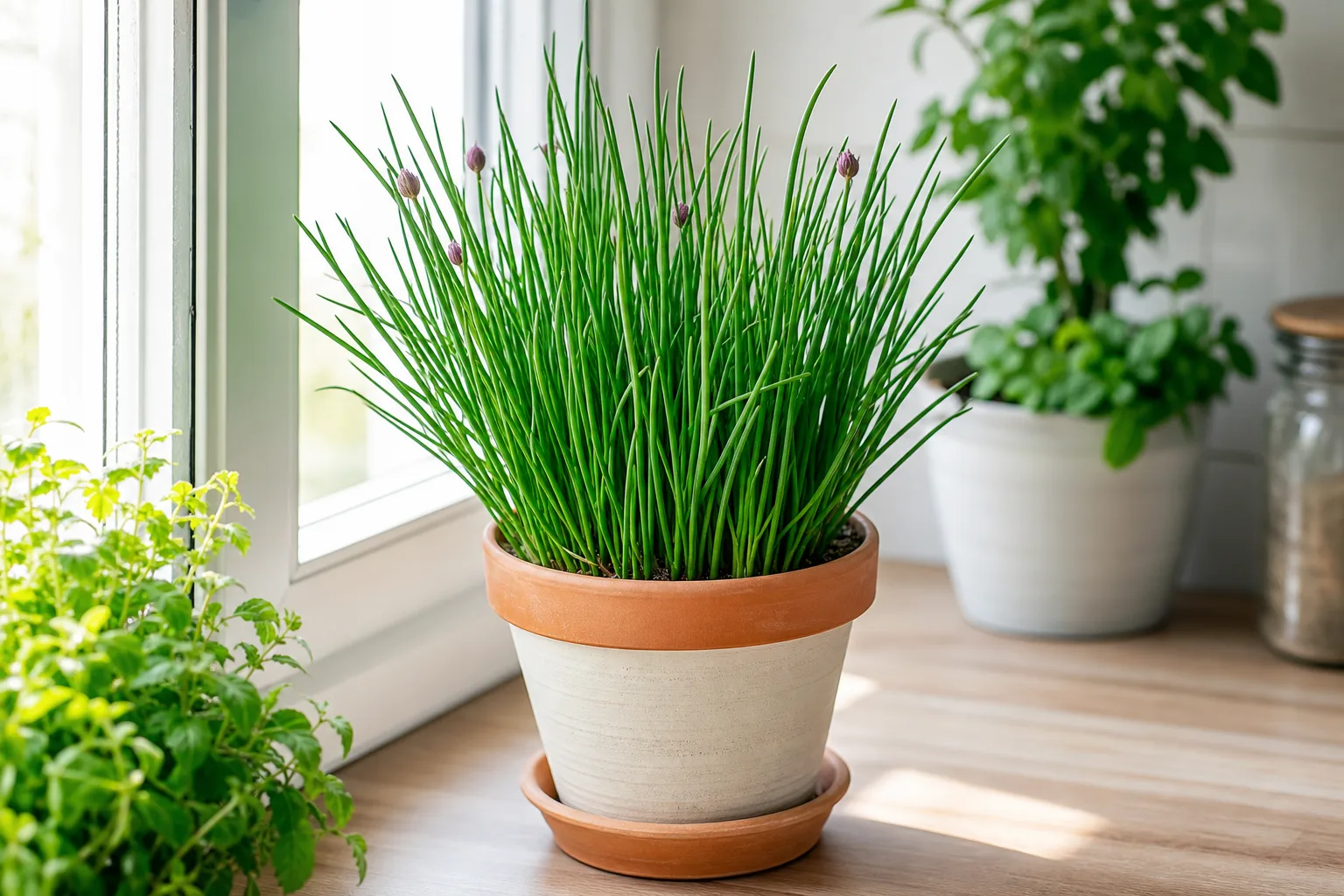
8. Chives stay in a manageable clump and their purple flowers add a nectar source when allowed to bloom. Place a clump just outside the celery spacing zone so it is easy to trim and does not crowd the stalks. Divide or remove old clumps if they expand into the bed.
9. Garlic can be planted near celery as a seasonal allium, especially at a bed edge where its leaves will not shade the crop. The claim that garlic automatically repels aphids around celery is stronger than the evidence for this specific pairing; consider it a compact companion, not a pest-control treatment. If you plant garlic in fall, plan its harvest and removal so it does not occupy the celery’s root zone all season.
10. Dill produces umbrella-shaped flower clusters that draw small insects, including some beneficial species, once it bolts. That makes it more useful as a flowering border plant than as a dense leafy crop beside young celery. Because dill is in the Apiaceae family with celery, do not use it as a close “trap” crop if related-crop pests or disease have been a recurring problem.
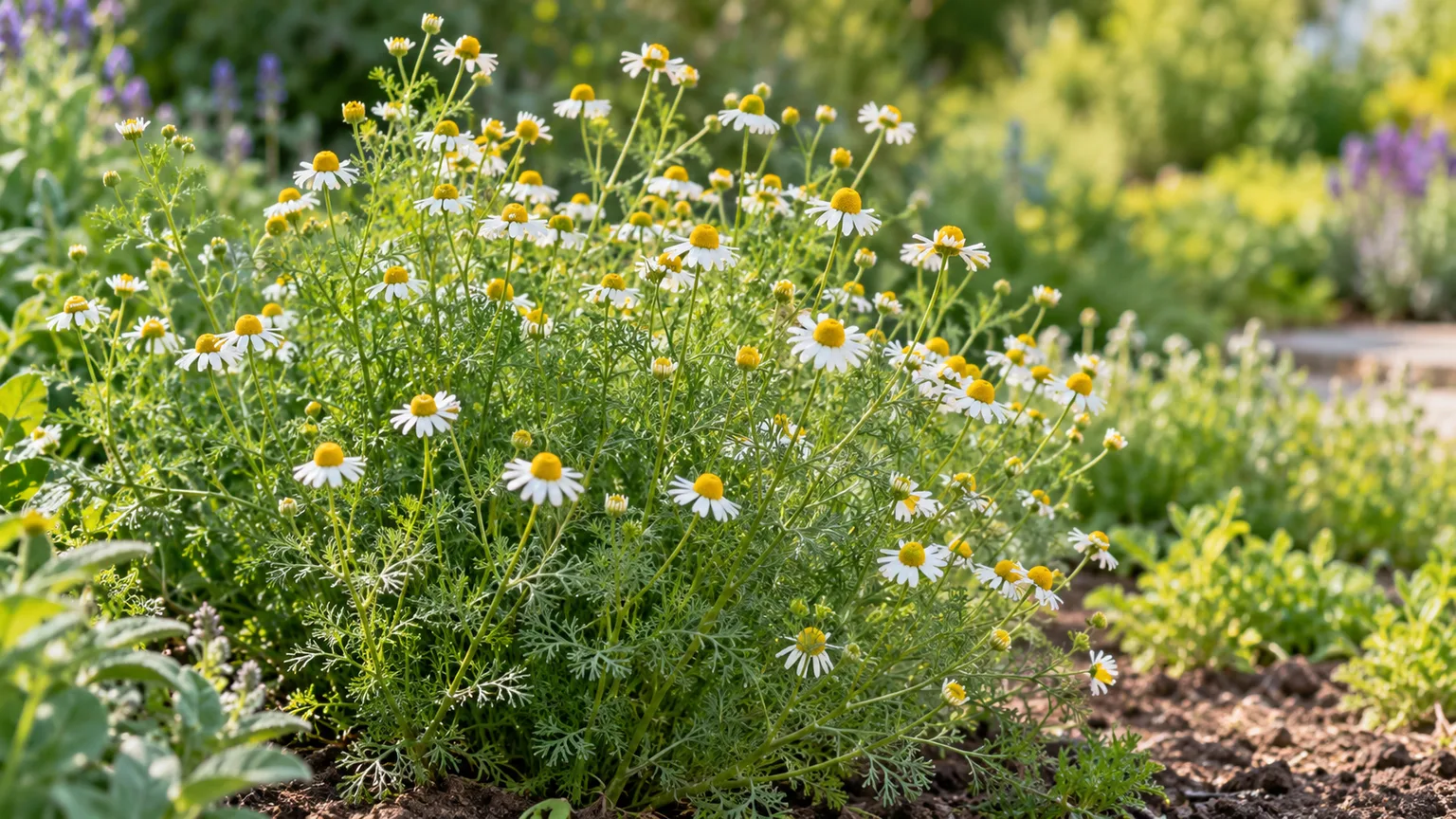
11. Chamomile can soften a bed edge and provide small flowers for visiting insects. German chamomile is an annual, so it is easier to manage than a spreading perennial; allow space for air around celery and pull seedlings where they crowd the crop. Its presence may support a more diverse garden, but it is not a proven celery flavor booster.
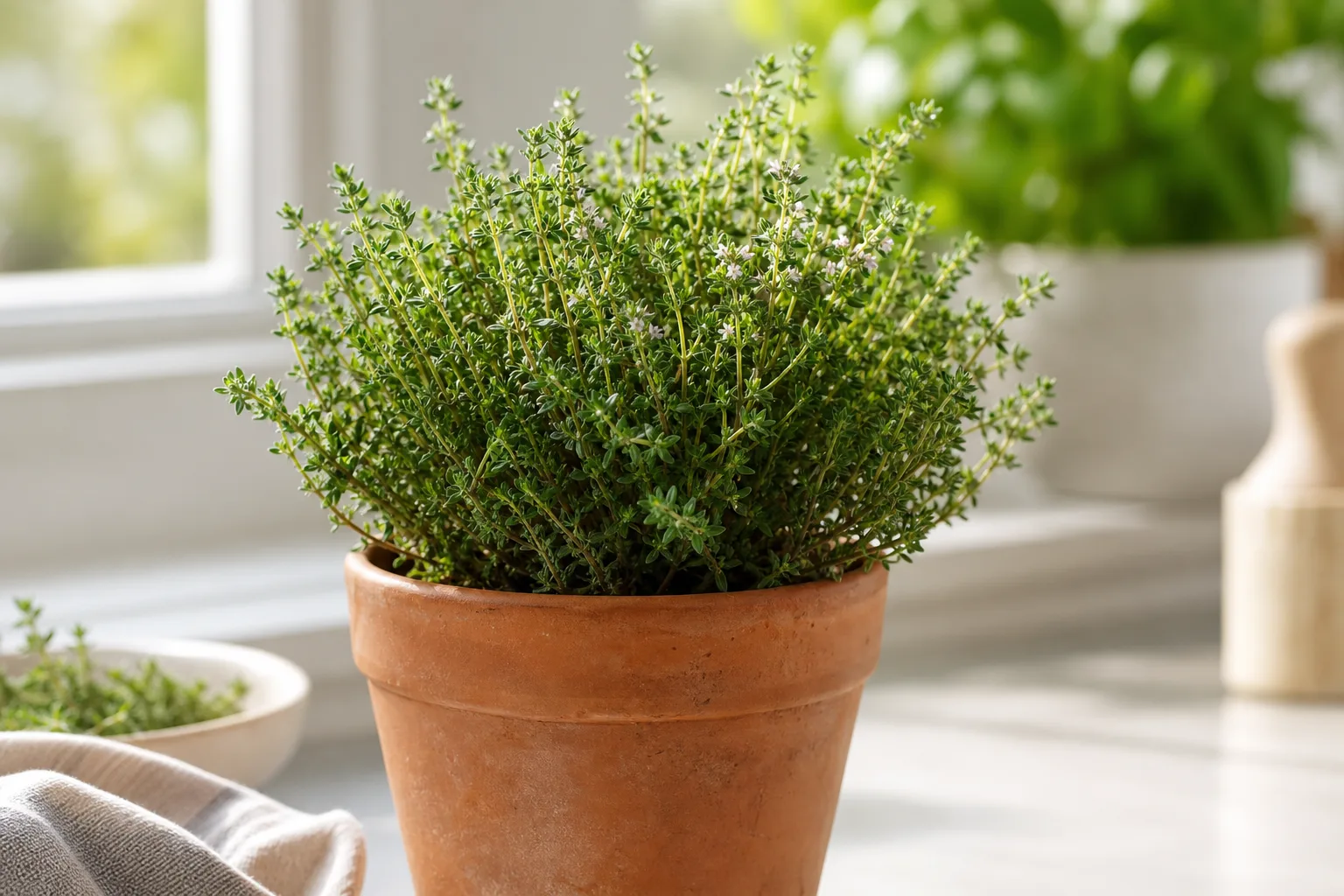
12. Thyme is a low herb that can work beside a celery bed, but it generally prefers drier conditions than celery. Grow it in a small pot or along the outer edge where it can receive less water, rather than planting a carpet of thyme through the celery row. That separation lets each plant get a more suitable routine.
13. Sage is best treated as a nearby border herb, not a plant to tuck into celery’s wettest root zone. It prefers a sunnier, drier position and a little airflow, while celery’s soil should stay evenly moist. A pot near the vegetable bed is a simple way to keep both crops close without forcing them to share the same conditions.
Flowers for a more diverse bed
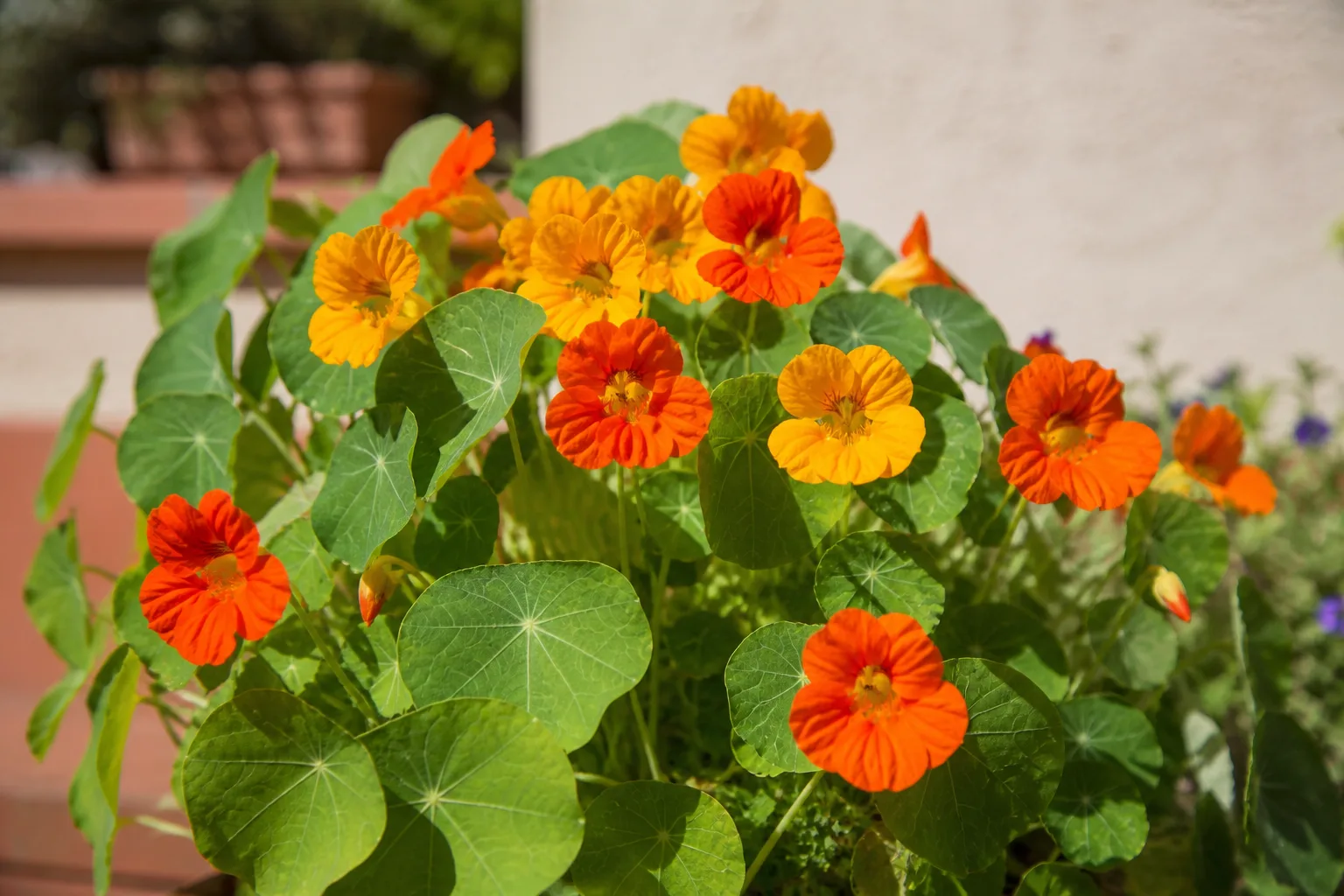
14. Nasturtiums can trail from a bed edge or grow in a nearby pot, adding edible leaves and flowers without using the celery’s central space. Gardeners often use them as a trap crop for aphids, but that only helps if you inspect the nasturtiums and act when colonies appear; an unchecked plant can become a place for aphids to multiply. Do not let trailing stems cover celery or block access for watering.
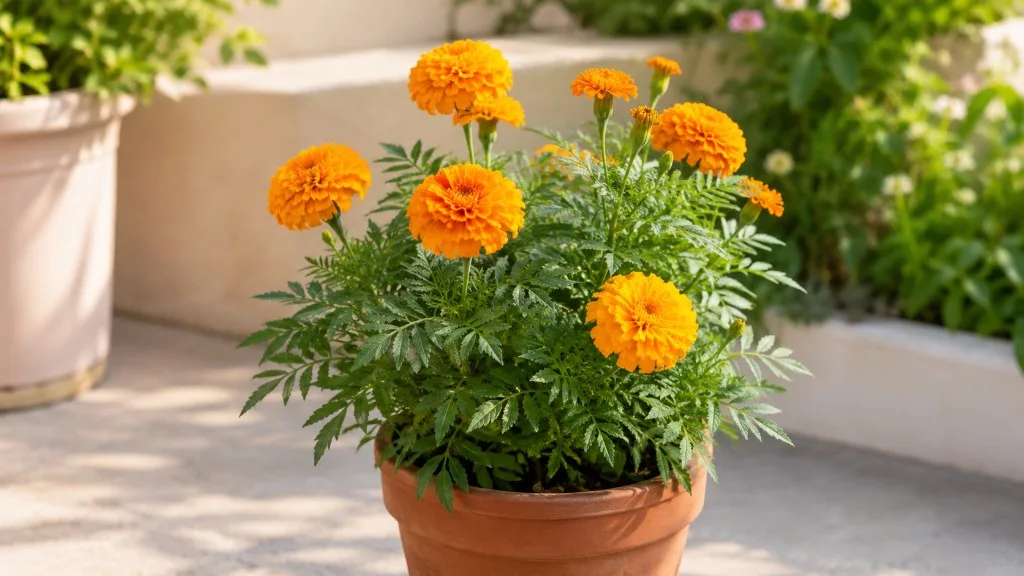
15. Marigolds are easy to tuck into an outer border, where their flowers add color and can support insect activity. French marigolds have documented effects on some pests in particular crop settings, but a ring of marigolds is not a reliable cure for celery pests or soil nematodes. For nematode suppression, species choice and how the marigold is grown matter; a few border plants are not equivalent to a managed cover crop. (RHS guidance on companion planting)
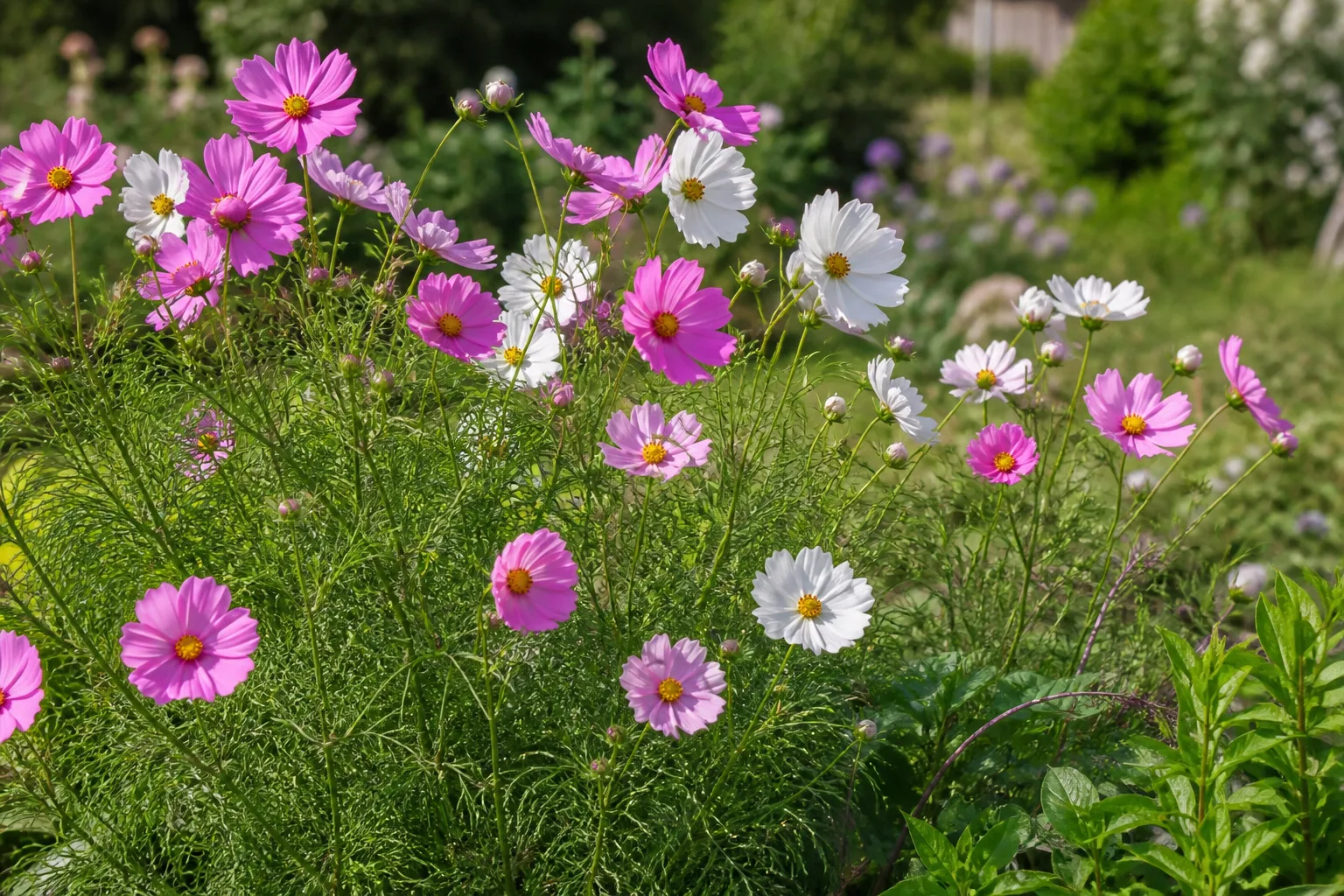
16. Cosmos offers open flowers that can feed visiting pollinators and other insects, and its height gives it a place along a bed’s north edge. Sow or plant it where it will not cast persistent shade on the celery, especially while transplants are young. Deadhead or thin volunteer seedlings before they occupy the paths and planting gaps you need.
How to place companions without crowding celery
Think of celery as the crop that sets the rules for the bed. Put its water, spacing, and light needs on the sketch first, then fit companions into the leftover areas. Utah State University Extension notes that water stress can make stalks stringier and stronger-flavored, so the goal is steady moisture rather than watering every neighbor on the same calendar regardless of weather. (Utah State University Extension)
Keep celery’s spacing and moisture first
Use the planting distance for your variety, then keep stems of companion plants outside that circle. Add compost or mulch to help retain moisture, but leave space around the celery crown; the RHS recommends mulching to reduce water loss and hand-weeding near celery because the roots sit close to the surface. Dense groundcovers or frequent hoeing can damage that shallow root zone. (Royal Horticultural Society, Utah State University Extension)
Match irrigation to the hungriest crop only when the soil and drainage suit both plants. A container with sage or thyme beside celery is easier to manage than forcing dry-loving herbs into a constantly moist bed. For two crops in one bed, drip irrigation or a soaker hose makes it easier to water the root zone without keeping dense foliage wet.
Put taller plants on the north side
Tomatoes, cabbage, and cosmos can cast shade as they mature. In a Northern Hemisphere garden, place taller neighbors north of celery where possible; in the Southern Hemisphere, reverse that orientation. In a very hot climate, a little afternoon shade may reduce heat stress, but celery still needs a bright growing position and should not sit under a dense canopy all day.
Keep a hand-width access path around the plants when you can. It makes it easier to check the celery crown, see aphids or leaf damage, water evenly, and remove leaves with spots before they touch neighboring plants. The RHS notes that celery can be affected by leaf-mining fly and leaf spot, so crowding that hides early signs is a poor trade for a fuller-looking bed. (Royal Horticultural Society)
Use quick crops between young celery
Spinach can be sown between celery positions early in the season, but plan its harvest before the celery leaves meet. The RHS describes intercropping fast-maturing crops such as lettuce and radish between slower, larger plants, then harvesting the small crop before it is overshadowed. The same timing principle is useful here: plant only what you can clear on schedule. (RHS guidance on companion planting)
If the celery is still small, avoid filling every gap with another crop. Its growth is slow, and weeds already compete for water; adding more plants can recreate the same problem with vegetables instead of weeds. Mulch and a few deliberately chosen companions usually give you more control than a crowded polyculture.
What should you avoid planting next to celery?
There is no universally accepted list of plants that are poisonous or categorically incompatible with celery. Most problems come from practical competition: a neighbor gets too large, needs a different moisture level, or makes it difficult to reach and inspect the celery. A crop can be a poor fit in a small raised bed and perfectly manageable in a larger garden.
Avoid direct competition and persistent shade
Corn and pole beans are awkward choices in a compact celery bed because they can rise above the crop and shade it. Potatoes and other large, hungry vegetables can also compete for soil nutrients and water; if you grow them nearby, leave a clear row or separate bed rather than squeezing them between celery plants. Celery’s dependable harvest comes from meeting its own needs, not from putting a maximum number of crops in one square foot.
Carrots and parsnips are not automatically “bad” neighbors, but their roots need undisturbed space, and close planting can make watering, weeding, and harvest harder. Fennel can become a large, competitive plant, so keep it separate from a small celery block. When in doubt, prioritize mature size, root disturbance, and water demands over a universal companion chart.
Rotate celery and related crops after disease
Celery and celeriac are close relatives, and celery leaf-mining fly can affect celery, celeriac, and related plants. If you have seen recurring leaf damage or disease, do not keep planting celery in the same ground year after year; rotate the bed and remove affected debris. Avoid using dill, parsley, or carrots as close decoy plants until you know which pest is involved, because related crops can complicate rather than solve a problem. (Royal Horticultural Society)
Companion planting also does not replace basic pest checks. Look under leaves for aphids, inspect for tunnels or blotches, and check around damp foliage for slugs and snails. If a plant is attracting pests, remove or manage it rather than assuming it will draw every pest away from celery.
A simple companion layout for a small bed
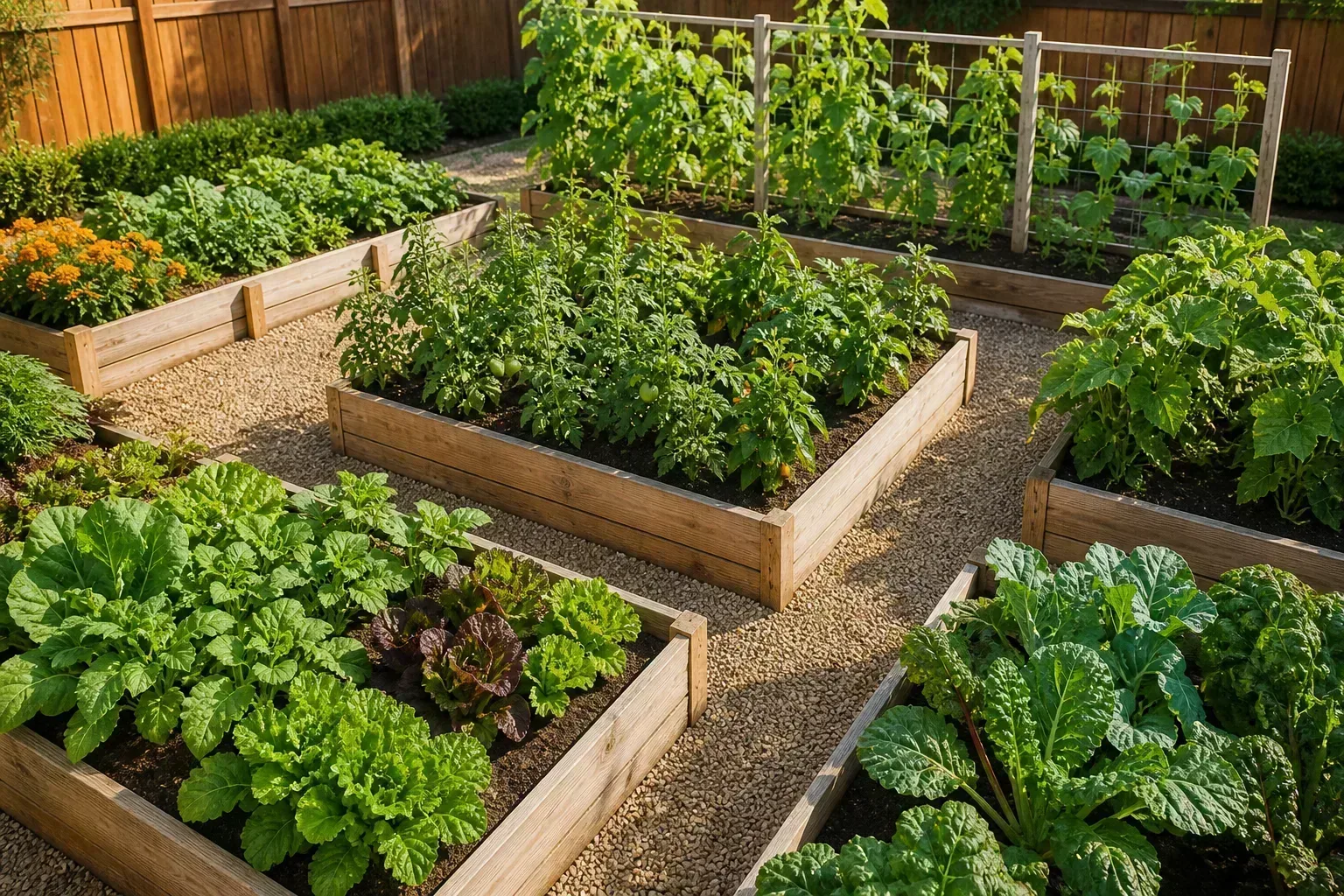
For a raised bed, keep the plan simple enough to maintain. One celery block can share space with a low, quick crop and one flower border; a larger plot can add tomatoes, cabbage, or leeks in their own rows. This is easier to adjust than planting every suggested companion at once.
A 4-by-8-foot bed plan
Start by checking the mature size and spacing on the celery variety label. Set celery in a block toward the south half of a north-south-oriented bed, then put a supported tomato or cabbage along the north edge if the bed is wide enough. Reserve one outside strip for spinach early in the season, and place chives or marigolds at a corner where they will not close over the crop.
Keep any nasturtium in a pot at the edge so it can trail away from the celery rather than through it. If you have room for a tall flower such as cosmos, place it on the north side and thin seedlings before they crowd the path. Mulch the exposed soil, water celery consistently, and remove the quick crop once the celery leaves begin to overlap.
For a different bed shape, our vegetable garden layout guide explains how orientation, path access, and crop height affect a planting map. The guide to whether companion planting actually works also covers the mechanisms and limits behind mixed planting.
A container option
Celery can grow in a large container, but its constant moisture needs make small pots difficult to manage. Give it a deep, wide pot with drainage and use the rest of the container for one compact companion, such as a few spinach plants early in the season or a single chive clump. Check moisture at the soil surface and water before the mix dries completely.
Keep thyme, sage, and nasturtium in separate pots nearby if you want them in the same garden scene. Separate containers let you give celery more water than sage and stop vigorous trailing stems before they cover the celery leaves. In hot weather, move the pots where they receive strong light without exposing the roots to a rapid cycle of drying and soaking.
Conclusion
The most dependable celery companion plants are the ones that share its season and watering routine without stealing its light or root space. Spinach can fill a temporary gap, upright alliums can fit along an edge, and flowering plants can add habitat when they are kept under control. Treat claims about pest repellence as possibilities rather than guarantees, then watch what happens in your own garden.
Plan around celery’s spacing first, water it before it wilts, and add only a few companions that serve a clear purpose. That gives you a productive mixed bed without sacrificing the steady, open growing conditions that make celery crisp and usable.