Start These 6 Vegetable Seeds Indoors Now
Start tomatoes, peppers, eggplant, onions, cauliflower, and celery indoors now. Crop-by-crop weeks-before-frost timing, setup tips, and what to skip.
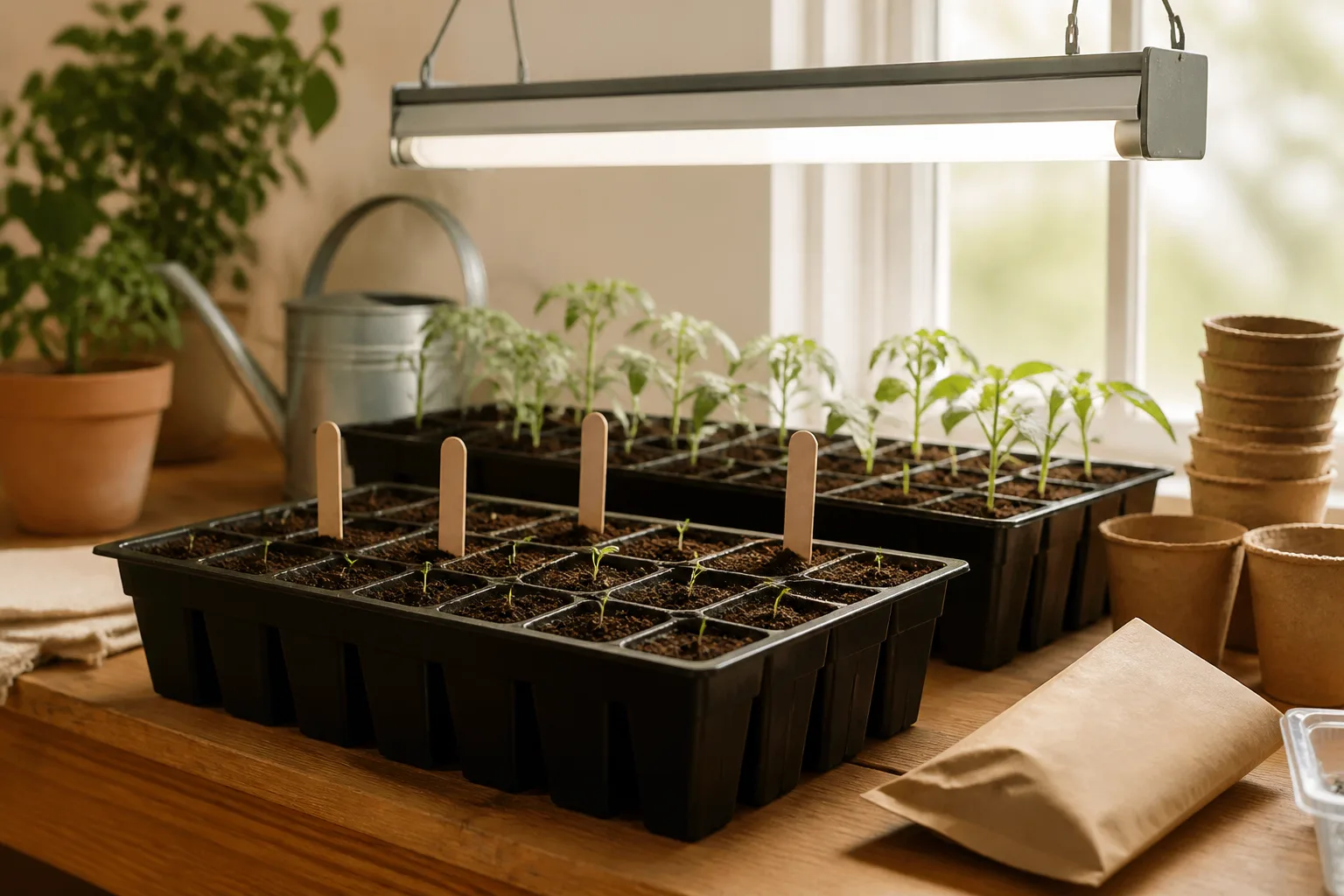
Late winter is when disciplined gardeners get ahead of everyone else at the nursery. While snow still covers the beds, six common vegetables—tomatoes, peppers, eggplant, onions, cauliflower, and celery—should already be germinating under lights indoors. Wait until March and you either buy overpriced transplants or accept a shorter harvest window. Start everything on the same date and you end up with cauliflower ready weeks before the ground is workable and tomato seedlings still stretching toward a dim window in May.
The fix is not complicated, but it is specific: each crop gets its own indoor sow date and its own outdoor transplant date, both counted backward and forward from your average last spring frost. This guide maps those dates crop by crop, explains why these six need the longest runway, and flags the vegetables you should leave in the packet until outdoor soil warms.
Why Certain Vegetables Need an Indoor Head Start
Vegetables fall into two practical buckets for seed-starting decisions: crops that finish a full season only if they get extra weeks indoors, and crops that germinate or root so slowly that direct sowing outdoors burns too much of your frost-free calendar. The six vegetables on this list hit one or both problems.
Penn State Extension groups tomatoes, peppers, and eggplant among warm-season crops that need higher soil and air temperatures and are typically started indoors in short-season regions because the outdoor growing window is too narrow for them to mature from a spring direct sow. Onions and cauliflower are cool-season crops that tolerate—and often prefer—chilly transplant weather, but they still benefit from an indoor start because they are slow to reach transplant size. Celery is cool-season too, and notoriously slow at every stage.
Starting indoors buys three things: time (more frost-free days for fruiting), control (stable warmth at germination), and selection (dozens of varieties versus whatever the garden center ordered). The trade-off is daily attention—trays need light, airflow, and a hardening-off period before they ever touch garden soil. For these six crops, that trade-off almost always pays off.
Long-Season Crops vs Slow Root Development
Long-season crops need many weeks between transplant and first harvest. Tomatoes and peppers are the classic examples: if you direct-sow them when the soil finally warms in late spring, indeterminate tomatoes and full-size bell peppers may run out of warm days before fruit ripens in zones 5 and 6. An indoor start shifts the whole production curve earlier.
Slow-developing crops are not always long-season in the kitchen sense, but they are slow in the seedling tray. Onions from seed can take two months to look like anything you would recognize as a transplant. Celery germination alone can take two to three weeks even under ideal conditions. Cauliflower needs steady, cool growth; a tiny start that sits too long indoors becomes stressed and buttons instead of forming a full head.
When you read “start 8–12 weeks before last frost” on a seed packet, ask which problem the crop is solving. Warm-season nightshades are buying calendar length. Onions and celery are buying root and leaf development. Cauliflower is buying both—early maturity before summer heat arrives.
Work Backward From Your Last Frost Date
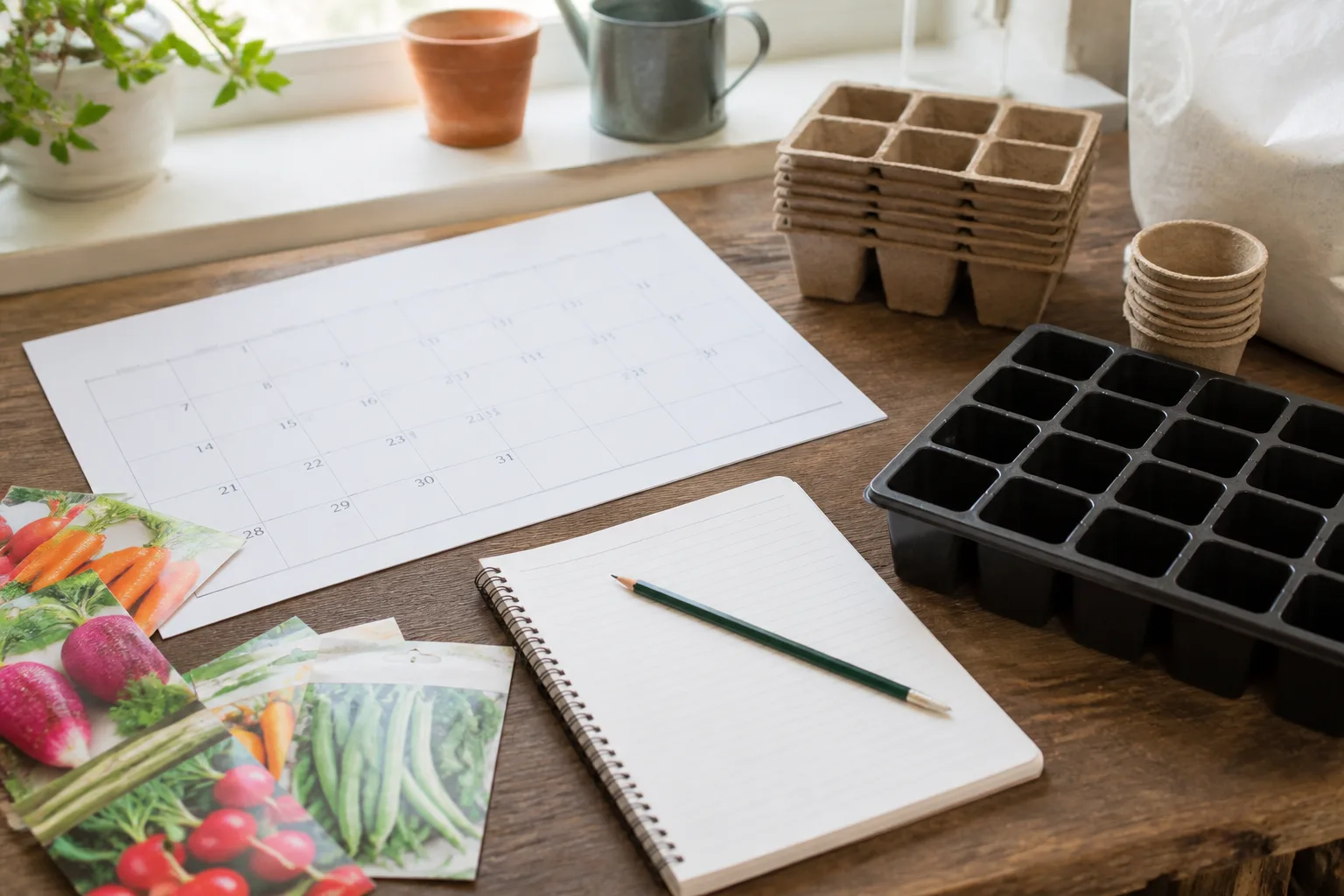
Every indoor sow date on this page is really a math problem. You need your average last spring frost—the date when freezing temperatures have historically stopped in your area, not a guarantee for this year. Cooperative extension offices, regional planting calendars, and reputable frost-date tools all publish this number by zip code or county.
Write two dates for each crop before you sow:
- Target transplant date — when the seedling should move outdoors (this differs sharply between cool- and warm-season crops).
- Indoor sow date — transplant date minus the weeks on the seed packet (minus another 7–10 days for hardening off if you are tight on space).
If you have never built this calendar before, our complete indoor seed-starting guide walks through trays, lights, and daily care once your dates are set.
Cool-Season vs Warm-Season Transplant Timing
This is the detail that collapses most beginner schedules. Cool-season cauliflower and onions do not wait for the last frost the way tomatoes do. They go out during the cool stretch before or just around your last frost, often with row cover on cold nights. Penn State Extension notes that many cool-season vegetables are planted weeks to months before the last frost date, while warm-season crops are always planted after it.
Warm-season tomatoes, peppers, and eggplant need frost-free nights and soil consistently warming toward 60°F. Transplanting them too early—when nights still dip below 50°F—stunts growth and can permanently set back fruiting. Experienced growers in zone 7 report that temperatures under 55°F can damage tender transplants even without a hard freeze, which is why local extension frost dates matter more than generic zone maps.
| Crop | Season type | Typical indoor start before transplant | Typical outdoor transplant |
|---|---|---|---|
| Tomato | Warm | 6–8 weeks | After last frost |
| Pepper | Warm | 8–10 weeks | 1–2 weeks after last frost |
| Eggplant | Warm | 8–10 weeks | 1–2 weeks after last frost |
| Onion | Cool | 8–12 weeks | 2–4 weeks before last frost |
| Cauliflower | Cool | 6–8 weeks | 2–4 weeks before last frost |
| Celery | Cool | 10–12 weeks | 1–2 weeks before last frost |
Always read your seed packet. Variety, bulb vs bunching onions, and your microclimate can shift each row by a week or two.
A Sample Calendar for a May 15 Last Frost
Suppose your average last spring frost is May 15. Here is a working schedule—not a rule for every yard, but a concrete example you can slide earlier or later:
| Crop | Sow indoors | Harden off begins | Transplant outdoors |
|---|---|---|---|
| Onion | January 15–February 1 | April 20 | April 22–May 1 |
| Celery | February 1–15 | May 1 | May 1–8 |
| Pepper & eggplant | February 22–March 8 | May 8 | May 22–29 |
| Cauliflower | March 1–15 | April 25 | April 22–May 1 |
| Tomato | March 20–April 1 | May 8 | May 15–22 |
Notice cauliflower and onions leave the house before tomatoes. That single split prevents the classic mistake: one overcrowded shelf of leggy plants at wildly different life stages. For a broader planting calendar beyond these six, see when to plant vegetables by frost date and crop type.
The Six Vegetables to Start Indoors Now
If your last frost falls in late April through May, late January through February is the correct window for the slowest crops on this list. If you are in a colder zone 3–4 with a June frost, move every sow date roughly two to three weeks earlier. If you are in zone 8–9 with a March frost, you may still start tomatoes and peppers indoors for variety choice, but your onion and celery window may already be closing—check the packet math first.
Tomatoes (6–8 Weeks Before Transplant)
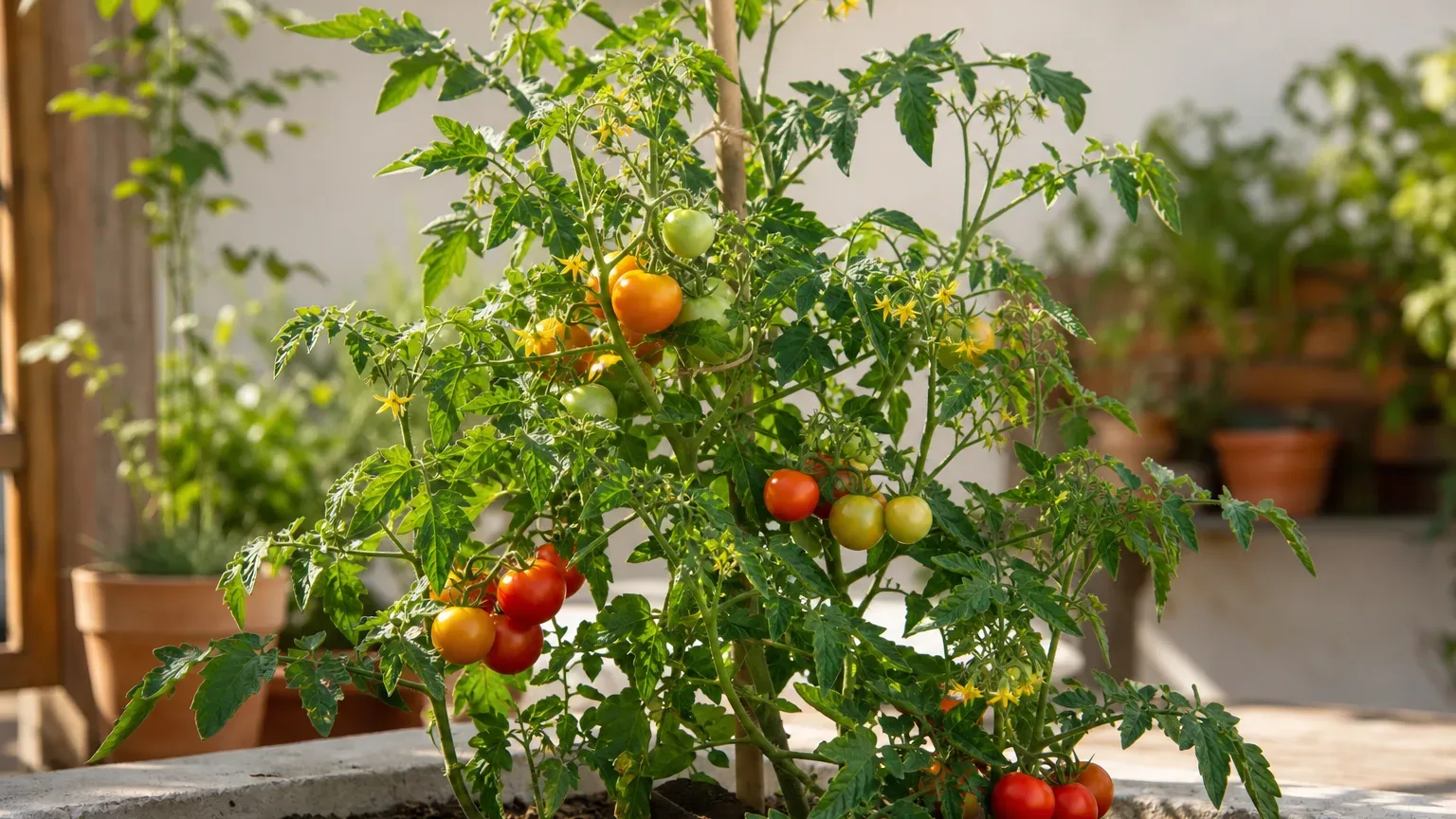
Tomatoes are the crop most gardeners start indoors—and the one most often started too early. Count 6–8 weeks from your planned post-frost transplant date, not from last frost itself. For a May 15 transplant, sow between March 20 and April 1.
Choose deeper cells or pot up once: tomatoes root along buried stems and recover from a slightly leggy start better than peppers do. They want 70–80°F soil for fast germination, then strong overhead light within 24 hours of emergence. Without 12–16 hours of bright light daily, seedlings stretch and never quite recover.
Transplant after your last frost when nighttime lows stay above 50°F and soil at four inches deep is warming. In short seasons, prioritize determinate or early-maturing varieties if you are starting late.
Peppers and Eggplant (8–10 Weeks)
Peppers and eggplant are slower than tomatoes at every stage—germination, leaf growth, and early outdoor establishment. Plan 8–10 weeks indoors before transplant, and set transplant day one to two weeks after last frost when nights are reliably mild.
Both crops germinate best with warm soil, often 80–85°F at the seed layer. A seedling heat mat is worthwhile here even if you skip it for brassicas. Epic Gardening’s indoor seed-starting overview notes that warm-season crops like peppers benefit noticeably from bottom heat in cool rooms.
Eggplant seedlings are more sensitive to root disturbance than tomatoes. Use larger cells or peat/cow pots if you start early, and avoid letting plants become root-bound while waiting for outdoor warmth. Pepper seedlings that sit too long indoors without adequate light develop woody stems and stall after transplant.
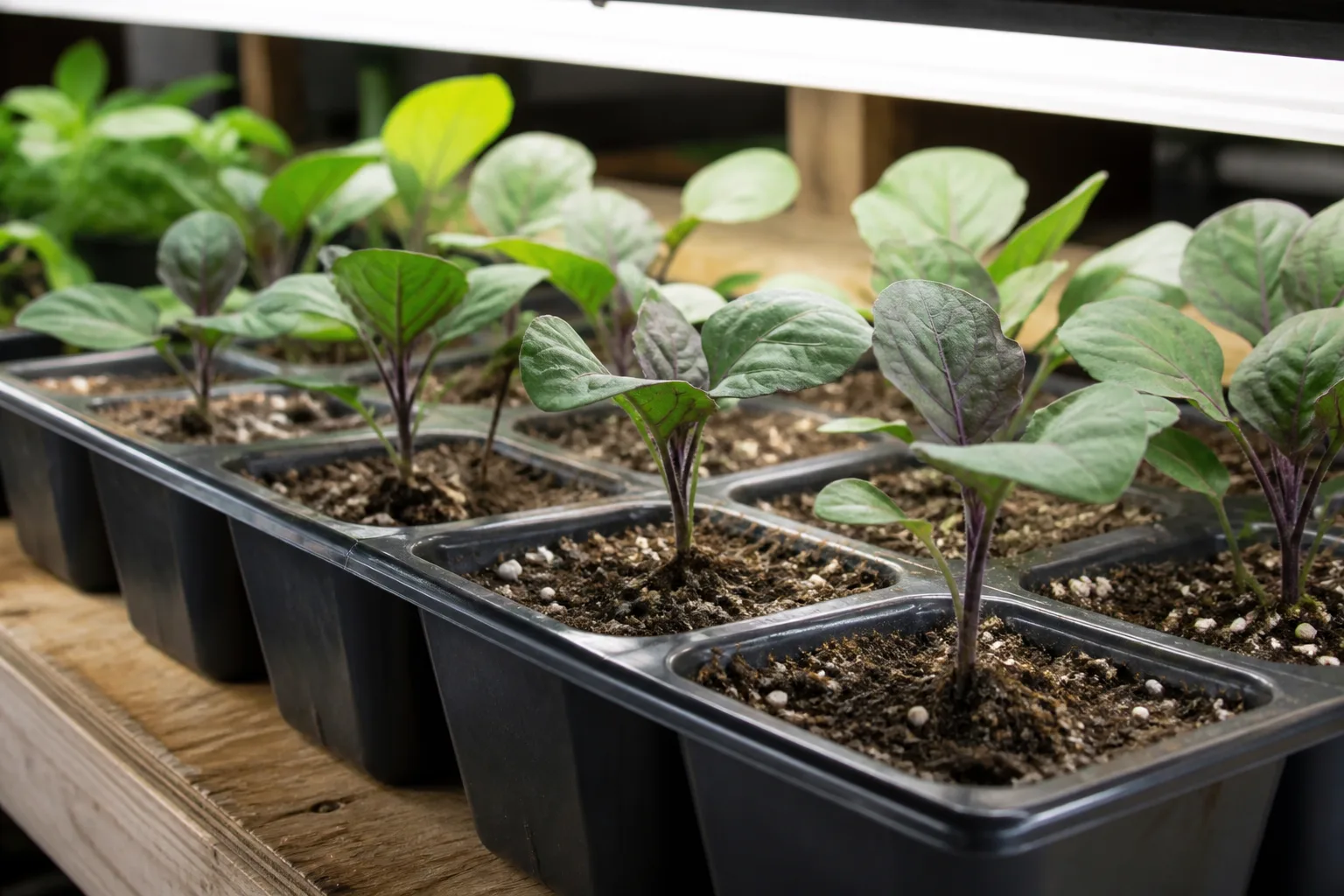
Onions (8–12 Weeks—Earlier Than Most Gardeners Sow)
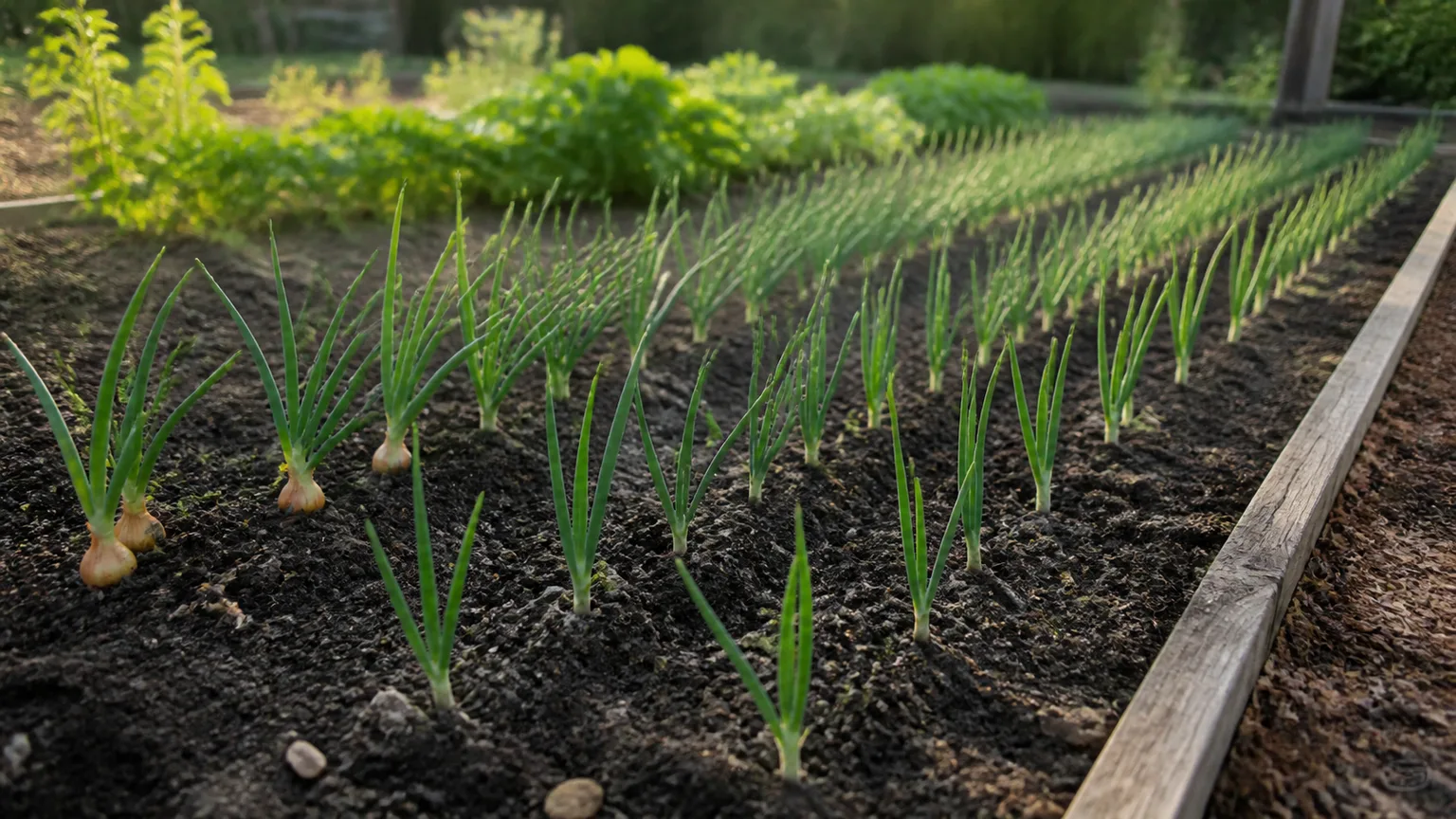
Onions are the stealth schedule-buster. From seed, they need 8–12 weeks indoors before transplant, and they move outside 2–4 weeks before your last frost—among the earliest transplants in the garden. If your last frost is mid-May, that means sowing in mid-January through early February, not “whenever you start tomatoes.”
Long-day, short-day, and intermediate-day varieties matter for bulb formation; your latitude determines which type you should grow. Bunching (green) onions can follow a slightly shorter indoor timeline but still reward an early start.
Onion seedlings should look like slender blades—almost grasslike—at transplant. Trim tops to four inches if they flop, and plant shallowly in loose soil. Because they leave the house so early, allocate tray space before warm-season crops take over your light rack.
Cauliflower (6–8 Weeks for Cool-Season Transplants)
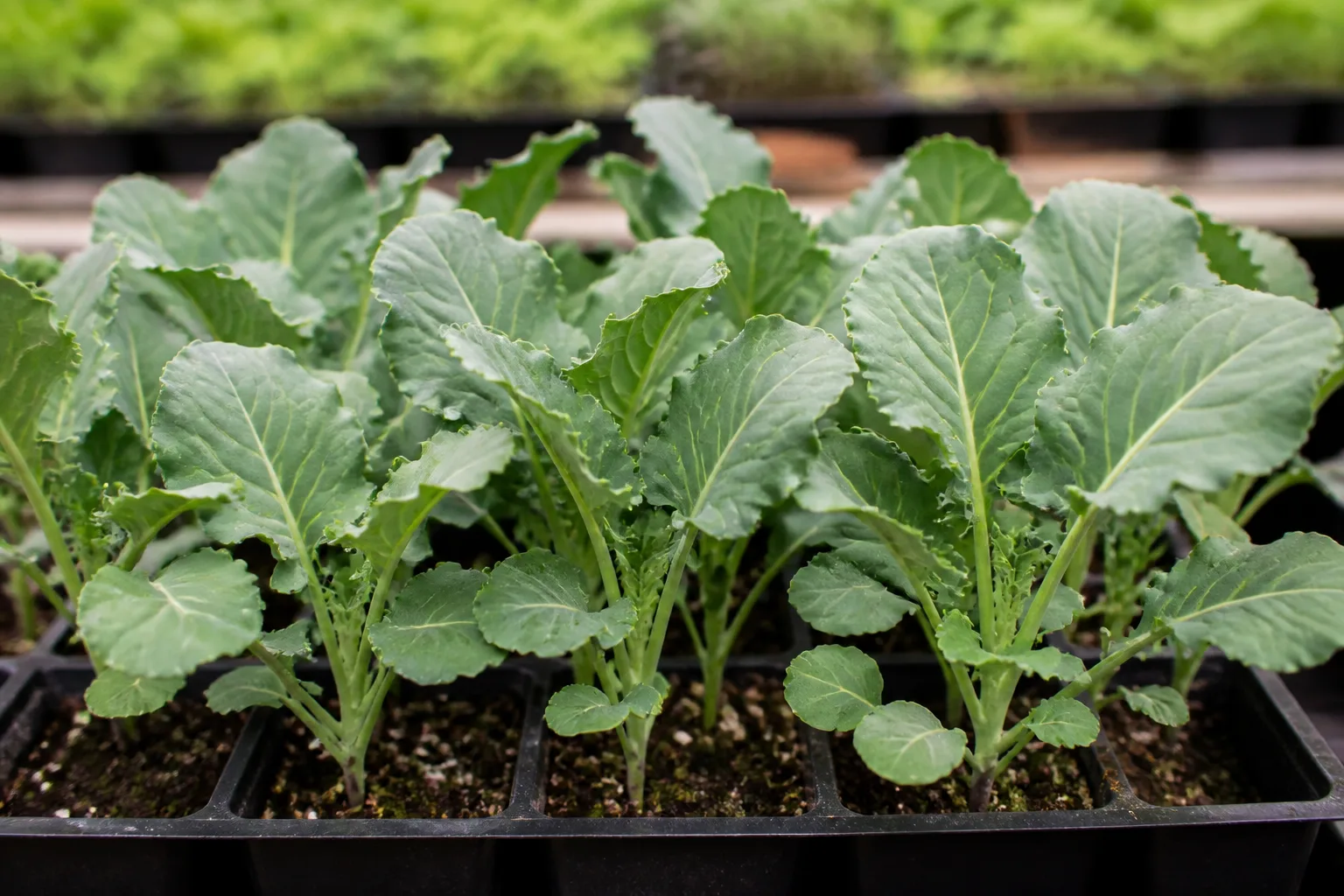
Cauliflower is a cool-season brassica that needs steady temperatures. Start seeds 6–8 weeks before you intend to transplant, and plan to set plants out 2–4 weeks before last frost with protection if nights are harsh. The goal is a mature head before summer heat; cauliflower that experiences stress often produces small, bitter buttons instead of full curds.
Germination prefers roughly 70°F, but young plants grow stockiest in 60–65°F air after they have true leaves. That makes cauliflower a good candidate for a cooler room or a rack farther from the heat mat once sprouted. Do not starve them for light—weak brassica seedlings attract pests and collapse after transplant.
If you are also starting broccoli, kale, or cabbage for spring, the same cool-season transplant rules apply. Our seeds to start now for March planting guide covers additional brassicas and herbs on a similar calendar.
Celery (10–12 Weeks—Plan for Patience)
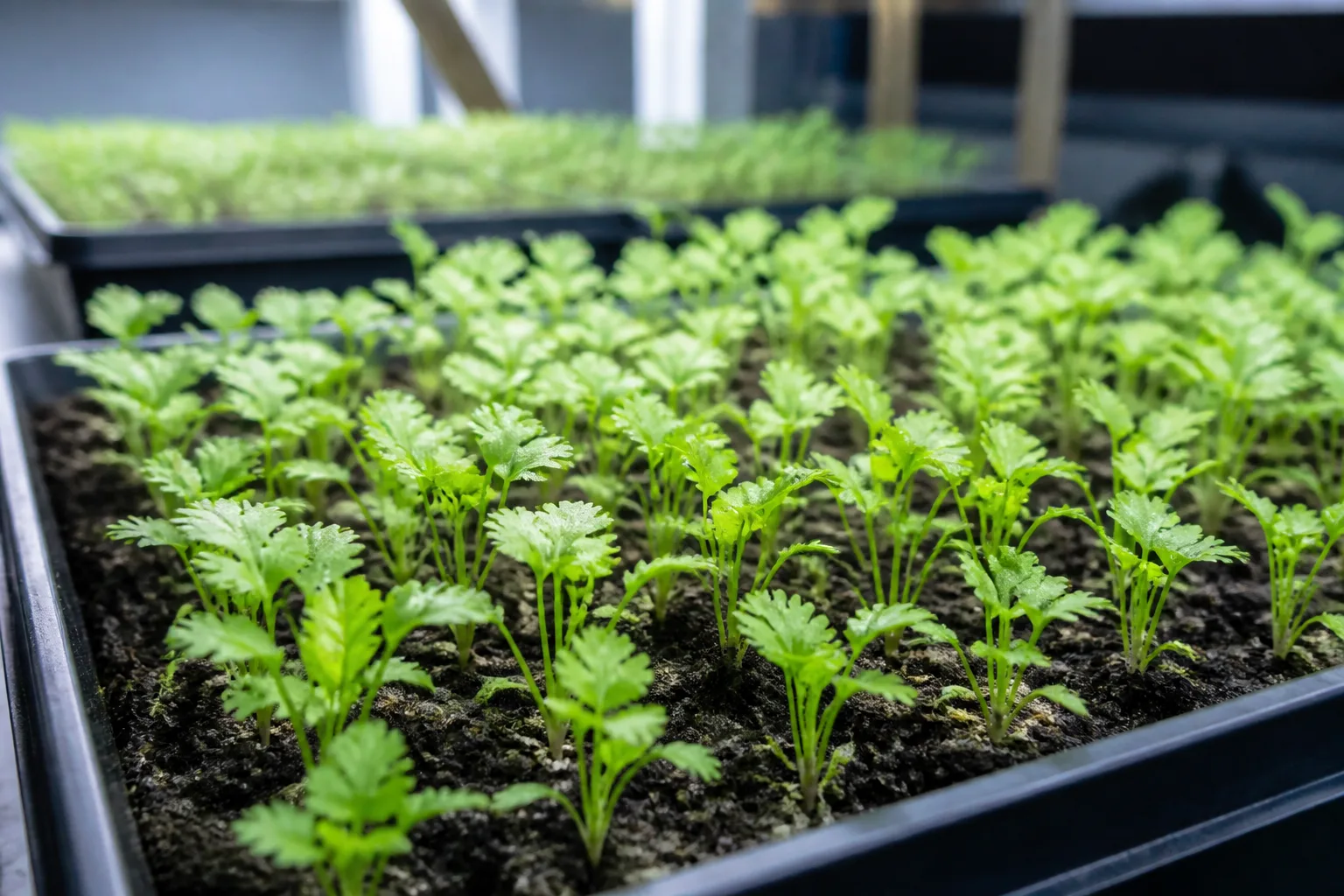
Celery is the slowest vegetable on this list. Seeds are light-dependent germinators—press them into moist mix but do not bury deeply—and they can take two to three weeks to sprout even when soil is 70–75°F. Plan 10–12 weeks indoors before transplanting 1–2 weeks before last frost.
Celery seedlings are tiny for a long time. Bottom-water to avoid washing seeds away, and be patient with surface moisture during the long germination wait. Once established, they need consistent water and nutrition; celery that dries out even once can turn bitter or bolt later.
Because of the timeline, celery belongs on your January sow list in most northern gardens. Missing that window does not mean failure—you can buy transplants—but home-started celery in deep, rich soil is noticeably more tender than many store-bought starts.
Indoor Setup Checklist Before You Sow
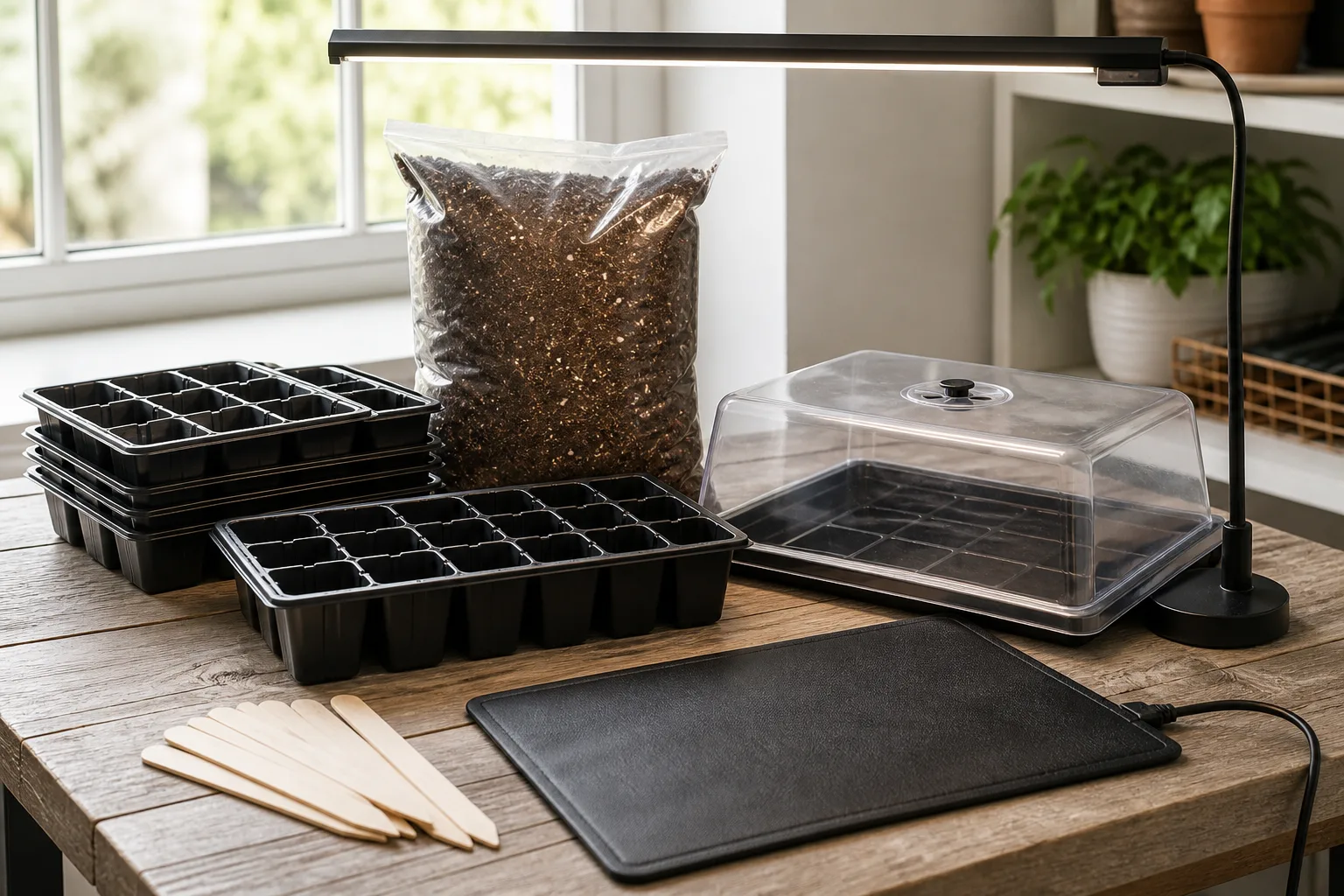
You do not need a greenhouse. You do need a repeatable setup that handles germination warmth and post-emergence light as separate jobs. UMN Extension emphasizes that while seeds germinate in many containers, success indoors depends on adequate light after sprouts appear—something a south window alone rarely provides in January and February.
Gather before you open packets:
- Shallow trays or cell packs with drainage; deeper cells for tomatoes, peppers, and eggplant if you cannot pot up quickly
- Sterile seed-starting mix (not garden soil) to reduce damping-off
- Clear dome or plastic cover for even moisture during germination, removed once sprouts show
- Grow lights on a timer for 12–16 hours daily
- Heat mat (optional for cool-season crops, strongly helpful for peppers, eggplant, and tomatoes)
- Labels—six crops on one shelf without names becomes guesswork within a week
Light, Heat, and Trays That Actually Work
After emergence, keep lights 2–3 inches above leaf tops and raise them as plants grow. Leggy seedlings are almost always a light problem, not a fertilizer problem. Air temperature can drop to 60–65°F for most seedlings once they have true leaves, but soil warmth still helps root growth.
Water when the surface lightens—bottom watering keeps foliage dry and reduces fungal issues. A fan brushing seedlings for an hour daily strengthens stems before outdoor wind. These details are boring until you lose a tray to damping-off; then they feel essential.
Vegetables You Should Not Start Indoors Yet
Indoor space is finite. Starting everything in January is how dining tables disappear under flats of squash that cannot go outside for ten more weeks. Hold off on these until their correct window—or direct-sow outdoors instead:
- Root crops (carrots, beets, radishes, parsnips): taproots resent transplanting; sow in place when soil is workable
- Beans and peas: fast germination outdoors; peas especially prefer direct sow in cool soil
- Corn: large, fast-growing, and awkward in cells
- Cucumbers and summer squash: unless you are in a very short season, sow indoors only 3–4 weeks before transplant, or direct-sow after soil warms
- Zinnias, cosmos, and sunflowers: better direct-sown; indoor starts get leggy quickly
Fifth Season Gardening warns that starting tender summer flowers and heat-lovers months too early produces huge, light-starved plants with nowhere to go—a pattern worth remembering when seed catalogs arrive in December.
Mistakes That Ruin a January Seed-Starting Push
The most expensive seed-starting mistake is timing without light. The second is treating average frost as a promise. Half the years in any zone, frost comes later than the chart says. Build a one-week safety buffer on warm-season transplants and keep row cover handy for cool-season brassicas and onions.
Other common failures:
- Overwatering after germination, leading to damping-off
- Fertilizing too early before true leaves; start dilute feeding only after the first set
- Planting multiple seeds per cell without thinning—crowded stems never toughen up
- Skipping hardening off, which sunburns or wind-tears leaves that never saw outdoor air
Starting Too Early Without Strong Light
Social media in February is full of enormous tomato plants under weak windows. By May, those gardeners are asking neighbors to adopt seedlings. If your transplant date is ten weeks away and you only have one south window, wait to sow or add a real grow light before you sow.
A good rule: if indoor time before transplant exceeds ten weeks for tomatoes or twelve weeks for peppers, you will need pot-ups, more light, and more patience. Otherwise, buy transplants for one crop and focus indoor effort where variety selection matters most—often peppers and unusual tomatoes.
From Seedling Tray to Garden Bed
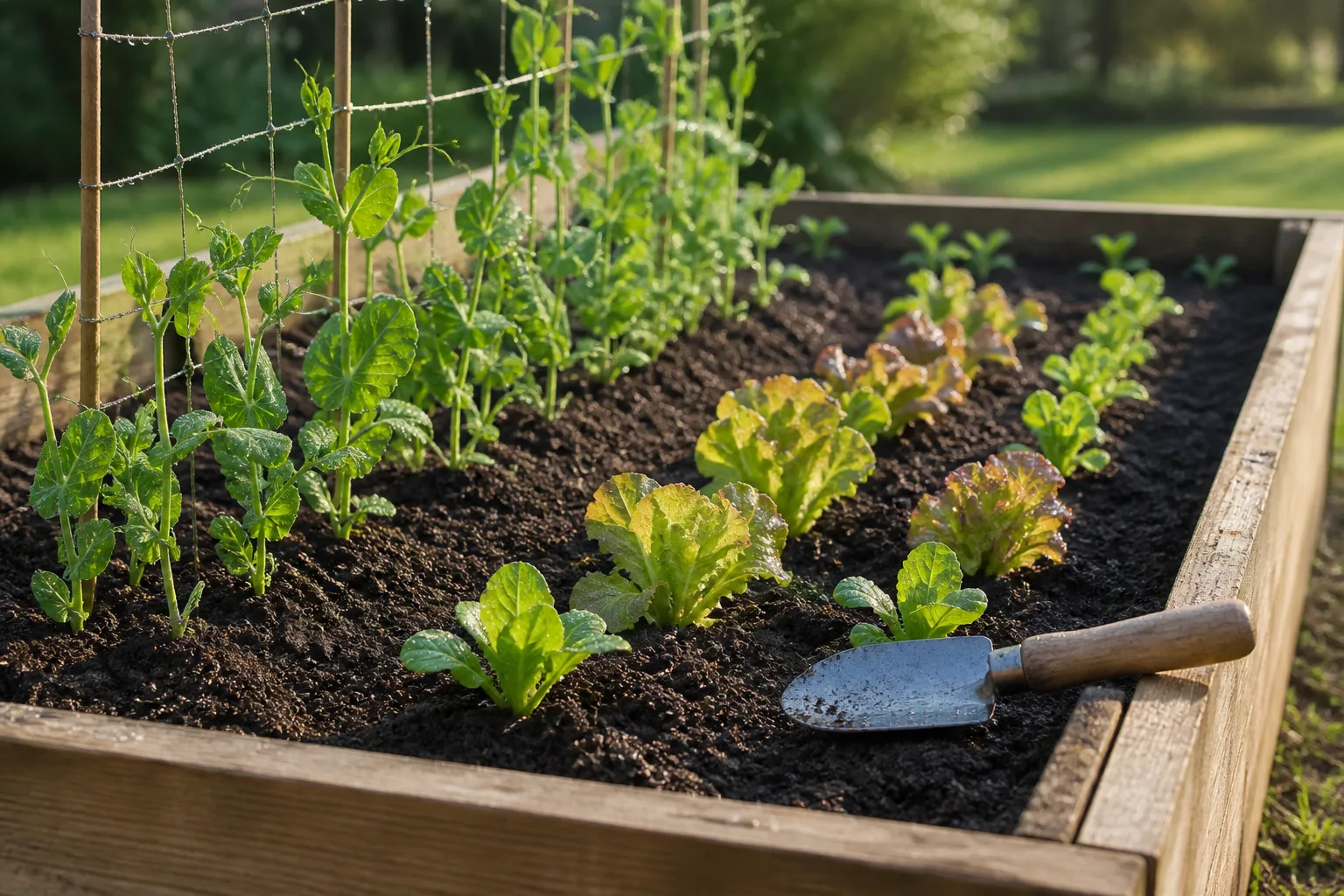
Hardening off bridges the climate-controlled shelf and the garden. For 7–10 days before transplant, move trays outdoors to a sheltered spot for increasing hours each day—start with shade and calm weather, then introduce morning sun. Bring them in if frost threatens. Skipping this step causes whitened, torn leaves that stall growth for weeks.
Transplant on a cloudy day or late afternoon to reduce wilting. Water in well, and use row cover on cool nights for cauliflower, celery, and onions. Tomatoes and peppers go out when the forecast, not just the calendar, looks warm for a full week ahead.
Keep a garden journal entry: sow date, first true leaves, pot-up date, hardening-off start, transplant date, and first harvest. One season of notes beats any generic zone chart for your specific yard.
Conclusion
Six vegetables—tomatoes, peppers, eggplant, onions, cauliflower, and celery—earn their indoor head start because they are slow, long-season, or both. Sow them on different January–March dates, transplant them on different April–May dates, and give them strong light from the first day they emerge. Get the cool-season crops out early, hold the nightshades until frost passes, and harden everything off before it touches garden soil.
Mark your last frost, write the backward math for each crop, and start only what your lights and calendar can support. Done right, you will walk past the picked-over transplant table in May with sturdy plants already acclimated to your varieties—not whatever the nursery ordered in bulk.