Cauliflower Care Guide: Grow Brassica oleracea var. botrytis
Brassica oleracea var. botrytis
Grow cauliflower in India with winter sun, steady moisture, cultivar-aware timing, and optional blanching for white curds. Includes container spacing and heat-stress tips.
Cauliflower Care Guide: Grow Brassica oleracea var. botrytis
Start with wateringThe most common care mistake for CauliflowerWatering guide → →Cauliflower care essentials
Light
Water
Keep the root zone evenly moist from seedling through harvest. Cauliflower aborts or stalls head development under drought stress, but saturated soil invites root and stem problems. Water deeply when the top 2–3 cm feels dry and let excess drain.
Soil
Fertile, moisture-retentive but well-drained loam high in organic matter. Aim for pH 6.0–7.5; slightly acidic soils below about 6.5 increase clubroot risk.
Humidity
Temperature
Fertilizer
About Cauliflower
Cauliflower is native to Cultivated heading brassica derived from Mediterranean and western Asian cabbage ancestors, typically reaches 45–60 cm tall and 45–60 cm wide per plant; compact cultivars vary indoors, with moderate - dense heads in about 55–80 days from transplant, depending on cultivar and season growth. Cauliflower has a herbaceous biennial usually grown as a cool season annual vegetable growth habit and part of the Brassicaceae family. It is also known as Phool Gobhi, Gobi, Heading cabbage, and Snowball cauliflower.
| Detail | Information |
|---|---|
| Also known as | Phool Gobhi, Gobi, Heading cabbage, Snowball cauliflower |
| Native region | Cultivated heading brassica derived from Mediterranean and western Asian cabbage ancestors |
| Mature size | 45–60 cm tall and 45–60 cm wide per plant; compact cultivars vary |
| Growth rate | Moderate - dense heads in about 55–80 days from transplant, depending on cultivar and season |
| Growth habit | Herbaceous Biennial Usually Grown As A Cool Season Annual Vegetable |
| Scientific name | Brassica oleracea var. botrytis |
| Family | Brassicaceae |
Cauliflower Care Guide: Grow Brassica oleracea var. botrytis
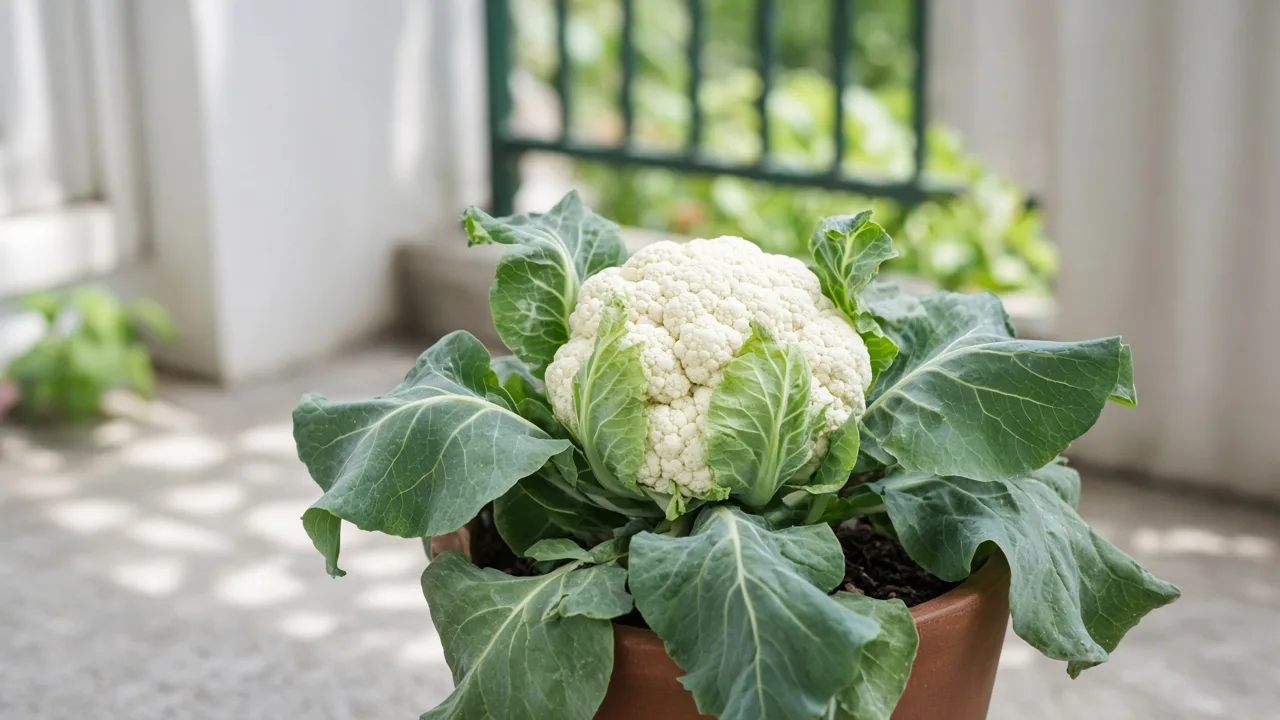
Cauliflower (Brassica oleracea var. botrytis) is grown for a single dense head of immature flower buds—the curd—that sits above a short stem and ring of large leaves. Unlike heading cabbage, which forms tight overlapping leaves, or broccoli, which produces many small green florets, cauliflower aims for one smooth, harvestable cluster. In Indian markets the crop is widely known as Phool Gobhi (फूल गोभी). It shares pests, soil diseases, and rotation rules with broccoli, cabbage, kale, and mustard greens because all belong to the Brassicaceae (cole crop) family UF/IFAS Gardening Solutions.
Home gardeners often call cauliflower the most finicky brassica: growth must stay cool, moist, and uninterrupted from transplant through curd formation. When conditions slip—heat spikes, drought, or hungry roots—the plant may button (form tiny heads) or bolt (flower prematurely) instead of a full curd The Royal Horticultural Society. Treat this page as your season map; sibling guides drill into light, water, soil, and feeding without repeating every detail here.
What Cauliflower Is and How It Grows
Scientific identity, Phool Gobhi, and cabbage-family relatives
The Latin name Brassica oleracea var. botrytis places cauliflower in the same species as kale, Brussels sprouts, kohlrabi, and broccoli—only the inflorescence differs UF/IFAS Gardening Solutions. Romanesco types form striking spiral green heads but cook like standard cauliflower. Broccoflower hybrids blend cauliflower and broccoli traits. Seed packets may list Snowball, Purple Cape, or mini tennis-ball types; label and days-to-harvest matter because spacing and pot size change with vigor.
Botanically cauliflower is a biennial grown as an annual for the kitchen: year one builds leaves and the curd; year two would flower and set seed if left in place. Most balcony growers end the crop after one harvest rather than saving seed.
Curds, growth habit, and mature size
Plants form a rosette of broad, waxy leaves with the curd developing in the center. Standard varieties can produce heads 20–30 cm (8–12 in) wide on healthy soil with wide spacing The Royal Horticultural Society. Mini cauliflowers stay closer to tennis-ball size and mature faster—often in about three months—making them the practical choice for containers The Royal Horticultural Society. Above-ground height is usually modest (30–60 cm), but the root zone still needs depth and steady moisture because the curd forms quickly once initiated.
From transplant or favorable direct sowing, expect roughly 55–100 days of cool, even growth before harvest, depending on cultivar and weather Harvest to Table. Interruptions during that window are what separate a tight white head from a loose, ricey curd or no head at all.
Why Cauliflower Demands Cool, Steady Weather
Comfortable temperatures and heat limits
Cauliflower is a cool-season vegetable. Quality curds form when days stay mild and growth is continuous—not when pots bake on a pre-monsoon railing. Guides commonly place the active range near 13–27 °C (55–80 °F); prolonged heat or dry air pushes plants toward bolting and poor head texture Harvest to Table. UF/IFAS notes that buttoning—premature small heads—can follow nutrient stress, drought, or extended cool snaps around 35–50 °F (about 2–10 °C) during early growth, so transplants should not be chilled below about 13 °C (55 °F) while young.
On the Indian plains, plan cauliflower as a winter crop, not a summer one. Sow or set transplants from October into November so most curd development happens in winter sun, then harvest before sustained March–April heat. In cooler hill districts, the season can start earlier and last longer, though monsoon humidity still raises disease pressure. Attempting Phool Gobhi through hot lowland summer usually wastes pot space regardless of how faithfully you water.
Sowing windows for Indian plains and hills
Match the packet to your season: early and mini types fit shorter cool windows; winter/spring varieties need months of mild weather and wide spacing The Royal Horticultural Society. Stagger small batches two to three weeks apart so every head does not mature the same week—cauliflower does not store on the plant once ready.
Indoors, sow in modules about six weeks before outdoor planting, keeping seedlings at roughly 12–22 °C (54–72 °F) until roots fill the cell The Royal Horticultural Society. Harden seedlings for several days on a sheltered balcony before final placement. Detailed seed depth, module mixes, and nursery timing live in the Cauliflower propagation guide.
Light Needs in Brief
Cauliflower wants full sun on a bright, sheltered site—think six or more hours of direct light on most winter days Harvest to Table. On a north Indian winter balcony, a south- or west-facing rail often supplies enough brightness without the scorch of summer. Light shade may help during an unusual warm spell, but deep shade produces weak leaves and small curds.
For orientation, reflectors, and heat-stress signs, use the dedicated Cauliflower light guide. This overview only sets the rule: bright cool-season sun, cautious shade only in heat spikes.
Water and Root-Zone Basics
Cauliflower is not drought-tolerant. The curd forms from steady, uninterrupted growth, so the root zone should stay evenly moist—not soggy, never bone-dry between hot afternoons Harvest to Table. Check the top 2–3 cm of mix; water deeply when that layer dries while deeper soil remains slightly damp. Empty saucers after watering so the stem base does not sit in stagnant water.
Because growth checks cause buttoning, treat missed irrigation during head formation as a high-risk event UF/IFAS Gardening Solutions. Seasonal frequency, wilt diagnosis, and container habits are expanded in the Cauliflower watering guide.
Soil, pH, and Container Choice
Fertility, drainage, and pot size
Cauliflower is a heavy feeder that prefers deep, fertile, moisture-retentive soil with excellent drainage The Royal Horticultural Society. UF/IFAS recommends pH 6.0–7.0; Harvest to Table allows up to about 7.5 on the alkaline side. Work mature compost into the mix at planting and plan mid-season feeding rather than one burst of fertilizer.
A workable container blend mirrors other brassicas: roughly 50% quality potting mix or loam, 30% mature compost, and 20% perlite or coarse coco chips for aeration. Acidic mixes on balconies may need lime the season before planting if clubroot has appeared in reused brassica soil The Royal Horticultural Society.
Mini caulis vs full-size types
Full-size cauliflower belongs in large beds or very big pots with 45–60 cm spacing between plants Harvest to Table. Mini types are the balcony default: The Royal Horticultural Society suggests up to four mini plants in a 40 cm (16 in) deep container of peat-free multi-purpose compost, planted deeply with lowest leaves at the compost surface. Single standard plants need far more root room—often 25–30 litre pots or larger—to buffer moisture through curd swell.
Drainage holes are non-negotiable. Mix recipes, pH testing, and wrong-soil warning signs are covered in the Cauliflower soil guide and Cauliflower fertilizer guide.
Planting: Seeds, Transplants, and Spacing
Transplants are the most reliable route for beginners UF/IFAS Gardening Solutions. Choose stocky seedlings with four to five true leaves, firm stems, and clean leaf undersides—avoid leggy plugs and aphid-coated starts. Set plants 30–45 cm (12–18 in) apart in final pots or beds UF/IFAS Gardening Solutions; mini types can go closer following packet guidance.
Seeds sown outdoors typically go ½ in (1.3 cm) deep; thin or transplant to final spacing once seedlings are 10–15 cm tall The Royal Horticultural Society. Leggy transplants can be buried up to their first leaves so they do not topple in wind. Do not grow cauliflower in the same container soil where cabbage-family crops struggled with clubroot last season—refresh mix or rotate placement.
Repotting logic for upgrading seedling pots versus final containers is in the Cauliflower repotting guide.
Blanching White Curds (and When You Can Skip It)
Blanching means shading the developing curd so white varieties stay pale and protected from sunburn—not the kitchen blanch of boiling water UF/IFAS Gardening Solutions. When the head reaches about 7–8 cm (3 in) or egg size, pull the longest outer leaves over the curd and secure them loosely with soft twine or a rubber band, blocking light without crushing leaves UF/IFAS Gardening Solutions.
Self-blanching cultivars fold leaves naturally; still check during heat waves because coverage may fail UF/IFAS Gardening Solutions. Purple, orange, and green types are grown for color—blanching is usually unnecessary. Leaf-trimming technique overlaps with harvest prep; see the Cauliflower pruning guide for tie-and-trim workflow without damaging the curd.
Harvest Timing and Post-Harvest Care
Harvest when the curd is fully developed but bud clusters remain tight—before segments separate and the head looks grainy UF/IFAS Gardening Solutions. Warm spells accelerate maturity, so check the first blanched plants first. Cut the head with a knife, leaving some wrapper leaves attached for handling.
Cauliflower is perishable; refrigerate promptly and cook or preserve within a few days UF/IFAS Gardening Solutions. Unlike kale, cauliflower does not offer cut-and-come-again harvests—one curd per plant is the norm. Plan a second sowing if you want another winter head.
Pests, Diseases, and Brassica Rotation
Expect the usual cole-crop pests: aphids, flea beetles on young leaves, and caterpillars from cabbage white butterflies and loopers UF/IFAS Gardening Solutions. Inspect leaf undersides weekly; hand-pick caterpillars on small plantings and isolate heavily infested pots before pests spread to neighboring brassicas.
Clubroot, black rot, downy mildew, and damping-off appear when rotation fails, drainage is poor, or humidity stays high. Do not reuse suspicious mix from diseased cabbage-family crops. Rotate planting sites or replace container soil between seasons, and avoid growing cauliflower where other brassicas occupied the same pot within the last two years The Royal Horticultural Society.
Common Cauliflower Care Mistakes
Growing through hot lowland summer is the most frequent error—plants bolt or button no matter how much you feed. Letting pots dry out during curd initiation produces small or deformed heads UF/IFAS Gardening Solutions. Skimping on pot size for standard varieties starves roots right when the curd swells. Planting too many full-size caulis in one container crowds leaves, blocks airflow, and shades curds unevenly.
Skipping blanch on white types in bright winter sun yields discolored curds. Over-fertilizing without soil testing can lush leaves at the expense of heads—pair feeding with compost and follow the Cauliflower fertilizer guide. Ignoring cultivar class sets unrealistic expectations when a slow winter variety is squeezed into a short cool window.
Pets, Pesticides, and Edible Heads
Cauliflower is a human food crop, not a pet-safe ornamental. Cooked or raw florets are not automatically appropriate for cats, dogs, or other pets—especially plants sprayed with pesticides. Keep pots out of grazing paths, wash harvests thoroughly, and ask a veterinarian before sharing garden produce with animals that have digestive or thyroid conditions.
Edibility for people does not prove unlimited safety for every species. Treat balcony brassicas like food, not chew toys.
When to Use This Page vs Other Cauliflower Guides
Use this overview when you need the whole picture—identity, cool-season timing, light and water summary, soil pH, blanching, harvest, and mistake avoidance—before diving into one topic. Open the Cauliflower light guide for window orientation, sun hours, and heat-stress signs. Use Cauliflower watering when wilt, saucer habits, or seasonal frequency need troubleshooting.
Cauliflower soil and Cauliflower fertilizer cover mix recipes, pH tweaks, and feeding schedules without repeating here. Cauliflower repotting and Cauliflower propagation walk through seedling pot-ups, sowing dates, and transplant timing. Cauliflower pruning focuses on leaf management and blanching ties around the curd.
Related Cauliflower Guides
- Cauliflower hub — profile, grower notes, and care index
- Cauliflower light — sun hours, balcony placement, heat shade
- Cauliflower watering — moisture checks, container frequency, buttoning risks
- Cauliflower soil — mixes, pH, drainage, rotation
- Cauliflower fertilizer — nitrogen timing, compost, overfeeding risks
- Cauliflower propagation — sowing dates, transplants, modules
- Cauliflower repotting — pot sizing for mini vs standard types
- Cauliflower pruning — blanching leaves, curd protection
Conclusion
Cauliflower rewards growers who respect its cool-season biology: on Indian plains, sow or buy plants for winter sun, keep fertile soil near pH 6.0–7.5, and maintain even moisture without waterlogging through curd formation. Choose mini types for pots, blanch white curds when leaves no longer shade them, and harvest while buds stay tight. Rotate away from other brassicas, expect one head per plant, and plan a fresh sowing when heat ends the season. For deeper instruction on any single lever—light, water, soil, feed, propagation, or leaf management—follow the sibling guides above rather than treating Phool Gobhi like a generic evergreen houseplant.
How to care for Cauliflower?
When should you water Cauliflower?
Keep the root zone evenly moist from seedling through harvest. Cauliflower aborts or stalls head development under drought stress, but saturated soil invites root and stem problems. Water deeply when the top 2–3 cm feels dry and let excess drain.
- Push a finger 2–3 cm into the mix and water when that layer feels dry while the soil below stays slightly moist - Water deeply when the top 2–3 cm feels dry and let excess drain.
- Drain excess water - Water deeply when the top 2–3 cm feels dry and let excess drain.
What soil works best for Cauliflower?
Fertile, moisture-retentive but well-drained loam high in organic matter. Aim for pH 6.0–7.5; slightly acidic soils below about 6.5 increase clubroot risk.
- 50% good-quality potting mix or loam - Fertile, moisture-retentive but well-drained loam high in organic matter.
- 30% mature compost
- 20% perlite, rice hulls, or coarse coco chips - Fertile, moisture-retentive but well-drained loam high in organic matter.
Grower notes for Cauliflower
Treat cauliflower as a cool-season head crop
Cauliflower is less forgiving than many brassicas because the edible curd forms in a narrow temperature window. Extension and seed-industry guides place the sweet spot near 15–21°C (about 60–70°F) during head development. In most Indian plains, sow or transplant from October into November for winter harvest before spring heat arrives. Hot lowland summers commonly cause ricey texture, discoloration, or premature bolting even when water and fertility look adequate.
Never let growth stall before the head forms
University of Illinois Extension notes that any interruption—cold shock, heat, drought, or physical damage—can abort curd development and leave large plants with no usable head. Start with young, actively growing transplants rather than old, root-bound seedlings held too long in trays. Keep moisture consistent and avoid repotting, hard pruning, and major placement changes once the plant is sizing up.
Match container size to one mature plant
Field spacing commonly runs 45–60 cm between plants. In containers, give one standard cauliflower at least a 20–30 litre pot with drainage holes. Closer spacing or undersized pots increase competition, slow curd development, and make moisture swings harder to manage. Read the seed packet for days-to-maturity and heat tolerance because Snowball-type whites, self-blanching selections, and colored Romanesco types do not all behave the same.
Blanch white curds only when needed
When a white head shows 5–8 cm of curd through the leaves, tie outer leaves over the center or use a self-blanching cultivar so sun does not yellow the curd or develop off flavors. In cool winter weather, tying is often unnecessary. Colored types need light to develop their purple, orange, or green tones, so do not cover those heads. Tied heads hold more humidity, so inspect for leaf spots if weather turns wet.
Inspect transplants and protect against brassica pests
Choose stocky seedlings with firm stems, clean leaf undersides, and no chewed holes or caterpillar droppings. Cauliflower shares aphids, imported cabbageworm, cabbage looper, and flea beetle pressure with other cabbage-family crops. Row covers on young plants, hand checks as the head forms, and crop rotation away from recent brassicas reduce the chance of frass inside the curd at harvest.
Keep edible heads pet-aware
Cauliflower is a human food crop, but that does not establish unrestricted safety for every pet species. Major pet-toxicity databases do not provide a clear species-specific cauliflower listing. Prevent routine grazing, avoid pesticide-treated heads, and ask a veterinarian before offering cauliflower as food, especially to animals with thyroid, urinary, or digestive conditions.
Is cauliflower safe for pets?
Cauliflower is edible for people, but a clear species-specific classification for pets was not confirmed in the major poison-control database reviewed. Prevent unsupervised grazing and consult your veterinarian before feeding it.
Human edibility is not proof of pet safety. Cauliflower contains bioactive brassica compounds, and large or repeated servings may be unsuitable for some animals. Keep pesticide-treated plants inaccessible and contact a veterinarian if a pet eats a large amount or develops digestive signs.
Watering Cauliflower
For Cauliflower, push a finger 2–3 cm into the mix and water when that layer feels dry while the soil below stays slightly moist and water check every 2–3 days in containers; adjust for weather, pot size, and growth stage rather than watering on a fixed calendar. Maintain steady moisture during curd formation; reduce frequency only when cool weather slows growth and the pot stays wet longer.
| Detail | Information |
|---|---|
| How often | Check every 2–3 days in containers; adjust for weather, pot size, and growth stage rather than watering on a fixed calendar |
| How to check | Push a finger 2–3 cm into the mix and water when that layer feels dry while the soil below stays slightly moist |
| Seasonal changes | Maintain steady moisture during curd formation; reduce frequency only when cool weather slows growth and the pot stays wet longer |
Signs of overwatering
- persistently wet soil with yellowing lower leaves
- soft or darkened stem at soil level
- wilting while the root zone is wet
Signs of underwatering
- limp leaves and dry soil
- stalled or aborted head development
- small or loose curds under heat stress
Soil & potting for Cauliflower
Use a mix of 50% good-quality potting mix or loam, 30% mature compost, 20% perlite, rice hulls, or coarse coco chips for Cauliflower. Free drainage is essential, but an extremely gritty mix can dry too quickly for cauliflower's steady moisture needs. Target soil pH around 6.0–7.5. Repot usually grown for one cool season; pot up seedlings once into a final large container rather than repeatedly repotting mature plants, ideally in early autumn in most Indian plains for winter harvest; late winter or early spring only where summers stay cool enough for spring crops.
| Detail | Information |
|---|---|
| Recommended mix | 50% good-quality potting mix or loam, 30% mature compost, 20% perlite, rice hulls, or coarse coco chips |
| Drainage | Free drainage is essential, but an extremely gritty mix can dry too quickly for cauliflower's steady moisture needs |
| Soil pH | 6.0–7.5 |
| Repotting frequency | Usually grown for one cool season; pot up seedlings once into a final large container rather than repeatedly repotting mature plants |
| Best season to repot | Early autumn in most Indian plains for winter harvest; late winter or early spring only where summers stay cool enough for spring crops |
Signs it needs repotting
- seedlings have 3–4 true leaves and fill their nursery cells
- roots circle densely or emerge from drainage holes
- the final container dries out within a day in cool weather