Cauliflower Pruning Guide: Blanching, Leaf Folds & Harvest
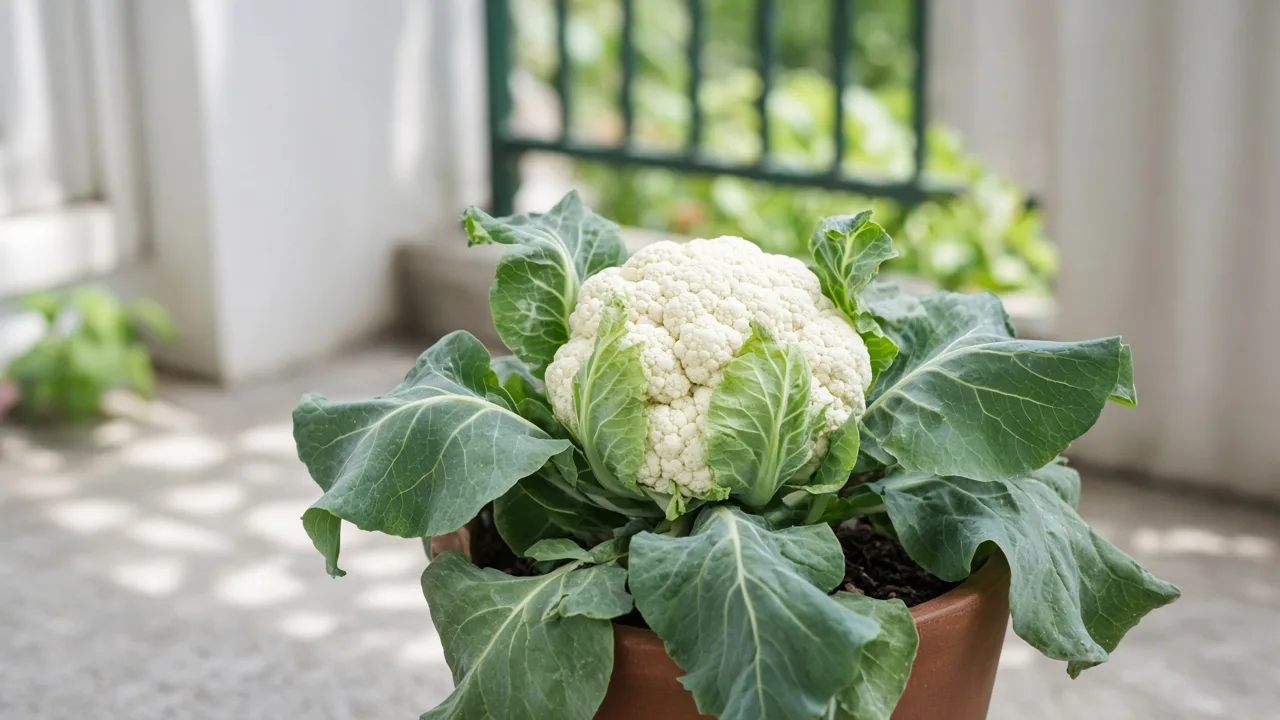
Cauliflower Pruning Guide: Blanching, Leaf Folds & Harvest Cuts
Cauliflower Pruning Guide: Blanching, Leaf Folds & Harvest Cuts
First, remove only one fully yellow, wilted, or clearly damaged lower leaf at its base with clean scissors or by snapping downward. Stop and look at the curd and crown before you fold leaves for blanching or cut for harvest.
Cauliflower (Brassica oleracea var. botrytis) is grown for one dense curd, not repeated leaf picks like kale. Home “pruning” means sanitation on lower leaves, folding or tying leaves to blanch white heads, optional airflow trims, and the final harvest cut—not shaping a woody shrub. UF/IFAS notes that excess sun on white curds causes discoloration and off flavor, which is why leaf folding matters for store-white types (UF/IFAS Gardening Solutions). For cultivar choice, season windows, and container spacing, start with the Cauliflower overview.
Quick answer
During cool-season growth, fold outer leaves over white curds when the head is about 7–8 cm (3 in) across—UF/IFAS compares that to a teacup; Epic Gardening uses baseball size as a similar cue. Secure leaves loosely with soft twine, raffia, or a rubber band so light is blocked but blades are not crushed (UF/IFAS Gardening Solutions). Skip manual blanching on self-blanching whites and on purple, orange, green, or Romanesco types that need light for color (RHS). Harvest when the curd is firm and compact, before florets separate (RHS). Pruning cannot fix button heads from drought, heat, or transplant shock—stabilize watering and light before aggressive leaf removal.
What “pruning” means on Cauliflower
Unlike houseplants you tip for bushiness, cauliflower channels energy into a single apical curd. The wrapper leaves protect that bud; your cuts manage those leaves and finish the crop.
| Situation | Action | Timing | Outcome |
|---|---|---|---|
| Yellow, spotted, or pest-chewed lower leaf | Sanitation snap at petiole base | Anytime | Less pest habitat; clearer view of curd |
| White curd showing through leaves | Blanch by folding longest outer leaves over head | ~7–8 cm curd | Pale, tender curd; sun protection |
| Firm, tight head at target size | Harvest cut below curd with a few wrapper leaves | Before separation | Kitchen crop; plant usually done |
| Thick flower stalk elongating | Bolt removal at base | Early bolt only | Brief delay; plan succession sowing |
There is no useful “top the plant for side branches” step on standard heading cauliflower—except on sprouting cultivars bred for repeated floret picks (Epic Gardening).
When to manage leaves or harvest
Best season for blanching and harvest
Cauliflower heads form in cool, even weather—roughly 15–21°C (60–70°F) during curd development for many cultivars. In most Indian plains, transplant from October into November and harvest before sustained spring heat. RHS warns that hot, dry spells produce loose or deformed heads and encourage bolting.
Blanch white types when the curd is visible and in the teacup-to-baseball size range (UF/IFAS Gardening Solutions; Harvest to Table). Plants mature unevenly; color-coded ties help you check the earliest-wrapped heads first (UF/IFAS Gardening Solutions).
What you can remove anytime
Fully yellow, collapsed, or clearly diseased lower leaves are sanitation cuts, not a heavy prune. Remove them to improve airflow around the stem and spot caterpillars before they reach the curd.
Defer large leaf stripping when seedlings are newly transplanted, the pot is waterlogged, or midday heat is wilting healthy foliage. UF/IFAS lists drought and nutrient stress among causes of buttoning—a tiny premature head that will not size up (UF/IFAS Gardening Solutions).
What to check before cutting
Before your first sanitation leaf or blanching fold, confirm:
- Curd stage: A visible, firm button means blanching may be near for white types; a loose, ricey surface often means heat or delay—harvest soon or improve care rather than folding tighter.
- Leaf health: Wrapper leaves should be flexible enough to bend without snapping. Brittle, nitrogen-starved blades tear when tied—review fertility and moisture before forcing folds.
- Moisture: Harvest to Table stresses that dryness during curd formation can send the center “breaking” into flower. Wilting with wet soil points to drainage issues on the soil page instead of more pruning.
- Light quality: Pale, stretched plants on a dim balcony need brighter winter sun before you solve stretch by removing leaves.
Tools and sanitation
Use sharp bypass pruners, kitchen scissors, or a harvest knife for the final head cut. For sanitation leaves, clean hands plus a snap often suffice.
Wipe blades with 70% isopropyl alcohol before work and when moving between brassica beds. Cauliflower shares diseases with cabbage and broccoli; clean tools reduce smearing pathogens on fresh cuts.
Bag and discard leaves with heavy black rot or soft bacterial decay instead of composting them in small home piles.
The first cut to make
After inspection, remove one lowest outer leaf that is yellow, slimy, or heavily pest-damaged. Grasp the petiole, pull slightly outward, and snip or snap at the stem attachment without tearing wrapper leaves you will need for blanching. Pause.
If a white curd is already 7–8 cm and self-blanching leaves have not curled over it, move to folding—not more sanitation—before sun discolors the surface (UF/IFAS Gardening Solutions).
How to blanch white cauliflower (leaf folding)
- Choose wrapper leaves: Select the longest outer leaves that reach across the curd without breaking (Harvest to Table suggests three or four leaves).
- Fold, do not scalp: Pull them gently over the head so the curd is shaded but leaves can still grow (Harvest to Table). UF/IFAS warns against tying so tight that leaves are injured (UF/IFAS Gardening Solutions).
- Secure loosely: Use soft twine, raffia, tape, or a rubber band at the tips—tight enough to block light, loose enough to slip a finger inside (UF/IFAS Gardening Solutions; Epic Gardening).
- Mark the date: Color-coded ties help track which heads to harvest first (UF/IFAS Gardening Solutions).
- Peek if weather turns wet: Tied heads hold humidity; untie briefly after heavy rain to check for leaf spots, then re-cover if the curd is still developing.
Self-blanching cultivars curl leaves naturally—verify coverage before you add ties (UF/IFAS Gardening Solutions). Colored and Romanesco types need light for pigment and texture; do not cover those heads (RHS).
In summer sun, RHS advises snapping and folding leaves to stop white curds yellowing. In hard frost on overwintering types, bunch and tie leaves over the curd or add fleece—remove covers promptly when temperatures rise.
The harvest cut (final prune)
Harvest when the curd is large enough for your cultivar but still firm and tight—mini types at tennis-ball size, standards often 10–20 cm (4–8 in) when tight (RHS; Harvest to Table). Once florets separate, flavor turns bitter even though the head remains edible (UF/IFAS Gardening Solutions; RHS).
- Untie blanched leaves if present.
- Hold the curd without pressing bruises into the surface (Epic Gardening).
- Cut the stem with a sharp knife just below the head, keeping a few inner wrapper leaves for fridge storage (RHS).
- Cool immediately—UF/IFAS recommends prompt refrigeration because heads are sensitive (UF/IFAS Gardening Solutions).
In warm weather, Harvest to Table suggests checking readiness about four days after tying for blanching. Rows sown together often mature together; start picking slightly early to spread the glut (RHS).
How much you can safely remove
Treat cauliflower as leaf-conserving:
- Sanitation: One to a few failing lower leaves per visit.
- Blanching: Fold wrapper leaves over the curd; do not cut them off unless they are already dying.
- Harvest: One head per plant on standard types—the cut ends the crop.
Removing many healthy outer leaves at once starves a sizing curd and invites sunscald on exposed tissue. If you need airflow in a dense row, remove only the lowest leaves that drag on soil or block drainage channels—not the blades shading the curd.
Where to cut—and what to avoid
Cut: Yellow or diseased lower petioles at the stem; the main stalk below the curd at harvest; soft bolt stems if you catch flowering early.
Do not cut: The curd surface itself while it is developing; the growing point before a head forms; or so many wrapper leaves that the plant cannot photosynthesize. Avoid hacking into the crown when learning blanching folds—creased curds bruise easily.
On sprouting cauliflower, Epic Gardening describes harvesting tender side branches 4–8 in long with repeated cuts until the plant expires—different from a single Snowball-type head.
Bolting, buttoning, and damaged growth
Buttoning—a tiny head on a small plant—follows growth checks from cold snaps, drought, root-bound transplants, or nutrient stress (UF/IFAS Gardening Solutions). More pruning will not enlarge a buttoned curd; restart with fresh transplants and steadier care.
Bolting: When a thick stalk elongates with flower buds, leaf quality collapses. Snap or cut the bolt early if you want a few more wrapper leaves, but plan a new sowing—especially before lowland summer heat (UF/IFAS bolting guide).
Pest-damaged wrappers: Remove leaves with heavy caterpillar frass inside folds before you tie; otherwise pests finish the curd under cover.
Aftercare and recovery
After blanching, keep the root zone evenly moist while the curd expands—dry spells during this window produce ricey texture (RHS; Harvest to Table). Do not fertilize as a “tie reaction”; feed only on your normal schedule from the fertilizer guide.
Signs leaf work helped: The curd stays pale (on blanched whites), remains firm, and reaches harvest size without separating.
Signs timing or tension failed: Yellow curd on white types before harvest, mold under tight ties, separated “ricey” grains, or a crown that stalls after heavy leaf stripping.
After harvest, standard heading plants do not regrow a second main curd in the same pot. Compost or remove the stump; use propagation timing for succession plants in a clean mix.
Mistakes to avoid
- Stripping healthy wrapper leaves instead of folding them for blanching
- Tying folds so tight that leaves tear or the curd bruises
- Blanching purple, orange, or Romanesco heads that need light
- Waiting until florets separate because the head “looks big enough”
- Harvesting wet, muddy curds and storing them warm—wash and chill promptly
- Using dirty pruners between brassica patches
- Combining hard pruning with repotting while the curd is sizing
When not to prune
Skip non-urgent leaf removal when transplants are still rooting, pots are sodden, or only heat—not age—is yellowing lower leaves. Remove diseased tissue if sanitation demands it, but delay blanching until the curd is the right size and leaves are pliable.
Also pause if plants show transplant shock—wait until new wrapper leaves look firm, then resume light sanitation only.
Related Cauliflower guides
- Cauliflower overview — cool-season timing, cultivar types, and one-head harvest logic
- Cauliflower light — winter sun, heat stress, and curd quality
- Cauliflower watering — even moisture while curds size
- Cauliflower soil — fertility, drainage, and pH for brassicas
- Cauliflower fertilizer — feeding during head development
- Cauliflower propagation — succession sowing when the crop finishes
- Cauliflower repotting — final pot size without disturbing mature curds