Cauliflower Soil Guide: Mix, pH & Drainage for Pots
Cauliflower Soil Guide: Mix, pH & Drainage for Pots
Cauliflower Soil Guide: Mix, pH & Drainage for Pots
Cauliflower (Brassica oleracea var. botrytis—phool gobhi on many Indian terraces) is judged by one thing: a tight, white curd that forms before heat or stress sends the plant bolting. That curd depends on a root zone that is fertile, consistently moist, well aerated, and—unlike many leafy greens—physically firm. Loose, fluffy “houseplant” mixes and soggy clay pockets both produce the same disappointment: stunted growth, button heads, or no head at all.
This page covers texture, organic matter, pH, containers, and drainage. For irrigation once the mix is right, use the Cauliflower watering guide. For seasonal placement and harvest timing, start with the Cauliflower overview.
What cauliflower roots need from the soil
RHS cauliflower guidance describes the ideal site as sunny, with deep, fertile soil that is moist but free-draining. The Farmers’ Almanac cauliflower guide adds a practical band of well-drained, fertile ground with pH roughly 6 to 7, worked with nitrogen-rich compost so the mix holds moisture without drying out in a day. Those two ideas—water available to roots plus oxygen between particles—are the whole game for cauliflower.
Cauliflower is a cool-season brassica with a relatively large root system for a vegetable bed. NC State notes that Brassica oleracea crops perform best in full sun with nitrogen-rich soil and good drainage. Shallow preparation in hard ground or a thin layer of compost on top of compacted clay does not give those roots room to explore or breathe.
Firm ground is not optional for a full curd
Cauliflowers are unusual among garden vegetables in how much they dislike loose, unsettled soil. The RHS warns that deformed or “button” heads can follow loose soil, irregular water, transplant shock, and temperature swings. Firming the surface by treading or shuffling across a prepared bed—after compost is incorporated—is deliberate, not old-fashioned fussiness.
In containers, “firm” does not mean compressed concrete. It means a settled, compost-rich mix in a pot large enough that wind and daily watering do not slump the root ball every afternoon. If your terrace mix is mostly bark and perlite with little loam or compost, stems wobble and heads stay small even when you water faithfully.
Moisture retention without waterlogging
The RHS states that cauliflower grows best in soil damp at all times but not waterlogged, and that dry spells can stop growth or distort the head. That is different from succulents and many houseplants: cauliflower wants steady root-zone moisture through the cool growing months, especially while the curd is forming.
Waterlogging is equally fatal. Roots need air. A mix or bed that glistens hours after irrigation, smells sour, or never dries slightly between waterings will shut down nutrient uptake long before you see obvious mould on the surface. Soil choice and the Cauliflower watering guide must work together; neither fixes the other alone.
How cauliflower soil differs from kale and cabbage
All brassicas appreciate organic matter and rotation, but cauliflower is less forgiving than kale about checks in growth. Kale can often limp through imperfect tilth; cauliflower punishes it with ricey or absent heads. Cabbage shares the firm-soil preference but tolerates a wider timing window in some climates. If you have succeeded with loose potting mix on leafy brassicas, do not reuse that recipe unchanged for phool gobhi—add more compost, settle the mix, and size the container up.
pH, lime, and brassica nutrition
A practical home-garden target is pH about 6.0–7.0, with many references centring near 6.5. The RHS recommends about pH 6.5 for cauliflowers and suggests liming the previous winter if soil is acidic, partly to reduce club root pressure. The Farmers’ Almanac lists pH 6 to 7 with compost supplying nitrogen for curd development.
Do not chase pH on paper while ignoring structure. Waterlogged soil at “perfect” pH still produces weak plants. Fix drainage and organic matter first; lime or sulphur only when a soil test shows a real need.
When to test before you plant
If you are reusing terrace soil, gardening on red laterite, or planting where cabbage family crops failed before, a simple pH test is worth the time. Acidic beds that hosted brassicas without rotation are higher risk for club root. Follow test-lab or kit instructions; in India, local agricultural extension offices and garden centres often offer basic testing or can point you to services.
Prepare garden beds and rotation rules
Start soil prep well before sowing or transplanting when possible. The RHS advises digging in a couple of bucketfuls of well-rotted manure or garden compost per square metre, ideally the autumn before planting so the ground settles. Do not grow cauliflowers or other brassicas in the same spot for at least two years—rotation limits soil-borne diseases that build up on cole crops (Clemson HGIC summarises common cole-crop disease issues).
Choose a sunny bed with access to consistent water. Remove weeds, spread mature compost across the whole planting area, fork it in, then rake to a fine, crumbly seedbed. For spacing and whether to sow or transplant, see the Cauliflower propagation guide.
Building organic matter without sour pockets
Organic matter buffers moisture and feeds soil biology, but fresh, hot manure or unfinished compost can burn seedlings and stay wet in the centre of a heap incorporated too late. Use material that smells earthy, not ammonia-like. In heavy clay, repeat moderate compost additions over seasons rather than one thick layer of sand that can stratify and drain poorly.
Side-dressing with compost later—worked lightly into the surface several centimetres from stems—matches Farmers’ Almanac guidance for steady nitrogen without a single overloaded feeding. Detailed NPK choices belong in the Cauliflower fertilizer guide once roots are established in good tilth.
How deep to work the root zone
Cauliflower benefits from deep, improved soil, not just a enriched planting hole. Loosen or dig the bed profile so roots can penetrate downward; on terraces built over rubble, use a deep raised frame filled with imported loam and compost rather than a shallow tray of potting mix. Shallow roots dry fast in Indian winter sun; shallow soil over a hard pan pools water after monsoon rains.
Seed-starting compost versus final planting mix
Seedlings need free-draining, low-salt seed compost in modules or trays—the RHS describes peat-free seed compost as fine, sterilised, and low in nutrients so seedlings are not scorched. That mix is for germination, not for holding a full-sized cauliflower through curd formation.
Harden off seedlings, then move them into richer, firmer final soil in the bed or container. Set transplants deeper than in the tray, with lowest leaves near the soil surface, so they root in strongly (RHS transplanting guidance). Skipping that step on loose terrace mix is a common reason stems never stiffen before heading.
Container and terrace mixes for phool gobhi
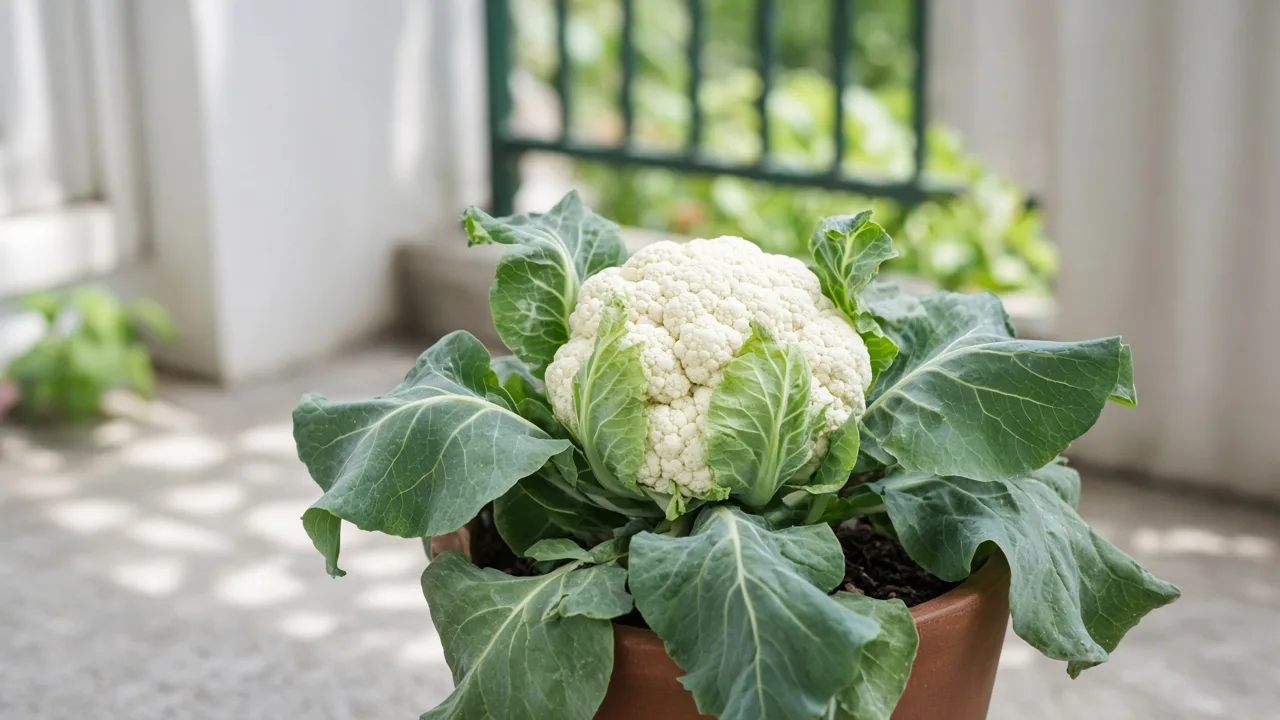
Mini cauliflowers can grow in large, deep pots—the RHS suggests up to four mini plants in a 40 cm diameter container filled with peat-free multi-purpose compost, planted deeply with lowest leaves at the compost surface. Standard-heading cultivars need one plant per large pot with roughly 30–40 litres of mix or more on windy rooftops.
A workable starting blend for terraces mirrors vegetable loam, not cactus mix: about 50% quality potting mix or loam, 30% mature compost, and 20% perlite, coarse sand, or coco chips for aeration. Adjust toward more compost in hot, drying balconies and slightly more grit in humid, slow-drying monsoon pockets. Every pot needs open drainage holes and no standing water in saucers during cool-season growth.
Pot size, depth, and transplant depth
Undersized pots dry in hours and heat the root zone on concrete terraces. If you must use smaller containers for nursery holding, plan to pot up before curd initiation—see the Cauliflower repotting guide for timing. When moving to the final pot, firm the mix gently around the root ball and water once to settle; avoid leaving large air gaps that collapse later and snap feeder roots.
DIY blends versus bagged potting compost
Bagged peat-free multi-purpose compost is acceptable for containers when you plant deeply and water consistently, but many brands are too light alone. Boost fertility and water-holding with mature compost and a little loam if available. Pure garden soil in pots is risky: it compacts, sheds water when dry, and can introduce pests; a compost-based blend with grit behaves more predictably.
Do not reuse mix from a failed brassica crop without refreshing; disease spores and nutrient exhaustion accumulate. If last season’s cauliflower bolted or showed clubbed roots, replace compost and rotate the family to another container for two seasons when possible.
Cool-season soil prep on Indian plains and hills
On the plains, cauliflower is typically a winter crop: prepare beds or fill pots in autumn as temperatures fall, so soil is settled before October–November sowing or transplanting common in many regions. In hills and cooler pockets, slightly earlier prep may match local frost-free windows. Soil that is still steaming from hot compost or monsoon soddenness is a poor host for cool-loving roots.
Terrace growers should remember that winter sun is shorter but can still dry pots on clear days; organic-rich mix helps buffer that swing. When heat returns in spring, even good soil cannot save a curd—harvest or accept bolting, and plan the next cycle with fresh compost rather than fighting summer with more water alone. Light stress on heat days ties to the Cauliflower light guide.
Warning signs your soil mix is wrong
Button heads or no curd after healthy leaves often trace to growth checks: loose soil, drought, heat, or root disturbance—not always “bad luck.” Yellow lower leaves with constantly wet mix point to oxygen starvation or nitrogen loss in saturated conditions. Wilting at midday with wet surface soil can mean damaged roots in a waterlogged core while the top dries—a classic overpotting or blocked-drainage pattern.
Seedlings that collapse at the stem base in trays may be damping off in a soggy, poorly ventilated seed compost—fix drainage and airflow before blaming seed quality. Clubbed, swollen roots when you pull a plant mean rotation and pH/drainage issues; liming and fresh ground are long-term fixes, not mid-season miracles.
First actions when roots look unhappy
If growth stalls but leaves look otherwise green, probe deeper than your finger in beds or pots. Lift the plant gently if it is young enough; brown, mushy roots mean stop watering until the mix approaches the moisture range described in the watering guide, clear blocked holes, and consider repotting into fresh, grittier compost after trimming rot. If the mix is dusty and pulls away from the pot wall, soak slowly until water runs free, then mulch with fine compost to hold moisture—cauliflower rarely recovers from repeated wilt cycles during curd formation.
Do not pile fresh manure on stressed plants as a “boost.” Stabilise drainage and moisture first, then feed lightly as covered under fertilizer. On terraces, move pots off radiating hot paving if roots overheat while the mix stays wet on top.
When to use this page vs other Cauliflower guides
Use this soil guide when you are building beds, filling containers, or diagnosing texture and drainage before or during the cool season. For how often to water a mix that already drains well, open the Cauliflower watering guide. For NPK timing and side-dressing, use Cauliflower fertilizer. For sowing dates, modules, and transplant spacing, see Cauliflower propagation. For moving seedlings into final pots, see the Cauliflower repotting guide.
Related Cauliflower guides
- Cauliflower overview — crop timing, cultivar choice, and harvest basics
- Cauliflower watering — moisture checks matched to this mix
- Cauliflower light — winter sun and heat protection on terraces
- Cauliflower fertilizer — feeding after soil structure is right
- Cauliflower propagation — sowing and transplant timing
- Cauliflower repotting — moving seedlings into final containers
Conclusion
Cauliflower soil should behave like settled vegetable loam: deep, fertile, moist at the root zone, free-draining, and firm enough to support a heavy curd without growth checks. Work mature compost through the whole bed or container, aim near pH 6.0–7.0, rotate away from recent brassicas, and size pots for real root volume on Indian terraces. Fix structure and drainage before chasing additives; pair this mix with steady cool-season water and strong light, and phool gobhi has a fair chance to form the tight head you planted for.
Related tool
Try the Soil Mix Calculator with cauliflower pre-selected to estimate blend proportions for your pots.