Cauliflower Repotting Guide: Containers & Transplant Timing
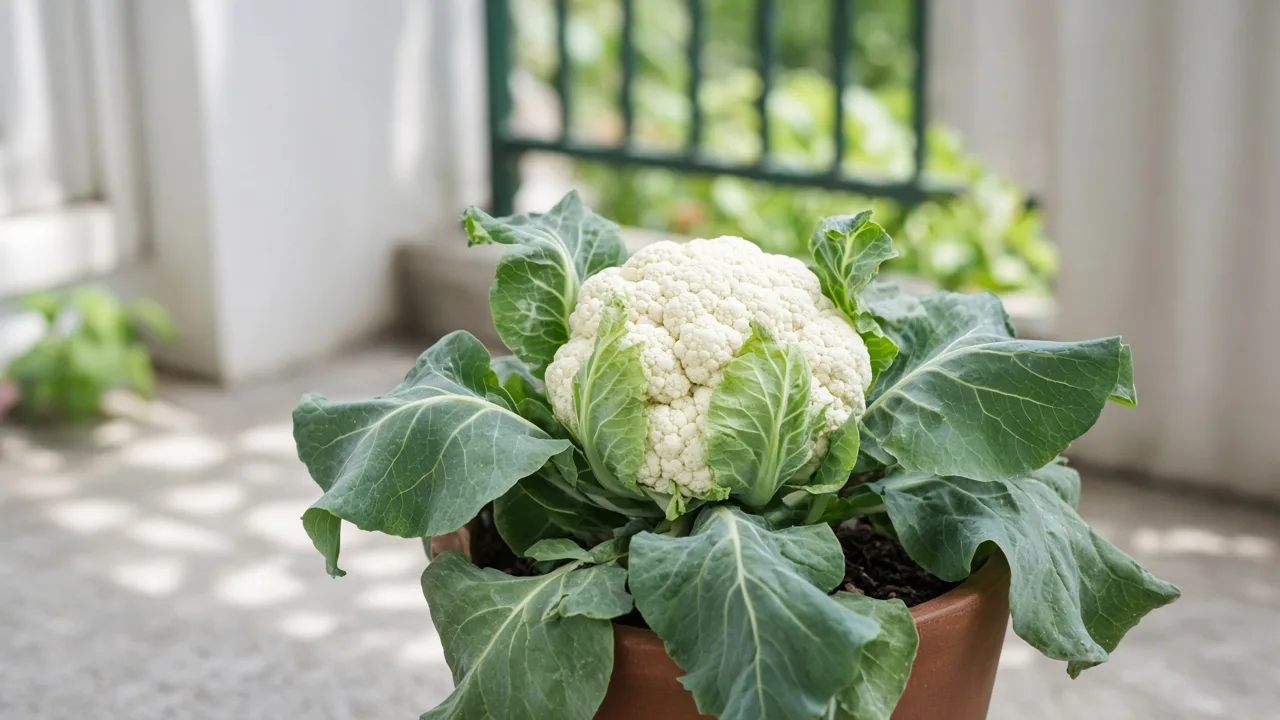
Cauliflower Repotting Guide: Containers & Transplant Timing
Cauliflower Repotting Guide: Containers & Transplant Timing
Most repotting articles assume a long-lived indoor plant you upsize every spring. Cauliflower (Brassica oleracea var. botrytis, phool gobhi) is a cool-season annual grown for one curd, not years of foliage. The real question is whether you should sow in the final container, move a young module seedling once, or start a new sowing when the pot is crowded or the season is ending—not how often to refresh a perennial root ball.
Cornell’s vegetable guide calls cauliflower the most finicky of the cabbage-family crops: it needs steady, moderate temperatures and careful timing so the head forms before heat or cold checks growth. RHS likewise treats cauliflowers as seed-grown plants that are usually started indoors and transplanted when roots fill a module, with mini types suited to containers. This page covers when a container truly needs upsizing, how to transplant without button heads, and when repotting is the wrong tool—especially on Indian balconies where the reliable window is the cool part of the year.
The quick answer for phool gobhi in pots
Plan at most two container steps: (1) pot up from a cramped cell when seedlings have several true leaves and roots fill the module, and (2) transplant into a final pot sized for your cultivar before the plant becomes root-bound or the mix dries out every day. After that, focus on even moisture, fertility, and blanching—not another upsize on a houseplant schedule.
For one standard cauliflower, use a container at least about 20 cm (8 in) deep and 45 cm (18 in) wide with real drainage holes, as Harvest to Table and Gardener’s Path recommend for single-plant culture. Mini cultivars can share a wide tub: the RHS suggests up to four mini plants in a 40 cm (16 in) diameter pot filled with peat-free multi-purpose compost. Match timing to cool, stable growth—on many Indian plains, that usually means autumn through winter sowing and transplanting, not pre-monsoon heat.
If a curd is already forming or a thick flower stalk is rising, do not repot; harvest or compost and sow again next cool window.
Why cauliflower repotting is not houseplant repotting
Houseplant repotting refreshes a perennial for years of growth. Cauliflower completes its useful life in one season: you nurture leaves until a single head sizes up, then the crop is done. Disturbed roots, dry soil, and heat after a move can trigger buttoning (small, early heads) or bolting—problems the RHS links to checks in growth, including late or rough transplanting, loose soil, and irregular water.
Shallow roots and a single curd deadline
Cornell notes that cauliflower has shallow root systems and suffers from even shallow cultivation. That biology explains why a small cup dries out in hours yet an enormous decorative pot stays wet and cold around a young seedling—both extremes show up as wilt or stalled curd development. Repotting fixes cramped modules and exhausted starter mix; it does not reverse aphid damage, nitrogen shortage, or not enough light if the terrace is too shady.
Mini cultivars vs full-size heads
Mini cauliflowers mature faster—sometimes in about three months on the RHS timeline—and tolerate closer spacing in pots. Winter or large-headed types need wider spacing and a longer cool run; forcing them into a tiny final pot often yields button heads instead of full curds. Read the seed packet before you choose container width; repotting cannot substitute for the wrong cultivar in a small space.
Signs your cauliflower needs a bigger pot or fresh mix
Repot or transplant when the container shows limits, not every yellow lower leaf. Useful triggers include:
- Seedlings crowding a module tray so leaves overlap and airflow drops.
- Roots circling the plug, visible through drainage holes, or a stiff root mat that lifts out as one piece.
- Mix that dries within hours in mild weather despite thorough watering—common when a fast-growing plant outgrows a small cup.
- Stalled growth in cool weather while watering and light otherwise look adequate.
- Collapsed, salty, or hydrophobic mix that no longer absorbs water evenly—a refresh more than a dramatic size jump.
A single floppy leaf on a warm afternoon is not automatically a repotting call. Check moisture a few centimetres down before you disturb roots that cauliflower needs to hold a heavy curd later.
When direct sowing beats another transplant
RHS allows sowing straight into the final growing site (including a large container), then thinning to proper spacing, because each move risks root disturbance. Harvest to Table notes cauliflower is usually grown from transplants, but direct seeding can work where a long cool period exists.
Direct sowing wins when:
- You have the final-sized pot or grow bag ready with the soil mix cauliflower needs.
- Weather is cool and stable for germination and early growth.
- Last season’s transplant buttoned or bolted right after a move—a sign to change timing or sow in-place, not to keep shifting larger plants.
- You are growing quick mini types at closer spacing for one harvest.
Modules still help when you must protect germination from heavy rain, birds, or hot soil on a terrace. Treat cells as a short bridge to the final pot, not a permanent home.
Best season to repot or transplant cauliflower
Align any move with moderate temperatures and steady moisture. Cornell warns that larger, older transplants are more likely to bolt when exposed to cool garden temperatures after a warm indoor start, and that spring transplants need soil at least about 50°F (10°C) and frost risk past. Cauliflower also buttons when warm weather follows a cold spell—timing matters as much as pot size.
Cool windows in India and warm lowlands
On Indian plains and similar warm lowlands, sow and transplant during the cooler months (often roughly October–February, varying by region)—not during peak summer when days routinely exceed about 27–30°C. Gardener’s Path notes container soil can run hotter than ground soil on cement terraces; postpone repotting if a heat wave is forecast unless you can move pots to afternoon shade.
Morning transplants reduce wilting. If nights are still warm when you hoped for a “winter” crop, delay the final move and keep seedlings in slightly larger cells with good light rather than planting into a huge pot that stays wet.
Hardening off before the final move
Indoor- or shade-grown seedlings need hardening off—gradually increasing outdoor time over about a week—before the permanent container, as the RHS hardening-off guidance recommends for tender starts. Skipping this step on a sunny terrace often scorches leaves and stalls curd formation even when the pot size is correct.
Container size and depth for Brassica oleracea var. botrytis
Cauliflower roots spread outward more than they dive deep. Gardener’s Path advises a minimum of about 20 cm (8 in) depth and 45 cm (18 in) width for one plant, with 45–60 cm (18–24 in) between plants if you grow several in one wide trough. Harvest to Table similarly suggests 18-inch (45 cm) centers in large containers.
One plant per pot: minimum volume
For one standard curd, think one strong plant per appropriately sized pot rather than stair-stepping from a seed tray into a half-barrel in one jump. Step up one size at the seedling stage (for example from a cell to a 10–12 cm pot), then into the final container when roots nearly fill the interim pot. Oversized final pots stay cold and waterlogged in cool weather, encouraging rot around the shallow root zone.
Every vessel needs multiple open drainage holes; sealed decorative outer pots defeat the purpose of a brassica mix that should stay moist but never stagnant.
Several mini caulis in one wide container
For mini types, the RHS allows up to four plants in a 40 cm (16 in) diameter container. Position each seedling deeply, with the lowest leaves at the compost surface, and water in well. Do not squeeze full-size winter varieties into the same footprint—they compete for water and produce ricey or split curds under stress.
If you are unsure about volume, the Pot Size Calculator with cauliflower pre-selected offers a starting estimate; adjust upward for large-headed cultivars.
Soil and mix when you move cauliflower
Repotting is the moment to replace depleted or compacted starter mix with fertile, moisture-retentive, well-drained compost—aligned with Cornell’s preference for high organic matter and pH roughly 6.0–7.5. Use the same priorities as your main Cauliflower soil guide: a practical blend is often about 50% quality potting mix or loam, 30% mature compost, and 20% perlite or coarse sand for aeration.
Pre-moisten mix before filling so the root ball does not sit in a dry pocket after watering. Avoid reusing mix from a previous brassica crop if you saw unexplained stunting or swollen roots—rotate containers and replace media when in doubt, even though pots do not require multi-year field rotation like open beds.
Step-by-step: pot up seedlings or transplant to the final container
Lifting plugs without breaking shallow roots
- Water lightly an hour before so plugs slide out without being mud-soaked.
- Prepare the new container with moist mix and drainage; dig a hole sized to the root mass.
- Slide seedlings out by pushing from the drainage hole or squeezing a flexible cell—support the root ball, not the curd-forming crown.
- Disturb roots minimally. If only the outer edge circles, loosen the outer 1 cm; do not bare-root cauliflower like a woody shrub.
- Set depth correctly. The RHS advises planting deeply for container mini caulis, with lowest leaves at the compost surface—similar to setting leggy brassica transplants deeper so stems do not grow top-heavy, as Harvest to Table recommends for crooked stems. Do not bury the folded growing point in the center.
- Backfill, water gently until excess drains, and empty saucers.
- Shade lightly during the hottest afternoon for a day or two if temperatures climb after the move.
Cornell suggests transplanting when seedlings are about 4–6 weeks old with four or five true leaves, spaced roughly 38–60 cm (15–24 in) apart in ground terms—in a single-pot culture, that spacing translates to one plant per final pot unless you are deliberately growing multiple mini heads with room to spare.
Planting depth and spacing in the new pot
Thin direct-sown pots to one strong seedling per small container, or to 18–24 in (45–60 cm) equivalents in shared troughs for standard types, matching Gardener’s Path spacing guidance. Crowded rosettes look like a repotting problem but are fixed by removing extra plants, not by a bigger pot alone.
Watering and light after repotting
Expect mild wilt for a few days while roots contact fresh mix. Then return to even moisture without saturating the crown—cauliflower heads fail when soil swings between dust and puddle, as both RHS and Cornell stress for cole crops. Follow your Cauliflower watering rhythm: containers dry faster than ground beds, especially on windy terraces.
Give full sun during the cool season, shifting to afternoon shade only when heat spikes above roughly 24–27°C in spring or when Gardener’s Path suggests moving pots off hot paving. Hold heavy nitrogen feeds until new growth looks steady; later feeding follows the Cauliflower fertilizer guide once plants are actively sizing a curd.
When routine repotting will not fix the problem
Skip or postpone repotting when:
- A curd is already forming and you only need blanching and harvest timing—not more root disturbance.
- Bolting has begun; the crop is finishing regardless of pot size.
- Sustained heat is forecast and you cannot shade pots or water reliably.
- Plants show pest or disease collapse—caterpillars, clubroot suspicion, or mushy stems need targeted fixes, not fresh mix alone.
- You are tempted to rescue a summer pot with another move; in warm lowlands, succession-sow in the next cool window per the Cauliflower overview instead.
If lower leaves yellow while mix stays wet and smells sour, treat it as a drainage emergency—ease watering and inspect roots—rather than assuming a larger pot will help.
Common cauliflower repotting mistakes
Oversized final pots leave a ring of cold, wet mix the shallow roots never colonize—especially risky right after transplant in humid shoulder seasons. Repotting into midday sun without hardening off invites scorch and leggy regrowth. Late, root-bound transplants match Cornell’s warning about bolting after cool exposure. Burying the growing point rots the crown; bury the stem, not the new center leaves.
Reusing brassica soil spreads shared diseases. Pulling seedlings by leaves damages the tissue you need for photosynthesis while the curd forms. Stacking repotting, heavy feed, and pruning the same week multiplies stress—stabilize moisture and light first. Ignoring cultivar size and expecting a large winter type to head in a mini pot sets up button heads, which the RHS ties to growth checks including transplant timing.
When to use this page vs other Cauliflower guides
- Cauliflower overview — Cultivar choice, season framing, and whether containers fit your climate before you buy pots.
- Cauliflower soil — Mix recipes, pH, and drainage when repotting is really a soil-quality problem.
- Cauliflower watering — Moisture checks after transplant when wilt could be drought or excess water.
- Cauliflower light — Sun and heat stress that no pot size fixes.
- Cauliflower fertilizer — Feeding after roots settle—not on transplant day.
- Cauliflower propagation — Starting new plants instead of repotting a finished crop.
Related Cauliflower guides
- Cauliflower overview
- Cauliflower watering
- Cauliflower light
- Cauliflower soil
- Cauliflower fertilizer
- Cauliflower propagation
- Cauliflower pruning
Conclusion
Cauliflower repotting is a cool-season container task, not a perennial houseplant ritual. Pot up seedlings when true leaves and roots outgrow cells, then transplant once into a well-drained, compost-rich final container sized to your cultivar—often about 45 cm (18 in) wide and 20 cm (8 in) deep for one standard plant, or a 40 cm tub for several mini heads. Plant at the right depth, harden off, water in thoroughly, and keep moisture even while shallow roots establish. After that, focus on blanching, fertility, and harvest—not endless upsizing. When heat, buttoning, or bolting take over, sow fresh seed for the next cool window rather than forcing another repot on a crop meant to finish in one pot.