Cauliflower Watering Guide for Pots and Beds
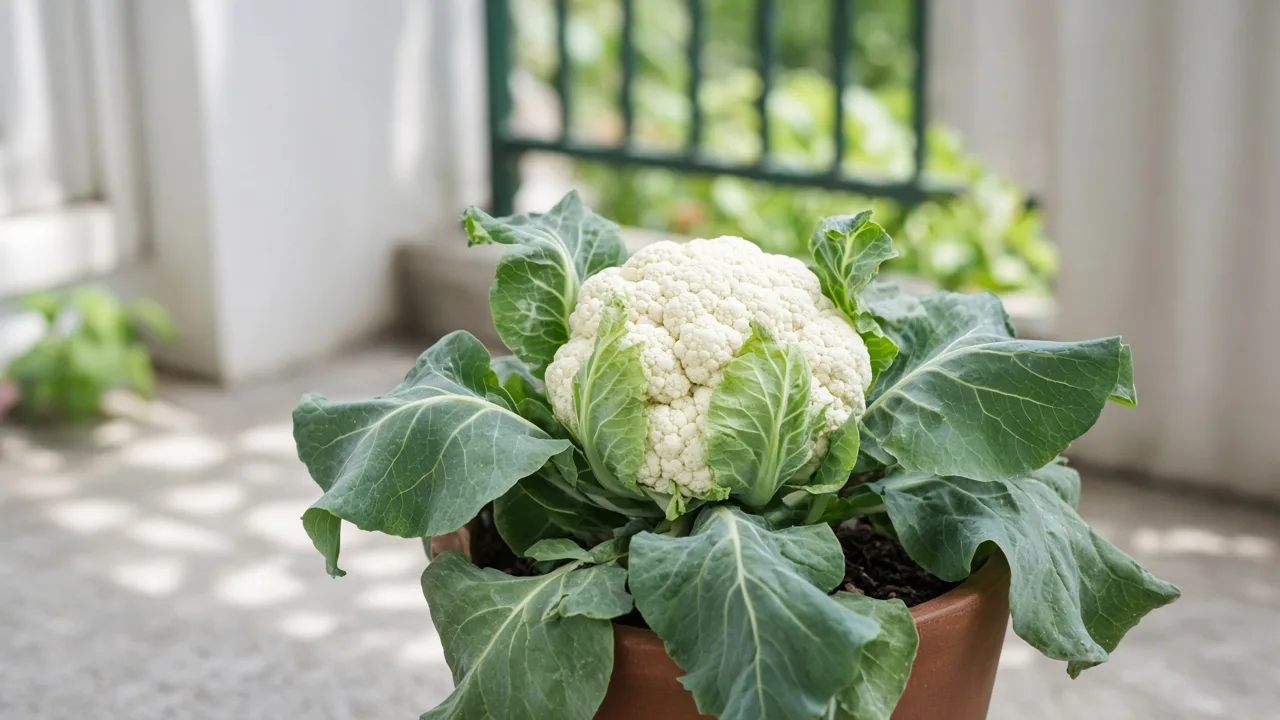
Cauliflower Watering Guide for Pots and Beds
Cauliflower Watering Guide for Pots and Beds
Cauliflower can look lush one week and stall the next if moisture swings even briefly. Brassica oleracea var. botrytis—phool gobhi in many Indian kitchens—is a cool-season brassica grown for a single dense curd, not repeated leaf harvests like kale. Harvest to Table describes it as resenting heat and dryness and needing cool, even conditions for 55 to 100 days to reach harvest (Harvest to Table — How to grow cauliflower). The Royal Horticultural Society is equally direct: cauliflowers grow best in soil that is damp at all times, but not waterlogged, and dry soil may stop growth so the head does not form correctly (RHS — Grow your own cauliflower).
For plains growers, that biology maps to a winter crop: sow or transplant in autumn, grow through the mild months, and harvest before sustained heat returns. Watering must follow uninterrupted growth from seedling to curd. A schedule copied from succulents will produce button heads; keeping mix swampy in a shaded corner will invite stem rot and yellow lower leaves.
The quick answer: damp soil, steady growth, never a soggy root ball
Push a finger 2–3 cm into the mix away from the stem. If that layer is beginning to dry and the soil below is only lightly moist, water the full root zone until excess drains freely. If the pot feels heavy, the mix below the surface stays cold and wet, or water pools in the saucer, wait—more water will not fix oxygen-starved roots.
The RHS stresses consistent moisture while curds start to form so they reach good size, and notes that seedlings and young plants need regular watering until a deep root system develops (RHS — Grow your own cauliflower). Read that as “check often, irrigate when the root zone is starting to dry,” not “flood every Sunday regardless of weather.”
Why cauliflower punishes dry spells more than leafy kale
Cauliflower shares the cabbage family’s shallow, fibrous roots, but your harvest goal is different. Kale can recover from a missed drink if outer leaves are sacrificed; cauliflower often buttons—forms a tiny premature head—when growth checks from drought, heat, loose soil, or root disturbance (RHS — Grow your own cauliflower). UF/IFAS lists lack of irrigation among causes of premature buttoning, alongside nutrient stress and cold snaps (UF/IFAS Gardening Solutions — Cauliflower).
One curd, one chance
Each plant typically gives you one main curd per cycle. Interrupted water during the weeks when the head swells is a common reason for ricey, loose, or absent heads. Harvest to Table warns that if growth is interrupted by heat, cold, or lack of water, heads will not form properly (Harvest to Table — How to grow cauliflower). That is why cauliflower feels “fussier” than broccoli or kale in the same bed.
Cool weather and fast head development
Cauliflower prefers roughly 55–80°F (13–27°C) through the growing window; hot or dry spells push plants toward bolting or poor curds (Harvest to Table — How to grow cauliflower). On a Bengaluru or Pune terrace in January, evaporation is slow and you may water less often than in a dry March week with wind. In humid Kolkata winters, surface mold can linger if you sprinkle lightly every day without draining—still a moisture-management problem, not a call to keep the pot bone-dry.
How often should you water cauliflower?
There is no honest universal interval. Pot volume, mix, cultivar vigour, sun, wind, humidity, rainfall, and whether the curd is actively sizing all change drying speed. A 25-litre container with compost-rich mix behaves differently from a 20 cm nursery pot or a mulched raised bed.
Editorial guides often cite about 1–1.5 inches (2.5–4 cm) of water per week for brassica-family crops as a planning benchmark for in-ground plantings, including rain (Harvest to Table — How to grow cauliflower). Treat that as a reference for garden rows in moderate climates, not a measured pour into every balcony pot during a humid monsoon break. Let soil dryness decide each check.
The 2–3 cm finger check
Combine a fingertip test with pot weight. Push a finger 2–3 cm deep; if it comes back dry and the pot is noticeably lighter, water deeply once. If the finger picks up cool moisture, skip until the next check. For tall pots, a dry wooden skewer toward the lower root zone confirms whether the centre is still wet.
Cauliflower dislikes extremes: Harvest to Table says to keep soil evenly moist, never let the ground dry out, and avoid overwatering (Harvest to Table — How to grow cauliflower). That middle path—moist, not wet—is the target.
Containers vs in-ground beds
A single cauliflower in a balcony pot may need attention every two to three days during sunny, breezy winter weather, while a mulched in-ground row may go longer between irrigations. Black plastic heats and dries faster than glazed ceramic. Harvest to Table notes that a single plant can grow in an eight-inch-deep container, with about 18 inches of space per plant in larger tubs (Harvest to Table — How to grow cauliflower). Small pots dry within hours in direct sun; if yours needs water daily after a full soak, review mix and final container size in the Cauliflower soil guide and Cauliflower repotting guide before you respond by watering even more aggressively.
How to water cauliflower without drowning roots
When a check says “water,” apply it once, thoroughly, at soil level. Partial sips keep the top crust damp while the centre stays dry, encouraging shallow roots and hiding wet anaerobic zones where rot starts.
Water the soil, not the leaf crown
Morning irrigation gives leaves time to dry before cool nights, which helps reduce foliar disease pressure on brassicas—a practical habit echoed across cole-crop guides (Harvest to Table — How to grow cauliflower). Direct water to the root zone rather than repeatedly showering the crown. Wet foliage alone does not hydrate roots, and cauliflower that stays dripping in stagnant air is more vulnerable to leaf problems you may later blame on “too much fertilizer.”
Soak slowly until water exits drainage holes, then stop. For garden rows, moisten deeply enough to match the active root zone rather than sprinkling the surface.
Saucers, rain, and blocked drainage
Empty saucers after each watering so the pot is not sitting in a reservoir. During unexpected winter rain on a sheltered balcony, pause irrigation until a root-zone check shows the mix beginning to dry; roof runoff can still saturate a pot that received no hose water.
If water pools on the surface or holes appear blocked, clear them before the next drink. Chronic wet mix with sour smell or fungus gnats points toward poor drainage and overwatering—fix the wet–dry cycle and airflow, not feeding alone.
Watering through the Indian cool season
Most plains growers treat cauliflower as an October–March crop: transplant after the monsoon heat breaks, grow through mild months, harvest before sustained 35°C+ days. Moisture must stay steady across that entire arc.
After transplant and during leaf growth
Water transplants well at planting and keep seedlings from wilting hard while roots establish (RHS — Grow your own cauliflower). UF/IFAS recommends growing transplants at 55°F (13°C) or higher to reduce cold-related buttoning risk (UF/IFAS Gardening Solutions — Cauliflower). In warm nurseries, that means shading modules and checking small cells daily—they can dry within hours.
As plants size up, shift from “never let the seedling collapse” to “never let the mature root ball swing to dust-dry.” Mulch in-ground plantings with mature compost to hold moisture, echoing RHS advice to mulch and weed so plants are not competing for water (RHS — Grow your own cauliflower).
When the curd (phool) is forming
This is the highest-stakes window. The RHS highlights consistent moisture while curds start to form (RHS — Grow your own cauliflower). A dry spell here often shows up as stalled head growth or poor quality long before harvest day.
If you blanch white varieties by folding leaves over the curd, do it when the head is roughly teacup size per UF/IFAS—about three inches across—securing leaves without crushing them (UF/IFAS Gardening Solutions — Cauliflower). Keep watering the soil on schedule; blanching shades the curd but does not replace root moisture.
Late winter heat spikes
Sudden warmth in February or March can make leaves wilt in the afternoon even when soil moisture is adequate, because transpiration outpaces uptake. Confirm with a morning finger test. If soil is moist and plants recover overnight, improve airflow, move pots off heat-radiating walls, and review afternoon shade in the Cauliflower light guide. If soil is dry and leaves stay limp into the next morning, water deeply once and recheck in two days.
Do not move a stressed plant into deeper shade and increase watering and fertilize in the same week. Change one variable at a time.
Seedlings, modules, and final pots
Seedlings in small cells need gentle moisture whenever the surface lightens; avoid blasting dry compost off tender stems. Modules ready to transplant should be watered ahead of lifting so roots stay intact (RHS — Grow your own cauliflower). Final containers need a rhythm you can sustain until harvest—cauliflower will not wait politely while you forget the pot for a long weekend during curd swell.
If you direct-sow, keep the seedbed evenly moist through germination, then maintain steady moisture as true leaves expand. Interrupted water at any stage can still trigger checks visible only weeks later as a button head.
Signs cauliflower needs more water
Dry mix combined with limp leaves that recover after a thorough soak usually means genuine thirst. Growth slows, older leaves may blue-gray or dull, and container weight drops sharply. These signs overlap with heat wilt, so always pair appearance with a root-zone check.
Harvest to Table notes that hot, dry weather can cause the centre to “break” toward flowering and ruin the crop (Harvest to Table — How to grow cauliflower). That is different from reversible afternoon flagging on a mild day.
Signs cauliflower is getting too much water
Yellowing lower leaves on a plant watered frequently, soft tissue at the soil line, and wilt while mix stays wet are classic overwatering cues. The RHS defines waterlogged soil as saturated enough to displace air from root zones (RHS — Grow your own cauliflower). Brassica stems in stale wet mix often rot before you connect the symptom to irrigation habit.
Persistently wet surface mulch, algae, or sour smell should trigger a pause in watering, saucer emptying, and a drainage review in the Cauliflower soil guide.
First steps when you are unsure
If you cannot tell whether the problem is too much or too little water, do not guess with another full soak.
Push your finger 2–3 cm deep, lift the pot, and smell the drainage area. Wet and heavy means wait and improve airflow; dry and light means one deep watering at soil level. Remove standing water from saucers. If problems continue after you correct the pattern for two weeks, compare light and nutrition in the Cauliflower light guide and Cauliflower fertilizer guide. Severe stem softness with foul-smelling mix may require repotting into fresh, drained mix per the Cauliflower repotting guide.
When to use this page vs other Cauliflower guides
Use this page when the main question is how much water, how often, and how to check dryness for cauliflower in pots or beds. Start with the Cauliflower overview if you need cultivar choice, sowing windows, or harvest timing.
If mix stays waterlogged or dries within hours, move to the Cauliflower soil guide. If roots fill the pot before the curd forms, use the Cauliflower repotting guide. For pale growth after moisture is stable, see the Cauliflower fertilizer guide. Seed and transplant timing live in the Cauliflower propagation guide; blanching and harvest cuts are in the Cauliflower pruning guide.
Related Cauliflower guides
- Cauliflower overview — cool-season identity, phool gobhi basics, and whole-plant care
- Cauliflower light — winter sun, heat stress, and curd quality
- Cauliflower soil — moisture retention, drainage, and pH for brassicas
- Cauliflower fertilizer — feeding without salt buildup on moist roots
- Cauliflower repotting — final pot size and transplant handling
- Cauliflower propagation — seedling moisture from sowing onward
- Cauliflower pruning — leaf folding, blanching, and harvest timing
Conclusion
Cauliflower rewards growers who treat water as a growth-stability question, not a habit. Check 2–3 cm deep, water deeply when that layer begins to dry, drain every pot completely, and stay especially consistent while the curd forms. Cool-season brassicas need damp—not waterlogged—soil from transplant to harvest; saturated mix steals oxygen and dry spells trigger buttoning you cannot undo. Match your rhythm to container size, local winter weather, and curd stage, and use sibling cauliflower guides when light, soil, or nutrition—not thirst—is the real limit.
Related tool
Try the Plant Watering Calculator with your container size to estimate baseline intervals, then override with finger checks for this thirsty brassica.