Cauliflower Fertilizer Guide: When and How to Feed
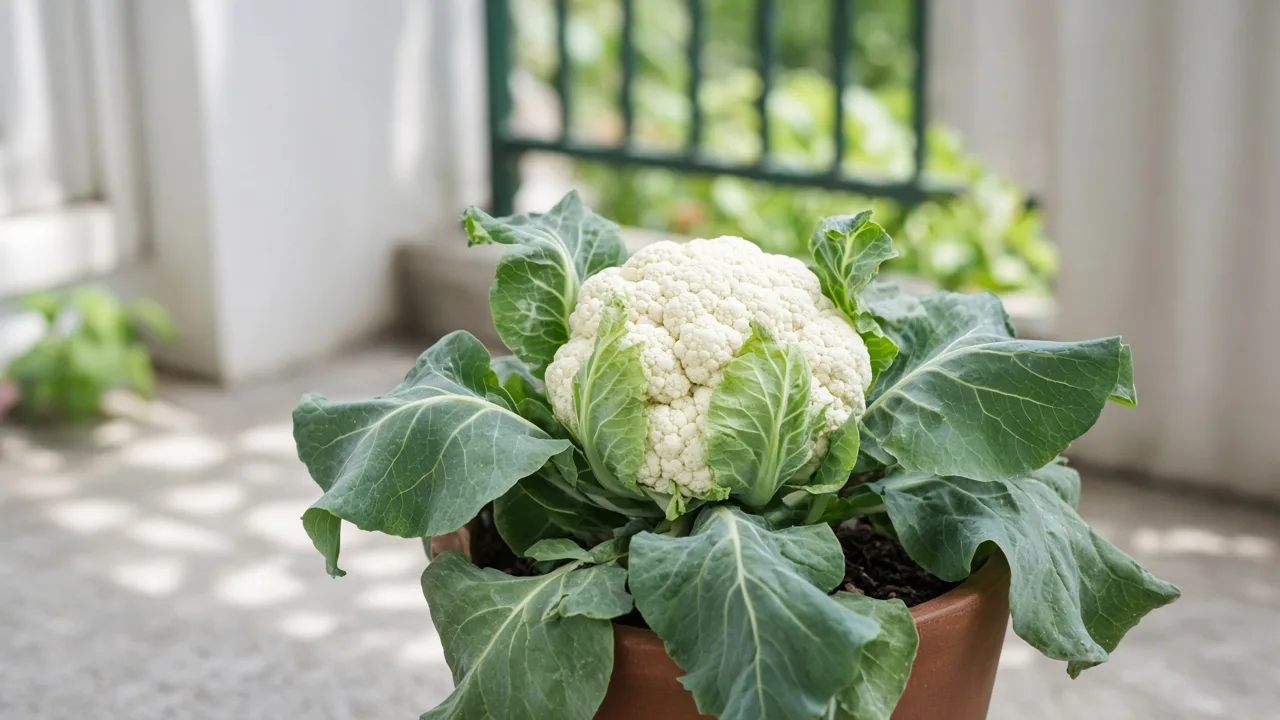
Cauliflower Fertilizer Guide: When and How to Feed
Cauliflower Fertilizer Guide: When and How to Feed
Cauliflower (Brassica oleracea var. botrytis) is grown for a single tight curd—not for repeated leaf harvests like kale or palak. That changes how you feed it. Nitrogen fuels the leafy wrapper that protects the head, phosphorus supports seedling roots after transplant, and potassium matters once the plant moves into buttoning and heading. Pouring fertilizer on a stressed plant, or pushing heavy nitrogen while the curd is forming, often produces lush leaves and disappointing heads.
The practical rule matches other winter brassicas on a terrace: build fertility with compost and a well-prepared mix first, then add bottled feed only to close a gap you can see or measure. In-ground beds that already received manure may need little else; containers almost always need a plan because nutrients leave every time water drains.
This page covers when, what, and how much to fertilize. For mix recipes and drainage, use the Cauliflower soil guide. For moisture that moves nutrients to shallow roots, see Cauliflower watering. For sowing dates and the full seasonal picture, start at the Cauliflower overview.
Why cauliflower nutrition targets one curd
Unlike fruiting crops, cauliflower does not need a late-season bloom formula. Your feeding window runs from transplant establishment through the weeks when leaves expand and the immature head stays hidden inside the crown. Once the curd sizes up, the crop is on a clock—heat, drought, or root stress can still ruin quality, but megadoses of nitrogen rarely rescue a head that is already buttoning or bolting.
California’s crop fertilization guidelines note that cauliflower needs little nitrogen in the earliest growth phase, with most demand rising later in the cycle, and they recommend split in-season applications rather than dumping everything at planting when leaching risk is high (CDFA cauliflower fertilization guidelines). You do not need commercial-field soil nitrate tests on a balcony, but the principle translates: small starter nutrition, then adjust while plants are actively growing.
Cool-season windows on Indian plains and hills
On most Indian plains, cauliflower is sown or transplanted from October into November and harvested through winter while days are bright and nights are cool. Hill districts often enjoy a longer productive window; lowland spring heat quickly coarsens leaves and pushes plants toward flowering. Fertilizer supports growth only while the plant is actively making biomass and a curd—when March heat arrives on the plains, taper or stop rather than chasing size with nitrogen.
Match feeding to that window. Maintain moderate nutrition during cool active growth on the Cauliflower light guide placement you chose, then back off as temperatures climb. Fertilizer cannot substitute for shade cloth, timing, or a heat-tolerant cultivar once the season turns.
Cauliflower vs leafy brassicas you harvest leaf-by-leaf
Kale and spinach reward steady nitrogen across many pickings. Cauliflower still needs nitrogen for leaves, but the end goal is one firm curd. Excess nitrogen late in the cycle can favor leaf expansion over the tight head you want—a pattern many growers describe when side-dressing too aggressively at heading (feeding cauliflower fertilizer tips). Think in phases: establish roots, grow a healthy leaf canopy, then support heading with even nutrition rather than a late nitrogen spike.
Macronutrients through the crop cycle
Nitrogen for leaves before the head sets
Nitrogen drives chlorophyll and leaf area—the solar panels that feed curd development. Deficient plants are stunted with small, pale leaves; older foliage may show strong discoloration before it senesces, because nitrogen is mobile inside the plant (CDFA cauliflower fertilization guidelines). On rich garden soil, extra nitrogen may be unnecessary; the RHS notes that feeding is not generally needed, but on poor soil you can feed young plants before heads start to form with an organic-based, nitrogen-rich fertilizer (RHS cauliflower growing guidance).
For terrace growers, aim for enough nitrogen to keep new leaves coming without pushing watery, overly soft tissue that invites pests. If leaves are deep green, plants stand upright in cool weather, and the curd is developing normally, compost at planting may already be sufficient.
Phosphorus for roots and early establishment
Phosphorus supports root development after transplant—critical when seedlings move from nursery trays to final pots. CDFA guidelines describe modest starter phosphorus banded near the root zone on deficient soils, while emphasizing that application rates should follow soil tests in field production (CDFA cauliflower fertilization guidelines). In containers, a balanced vegetable fertilizer at planting mixed into the upper few centimetres of mix is usually enough; you rarely need a high-phosphorus “bloom” product for this crop.
Potassium for vigor during heading
Potassium is taken up in large amounts during cauliflower growth, and low potassium can limit yield on sandy or heavily leached soils (CDFA cauliflower fertilization guidelines). For home gardeners, well-rotted compost and a complete vegetable blend at planting cover most needs. If leaves look dull and margins scorch despite even watering, review pot size and drainage in the Cauliflower repotting guide before assuming a micronutrient crisis.
Build fertility before bottled feed
Long before choosing an NPK ratio, improve the root zone. Cauliflower prefers fertile, moisture-retentive but well-drained soil. The RHS recommends digging in well-rotted manure or garden compost ahead of planting and notes cauliflowers grow well near pH 6.5, with lime on acidic ground to support brassica health (RHS cauliflower growing guidance).
Compost, manure, and pH for brassicas
UF/IFAS lists a target soil pH between 6.0 and 7.0 for cauliflower and urges soil testing before applying amendments so you do not stack nutrients the plant cannot use (UF/IFAS cauliflower culture). Mature compost mixed at planting supplies slow nitrogen and improves water-holding for roots that dry quickly on a sunny terrace.
When a soil test beats guessing
If older leaves yellow while veins stay green, or growth is stunted despite regular feeding, test pH and organic matter before increasing fertilizer rate. Brassicas on the wrong pH can show deficiency patterns even when nutrients are present in the mix. Liming or sulfur decisions belong in soil management—not in repeating soluble feeds that only raise salts.
Choosing a fertilizer product
Choose a product labelled for vegetables, measure for the actual pot or bed area, and prefer slow, even release over repeated strong soluble doses unless you are correcting a visible shortfall during cool active growth.
Reading NPK labels for vegetable beds
The three numbers on a label show the percentage by weight of nitrogen, phosphate, and potash. Higher first numbers mean more nitrogen relative to the other macronutrients. Use the label to calculate dose, not to guess need (NPK fertilizer numbers). At establishment, a balanced analysis incorporated into the top layer of soil matches common practice; as plants size up in cool weather, a modest nitrogen-forward side-dress can help only if color and vigor lag.
Organic slow release vs soluble liquids
Compost, aged manure, or fish-based liquids release nutrients gradually and improve biology. Synthetic soluble feeds act faster but demand careful dilution and consistent watering to avoid root burn. Many Indian terrace growers combine compost-rich mix at potting with occasional diluted liquid feed during the winter growth window—similar to the staged approach outlined for home cauliflower in trusted grower guides (feeding cauliflower fertilizer tips).
Feeding schedule from transplant to harvest
Think in four phases: pre-plant incorporation, establishment after transplant, active leaf growth, and heading/harvest—with a hard shutdown when heat or bolting ends the crop.
At planting and the first weeks after transplant
UF/IFAS notes you can apply fertilizer before, during, or soon after planting, but should test soil fertility first to prevent excess (UF/IFAS cauliflower culture). At transplant, blend compost or a measured dose of granular vegetable fertilizer into the top 8–10 cm of soil rather than pouring concentrate against the stem. Water thoroughly so nutrients move into the root zone described in the Cauliflower watering guide.
CDFA field guidelines suggest only small preplant nitrogen for early growth, with banded placement more efficient than careless broadcast on commercial soils (CDFA cauliflower fertilization guidelines). Home pots mirror that idea: a light starter charge in the mix, not a double dose of slow-release plus full-strength liquid on day one.
Side-dressing during active leaf growth
Once seedlings have settled—often two to three weeks after transplant on a winter terrace—a light side-dress of compost or diluted vegetable fertilizer a few centimetres from the base, followed by irrigation, can support leaf expansion. Skip this step if plants are already dark green and your potting mix was heavily composted. Splitting feed across the season reduces salt shock compared with one heavy application at planting.
Curd formation: steady food, not a nitrogen spike
When the immature head begins to develop, maintain even moisture and moderate nutrition. This is not the stage for blood meal or strong soluble nitrogen that pushes leaf growth at the expense of curd quality. Trusted home-garden guidance suggests feeding again as curds form, but with balanced or lower-nitrogen sources and careful placement away from tender tissues (feeding cauliflower fertilizer tips). Blanching leaves, pest checks, and steady water matter as much as the next bottle.
When to stop feeding as heat builds
When daytime heat rises or flower stalks elongate, cauliflower is exiting the useful head stage. Additional nitrogen cannot reverse bolting and may worsen loose, bitter curds. Shift focus to harvesting what remains usable and planning a fresh sowing for the next cool window rather than fertilizing a crop that is physiologically finished.
Container and terrace pots
Pots magnify both deficiency and excess. Penn State Extension notes that container vegetables rely on a limited soilless volume and generally need slow-release fertilizer at planting plus soluble feeds on a two- to four-week schedule during the season (container vegetable keys). Read the potting mix label before adding anything—many blends already include starter or controlled-release fertilizer, and doubling up is a common cause of seedling burn on terraces.
Mini cauliflowers can grow in large deep pots on a bright balcony; nutrition must be supplied entirely by you because there is no subsoil reserve. Pair feeding with the spacing and transplant timing notes in Cauliflower propagation so roots are not crowded before heads form.
Preventing fertilizer salt burn on paving
Fertilizers are salts. In a pot with limited drainage or hot paving underneath, salts concentrate at the root ball. Warning signs include brown leaf margins shortly after feeding, a white crust on the medium surface, or wilting despite wet mix. Pause feeding, confirm drainage holes are open, and water deeply enough for runoff when the plant truly needs moisture—not on a blind calendar flush.
Read the plant before the next dose
Stalled cauliflower is not automatically hungry. Transplant shock, compacted mix, aphids on undersides, or warm nights after cool days can all slow growth without a fertilizer deficit. Inspect multiple plants, check moisture with a finger 2–3 cm deep, and confirm the crop is still in its cool-season productive phase before increasing feed.
Deficiency clues vs watering or light stress
True nitrogen shortage tends to show as overall paleness beginning on older leaves while the plant remains otherwise upright in cool weather. Waterlogged roots, drought stress, and too little direct sun can mimic weakness without a nutrient gap. Leggy, pale stems with stretched internodes often point to light before fertilizer. Cross-check light placement and watering rhythm before stacking products.
Buttoning—a tiny curd on a small plant—usually traces to stress such as root disturbance, drought, or extreme temperature swings, not only low nitrogen. Fix culture first; more fertilizer rarely unpins a buttoned head.
Overfeeding, leaf scorch, and soft growth
Excess nitrogen produces overly lush, soft tissue and can leave soluble salts that scorch margins. Quick-release nitrogen spikes have also been associated with greater pressure from sap-feeding pests on leafy crops; SARE’s soil-health guidance describes how fertilizer practices can influence insect outbreaks (impacts of fertilizers on insect pests). Brassicas already attract aphids; overfeeding a terrace pot can make management harder without improving curd quality.
If you suspect overdose, stop feeding, verify drainage, and allow only plain water until new growth looks normal. Do not apply a “balancing” micronutrient blend to fix burn.
When to use this page vs other Cauliflower guides
Use this page to decide whether, when, and how much to fertilize. Use the Cauliflower watering guide when wilting, saucer water, or dry pots dominate, because moisture moves nutrients and oxygen together. Use the Cauliflower soil guide for mix recipes, pH, and drainage. Use Cauliflower repotting when seedlings move into final containers, since that is often the best moment to incorporate slow-release feed.
For sowing, spacing, and harvest timing, start at the Cauliflower plant hub and Cauliflower propagation. Fertilizer cannot compensate for a crop transplanted too late into warming weather.
Related Cauliflower guides
- Cauliflower overview — season, spacing, and the full cool-season picture.
- Cauliflower watering — even moisture for roots without waterlogging.
- Cauliflower soil — compost-rich mixes, pH, and drainage for brassicas.
- Cauliflower light — enough winter sun without unnecessary heat stress.
- Cauliflower propagation — transplant timing that affects early nutrient uptake.
Conclusion
Good cauliflower nutrition is measured and seasonal. Build fertility with compost and the right mix, add vegetable fertilizer only when containers or poor soil require it, and favor split, moderate feeding during cool active growth rather than heavy nitrogen at heading.
Read the plant, the mix label, and the calendar together. When leaves are firm, green, and the curd is sizing cleanly in winter sun, you have likely found the balance; when margins burn, pests surge, or heads button early, the next step is often less fertilizer and better culture—not more.
Related tool
Try the Fertilizer Dilution Calculator with cauliflower pre-selected to estimate needs for your setup.