Why Is My Cauliflower Purple? Causes & What to Do
Why is your cauliflower purple? Learn when anthocyanin is normal, what sunlight and cold can change, when to harvest, and how to tell pigment from spoilage.
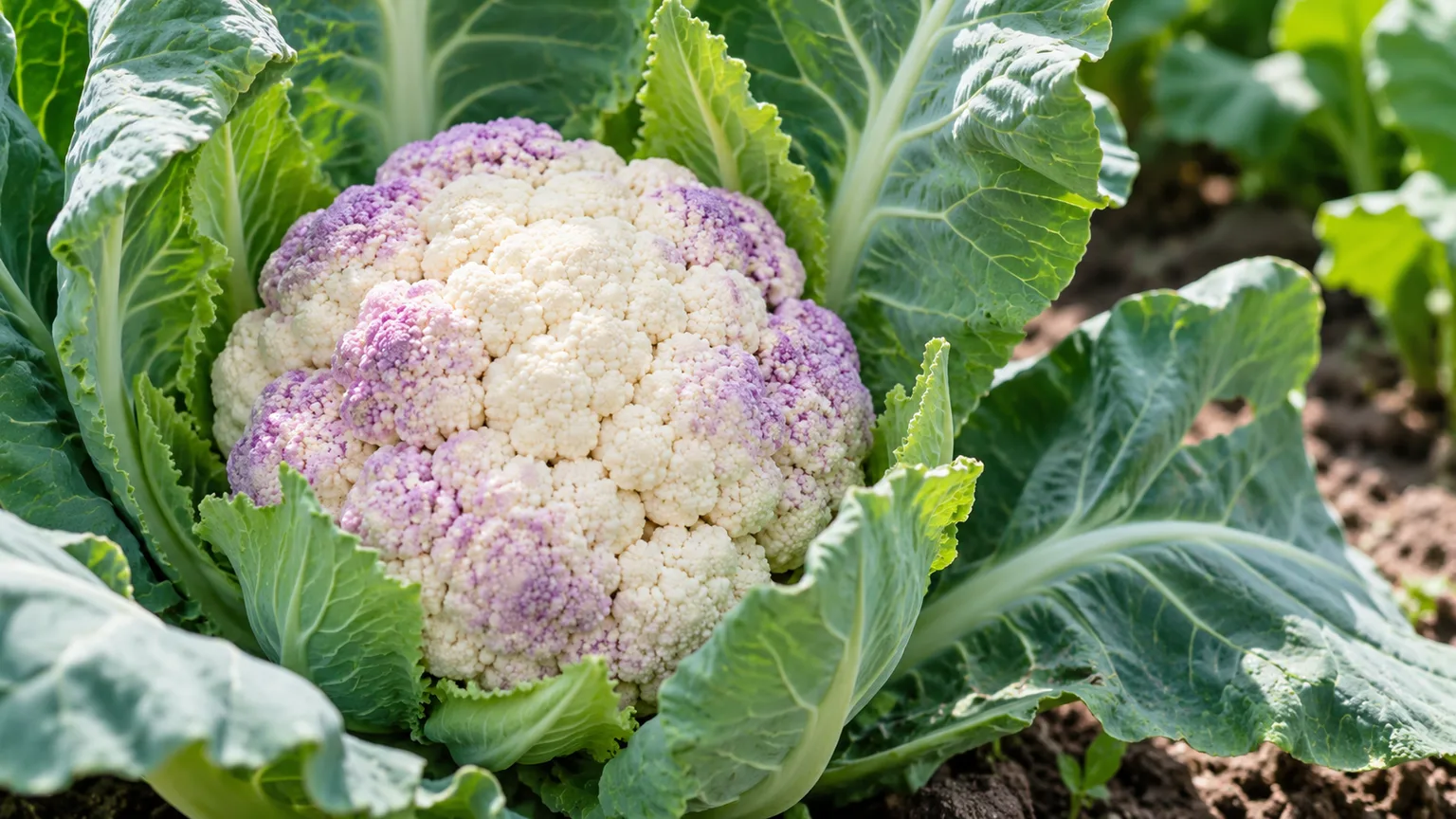
The quick answer: purple usually means pigment, not disease
If a white cauliflower head has developed a pink, red, or purple tint, the color is usually anthocyanin, a natural plant pigment. It may appear when a sensitive cultivar is exposed to light or responds to environmental conditions, and it is not, by itself, evidence of fungus, insects, or a food-safety problem.
Start with two questions: What variety did you plant, and is the curd still firm and compact? A deliberately purple cultivar should develop colored florets across most of the head. A white cultivar that blushes unevenly, especially on exposed surfaces, may simply be making more pigment. Either can still be usable if it is fresh, firm, and free of decay.
The color matters more to appearance and market grade than to whether the cauliflower is edible. The decision changes only when the purple is accompanied by a different warning sign—soft or slimy tissue, spreading dark breakdown, a foul smell, or extensive mold—or when the curd has become loose and overmature. Treat pigmentation and spoilage as separate checks.
Natural purple varieties and unexpected purple blushes
Cauliflower is the immature flower cluster of a plant in the species Brassica oleracea. Its tightly packed buds form the edible curd. White is the familiar color, but gardeners can also grow cultivars selected for purple, orange, or green heads.
The Royal Horticultural Society lists purple forms alongside traditional white varieties, and ‘Graffiti’ is a familiar deep-purple cultivar whose color is an intended trait (RHS cauliflower growing guide; RHS profile of ‘Graffiti’).
A white cauliflower can also develop a purple blush without changing into a purple variety. The difference is useful: an intentionally purple cultivar is usually colored across much of the curd and matches its seed description, while a white cultivar often shows scattered or edge-focused pink-purple patches where florets have been exposed. That visual distinction is not a perfect genetic test, but it is a strong first clue.
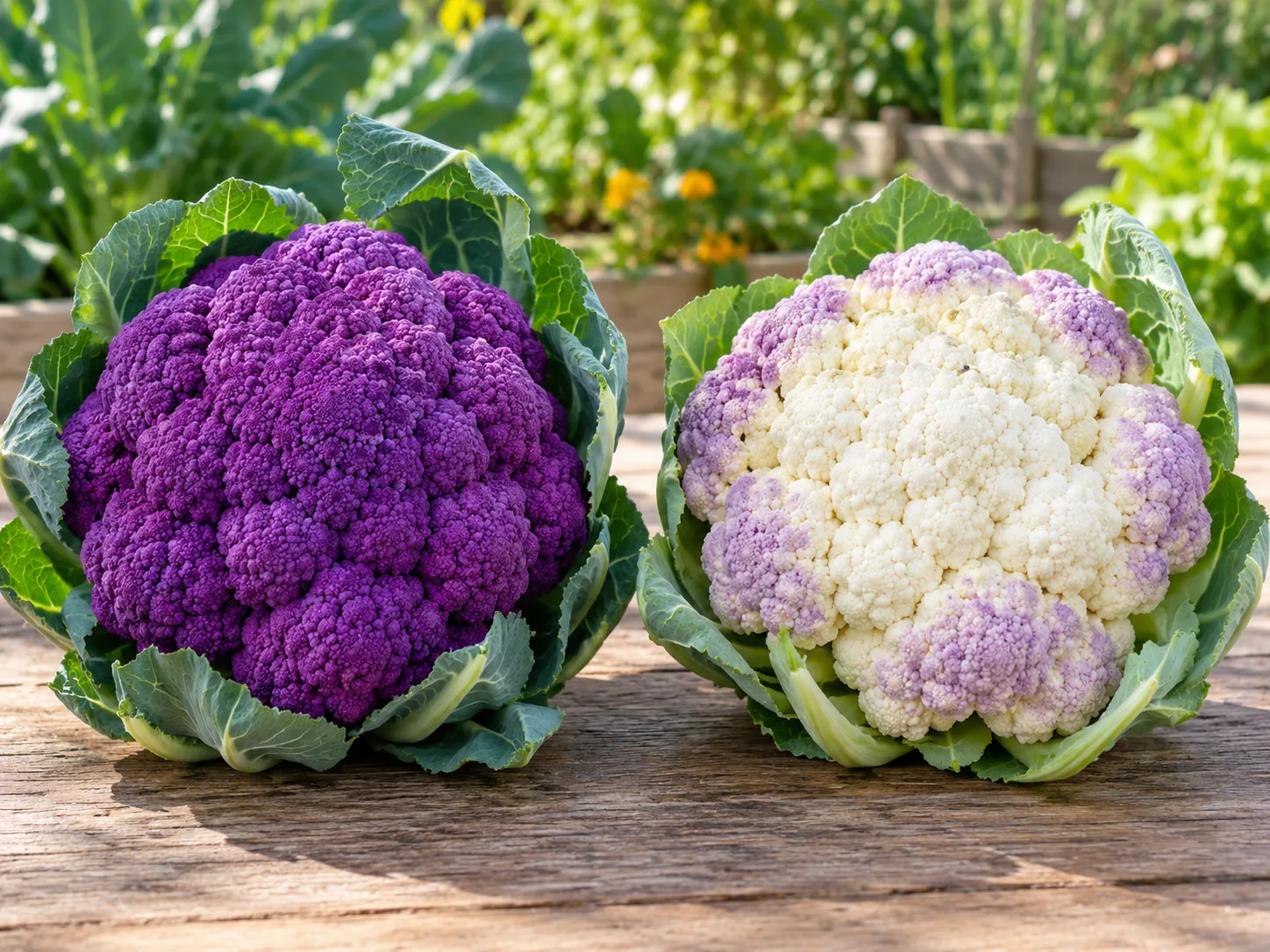
What anthocyanin does
Anthocyanins are water-soluble flavonoid pigments that create red, purple, and blue tones in many plants and foods. They occur naturally in cauliflower, and breeding can select plants that accumulate enough pigment for a consistently purple head. The color is therefore a normal plant trait, not dye or a disease marker; Iowa State University Extension describes purple cauliflower color as a result of anthocyanin (Iowa State Extension’s overview of cauliflower colors).
Anthocyanin can also accumulate in a white cultivar when its curd experiences certain conditions. Exposure and temperature responses vary by cultivar; color may appear on one part of the head before another because the curd is not exposed evenly. A 2024 controlled study found increasing purple pigmentation as a particular cauliflower line experienced extended low-temperature treatment, but the result should not be turned into a universal temperature rule for every garden variety (peer-reviewed study of low-temperature purple discoloration).
The practical point is that pigment explains the color, but the color alone does not reveal why it formed. A white curd can blush while the plant remains healthy, and a stressed plant may show other signs—poor growth, weak leaf cover, or an undersized or irregular head—that deserve attention separately.
How to tell an intentional purple cultivar from a blush
Check the seed packet, plant tag, or saved seed notes first. Varieties such as ‘Graffiti’ are bred to make deep purple curds; purple is part of what you bought, and the outer leaves do not need to conceal the pigment. In contrast, a Snowball-type white cultivar is grown for a pale head, although environmental exposure can still produce discoloration in some lines (University of Georgia Cooperative Extension’s cauliflower variety notes).
If you saved seed, do not assume the offspring will exactly repeat the parent. Many commonly sold varieties are hybrids, and saved seed from a hybrid may produce plants with variable traits.
Even open-pollinated cauliflower can cross with another nearby cauliflower variety when allowed to flower, so unexpected color in a later generation may reflect seed genetics rather than a new disease. A practical note from Gardener’s Path is that mixed varieties blooming nearby can make seed-saving results less predictable.
For a plant of unknown variety, compare the head’s overall pattern with its condition. A densely colored, evenly purple curd that is firm and growing normally is more consistent with a colored cultivar. A mostly white head with a purple rim or scattered surface tint is more consistent with pigment developing in exposed tissue, but the seed description remains the best evidence.
What causes a white cauliflower to turn purple?
Purple coloration is a pigment response, not one single diagnosis. The most useful causes to consider are the variety’s sensitivity, the amount of sunlight reaching the curd, temperature history, and whether the plant grew strongly enough to keep its leaves over the head.
Exposed curds and direct light
The white wrapper leaves normally shade the developing head. When those leaves fail to cover it—or when a maturing head rises above them—the curd can receive direct light and discolor. Clemson Extension has documented purple-red cauliflower coloration associated with sun exposure, while Oregon State University notes that poor leaf cover or overmaturity can leave sensitive heads exposed and prone to purpling (Clemson Extension’s discolored cauliflower diagnosis; Oregon State University’s cauliflower production guide).
The exposure can be uneven. One side of a head might show color because leaves shade the other side, or the top florets may turn pink while the center stays cream-colored. Look at which leaves cover the curd and whether they are healthy, upright, and large enough to meet over the head.
Sunlight is not the same as “too much sun for the whole plant.” Cauliflower generally needs a sunny site to grow well; the curd of a white variety is often protected by leaves as it develops. The goal is not to move the plant into deep shade but to keep the head covered when its own leaves are not doing that job.
Cold, heat, and growth interruptions
Cauliflower is a cool-season crop, but sudden weather shifts and prolonged extremes can interrupt growth. The timing matters: stress during head development may reduce leaf growth, expose the curd, or change pigment production.
Oregon State’s production guidance connects poor plant growth and leaf cover with several possible pressures, including temperature, water, soil compaction, and nutrient conditions. This means a purple head can be a clue to review the plant’s history, not a diagnosis of one specific deficiency.
Cold can be relevant even though gardeners often associate purple blushes only with strong sun. The 2024 study cited above induced purple discoloration with low-temperature stress in one cultivar, and the purple intensity increased with longer exposure. This is useful evidence that temperature can affect anthocyanin, but it does not show that every purple head has suffered damaging cold or that the same thresholds apply across varieties.
Warm conditions and long days can also coincide with poor white-head quality, especially when the plant grows too quickly, has insufficient leaf cover, or is left too long before harvest. The curd may yellow or loosen as it matures; that is a separate quality change from purple pigment. A hot spell is a reason to inspect the head more often and maintain even moisture, not a reason to expect that every exposed curd will turn purple.
Avoid turning a weather correlation into a rigid calendar. The right planting window depends on local frost dates, day length, cultivar maturity, and whether you are growing a spring or fall crop. Illinois Extension advises timing spring cauliflower so it matures before summer heat without setting transplants out too early into cold injury; fall timing also varies by region (University of Illinois Extension’s cauliflower guidance).
Why purple color alone is not a fertilizer diagnosis
A purple head does not prove the soil lacks phosphorus, and adding fertilizer without evidence can create a different problem. Some production references note that poor fertility may limit plant growth and leaf cover, which can indirectly expose the curd. That is not the same as saying a purple pigment is a reliable nutrient test.
Check the whole plant before you feed it. If leaves are unusually small, pale, damaged, or stunted, review watering, root-zone drainage, spacing, pest injury, and soil fertility together. A soil test is a better basis for adding nutrients than the curd’s color; excess fertilizer can waste money and contribute to runoff without removing the pigment already present.
Keep feeding separate from color correction. Fertilizer will not bleach a purple curd white, and a head that is already near maturity may be ready to harvest before a corrective treatment could affect new growth. If the crop is still young, improve the growing conditions that support healthy leaves and steady head formation, then reassess the plant rather than treating anthocyanin as a deficiency symptom.
Read the whole plant before you act
A quick field check can prevent two common mistakes: pulling a healthy head because it looks unusual, or waiting too long because you assume every tint will disappear if shaded. Inspect the plant, the curd, and its recent weather in that order. The best clue is the combination, not the shade of purple by itself.
A practical four-check triage
- Confirm the cultivar. Read the seed packet or tag. If the variety is intentionally purple, treat the color as expected unless texture or odor suggests decay.
- Check where the color appears. Purple concentrated on exposed outer florets points toward light or exposure; fairly uniform deep purple fits an intentionally colored variety. A mottled pattern can still be anthocyanin, so use texture and freshness as additional checks.
- Inspect leaves and growth. Healthy, broad wrapper leaves that arch over the curd suggest the head has remained protected. Broken, wilted, insect-damaged, or undersized leaves can leave it exposed; gaps in the canopy tell you what to correct for the next head.
- Review the last one to three weeks. Note strong direct sun on the curd, a cold spell, a warm stretch, uneven watering, transplant shock, or a sudden change in growth. This timeline helps explain exposure and stress without pretending that one observation proves the cause.
Then decide whether the head is still developing or already mature. If the curd is firm and compact but still small, gently cover it if you want a paler harvest. If it has reached the size and firmness expected for the variety, or the buds are beginning to separate, harvest it rather than waiting for the existing pigment to fade.
If the head looks purple but the plant is otherwise healthy, do not spray it, dig it up, or fertilize it as a first response. A color change without soft tissue, odor, or structural decline does not justify disease treatment. Recheck the head after a few days, particularly during warm weather when it can grow quickly.
What to do for the current head
The right action depends on maturity. A young curd may benefit from shade; a full-size head should usually be harvested while the buds remain tight. Covering reduces further light exposure, but it cannot remove pigment that has already accumulated, so do not keep an overmature cauliflower in the garden in pursuit of a white finish.
Cover a developing white curd without trapping moisture
When a white curd is about 2 to 3 inches across, many growers begin blanching it—the horticultural term for shielding it from light. This is not boiling or cooking.
Use several of the plant’s largest healthy outer leaves, draw them loosely up and over the curd, and secure their tips with soft twine, raffia, or a plant tie. University of Florida IFAS and Illinois Extension both describe covering the forming curd with its own leaves to preserve a pale head (UF/IFAS cauliflower guide; Illinois Extension cauliflower guide).
The leaves should block most direct light without crushing the head. A tie that cinches tightly around the curd can injure leaves or restrict the curd as it expands. If the outer leaves are too short, torn, or heavily damaged to cover the head, use a clean breathable garden cover to shade it, secured so that it will not rub on the florets or trap rainwater against them.
Start with a dry curd and avoid sealing it into a wet pocket. University of California Master Gardener guidance recommends covering when the surface is dry and checking the curd periodically; open the leaves after rain or dew so trapped moisture can dry, and look for insects or signs of rot while you check. Re-tie as the head grows, and harvest as soon as it is firm and full-sized.
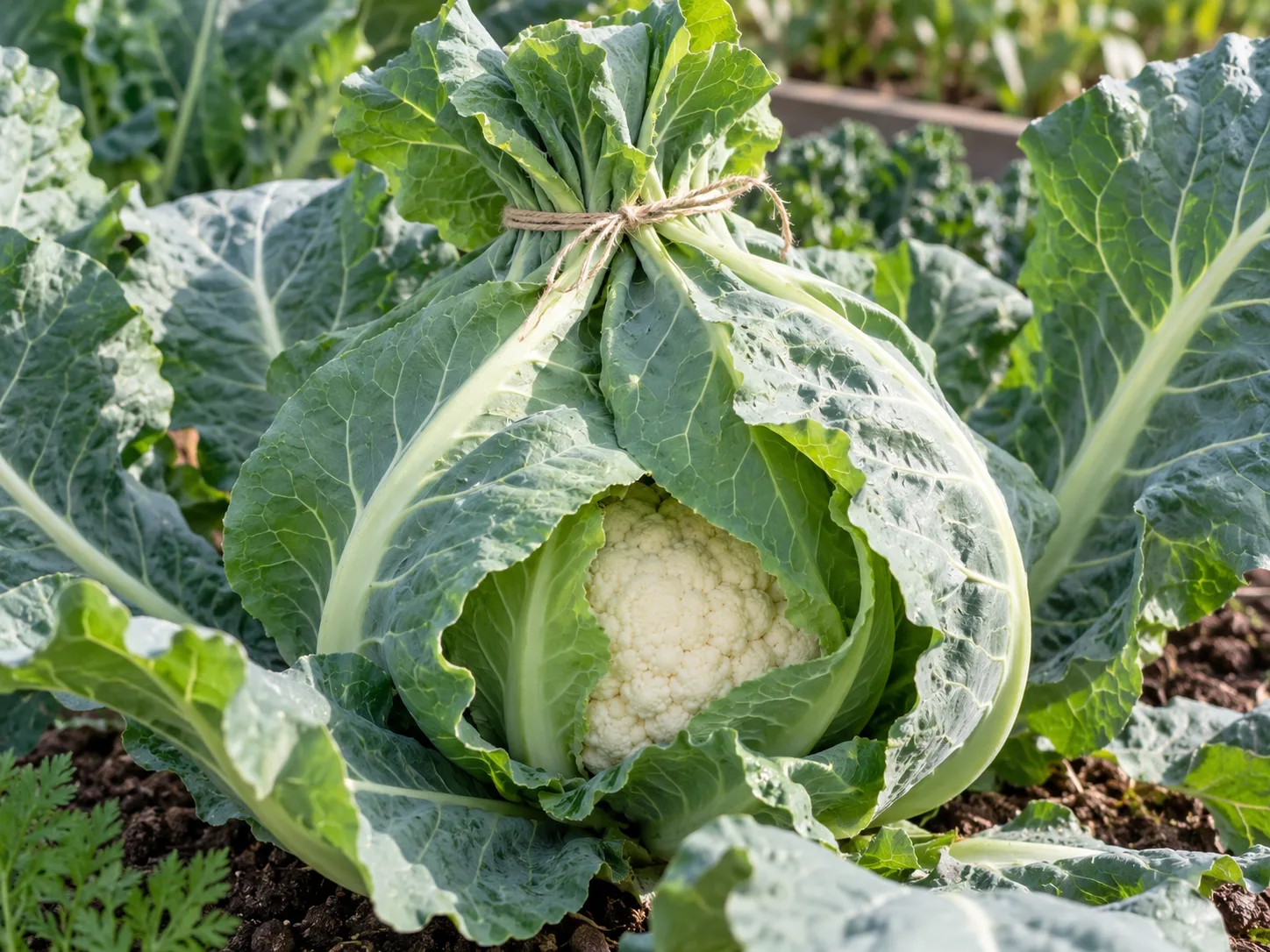
You can cover a head that has just begun to blush if it is still compact. That may limit additional exposure, but it will not reliably reverse color already present. If the head is ready, the more useful choice is to harvest and enjoy it rather than add a late covering step that only delays the meal.
Prevent discoloration in the next crop
You cannot guarantee a pure-white curd in every variety or season, but you can reduce the conditions that make a white head more likely to discolor. Choose a variety suited to your climate, keep the plant growing steadily, and check curds often enough to cover or harvest them before exposure and overmaturity become problems.
Match planting dates to local conditions instead of using a generic “plant early” rule. For a spring crop, starting too early can expose young transplants to cold, while planting too late may push head formation into heat.
A fall crop can give the curd a cooler window, but it needs enough time to mature before severe frost in your area. Ask a local extension service or use a regional planting calendar when you select transplant dates and days-to-maturity.
Give cauliflower firm, fertile, well-drained soil and consistent moisture. The plant needs enough healthy leaf area to shade its curd and support head development; drought, root disturbance, compaction, or pest damage can reduce that leaf cover. Mulch can help moderate soil moisture, but keep it from piling against the stem, and do not leave the root zone waterlogged.
Inspect plants weekly as they start to form heads. Look under the leaves for a curd, check whether the leaves naturally fold over it, and watch for caterpillars or leaf damage that can expose the center. When the head reaches roughly egg to small-orange size, decide whether to cover it based on the variety and your goal: white cultivars that do not self-blanch usually benefit from a simple leaf cover, while colored cultivars are meant to be visible.
For a white harvest, take the seed packet seriously. Some cultivars are more likely to remain pale or have leaves that curl over the curd on their own; others need manual covering.
Colored varieties such as purple ‘Graffiti’ are normally grown without tying the leaves over the head because the sun helps reveal the selected color. The RHS likewise notes that colorful forms are grown for their striking curds, while white forms can be protected from discoloration with folded leaves.
Harvest by firmness and maturity
Do not wait for the curd to be a particular color before cutting it. Harvest when the head is full-sized for its variety, feels firm, and has tightly packed buds. The size varies; smaller cultivars may be ready well before a large standard head reaches the familiar grocery-store diameter.
Watch the bud texture more closely than the calendar. A compact, smooth curd is at its best; when the individual buds begin to loosen, separate, or look grainy, quality is declining and the plant is moving past the ideal harvest stage.
Warm weather can make this change happen quickly, so inspect mature heads frequently rather than checking only once a week. The RHS advises harvesting once a cauliflower is large enough and still firm and compact, before the head starts to separate (RHS harvesting guidance).
Use a clean, sharp knife to cut through the stem below the head, leaving a few outer leaves attached to protect the curd. If the head is purple but compact, harvest at the same maturity cue you would use for a white head. If it is slightly loose but not spoiled, it is usually still usable in the kitchen, although the texture may be less tender and the flavor stronger.
After cutting, refrigerate it promptly. Keep the head dry and unwashed until you are ready to prepare it, then rinse it under clean running water and remove grit from between the florets.
Extension guidance varies on exact home storage duration because temperature, freshness, and refrigerator conditions differ; use it within several days when possible and discard any portions that become slimy or develop an off odor. The University of Georgia Cooperative Extension recommends prompt use for best flavor and nutrients, and notes that refrigerated cauliflower can keep for a week or more in a plastic bag (UGA home-garden cauliflower guide).
Is a purple head safe to eat?
A firm purple or pink tint by itself is generally a cosmetic pigment change, not a food-safety warning. Both naturally purple cultivars and white cauliflower with anthocyanin can be eaten raw or cooked. Color does not, however, certify that a head is safe: freshness, handling, and visible decay still matter.
Before eating, remove the outer leaves and inspect the curd in good light. If it is crisp and firm, smells mild and cabbage-like, and shows a stable pink-purple pigment rather than wet breakdown, rinse it well and prepare it as usual. If only a small area is bruised or damaged, cut that area away with a clean knife and use the remaining sound curd promptly.
When to cut away damage or discard the head
Do not confuse purple pigment with soft rot. Anthocyanin is usually integrated into the floret color; decay is more likely when the tissue is wet, slimy, soft, collapsing, or spreading dark brown or black, especially when accompanied by a sour or foul smell. Extensive mold or widespread mushy breakdown is a reason to discard the head rather than trying to make it safe by cooking.
For a small damaged spot, cut away the affected section generously and inspect the surrounding florets. If discoloration continues beneath the surface, the tissue is soft, or the odor is unpleasant, discard the whole head. A visual check cannot detect every foodborne pathogen, so wash hands, knives, cutting boards, and the cauliflower; the USDA’s Food Safety and Inspection Service advises rinsing fresh produce under cold running water and not using soap or detergent (USDA produce-washing guidance).
Appearance can also tell you about garden quality without telling you about microbial safety. A purple head may be less marketable because growers select for an even, pale color, but a market-grade blemish is not the same as rot. Use the same freshness checks you would apply to a white cauliflower.
Cook it without expecting one exact color
Purple cauliflower is delicious raw, roasted, grilled, steamed, or sautéed. The pigment is water-soluble, so boiling can leach some color into the cooking water and leave florets paler or duller. Dry-heat methods such as roasting, grilling, or sautéing usually retain more visible color, though the result depends on the cultivar and how long it cooks (Iowa State Extension’s cooking notes).
If color matters, cut the head into even florets, keep the pieces fairly large, and cook only until tender. Roast or sauté in a single layer so moisture can escape; crowding the pan encourages steaming and may dull the color. A few minutes in hot water may still be useful for a soup or purée, but expect some pigment to move into the liquid.
Acid can shift anthocyanin toward a pinker or more magenta shade, while neutral or alkaline conditions may make some purple pigments look bluer or duller. A little lemon juice or vinegar can help maintain or brighten color in some preparations, but results vary with cultivar, water chemistry, and recipe. Add acid only if the flavor suits the dish; it is an optional color adjustment, not a food-safety treatment.
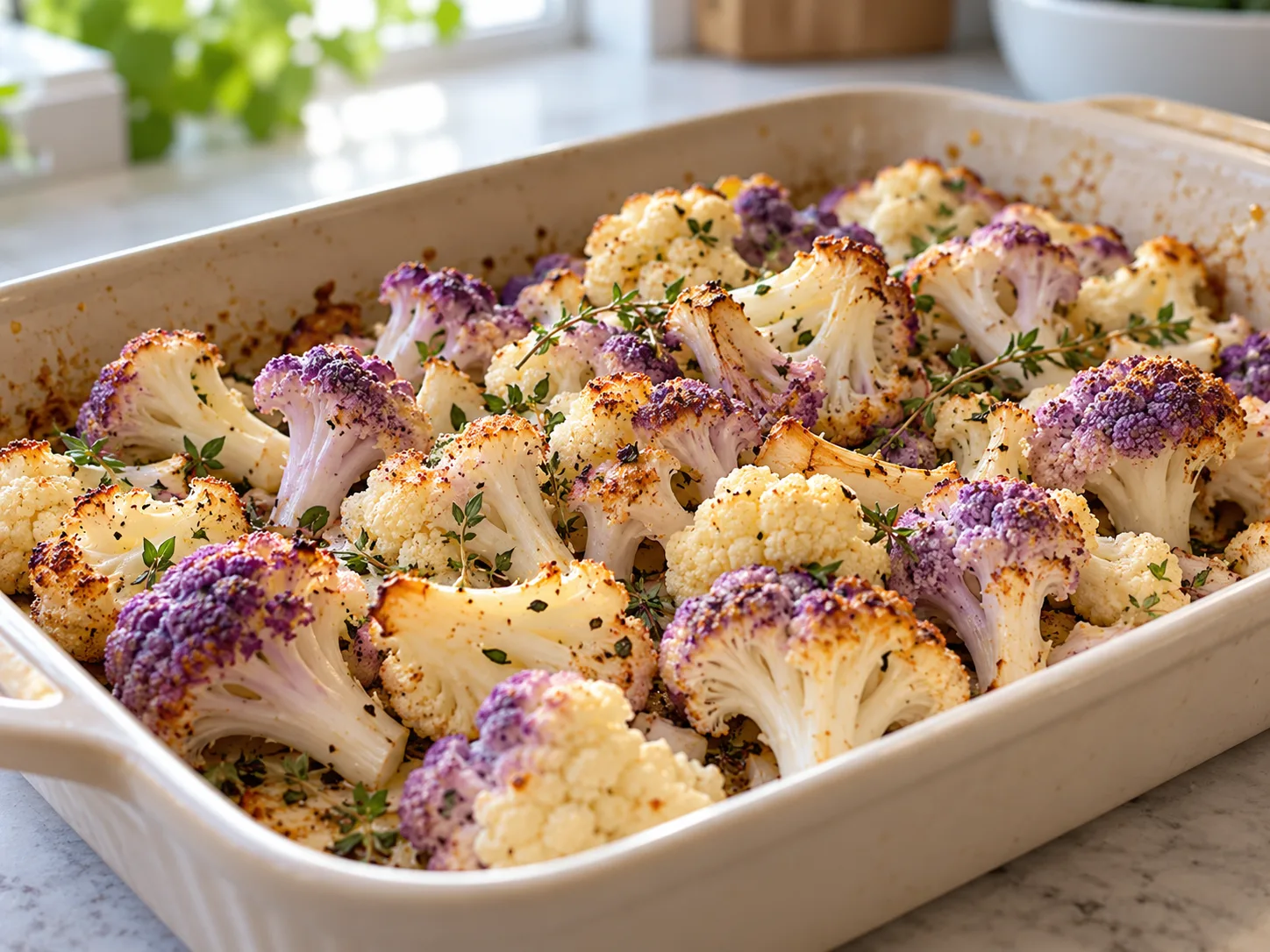
Do not treat a cooking color shift as proof that the cauliflower has spoiled. Pigment fading, bleeding, or shifting hue is a chemistry and cooking-method issue; use the head’s fresh condition before cooking to decide whether it belongs in the meal. For a bright raw platter, keep the florets chilled and add dressing shortly before serving.
Conclusion
A purple cauliflower is usually showing anthocyanin, a natural pigment, not a disease. First check whether you planted a purple cultivar; if it is a white variety, look for exposed florets, weak leaf cover, or recent weather shifts, while remembering that no single purple pattern identifies one cause.
If a white head is still growing and you want it pale, fold healthy leaves over the dry curd and keep the cover loose enough to air out. If the head is firm and compact, harvest it on time; a purple blush alone is not a reason to discard it. Use freshness and texture—not color alone—to decide what is safe to eat, then store and cook the curd in the way that best suits the meal.



