Baking Soda Spray for Plant Fungus: What Works
Learn when baking soda spray helps plant fungus, the safest small-batch recipe, how to avoid leaf burn, and when a different treatment is smarter.
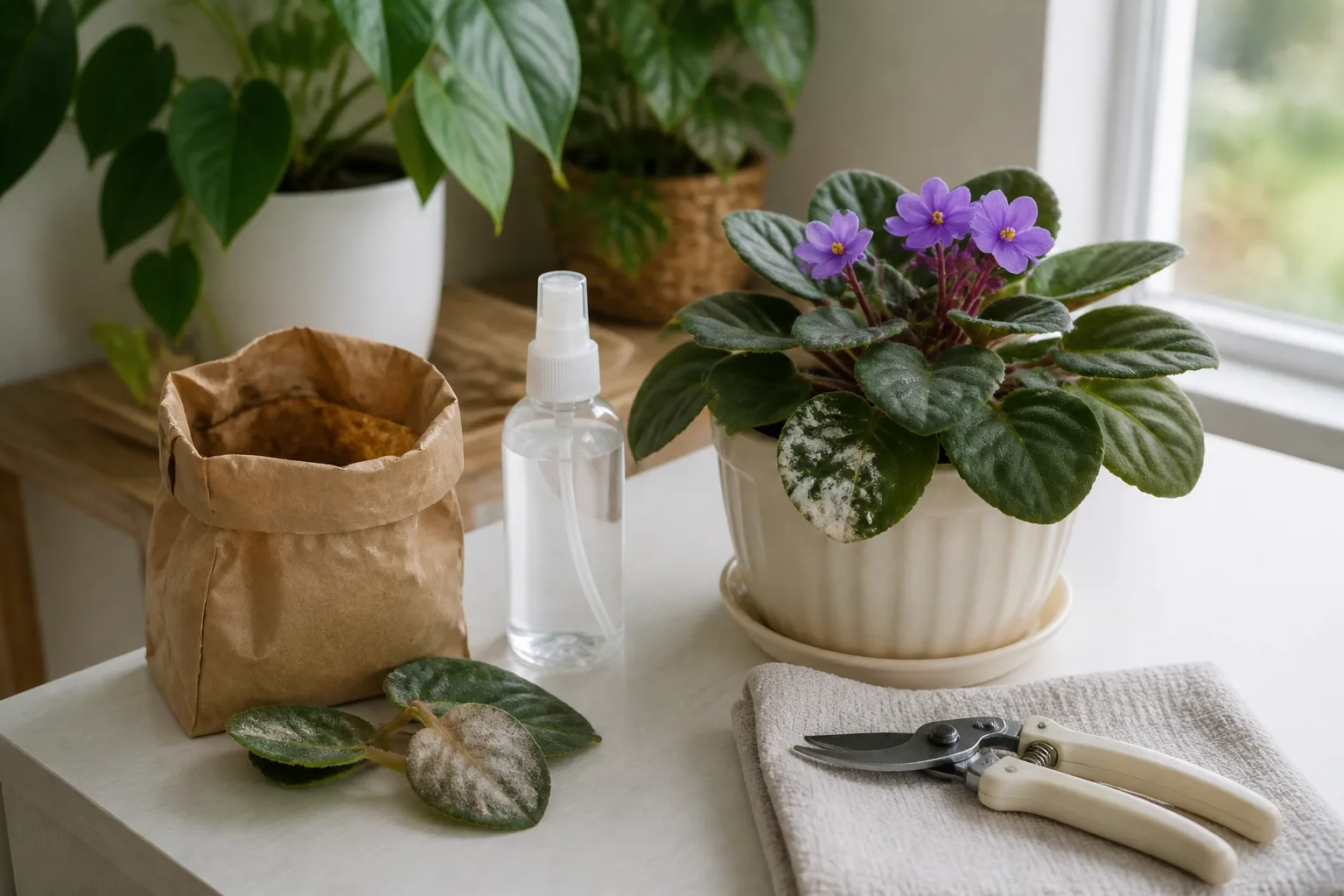
Baking soda can be a reasonable early powdery mildew experiment, but it is not a general cure for “fungus on plants.” The right response depends on what you are looking at: a white, dusty coating on a leaf surface is a different problem from a brown leaf spot, orange rust pustules, black sooty mold, or mushy roots.
The safest way to use sodium bicarbonate is to diagnose first, correct the growing conditions that keep disease moving, and treat one small area before spraying a whole plant. A dilute spray may slow a light surface infection; it will not reverse dead tissue, sterilize potting soil, or rescue roots that have rotted in wet mix.
The short answer: use it only for early powdery mildew
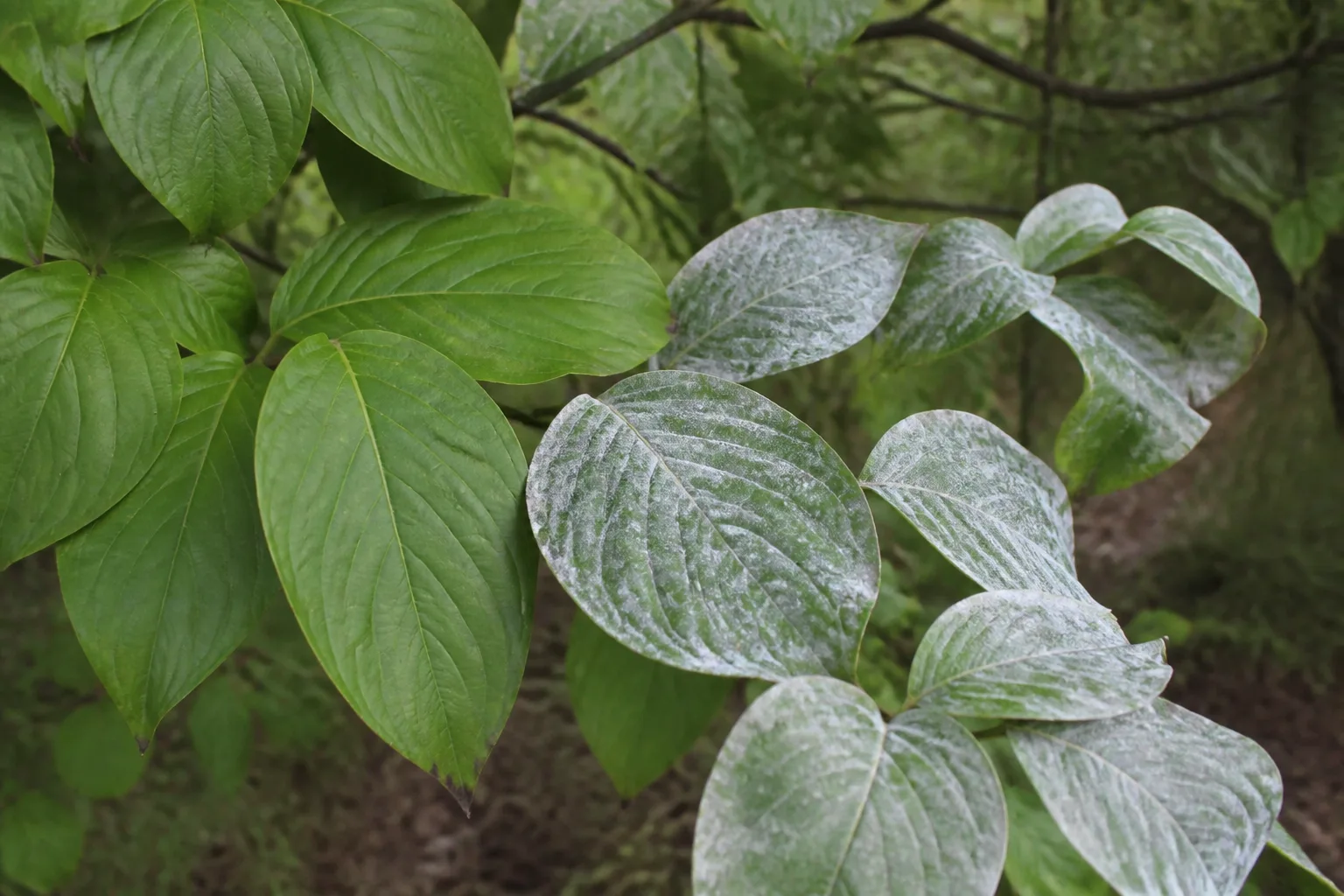
If the symptom is a thin white-to-gray powder that wipes or brushes away from the surface of leaves, baking soda may help suppress early powdery mildew when used as a contact spray. The effect is usually temporary and preventive rather than curative: it changes the leaf-surface chemistry and must reach new or unprotected tissue as the plant grows.
That distinction matters because powdery mildew is unusual among common plant diseases. Its fungal growth is largely on the plant surface, and its spores can germinate without a film of water sitting on the leaf. Colorado State University Extension describes the disease as especially favored by warm days, cool or humid nights, crowded growth, and poor air circulation. A wet leaf is not automatically the cause, so simply misting or rinsing a plant does not solve the underlying conditions. (Colorado State University Extension)
Use the spray as one small part of an integrated plan: remove the worst leaves, increase air movement, stop feeding lush soft growth, and monitor new leaves. If the plant is losing leaves quickly, the coating is not clearly powdery mildew, or the disease is advanced, pause before adding more sodium or soap.
Diagnose before you mix
“Fungus” is a useful alarm, not a diagnosis. Look at the pattern, location, texture, and speed of spread before deciding whether a foliar spray belongs in the plan.
What powdery mildew looks like
Powdery mildew begins as small white or gray patches that expand into a dusty coating. The growth may appear on the upper or lower leaf surface, stems, buds, or flowers. New leaves can curl or distort, and a heavily affected leaf may yellow and drop, but the first clue is the powder sitting on the surface, not a sharply defined dead spot inside the leaf.
Several powdery mildew fungi exist, and many have narrow host ranges. A strain on one plant does not automatically behave like the strain on another, which is one reason that moving plants, improving airflow, and choosing resistant cultivars are more reliable long-term strategies than repeatedly increasing a homemade spray. The RHS describes the disease as a white, dusty coating that can affect leaves, stems, flowers, and fruit across many plant hosts. (RHS powdery mildew guidance)
Rub a tiny patch with a clean, dry cotton swab or tissue. If a superficial powder transfers, the observation is consistent with mildew, but it is not proof. Do not aggressively scrub a delicate leaf; the abrasion itself can create damage that looks like disease later.
When a white or dark coating is not powdery mildew
Skip baking soda until you identify these common lookalikes:
| What you see | More likely explanation | Better first action |
|---|---|---|
| Brown or black circular spots, often with a yellow halo | Leaf spot, bacterial disease, or another necrotic problem | Isolate, keep leaves dry, remove badly affected tissue, and identify the host and pattern |
| Orange, yellow, or rust-colored powder mostly on leaf undersides | Rust disease | Remove affected leaves, improve airflow, and use a host-labeled treatment if needed |
| Black or dark brown film on upper leaves plus sticky residue or insects | Sooty mold growing on honeydew | Find and manage aphids, scale, mealybugs, or whiteflies; wipe the leaves clean |
| Gray, water-soaked, or rapidly collapsing tissue | Downy mildew, blight, bacterial disease, or severe tissue damage | Isolate promptly and seek plant-specific diagnosis |
| White fuzz only on the potting mix | Surface mold or fungal growth in persistently wet soil | Reduce moisture, improve drainage and airflow, and inspect roots if the plant declines |
| Soft brown roots, sour smell, and wilt despite wet soil | Root rot | Unpot, inspect roots, remove rot, and repot into fresh, well-draining mix |
Black spots are especially easy to misread. Baking soda may change a leaf surface, but it cannot repair a necrotic spot or reach a pathogen already damaging internal tissue. The same caution applies to soil mold: a foliar spray does not correct waterlogged roots.
Sooty mold deserves a separate decision rule. The RHS explains that it grows on sugary honeydew produced by sap-feeding insects and does not attack the plant directly. Wiping the film away can improve the appearance, but it will return if the insect infestation remains. (RHS sooty mold guidance)
When baking soda can help
Baking soda is most defensible when all of these conditions are true:
- The symptom is a light, surface-level powder consistent with early powdery mildew.
- The plant is hydrated and actively growing rather than wilted from drought, heat, or root trouble.
- You can spray in cool, bright conditions without leaving leaves wet all night or exposing wet foliage to hot direct sun.
- You are willing to patch-test, observe for several days, and stop if the leaf margins brown or the surface turns scorched.
- You are also correcting spacing, airflow, watering, and sanitation rather than expecting the bottle to carry the whole treatment.
Evidence for plain sodium bicarbonate is mixed. University of Connecticut Extension notes that a sodium bicarbonate and 1% horticultural-oil combination has been reported to work on roses, while a Maryland lilac study found the combination was not significantly better than horticultural oil alone and that sodium bicarbonate without oil failed to control mildew. The same guidance warns that vegetable oils and dishwashing detergent can cause phytotoxicity, meaning plant injury. (University of Connecticut Extension)
So the honest claim is not “baking soda kills all plant fungus.” It is: a carefully tested, dilute bicarbonate spray may help slow early powdery mildew on some plants, but results vary and the ingredients can injure foliage when overused.
The safest small-batch recipe
For a cautious trial, mix:
- 1 teaspoon plain baking soda (sodium bicarbonate)
- 1 quart of water
- Optional: a very small amount of a plant-labeled spreader or insecticidal soap, only if its label allows foliar use on that plant
Mix the baking soda into the water until it dissolves, then add the labeled spreader according to its directions. Pour the solution into a clean, clearly labeled spray bottle. Use the batch the same day rather than storing it for weeks; sediment, contamination, and an unmeasured concentration make repeat results harder to judge.
This conservative ratio is a starting point, not a promise of efficacy. Do not keep adding baking soda because the first application did not visibly remove the powder. Increasing the concentration raises the risk of sodium residue and leaf injury faster than it guarantees disease control.
Do not substitute laundry detergent, dishwasher detergent, bleach, vinegar, ammonia, or a random essential oil. Household cleaners are formulated for hard surfaces or fabrics, not living leaf tissue. Do not combine this recipe with sulfur or an oil product unless the product label and an expert recommendation specifically support the sequence; incompatible spray combinations can injure plants.
Optional spreader: use only a labeled product
A spreader helps a spray wet and remain on a waxy leaf, but “more soap” is not better coverage. Strong detergent can strip the leaf’s protective surface and cause scorch, especially on thin, fuzzy, young, or drought-stressed foliage.
For an edible crop, follow the product label for the crop, application interval, harvest interval, and allowed tank mixes. A kitchen recipe is not a replacement for a pesticide label. For a houseplant, keep the spray off furniture and floors, avoid runoff into the potting mix, and store the bottle where children and pets cannot reach it.
How to apply it without burning leaves
The application is where many homemade sprays fail. Treat the plant gently and keep the first test small.
Patch-test and wait
Choose one or two older leaves in an inconspicuous area. Spray until the surface is evenly moistened, not dripping, and let it dry under the same conditions the whole plant will experience. Check the test area after 24 hours and again after 48 hours for translucent patches, brown margins, speckling, curling, or a dull film.
Do not test on the newest unfurled leaf, a flower, or the only healthy leaf on a struggling plant. Fuzzy African violets, ferns, succulents, thin-leaved tropicals, and plants already stressed by transport can be less forgiving of wetting agents and salts. If the test leaf reacts, rinse the plant gently with clean water if its care permits, stop the spray, and use cultural controls while you reassess the diagnosis.
Coverage and timing
Spray early enough in the day for the leaves to dry, but not while the plant is sitting in harsh, hot sun. Wet foliage under intense light can scorch; leaves left wet overnight can stay in a humid pocket that works against good disease management. A cool, calm morning is often easier to control than a hot afternoon or a still evening.
For powdery mildew, cover the visible leaf surfaces and the stems where the coating is present. Check both sides when the plant’s shape allows it, because powdery mildew can occur on either surface even though it is often easiest to see above. Aim for a fine, even film rather than runoff into the pot. Keep the spray away from open flowers when possible.
Avoid spraying a wilted plant. Water the root zone appropriately first, let the plant recover, and confirm that the pot drains. Never use a foliar spray as a substitute for correcting root damage, dehydration, or extreme heat.
What to do after the first spray
The goal is not to make existing white patches vanish instantly. Existing fungal growth and damaged tissue may remain visible even if the disease stops expanding. Track new growth and the edge of the infection instead.
After the test application:
- Mark or photograph the affected leaves so you can compare the same area.
- Wait 48 hours for any spray injury to show.
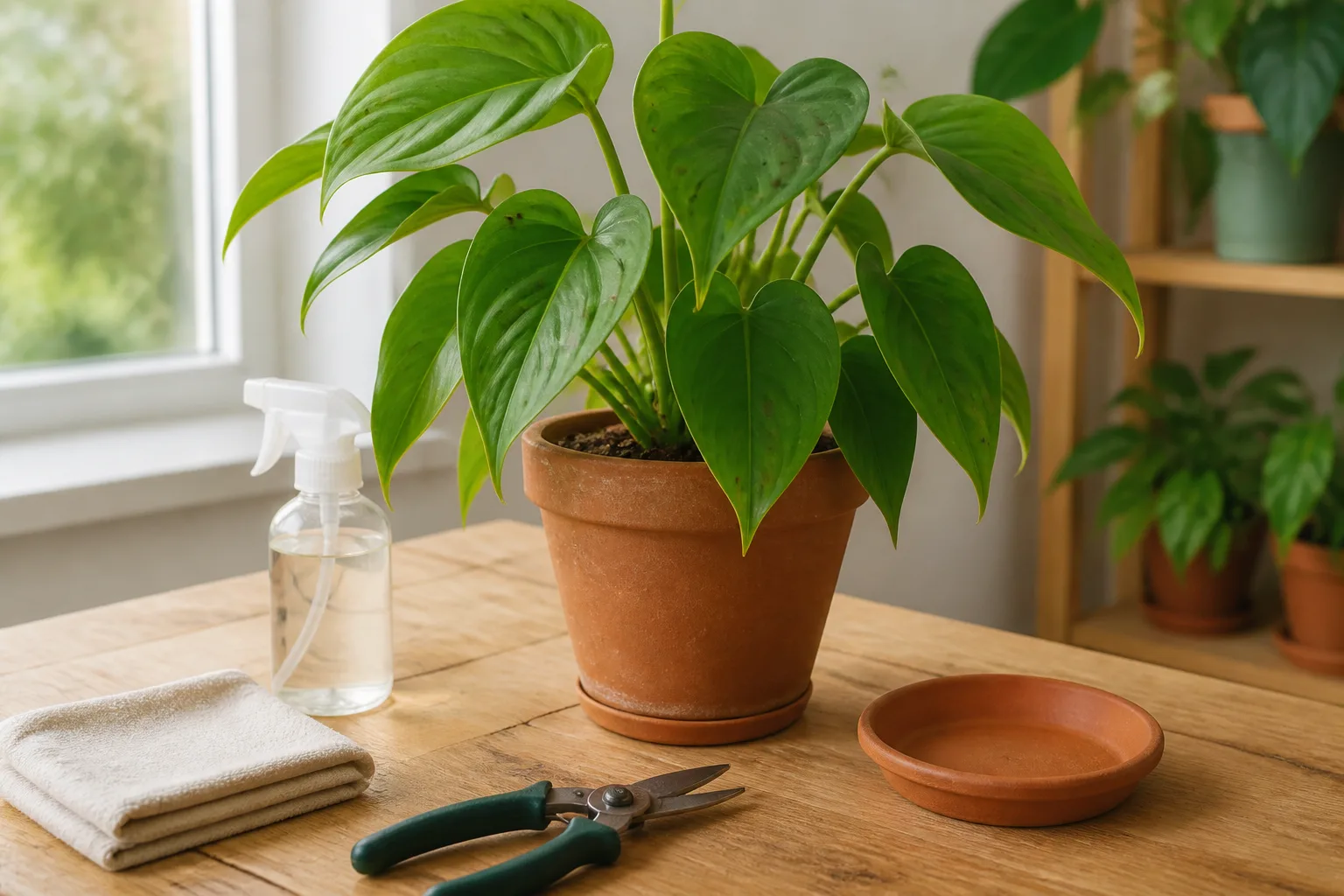
- Remove leaves that are mostly covered, badly distorted, or collapsing, using clean scissors.
- Bag infected foliage rather than adding it to a cool home compost pile; Colorado State University Extension warns that compost temperatures may not be high enough to kill disease material. (Colorado State University Extension)
- Recheck the plant in about a week. If the white coating is still spreading, stop escalating the kitchen recipe and reassess the diagnosis and the growing conditions.
Do not schedule endless weekly spraying by habit. Repeated sodium-containing sprays can leave residue on leaves and send sodium into the potting mix. A visible crust, declining leaf edges, or new damage after each application is a reason to stop, flush the soil only if the plant and pot drain well, and move to a different plan.
Why the spray may fail
Failure usually has a clear cause:
- It was not powdery mildew. Leaf spot, rust, sooty mold, and root rot need different actions.
- The disease was already advanced. A contact spray cannot restore tissue that is dead or heavily colonized.
- The leaves were not covered. A treatment that remains only on one surface misses protected areas and new growth.
- The environment stayed favorable. Crowding, stagnant air, low light, excessive nitrogen, and repeated stress can outpace a temporary spray.
- The mixture was too weak for that plant and disease—or too strong for the leaf. This is why a recipe copied from another plant is not a guarantee.
- Soap or oil caused injury. The brown patches appearing in a clean pattern after spraying may be chemical damage rather than more fungus.
- The problem is below the soil. Root pathogens and overwatering do not respond to a leaf treatment.
When new white patches appear on the plant’s newest growth despite better airflow and sanitation, use a plant clinic, extension office, or a product labeled for that host and disease. Correct diagnosis is more useful than adding a second kitchen ingredient.
Prevent repeat outbreaks
Prevention usually has a better return than chasing visible spots. Powdery mildew favors susceptible hosts in crowded, still air, especially where warm days meet humid nights. University extension guidance consistently emphasizes spacing, sun appropriate to the plant, sanitation, and monitoring before the disease is widespread.
For indoor plants, leave a little space between leaves and nearby pots, run a gentle fan across the room rather than directly blasting one plant, and remove dead leaves from the soil surface. Keep the plant in the brightest light it can tolerate without sun scorch. Rotate the pot so one side does not stay pressed against a wall or window.
Water the root zone instead of routinely misting the foliage. If an outdoor plant receives overhead rain, do not panic; powdery mildew is not managed by keeping every leaf permanently dry, and some morning rinsing can be compatible with fast drying. The practical target is shorter leaf-wetness periods and better airflow, not a perfectly sterile plant.
Avoid pushing soft, lush growth with excess nitrogen. Colorado State University Extension specifically recommends avoiding late-season nitrogen applications once powdery mildew is a problem because succulent tissue is more susceptible. Choose resistant cultivars where they exist, inspect new plants before placing them beside a collection, and clean pruners between diseased and healthy plants.
Better options when the problem is serious
A labeled treatment can be more predictable than a homemade mix, but “stronger” does not mean automatically safer. Select the product for the plant, disease, setting, and harvest constraints, and follow the label exactly. Use cultural controls alongside it, not after they fail.
Potassium bicarbonate and labeled fungicides
Potassium bicarbonate is chemically related to baking soda but supplies potassium rather than sodium. Formulated potassium-bicarbonate products are designed and labeled for disease control, so they are usually a more appropriate bicarbonate option when the disease and host are listed. Colorado State University Extension includes potassium bicarbonate among powdery-mildew control options and notes that products work best with cultural controls and label-directed intervals. (Colorado State University Extension)
Horticultural oils, sulfur, copper products, and other fungicides each have different host, temperature, residue, and compatibility limits. Do not spray sulfur close to an oil application unless the label says it is safe. Do not assume a product approved for roses is approved for a tender houseplant, an edible crop, or a plant grown around pets.
For a small indoor collection, the sensible escalation is often: isolate the plant, remove heavily affected tissue, improve conditions, use a labeled product if needed, and discard a plant only when the disease is severe, the diagnosis is uncertain, or keeping it would threaten irreplaceable neighboring plants. Treatment should be proportionate to the value and risk of the plant.
Root and soil problems need a different plan
Do not spray baking soda on the potting mix to “kill fungus” as a routine treatment. White growth on soil may be harmless decomposer fungi, but it can also signal a mix that stays wet too long. If the plant is wilting while the soil remains wet, smell the mix and inspect the roots rather than adding a foliar or soil drench.
Healthy roots are firm and pale tan, cream, or light brown depending on the species. Mushy, hollow, dark, or foul-smelling roots should be removed with clean scissors. Repot into fresh, appropriately airy mix in a draining container, then change the watering interval so the root zone dries at a species-appropriate pace. Baking soda does not reverse root rot and can raise the salt load in the container.
Houseplant-specific workflow
Indoor air is still air, and a collection can spread problems by touch, splashing, shared tools, or simply keeping diseased leaves pressed against healthy ones. Start with isolation: move the suspect pot away from other plants and check the undersides of leaves, stems, leaf axils, and the soil surface.
If the coating is clearly early powdery mildew, remove the worst foliage, correct light and airflow, patch-test the conservative spray, and watch new growth for a week. If there are insects or sticky leaves, treat the sap-feeders; if there are discrete spots, investigate leaf spot or environmental stress; if there is root decline, repot rather than spraying.
Keep a note of the date, recipe, plant, weather or room conditions, and any reaction. That simple record tells you whether the problem is spreading, whether the spray is causing the damage, and whether the plant improves after the environment changes. If it does not, a plant-specific diagnosis is the next useful action—not a more concentrated bottle.
Conclusion
Baking soda spray has a narrow, honest use: it may help suppress early powdery mildew on some plants when applied cautiously to healthy, hydrated foliage. It is not a cure for every fungal-looking symptom, and it cannot repair dead leaves, treat root rot, or replace diagnosis.
Start with the symptom, not the recipe. Isolate the plant, improve airflow and sanitation, patch-test a dilute mixture, spray in cool conditions, and stop at the first sign of injury. If the disease keeps moving, switch from guesswork to a host-labeled treatment or an extension-backed diagnosis.