Rust Disease on Houseplants: Signs and Treatment
Indoor plant diseases are usually fungal or bacterial infections favored by moisture on leaves and poor ventilation. Rust Disease can weaken growth and spread to nearby plants if ignored. Use Orange, yellow, or brown powdery spots under leaves as your starting point, then confirm whether you are dealing with infection, physical damage, or care stress. Track weekly progress after you change care, and note watering, light, and repotting dates so you can tell whether the symptom is improving or returning. Compare upper versus lower leaves, new versus old growth, and soil moisture at root depth before you treat, because the same visible symptom can come from watering, light, pests, or normal aging on different plants.
Rust Disease on Houseplants
Still unsure?Match your symptoms to the most likely problems in under a minute.Run diagnosis →Understand and fix rust disease
Indoor plant diseases are usually fungal or bacterial infections favored by moisture on leaves and poor ventilation. Rust Disease can weaken growth and spread to nearby plants if ignored. Use Orange, yellow, or brown powdery spots under leaves as your starting point, then confirm whether you are dealing with infection, physical damage, or care stress. Track weekly progress after you change care, and note watering, light, and repotting dates so you can tell whether the symptom is improving or returning. Compare upper versus lower leaves, new versus old growth, and soil moisture at root depth before you treat, because the same visible symptom can come from watering, light, pests, or normal aging on different plants.
Overview
Indoor plant diseases are usually fungal or bacterial infections favored by moisture on leaves and poor ventilation. Rust Disease can weaken growth and spread to nearby plants if ignored. Use Orange, yellow, or brown powdery spots under leaves as your starting point, then confirm whether you are dealing with infection, physical damage, or care stress. Track weekly progress after you change care, and note watering, light, and repotting dates so you can tell whether the symptom is improving or returning. Compare upper versus lower leaves, new versus old growth, and soil moisture at root depth before you treat, because the same visible symptom can come from watering, light, pests, or normal aging on different plants.
How to identify it
- Look for spots with halos, powdery coating, or water-soaked margins
- Check if damage spreads over days vs stays static
- Note whether leaves were recently misted or watered overhead
- Inspect multiple plants in the same room for similar patterns
- Smell soil-sour odor suggests rot rather than surface disease alone
When to worry
Rapid defoliation, soft mushy stems, or spots enlarging daily mean isolate immediately and trim affected tissue.
Common causes
Water sitting on leaves overnight
Overhead watering and late-day misting keep foliage wet for hours-the perfect environment for leaf spot and mildew.
Poor airflow between plants
Crowded shelves and closed rooms trap humidity around leaves and speed up Rust Disease.
Infected tools or splashing water
Pruning with dirty shears or reusing drip trays without cleaning spreads pathogens plant to plant.
Weakened or stressed plants
Plants recovering from repotting, low light, or root issues are more susceptible to infection.
Step-by-step fix
Isolate affected plants
Move sick plants away from healthy ones until active spread stops.
Remove infected leaves
Cut off heavily spotted or mushy foliage with clean scissors. Dispose in trash, not compost indoors.
Improve airflow and watering technique
Space plants out, run a fan on low, and water at soil level without wetting leaves.
Apply fungicide if fungal disease is confirmed
For powdery mildew or leaf spot, use a houseplant-safe fungicide per label. Bacterial issues may need removal rather than spray.
Avoid fertilizer until recovery
Let the plant stabilize. New healthy growth confirms your changes are working.
Prevention tips
- Water at the soil line, not over leaves
- Provide spacing and gentle airflow in plant rooms
- Sterilize pruning tools between plants
- Quarantine new plants before mixing collections
Common mistakes
- Misting diseased leaves hoping humidity helps
- Leaving fallen infected leaves on soil surface
- Treating bacterial rot with fungicide only
Plant rust is named for its orange, cinnamon, brown, or black spore masses, not because the leaf is oxidizing like metal. The strongest visual clue is usually a field of raised, powder-producing pustules, often concentrated on the underside of leaves. A flat orange stain or one brown circle is not enough to make the diagnosis.
Move a suspect plant away from the collection before handling it closely. Photograph both leaf surfaces, hold a white card beneath one lesion, and gently tap rather than rub. Colored powder dropping from intact raised structures strengthens the case for rust, but a diagnostic laboratory may still be needed because insects, edema, mineral deposits, and other fungi can look similar.
Management protects uninfected tissue; it does not restore tissue already occupied or killed by the fungus. Keep leaves dry, remove the most productive infected tissue without stripping the plant, correct crowding, and use a labeled fungicide only when the disease, plant, and indoor site all appear on the label. Healthy new growth and no new pustules are the practical signs of control.
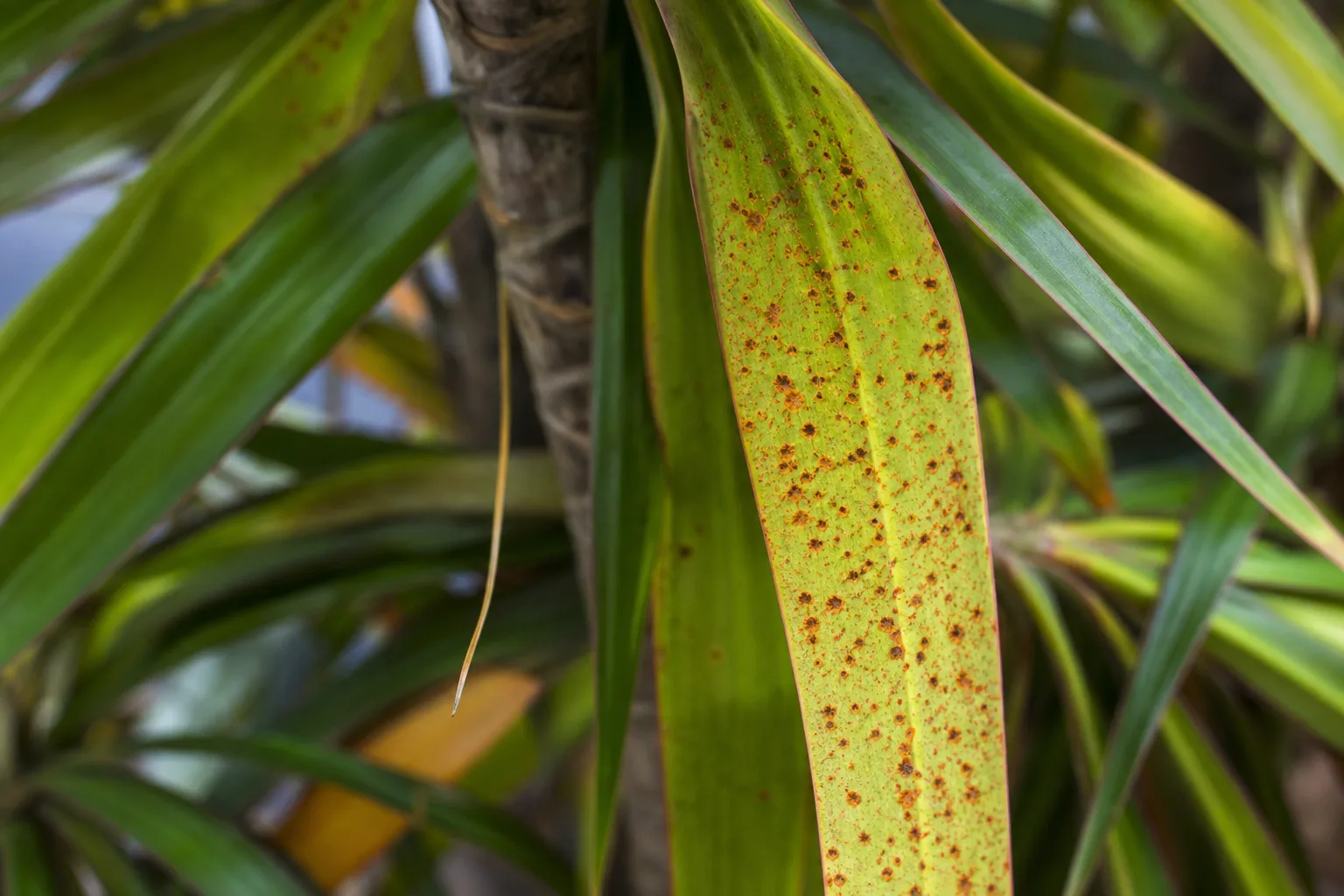
This guide is an evidence synthesis drawn from university Extension and integrated-pest-management sources. It does not claim microscopy, culturing, or a treatment trial for the pictured plant. The two dracaena images are comparison aids for distribution and surface structure; they cannot establish a rust species or confirm that a reader’s plant has the same disorder.
What Rust Disease Is
Rust diseases are caused by a large group of specialized fungi. They are obligate parasites, meaning they require living host tissue to grow and reproduce. Some complete their life cycle on one host species or group, while others alternate between two unrelated hosts and may produce several different spore stages.
The visible pustules rupture the leaf surface and release masses of spores. University of Connecticut IPM describes rusts on ornamental crops as diseases that commonly produce yellow, orange, reddish-brown, or black pustules on foliage and sometimes stems (rust diseases on ornamentals). Their color and position change with the rust species and stage.
“Rust” therefore names a disease category, not one universal fungus. The rust on a fern may not infect a neighboring philodendron, while another rust can cycle through alternate hosts. Correct plant identification and symptom documentation make any later diagnosis much more useful.
Record the botanical name from a reliable label and the cultivar when known, because closely related ornamentals may differ in susceptibility. Penn State Extension places accurate problem identification before control selection (plant disease identification and control). A diagnostician can use host identity to eliminate rusts that cannot complete infection on that plant, making this basic record more valuable than another heavily enlarged photograph.
The Classic Rust Pattern
Early symptoms may appear as pale yellow, white, or chlorotic flecks on the upper leaf surface. Directly beneath those areas, small raised structures develop and mature into powdery pustules. Over time the pustules may darken, merge, or be surrounded by yellow or dead tissue.
Rust can occur on leaves, petioles, stems, flowers, or young shoots depending on the host. Heavily infected leaves may yellow, dry, distort, or drop early. A severe case reduces functioning leaf area and can weaken growth, but a few pustules on one old leaf are a different management problem from infection throughout every growing point.
Inspect a sequence of leaves. A repeating pattern on newer growth suggests an active disease, while one stable, scarred leaf may record an old infection or injury. Track change rather than repeatedly reacting to permanent damage.
Inspect Pustules, Powder, and Leaf Distribution
Use bright light and a hand lens. A pustule is three-dimensional: it may look like a tiny blister, cup, bump, or torn patch with powder inside. Check whether the upper and lower symptoms align through the leaf. That relationship is more informative than rust-like color alone.
Hold white paper below the leaf and tap once. Orange or brown dust may be spores, but pollen, potting mix, and mineral residue also transfer. Do not blow on the plant or scrape multiple lesions because that can distribute material through the room.
Use the image to compare distribution and surface texture, not to confirm a pathogen. Many leaf disorders share orange or brown coloration.
Map the affected foliage. Rust favored by leaf wetness may be concentrated where leaves overlap or where overhead water lands. One-sided dry damage near a heater or window points elsewhere. A plant-wide pattern with compatible pustules deserves a stronger containment response.
How Symptoms Change Over Time
Photograph representative lesions every few days from the same angle. Early pale spots may develop raised centers, release powder, and then leave dry, dead tissue. New generations of pustules may appear nearby or on younger leaves if conditions remain favorable.
Color can shift as spore stages mature. Some rusts produce bright yellow or orange spores first and darker brown or black resting structures later. Penn State Extension’s discussion of pome-fruit rust illustrates that rust fungi may use distinctive spore structures and alternate hosts during complex life cycles (rust life cycle).
Do not interpret every darkening lesion as sudden worsening. Old pustules naturally age, and treated tissue remains discolored. Count newly formed pustules and affected leaves. Those measurements separate continuing infection from the normal aftermath of damage.
Use the same leaf as a reference only while it remains attached and useful. Once a heavily infected leaf is removed, photograph the bagged leaf beside its date label before disposal, then switch monitoring to a nearby marked leaf. A weekly table—new pustules, newly affected leaves, leaves removed, and products applied—prevents old damage from being counted again and reveals whether the trend is improving.
Problems That Mimic Rust
Scale insects can resemble brown raised dots, especially along veins and stems. They usually form individual bodies that can be lifted or reveal an insect shape, and some produce sticky honeydew. Rust pustules arise from plant tissue and release fine spores rather than exposing a recognizable insect.
Edema creates blisters or corky bumps, often beneath succulent or thick leaves, when water uptake exceeds water loss. Mineral deposits form crusts where droplets dried. Spider mites create pale stippling and sometimes webbing, while other leaf-spot fungi may create colored fruiting bodies.
A complete inspection prevents a cascade of wrong treatments. Oil applied for scale may suppress some fungi but can also obscure symptoms or burn stressed foliage. Fungicide will not correct edema. Identify the evidence that distinguishes the leading possibilities before choosing a product.
A Quick Evidence Comparison
| Evidence | More consistent with | What to verify |
|---|---|---|
| Raised pustules that shed orange or brown powder | Rust fungus | Alignment with upper-leaf spots and new pustules |
| Discrete bodies along veins plus honeydew | Scale insects | Legs or body structure under magnification |
| Corky blisters without loose powder | Edema | Wet root zone and low transpiration conditions |
| Flat rings matching dried droplets | Mineral or spray residue | Recent misting, hard water, or treatment |
| Dark spots with concentric rings | Other leaf-spot fungus | Fruiting bodies and laboratory diagnosis |
The comparison reduces error; it does not replace testing. Mixed infestations occur, and secondary fungi can colonize injured tissue. When a valuable plant has atypical lesions or treatment would involve a risky pesticide, submit a sample to an Extension diagnostic service.
Why Rust Establishes and Spreads
Rust spores reach a compatible host, germinate under favorable moisture and temperature, and infect living tissue. Exact requirements differ among rust species. Many benefit from extended leaf wetness or high humidity, so crowded foliage, overhead watering, condensation, and poor drying conditions increase opportunity. Utah State University Extension likewise identifies moisture, host susceptibility, and rust-specific life cycles as central management considerations in its overview of rust diseases.
Spores may travel on air currents, splashing water, hands, clothing, tools, or infected plant material. Dry spore masses are easily disturbed, which is why carrying or brushing an infected plant through the collection is counterproductive. Sanitation and calm handling reduce avoidable spread.
Plant stress is not the pathogen, but low light, root problems, or temperature extremes can limit a plant’s ability to replace damaged foliage. Correct culture supports recovery while reducing the environmental overlap that favors disease.
Host Range and Alternate Hosts
Rust fungi are often specialized, so one rust may infect a narrow group of plants. That specialization lowers risk to unrelated neighbors but does not make casual contact safe when the organism is unidentified. Closely related plants and multiple specimens of the same species deserve close monitoring.
Some rusts require an alternate host to complete their life cycle. Removing one host can break that cycle outdoors, but the relevance indoors depends on the actual rust species. Outdoor tree, shrub, or crop examples illustrate rust biology; they do not establish the life cycle of an unidentified houseplant rust. Do not remove unrelated plants solely because a generic article mentions alternate hosts.
Record every plant showing symptoms and its botanical name if known. A diagnostic lab can use the host list, pustule position, and spore appearance to narrow the rust. Without the host identity, even a clear photograph loses much of its diagnostic value.
Think beyond the shelf when tracing exposure. A houseplant that spent summer outdoors may have encountered spores from garden hosts, while cut flowers, herbs, or newly purchased ornamentals can share the indoor space temporarily. This history does not prove the source, but it may explain why one isolated plant developed rust even when permanent neighbors remain clean.
The First Response
Place the suspect plant in a suitable bright area with physical separation from other foliage. Use a washable tray, dedicated watering can, and dedicated tools. Stop misting and overhead watering immediately, but continue root-zone watering when the plant’s mix reaches its normal dryness threshold.
Bag fallen leaves and loose debris without sweeping or blowing. Clean the shelf and nearby hard surfaces with an appropriate household cleaner, following its label. Launder clothing if it brushed through visible spore masses, and wash hands before handling other plants.
Create a baseline count of affected leaves and take close photographs. Note recent weather, open-window exposure, outdoor stays, new plant arrivals, and overhead watering. These details help explain introduction and provide a meaningful comparison after interventions.
Isolate Without Scattering Spores
Plan the route before moving the plant. Clear doors, keep leaves from brushing walls or other plants, and support long stems. If the plant is small, loosely surrounding the pot and lower canopy with a clean bag during transport can catch debris; remove it at the isolation site so humidity does not build around foliage.
Do not place the plant in a dark closet. Low light slows drying and recovery, while an airtight enclosure traps humidity. Isolation means separation plus appropriate care, not sensory deprivation.
Inspect neighbors before cleaning the suspect plant. Work from apparently healthy plants toward the infected one, then wash hands and tools. This order reduces the chance that the inspection itself becomes the transmission event.
A Practical Control Plan
Choose action according to severity and plant value. A few pustules on removable lower leaves may be managed with sanitation and environmental correction. Repeated lesions across new growth may justify a labeled fungicide. A small, heavily infected, replaceable plant among valuable susceptible specimens may be safer to discard.
| Severity | Evidence | Response |
|---|---|---|
| Mild | One or two affected leaves, no new pustules | Isolate, remove selectively, correct conditions |
| Moderate | Several affected leaves and continuing new spots | Add label-directed treatment if diagnosis fits |
| Severe | Most foliage affected or rapid collection spread | Seek diagnosis; consider disposal |
Avoid stacking interventions on one day. Heavy pruning, repotting, relocation, and spraying together create stress and make it impossible to know what helped or injured the plant. Start with containment and moisture management, then reassess.
Prune and Sanitize Proportionately
Remove leaves that carry many active pustules or are mostly yellow and no longer useful. Preserve lightly affected foliage when stripping it would leave the plant unable to photosynthesize. If only one segment is infected, cut into healthy tissue using a clean, sharp tool.
Place each cut piece directly into a bag. Do not carry loose leaves to a compost bin or shake them for inspection. Clean tools between plants and after the session, removing organic debris before disinfecting because debris can shield the surface.
Clemson Cooperative Extension recommends sanitation, dry foliage, and correct watering as core houseplant disease controls (houseplant diseases and disorders). These measures reduce inoculum and future infection opportunities, but they do not guarantee that all internal infection has been removed.
Correct Moisture, Spacing, and Airflow
Water directly into the potting mix and avoid wetting leaves. Allow enough time for drainage, then empty the saucer or cachepot. Do not keep a plant drought-stressed in an attempt to “dry out the fungus”; the root system still needs species-appropriate moisture.
Space foliage so leaves do not remain pressed together. Gentle ambient circulation helps surfaces dry, but a strong fan aimed at powdery pustules may move spores. Improve room airflow without turning the infected plant into the center of an air stream.
Increase light gradually within the species’ tolerance. Better light supports growth and can improve drying, but sudden direct sun adds scorch. Keep temperature stable and move plants away from persistent condensation on cold glass.
Humidity readings need context. A room hygrometer reports air around the sensor, not the damp boundary layer inside overlapping foliage. Two plants can experience different drying times in the same room because canopy density, pot position, and leaf texture differ. After watering, check how long moisture persists at crowded points and rearrange plants so foliage dries without heat or strong wind.
When a Fungicide Makes Sense
Fungicides work best as protectants for healthy or newly developing tissue. They may suppress spore production and new infection, but they do not turn damaged leaves green. Treatment is most defensible when rust is reasonably diagnosed and disease remains active after cultural controls.
The product label must permit the plant or ornamental category, rust disease, indoor use site, rate, interval, and application method. University of Connecticut IPM stresses combining sanitation and environmental management with properly timed fungicides when needed (ornamental rust management).
Do not mix oils with sulfur or apply multiple products without label support. Test permitted sprays on a small section because ferns, flowers, waxy leaves, and stressed plants may be sensitive. Wear the required protective equipment and keep people and pets away for the labeled period.
How to Judge Recovery
Old pustules, yellow areas, and scars remain visible. Judge progress by the absence of fresh powder and new pustules, stable lesion boundaries, and healthy new leaves. Photograph the same leaves weekly and inspect the underside of new growth.
Continue isolation through a meaningful period of clean growth. The period cannot be universal because plant growth rate, temperature, rust biology, and treatment interval differ. A fast-growing mint gives evidence sooner than a slow indoor fern.
If symptoms return after apparent control, reconsider the diagnosis, application coverage, hidden infected leaves, and environmental conditions. Repeated treatment failure is a reason to seek expert diagnosis rather than increasing dose or frequency.
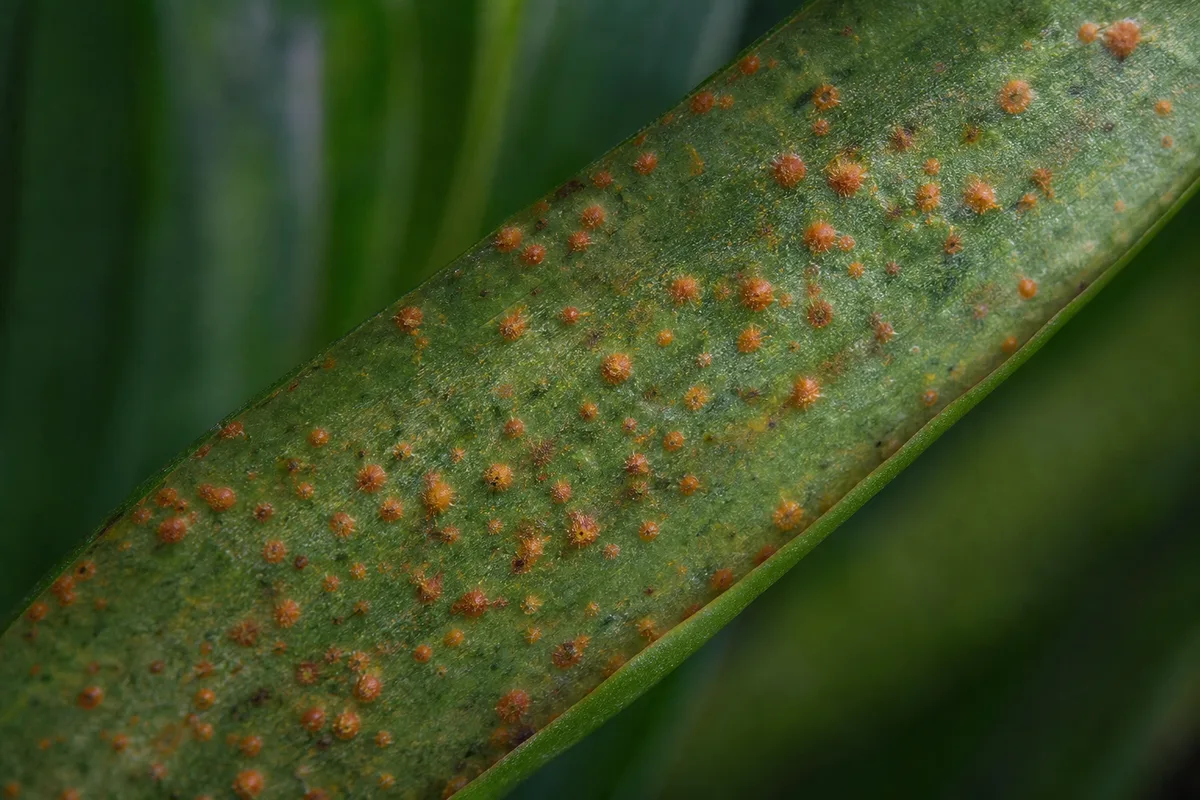
Magnification can reveal whether a mark is raised and powder-producing. It still cannot substitute for host-aware microscopic or laboratory diagnosis.
Prevention and Escalation
Inspect new plants before purchase and again during quarantine. Pay special attention to lower leaf surfaces, where pustules may be hidden. Avoid bringing outdoor plants back indoors without an inspection and separation period.
Clean shelves, trays, and tools, remove fallen debris promptly, and water at the root zone. Keep plant spacing adequate as the collection grows. These routine practices prevent many outbreaks from becoming established before anyone notices them.
Escalate to a plant diagnostic laboratory when pustules are atypical, several plant species are involved, a valuable collection is at stake, or treatment choice depends on the organism. Submit fresh material containing the boundary between healthy and affected tissue, and follow the lab’s packaging instructions.
Ask the laboratory whether it wants loose spores, intact leaves, stems, or the whole small plant before collecting. Package dry foliage so it is not crushed, label each host separately, and never mix samples from several plants in one unmarked bag. Include photographs of the plant in place because spacing, irrigation, and lesion distribution disappear once leaves are removed.
For shared indoor spaces, record who waters and cleans the plants. A rotating routine may explain inconsistent leaf wetness or reuse of tools between specimens. Prevention becomes easier when the care path is visible: one dedicated watering can for quarantine, one cleaning sequence, and one person responsible for tracking new pustules. These operational details are often more reliable than adding another product after every recurrence.
Conclusion
Rust disease is more than an orange spot. Look for raised pustules, powder transfer, aligned symptoms on both leaf surfaces, and a pattern that develops over time. Then isolate calmly, keep foliage dry, reduce crowding, and remove the most infectious tissue without exhausting the plant.
Use fungicide only when the diagnosis and label support it. Cultural changes lower infection pressure; label-directed products may protect new tissue; neither can repair an old lesion. Clean new growth and no additional pustules are the outcome that matters.
When the evidence remains ambiguous or the collection risk is high, testing is more valuable than another guess. A measured diagnosis-first approach protects both the affected plant and every healthy plant around it. Keep the written record with the plant until several cycles of new growth remain clean and structurally normal.
Plants commonly affected
These houseplants often struggle with rust disease. Open a care guide or plant-specific troubleshooting page for tailored fixes.
 Medium
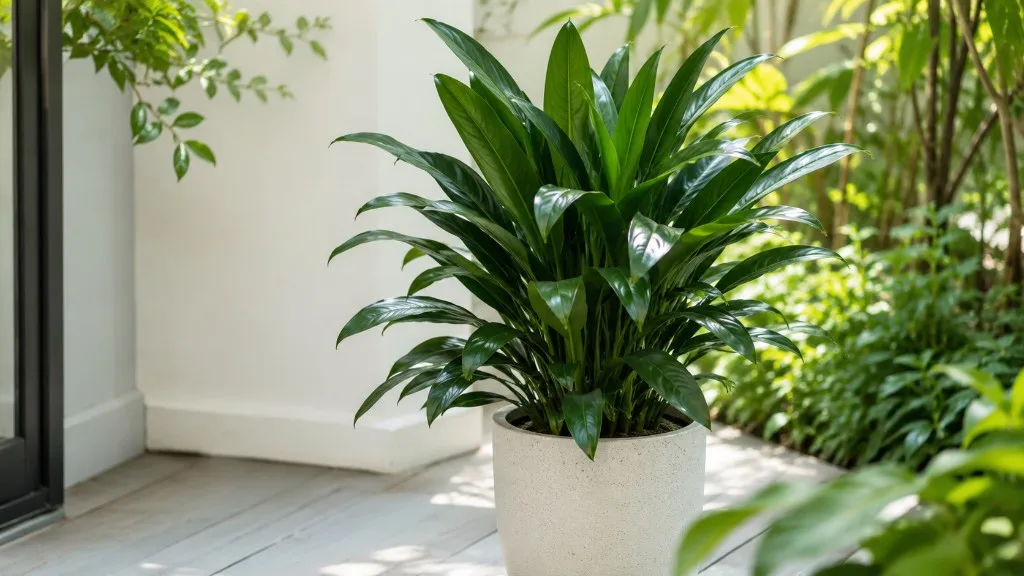
Janet Craig Dracaena
Likely causeJul 7, 2024 · In this article, we’ll explore what rust fungus is, how it affects the Janet Craig Dracaena, and, most importantly, what you can do about it. From identifying the signs to providing the right care, we’ll cover everything you n
Quick fixConfirm diagnosis on your Janet Craig Dracaena, then address the most likely care or pest factor described in current extension guidance.
 Easy
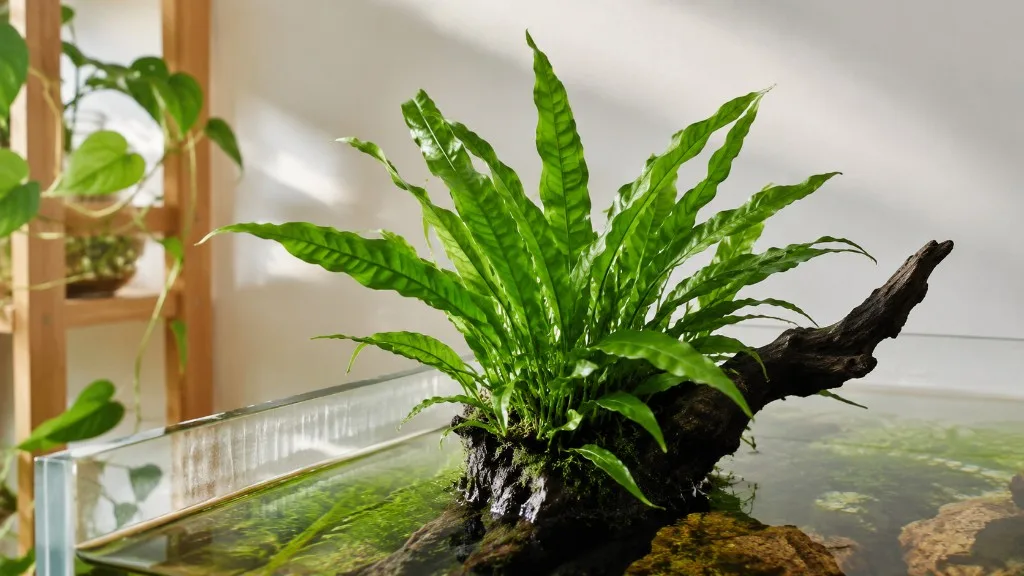
EasyJava Fern
Likely causeSep 28, 2023 · What does it mean when only one or 2 leaves are rust brown? I have had this plant 1 month 22 days.
Quick fixConfirm diagnosis on your Java Fern, then address the most likely care or pest factor described in current extension guidance.
 Medium
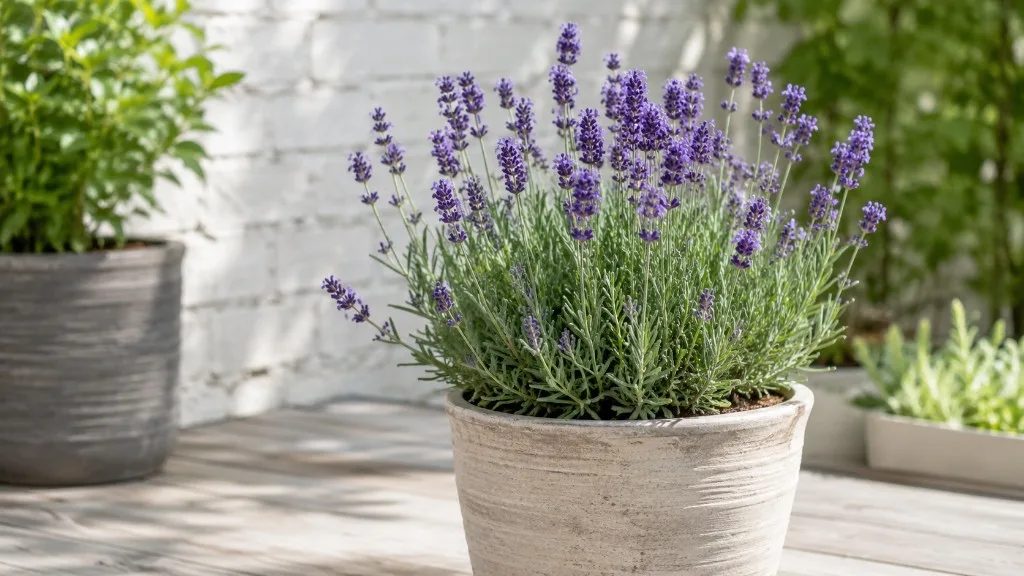
Lavender
Likely causeApr 24, 2026 · The fungus known as Septoria leaf spot can weaken lavender , particularly in humid conditions during late summer and early fall. Quick action is essential once a disease is suspected; identify the disease and take corrective
Quick fixConfirm diagnosis on your Lavender, then address the most likely care or pest factor described in current extension guidance.
 Medium
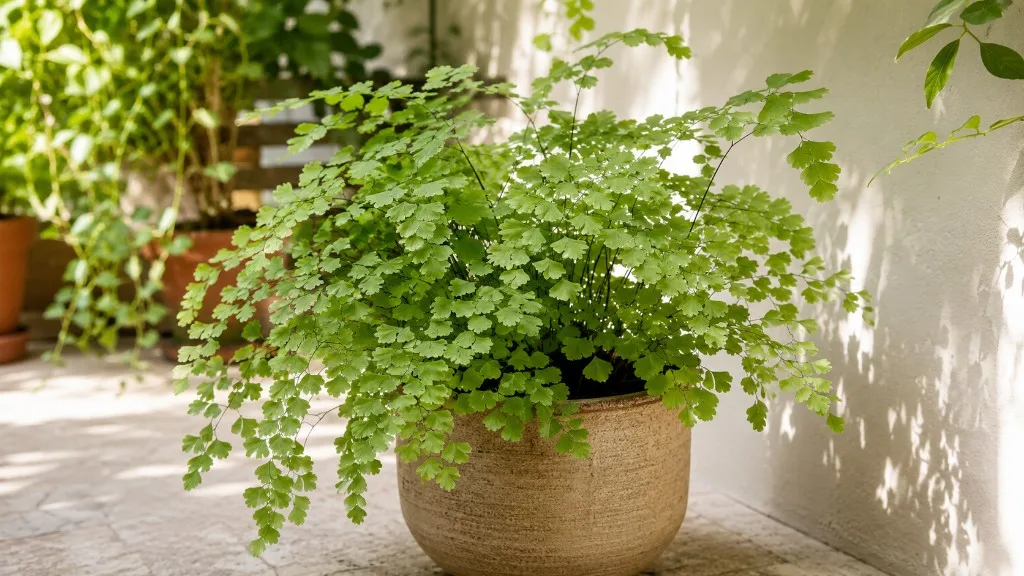
Maidenhair Fern
Likely causeJul 10, 2024 · This article will walk you through everything you need to know about maidenhair fern rust fungus , from identifying the problem to treating and preventing it. We’ll also share some tips on how to keep your ferns healthy and t
Quick fixConfirm diagnosis on your Maidenhair Fern, then address the most likely care or pest factor described in current extension guidance.
 Medium
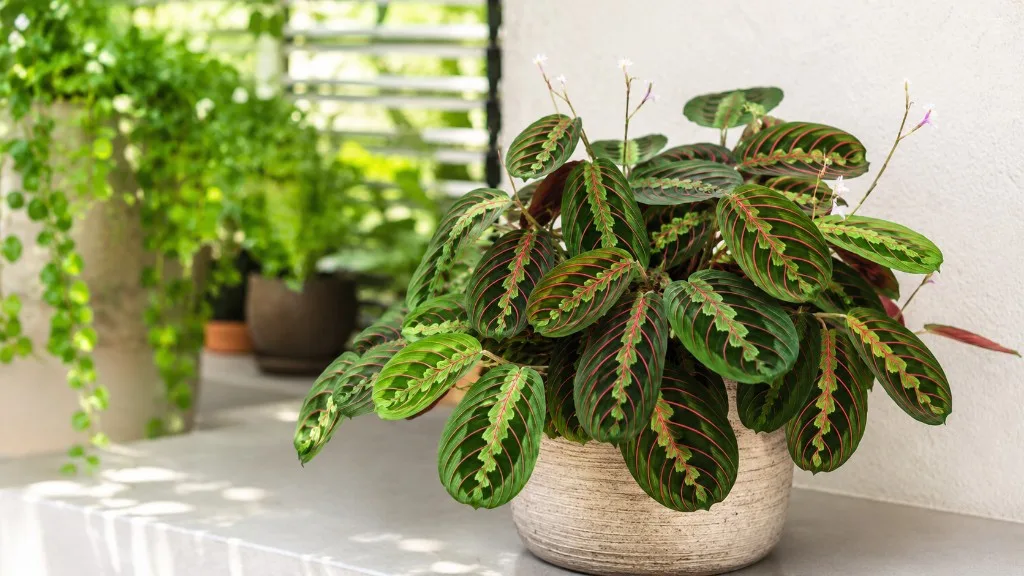
Maranta Leuconeura
Likely causeJul 17, 2023 · Root rot is a serious disease that affects the roots of plants, including the Maranta Red plant. It is caused by overwatering or poorly draining soil, which creates an environment conducive to fungal growth.
Quick fixConfirm diagnosis on your Maranta Leuconeura, then address the most likely care or pest factor described in current extension guidance.
 Medium
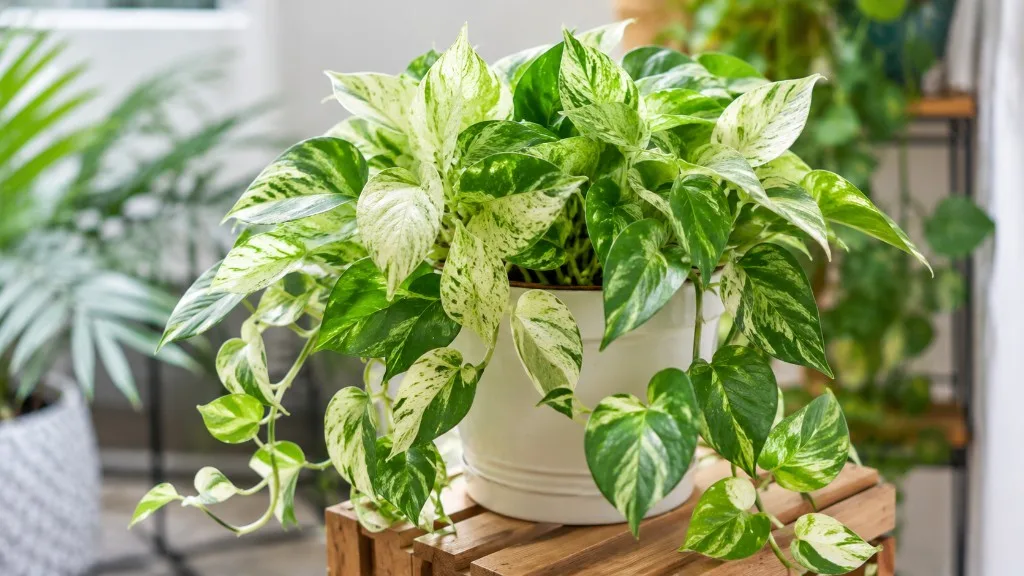
Marble Queen Pothos
Likely causeApr 29, 2026 · These cuttings frequently arrive infected with diseases . This publication addresses identification and treatment of common bacterial and fungal diseases encountered during commercial greenhouse production of pothos. Crop dam
Quick fixFollow extension or botanical guidance for Marble Queen Pothos rust disease; adjust care before applying broad treatments.
 Medium
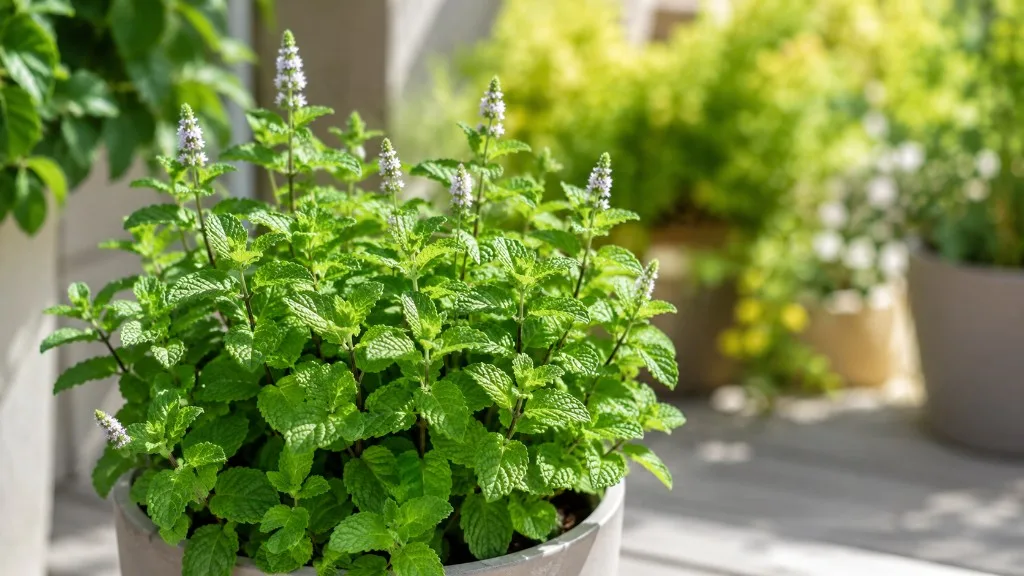
Mint
Likely causePuccinia menthae produces orange-yellow-black pustules on spearmint and peppermint, overwintering in rhizomes.
Quick fixRemove infected shoots before black spores form; divide and replant clean stock in fresh compost away from old beds.
 Medium
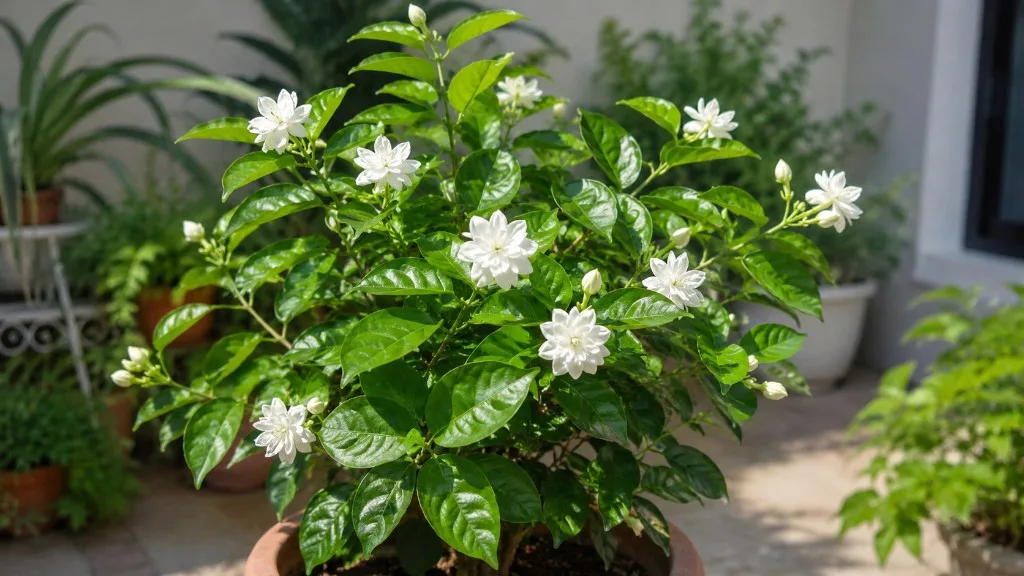
Mogra
Likely causeOct 18, 2023 · Rust and blight are the primary diseases that harm the mogra plant. If you are addressing the signs like de-coloration, foliage wilting, or less blooming, then use a soapy solution or insecticide spray on the infected parts.
Quick fixConfirm diagnosis on your Mogra, then address the most likely care or pest factor described in current extension guidance.
 Medium
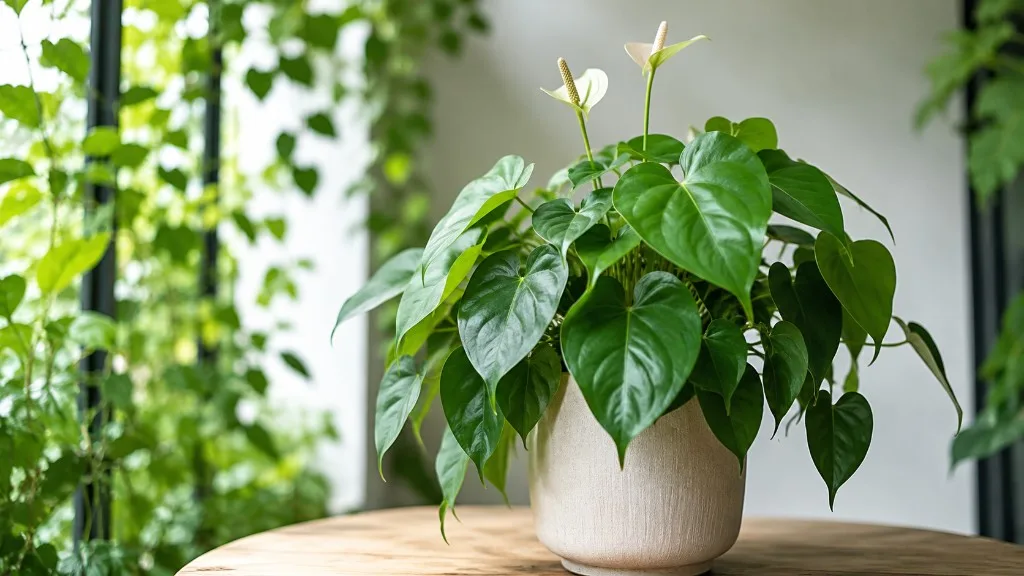
Heartleaf Philodendron
Likely causeJul 6, 2024 · In this blog post, we'll explore what rust fungus is, how to identify it, and, most importantly, what you can do to keep your Heartleaf Philodendron thriving. Whether you're a seasoned plant parent or just starting your plant
Quick fixConfirm diagnosis on your Heartleaf Philodendron, then address the most likely care or pest factor described in current extension guidance.
 Medium
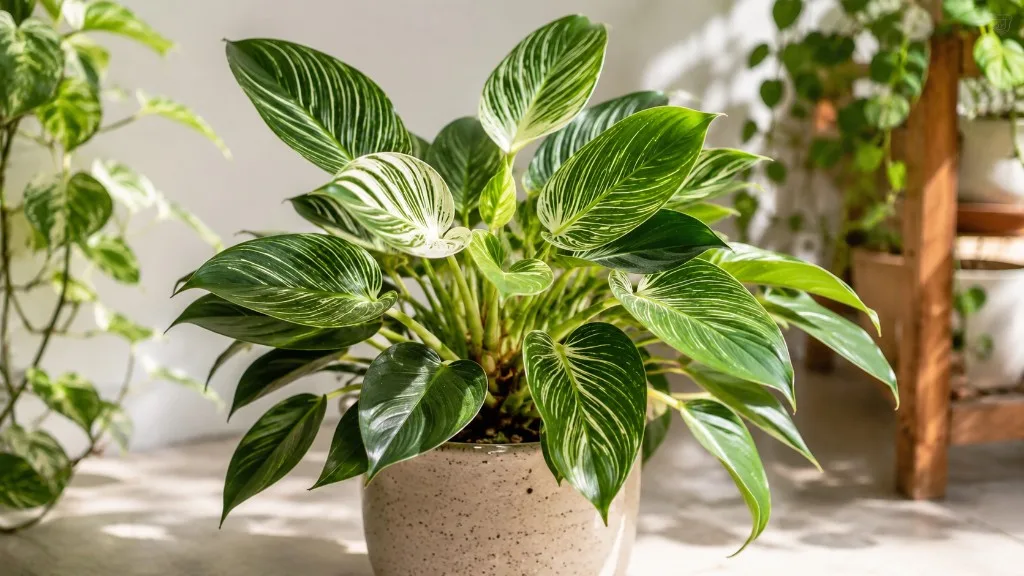
Philodendron Birkin
Likely causeJul 7, 2024 · In this article, we’ll chat about what rust fungus is, how it affects your Philodendron Birkin, and, most importantly, what you can do about it. From prevention to treatment, we’ve got you covered to ensure your plant stays he
Quick fixConfirm diagnosis on your Philodendron Birkin, then address the most likely care or pest factor described in current extension guidance.
 Medium
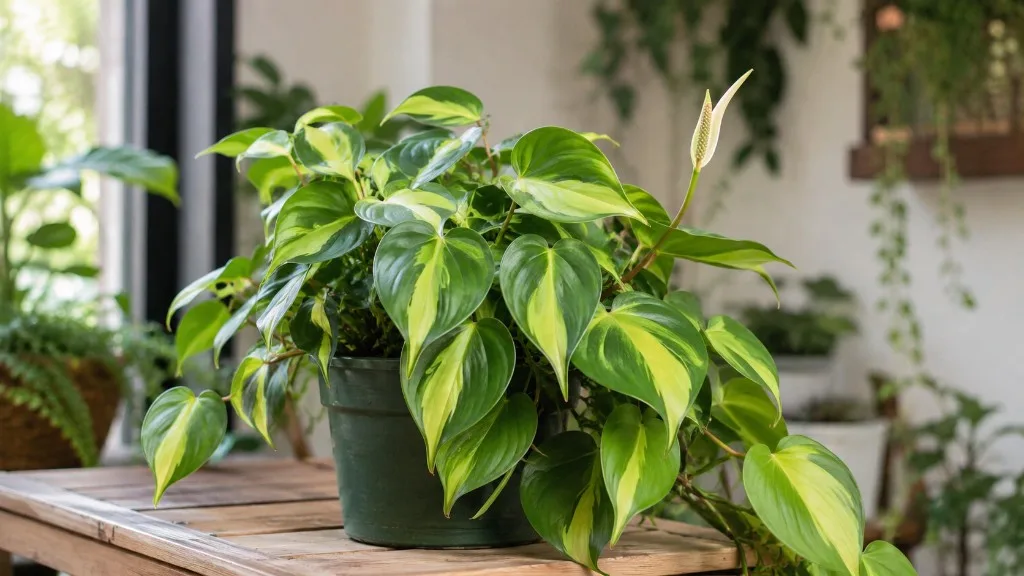
Philodendron Brasil
Likely causeJul 7, 2024 · In this article, we'll cover what rust fungus is, how to identify it, and why it might be showing up on your Philodendron Brasil. We'll also dive into practical steps you can take to treat and prevent this fungus from taking h
Quick fixConfirm diagnosis on your Philodendron Brasil, then address the most likely care or pest factor described in current extension guidance.
 Medium
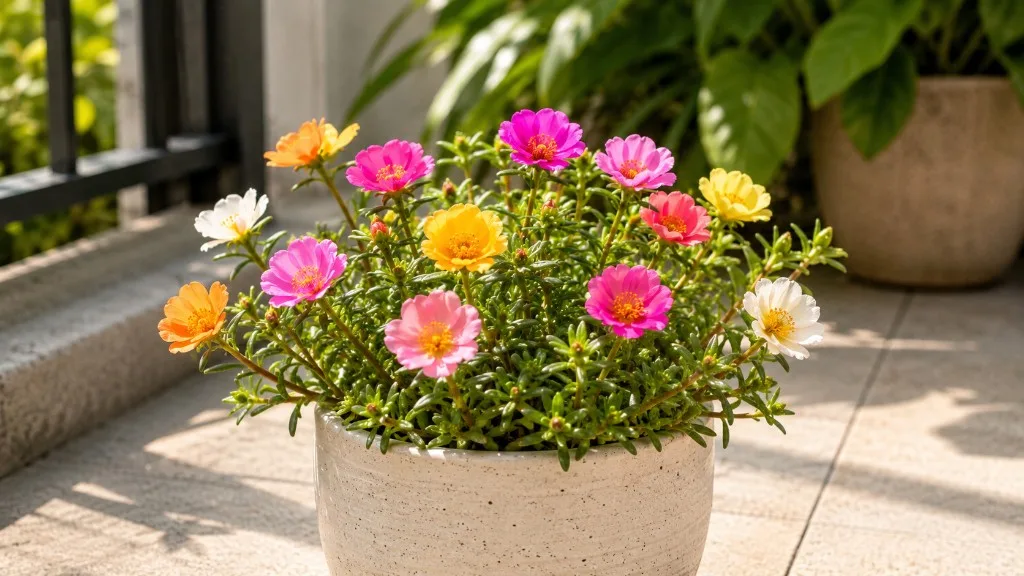
Portulaca
Likely causeJul 25, 2023 · Root rot is a common problem for portulaca plants, especially when grown in poorly drained soil or overwatered. This disease is caused by various fungi that attack the roots, leading to their decay and eventual death. Symptom
Quick fixConfirm diagnosis on your Portulaca, then address the most likely care or pest factor described in current extension guidance.