Rust Disease on Mogra: How to Confirm It and What to Do
Quick answer
On Mogra (Jasminum sambac), suspect true rust only when pale leaf spots develop into raised, powdery orange, brown, yellow, or dark pustules, usually underneath. First inspect several leaf undersides; if you confirm pustules on a few leaves, remove and bag only those leaves with clean snips. Flat rusty-colored marks alone are not enough reason to spray.
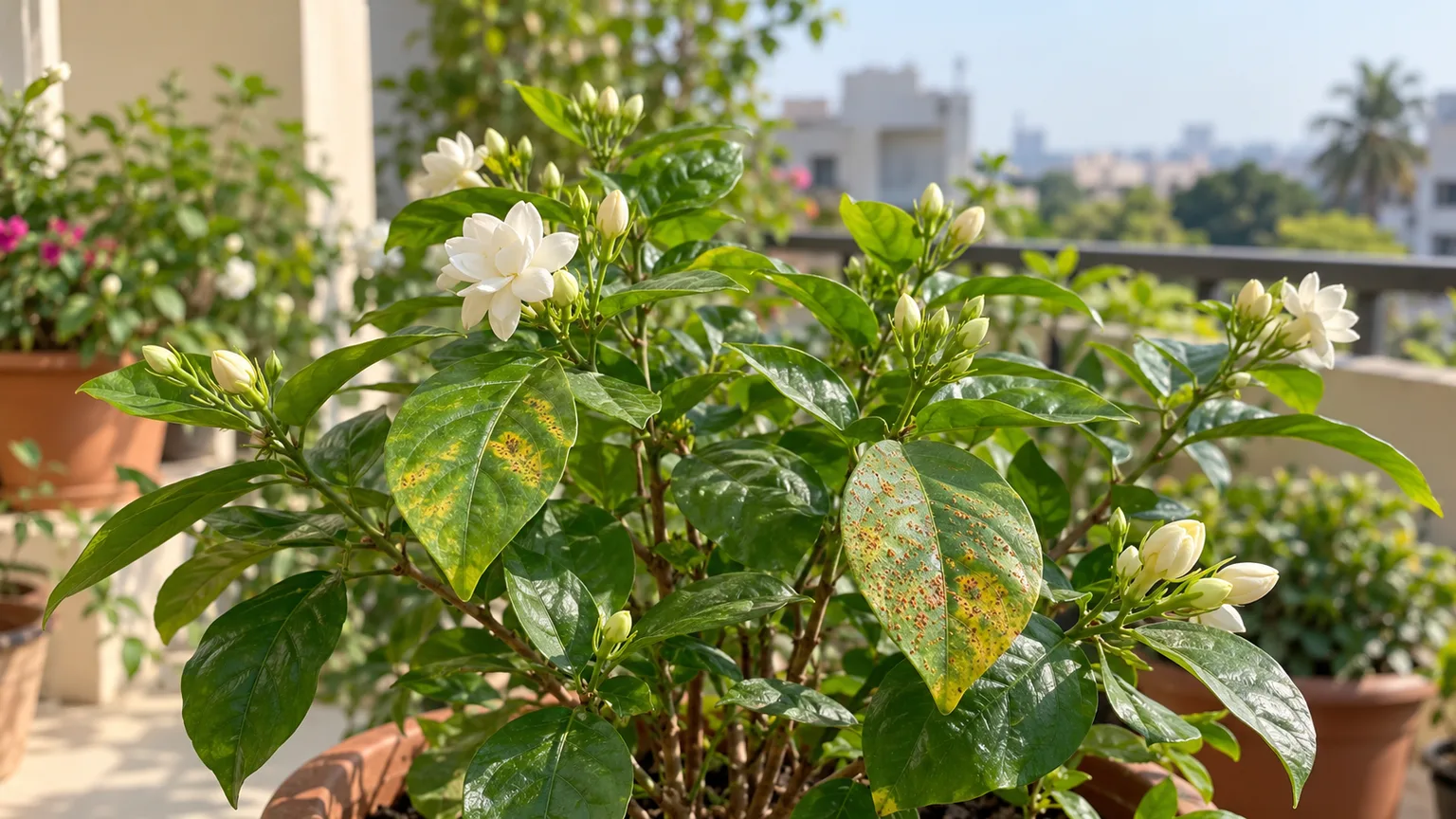
Rust Disease on Mogra: Causes, Checks & Fixes
This guide covers rust disease on Mogra. See also the general Rust Disease guide, watering, and light pages for this plant.
Rust Disease on Mogra: Causes, Checks & Fixes
Quick answer
True rust on Mogra should be treated as a diagnosis to confirm, not a label for any orange, yellow, or brown leaf mark. Turn over several affected leaves and look for small raised, powdery pustules that sit beneath pale spots. If only a few leaves show that pattern, the first fix is to remove those leaves with clean snips and bag them; because rust is a fungal disease, soap or insecticide is not a targeted treatment.
Mogra is Arabian jasmine, Jasminum sambac, as confirmed by the UF/IFAS plant record. Use the signs below to decide whether the problem actually resembles rust before changing the plant’s care; a leaf pattern alone cannot identify the exact rust species or prove that a particular rust is established on Mogra.
What rust looks like on Mogra leaves
Mogra’s smooth, glossy green leaves, noted in Arabian jasmine care guidance, make the underside worth checking carefully: rotate the leaf toward the light instead of judging the upper surface alone. A classic rust pattern begins as pale or yellowish spots and develops into raised spore pustules, most often on the lower surface. Pustules may look orange, rusty brown, yellow, black, or even pale depending on the rust species and stage; color by itself is not diagnostic. The Royal Horticultural Society’s rust guide describes this lower-surface pustule pattern across garden plants.
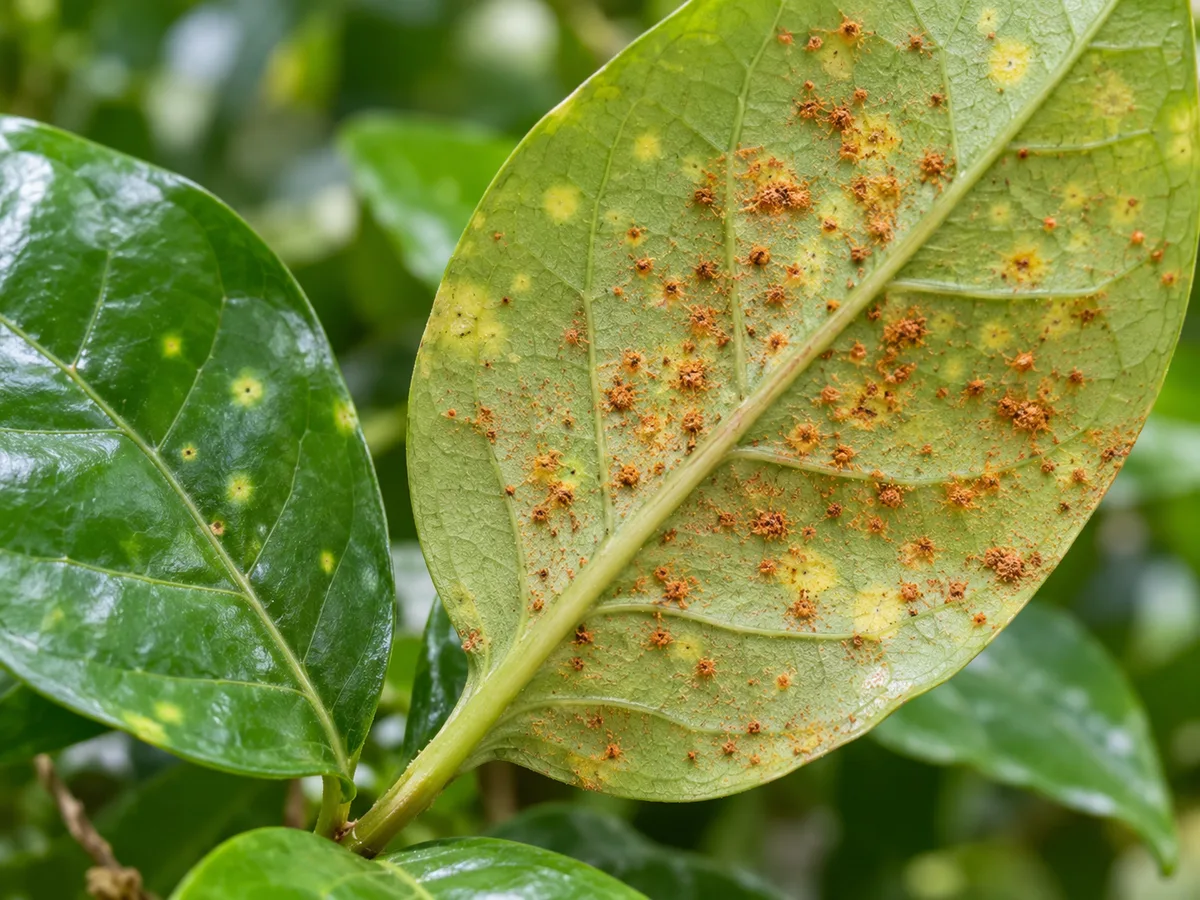
Rust is more likely when raised powdery pustules appear under pale spots; a flat brown patch alone does not confirm it.
On a Mogra, note which parts of the canopy are affected. A few older leaves with pustules and a firm, normally growing shoot tip suggest a localized leaf problem. Widespread spots on leaves at several heights, early yellowing and leaf drop, or similar symptoms on nearby jasmine plants deserve closer attention. Even then, the appearance supports a suspected rust diagnosis rather than telling you which fungus is involved; rust fungi often have narrow host ranges, and different rusts can look alike.
Do not rub every lesion with a finger. If you need to check whether a spot leaves colored dust, test one suspect leaf over a disposable white tissue, then discard it and wash your hands. A powdery transfer supports the possibility of a spore-producing lesion, but it is not a lab identification and should not be used to declare that Mogra rust is confirmed; the rust pustules are spore-producing structures.
First check: separate rust from Mogra’s lookalikes
Before treating anything, inspect both sides of at least five affected leaves, including one that is still mostly green. Use a phone light or bright window light. Look for a repeated pairing: pale or yellow marks above and raised, dusty pustules below. If you see only flat discoloration, holes, webbing, sticky residue, or dry edges, pause and investigate another cause instead of removing healthy leaves.
Check whether the marks are physically raised. Try wiping one isolated mark with a damp, clean cotton swab; if it disappears without a lesion remaining in the leaf tissue, treat it as a possible surface deposit. A flat mark that stays in the leaf but has no raised powdery pustule still does not confirm rust. Rust pustules often recur in clusters and produce spores, as described in the general rust guide. If lesions are dark, wet-looking, sharply edged, or rapidly expanding, ask for a local diagnosis before assuming rust; other leaf problems may need a different response.
Photograph the same leaf from above and below, and mark the date. Keep the plant separate from other Mogra or jasmine plants while you check whether fresh lesions appear. Rust species vary in the plants they infect, and many rusts have limited host ranges, so a rust-like spot does not mean every plant in the room is at risk.
Why a warm, crowded Mogra canopy can stay wet
Rust is a fungal disease, but it is not created by poor watering at the roots. Prolonged wetness on leaves can favor infection, so a Mogra kept close to other pots, under a roof drip, or in a dense corner that stays damp after rain may have foliage that takes too long to dry. The rust overview recommends faster leaf drying and good air circulation as part of rust prevention.
This matters for Mogra because owners often keep it on a sunny balcony or in a warm, sheltered spot for flowering. Good light and regular moisture at the roots are appropriate for the plant; that does not mean the leaves should stay wet overnight. NC State Extension’s jasmine profile describes jasmines as needing bright light and moist, well-drained soil. Keep that distinction in mind: correct the way the canopy dries, not the root-zone watering schedule, unless the soil check independently shows a problem.
Humidity readings alone cannot confirm rust. A humid room with moving air and dry leaves may be less concerning than repeated rain or overhead watering that leaves the canopy wet for hours. Likewise, an old, crowded Mogra may hold dampness inside its foliage, but the presence of dense growth is a risk clue, not proof that the spots are fungal.
First fix: remove only a few confirmed rusted leaves
If you find true-looking powdery pustules on only a small number of Mogra leaves, remove just those leaves. Use clean, sharp snips and cut the leaf stalk without tearing the nearby shoot. Put the material directly into a bag and discard it rather than carrying loose infected leaves through the garden. The RHS recommends limited leaf removal, because stripping many leaves can do more harm than good.
Do not prune healthy Mogra branches simply to make the shrub look tidy. Arabian jasmine is grown for its flowers, and jasmine flower buds can be affected by pruning timing; Arabian jasmine care guidance recommends pruning after flowering. If rusted leaves are attached to otherwise healthy flowering shoots, remove only the infected leaves and leave the shoot structure intact unless an expert identifies a more serious infection.
Clean the snips after the small removal and wash your hands. Do not mist the plant, rinse the canopy, or apply a homemade soap mixture as a substitute for diagnosis. Recheck the marked leaves in three to five days and then weekly. The goal is not to make old spots disappear; it is to stop adding fresh symptomatic leaves while preserving enough foliage for Mogra to keep growing.
When more of Mogra’s canopy is affected
If rust-like pustules occur on many leaves, do not defoliate the plant in one session. Removing too much leaf area can weaken a flowering shrub, while a mistaken diagnosis may leave the real problem untouched. Photograph the pattern, keep the plant away from nearby jasmines, remove fallen leaves, and seek a local plant clinic or extension service for confirmation before using a fungicide.
Fungicide choices depend on location, label, crop or ornamental category, and use site. The RHS fungicide guidance favors cultural management over default home-garden use; it is not a product list for every country. Avoid the stub’s suggestion to apply insecticide or soapy solution: those are not a targeted treatment for a confirmed fungal rust. If a qualified local source recommends a fungicide, follow the exact label for Mogra or the applicable ornamental plants and for outdoor or indoor use; never improvise a concentration or repeat interval.
For a container Mogra, check the soil separately before changing watering. If the mix remains saturated or smells sour, follow the plant’s watering guidance and inspect drainage; do not infer root rot just because leaves have spots. A well-draining mix is important for jasmine, but repotting a stable plant will not remove a leaf infection and may add stress.
Mogra-specific lookalikes to rule out
Several problems can leave Mogra with colored leaves, but they do not show the paired spot-and-pustule pattern expected from rust. NC State lists common jasmine pests, so use this table to route the next check instead of applying one broad spray.
| What you see | More likely direction | What to do next |
|---|---|---|
| Orange or brown raised powdery bumps under pale spots | Suspected rust | Remove a few affected leaves only; document both surfaces and ask for identification if it spreads. |
| White or gray surface growth without orange or brown pustules | Powdery mildew or residue | UC ANR describes powdery mildew as white powdery growth; compare with the Mogra powdery mildew guide. |
| Fine stippling, tiny moving specks, or delicate webbing | Possible spider mites | Colorado State describes spider mite signs on houseplants; inspect leaf undersides and use the Mogra spider mite guide if you find active mites. |
| Clusters of small insects on soft tips, sometimes with sticky residue | Aphids | Inspect new shoots and flower buds; Colorado State lists aphids among common houseplant pests, and the Mogra aphid guide covers a confirmed infestation. |
| Flat brown patches on the sun-facing side, with no powdery underside lesions | Sun or heat injury | Review recent exposure against the Mogra light guide before moving it abruptly into shade. |
| General yellowing or leaf drop without pustules | Root moisture, light, age, or another issue | Compare with yellow leaves on Mogra and check soil moisture at root depth. |
These are field clues, not a guarantee. If the marks do not match one row clearly, keep photos and avoid stacking treatments: rust, leaf spot, pests, and water stress can overlap on a stressed Mogra.
Protect Mogra’s next flowering flush while it recovers
Rust lesions will not turn back into healthy green tissue. A damaged leaf may remain speckled, yellow, or eventually drop after you remove the source of new spores. Recovery is shown by no new pustules on clean leaves, stable stems, and continued growth from the shoot tips—not by the oldest spotted leaves becoming perfect again.
Jasmine flowers are borne on established growth, so aggressive pruning can cost more than the affected foliage. NC State’s jasmine pruning guidance recommends pruning after flowering to preserve the next bud set. Keep cuts limited to infected leaves unless branches are dying or a local diagnosis indicates otherwise. For routine shaping, use the plant’s normal flowering cycle and the Mogra pruning guide rather than cutting back every stem as a disease treatment.
During the next two to four weeks, inspect the same areas once a week and record whether new lesions appear. If no fresh pustules develop and the plant retains firm green shoots, return to ordinary care without adding fertilizer to “push” recovery. If symptoms continue to spread or the shrub loses a large portion of its leaves, seek a diagnosis; the correct response depends on which pathogen or noninfectious problem is actually present.
Prevent rust without keeping Mogra thirsty
Aim to shorten how long leaves stay wet while preserving the root conditions that support flowering. Water the soil when its surface begins to dry according to the pot and weather; do not skip necessary watering just because rust is suspected. Direct the watering can toward the mix, avoid routine misting, and let rain-wet foliage dry in open air. Keep pots from touching and avoid trapping the Mogra between a wall and dense neighboring plants. Good air circulation is part of the rust prevention advice.
Mogra performs best in bright light and moist but well-drained soil, and its container mix should not remain waterlogged. Arabian jasmine care notes distinguish regular moisture from soggy soil. If the plant spends the cool season indoors, place it where it gets strong light and enough air movement around the foliage.
Remove fallen leaves from the pot surface, and do not reuse them as mulch around the same plant. When you prune after flowering, clear debris and clean the blades before moving to another jasmine. Avoid excess nitrogen fertilizer: lush, soft growth is not a substitute for disease control and can be more vulnerable to rust colonization, as the RHS rust guide explains.
When to ask for a local diagnosis
Get expert confirmation when most leaves are affected, new leaves develop pustules soon after old leaves are removed, stems become weak, or the plant declines despite dry foliage and normal root care. Also ask for help when the spots look water-soaked or black rather than powdery, since other leaf diseases may need different management. A phone photograph may be enough for triage, but include a clear view of the upper and lower surfaces and the whole Mogra canopy.
Bring the name Jasminum sambac, the first date you noticed symptoms, recent rain or overhead watering, and any spray or fertilizer already used. If the plant is in a nursery pot inside a decorative cover, mention whether water collects in the outer pot. Do not apply a broad insecticide or fungicide while waiting; an unnecessary spray can complicate identification and may injure foliage.
When to use this page vs other Mogra guides
Use this page only when spots are paired with raised, powdery pustules on the lower surface of Mogra leaves. If the plant has a white surface coating, use the Mogra powdery mildew guide; if you see stippling or webbing, use the spider mite guide. When the main sign is yellowing without pustules, compare the yellow-leaf guide and review the Mogra overview for the normal light and moisture rhythm.
For broader plant-problem diagnosis, the Mogra problems hub maps the other causes covered for this plant. Use the general rust disease guide for rust identification principles across plants; the Mogra page is for checking this particular jasmine and protecting its flowering shoots.
Related Mogra guides
- Mogra overview — use it to check the plant’s normal growth and flowering conditions before changing several care variables.
- Mogra light guide — use it when growth is weak or the pot was recently moved; it helps you assess exposure without confusing shade stress with rust.
- Mogra watering guide — use it when the root mix stays wet or dries unevenly; rust pustules themselves do not tell you when to water.
- Mogra soil guide — use it when drainage or mix texture is the separate concern.
Related tool
Use the Plant Problem Diagnosis Tool to compare likely causes before changing multiple parts of Mogra’s care at once.