Distorted Leaves on Mogra: Causes, Checks & Fixes
Quick answer
If Mogra's newest leaves are continuing to twist or pucker, first separate the pot from nearby plants while you inspect the affected shoot tips. Look for feeding scars, black specks, clustered insects, or a recent care change before pruning, spraying, or repotting.
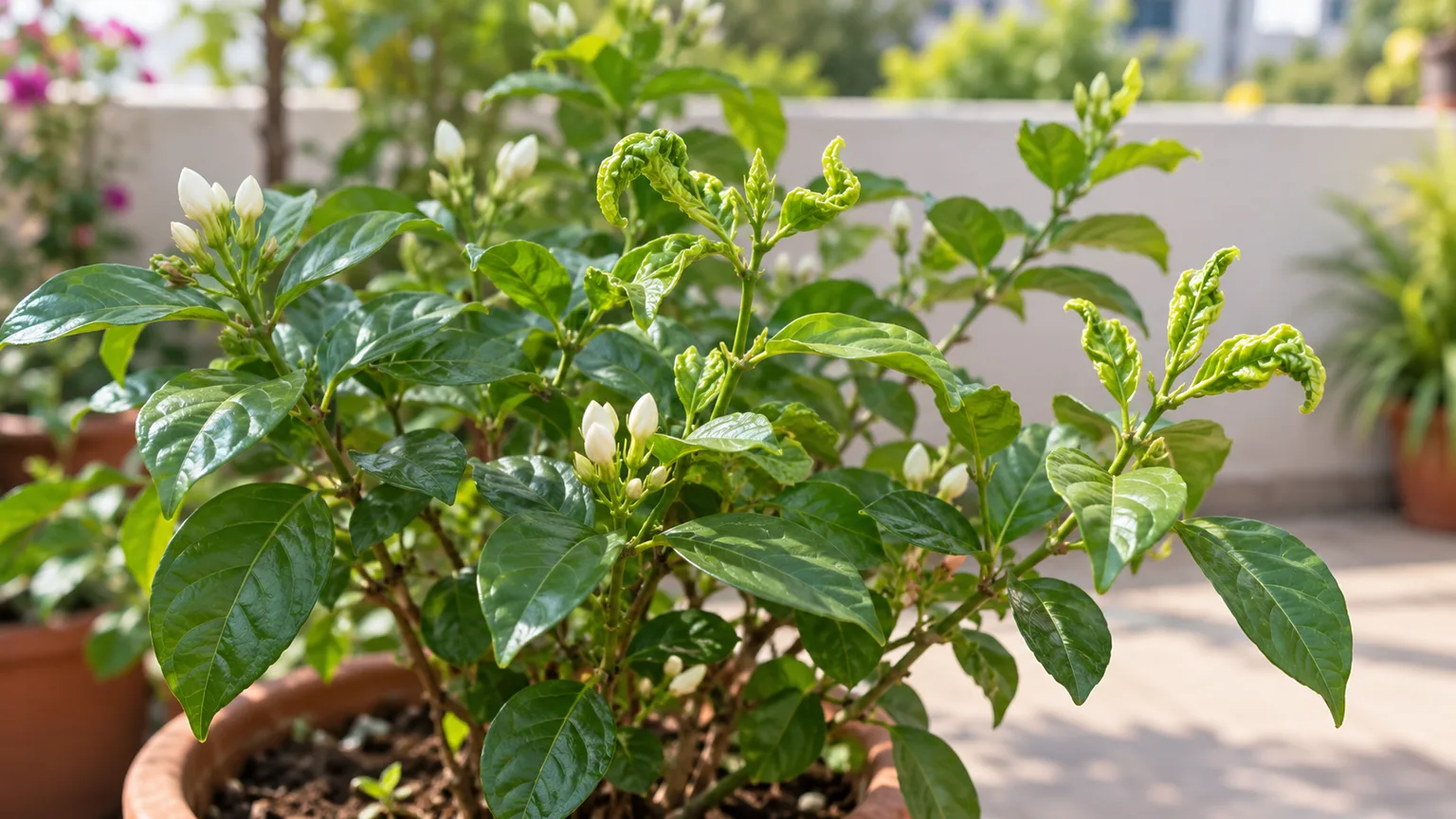
Distorted Leaves on Mogra: Causes, Checks & Fixes
This guide covers distorted leaves on Mogra. See also the general Distorted Leaves guide, watering, and light pages for this plant.
Distorted Leaves on Mogra: Causes, Checks & Fixes
Quick answer
When a Mogra’s newest leaves keep emerging twisted, puckered, or uneven, first move the pot away from foliage it touches. That gives you time to inspect the affected tips and reduces contact while you work out what the pattern means; thrips can move on plants.
Distortion is a symptom, not a diagnosis. Check the newest leaves, their undersides, and the stem tip for feeding marks or insects; then compare the timing with a recent move, pruning, watering change, or spray. Do not prune the whole shrub, add fertilizer, or apply a pest product based on one odd leaf. The global distorted-leaves guide explains the general symptom; the checks below focus on Mogra, also sold as Arabian jasmine (Jasminum sambac), a shrub or vine native to tropical Asia according to the UF/IFAS profile.
What distorted leaves look like on Mogra
On Mogra, the clearest warning is a pattern in leaves that are still unfolding: one or more young leaves may look pinched, puckered, asymmetrical, twisted, or smaller than the next healthy leaf on the same stem. The mature leaves may remain flat and green. A single leaf that was trapped against a wall, tied branch, or pot rim can be misshapen without the plant having an active pest or disease problem.
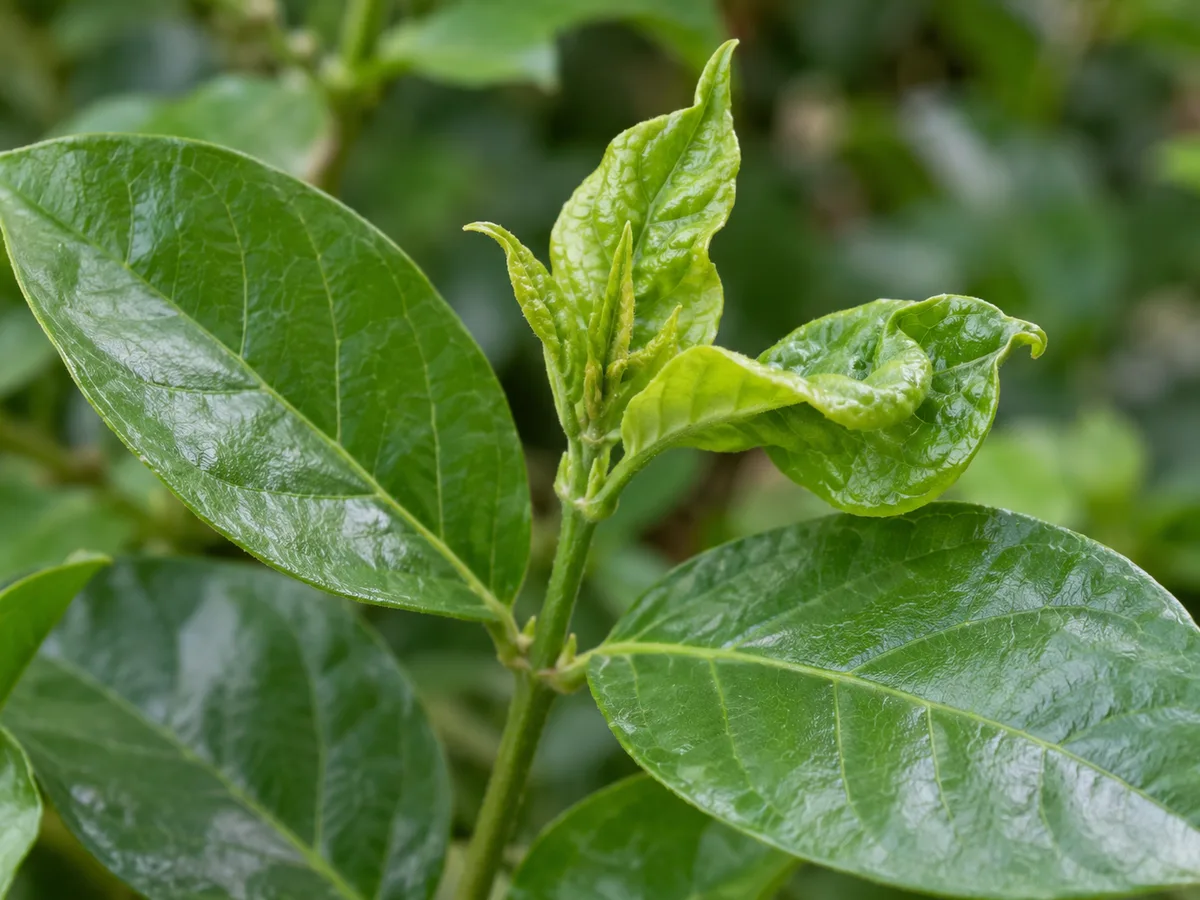
Mild distortion on an expanding shoot is a reason to inspect the new growth, not proof of a particular pest.
Look at the whole shoot, not only the most dramatic leaf. If the same kind of damage appears on several fresh tips, or every new leaf is more distorted than the one before it, the plant is giving you a useful trend. Note whether the damage is only on the softest growth or whether older leaves have developed spots, yellow patches, bronzing, or dry margins too. The symptom pattern can narrow the search, but it cannot identify a pest by itself.
Compare the affected Mogra shoot with its next flush
Mogra can be grown as a shrub or vine, so compare new shoots on more than one branch; the Jasminum sambac assessment records both growth habits. If one exposed tip is distorted while nearby tips are normal, look for a local trigger such as a trapped leaf, an insect feeding on that shoot, or recent spray contact. If several tips change at once, check the whole plant and note any shared exposure or recent move.
Thrips often feed in buds and shoot tips, and their injury may become visible only after tissue expands, according to UC IPM. Follow one affected branch from its newest folded leaves down to the mature leaves; use a phone zoom or hand lens to check the folds and undersides. Feeding can leave pale scarring, stippling, distorted tissue, or dark specks. Gardening Know How describes distorted plant parts and black specks as possible signs, while The Spruce notes the damage can resemble disease or a nutrient problem.
Take a dated photo of the shoot and revisit it in about a week. Record whether Mogra was recently pruned, moved indoors, shifted into stronger sun, repotted, fertilized, or sprayed. These details do not prove causation, but they help separate a one-time injury from a pattern that is still spreading.
Causes to check on Mogra
Thrips feeding on a soft tip
Thrips are plausible when the newest Mogra leaves are distorted and also show pale scarring, stippling, or dark specks. They can hide in buds and shoot tips, so damage may be easier to see than the insect. To look for live thrips, gently shake a branch over white paper; UC IPM recommends this monitoring method. A speck or trap capture alone does not prove the insects caused the damage, so look for matching feeding marks on another shoot before acting.
Aphids, spider mites, or broad mites
Clusters of small insects on soft tips put aphids on the list. Spider mites can also cause overlapping leaf marks; NC State’s Jasminum pest list names aphids and spider mites. Broad mites are another possibility when terminal growth becomes twisted or hardened. NC State lists jasmine among broad-mite hosts and describes distorted terminal growth from feeding. These mites are under 0.3 mm long and hard to see without magnification, so the NC State broad-mite note supports treating this as a possibility for Mogra, not a diagnosis from leaf shape alone.
Root-zone stress or a care change
Distorted leaves alone do not prove overwatering, underwatering, or root rot. If the pot stays heavy, the mix smells sour, several leaves yellow, or stems soften near the base, inspect the root zone before changing the schedule. If the mix is dry well below the surface and the plant is limp, water thoroughly and let excess drain. Mogra needs bright light and a moist but well-drained root zone; NC State’s Jasminum guidance supports those broad conditions and lists root rot as a possible problem in the genus.
A recent move, a change in sun, or inconsistent watering can line up with a damaged flush without being the cause. Other factors can mimic thrips injury, including weather, inadequate care, pathogens, and other invertebrates. Compare leaves formed before and after the change, and review the Mogra watering routine and light placement before adding fertilizer. If the mix stays wet and the roots are soft or dark, use the Mogra soil guide to assess drainage; do not repot just because one leaf is crooked.
Contact or handling injury
A leaf bent against a support, trapped under another branch, or rubbed while soft may develop unevenly. Check whether the damage aligns with a tie, screen, shelf, or recent move. Also record any foliar product or nearby spray as a competing exposure; timing is a clue, not proof. Do not apply a second product to cancel the first one. If later Mogra leaves distort too, keep looking for an active cause instead of assuming the original contact explains the whole pattern.
A careful confirmation path before treatment
Work through these checks in order so the evidence stays readable:
- Map the pattern. Is distortion on one leaf, one branch, several tips, or nearly every new leaf? Photograph an affected branch instead of pruning it immediately.
- Inspect the soft growth. Check leaf folds, buds, and undersides for slender insects, clusters, pale scarring, stippling, sticky deposits, or webbing. Use magnification if available and check a second branch if nothing is visible.
- Check the root zone only if other clues point there. Feel the top layer of mix, lift the pot to judge whether it is still unusually heavy, and make sure drainage holes are open. Unpot only when there are accompanying signs such as persistent wetness, sour odor, widespread yellowing, or a soft stem base.
- Compare recent changes. Note recent pruning, a move indoors or outdoors, a change in light, a spray, a feeding, or a repot. Look for a clear timing match; do not assume the last change caused the problem just because it happened recently.
- Wait for the next leaf to expand. If the plant is otherwise firm and stable, the next new leaf is a better test than trying to flatten damaged tissue. Check whether the same mark recurs or whether growth resumes normally.
If clues point in different directions, pause. A pest treatment will not repair root stress, and extra water will not remove insects from a folded shoot. Use the Mogra problems hub to compare symptoms before choosing a cause.
The first fix: isolate Mogra while you confirm the cause
If distortion is still appearing on fresh leaves, place the pot where it does not touch nearby plants for a short observation period. Keep its light and airflow similar; isolation does not mean moving Mogra into a dark corner or enclosing it in a humid bag. This gives you time to inspect while limiting contact if a mobile pest is involved.
After isolating it, inspect before treating. If you find feeding pests, rinse affected leaves and tips gently with clean water, supporting the branch so tender leaves are not torn; UC IPM recommends water rinsing among thrips-management options. Recheck other tips after the foliage dries. Remove only dead or severely damaged tissue; leave healthy leaves while the cause is uncertain.
If no pest is visible and the roots are firm, keep the care routine steady rather than changing several conditions at once. Correct one confirmed mismatch: restore bright light gradually if the plant has been in deep shade, or let an over-wet mix dry appropriately before watering again. If root damage is evident, address drainage and remove only clearly rotten material; that is the situation in which repotting may be justified. A broad spray, hard pruning, fresh fertilizer, and emergency repot on the same day would erase the evidence and add stress.
What recovers and how long it may take
A leaf bent or damaged while expanding may stay misshapen. Damage persists until new growth appears, according to UC IPM. Broad-mite damage may also persist after mites are gone, according to NC State Extension. Recovery means new damage has stopped, stems remain firm, and later Mogra leaves open in a more typical shape. Compare dated photographs rather than relying on memory.
The first useful sign is a clean next leaf, followed by a second healthy flush. The timing depends on whether Mogra is actively growing, so check the next leaf and following flush rather than expecting a specific day-count. If new growth stalls, revisit light and root-zone conditions. Keep the routine steady while you watch for that next flush.
Escalate the diagnosis if distortion appears on more branches, older leaves develop expanding lesions, the plant sheds leaves rapidly, or the stems begin to soften. Take dated photos of the same two or three shoot tips, include the whole plant and pot, and share the watering and spray history with a local extension service or experienced horticulturist. If a pest is confirmed but a rinse does not stop new damage, ask for species-level identification before considering a pesticide. UC IPM’s flowering-plant pesticide caution is relevant because some thrips products can harm pollinators.
Mistakes that make Mogra harder to diagnose
- Do not treat the shape alone. A curled or puckered leaf is a clue, not a pest diagnosis. Look for a second sign such as visible insects, characteristic feeding marks, or a clear timing pattern.
- Do not fertilize a distorted flush as a test. Feeding will not correct a pest, damaged root, or leaf that was physically injured, and excess fertilizer can create a new problem that obscures the original one.
- Do not repeatedly peel open tender leaves. Use a phone zoom or a lens instead of forcing a folded leaf apart, and inspect another tip if you cannot see clearly.
- Do not hard-prune the shrub before you know whether the damage is spreading. Cutting off all of the affected ends removes the best evidence and can delay the next comparison. Remove only dead, broken, or confirmed heavily infested tissue.
- Do not repot because one branch is misshapen. Repotting is for a root or soil problem supported by evidence, such as persistently wet mix, a sour smell, failing drainage, or soft roots.
- Do not add several sprays or home remedies at once. A mixture makes it hard to tell which change helped or what the plant reacted to. If a pesticide becomes necessary, confirm the pest first and follow the product label.
Prevent distorted new growth on Mogra
Inspect each new Mogra flush while the leaves are still small enough to examine. Check the undersides and folds, then note whether the stem tip is clean, sticky, scarred, or distorted. This light-touch check is more useful than a fixed weekly spray because it gives you a comparison between healthy and affected shoots without exposing the plant to unnecessary products.
Keep Mogra in a stable bright position and water according to the mix’s actual dry-down. If you adjust the plant from indoor shade to stronger sun, do it gradually and watch the next flush. Avoid letting the pot stand in runoff or swinging between a saturated mix and prolonged drought. The Mogra overview summarizes its preferred care.
After a Mogra flowering prune
If you have just pruned Mogra, note which stems are producing the next leaves and whether distortion is isolated to one tip or repeats across the plant. Avoid repeatedly trimming every uneven leaf before you have inspected it. For pruning timing and technique, use the Mogra pruning guide.
When Mogra moves indoors for a cool season
If you shift a balcony-grown Mogra indoors as weather cools, record the date and check the first new leaves for pests. NC State’s indoor-winter pest note says insect and disease problems may be more likely on Jasminum brought indoors; keep Mogra bright and inspect leaf undersides more often during the transition.
When to use this page vs other Mogra guides
Use this guide when Mogra leaves are physically misshapen, especially if the newest tips are twisted or puckered. If yellowing is the main change, compare the watering and soil conditions; if you see clear pests, use a pest-specific diagnosis rather than treating “distorted leaves” as the final answer. The Mogra problems hub groups related symptoms.
A useful distinction is whether the leaf surface developed unevenly or carries a separate mark. Spots, powdery coating, widespread yellowing, or webbing are different clues and need their own diagnosis. If distortion repeats across flushes but you cannot find insects, spray exposure, or a root problem, share dated photos with a local extension service rather than diagnosing from one image.
Related Mogra guides
- Mogra overview: use for the whole care baseline and plant profile.
- Mogra watering: use when pot weight, soil dryness, or drainage does not match the plant’s needs.
- Mogra light: use when growth is weak after a move or the plant spends most of the day in deep shade.
- Mogra soil: use when the mix stays wet, compacts, or drains poorly.
Related tool
Use the Plant Problem Diagnosis Tool to compare the leaf pattern with Mogra’s care and pest clues before changing more than one condition.