Draft Stress on Mogra: Causes, Checks & Fixes
Quick answer
Draft stress is plausible when a Mogra starts declining soon after a cold or hot air stream reaches one side of the plant. Move it first to a bright, warm, steady location away from direct airflow; then check soil moisture and watch whether damage stops before changing anything else.
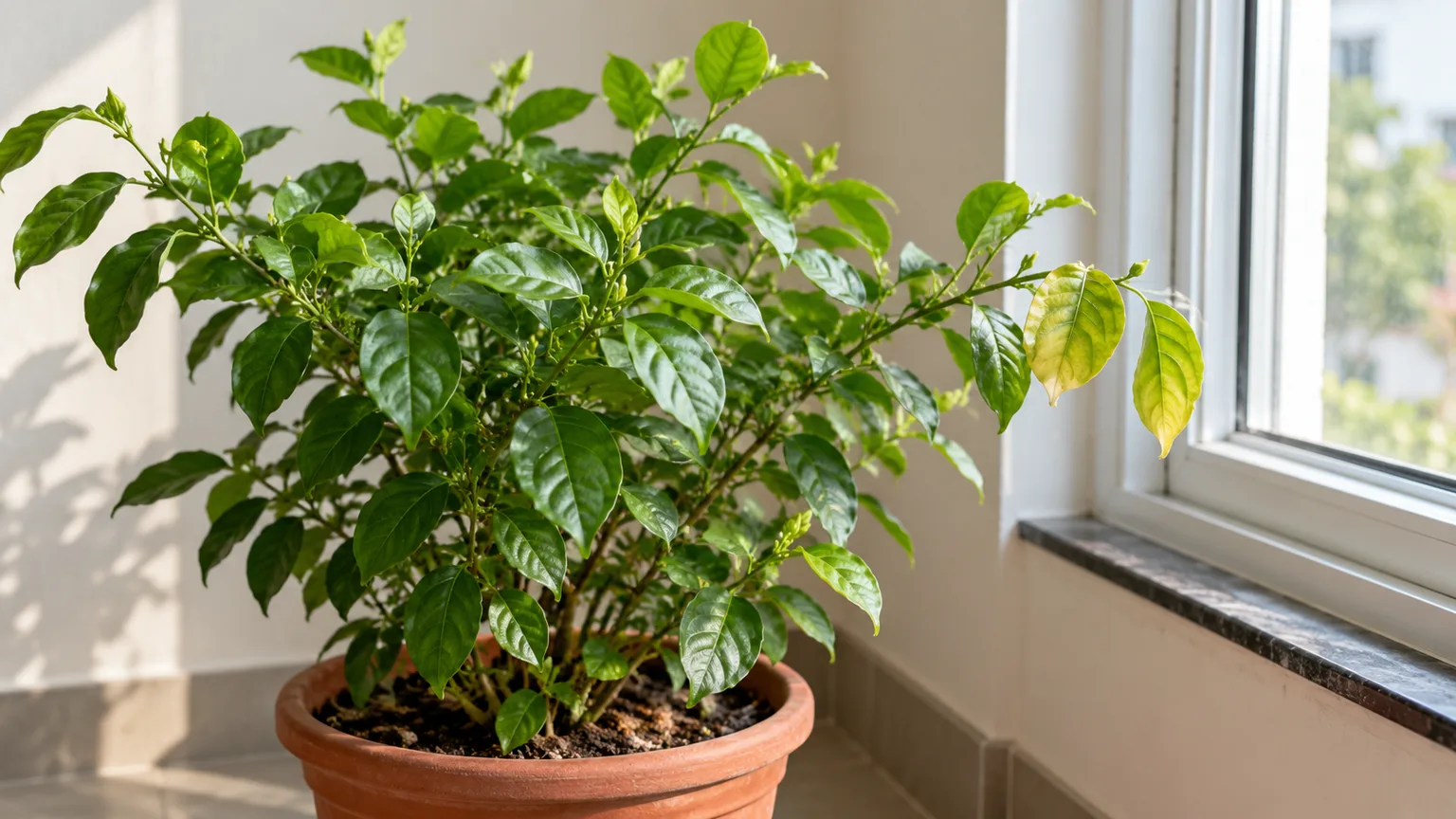
Draft Stress on Mogra: Causes, Checks & Fixes
This guide covers draft stress on Mogra. See also the general Draft Stress guide, watering, and light pages for this plant.
Draft Stress on Mogra: Causes, Checks & Fixes
Draft stress on Mogra: how to check cold-air exposure and stabilize growth
Quick answer
If Mogra begins drooping, yellowing, dropping buds, or losing leaves soon after you move it beside a chilly window, exterior door, air conditioner, or heater, treat a draft as a possibility—not a diagnosis. First move the pot into a bright, warm place with steadier temperatures and no direct air stream. Keep the rest of its care consistent while you check the soil and observe new growth.
Mogra is Arabian jasmine (Jasminum sambac), a tropical species; UF/IFAS records its origin as tropical Asia. UF/IFAS’s species assessment This context makes prolonged cold exposure a reasonable concern, but it does not mean every leaf problem is caused by a draft. A wilted shoot may reflect dry soil, while yellowing in a persistently wet pot is a reason to check root-zone conditions. For the general pattern across houseplants, see the draft-stress overview; this page focuses on checking whether airflow is the trigger for Mogra. Use exposure history and repeatable temperature readings to decide whether the location is the likely trigger.
What draft stress may look like on Mogra
A single leaf mark cannot tell you whether Mogra has draft stress. You may first notice a change in leaves, a shoot, or buds; use it as a reason to check the plant’s recent location and care rather than as proof of a temperature problem. The pattern matters: did symptoms start after a move, and are they worse on the side facing a vent, doorway, or cold pane?
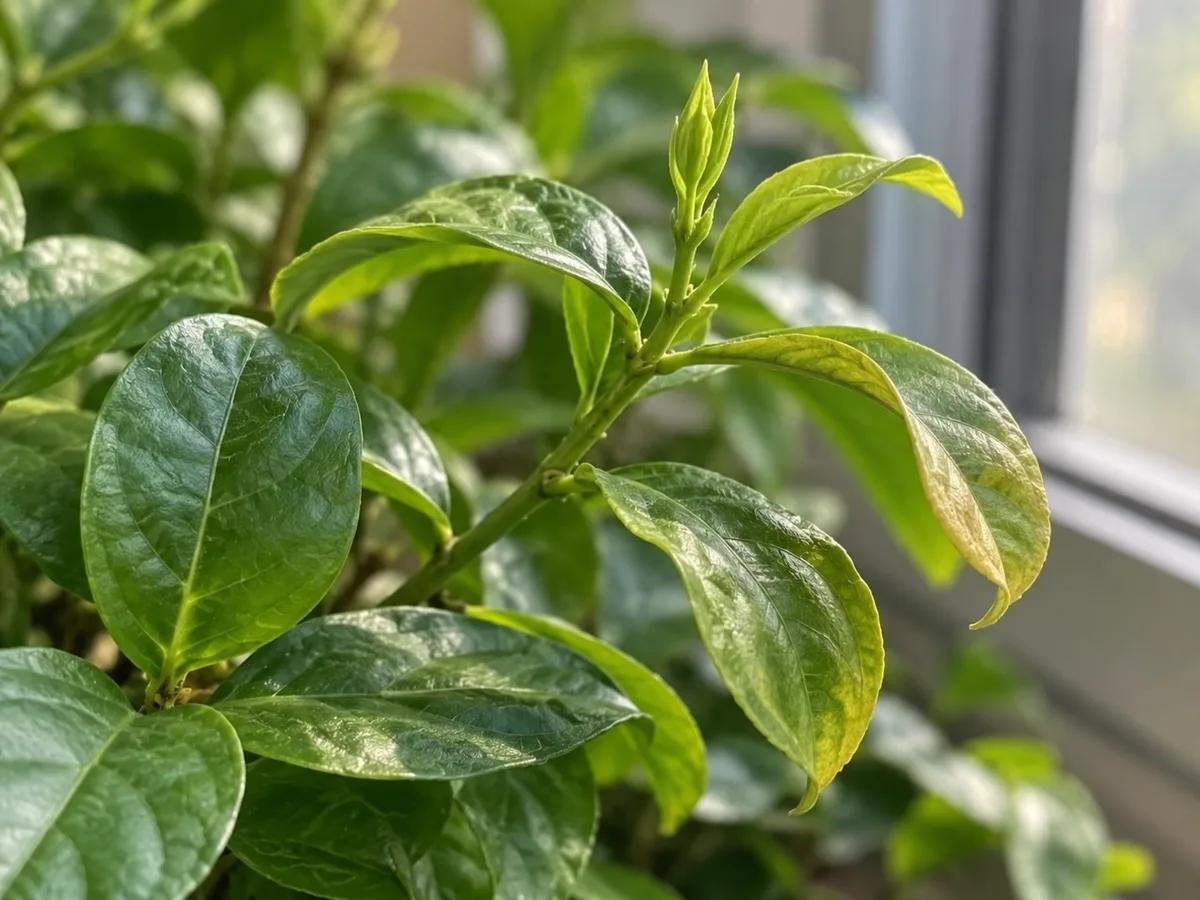
Compare exposed leaves with sheltered, newer growth; no single mark confirms draft stress.
On a potted Mogra, note whether decline is limited to the exposed outer shoots or is happening evenly across the plant. Damage clustered on the side nearest a cold window or supply vent strengthens the case for an exposure issue, especially if the plant looked stable before that placement change. If every branch is declining and the pot remains wet or very dry, check the root-zone conditions before blaming airflow.
Flower buds need their own check. A bud that dries or drops does not identify a draft by itself. Record whether buds were already forming when the plant was moved, and whether leaf or shoot symptoms appeared at the same time. If bud loss is the only change, compare the conditions covered in the Mogra bud-drop guide before making a temperature diagnosis.
Why Mogra’s position matters more than a room label
“Indoors” does not guarantee a stable temperature. A Mogra sitting on a cold sill can experience a different night-time environment from a pot placed several feet into the room; similarly, an air-conditioner outlet can expose one section of the canopy to moving cool air while the rest of the room feels comfortable. The useful question is not whether the house is generally warm, but what the leaves and pot experience over a full day and night.
Arabian jasmine needs a warm, humid climate and is susceptible to frost damage; The Spruce’s care guide recommends bringing plants indoors before winter in temperate climates. The Spruce’s Arabian jasmine care guidance Gardening Know How likewise recommends a warm, sheltered location for jasmine and calls protection from cold temperatures an important part of care. Gardening Know How’s jasmine guide These references support protecting Mogra from cold exposure. They do not provide a universal indoor minimum temperature for every cultivar, pot size, or acclimated plant, so do not treat one threshold as a guarantee of safety.
This is especially relevant when you move a balcony-grown Mogra indoors for a cool season, or move it back outside when nights are still cold. A plant can look fine at midday and receive the strongest chill after sunset, when a pane cools or a door opens repeatedly. Conversely, a heater may make a corner feel warm while its direct airflow dries the surrounding air and foliage. Avoid rapid position changes between those extremes; the goal is a bright position where temperature changes gradually.
Jasmine is a broad genus, and species differ in how much cold they tolerate. NC State Extension notes that less-hardy jasmines are grown as houseplants or conservatory plants, while some other jasmines can be landscape shrubs. NC State Extension’s jasmine profile That distinction matters for Mogra: advice for a winter-hardy landscape jasmine should not be used to justify leaving Arabian jasmine exposed to chilly night air.
How to confirm a draft is the likely trigger
Start with a short placement history rather than changing several care variables. Write down when symptoms began, where the pot stood, whether you used heating or AC, and whether a door or window was opened nearby. Include any recent move from a sunny balcony to a cooler indoor corner. If the timing does not line up with a change in exposure, a draft becomes less likely.
Then check the microclimate at leaf height. A simple room thermometer with a minimum and maximum reading can reveal a night-time dip or repeated swings that a daytime glance misses. Take readings near the Mogra’s outer leaves and in a sheltered part of the same room; repeat when the AC, heater, or ventilation is operating as usual. Do not place the probe against glass or directly in a vent stream unless you are deliberately checking that surface or outlet—the goal is the air the plant actually receives.
Look for a directional pattern. Compare leaves and shoots nearest the airflow with growth on the sheltered side. A problem that repeatedly appears on exposed tissue, while protected new shoots remain firm, supports the location hypothesis. If the whole plant is affected, check the pot and roots too; a cold room can coincide with slower drying, and watering by the summer calendar may leave Mogra’s mix wet longer than expected.
A draft diagnosis is stronger when three clues line up: a recent exposure change, a measurable temperature difference or direct airflow at the plant, and a symptom pattern that fits the exposed side. It is weaker when the pot is far from doors and vents, temperatures stay steady, and the decline matches a different condition such as very dry mix or persistent saturation. This is a practical diagnosis, not a lab test; use the plant’s response after relocating it as the final check.
Rule out Mogra’s common lookalikes
Dry mix or a missed watering
Mogra prefers soil that stays moderately moist while draining well. The Arabian jasmine care guide recommends watering container plants after the upper soil dries and warns that overwatering can lead to root rot. If the pot is unusually light and the top 2–3 cm of mix are dry, the plant may be short of water rather than reacting to cold air. Check the Mogra watering guide and water thoroughly only if the mix is dry at the plant’s normal check depth. Do not add extra water just because a leaf droops; a wet root ball will not be corrected by watering again.
A pot that stays wet
If the mix is still damp well below the surface, the pot remains heavy, or the soil smells sour, pause before watering. Weak light and cool conditions can slow how quickly a container dries, so the same routine that worked on a bright balcony may now be too frequent. Compare the plant with the Mogra guide to yellow leaves if yellowing is widespread, and inspect drainage before considering a repot. Repotting is not the first response to a draft unless the mix itself is failing or roots show a clear problem.
Low light after a move indoors
A Mogra moved away from a bright balcony may receive less usable light at the same time it is exposed to a different temperature. The Spruce recommends a sunny window or grow light for Arabian jasmine brought indoors in winter. Indoor light guidance for Arabian jasmine Long gaps between leaves, weak new shoots, and a gradual loss of vigor fit a light problem better than a short, directional cold-air event. Check the Mogra light guide and move it toward a bright window while keeping the pot out of the coldest window-edge zone. If possible, provide bright light from a nearby window without letting leaves touch cold glass.
Pests or old leaves
Before treating the plant, look closely at leaf undersides, tender shoot tips, and stem joints for webbing, stippling, sticky residue, or visible insects. Pests can cause uneven leaf damage that may be mistaken for environmental stress. Also separate a small number of old lower leaves from active decline at several growing tips; normal aging of older leaves does not prove a new draft problem. If you see signs of insects, use the relevant Mogra problem guide and confirm the pest before applying any product.
First fix: give Mogra one stable, bright position
Move the whole pot away from direct cold or hot airflow and from the coldest part of a window. Choose a bright location where temperatures remain steadier, with room around the canopy for gentle air movement. This single change removes the suspected trigger without making it hard to interpret what happens next. A warm, sheltered position is also consistent with practical jasmine-care guidance.
Do not put Mogra in a dark corner merely to escape a vent. Arabian jasmine needs good light, so solve the exposure problem by changing the distance or direction of the airflow, using a different bright window, or redirecting the room’s air outlet—not by sacrificing the plant’s light. If the only bright window is cool at night, move the pot a short distance inward after sunset and return it to the brighter position in daytime only if that routine is practical and gentle.
For an outdoor container that must be brought in during cold weather, do so before nights become too cold. The Spruce advises moving Arabian jasmine indoors before night temperatures fall below 55°F in regions where it cannot remain outside through winter. Its overwintering guidance for Arabian jasmine Treat that as a precaution from a gardening source, not a universal damage threshold for an indoor Mogra. A plant already living indoors should be judged by its actual exposure, cultivar, and response rather than moved repeatedly to chase a number.
Recovery: hold the other variables steady
For the first several days after moving Mogra, keep a simple log of the plant’s location, temperature readings, soil moisture, and any fresh damage. Avoid pruning affected shoots immediately unless they are broken or clearly dead; a short observation period helps you see whether damage continues. Do not fertilize a plant that is not actively growing, and do not repot it just because leaves have fallen. The first goal is to remove the exposure and let the plant show whether that change stabilizes it.
Water by checking the mix rather than following the old balcony schedule. Mogra’s care profile recommends letting the top 2–3 cm dry before watering and reducing water in winter, which aligns with the Arabian jasmine winter watering guidance. If the mix is dry at that depth, water evenly and let excess drain. If it is still moist, wait and recheck. Do not mist leaves to compensate for a cold draft; wet foliage and a chilly, stagnant corner do not correct the temperature problem.
After about a week, compare the exposed side with the sheltered side and note any newly yellowing or dropping leaves. Existing damaged tissue may remain marked or fall even after the cause is removed, so judge the direction of change rather than expecting old leaves to become glossy again. If no additional damage appears and the newest leaves remain firm, keep the location stable. If symptoms progress, check roots, soil moisture, pests, and light again instead of stacking fertilizer, pruning, and repotting together.
What recovery looks like on a flowering Mogra
The clearest sign of improvement is not a fast return of flowers; it is stable stems and clean new leaves after the move. A Mogra may shed a few leaves or buds already affected by earlier stress. Those parts are unlikely to become normal again. Remove only fully dead material once the plant has stabilized, using clean snips, and avoid trimming healthy flowering shoots simply to make the plant look tidy.
Mogra flower timing depends on its growing conditions and season. When diagnosing recovery, compare new shoots and the next set of buds rather than judging the plant by an existing bloom flush. NC State Extension notes that jasmine flowers are borne on old growth and recommends pruning after flowering to support the next season’s bud set. NC State’s pruning note for jasmine For Mogra, that is another reason to wait until a temperature problem is resolved before pruning healthy branches: unnecessary trimming can remove growth that would otherwise carry flowers.
Seek a closer root-zone assessment if several stems soften, leaves keep falling from both sheltered and exposed sides, or the plant continues to worsen after its temperature is steadier. Soft, dark roots or a sour-smelling, waterlogged pot point away from a simple draft-only explanation. If the stem base is still firm and some shoots remain healthy, keep those conditions stable and assess new growth before deciding how much to prune or whether to replace the plant.
Prevent repeat exposure through the season
Before cold weather, choose Mogra’s indoor position before the first night you need to move it. A bright spot a little away from exterior glass is usually easier to manage than the sill itself. Keep it clear of frequently opened doors, leaky frames, and direct heater or air-conditioner discharge. If you are unsure whether the spot is stable, measure the air beside the outer leaves overnight for several nights before leaving the plant there full time.
When using air conditioning, pay attention to where the vent sends air rather than only the thermostat setting. Redirecting a louver or shifting the plant outside the direct stream is usually less disruptive than moving it room to room. In a heated room, do not park Mogra directly above a radiator or near a heater outlet; choose a bright position that does not receive the hottest blast. If foliage dries faster after a placement change, check the mix moisture and the room’s airflow before increasing watering frequency.
If Mogra spends warm months outdoors, move it between outdoor and indoor positions in stages where weather allows. Bring it in before chilly nights, but avoid placing it immediately beside the coldest pane. When moving it back outdoors, wait until nighttime conditions are suitable and acclimate it to the brighter exposure gradually. Do not combine the move with hard pruning or a major repot unless another urgent problem requires it; one change at a time makes the response easier to read.
Related tool
Use the Plant Problem Diagnosis Tool if the exposure history is unclear and you want to compare likely causes before changing Mogra’s care.
When to use this page vs other Mogra guides
Use this page when the onset of leaf, shoot, or bud decline lines up with cold or hot airflow, a cold window, or a sudden move between outdoor and indoor conditions. If the pot is too dry or takes unusually long to dry, follow the watering guide or the yellow-leaf diagnosis instead. If the plant is declining gradually in a dim location without a temperature swing, use the light guide. For a broader starting point, visit the Mogra care overview or the Mogra problems hub.
Related Mogra guides
- Draft stress: use this guide when exposure to a cold window, doorway, or direct vent matches the timing and location of damage.
- Bud drop: use the Mogra bud-drop guide when buds are falling but leaves and stems remain otherwise stable; check water and light before assuming temperature is responsible.
- Yellow leaves: use the Mogra yellow-leaf guide when discoloration is spreading across the plant or the pot’s moisture pattern has changed.
- Watering and light: use the watering guide and light guide when the exposure history does not fit but the plant’s daily care may have changed.