Compacted Soil on Mogra: Causes, Checks & Fixes
Quick answer
If Mogra's pot stays heavy, water pools or runs down the pot wall, and the root ball feels dense, replace the failed mix in a gentle repot. First confirm the problem extends below the surface; a crust alone is not proof. Repot after the current flower flush unless the plant keeps declining while the root ball stays wet.
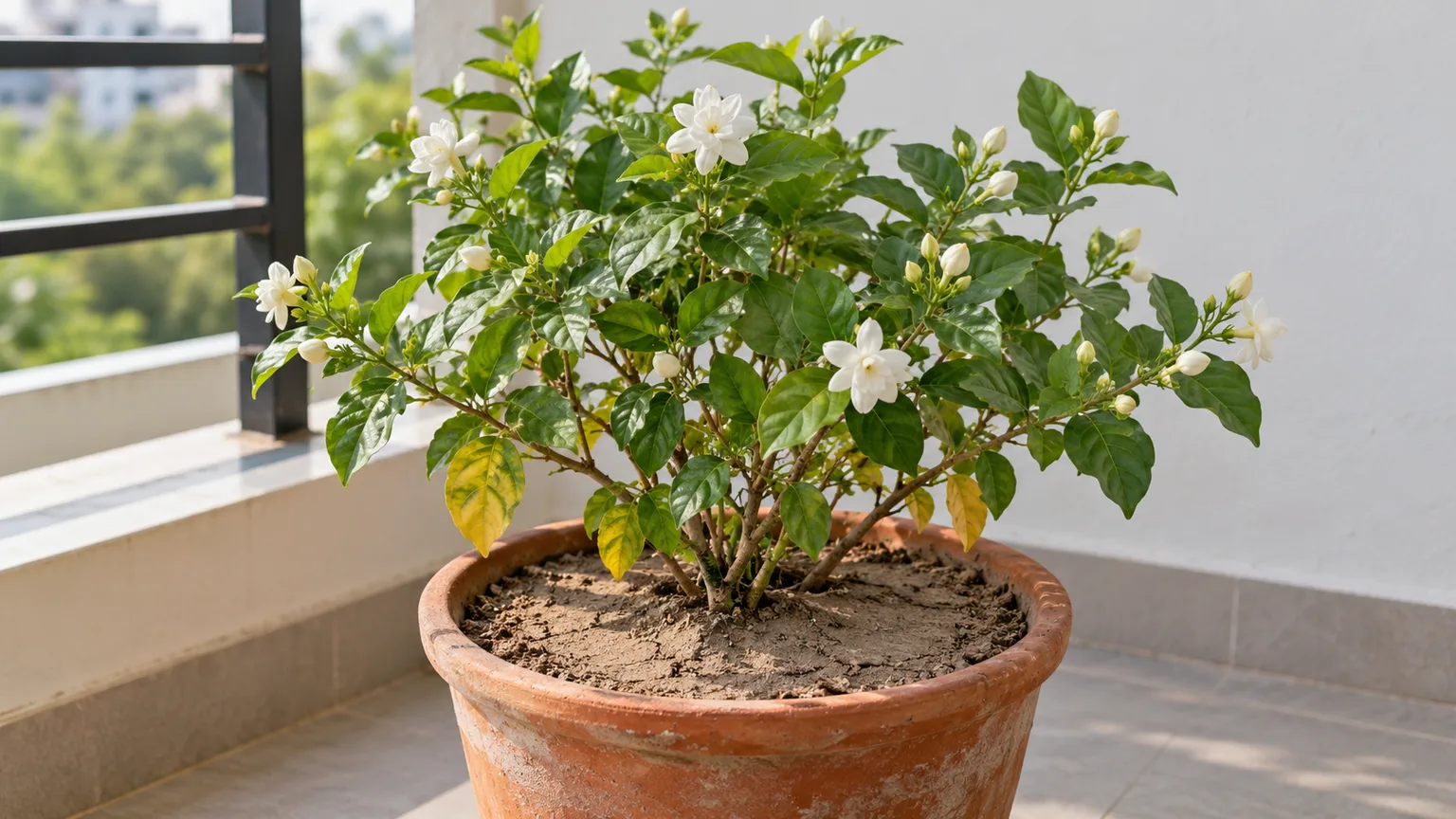
Compacted Soil on Mogra: Causes, Checks & Fixes
This guide covers compacted soil on Mogra. See also the general Compacted Soil guide, watering, and light pages for this plant.
Compacted Soil on Mogra: Causes, Checks & Fixes
Quick answer
If Mogra’s pot stays heavy, water pools or runs down the pot wall, and the root ball feels dense, replace the failed mix in a gentle repot. First confirm the problem extends below the surface; a crust alone is not proof. Repot after the current flower flush unless the plant keeps declining while the root ball stays wet. For the general mechanics of how compacted soil restricts air and water, see the compacted-soil guide; this page focuses on how to confirm and correct it in a potted Mogra (Jasminum sambac).
What compacted soil looks like on Mogra
On a Mogra, compaction is a root-zone problem first and a leaf problem later. The surface may set into a firm crust, water may sit briefly or travel along the gap between the soil and pot, and the container may remain unexpectedly heavy. The plant can still have plenty of green leaves while its lower roots struggle to receive both water and air. A few yellow lower leaves, slower shoots, or buds that fail to open can be part of the picture, but none of those signs proves compaction by itself; Nurserylive’s Mogra guide also connects poor drainage with yellow leaves and weaker flowering.
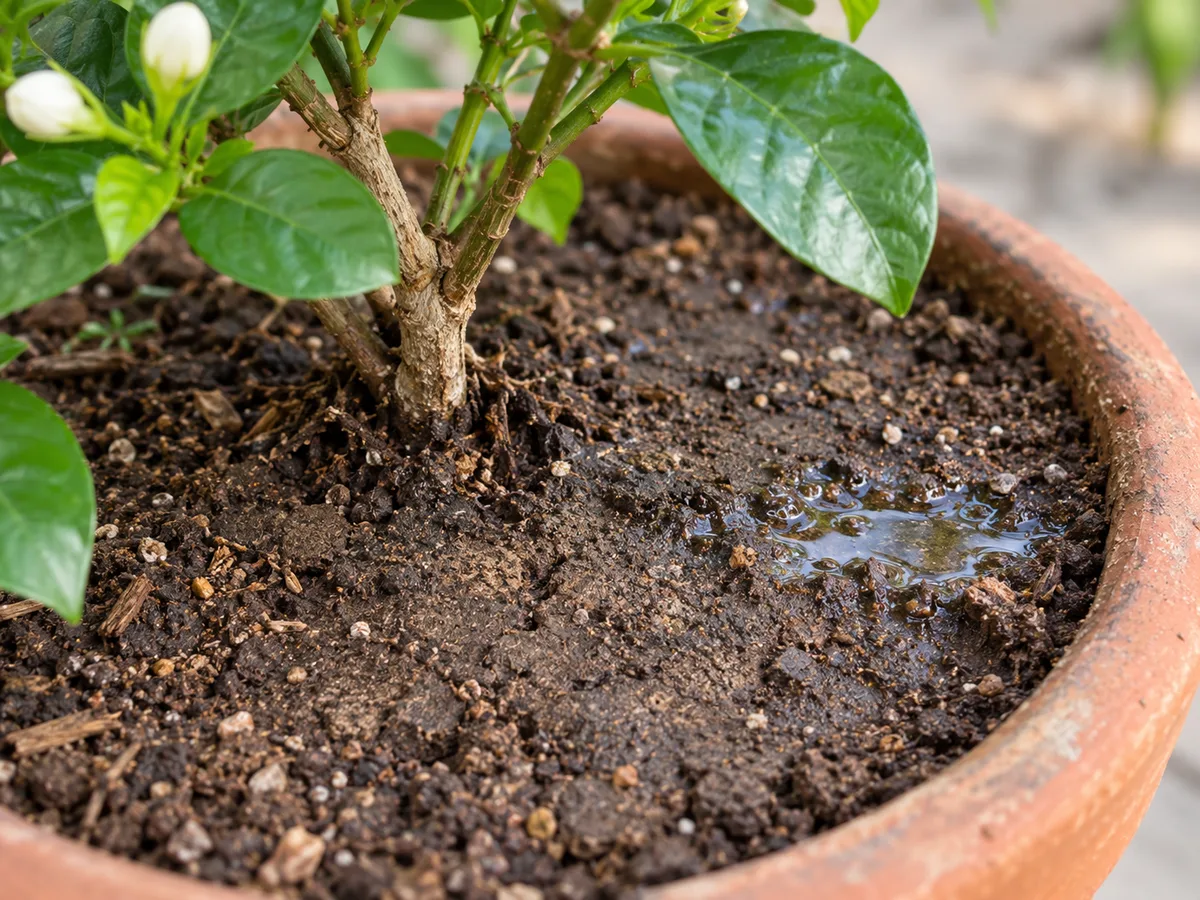
A crusted surface and water beading are clues to investigate; check the whole Mogra root ball before deciding to repot.
Compaction means the particles have been pressed into a denser structure with less pore space. The University of Delaware Cooperative Extension explains that this can reduce the paths for air and water, make water drain poorly, and make it harder for roots to penetrate; standing water, dense soil, stunted growth, and discoloured leaves are possible clues, but symptoms overlap with other site problems. That overlap matters in a pot: a hard top layer might be a crust or mineral residue while the mix underneath is still open, and a drooping Mogra can be thirsty even when the soil surface looks firm.
Look for a pattern instead of diagnosing from a single leaf. Compaction is more plausible when the soil itself feels dense below the top crust, water cannot move evenly through the root ball, and the pot’s dry-down has changed despite similar light and weather. If leaves are yellowing while the pot drains freely and becomes light at a normal pace, inspect Mogra’s watering pattern and the light guide before disturbing the roots.
Why Jasminum sambac needs both moisture and an open root zone
Mogra needs a potting mix that holds some moisture without remaining saturated. The Missouri Botanical Garden describes Arabian jasmine as best grown in loose, humusy, evenly moist but well-drained soil, while the Royal Horticultural Society lists Jasminum sambac for loam that is moist but well-drained. Think of it as a balance: keep the mix evenly moist while leaving pore space for air and water to circulate around roots; the University of Delaware Cooperative Extension explains how that pore space supports root conditions. A mix that has collapsed into a dense mass makes it harder to meet both needs with one watering routine.
A compact root zone can make Mogra’s normal watering checks misleading. The top may dry while the center stays wet, or water may run down a side channel and leave the middle of the root ball dry. Either pattern can produce a plant that looks stressed despite frequent watering. The Mogra-specific soil guide explains the intended texture and how to adjust it for a rainy balcony or a slower-drying indoor pot; use it to choose a replacement mix after you have confirmed the failure.
Why a Mogra flower flush can expose a compact root zone
Mogra grows and flowers through warm, bright parts of the year, when a container’s dry-down can differ from a cool or overcast pause. The surface may become hard after repeated wetting and drying, particularly when fine or decomposed material has settled through the pot. Meanwhile, the plant may be setting buds while its pot dries at a different rate than it did during a cooler period. Do not respond by keeping a dense pot constantly wet: Ugaoo’s Mogra growing guide notes the plant’s flowering season and warns that it does not tolerate waterlogging, while the RHS and Missouri Botanical Garden both pair moisture with free drainage.
When compacted mix is suspected during an active flowering flush, read the whole plant and the pot together. A few fallen buds without a change in water movement are not enough to justify a disruptive repot; check the plant’s placement and recent watering alongside the soil test. If the pot is heavy, the core stays wet, and buds are failing alongside pale or limp growth, the root zone deserves attention. If the mix still drains evenly, use the Mogra bud-drop guide to choose the next check for the flowering problem.
Confirm compaction before disturbing a Mogra in bud
A reliable check uses the pot, the moisture profile, and the drainage hole. Do these checks before lifting a flowering Mogra out of its container.
- Check the root ball, not just the crust. Press a fingertip into the top centimetre near the edge, then slide a clean wooden skewer a little way into the mix at two points near the pot wall. Do not force it through resistance or probe close to the stems. Compare the core’s moisture with the surface: a dry top over a wet, dense center supports a drainage problem; an easy, crumbling core does not.
- Watch one careful watering. When the plant is due for water, apply it slowly across the surface. Note whether it soaks in evenly, pools for a long time, or immediately escapes down the side without wetting the center. A single slow pour can happen in a very dry mix, so repeat the observation on a later normal watering before concluding that the entire pot is compacted.
- Check the exit path. Look for a drainage hole and make sure a cachepot or saucer is not holding runoff against the base. Water trapped outside the root ball can mimic poor drainage even when the mix is usable. Empty a full cachepot before you diagnose a soil failure.
- Compare pot weight and dry-down. Lift the container after watering and again as the upper mix dries. If it remains heavy for much longer than it used to, and the core stays wet, compaction is more credible. Compare like with like: note the pot material, placement, light, and recent weather before deciding that the mix has changed.
- Inspect roots only when other signs justify it. If drainage stays poor and the plant continues to wilt or yellow while the mix is wet, slide the root ball out carefully. A dense, rigid mass that barely releases the pot shape supports repotting. If the roots are firmly circling the outside and the mix is otherwise loose, the issue may be root crowding instead; the Mogra repotting guide covers when to move up a pot size.
The diagnosis is stronger when several clues agree: dense mix below the surface, uneven wetting, prolonged heaviness, and slowing growth. If only the top is crusted but the center accepts water and the plant is growing normally, leave the root ball intact and correct the surface rather than treating the whole pot as failed.
Compacted soil or another Mogra problem?
Use the pattern below to choose the next check. The same leaf symptom can point in different directions, so do not let yellowing or bud loss decide the diagnosis alone.
| What you notice | More likely explanation | Next step |
|---|---|---|
| Dense mix below the surface, slow or uneven water movement, and a pot that stays heavy | Compaction or a collapsed old mix | Confirm the core is wet or rigid, then follow the repotting steps below. |
| Water runs off but a skewer shows that much of the root ball remains dry and light | A dry core rather than a wet compacted core may be the issue | Compare with dry hydrophobic soil on Mogra; re-wet gradually instead of adding more mix immediately. |
| The mix is open, but roots circle at the pot wall | Root crowding rather than compaction | Use the Mogra repotting guide; circling roots call for a different repot check. |
| The pot stays wet and Mogra continues to decline even after drainage is restored | Possible root damage | Compare with root rot overview and inspect the roots before feeding. |
| The soil drains normally but Mogra stretches, pauses, or blooms poorly | The soil may not be the cause | Check the Mogra light guide and the plant’s recent placement history before changing the mix. |
If two patterns fit at once, address the condition you can verify. A surface that feels dense while the skewer finds a dry core deserves the separate dry-soil check; a root-bound Mogra can still have loose mix, which points away from compaction. A container without an open drainage hole can also keep the lower mix wet. The problem pages linked above explain those cases so this guide stays focused on a compacted root zone.
First fix: replace a failed mix, not the watering schedule
If compaction is confirmed through the root ball, the first fix is a gentle repot into fresh, open container mix. Do not try to compensate by watering more often or driving a fork through the pot; address the failed mix without disturbing more of Mogra’s roots than necessary. A surface crust alone does not warrant repotting; the trigger is a dense interior that wets or drains unevenly, especially when Mogra is declining in a pot that remains heavy.
For a stable plant, schedule the change after its current flower flush. If the root ball stays waterlogged or Mogra wilts while the core remains wet, do not wait for a convenient season; preventing further time in failed mix matters more than preserving the current buds. These are practical cautions, not a diagnosis by themselves, which is why the moisture and flow checks come first.
Repot Mogra between flowering flushes
Active Mogra flower buds are vulnerable to disturbance during root work. When the plant is not in immediate danger, repot after the active flush rather than while clusters are swelling or flowers are open. This timing is a practical way to limit overlapping stress; it does not mean a severely waterlogged root ball should be left untouched until the next bloom cycle. The aim is to protect roots and avoid adding an unnecessary interruption to Mogra’s flowering rhythm.
Prepare a pot with a clear drainage hole that is only a little wider than the root ball. Do not use a much larger decorative pot to compensate for poor soil; match the new pot to the roots you are repotting. Choose a fresh potting mix that is loose and moderately moisture-retentive. For Mogra, the soil guide gives the site’s complete blend and container adjustments; avoid garden soil, fine compacting material, or a dense layer pressed against the roots. Gardening Know How’s jasmine care guidance also describes well-drained, moderately fertile soil as the safer baseline for jasmine.
Work in this order:
- Water only if the root ball is dry enough to hold together; do not saturate a pot that is already wet and heavy.
- Ease the plant from its container while supporting the woody stems near their base. Keep most of the root ball intact instead of washing it bare.
- Remove only mix that releases with a gentle shake or light finger pressure. If roots are tightly circling the outside, tease a few outward; do not rake through the central root mass to make it look clean.
- Set Mogra at the same depth it was growing. Fill around the sides with fresh mix and settle it lightly with your fingertips so the plant stands upright while the medium remains springy rather than packed hard.
- Water once around the root ball until runoff appears, then let the pot drain fully. Move it back to its normal bright position gradually if you have had to work the roots extensively, and do not add fertilizer on the same day.
A small surface crust with otherwise open mix may need less: remove loose debris, gently lift only the top crust without driving a tool into the root zone, and top-dress with a thin layer of fresh potting mix. This is a surface correction, not a cure for compaction deeper in the pot. If the next watering still pools or the center remains wet for too long, plan the full repot rather than repeating the shallow scrape.
Mogra recovery: follow water movement and new growth
The most useful immediate result is a more even wetting and drainage pattern on the first watering after repotting. Let excess water leave the pot, then use the Mogra watering guide to adjust the next watering to the mix and weather instead of returning to the old calendar. A fresh mix can change dry-down speed, so a routine learned from the compacted pot may no longer fit.
Do not judge recovery by trying to reverse old yellow leaves or waiting for fallen buds; watch what Mogra produces next. New leaves stay firm, the pot no longer remains unexpectedly heavy, and new buds develop without the same decline pattern. Review those signs over the next several weeks rather than expecting the plant to show new growth immediately. If it is growing slowly, use the more immediate drainage and pot-weight pattern as evidence while you wait. Keep the plant stable while you observe it rather than adding fertilizer, hard pruning, and a second repot at the same time.
Escalate the inspection if Mogra continues to wilt while the mix is wet or if decline continues after drainage is restored. These patterns point beyond a simple surface crust and justify checking for damaged roots. If the roots remain firm and the plant stabilizes after the mix is replaced, allow it time to rebuild before making another major change.
Prevent compaction in a Mogra container
Start with the mix and the way it is settled into the pot. Mogra needs the combination described by the Missouri Botanical Garden and RHS: moisture held in a loose medium that still drains. A named-author GardenGuides packing guide recommends lightweight container mix, warns that garden soil compacts through repeated watering and drying, and advises gentle settling around roots. Use container mix rather than garden soil by itself, and keep the medium springy instead of packing it hard.
Match the pot, mix, and watering to Mogra’s season
Use a pot with an unobstructed drainage hole and avoid leaving the nursery pot standing in water inside a cachepot. If a new Mogra is root-bound, upsize gradually instead of surrounding a small root ball with a large volume of wet mix. Refresh the medium when it has broken down, become persistently dense, or no longer wets evenly; do not repot healthy, flowering Mogra simply because a calendar date arrived.
Mogra’s water use changes with sun, temperature, and whether it is actively growing. Check the top layer and the pot weight during hot, bright periods, then check less often when light and growth slow. During monsoon weather, protect container Mogra from repeated saturation and confirm runoff leaves the pot. The same plant may need different spacing between waterings on a hot terrace and a cool windowsill; soil condition, not a fixed interval, tells you when to water.
Keep Mogra’s flower cycle out of the soil diagnosis
A missed bloom is not a soil test. Confirm the root-zone pattern before concluding that compaction is the cause. If the pot stays evenly moist but drains, shift attention to the plant’s light and flower-stage care rather than adding more perlite or disturbing its roots.
When to use this page vs other Mogra guides
Use this guide when the mix itself has become dense and water no longer moves evenly through Mogra’s root ball. If the problem is a dry center that repels water, follow the dry-hydrophobic-soil guide; if the pot is wet and roots appear damaged, use the root-rot guide. For normal seasonal watering or a routine soil recipe, go to the Mogra watering or soil care pages instead of repeating an emergency repot.
Related Mogra guides
- Mogra overview — start here for whole-plant care and the species hub.
- Mogra problems hub — use this when you know the plant is struggling but have not identified the cause.
- Mogra soil guide — use for the regular mix recipe, drainage checks, and container choices.
- Mogra watering guide — use after correcting the mix to reset watering around the new dry-down pattern.
- Mogra repotting guide — use for routine repot timing and root-ball handling.
Related tool
Use the Plant Problem Diagnosis Tool to compare compacted soil with other possible causes before changing Mogra’s care routine.